Introduction
Importing marble slabs is far more complex than simply purchasing stone from a supplier overseas. Whether you are a developer, stone distributor, fabricator, architect, or contractor, the true profitability of a marble procurement project depends on understanding the total landed cost — including GST, VAT, customs duties, freight, insurance, brokerage fees, and currency fluctuations.
Many first-time importers focus only on FOB slab pricing while underestimating the financial impact of import taxation and logistics. In reality, taxes such as GST on marble slabs can significantly affect final project margins, especially for large-scale commercial or luxury residential developments.
This guide explains how marble slab imports are taxed in major markets, including Canada, Australia, and the United Kingdom. It also analyzes freight structures, brokerage charges, and exchange-rate risks, and provides a practical landed-cost calculation model suitable for global stone buyers.
Understanding Total Landed Cost
The term landed cost refers to the complete expense of importing marble slabs from an overseas supplier to the buyer’s warehouse, fabrication facility, or jobsite.
For natural stone imports, landed cost generally includes:
- Marble slab purchase price
- Export packaging and crating
- Inland transportation in the origin country
- Ocean freight or air freight
- Marine insurance
- Import customs duties
- GST or VAT
- Customs brokerage fees
- Port handling charges
- Currency exchange fluctuations
- Final inland trucking
Many importers mistakenly assume that freight is the highest hidden cost. However, taxation often creates the most substantial financial impact, particularly in countries with GST or VAT systems.
For example:
| Cost Component | Approximate Share |
|---|---|
| Stone Material | 45–65% |
| Freight & Logistics | 15–30% |
| GST/VAT & Duties | 10–20% |
| Brokerage & Handling | 3–8% |
| Currency Fluctuation | Variable |
For luxury marble slabs with high FOB values, even small tax differences can create thousands of dollars in additional project expenses.
GST on Marble Slabs in Canada
In Canada, imported marble slabs are generally subject to:
- GST (Goods and Services Tax)
- Potential provincial sales taxes
- Customs duties depending on origin
- Brokerage and clearance fees
Canada applies GST on the value for tax, which usually includes:
- Cost of goods
- Freight charges
- Insurance
- Customs duties
This means GST is not only charged on the stone itself but also on transportation and import-related costs.
Federal GST Structure
Canada’s federal GST is commonly:
- 5% GST federally
- Additional provincial tax, depending on the province
Examples:
| Province | Tax Structure |
|---|---|
| Ontario | 13% HST |
| British Columbia | 5% GST + 7% PST |
| Alberta | 5% GST only |
| Quebec | GST + QST |
For importers bringing marble slabs into Toronto, Vancouver, or Montreal, provincial taxation can materially affect procurement budgeting.
Duty Rates on Marble Slabs
Duty rates depend on:
- Stone classification
- Harmonized System (HS) code
- Country of origin
- Trade agreements
Countries with favorable trade agreements may benefit from reduced tariffs, while others face standard customs duties.
Input Tax Credits
Commercial importers registered for GST/HST can usually recover taxes through input tax credits, improving long-term cash flow efficiency.
However, import GST still impacts:
- Working capital
- Project financing
- Inventory holding costs
This becomes critical when importing multiple containers of marble slabs for large commercial developments.
Import GST in Australia
Australia applies a 10% GST on imported goods, including marble slabs and engineered stone materials.
The Australian import taxation system calculates GST based on:
- Customs value
- Import duty
- International freight
- Insurance costs
This creates a tax-on-total-value structure similar to Canada.
Australian GST Formula
The GST calculation generally follows:
GST = 10% × (Customs Value + Duty + Freight + Insurance)This means logistics inefficiencies directly increase tax liability.
Low-Value vs Commercial Imports
Commercial marble slab shipments almost always exceed low-value thresholds, meaning GST applies to nearly all containerized stone imports.
Large projects in:
- Sydney
- Melbourne
- Brisbane
- Perth
Often requires detailed landed-cost forecasting before procurement approval.
Australian Biosecurity Considerations
Australia also enforces strict quarantine and packaging compliance rules.
Wooden crates used for marble slabs may require:
- ISPM-15 certification
- Heat treatment
- Fumigation documentation
Non-compliance can create:
- Port delays
- Inspection fees
- Storage penalties
- Re-export risks
These hidden logistics expenses frequently surprise first-time importers.
UK VAT for Stone Imports
The United Kingdom applies VAT (Value Added Tax) to imported marble slabs.
The standard VAT rate is generally:
- 20% VAT
This VAT is applied to:
- Product value
- Freight
- Insurance
- Customs duties
Post-Brexit Import Environment
After Brexit, UK import procedures became more complex for many European stone buyers.
Importers now face:
- Additional customs declarations
- VAT accounting changes
- Increased administrative procedures
- Potential border delays
For stone distributors and developers importing marble from Asia, Turkey, the Middle East, or Europe, accurate customs classification is essential.
Deferred VAT Accounting
UK businesses can often use postponed VAT accounting to improve cash flow.
Benefits include:
- Reduced upfront VAT payments
- Better liquidity management
- Simplified commercial accounting
This can significantly help large slab importers managing multiple container arrivals monthly.
Freight & Insurance Cost Structure
Freight is one of the most volatile components in marble slab importing.
Ocean freight pricing depends on:
- Container availability
- Fuel costs
- Global trade demand
- Port congestion
- Seasonal shipping cycles
Typical Freight Components
Ocean Freight
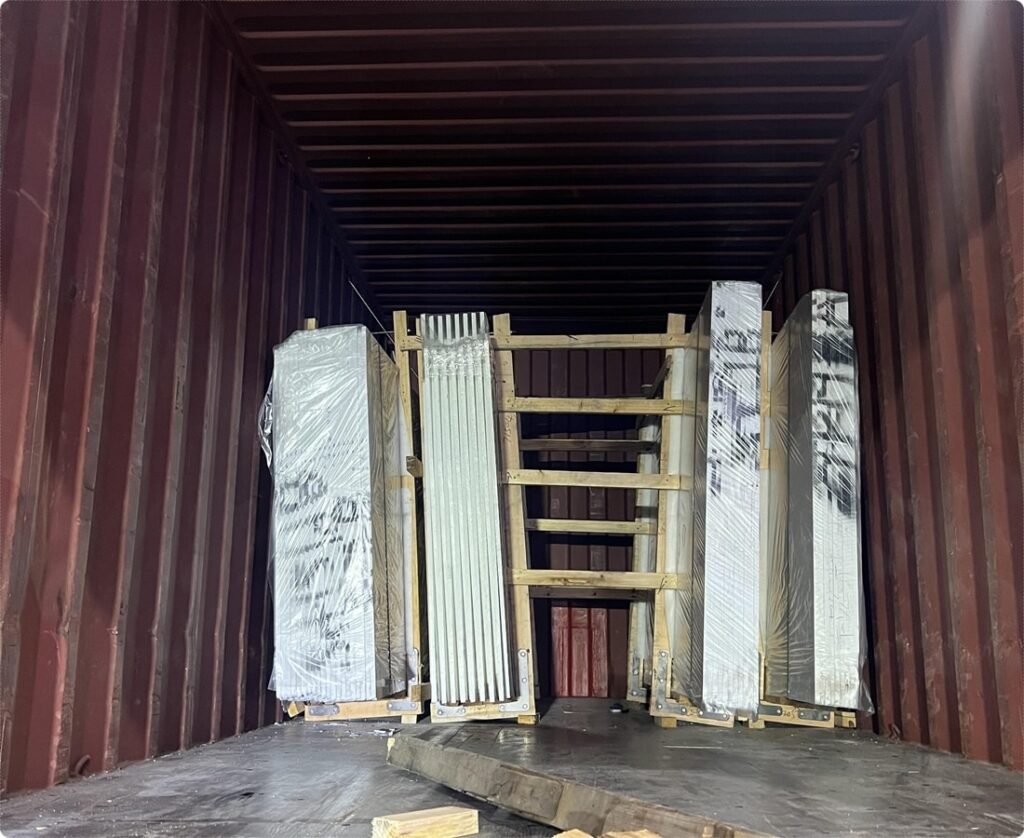
Most marble slabs are shipped via:
- 20-foot containers
- 40-foot containers
- Open-top containers
- Flat-rack containers for oversized slabs
Due to stone weight, 20-foot containers are often preferred for safety and legal road-weight compliance.
Port Charges
Additional fees may include:
- Terminal handling charges
- Documentation fees
- Security surcharges
- Port congestion fees
Inland Trucking
Heavy stone transport requires specialized logistics planning.
Factors affecting trucking costs:
- Slab weight
- Crate dimensions
- Delivery distance
- Crane or forklift access
Marine Insurance
Marine cargo insurance protects against:
- Breakage
- Water damage
- Container accidents
- Port mishandling
- Theft or loss
Insurance costs are relatively small compared to the potential value of damaged marble slabs.
Customs Brokerage Fees
Customs brokers play a critical role in stone imports.
They assist with:
- Customs declarations
- Duty classification
- GST/VAT calculation
- Port clearance
- Regulatory compliance
Common Brokerage Costs
| Fee Type | Typical Range |
|---|---|
| Entry filing | $75–$250 |
| Customs clearance | $100–$400 |
| Port handling | Variable |
| Inspection coordination | Variable |
| Duty advancement fees | Percentage based |
Why Classification Matters?
Incorrect HS classification may lead to:
- Overpayment of duty
- Customs penalties
- Shipment delays
- Audits
Stone products can fall under different classifications depending on:
- Material composition
- Finish level
- Thickness
- Processing status
Professional customs brokers help reduce compliance risks for importers handling high-value marble projects.
Currency Exchange Risk
Currency volatility is one of the most overlooked risks in international marble procurement.
Marble slab transactions are commonly priced in:
- USD
- EUR
- RMB
- TRY
However, buyers may operate in:
- CAD
- AUD
- GBP
Even a small exchange-rate movement can materially affect total project profitability.
Example of Exchange Exposure
A 3% currency fluctuation on a:
- $200,000 slab purchase
creates a potential:
- $6,000 cost variation
This is often larger than brokerage or inspection expenses.
Strategies to Reduce Currency Risk
Forward Contracts
Importers can lock exchange rates for future payments.
Split Payment Structures
Some buyers stagger deposits and final balances to manage exposure.
Multi-Currency Supplier Negotiation
Experienced stone suppliers sometimes offer:
- USD pricing
- EUR pricing
- Local currency settlement
Depending on buyer preferences.
Sample Landed Cost Calculation
Below is a simplified example of importing marble slabs into Canada.
Scenario
| Item | Amount |
|---|---|
| Marble slab purchase | $40,000 |
| Ocean freight | $6,500 |
| Marine insurance | $800 |
| Customs duty | $1,200 |
| Brokerage fees | $500 |
| Inland trucking | $2,000 |
Taxable Import Value
$40,000 + $6,500 + $800 + $1,200 = $48,500GST Calculation (5%)
GST=0.05×48,500=2,425GST = 0.05 \times 48{,}500 = 2{,}425GST=0.05×48,500=2,425
Total Estimated Landed Cost
$40,000
+ $6,500
+ $800
+ $1,200
+ $500
+ $2,000
+ $2,425
= $53,425
This demonstrates how taxes and logistics can increase the final procurement cost by more than 30% over the initial slab pricing.
Best Practices for Reducing Import Cost
Consolidate Containers
Combining slab orders reduces per-unit freight costs.
Optimize Slab Yield
Efficient cutting layouts minimize waste and improve ROI.
Work With Experienced Stone Suppliers
Professional exporters help reduce:
- Breakage rates
- Packaging failures
- Customs errors
- Shipping delays
Monitor Freight Markets
Ocean freight rates fluctuate significantly throughout the year.
Strategic booking timing may reduce logistics expenses.
Verify HS Classification Early
Correct classification avoids unnecessary duty overpayments.
Conclusion
Understanding GST on marble slabs is essential for accurate procurement planning and profitable international stone importing. Taxes such as Canadian GST, Australian GST, and UK VAT significantly influence total landed cost, especially when combined with freight, insurance, customs duties, and currency volatility.
For developers, distributors, fabricators, and commercial contractors, successful marble procurement requires more than selecting beautiful slabs. It demands a detailed understanding of global logistics, taxation structures, customs compliance, and financial risk management.
Professional landed-cost analysis allows buyers to:
- Protect project margins
- Improve budgeting accuracy
- Reduce customs risks
- Optimize cash flow
- Strengthen international sourcing strategies
As global stone supply chains become increasingly complex, companies that master import taxation and logistics gain a substantial competitive advantage in the premium natural stone market.
FAQ — GST on Marble Slabs
Is GST charged on imported marble slabs?
Yes. Most countries apply GST or VAT on imported marble slabs based on the customs value plus freight, insurance, and duties.
Does Canada charge GST on shipping costs too?
Yes. Canadian GST is typically calculated on the combined import value, including freight and insurance.
What is the VAT rate for marble imports in the UK?
The standard UK VAT rate is generally 20% for imported stone products.
Can businesses reclaim GST or VAT?
In many countries, registered businesses can recover GST or VAT through input tax credits or VAT accounting systems.
Why does landed cost differ from FOB pricing?
FOB pricing excludes taxes, freight, insurance, brokerage, inland trucking, and other import-related expenses.