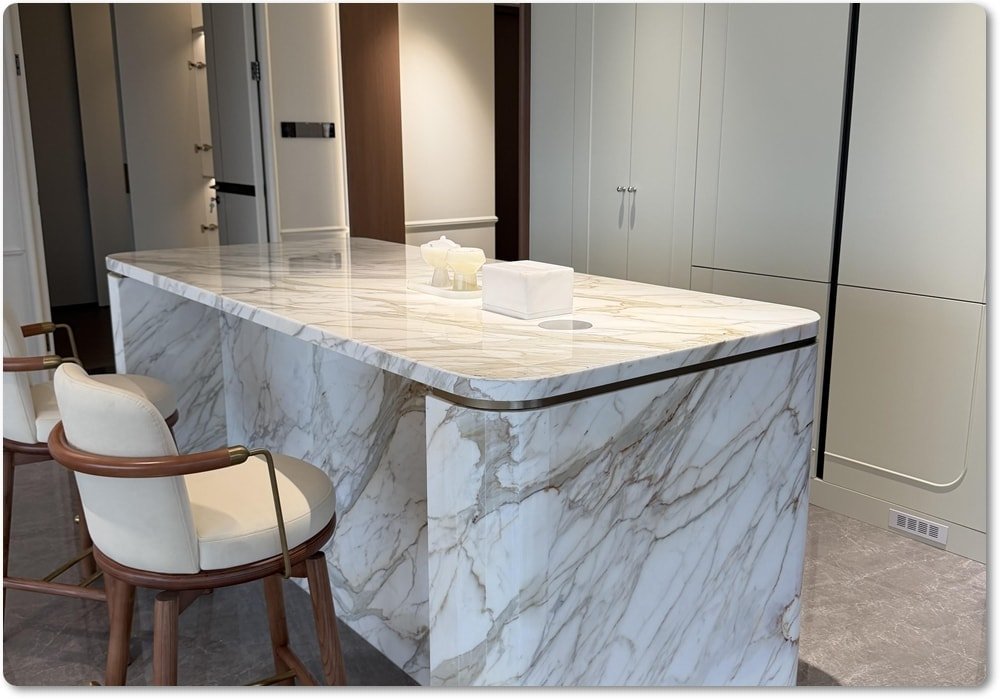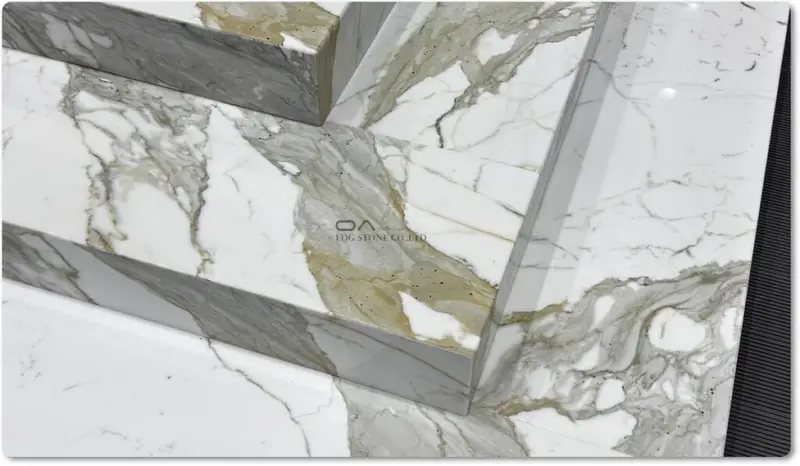
Carrara marble slabs remain one of the most recognizable natural stone materials in the global market. Known for their soft white to gray background, elegant veining, and classic European character, Carrara marble slabs are widely used in commercial interiors, hospitality spaces, retail environments, premium residential projects, and architectural feature areas.
For buyers, Carrara is more than a decorative surface. It is a procurement decision that affects visual consistency, fabrication efficiency, installation performance, and long-term project satisfaction. Contractors need reliable slab dimensions and predictable processing. Designers need color harmony and a refined visual result. Importers and distributors need a stable supply, packaging quality, and clear grading standards.
This guide explains what makes Carrara marble distinct, how to evaluate slab quality, where it performs best, how it compares with other white marbles, and what to ask suppliers before placing an order.

What Makes Carrara Marble Distinct?
Carrara marble comes from the Carrara region of Italy, a historic source associated with premium white marble for centuries. Its reputation is built on a refined balance of softness and structure. Unlike highly dramatic white stones with bold movement, Carrara marble usually presents a more restrained pattern, which makes it easy to integrate into both contemporary and traditional designs.
From a procurement perspective, Carrara is valued for three main reasons.
First, it offers a timeless visual identity. The background is typically white, off-white, or light gray, often with subtle blue-gray or charcoal veining. This creates an elegant surface that works well in commercial spaces where sophistication matters more than visual loudness.
Second, it is flexible in design language. Carrara marble slabs can be used in minimalist interiors, classic luxury schemes, hospitality lobbies, office receptions, spa environments, and premium retail displays. The material does not overpower a room; instead, it elevates the setting with quiet luxury.
Third, Carrara is widely recognized in the international stone trade. Because the name is familiar to architects, designers, and specifiers, it often simplifies specification conversations and helps projects communicate a clear aesthetic direction.
However, buyers should understand that “Carrara” is not a single visual formula. Natural variation exists between quarries, blocks, and slab batches. Some lots appear cooler and more linear, while others may show a warmer background or more cloud-like movement. That is why slab selection and batch control are essential.
Why Carrara Remains Commercially Relevant?
Commercial buyers continue to choose Carrara marble slabs because they strike a useful balance between prestige and practicality. The stone is premium enough for luxury projects, yet familiar enough for wide application. In competitive procurement environments, that combination matters. It allows designers to specify a stone with high aesthetic value without requiring extreme visual intensity or highly customized processing.
Visual Characteristics Buyers Should Recognize
When evaluating Carrara marble slabs, appearance is the first quality filter. Buyers should assess more than just whether the stone is “white.” The real question is how the background tone, veining, and finish will perform in the intended project.
Background Color
Carrara marble typically features a white to gray base with soft tonal variation. The background may appear cooler or slightly warmer depending on quarry origin, polish level, lighting conditions, and slab thickness. In commercial interiors, this subtle background tone influences how the material interacts with wood, metal, glass, and lighting design.
A brighter white background can support a cleaner, more modern look. A softer gray-white background may feel more natural and less clinical. For hospitality or residential luxury applications, many buyers prefer a balanced tone that feels elegant but not overly stark.
Vein Style
Carrara veins are usually finer and more restrained than the dramatic veining seen in some other white marbles. They can appear as delicate linear streaks, soft wisps, or light clouding. Some slabs have consistent directional movement, which is helpful for bookmatching and continuous visual flow. Others show more irregular patterns, which may be better suited for smaller applications or mixed layouts.
Buyers should evaluate whether the vein direction suits the intended fabrication. For example, long countertop runs may benefit from slabs with more linear movement, while vanity tops or feature walls may allow more flexibility.
Finish Options
Carrara marble slabs are commonly produced in polished, honed, or leathered finishes.
A polished finish enhances depth, brightness, and veining contrast. It is often preferred for luxury interiors and formal spaces.
A honed finish provides a softer, matte look and is popular in projects where designers want a calm, understated surface.
A leathered finish gives the stone a tactile, contemporary texture and can help reduce the appearance of minor surface marks.
The finish choice should be aligned with the use case, lighting plan, and maintenance expectations.
Batch Consistency
One of the most important visual procurement issues is batch consistency. Natural marble varies by block and quarry face. Even within the same order, slabs may differ in tone or veining intensity. That is why commercial buyers should request photos, video inspections, and lot control before approval.
For larger projects, ask the supplier to group slabs from the same block or the closest possible matching set. This is especially important for reception counters, long wall cladding runs, and other highly visible installations.
Typical Project Uses
Carrara marble slabs are used across a wide range of commercial and premium residential applications. The right use case depends on the finish, maintenance plan, traffic level, and fabrication detail.
Kitchen Countertops and Islands
Carrara marble is often used in high-end kitchens because of its timeless beauty. It works particularly well in projects that prioritize design over heavy-use durability. In kitchens, it is best suited to clients who understand natural stone care and are comfortable with sealing and routine maintenance.
For commercial kitchen-adjacent spaces, breakfast bars, display kitchens, and luxury residential kitchens, Carrara can create a premium focal point.
Bathroom Vanity Tops and Wall Cladding
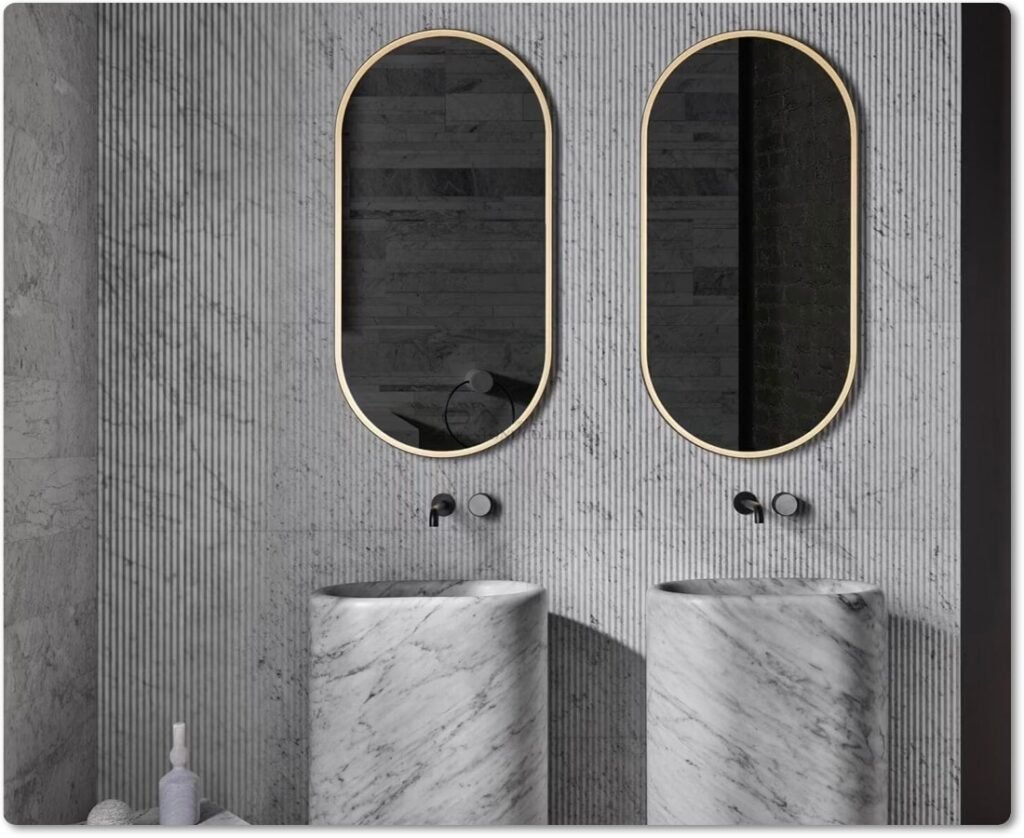
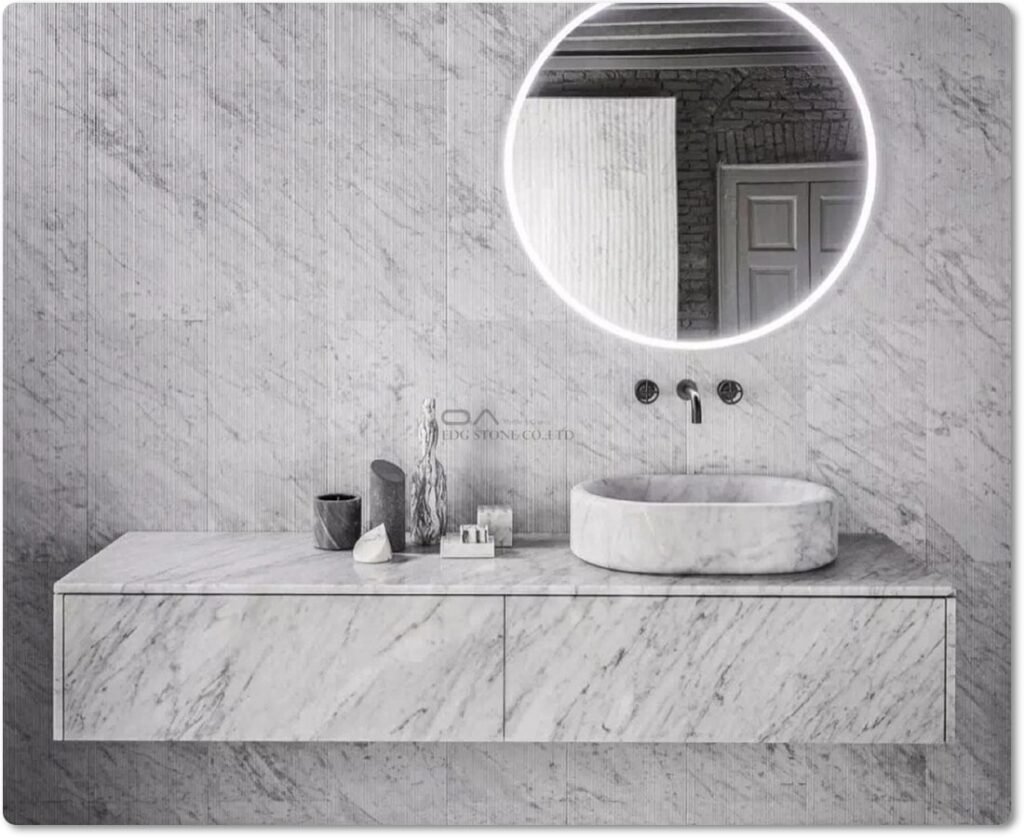
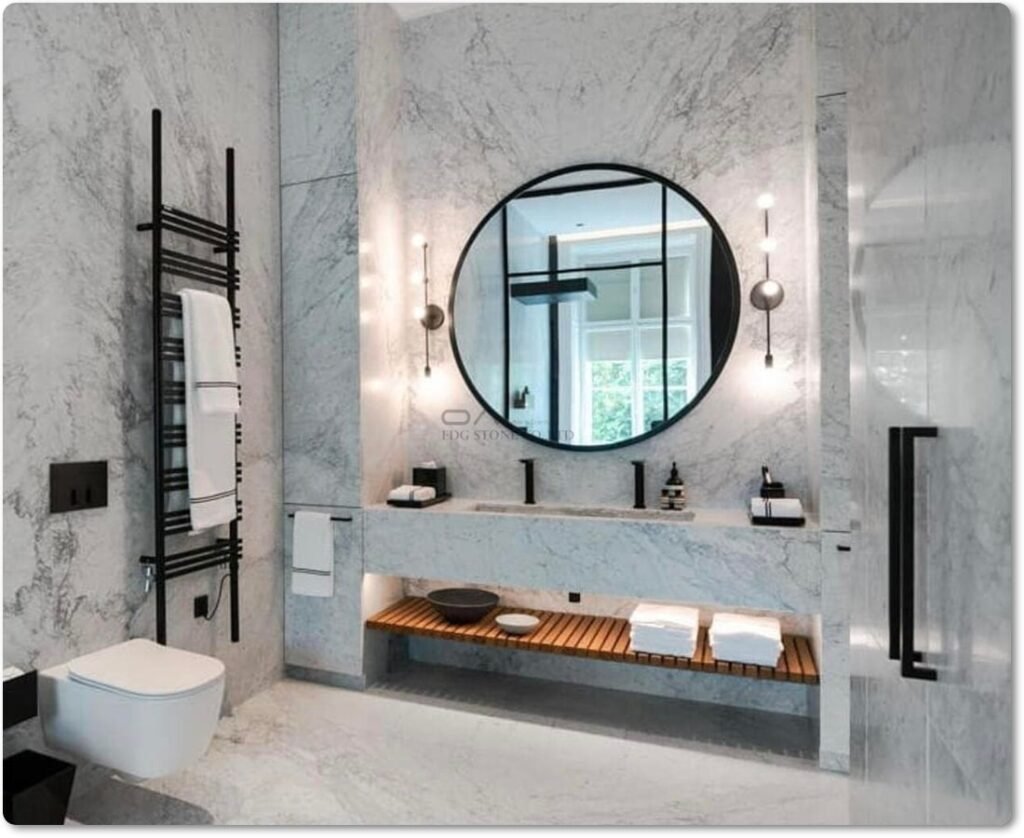
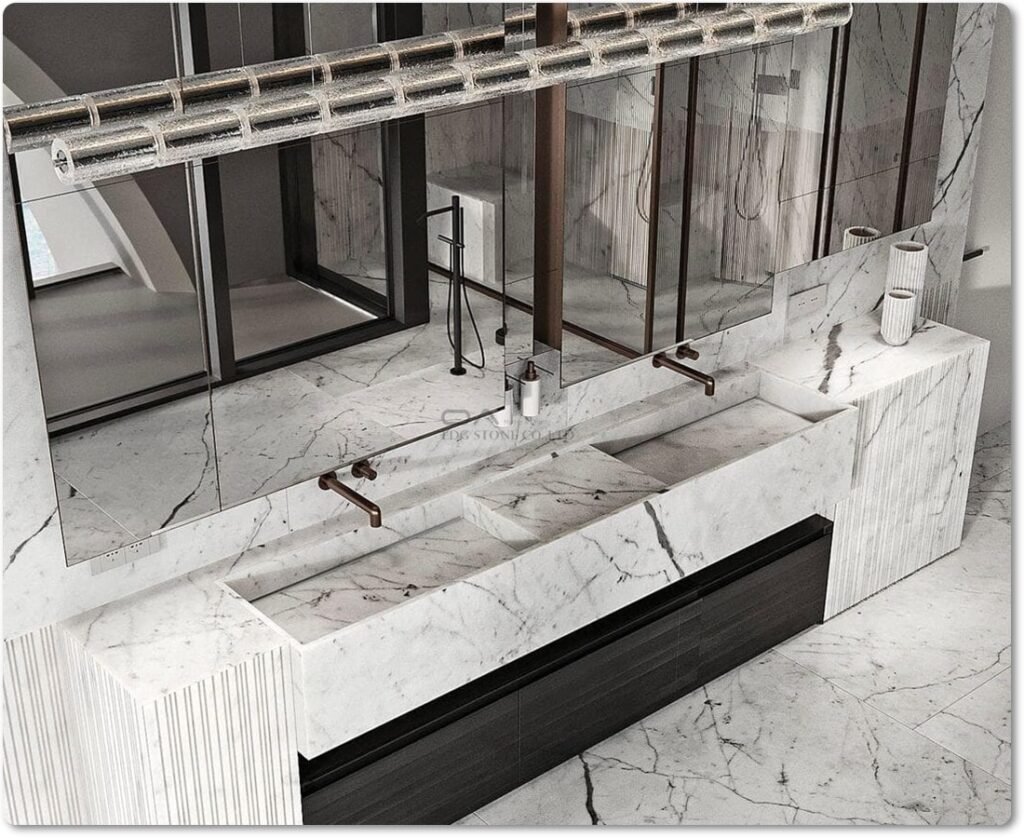
Bathrooms are one of the most popular applications for Carrara marble slabs. Vanity tops, shower walls, tub surrounds, and feature panels all benefit from the stone’s refined appearance. Because bathrooms often use softer lighting and controlled traffic, Carrara’s subtle veining performs especially well.
Hotel and Hospitality Interiors
Carrara marble has long been associated with luxury hospitality. It is frequently used in hotel lobbies, suite bathrooms, spa areas, concierge desks, and lounge features. The material communicates elegance without becoming visually overwhelming, which is ideal for spaces that need to feel polished and inviting.
Retail and Showroom Design
In retail environments, Carrara marble slabs can enhance brand perception. They are often used for cash wraps, display plinths, wall features, and luxury merchandising zones. The stone helps signal quality and craftsmanship, especially in fashion, beauty, jewelry, and lifestyle retail.
Commercial Reception and Office Spaces
Corporate reception desks, boardroom tables, wall cladding, and executive lounges often use Carrara marble to create a refined first impression. Its understated movement works well in professional settings where the goal is prestige rather than ornament.
Fireplace Surrounds and Feature Walls
Carrara marble is also used as a decorative architectural surface for fireplace surrounds, feature walls, and vertical cladding. These applications allow the stone’s natural movement to become a design element.
Carrara vs Other White Marble Options
Carrara is often compared with other white marble options, especially Calacatta and Statuario. The right choice depends on the visual goal, project budget, and desired level of pattern contrast.
Carrara vs Calacatta
Carrara marble usually has a softer background and finer veining. Calacatta often features a brighter white base with bolder, more dramatic veins. As a result, Calacatta tends to feel more striking and luxurious, while Carrara feels more subtle and versatile.
For large commercial orders, Carrara may offer a more forgiving visual rhythm. For statement spaces, Calacatta may deliver a stronger impact.
Carrara vs Statuario
Statuario marble is often associated with a brighter white field and more pronounced dramatic veining. It is frequently viewed as more exclusive and visually intense. Carrara is generally calmer and easier to integrate into broader design schemes.
Carrara vs Engineered White Surfaces
Carrara marble should also be considered against engineered alternatives such as quartz. Quartz may offer greater stain resistance and lower maintenance, while Carrara offers natural depth and authenticity. For premium projects, the choice often comes down to whether the priority is natural elegance or performance simplicity.
Procurement Takeaway
Carrara is a strong option when the project needs natural marble character without excessive visual drama. It is often the best choice for projects that want an elevated, classic, internationally recognized stone with broad design compatibility.
Fabrication and Installation Considerations
The beauty of Carrara marble slabs depends heavily on how they are fabricated and installed. Even a high-quality slab can underperform if the processing is weak or the installation details are ignored.
Thickness and Slab Dimensions
Before ordering, confirm slab thickness, usable dimensions, and tolerance ranges. Common commercial decisions include whether the project requires standard slab thickness, bookmatching, or reinforced fabrication. For large countertops or wall panels, dimensional consistency is critical.
Surface Finish and Edge Detail
The chosen finish influences both appearance and handling. Polished surfaces show more gloss and contrast. Honed surfaces hide glare and create a softer finish. Edge profiles should be selected according to the project style and use case.
For premium interiors, sharp modern edges may suit contemporary design. More traditional profiles may be better for classic spaces.
Sealing and Maintenance Planning
Carrara marble is a natural stone and should be specified with realistic care expectations. Buyers should confirm sealing requirements, cleaning recommendations, and maintenance responsibilities before installation. In kitchen and hospitality settings, maintenance planning is especially important.
Substrate and Support
Marble should be installed on appropriate substrates with proper support. Large slabs may require reinforcement, especially in vertical cladding, long countertop spans, or areas exposed to vibration or movement. Contractors should verify adhesive compatibility, leveling requirements, and expansion considerations.
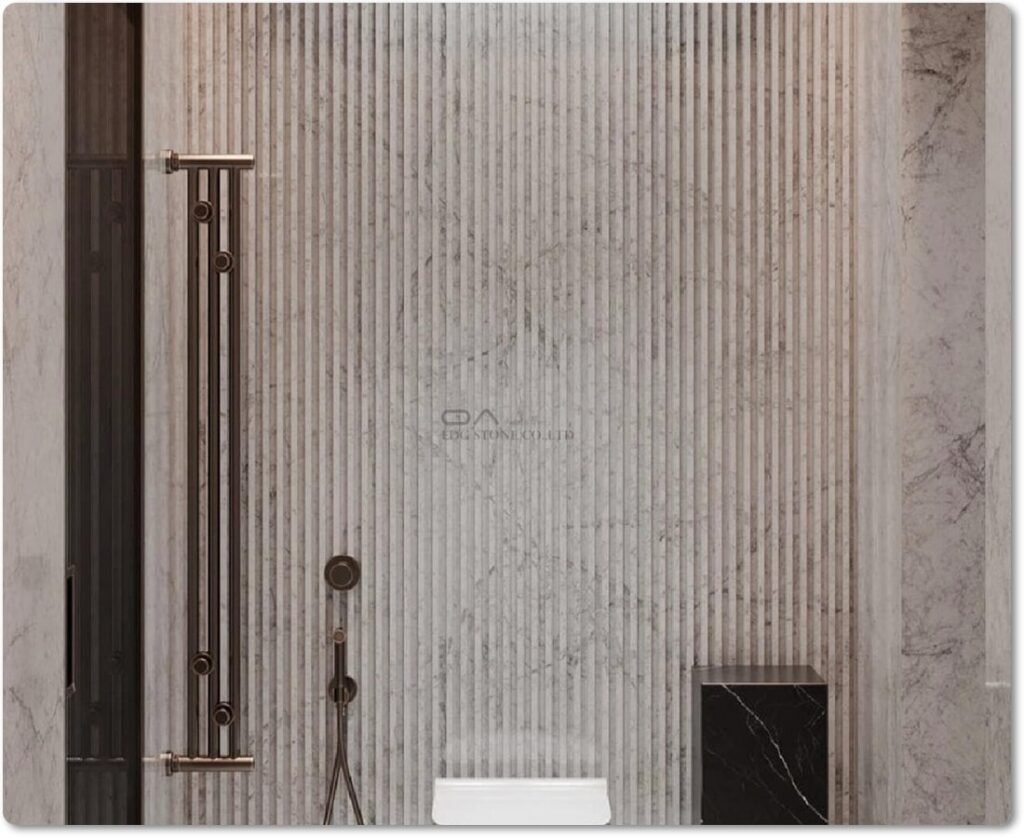
Bookmatching and Vein Flow
When used in feature walls, shower panels, or large statement surfaces, bookmatching can create a dramatic visual effect. But bookmatching only works if the supplier has selected slabs with compatible veining and orientation. Buyers should approve layout drawings before fabrication begins.
Shipping and Handling
Carrara marble slabs require careful packaging, crating, and loading. Damage in transit can create costly delays. Commercial buyers should request photos of packaging, container loading, and pallet protection before shipment.
Supplier Evaluation Checklist
Choosing the right supplier is just as important as choosing the stone itself. A strong supplier reduces risk, improves consistency, and protects project deadlines.
What to Ask Before Ordering?
Ask whether the slabs come from a single block or multiple batches. Ask for slab photos under natural light and ask whether the images show the exact pieces you will receive. Ask about finish type, thickness tolerance, reinforcement options, and available dimensions.
Also, ask whether the supplier can support project-level matching for larger orders. For many commercial installations, this is more important than a low unit price.
Quality Control Questions
Request details on inspection standards, surface defect tolerance, crack screening, resin treatment, fill usage, and color grading. A good supplier should be able to explain how they reject or classify slabs that do not meet commercial standards.
Documentation and Export Readiness
For importers, documentation matters. Confirm that the supplier can provide a commercial invoice, packing list, customs documentation, and product specifications. If the project is cross-border, the ability to manage export paperwork efficiently can reduce delays and avoid costly confusion.
Production and Lead Time
Ask about stock availability versus made-to-order processing. In fast-moving projects, lead time can matter as much as price. The best suppliers are transparent about production schedules, loading windows, and seasonal capacity.
Packaging Standards
A reliable supplier should use export-grade packaging, stable crating, corner protection, and moisture control where needed. Ask for photos or videos of how slabs are secured before departure.
Communication Quality
Supplier responsiveness is a procurement factor, not just a service detail. Fast, clear, and technical communication often signals better internal control and fewer surprises later in the project.
Practical Procurement Standards for Commercial Buyers
Carrara marble procurement should be guided by project performance, not just aesthetic preference. The following standards help buyers make stronger decisions.
Match the Stone to the Use
Not every Carrara slab is suitable for every application. A visually beautiful slab may still be unsuitable for a high-traffic or heavily used environment. Buyers should align stone selection with traffic level, cleaning frequency, and client expectations.
Approve Samples and Slab Photos Early
Sampling reduces uncertainty. However, small samples do not fully represent the character of an entire slab set. Always combine sample approval with actual slab photos before final confirmation.
Define Acceptable Variation
Natural stone will vary. The key is to define what variation is acceptable for the project. Set expectations in advance regarding background color, veining density, and visible natural features.
Use Project-Specific Quality Notes
For commercial work, include project-specific notes in the purchase order. These might cover finish, thickness, edge treatment, bookmatching, inspection criteria, and packing requirements. Clear specifications reduce dispute risk.
Consider Total Project Value, Not Just Stone Price
The lowest slab price is not always the best procurement choice. Shipping damage, fabrication waste, visual mismatch, and schedule delays can be more expensive than a slightly higher-grade supply option. Good procurement is about delivered value.
Conclusion
Carrara marble slabs remain one of the most dependable natural stone choices for commercial interiors, luxury homes, and premium architectural projects. Their enduring appeal comes from a refined visual balance: soft white background, elegant veining, and broad compatibility with many design styles.
For contractors, designers, and importers, the key to successful Carrara procurement is not only choosing beautiful stone, but also controlling the details that affect the final result. Background consistency, vein direction, slab matching, finish selection, fabrication quality, packaging, and supplier communication all influence project performance.
When sourced carefully and installed correctly, Carrara marble delivers a classic look that feels both timeless and commercially valuable.
FAQ
Is Carrara marble suitable for kitchens?
Yes, Carrara marble can be used in kitchens, especially in premium residential and design-focused spaces. It offers a luxurious look, but buyers should understand that natural marble requires sealing, careful cleaning, and realistic maintenance expectations.
How does Carrara compare with Calacatta?
Carrara is usually softer and more understated, with finer veining and a calmer overall appearance. Calacatta tends to have a brighter white background and bolder veining, creating a more dramatic luxury effect.
What should buyers ask before ordering Carrara slabs?
Buyers should ask about batch consistency, slab photos, thickness, finish, veining direction, reinforcement, packaging, lead time, and export documentation. It is also important to confirm whether the slabs are suitable for the intended application.
References
ASTM C503/C503M, Standard Specification for Marble Dimension Stone.
Natural Stone Institute, marble care, fabrication, and installation resources.