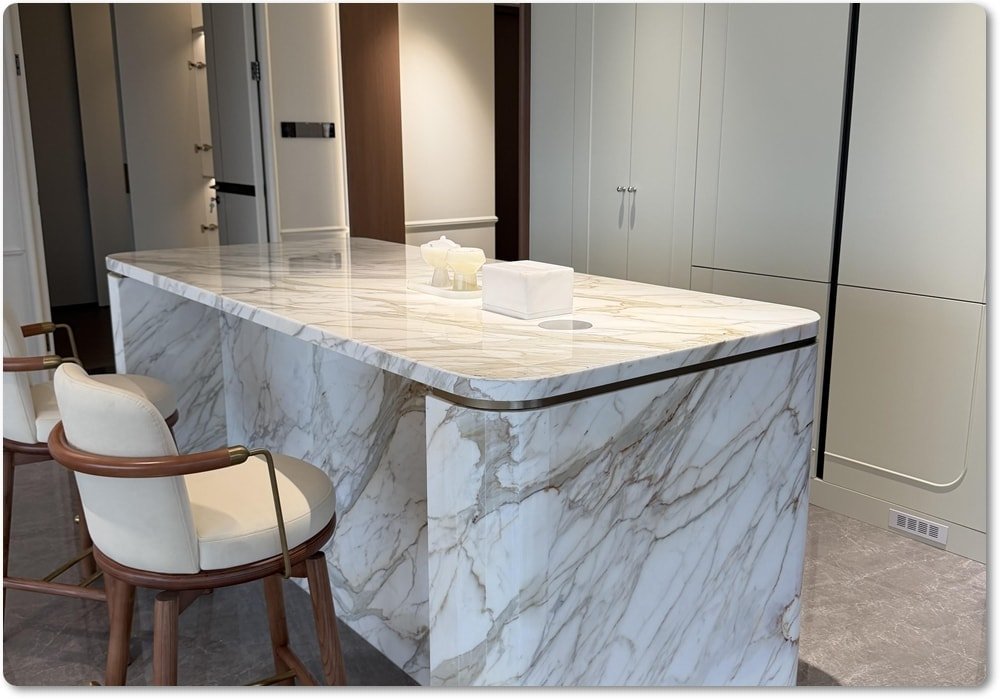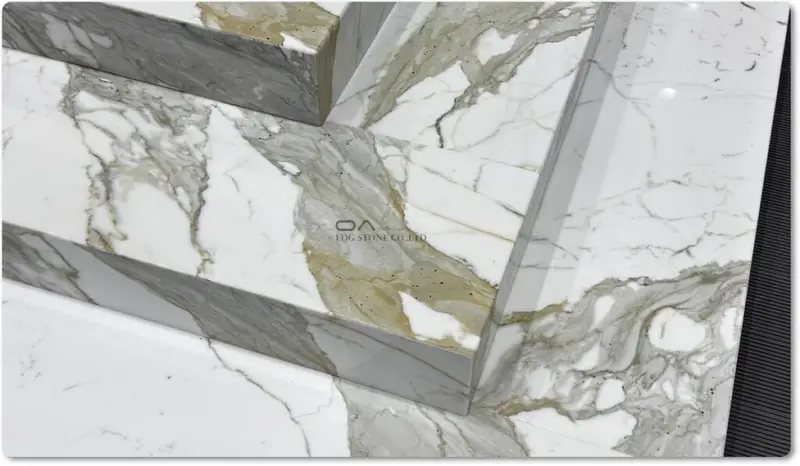
Outdoor living spaces have become one of the most valuable extensions of modern architecture. From luxury residential patios to hotel courtyards and resort pool decks, natural stone remains a preferred material for designers seeking timeless elegance and long-term property value. Among all premium surface materials, marble paving slabs and marble patio slabs continue to stand out for their sophisticated appearance, natural veining, and architectural versatility.
While marble is traditionally associated with interiors, advancements in quarry selection, surface finishing, sealing technologies, and fabrication standards now make exterior marble applications increasingly practical. High-end landscape architects, commercial developers, and hospitality designers are integrating marble into outdoor environments where aesthetics, durability, and luxury branding are equally important.
This guide explains how marble performs outdoors, which finishes work best, how to prevent common failures, and how professional suppliers like EDG Stone support global exterior stone projects.
Why Marble Remains Popular for Exterior Design?
Natural marble offers unique visual depth that engineered materials struggle to replicate. Every slab contains naturally occurring veining, mineral variation, and tonal movement that create a one-of-a-kind appearance.
For exterior projects, marble is commonly used in:
- Patio flooring
- Garden paving
- Pool surrounds
- Walkways
- Courtyard paving
- Rooftop terraces
- Hotel landscape zones
- Luxury villa entrances
- Outdoor entertainment areas
Modern designers increasingly combine marble with:
- Wood decking
- Architectural concrete
- Glass fencing
- Water features
- Outdoor kitchens
- Metal landscape accents
- Minimalist planting schemes
The result is a refined outdoor environment that blends natural texture with contemporary architecture.
Can Marble Be Used Outdoors?
Yes, marble can be used outdoors successfully when the correct stone type, finish, thickness, installation method, and climate considerations are properly evaluated.
Not all marble performs equally in exterior conditions. Outdoor marble must withstand:
- UV exposure
- Rainwater penetration
- Temperature fluctuation
- Freeze-thaw cycles
- Surface abrasion
- Chemical exposure
- Moisture migration
- Biological growth
Dense marbles with low absorption rates generally perform better outdoors than softer or more highly porous varieties.
Popular outdoor marble choices include:
- White marble
- Beige marble
- Grey marble
- Silver travertine-style marble
- Light limestone-look marble
- Honed marble finishes
- Sandblasted marble surfaces
Commercial-grade exterior marble typically undergoes:
- Water absorption testing
- Compressive strength testing
- Flexural strength testing
- Abrasion resistance evaluation
- Slip resistance certification
Professional stone suppliers assess climate compatibility before recommending exterior materials.
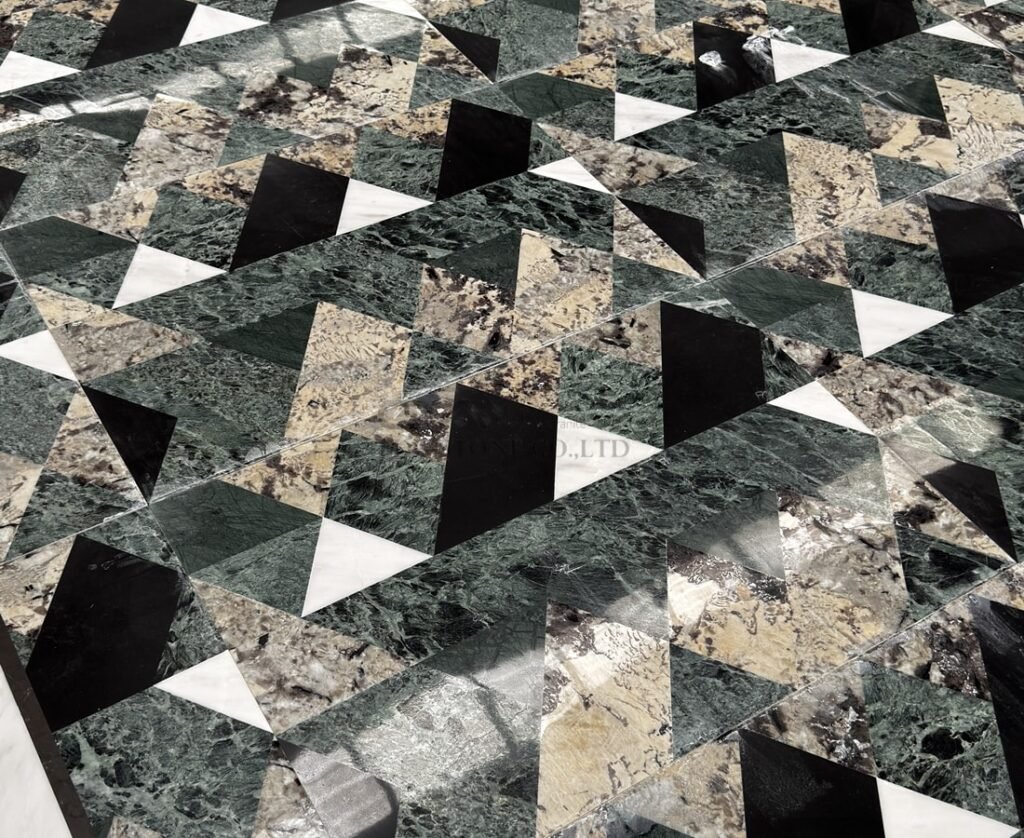
Freeze-Thaw Performance
One of the most critical technical factors in outdoor stone selection is freeze-thaw resistance.
What Is Freeze-Thaw Damage?
Freeze-thaw damage occurs when moisture enters microscopic pores inside the stone. During cold weather, trapped water freezes and expands. Repeated expansion and contraction eventually create:
- Surface cracking
- Edge spalling
- Delamination
- Structural weakening
- Surface flaking
This issue is particularly important in regions with cold winters, such as:
- Canada
- Northern United States
- Northern Europe
- UK high-moisture climates
- Alpine regions
How Marble Handles Freeze-Thaw Cycles?
High-density marble with low porosity performs significantly better outdoors.
Performance depends on:
- Mineral composition
- Quarry density
- Water absorption rate
- Installation drainage
- Surface finish
- Sealant quality
Exterior marble systems should include:
- Proper drainage slopes
- Waterproof setting beds
- Expansion joints
- Frost-resistant adhesives
- High-performance sealers
Recommended Thickness
For exterior paving applications, common thicknesses include:
- 20mm marble paving slabs
- 30mm heavy-duty landscape slabs
- Reinforced stone systems for commercial spaces
Thicker slabs improve structural stability and reduce cracking risks.
Slip Resistance Standards
Safety is essential for outdoor paving systems, especially around water features and swimming pools.
Why Slip Resistance Matters?
Polished marble becomes slippery when wet. Therefore, polished finishes are generally unsuitable for exterior walking surfaces.
Slip resistance testing evaluates traction performance under wet and dry conditions.
Common standards include:
- DIN 51130
- ANSI A326.3
- Pendulum Test Value (PTV)
- R-ratings for anti-slip performance
Recommended Outdoor Slip Ratings
For exterior marble paving:
- Residential patios: Moderate slip resistance
- Commercial walkways: Higher slip resistance
- Pool decks: Maximum wet-area traction
Designers often specify textured finishes to improve safety.
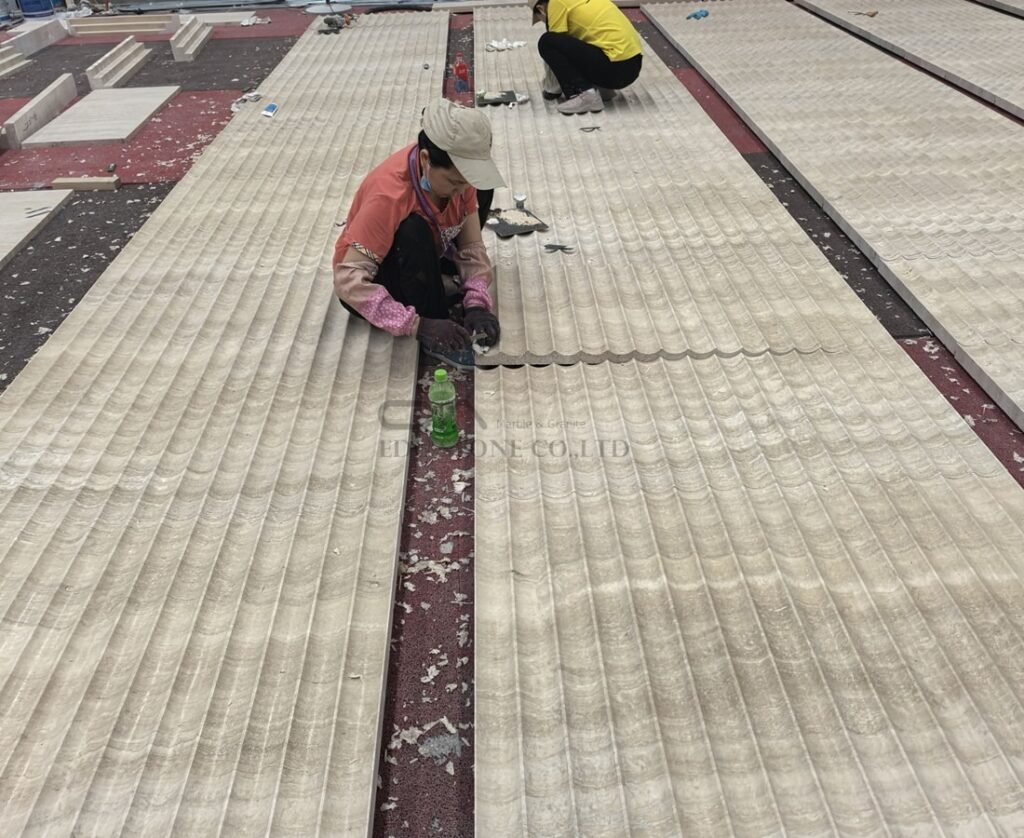
Surface Finish Recommendations
Surface finish dramatically affects both performance and appearance.
Honed Marble
Honed marble offers:
- Matte appearance
- Lower glare
- Better traction than polished surfaces
- Contemporary luxury aesthetics
Suitable for:
- Patios
- Courtyards
- Rooftop terraces
Sandblasted Marble
Sandblasted finishes create textured surfaces with improved grip.
Advantages include:
- Enhanced slip resistance
- Reduced visibility of scratches
- Better weathering performance
Ideal for:
- Public walkways
- Commercial paving
- Wet outdoor areas
Brushed Marble
Brushed finishes create a softer textured feel while maintaining natural stone elegance.
Popular in:
- Mediterranean-style landscaping
- Resort developments
- Outdoor lounge spaces
Leathered Marble
Leathered finishes provide subtle texture with rich visual depth.
Benefits include:
- Improved grip
- Luxurious appearance
- Reduced fingerprint visibility
- Better outdoor practicality
Pool Deck Applications
Marble patio slabs are increasingly used around luxury swimming pools because of their premium visual appeal and thermal comfort.
Why Marble Works for Pool Decks?
Certain light-colored marbles remain cooler under direct sunlight compared to darker stone materials.
Advantages include:
- Comfortable barefoot walking
- Elegant resort-style appearance
- Natural cooling properties
- High-end architectural value
Important Pool Deck Considerations
Pool environments expose stone to:
- Chlorinated water
- Saltwater systems
- Constant moisture
- UV radiation
- Chemical cleaners
Professional pool deck installations require:
- Anti-slip finishes
- Proper drainage slopes
- UV-resistant sealers
- Expansion joints
- Correct substrate engineering
Best Marble Colors for Pool Areas
Popular pool deck tones include:
- White marble
- Cream marble
- Beige marble
- Light grey marble
- Soft silver marble
Lighter tones help reduce heat absorption.
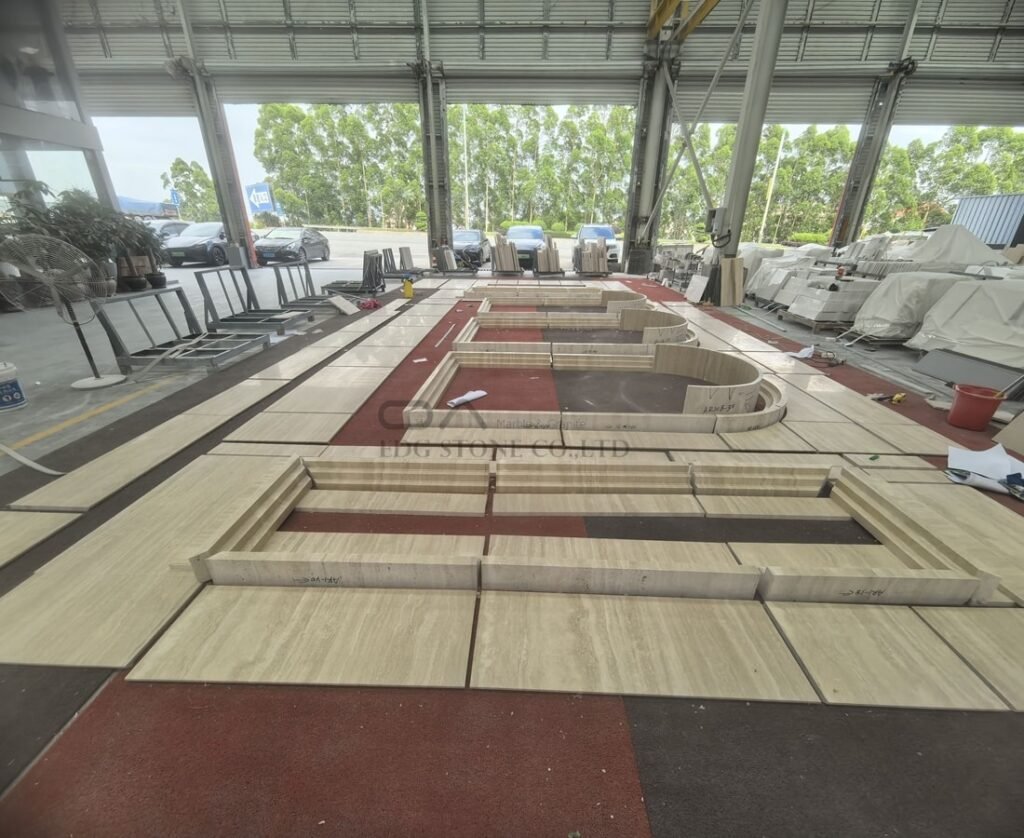
Luxury Landscape Design Trends
Outdoor marble applications continue to evolve with modern architectural trends.
Seamless Indoor-Outdoor Transitions
Large-format marble paving slabs help create visual continuity between indoor and outdoor spaces.
Popular design approaches include:
- Matching interior flooring with patio surfaces
- Flush threshold transitions
- Open-plan garden integration
- Full-height sliding glass systems
Bookmatched Exterior Features
Luxury villas increasingly use bookmatched marble for:
- Garden feature walls
- Outdoor fireplaces
- Waterfall backdrops
- Entrance focal points
Minimalist Landscape Design
Contemporary landscape architecture favors:
- Large-format paving
- Neutral color palettes
- Linear geometry
- Hidden drainage systems
- Minimal grout lines
Marble complements these aesthetics exceptionally well.
Sustainable Natural Material Trends
Natural stone aligns with sustainable architecture initiatives because it offers:
- Long lifecycle performance
- Low VOC emissions
- Recyclability
- Reduced synthetic material usage
- Timeless durability
Many developers now prioritize natural materials in luxury hospitality and residential projects.
Exterior Marble Maintenance
Proper maintenance significantly extends the outdoor marble lifespan.
Routine Maintenance
Recommended maintenance includes:
- Regular sweeping
- Gentle washing with pH-neutral cleaners
- Immediate stain removal
- Seasonal sealing
- Inspection of grout and joints
Avoid:
- Acidic cleaners
- Bleach-based chemicals
- High-pressure damage
- Abrasive cleaning pads
Sealing Requirements
Exterior marble should typically be sealed every:
- 1–3 years for residential spaces
- More frequently for heavy commercial traffic
Sealants help reduce:
- Water penetration
- Staining
- Biological growth
- Surface deterioration
Winter Maintenance
In cold climates:
- Avoid rock salt where possible
- Use stone-safe deicers
- Remove standing snow accumulation
- Maintain drainage systems
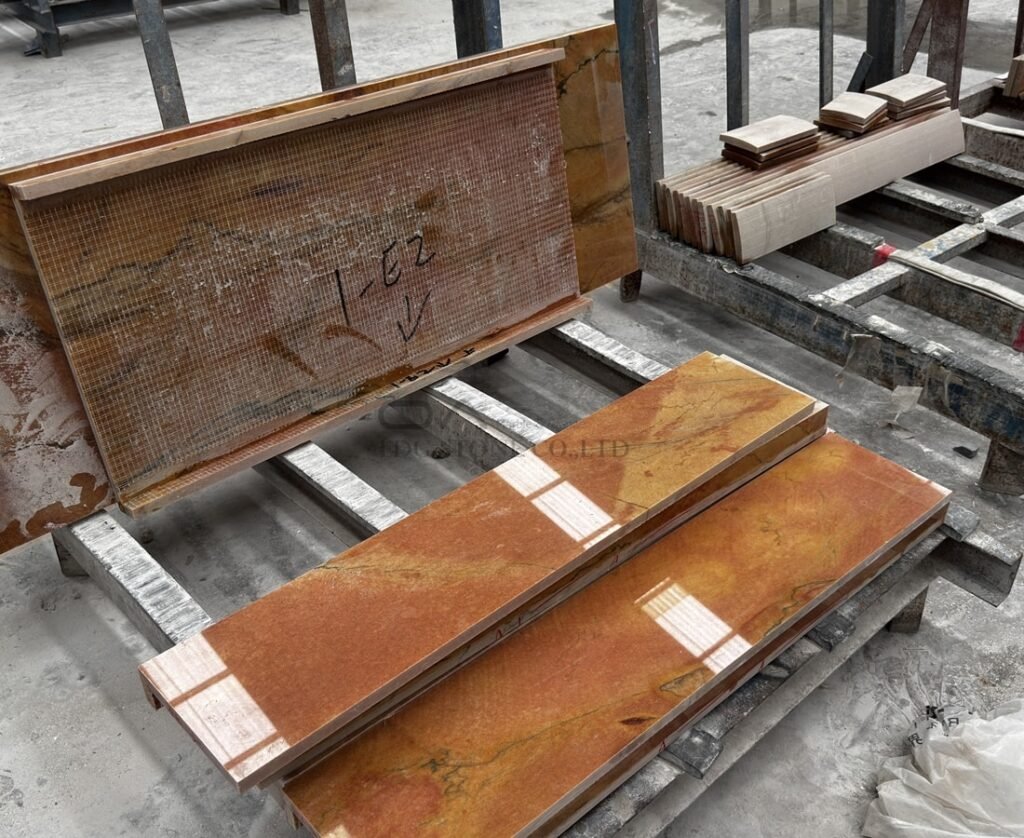
Common Outdoor Marble Failures
Most exterior marble failures result from installation mistakes rather than the stone itself.
Water Infiltration
Poor drainage allows water accumulation beneath slabs, leading to:
- Freeze-thaw cracking
- Efflorescence
- Adhesive breakdown
Incorrect Adhesives
Standard interior adhesives often fail outdoors.
Exterior paving requires:
- Flexible adhesives
- Frost-resistant systems
- Exterior-rated mortar beds
Using Polished Marble Outdoors
Highly polished marble may become dangerously slippery and visually uneven due to weathering.
Inadequate Expansion Joints
Temperature fluctuation causes natural expansion and contraction.
Without movement joints, slabs may:
- Crack
- Tent upward
- Separate at edges
Low-Density Marble Selection
Soft or highly porous marble varieties may absorb excessive moisture and deteriorate rapidly in harsh climates.
Professional suppliers help prevent these issues through proper stone selection and technical consultation.
EDG Stone Factory Exterior Marble Solutions
EDG Stone supplies professional-grade marble paving slabs and marble patio slabs for global residential and commercial projects.
Material Selection Support
EDG Stone assists buyers in selecting suitable exterior marble based on:
- Climate conditions
- Project type
- Slip resistance requirements
- Thickness specifications
- Installation environment
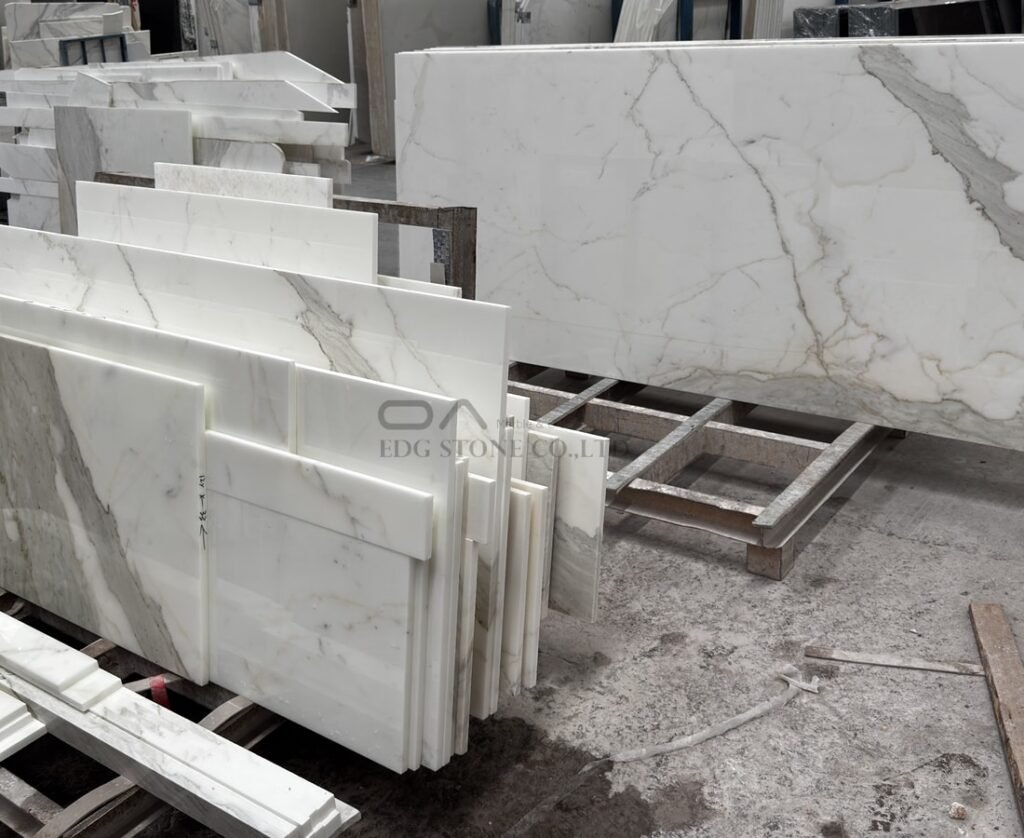
Large-Format Marble Fabrication
Available customization includes:
- Cut-to-size paving systems
- Coping stones
- Pool edge fabrication
- Stair treads
- Custom landscape elements
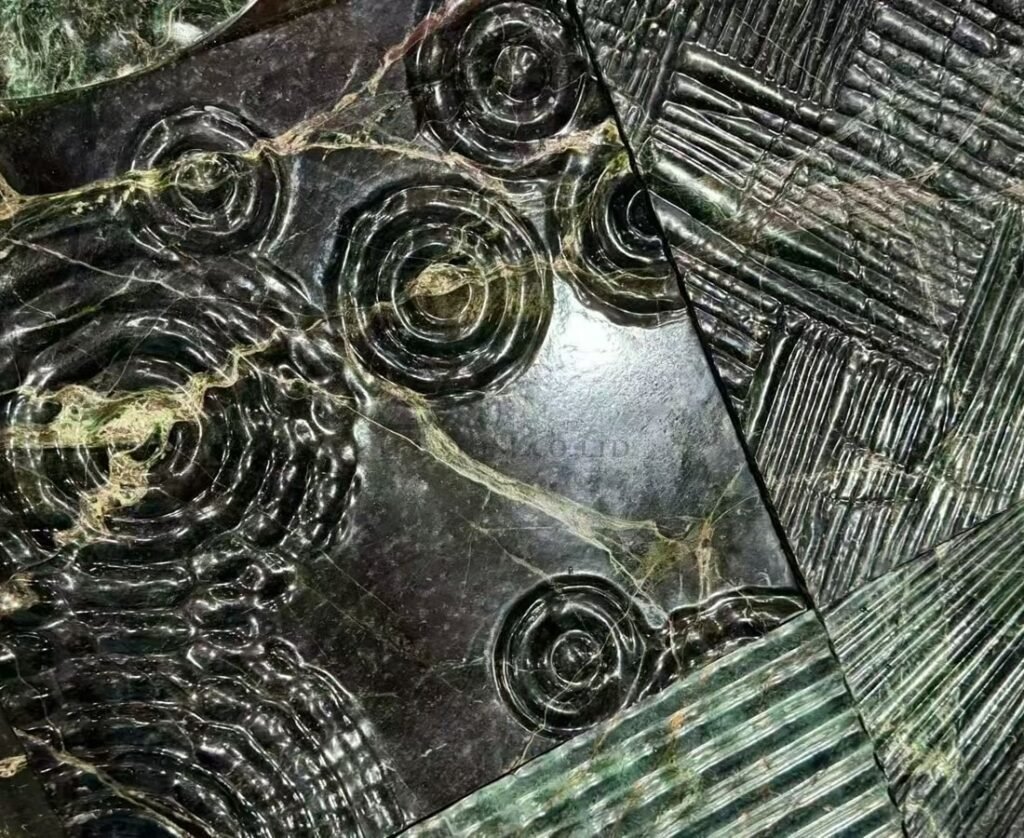
Surface Finish Options
EDG Stone provides multiple exterior finishes, including:
- Honed
- Sandblasted
- Brushed
- Leathered
- Antique-textured finishes
Global Export Capability
EDG Stone supports international projects through:
- Container consolidation
- Export-grade packaging
- QC inspection systems
- Moisture protection packaging
- Slab matching services
Commercial Project Experience
Applications include:
- Luxury villas
- Hotels
- Resorts
- Public plazas
- Rooftop terraces
- High-end residential developments
The company works with architects, contractors, distributors, and developers worldwide.
How to Choose the Right Marble Paving Slabs?
Selecting the right marble involves balancing aesthetics with engineering performance.
Consider Climate First
Cold regions require:
- Dense marble
- Low water absorption
- Frost-resistant installation systems
Hot climates prioritize:
- Heat reflectivity
- UV stability
- Surface comfort
Evaluate Traffic Levels
Commercial projects require:
- Higher abrasion resistance
- Thicker slabs
- Stronger structural systems
Residential patios may allow more design flexibility.
Match Finish to Function
- Pool decks → textured finishes
- Courtyards → honed finishes
- Walkways → anti-slip surfaces
- Decorative gardens → aesthetic-focused options
Request Technical Data
Professional suppliers should provide:
- Water absorption data
- Flexural strength reports
- Slip resistance information
- Density specifications
- Finish recommendations
Marble vs Other Outdoor Paving Materials
Marble vs Porcelain Pavers
Marble Advantages
- Natural veining
- Premium appearance
- Unique patterns
- Higher luxury perception
Porcelain Advantages
- Lower maintenance
- Uniform appearance
- Higher stain resistance
Marble vs Granite
Marble Advantages
- Softer visual texture
- Elegant aesthetics
- Luxury architectural appeal
Granite Advantages
- Higher hardness
- Greater scratch resistance
- Lower porosity
Marble vs Concrete Pavers
Marble Advantages
- Natural beauty
- Long-term luxury value
- Architectural prestige
Concrete Advantages
- Lower initial cost
- Easier replacement
- Broad color availability
Conclusion
Marble paving slabs and marble patio slabs continue to define luxury outdoor architecture across residential, hospitality, and commercial projects worldwide. When properly selected, fabricated, installed, and maintained, exterior marble can deliver exceptional long-term performance while creating visually stunning outdoor environments.
Successful outdoor marble applications depend on:
- Climate-appropriate material selection
- Proper slip-resistant finishes
- Professional installation systems
- Effective drainage engineering
- Routine maintenance practices
From elegant patios to premium pool decks and sophisticated landscape designs, marble remains one of the most desirable natural materials for exterior architecture.
EDG Stone helps global buyers source high-quality exterior marble solutions with customized fabrication, professional QC systems, and export-ready supply capabilities for modern outdoor projects.
FAQ
Is marble suitable for outdoor patios?
Yes. Dense marble with proper surface finishing and professional installation can perform very well outdoors.
Are marble patio slabs slippery?
Polished marble can be slippery when wet. Honed, brushed, or sandblasted finishes are safer for exterior use.
Can marble survive freezing temperatures?
Certain dense marble varieties can withstand freeze-thaw cycles when installed with proper drainage and waterproofing systems.
What finish is best for outdoor marble paving?
Honed, brushed, leathered, and sandblasted finishes are commonly recommended for exterior paving applications.
Does marble get hot in the sun?
Light-colored marble generally stays cooler than darker stone materials, making it suitable for pool decks and patios.
How often should outdoor marble be sealed?
Most exterior marble surfaces should be resealed every 1–3 years, depending on climate and usage conditions.
What causes outdoor marble to crack?
Common causes include poor drainage, freeze-thaw damage, inadequate expansion joints, and incorrect installation systems.
Is marble better than porcelain for patios?
Marble offers superior natural beauty and luxury appeal, while porcelain generally requires less maintenance.
References
- Natural Stone Institute — Exterior Stone Design Guidelines
- Marble Institute of America — Dimension Stone Design Manual
- ASTM International — Natural Stone Testing Standards
- ANSI A326.3 — Slip Resistance Standard
- European Committee for Standardization — Freeze-Thaw Testing for Natural Stone
- Construction Specifier Magazine — Outdoor Stone Installation Best Practices
- Journal of Architectural Engineering — Natural Stone Weathering Studies
- Landscape Architecture Magazine — Luxury Outdoor Material Trends
- International Surface Event — Exterior Stone Performance Reports
- Building Stone Magazine — Commercial Stone Installation Case Studies