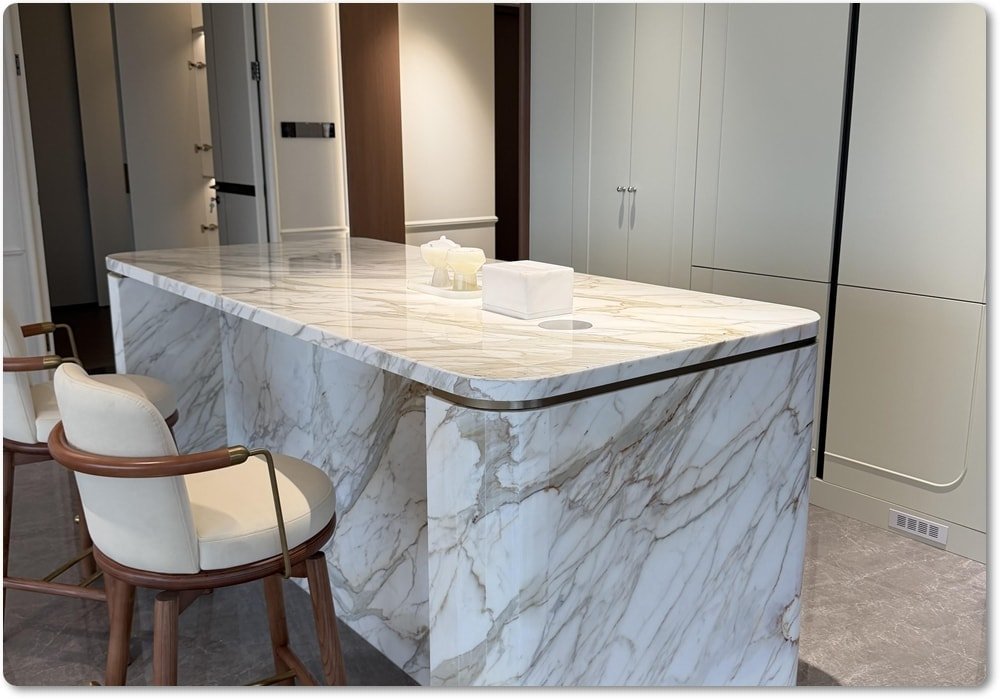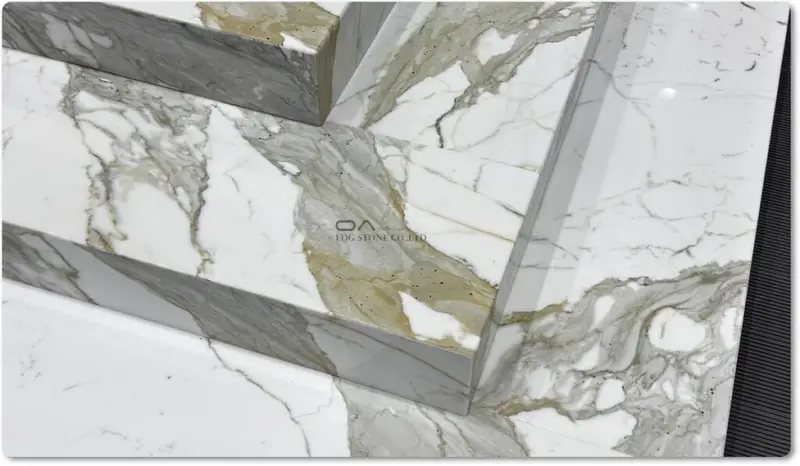
Calacatta marble slabs are one of the most recognized materials in luxury interior design because they combine visual prestige, strong architectural presence, and a high degree of exclusivity. For developers, architects, fabricators, and procurement teams, the challenge is not simply finding beautiful stone. The real task is selecting Calacatta marble slabs that deliver consistent aesthetics, sufficient slab size, manageable waste, and reliable project performance.
In premium residential and hospitality projects, Calacatta marble is rarely chosen as a commodity material. It is selected as a design statement. That means every procurement decision affects the final result: the background tone, the veining intensity, the bookmatch effect, the slab dimensions, the cut-to-fit yield, and the risk of color variation across a large installation. A good procurement strategy protects both the visual concept and the budget.
This whitepaper explains how to evaluate Calacatta marble slabs for luxury projects, how to control risk during sourcing, and how to align material selection with design intent, fabrication efficiency, and long-term project execution.
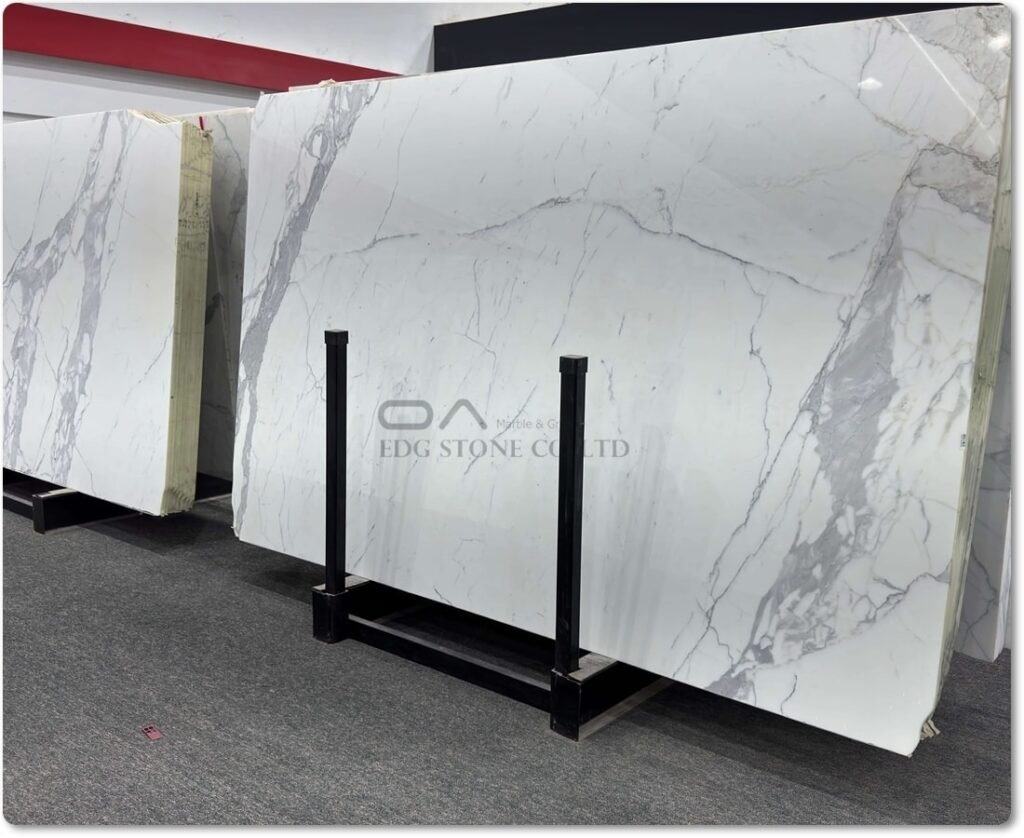
Why Calacatta Marble Commands Premium Pricing?
Calacatta marble commands premium pricing because it sits at the intersection of rarity, appearance, and demand. Unlike standard white marble, Calacatta is typically associated with a cleaner white background, bold, dramatic veining, and a refined luxury identity. That visual profile makes it highly desirable in projects where the stone itself is expected to function as a focal design element.
Several factors influence the price of Calacatta marble slabs. First is geological rarity. Not every quarry produces true Calacatta-style stone, and even within the same quarry, block quality can vary significantly. Second is slab selection. Luxury buyers usually require large-format slabs with attractive, consistent veining and minimal structural defects. Third is processing quality. High-grade polishing, resin treatment, reinforcement, and careful grading all add to cost but also improve usability and appearance.
For procurement teams, premium pricing should always be evaluated against final value. A lower-priced slab may appear attractive at the purchasing stage, but if it results in excessive waste, weak bookmatching, or uneven coloration, the actual project cost rises quickly. In luxury work, the cheapest marble is often the most expensive material by the end of the job. Calacatta marble slabs are priced not only for what they are but also for the risk they eliminate when used in high-visibility spaces.

Natural Vein Distribution
Vein distribution is one of the most important selection criteria for Calacatta marble slabs. Because marble is a natural stone, no two slabs are identical. The vein structure, line thickness, direction, density, and contrast all influence how the final installation will read visually. In luxury projects, vein distribution is usually more important than simple color.
Calacatta marble slabs may show soft linear veining, bold sweeping movement, or dramatic directional patterns that create a sculptural effect across walls, floors, and counters. Some projects call for highly expressive slabs with strong movement. Others require calmer slabs with elegant, evenly spaced lines. The key is matching the vein pattern to the design language of the space.
Procurement teams should review each block or slab set for the following characteristics:
The background tone should be checked for consistency across the slab pack.
The vein direction should be understood before cutting begins, especially for feature walls and large islands.
The contrast between background and vein should match the intended design level, from subtle sophistication to dramatic luxury.
The frequency of natural imperfections should be assessed, including fissures, soft spots, and mineral inclusions.
For projects with multiple zones, it is wise to sort slabs into visual families before fabrication. A staircase wall, bathroom vanity, and fireplace surround may all use Calacatta marble, but they may require different vein densities to achieve the desired effect. Good slab selection begins with visual planning, not after the material arrives at the site.
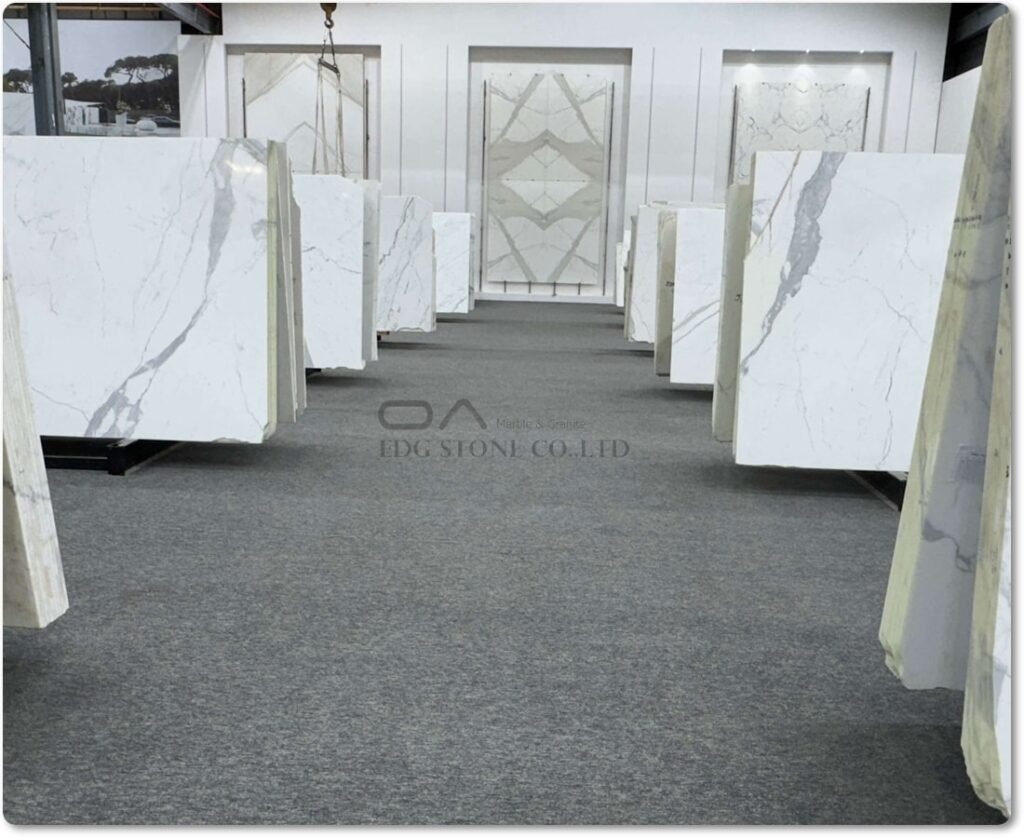
Bookmatch Feature Wall Systems
Bookmatch installation is one of the most powerful uses of Calacatta marble slabs in luxury architecture. When two adjacent slabs are cut and opened like the pages of a book, the mirrored veining creates a dramatic symmetrical pattern. This effect is widely used in hotel lobbies, penthouse living rooms, spa spaces, and luxury bathrooms because it turns stone into a centerpiece.
Bookmatch systems require careful procurement. Not every slab pack is suitable. The stone must have a strong directional vein structure, sufficient thickness consistency, and enough matching material to create paired panels with minimal visual interruption. If the slab sequence is poorly managed, the symmetry will break and the entire wall can lose its impact.
For bookmatch applications, procurement teams should ask a few critical questions. Are the slabs from the same block or visual batch? Can the supplier provide paired pieces with matching grain direction? Is the slab size large enough to allow the intended architectural rhythm? Will seams fall in a visually acceptable position?
In high-end projects, bookmatch stone is not just decorative. It supports the architecture of the room. A properly executed bookmatch wall can create depth, motion, and luxury at once. That is why the source selection, cutting sequence, and layout drawing must be coordinated before fabrication starts. With Calacatta marble slabs, bookmatch success is decided long before installation.
Slab Size Optimization
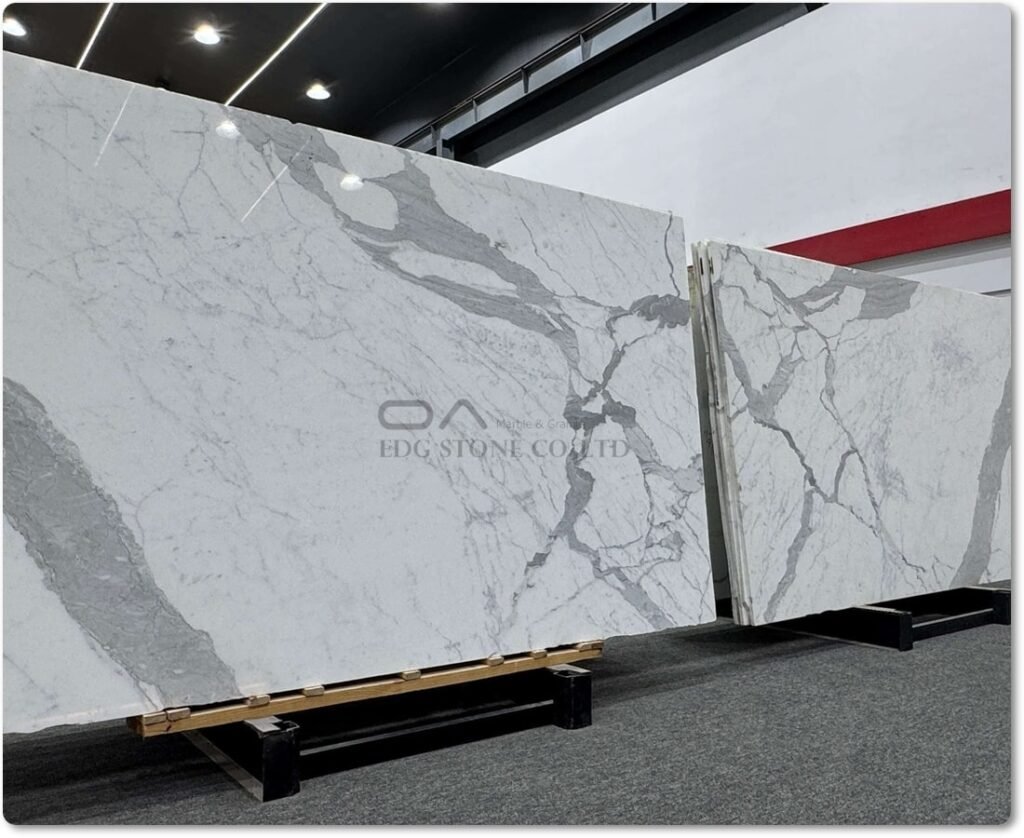
Slab size optimization is a major factor in both appearance and project economics. Luxury projects often involve large countertops, oversized islands, full-height feature walls, shower surrounds, and custom reception desks. The wrong slab dimensions can increase seams, reduce pattern continuity, and create expensive waste.
Calacatta marble slabs are typically procured with final fabrication in mind. That means the team should not only consider square footage, but also the actual cut plan. A slab that looks large on paper may still be inefficient if the vein direction forces difficult cuts or if the usable area is reduced by natural imperfections.
Effective optimization begins with a project drawing. Fabricators and procurement specialists should map all major parts, including overhangs, edge returns, backsplash panels, wall cladding, and cutouts. Once the layout is known, the slab pack can be matched to the design. This helps ensure the best parts of the stone are used in the most visible locations.
Optimization also affects visual continuity. For a kitchen island, one slab may be chosen to run uninterrupted across the surface, while another slab may be reserved for a waterfall edge. For a hotel lobby desk, the front face may need to align with the top surface grain. These details create the premium look clients expect. Proper slab sizing is therefore both a technical and aesthetic decision.
High-End Residential Projects
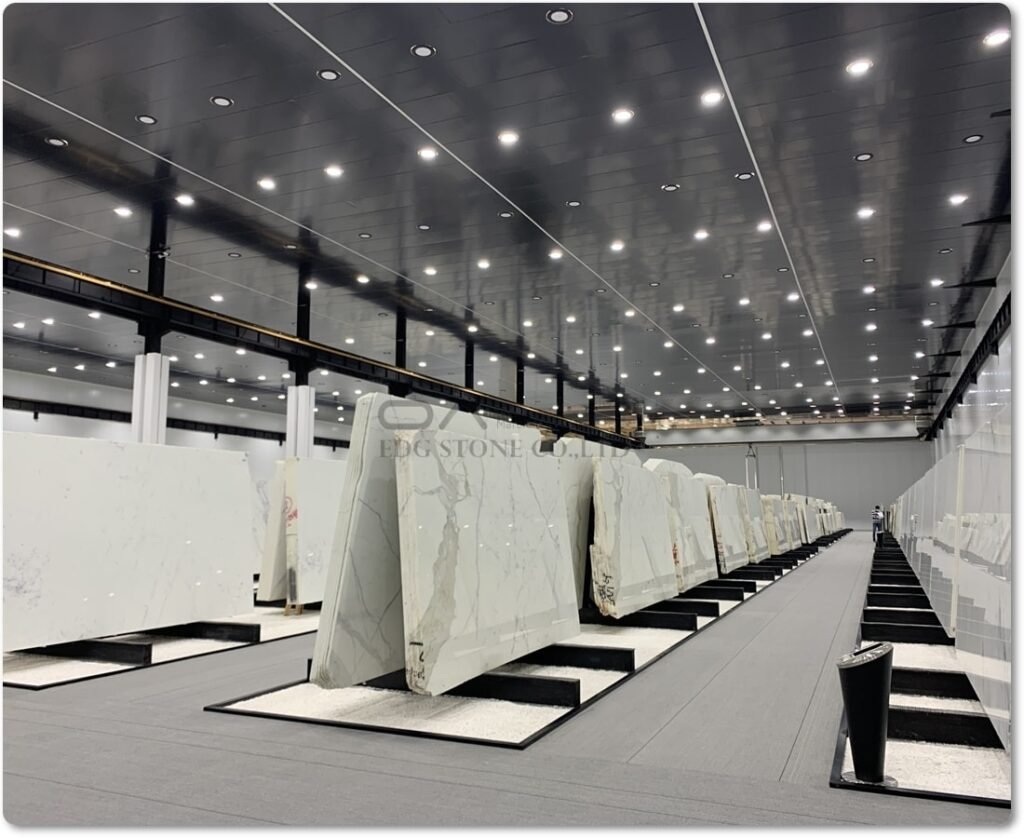
High-end residential projects use Calacatta marble slabs to express elegance, exclusivity, and custom craftsmanship. These projects often involve kitchens, bathrooms, entryways, fireplaces, feature walls, and dressing rooms, where the material is seen up close and touched every day. That means visual quality must be matched by fabrication precision.
In luxury homes, Calacatta marble is frequently used for kitchen islands, full-height backsplashes, vanity tops, shower walls, and statement fireplaces. Each application has different performance and aesthetic requirements. Kitchen use demands better planning around staining risk, cutout placement, and seam management. Bathroom use often emphasizes visual calm and a spa-like atmosphere. Entryways and staircases may prioritize dramatic grain and broader scale.
Procurement for residential work should focus on consistency, matching, and long-term maintenance expectations. A homeowner may be highly sensitive to visual variation, especially in open-plan homes where the stone is visible from multiple angles. The procurement team should therefore confirm slab photographs, view actual slabs or approved sample pieces, and align the final selection with the interior designer’s concept.
In this segment, Calacatta marble slabs are rarely a background material. They are part of the identity of the residence. When chosen carefully, they elevate the entire property and contribute to a sense of permanence that synthetic alternatives often struggle to reproduce.
Luxury Hotel Applications
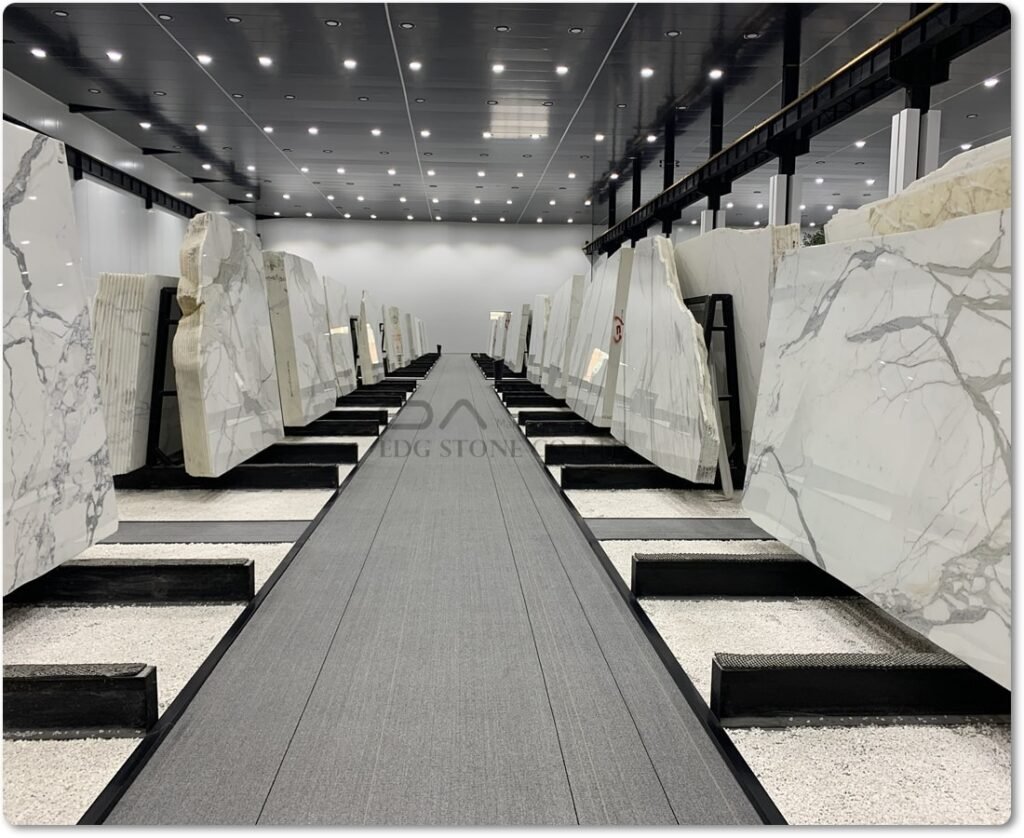
Luxury hotels demand Calacatta marble slabs that combine visual impact with repeatable performance. Unlike a single residence, a hotel may require stone across multiple floors, guest bathrooms, suites, spa areas, elevators, reception desks, restaurants, and feature walls. This creates a procurement challenge: the material must look consistent while still feeling rich and natural.
In hospitality design, Calacatta marble often appears in lobbies, concierge desks, bathroom vanities, spa walls, and suite feature panels. The goal is to create an immediate sense of luxury when guests arrive. Because the material is used in public and semi-public areas, the slabs must also be selected with installation practicality in mind. High foot traffic, frequent cleaning, and tight project schedules all increase the importance of planning.
For hotel projects, batch consistency is critical. Procurement teams should define acceptance standards early, including background tone, vein style, polish level, thickness tolerance, and defect thresholds. They should also clarify whether different zones can use slightly different slab characters or whether the design requires near-uniformity across the property.
Hotels benefit from Calacatta marble because it photographs beautifully, supports premium brand positioning, and pairs well with brass, bronze, dark wood, and minimalist metal details. Yet that luxury effect only works when the stone is selected and sequenced correctly. For a hospitality project, the slabs are part of the brand experience.
Stone Yield & Waste Control
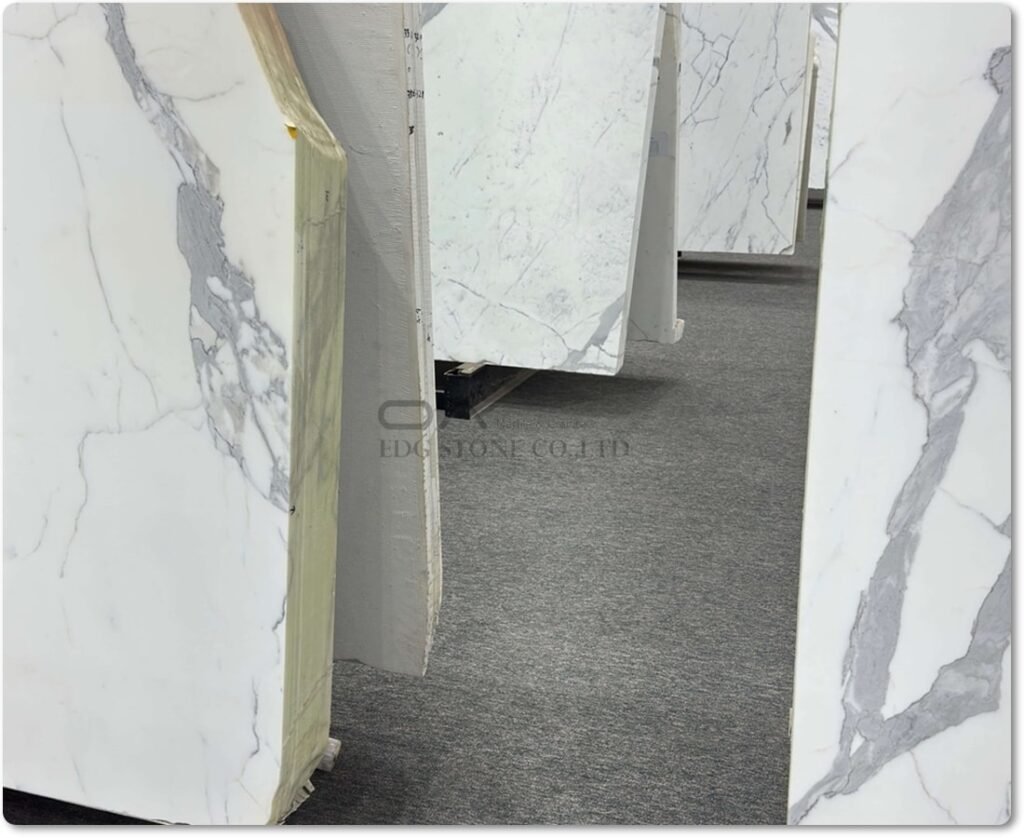
Stone yield is one of the most important financial issues in Calacatta marble procurement. Because marble is natural and often vein-dense, not every inch of a slab can be used. Some slabs include structural flaws, strong color shifts, or vein breaks that reduce usable area. A project that ignores yield can quickly exceed budget.
Waste control begins with slab evaluation. Procurement teams should understand the difference between nominal slab size and truly usable area. A large slab may appear economical, but if the best visual section occupies only part of the surface, the remainder may be unsuitable for visible application. This is especially relevant for bookmatch, waterfall edges, and wall panels where continuity matters.
A strong yield plan includes layout optimization, nesting of cut pieces, and prioritization of the most visible components. Large, uninterrupted surfaces should be assigned to the best slabs. Smaller secondary components can use the remaining sections. This approach preserves beauty while controlling waste.
Waste control is not only about money. It also affects procurement timing. If the slab yield is lower than expected, the project may need additional material from another batch. That can create color variation risk and delay installation. For luxury jobs, the best strategy is to purchase with a yield margin rather than assuming a perfect conversion rate. Calacatta marble slabs should always be evaluated as a system, not just as individual pieces.
Procurement Risk Management
Procurement risk management is essential when sourcing Calacatta marble slabs for luxury projects. Natural stone carries inherent variability, and that variability becomes more visible in premium environments where design expectations are high. Risk management protects the schedule, the budget, and the final visual result.
The first risk is color inconsistency. Even slabs from the same quarry can differ from one batch to another. To reduce this risk, buyers should request batch photos, slab-by-slab selection, and clear approval procedures before shipment. The second risk is vein mismatch. In coordinated spaces, mismatched vein direction can make adjacent surfaces feel disconnected. The third risk is fabrication loss. A slab that looks suitable at the source may reveal internal defects when cut.
Documentation is a major part of risk control. Procurement teams should keep records of slab photos, approved samples, thickness specifications, finish expectations, crate numbers, and production drawings. This creates traceability if a dispute arises later. It also helps maintain consistency when repeat orders are needed for phased projects.
Another key risk is shipping damage. Marble is heavy and fragile, so packaging standards matter. Proper crating, reinforcement, labeling, and container loading reduce the chance of breakage. For international projects, this is especially important because replacement lead times can be long.
The best procurement strategy is proactive, not reactive. Clear selection criteria, factory communication, technical drawings, and inspection checkpoints all reduce uncertainty. In luxury stone work, managing risk is as important as finding a beautiful slab.
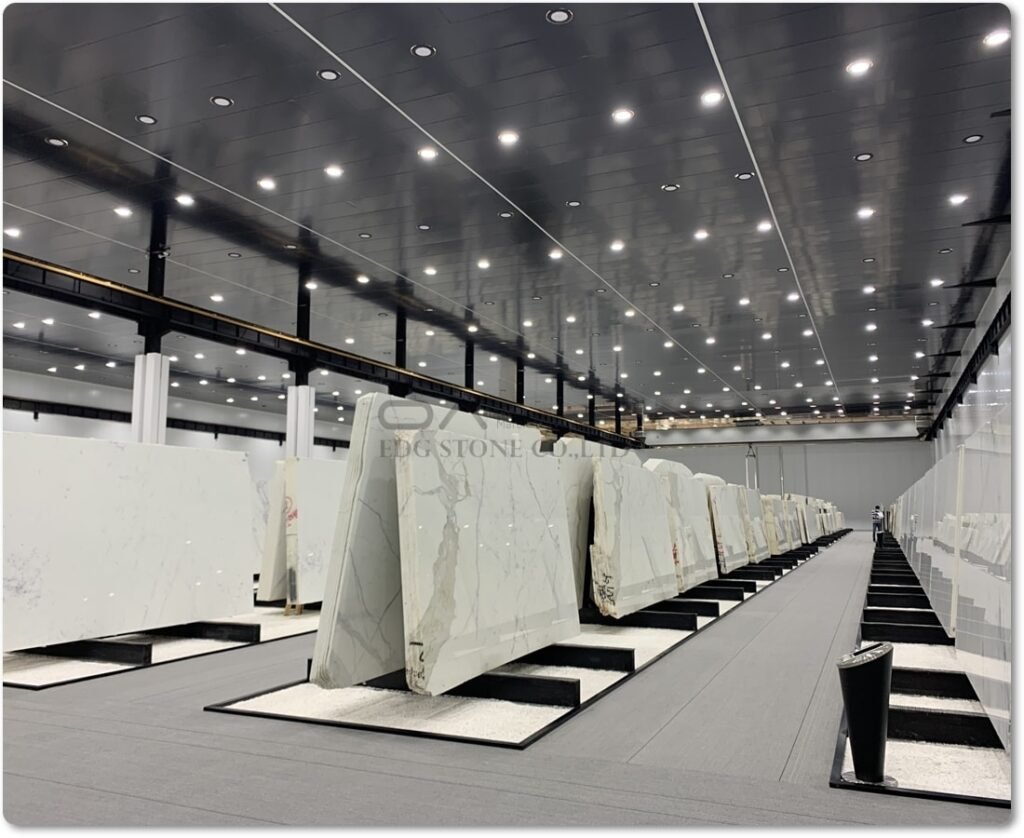
EDG Stone Factory Custom Calacatta Programs
EDG Stone factory custom Calacatta programs are designed to support luxury projects that need more than standard supply. Custom programs are especially valuable when a project requires specific slab sizes, coordinated vein directions, bookmatched pairs, matched batches, or consistent supply across multiple phases.
A factory-driven Calacatta program allows the procurement team to align stone selection with design intent before fabrication begins. This may include block reservation, slab grading, layout planning, thickness control, finish options, and pre-shipment inspection. For large residential or hotel projects, that coordination helps reduce delays and improve visual continuity.
Custom programs also support repeatability. When a project includes multiple units or phases, the same visual standard can be maintained over time. That matters for developers, designers, and contractors who need reliable material across a full property rather than a one-time shipment.
At the factory level, the most useful capabilities are selection control, cutting coordination, quality checking, and packaging discipline. The stronger the supply chain, the easier it becomes to deliver a premium final result. For luxury applications, EDG Stone-style custom Calacatta supply programs are not just about selling stone. They are about matching architectural vision with production precision.
Conclusion
Calacatta marble slabs remain one of the most powerful materials in luxury architecture because they combine beauty, rarity, and design flexibility. But premium stone only performs well when procurement is handled strategically. Buyers must evaluate vein distribution, slab size, bookmatch potential, yield, consistency, and risk before making a purchase decision.
For high-end residential projects, Calacatta marble creates a sense of individuality and refined taste. For luxury hotels, it reinforces brand identity and delivers a memorable visual impact. In both cases, the difference between average and exceptional results is often found in the procurement process.
The best approach is to treat Calacatta marble slabs as a design asset, not a commodity. Select carefully, plan early, coordinate with fabrication, and control risk at every step. When the process is done well, the stone will do exactly what luxury projects require: elevate the space, express craftsmanship, and leave a lasting impression.
FAQ
What makes Calacatta marble slabs different from other white marbles?
Calacatta marble slabs are typically valued for their whiter background, stronger veining, and more dramatic luxury appearance compared with many other white marble options.
Are Calacatta marble slabs suitable for bookmatch walls?
Yes. Calacatta marble slabs are often ideal for bookmatch walls because their directional veining can create striking symmetrical patterns.
How do I reduce waste when buying Calacatta marble slabs?
The best way is to plan the full layout, match slab size to the actual cut list, and prioritize the most visible surfaces for the best slabs.
Why is batch consistency important for luxury projects?
Batch consistency helps maintain the same color tone and vein character across multiple areas, which is critical in large residential and hospitality installations.
Can Calacatta marble be used in hotels and homes?
Yes. It is widely used in both high-end residential and hospitality projects, especially for feature walls, countertops, vanities, and lobby installations.