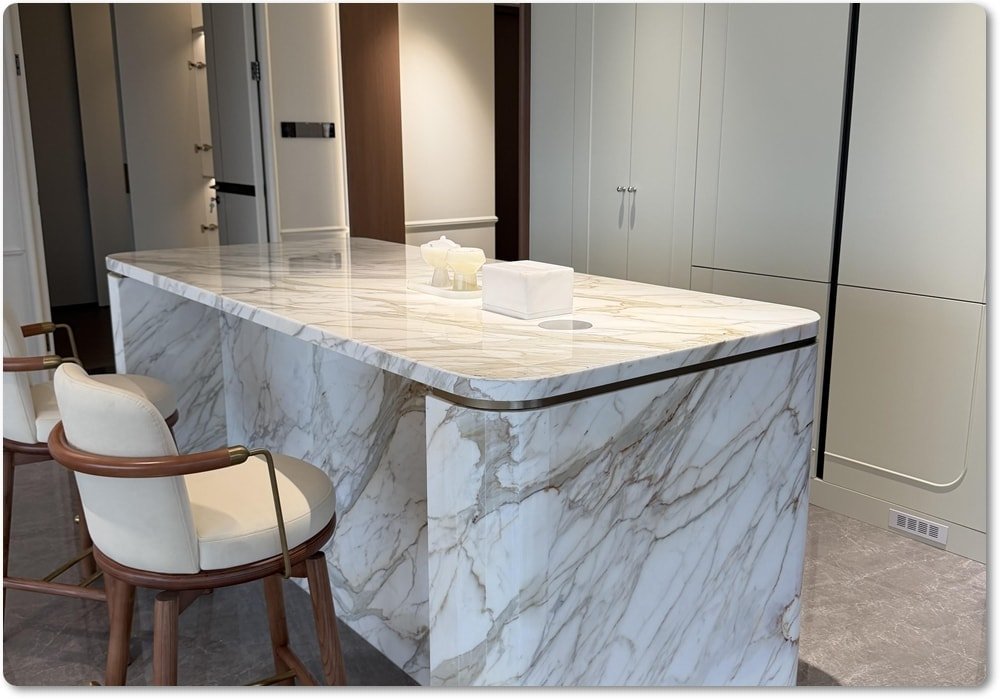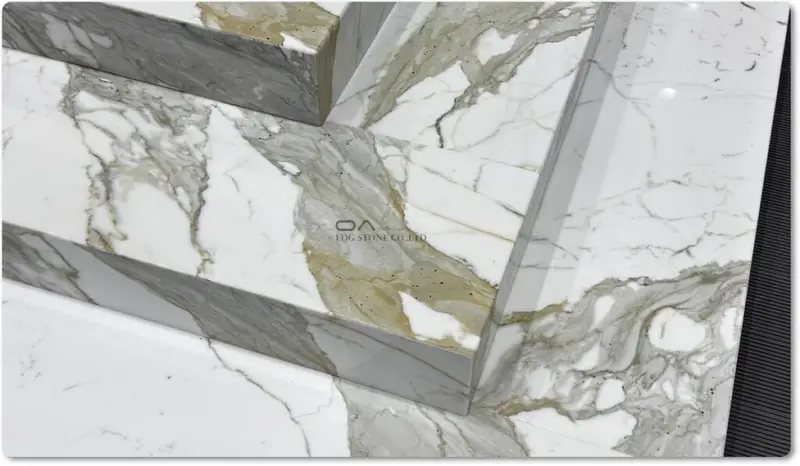
White marble remains one of the most desirable natural stone categories in global architecture and interior design. Its association with luxury, elegance, and timeless aesthetics has made it a leading material for hospitality, residential, commercial, and high-end retail projects.
Yet white marble procurement is not as simple as choosing the brightest slab in the yard. Because white marble is a natural material, buyers must evaluate tone, veining, finish quality, batch consistency, fabrication suitability, and supplier control before placing an order. A beautiful slab can still become a poor procurement decision if the project requires matching panels, consistent background color, or repeatable supply across multiple containers.
This guide explains how to evaluate white marble slabs professionally, what to inspect before purchase, where white marble performs best, and how a reliable factory QC process improves export stability. Whether you are sourcing for a luxury villa, hotel lobby, premium apartment tower, or retail interior, the goal is the same: choose white marble that delivers visual consistency, strong project continuity, and dependable long-term performance.
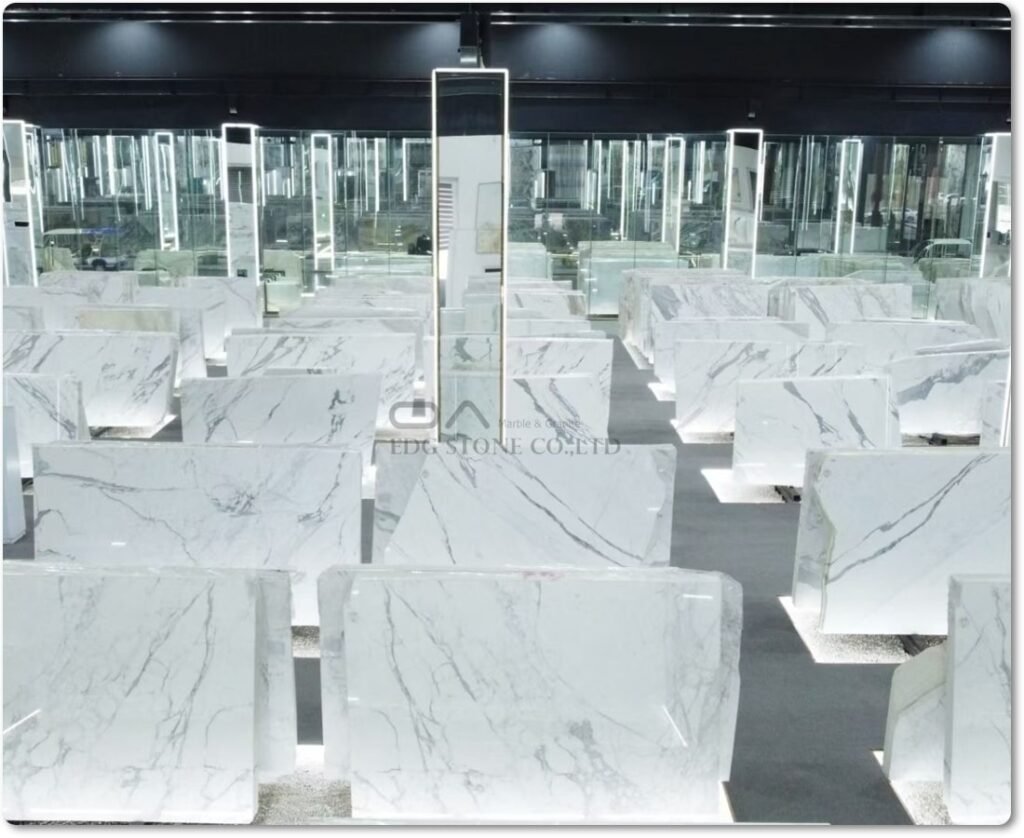
Why White Marble Is Premium?
White marble is often considered the most refined and architectural of all natural stones. Its value is not only visual but also symbolic, practical, and commercial.
Luxury and prestige
White marble is closely linked to elegance, sophistication, and high-end design. In many markets, it is the first material designers consider when they want a space to feel bright, premium, and timeless. From boutique hotels to luxury homes, white marble creates an immediate sense of quality.
Clean aesthetics
White surfaces help spaces feel open, calm, and balanced. In interior design, white marble works especially well in spaces with limited natural light or where a clean visual base is needed to support furniture, lighting, and decorative elements. It also pairs easily with wood, brass, black metal, glass, and neutral color palettes.
Architectural versatility
White marble can support classical, contemporary, minimalist, and transitional styles. A soft-veined white marble may suit a calm spa environment, while a bold-veined slab may become the focal point of a feature wall, reception counter, or kitchen island.
Strong market demand
White marble is widely used in luxury housing, hospitality projects, commercial lobbies, and retail environments. That broad demand makes it a strategic procurement item for distributors, contractors, architects, and project developers who need both visual appeal and dependable supply.
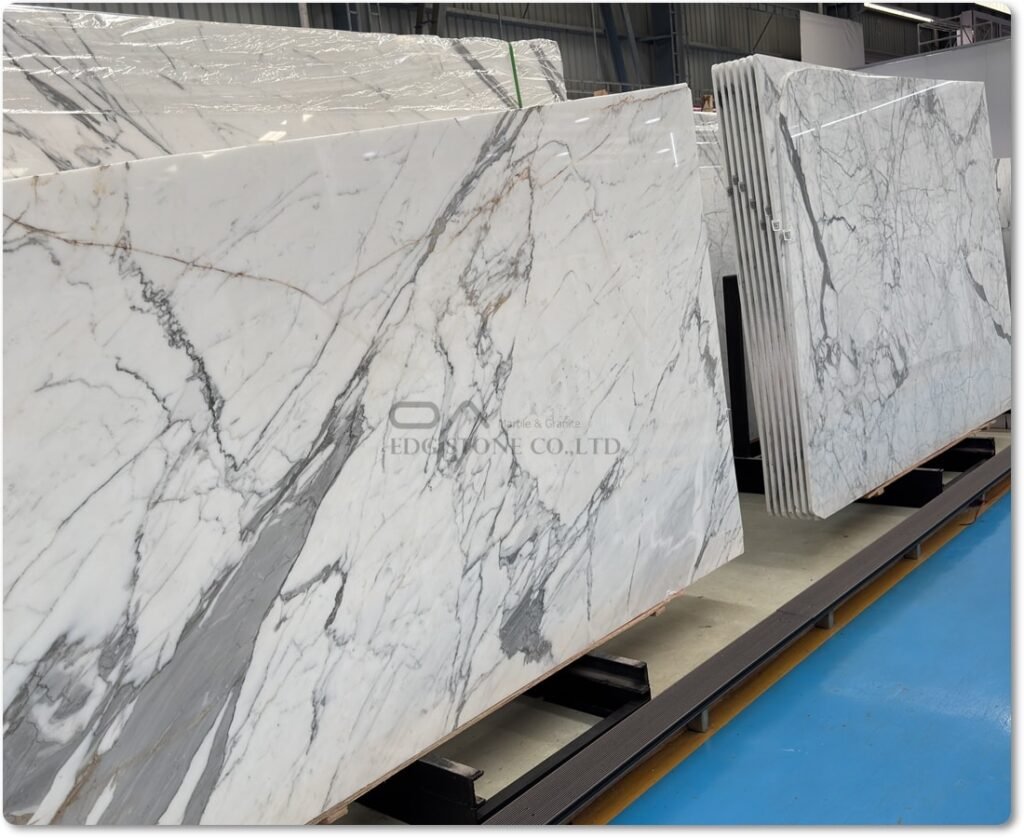
How to Evaluate White Marble Slabs?
White marble procurement should begin with a visual and technical review. A slab may look attractive in a showroom but behave differently once it is cut, installed, and illuminated on site. Buyers should evaluate each slab against project requirements, not just appearance.
Background tone
The first factor to inspect is the background color. White marble is rarely pure white. Most slabs have subtle undertones such as warm ivory, cool gray, cream, or soft beige. These undertones affect how the stone reads under different lighting conditions.
For example, a cool white marble may look crisp in a modern interior with daylight and black accents, while a warmer white marble may feel more inviting in hospitality or residential applications. For large projects, background tone consistency is often more important than the exact shade itself.
Vein movement
Veins define the identity of white marble. Some stones feature fine linear movement, while others have dramatic, cloudy, or branching patterns. The vein style should match the design intent of the project.
A calm, understated vein pattern is often preferred for large surface areas such as floors or wall cladding. Strong veins may be better suited for feature walls, fireplace surrounds, vanity tops, and statement islands. Buyers should always confirm whether the project needs a uniform look or a natural decorative effect.
Surface clarity
Inspect the slab surface for natural clarity and visual balance. White marble should not look muddy, overly fractured, or uneven in tone unless the design specifically calls for a more dramatic natural look. Surface clarity matters even more for premium interiors because white marble reflects light and reveals inconsistencies easily.
Cut and slab dimensions
Check whether the slab size matches the intended application. Large-format projects need dependable slab dimensions to reduce waste and minimize visible seams. Ask the supplier for the exact slab thickness, width, length, and available inventory count.
Finish compatibility
Different finishes change the appearance of white marble dramatically.
A polished finish increases brightness and visual depth.
A honed finish creates a softer, more understated appearance.
A leathered or brushed effect can add texture and reduce glare.
The finish should support both the design style and the practical requirements of the space.

Vein Classification
Vein structure is one of the most important selection criteria in white marble procurement. It affects not only appearance but also how the stone can be used in a project.
Fine vein structure
Fine veins are subtle and elegant. They often work best in bathrooms, private residences, spa spaces, and minimalist interiors where the goal is softness rather than drama. Fine-vein marble is usually easier to coordinate across multiple slabs because the visual movement is less aggressive.
Linear vein structure
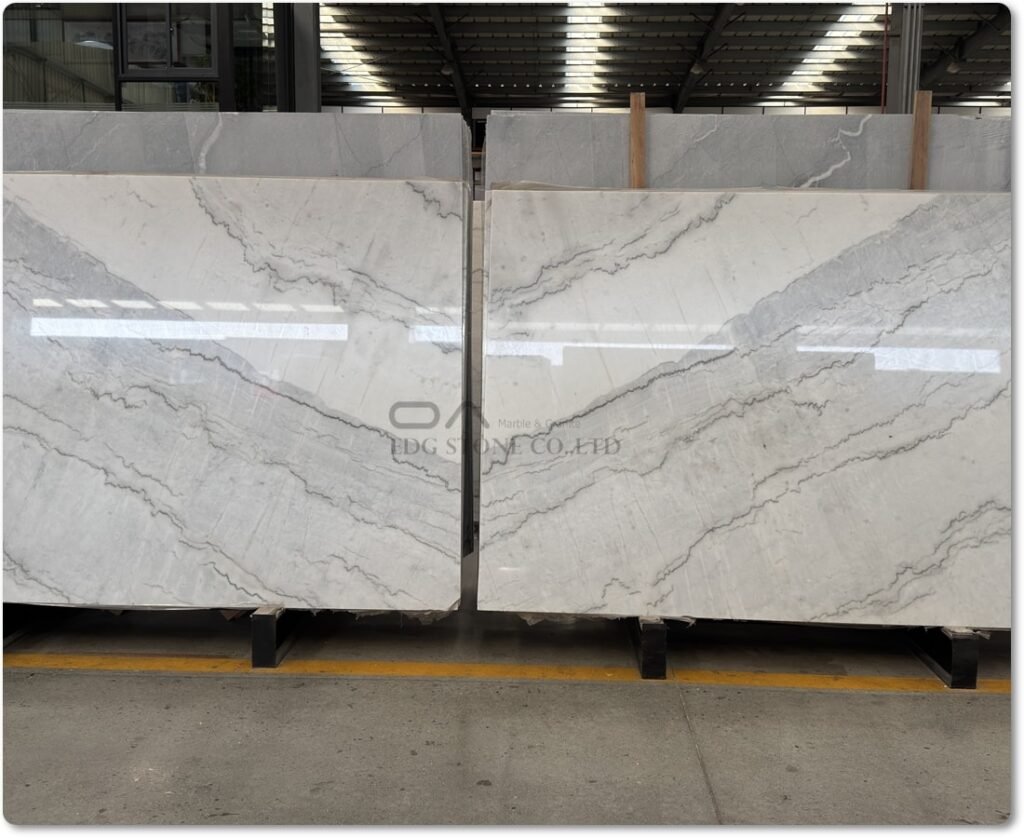
Linear veining gives a stronger architectural rhythm. This type of marble is often selected for long walls, floor runs, and bookmatched panels because the lines create direction and continuity. It is especially useful when designers want to emphasize symmetry and clean geometry.
Cloudy or flowing vein structure
Some white marbles show broad, cloudy, or flowing movement. These slabs create a more expressive and luxurious feel. They are frequently used in large feature surfaces where the stone can be viewed as a whole composition rather than as separate pieces.
Dramatic or high-contrast veins
Bold veins can turn a slab into a focal point. This style is highly desirable in luxury projects, but it requires careful planning. If the slab is too visually active, it may overpower the room. Buyers should confirm whether the stone will be used as a hero feature or as part of a broader neutral palette.
Bookmatching potential
For large wall applications, buyers should ask whether slabs can be bookmatched. Bookmatching allows mirrored vein patterns to create a symmetrical visual effect, which is often used in luxury hotels, grand entrances, and statement bathrooms.
Batch Consistency
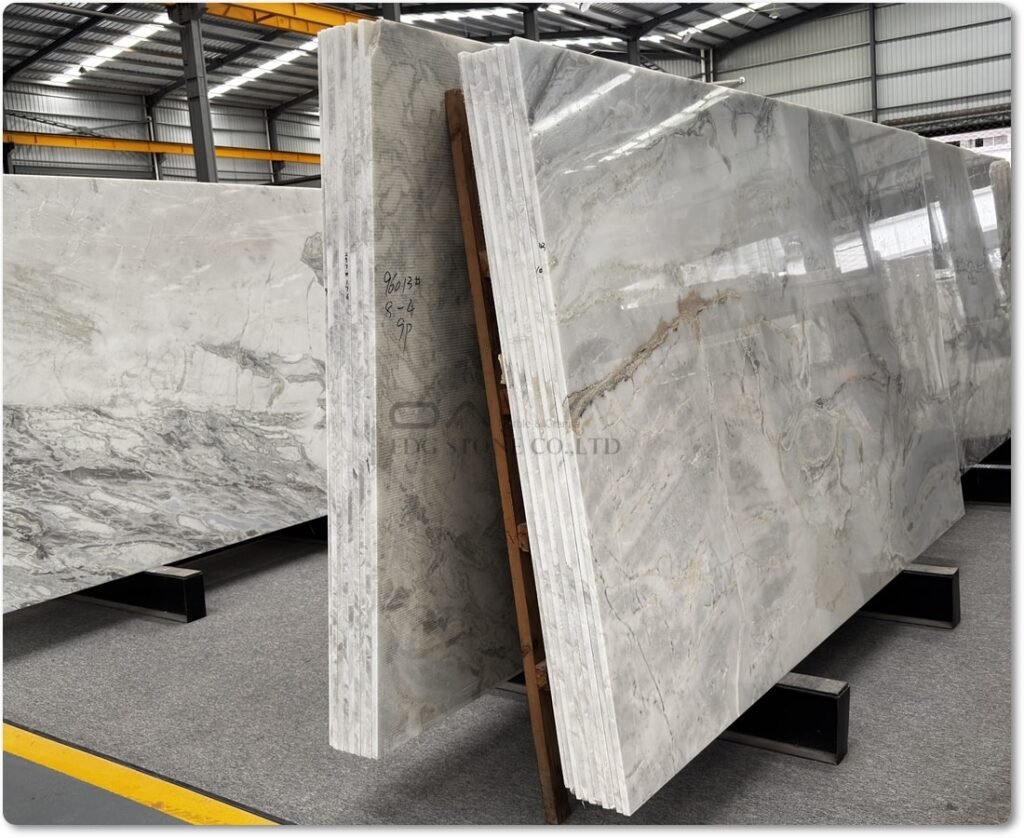
Batch consistency is one of the most important procurement issues for white marble. A single beautiful slab is not enough if the project needs ten or twenty matching slabs.
Why batch consistency matters?
White marble is a natural product, and no two quarry sections are identical. Tone variation, vein direction, and mineral movement can shift from block to block. If a project uses slabs from different batches without review, the final installation may look uneven or fragmented.
What buyers should check?
Bundle grouping
Ask the supplier whether the slabs are grouped by block, quarry section, or production batch. Slabs from the same group are more likely to match in tone and vein structure.
Slab sequence
Request photos or layout information showing the slab sequence. This helps installers and designers plan how the stone will be used and whether adjacent slabs will align visually.
Tone variation
Review slabs under similar lighting and compare them side by side. Small differences in shade may be acceptable for natural stone, but major shifts can create a visible mismatch on site.
Vein continuity
For panels, feature walls, and large islands, check whether the vein pattern continues logically across adjacent slabs. Consistent vein movement makes the finished project look more premium.
Best practice for large projects
For commercial or hospitality orders, it is smart to reserve full batches in advance. This reduces the risk of mixed lots, inconsistent shipment quality, or replacement difficulty later in the project.
White Marble Applications
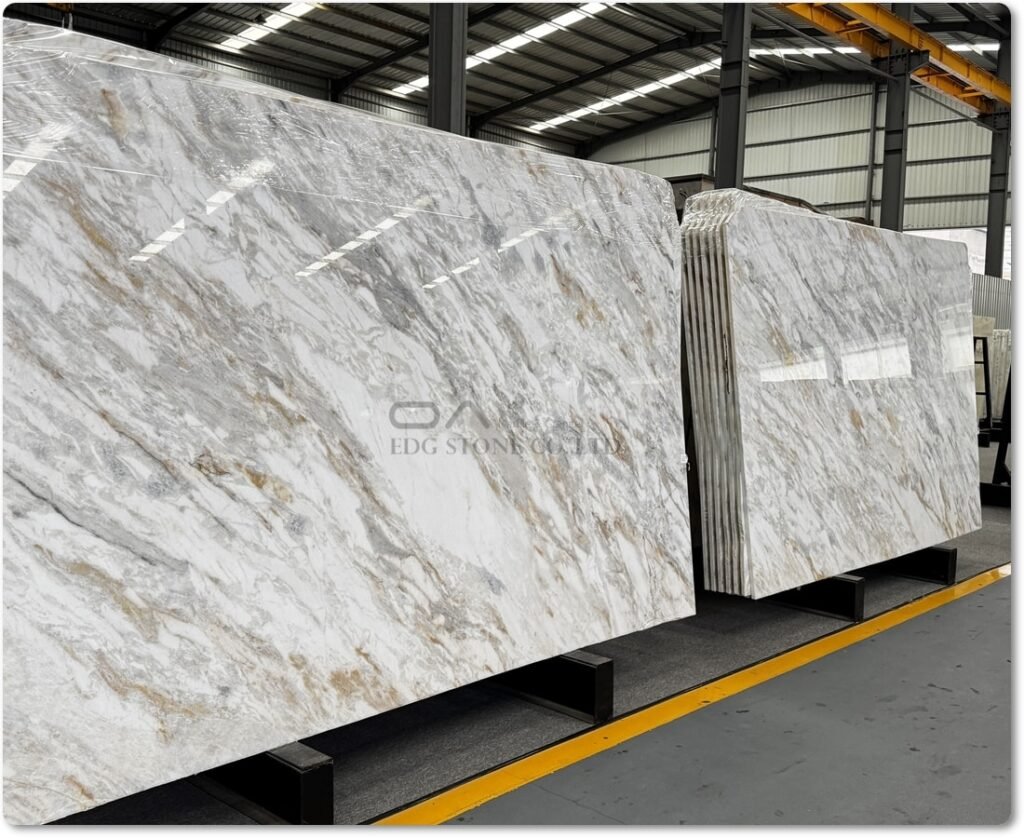
White marble is used across a wide range of luxury environments. Its success depends on matching the stone’s visual character with the function of the space.
Bathroom vanities
White marble is one of the most popular materials for luxury bathroom vanities. It adds brightness, cleanliness, and a spa-like feeling. Slabs with soft veins are usually preferred because they create a calm, elegant atmosphere without visual clutter.
Hotel lobbies
Hotel lobbies demand a strong first impression. White marble works well for reception desks, feature walls, columns, and flooring where the material needs to communicate prestige and refinement. In this setting, bookmatched or highly polished slabs often produce the strongest effect.
Kitchen countertops
White marble countertops are popular in upscale kitchens, especially where the design emphasizes sophistication and light. Buyers should confirm the sealing and maintenance requirements before using white marble in kitchens, since the surface may be more sensitive to staining than engineered alternatives.
Retail walls and display areas
White marble helps retail spaces feel clean, premium, and high-value. It is often used in luxury boutiques, cosmetic stores, jewelry counters, and branded interiors where material quality contributes directly to the brand experience.
Staircases and feature flooring
White marble can also be used in stair treads, landings, and luxury floors. In these applications, consistency and slip-resistance considerations are especially important. The finish should be selected carefully to balance aesthetics and safety.
Hospitality bathrooms and spa areas
Spa environments benefit from the soft, calming character of white marble. A honed or lightly textured finish may be more suitable than a high-gloss polish in wet or humid areas, depending on design intent and maintenance planning.
Common Defects
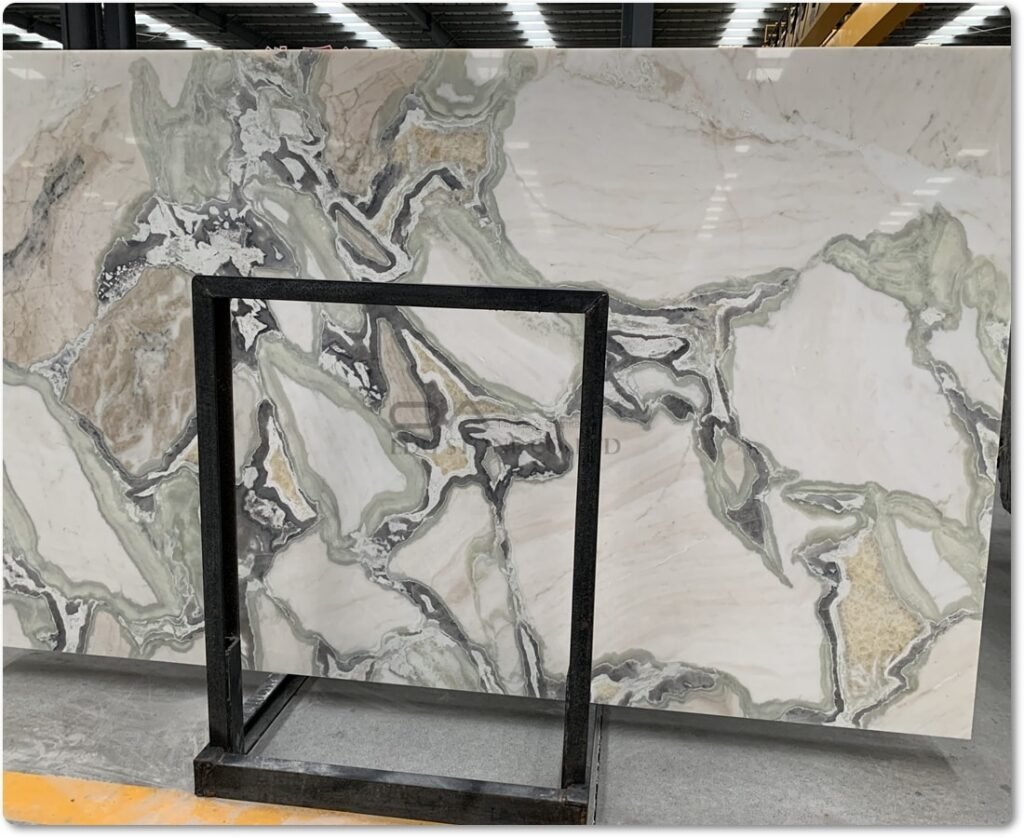
Even premium white marble can contain natural or fabrication-related defects. Professional buyers should inspect each slab carefully before approval.
Resin overfill
Resin is often used to fill minor surface pits and reinforce the stone. However, excessive resin can create glossy patches, color mismatch, or unnatural visual spots. Overfilled resin areas may be more visible in bright lighting or polished finishes.
Surface scratching
White marble surfaces can show scratches during handling, storage, or cutting. Buyers should check for transport damage, fabrication marks, and polishing irregularities before approving the shipment.
Cracks and fissures
Natural fissures may be present in some marble types, but they should be evaluated carefully. A visible crack that affects structural integrity or aesthetic continuity can become a major issue after installation. Always confirm whether any fissure is natural, stable, or repairable.
Excessive shade variation
Some variation is normal in natural stone, but excessive shade differences can disrupt a project. This is especially important for large wall surfaces, flooring runs, and contiguous countertops. Shade variation should be evaluated in both natural daylight and indoor lighting.
Patching and edge repair
Inspect the edges and corners for chips, patches, or hidden repairs. These may not be visible in one photo but can become noticeable during fabrication or installation. Buyers should request full slab images and, when possible, a physical inspection.
Inconsistent polish
Polish quality should be even across the full slab. Dull areas, swirl marks, or uneven reflection can reduce the perceived value of the stone and affect the final project finish.
How to Source White Marble for Luxury Projects?
A good procurement strategy reduces risk and improves design consistency. Buyers should combine visual review, technical screening, and supplier verification.
Define the project’s use first
Before buying, identify the application. A bathroom vanity has different requirements than a hotel lobby floor or a feature wall. The use case determines vein style, finish choice, slab thickness, and acceptable variation.
Request slab photos and videos
Always ask for actual slab photos or videos under consistent lighting. This helps evaluate tone, vein distribution, and finish quality before commitment. For export orders, request batch photos instead of isolated slab images.
Confirm inventory availability
Some white marble varieties are easy to source in small quantities but difficult to repeat in large volumes. If the project needs multiple containers or future reorders, confirm ongoing supply before approval.
Verify packaging and export standards
White marble is vulnerable to edge damage, scratching, and breakage during handling. Proper crate construction, reinforcement, labeling, and loading procedures are essential for international shipping.
Ask about lead time and replenishment
Luxury projects often run on strict schedules. Buyers should confirm lead times, production capacity, and the supplier’s ability to repeat the same color range in later shipments.
EDG Stone Factory QC Process
Professional quality control is a major advantage in white marble procurement. A strong QC process improves visual stability, reduces complaints, and supports export reliability.
Block selection and grading
The process begins with raw block selection. Good factories inspect the internal structure of the block before cutting to identify tone consistency, vein behavior, and potential defects. Better grading at the source leads to fewer surprises later.
Slab sorting by shade and vein
After cutting and polishing, slabs should be sorted by background color, vein intensity, and surface quality. This creates more predictable batches for project use and helps designers match pieces more accurately.
Surface inspection
Each slab should be checked for scratches, cracks, open fissures, resin issues, and polish uniformity. This step is especially important for white marble because visual defects are easier to see on light-colored surfaces.
Batch documentation
A professional supplier records batch numbers, slab photos, thickness, and packaging information. Good documentation helps buyers track repeat orders and simplifies communication when matching additional material for later project phases.
Export reliability
QC is not only about appearance. It also supports export performance by reducing the risk of breakage, mismatch, or shipment disputes. For global buyers, stable QC improves project planning and protects both schedule and budget.
Best Practices for Buyers
To make white marble procurement more reliable, use a simple decision framework.
Match the stone to the project mood
Choose subtle veining for calm, minimal interiors and dramatic veining for statement spaces. The stone should support the design concept rather than compete with it.
Prioritize batch continuity
For large projects, consistency matters more than isolated beauty. A slightly softer but more uniform batch may perform better than a highly decorative lot with wide variation.
Inspect under real lighting
White marble can look very different under showroom lights, daylight, and final installation lighting. Always review slabs in conditions similar to the project environment.
Confirm maintenance expectations
White marble should be selected with maintenance expectations in mind. Some applications require more frequent sealing, gentle cleaning, and stain prevention procedures. The client should understand this before installation.
Work with a supplier that understands project sourcing
The best suppliers do more than sell slabs. They help manage selection, sorting, documentation, packaging, and replenishment. That is especially important for architects, contractors, distributors, and developers managing multiple project phases.
White Marble Procurement Checklist
Before placing an order, confirm the following:
Background tone matches the project design
Vein style matches the application
Batch consistency is acceptable
Slab size and thickness are correct
Surface finish is suitable
Defects have been reviewed
Packaging standards are confirmed
Lead time and replenishment are clear
Export documentation is complete
Supplier QC process is reliable
Conclusion
White marble procurement requires more than an eye for beauty. Buyers must evaluate background tone, vein structure, batch consistency, surface quality, and supplier capability to ensure the material performs as expected in a luxury project.
When selected carefully, white marble creates powerful results across bathrooms, hotel lobbies, retail interiors, kitchens, and feature walls. When sourced from a supplier with stable QC and export control, it becomes a reliable material for both design impact and project continuity.
For architects, distributors, fabricators, and developers, the best white marble is not just visually elegant. It is also consistent, documented, and dependable from quarry selection to final installation.
FAQ
Why is white marble difficult to source consistently?
Natural variation between quarry sections creates differences in background tone, veining, and texture. Even within the same stone type, batches can look different if they are not carefully sorted.
What projects use white marble most often?
Luxury residential spaces, hotel lobbies, premium bathrooms, kitchens, feature walls, and upscale retail interiors are the most common applications.
Is white marble harder to maintain?
White marble can show stains, scratches, and etching more visibly than darker stones or some engineered surfaces. Proper sealing and routine care help protect the finish.
How can buyers reduce the risk of color mismatch?
Buyers should request batch photos, confirm slab sequence, review actual inventory, and source enough material from the same production lot for the full project.
What finish is best for white marble slabs?
It depends on the project. Polished finishes suit luxury and bright interiors, while honed finishes work well for softer, more understated designs. Textured finishes may be better for some wet or high-traffic areas.
How does QC improve white marble procurement?
QC improves sorting, reduces defect risk, supports consistency across batches, and helps ensure the final shipment matches the approved sample or project specification.