Standard Sizes
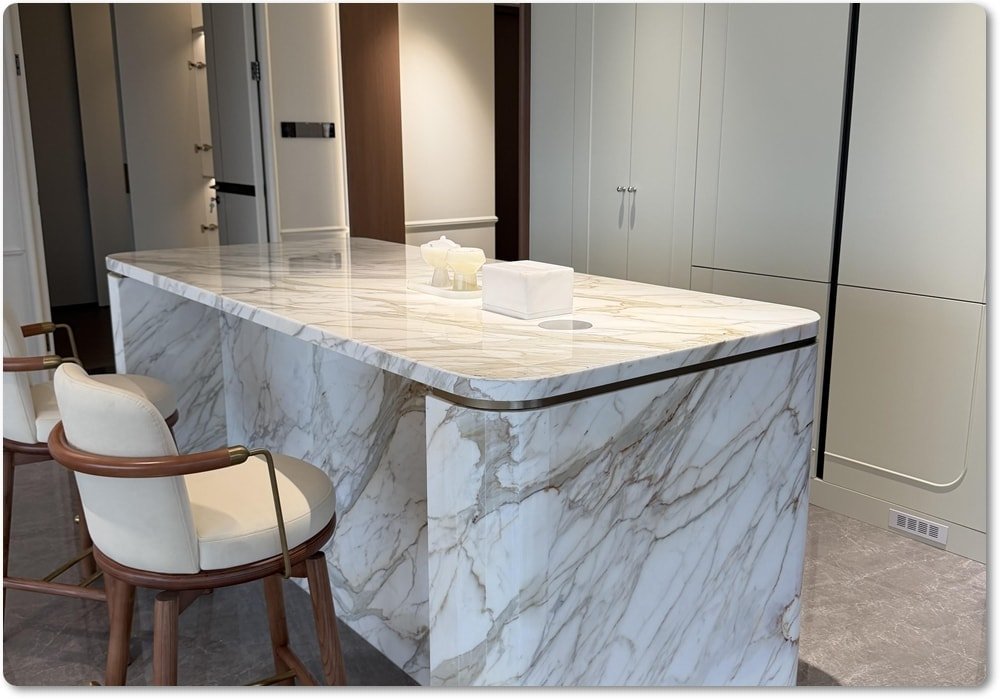
Single sink vanity tops work best when the room is compact, or the bathroom is usually used by one person at a time. A practical planning range for single vanities is 24 to 48 inches wide, with larger single vanities used when extra counter space or storage is needed. Double sink vanity tops are generally designed for shared bathrooms and usually begin at 60 inches wide, with 72 inches being a common larger size.
For height and depth, many standard vanities fall around 31 to 35.5 inches high, with depths commonly between 17 and 24 inches. That means the top should be selected together with the cabinet, faucet, and sink cutout, not as an afterthought.
Layout Planning
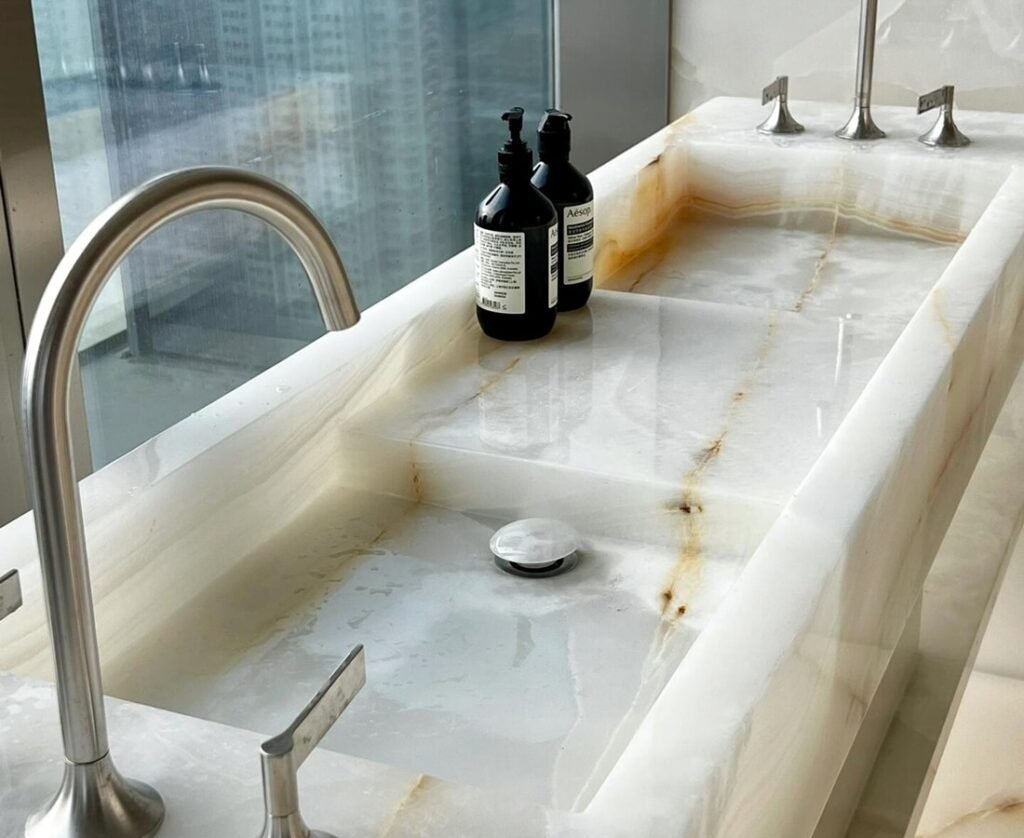
A single sink layout is usually the simplest option for small bathrooms, guest baths, and powder rooms. It leaves more uninterrupted counter space around the basin and is easier to fit into narrow walls or awkward floor plans. NKBA guidance for a single lavatory recommends at least 20 inches, or 508 mm, from the lavatory centerline to a sidewall or tall obstacle, with a minimum of 15 inches from centerline to wall by code. For accessibility planning, the lavatory should also allow a clear floor space of 30 by 48 inches, with the centerline at least 24 inches from the wall.
A double sink layout makes sense when two people regularly use the bathroom at the same time. NKBA recommends at least 36 inches, or 914 mm, between the centerlines of two lavatories, with 30 inches, or 762 mm, as the code minimum. In practice, that means a true double vanity needs enough width not only for two basins, but also for usable landing space on both sides. The edges of two freestanding or wall-hung lavatories should be at least 4 inches apart.
Functionality: When to Choose Each?
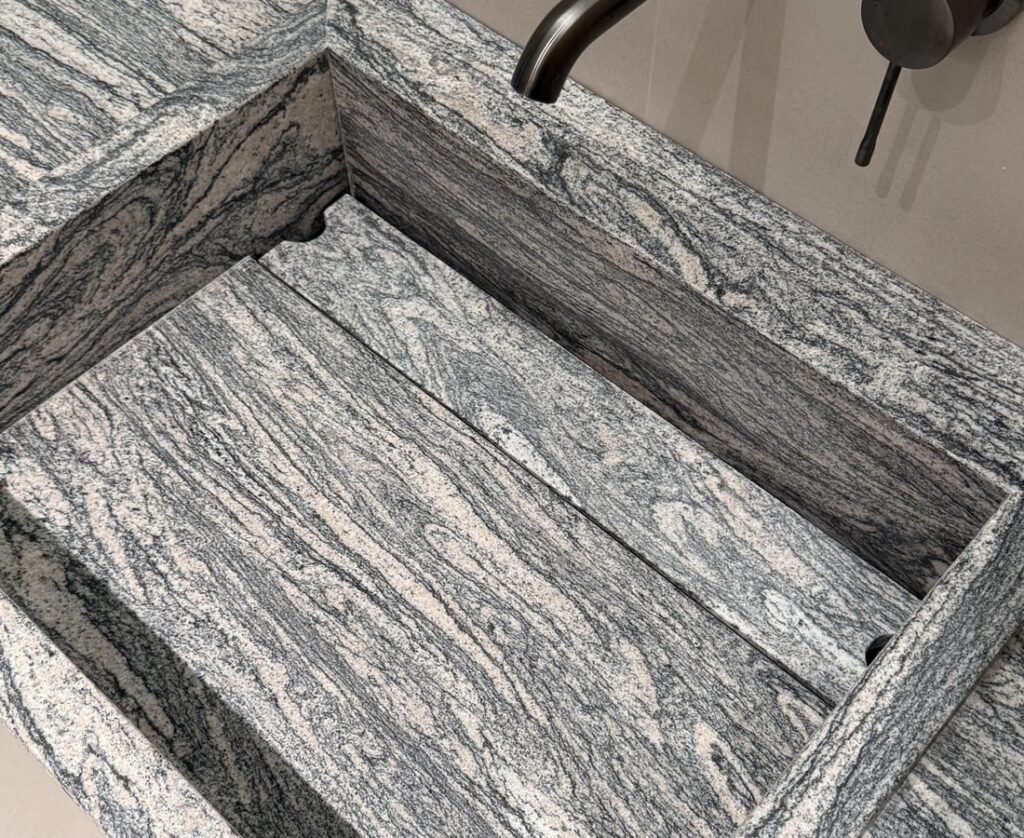
A single sink vanity is usually the better choice when the bathroom is small, the wall length is limited, or one person uses the space most of the time. It is also a strong choice for powder rooms, guest bathrooms, and secondary family bathrooms where storage and a cleaner visual line matter more than two separate basins.
A double sink vanity is the better fit for family bathrooms, primary suites, and higher-use shared spaces. Two basins reduce morning bottlenecks and give each user a defined area for daily routines. In shared spaces, this layout can also improve organization because toiletries, handwashing, and grooming tasks stay separated.

Design Principles
The most important rule is simple: do not let the vanity size overpower the room. A vanity that is technically wide enough can still feel cramped if the sink spacing, wall clearance, and standing area are too tight. NKBA’s recommendations show why centerline spacing, side clearance, and floor space should be checked before fabrication begins.
For a double sink top, plan the basin positions first, then reserve counter space around them. For a single sink top, use the extra width to improve daily usability with more countertop landing area, better drawer storage, or a more generous side margin. In both cases, the vanity should be coordinated with plumbing placement, faucet reach, and mirror width so the final layout feels balanced.
Case Study: Family Bathroom Upgrade
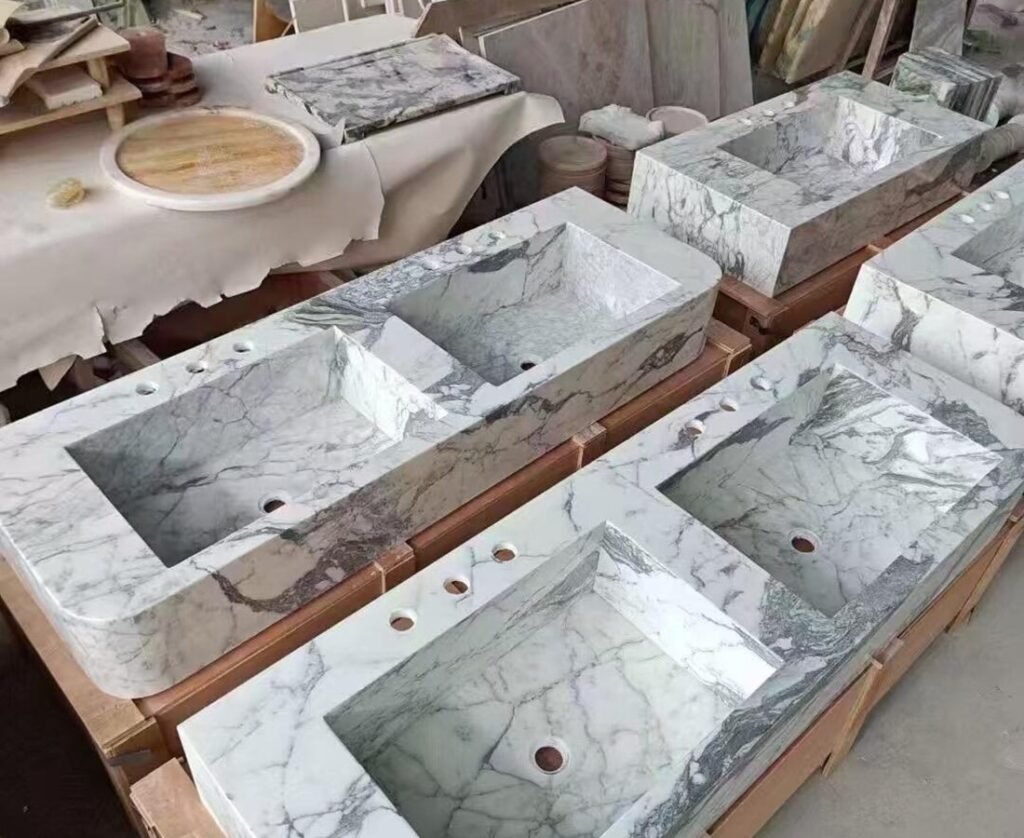
Project type: family residence.
Original layout: one small single sink vanity.
New solution: double sink vanity top with wider cabinet span.
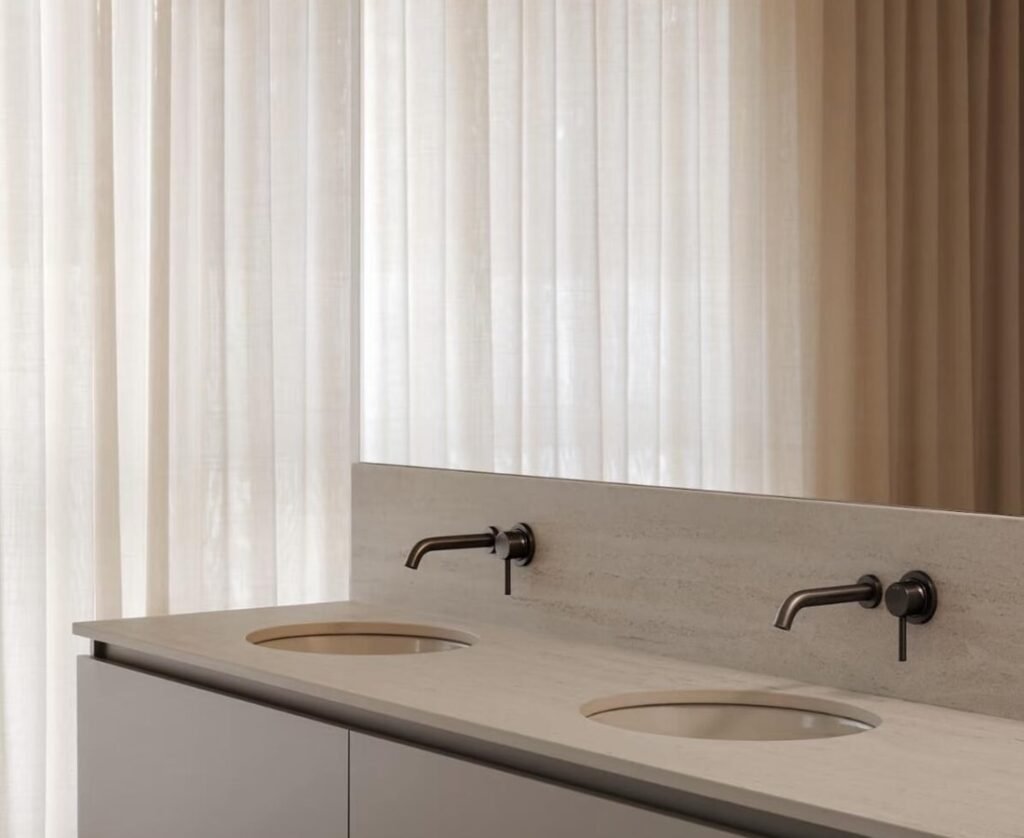
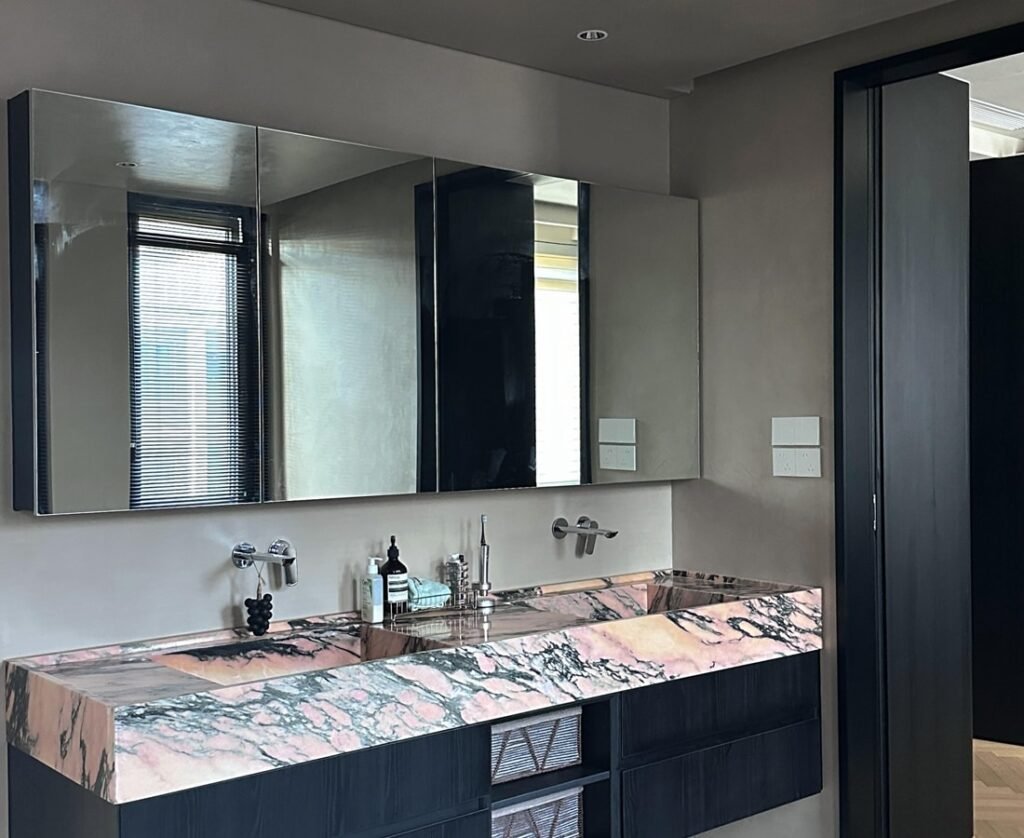
After the upgrade, the bathroom became easier to share in the morning because two users could work at the same time without competing for the same basin. The room also felt more organized because each side had its own zone for toiletries and daily use. This is the clearest benefit of a double vanity: it improves workflow first, and style second.
Conclusion
The right choice comes down to space, usage, and comfort. If the room is compact or mostly used by one person, a single sink vanity top is usually the smartest solution. If the bathroom is shared and the wall length allows proper spacing, a double sink vanity top delivers better efficiency and a more premium user experience. In other words, space decides the layout, and layout decides the function.