Bathroom renovation trends in 2026 continue to move toward surfaces that combine aesthetics, durability, and long-term cost efficiency. Among all available countertop materials, quartz bathroom vanity tops have become one of the most dominant choices for homeowners, developers, hotels, apartment builders, and commercial projects worldwide.
Quartz offers a rare balance between luxury appearance and practical performance. Unlike natural stone materials that can vary significantly in porosity and maintenance requirements, engineered quartz provides a more predictable, stable, and scalable solution.
From custom residential bathrooms to large-scale hospitality developments, quartz vanity tops are increasingly preferred because they deliver:
- Excellent stain resistance
- Minimal maintenance
- Strong structural stability
- Consistent color appearance
- Flexible customization options
- Competitive long-term cost efficiency
This guide explains everything buyers, contractors, distributors, and procurement teams need to know about quartz bathroom vanity tops in 2026, including fabrication, pricing, performance, design trends, project applications, and supplier selection strategies.
What Are Quartz Bathroom Vanity Tops?
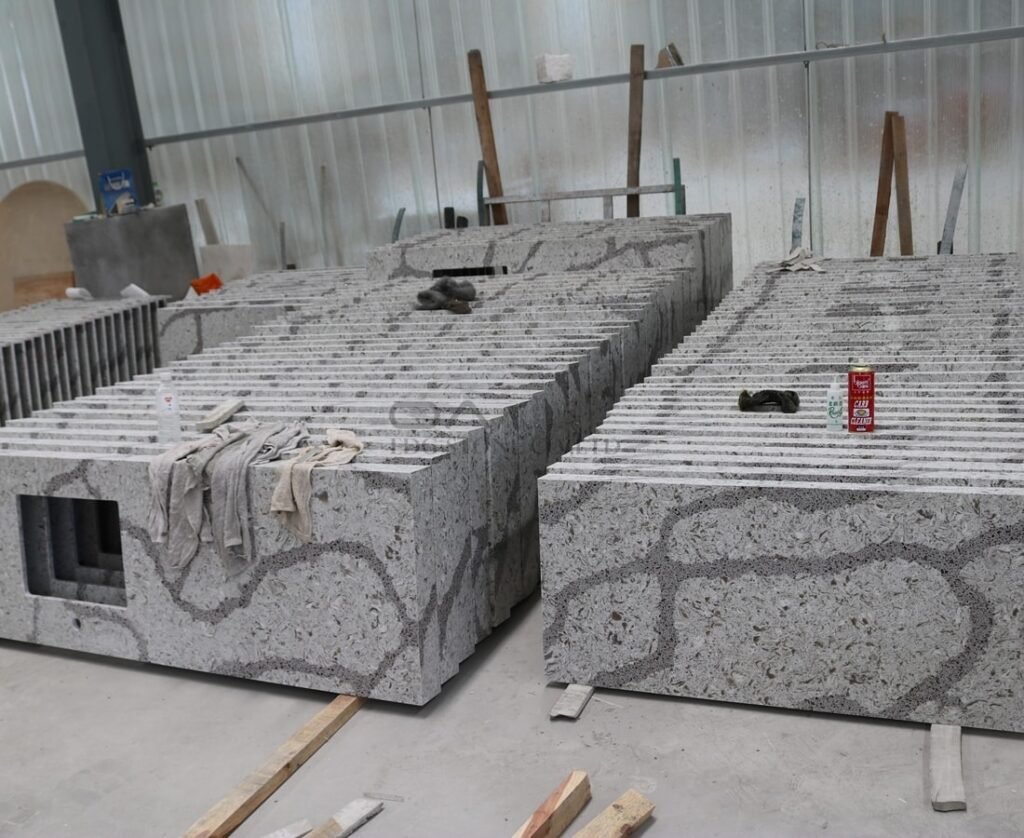
Quartz vanity tops are made from engineered quartz stone, a composite material manufactured using approximately:
- 90–95% natural quartz particles
- Polymer resins
- Pigments and additives
The material is produced using high-pressure vibration compression technology, resulting in a dense, highly durable slab surface.
Unlike granite or marble, quartz is not cut directly from a single natural block. Instead, it is engineered for industrial use to improve consistency, reduce porosity, and enhance performance in moisture-heavy environments such as bathrooms.
Why Engineered Quartz Became Mainstream?
The engineered structure gives quartz several important advantages:
- Uniform appearance
- Low water absorption
- Reduced bacterial growth potential
- Better dimensional stability
- Easier mass production consistency
According to NSF International, many quartz countertop products meet NSF/ANSI 51 food-contact standards, indicating high hygiene performance suitable for kitchens and bathrooms.
Additionally, the Occupational Safety and Health Administration (OSHA) emphasizes the importance of controlling respirable crystalline silica during fabrication. This is why selecting a professional fabrication facility is essential—not only for quality control but also for compliance and worker safety.
Professional factories such as EDG Stone Factory typically utilize:
- CNC fabrication systems
- Wet-cutting technology
- Dust-control systems
- Precision polishing lines
- Export-grade packaging standards
These capabilities significantly reduce manufacturing defects while improving production efficiency for large projects.
Why Quartz Bathroom Vanity Tops Became the Industry Standard?
1. Non-Porous Surface Structure
One of the biggest advantages of quartz is its extremely low absorption rate.
Most engineered quartz products have water absorption rates below 0.05%, making them highly resistant to moisture penetration.
Benefits of a Non-Porous Surface
Quartz vanity tops are highly resistant to:
- Makeup stains
- Hair dye discoloration
- Soap residue
- Toothpaste buildup
- Cosmetic chemical penetration
Unlike natural stone materials, quartz does not typically require periodic sealing.
Comparison with Other Materials
| Material | Sealing Required | Stain Resistance |
|---|---|---|
| Quartz | No | Excellent |
| Granite | Yes | Good |
| Marble | Yes | Moderate |
| Laminate | No | Moderate |
For busy bathrooms, especially shared family bathrooms and hotel environments, this low-maintenance characteristic becomes a major operational advantage.
2. Superior Stain Resistance
Quartz is widely recognized for its outstanding stain resistance.
According to ASTM C1378 stain resistance testing, engineered quartz surfaces perform exceptionally well against common household contaminants.
Common Bathroom Substances Quartz Resists
- Cosmetics
- Facial oils
- Cleaning chemicals
- Shampoo residue
- Coffee spills
- Hair coloring agents
Real-World Commercial Benefits
In multi-unit residential projects and hospitality environments, maintenance teams frequently report that quartz vanity tops reduce ongoing upkeep costs compared to marble surfaces.
Industry project feedback suggests:
- Lower repair frequency
- Reduced sealing expenses
- Faster cleaning turnover
- Lower labor costs over time
In many hotel and apartment applications, maintenance costs can be 30–50% lower than marble vanity systems.
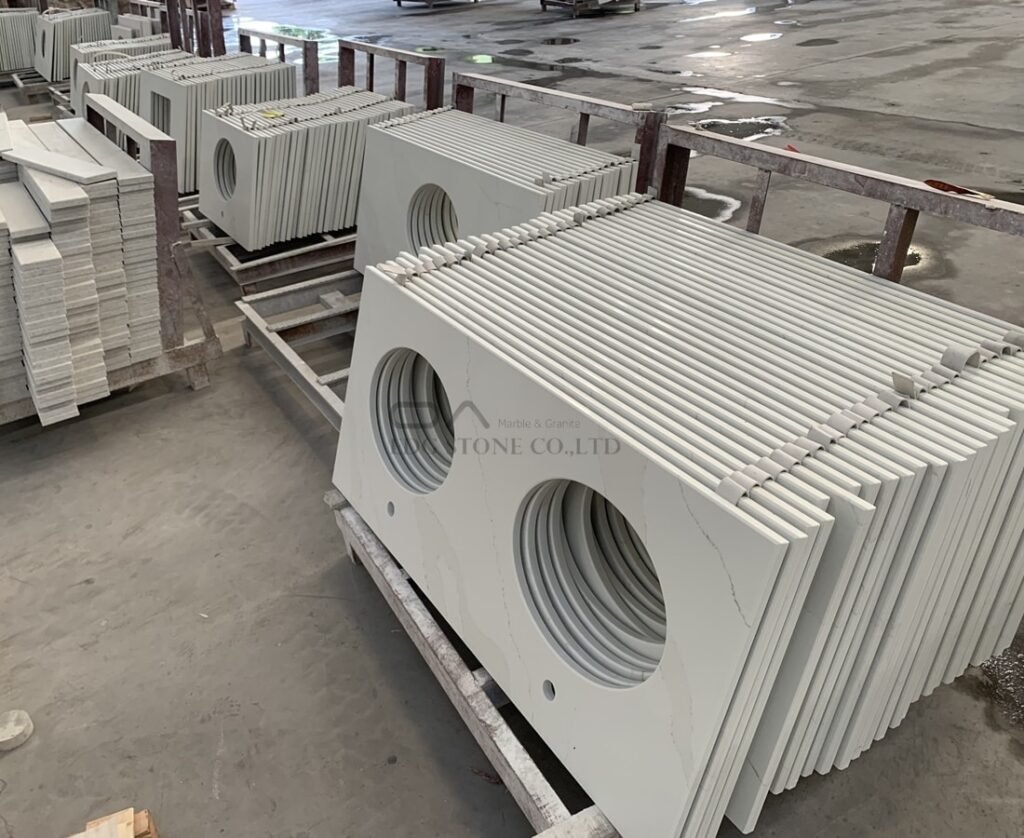
3. Strength and Structural Stability
Quartz has a hardness rating close to Mohs 7, comparable to many granite materials.
This gives quartz vanity tops:
- Good scratch resistance
- Strong edge stability
- Reduced cracking risk
- Reliable undermount sink support
Why Strength Matters in Bathroom Applications?
Bathroom vanity tops often require:
- Sink cutouts
- Faucet drilling
- Edge polishing
- Plumbing openings
Weak materials may crack around these cut areas over time. Quartz performs especially well because of its dense engineered structure.
This is one reason quartz is highly compatible with:
- Undermount sinks
- Floating vanities
- Thin-profile designs
- Large-format vanity installations
4. Industrial Color Consistency
Natural stone offers uniqueness, but it also introduces unpredictability.
Granite and marble can vary significantly in:
- Veining
- Color tone
- Mineral movement
- Surface texture
For single residential bathrooms, variation may be desirable. However, for large commercial projects, inconsistency can become a logistical challenge.
Quartz Solves Large-Scale Consistency Problems
Engineered quartz allows manufacturers to produce:
- Stable color batches
- Consistent veining patterns
- Uniform slab thickness
- Repeatable design aesthetics
This is especially important for:
- Hotels
- Apartment complexes
- Student housing
- Healthcare facilities
- Retail chains
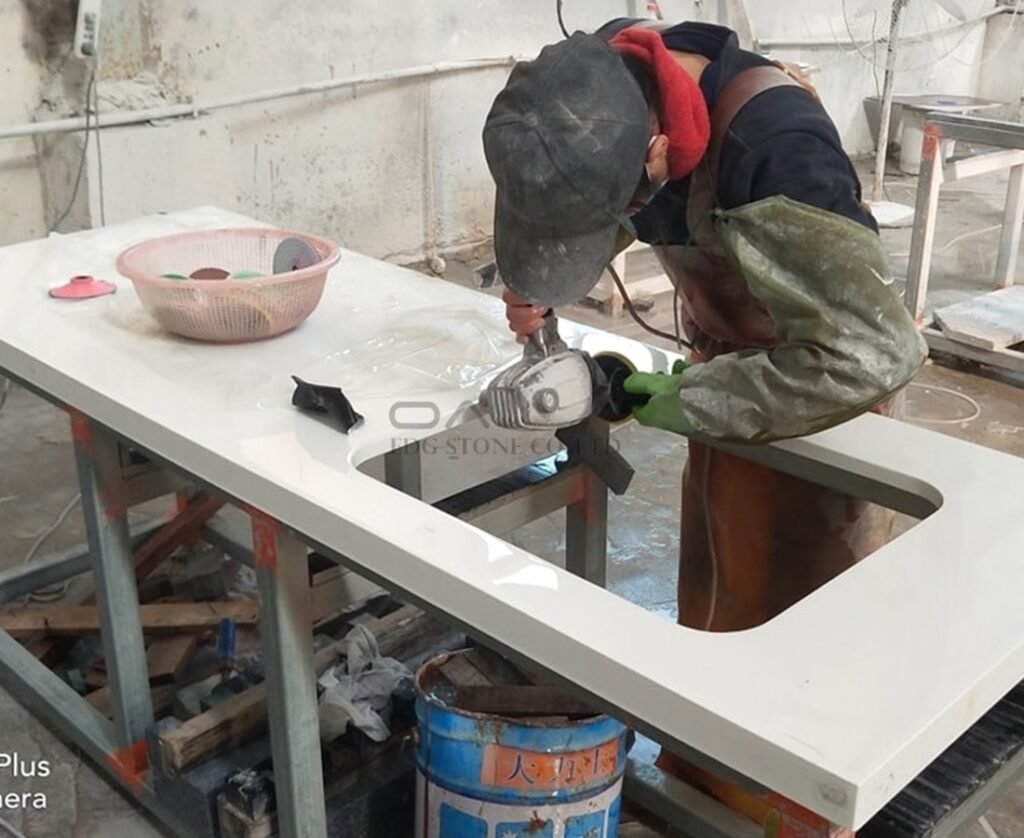
Factories like EDG Stone Factory often support large export projects because they can maintain visual consistency across hundreds or thousands of vanity tops.
Quartz Vanity Tops vs Other Bathroom Countertop Materials
| Material | Water Absorption | Maintenance | Cost Level | Best Applications |
|---|---|---|---|---|
| Quartz | Extremely Low | Low | Medium | Residential + Commercial |
| Granite | Medium | Medium | Medium-High | Luxury Homes |
| Marble | High | High | High | Luxury Design Projects |
| Laminate | High | Low | Low | Budget Renovations |
Overall Evaluation
Quartz delivers the best overall balance between:
- Performance
- Appearance
- Cost efficiency
- Long-term maintenance
This balanced profile explains why quartz has become one of the most widely specified bathroom vanity materials globally.
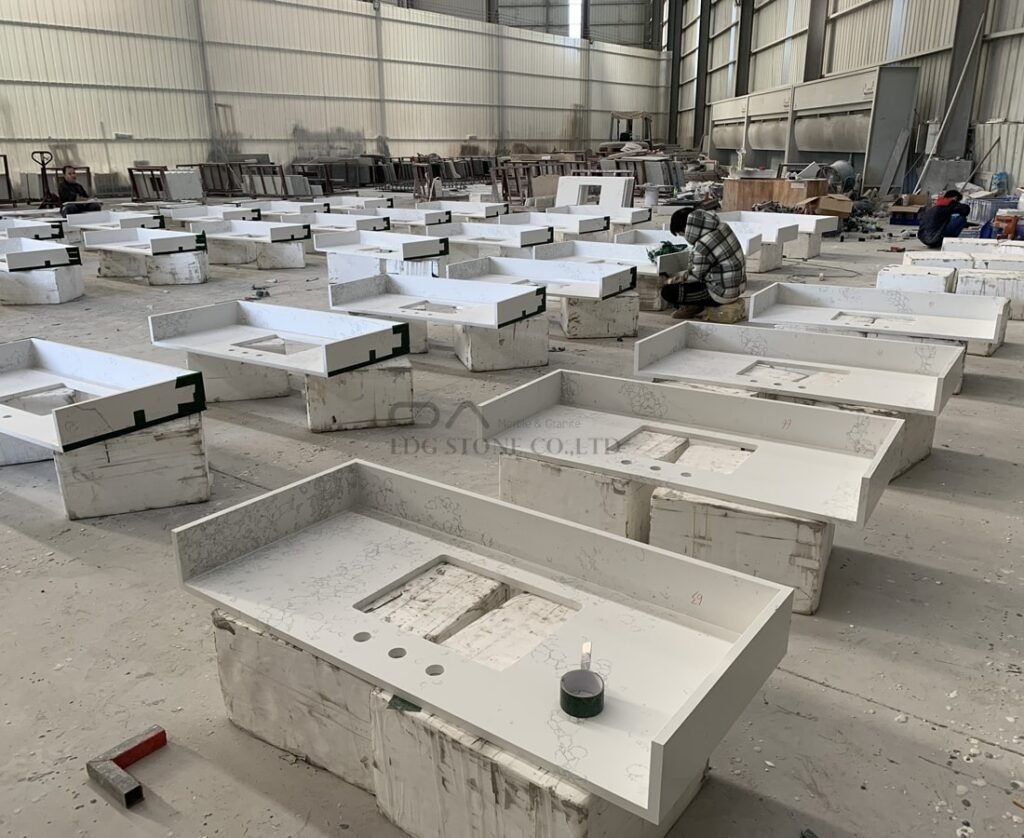
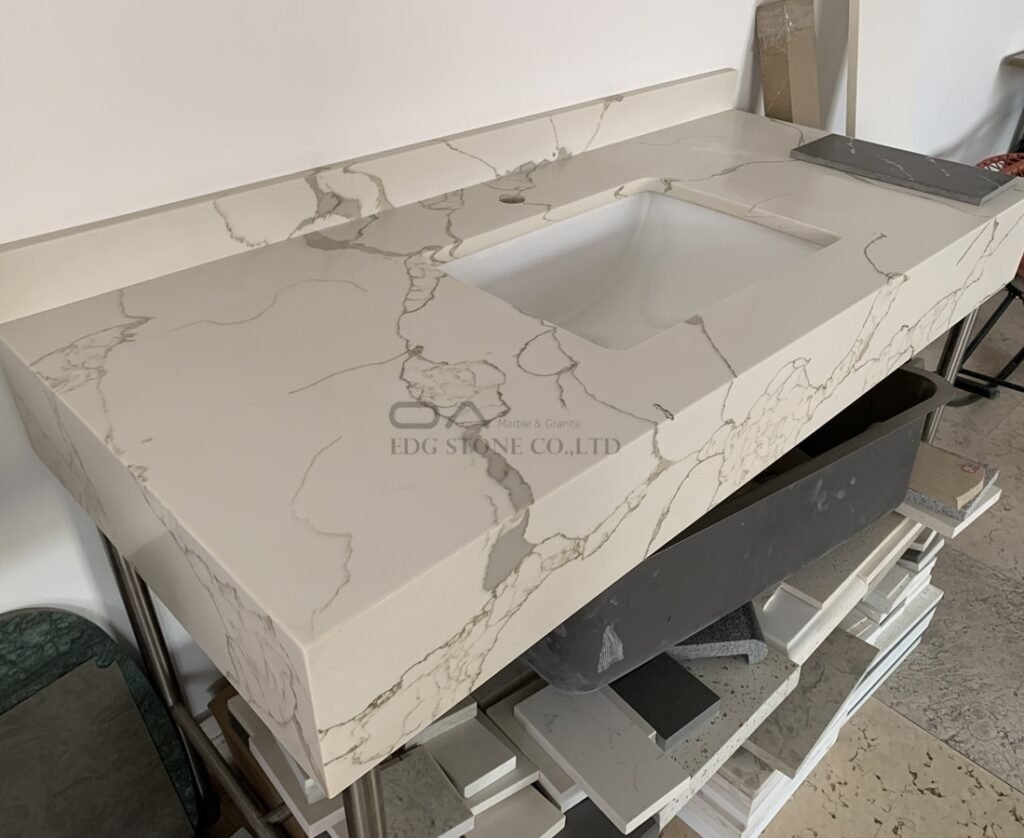
Quartz Vanity Tops with Undermount Sink
Undermount sink installations remain one of the most popular bathroom vanity configurations in 2026.
Why Quartz Works Well with Undermount Sinks?
Quartz offers several technical advantages for undermount fabrication:
High Structural Strength
The dense slab structure supports sink weight effectively.
Precise CNC Fabrication
Quartz can be cut with highly accurate edge detailing.
Excellent Moisture Resistance
The non-porous surface reduces water infiltration risks around sink edges.
Integrated Sink vs Undermount Sink
| Sink Type | Advantages | Disadvantages |
|---|---|---|
| Undermount Sink | Elegant appearance, easy cleaning | Higher installation precision is required |
| Integrated Sink | Seamless appearance | Higher fabrication cost |
Most Common Commercial Choice
For hotels, apartments, and multifamily projects, the most common specification is:
Quartz Vanity Top + Undermount Sink
This configuration offers the best balance of:
- Appearance
- Durability
- Installation efficiency
- Cost control
Quartz Bathroom Vanity Tops Cost Breakdown in 2026
Quartz pricing depends on several variables, including slab quality, fabrication complexity, edge detailing, and project scale.
1. Material Cost
Standard Quartz
- Approximately $30–60 per square foot
Premium Designer Quartz
- Approximately $60–120 per square foot
Premium slabs often include:
- Calacatta-style veining
- Bookmatched aesthetics
- Matte finishes
- Jumbo slab formats
2. Fabrication Costs
Fabrication pricing varies based on:
- Sink cutouts
- Faucet drilling
- Edge profiles
- Backsplash additions
- Polishing complexity
Common Fabrication Services
CNC Sink Cutouts
Precision sink opening creation.
Edge Profiling
Popular profiles include:
- Eased edge
- Pencil edge
- Beveled edge
- Mitered edge
Surface Polishing
Polished and matte finishes remain the most common.
3. Installation Costs
Installation expenses depend on:
- Sink type
- Wall conditions
- Structural support requirements
- Plumbing accessibility
Average Installed Cost in North America
Typical installed pricing ranges between:
$70–150 per square foot
This estimate is supported by:
- Remodeling Magazine Cost Reports
- Home Depot pricing data
- Lowe’s pricing ranges
- Regional contractor averages
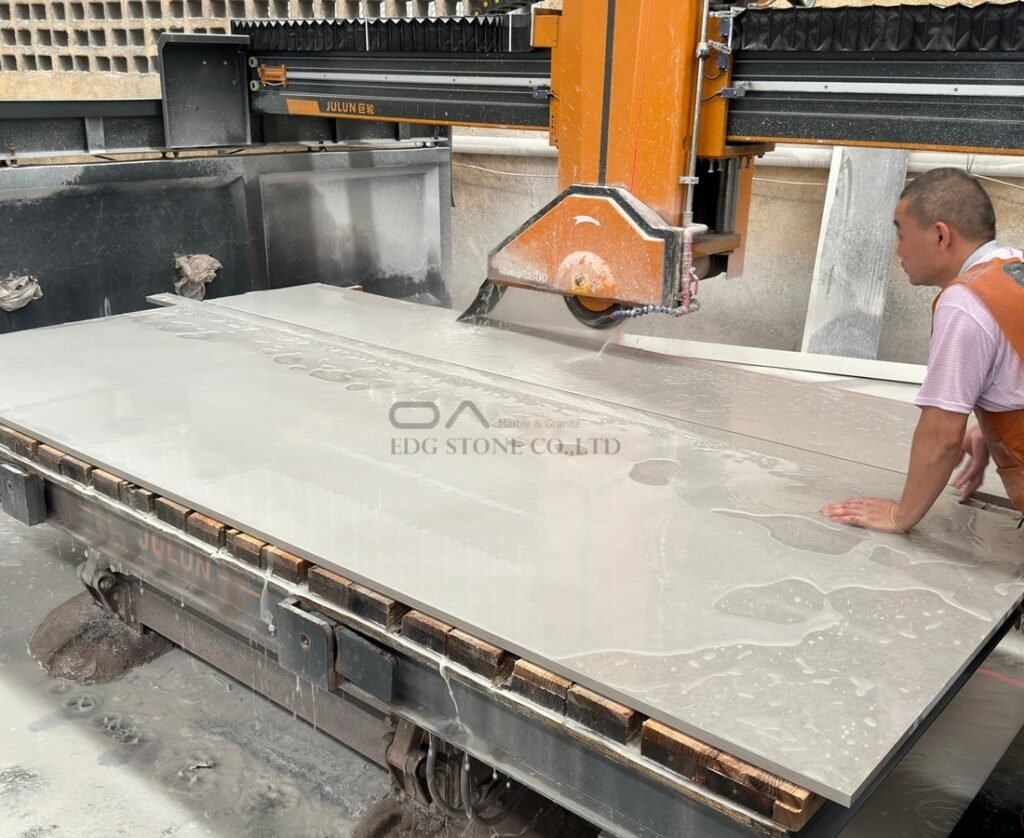
Custom Bathroom Vanity Tops: Complete Fabrication Workflow
Customization has become increasingly important in modern bathroom projects.
Standard Production Process
1. Site Measurement
Precise dimensions are collected.
2. CAD Drawing Preparation
Digital fabrication drawings are created.
3. Slab Selection
Color, thickness, and finish are confirmed.
4. CNC Cutting
Automated cutting improves precision.
5. Polishing & Quality Inspection
Edges and surfaces are refined and checked.
6. Packaging & Export
Products are prepared for domestic or international shipping.
Common Risks in Vanity Top Manufacturing
1. Measurement Errors
Incorrect measurements may result in installation problems.
2. Batch Color Variations
Low-quality suppliers may struggle with consistency.
3. Shipping Damage
Poor packaging increases breakage risk.
How Professional Factories Reduce Risk?
Experienced export manufacturers typically provide:
- No MOQ flexibility
- Fast sampling services
- Export-grade crate packaging
- Batch color management
- Pre-installation labeling systems
This becomes especially important for wholesalers, contractors, and developers managing large projects.
Real B2B Project Case Study: Canadian Apartment Development
Project Overview
- Product: Quartz bathroom vanity tops
- Quantity: 200 sets
- Sink Type: Undermount sink
- Vanity Size: 1200mm
- Market: Canada
Project Results
Compared with local sourcing options, the project achieved:
- Approximately 25% lower procurement cost
- 30% shorter installation timeline
- Zero rework incidents during installation
Why the Project Succeeded?
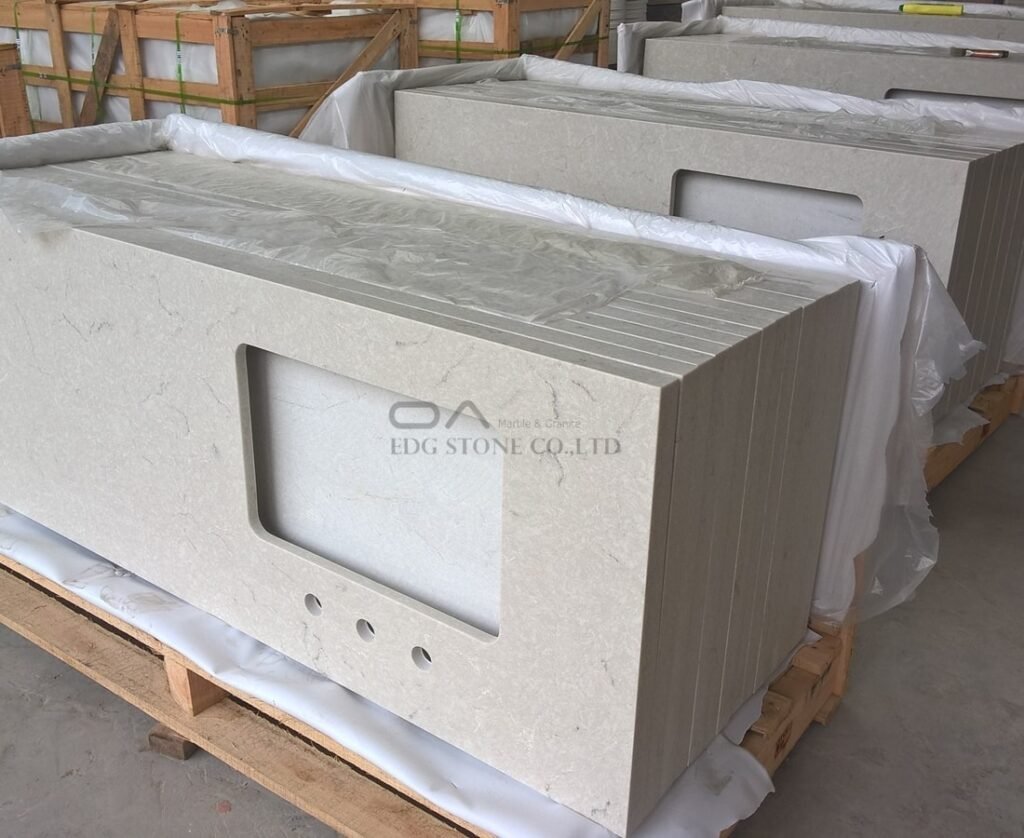
Factory Prefabrication
Pre-cut sink openings reduced onsite labor.
Standardized Production
Batch consistency minimized installation variation.
Professional Packaging
Damage rates remained extremely low during international shipping.
Quartz Bathroom Vanity Design Trends in 2026
Design preferences continue evolving toward cleaner, softer, and more architectural aesthetics.
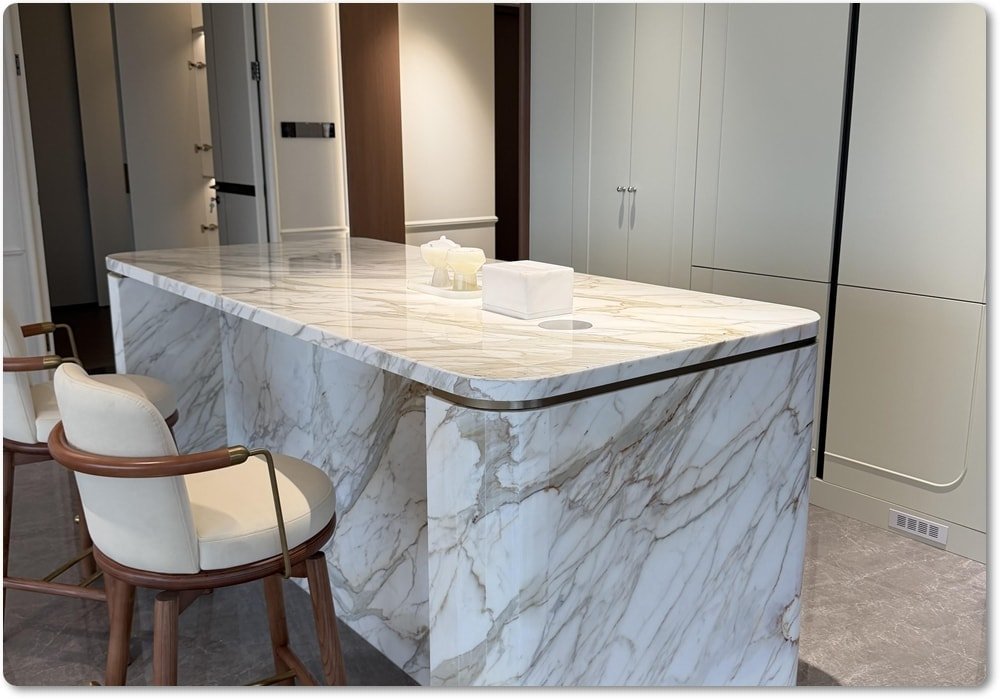
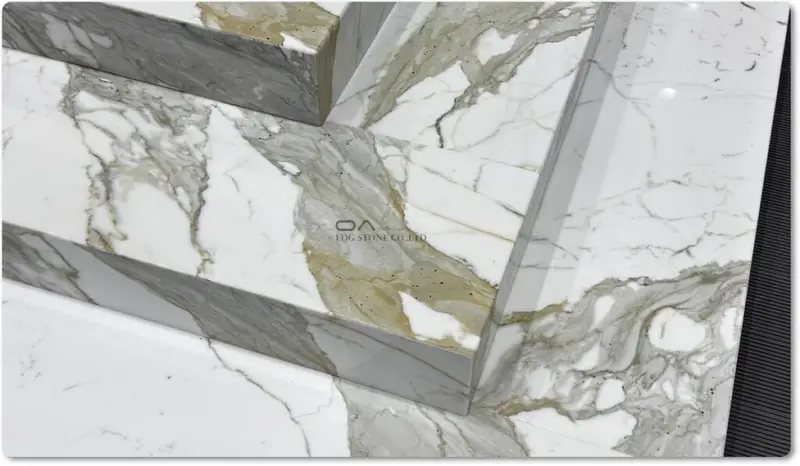
1. Calacatta-Inspired Quartz
Large marble-look veining remains one of the strongest trends globally.
Popular because it combines:
- Luxury aesthetics
- Marble-inspired visuals
- Easier maintenance
2. Matte Finish Quartz
Matte surfaces are increasingly popular for:
- Modern bathrooms
- Scandinavian interiors
- Minimalist spaces
Benefits include:
- Softer appearance
- Reduced glare
- Better fingerprint concealment
3. Ultra-Thin Vanity Tops
20mm slim-profile quartz tops are becoming more common in:
- Contemporary residential projects
- Luxury apartments
- Floating vanity systems
4. Integrated Design Language
Modern bathrooms increasingly favor:
- Seamless edges
- Hidden supports
- Coordinated backsplash systems
- Large-format slab continuity
Overall Trend Summary
The industry trend can be summarized as:
“Natural aesthetics combined with industrial performance.”
Are There Any Disadvantages to Quartz Vanity Tops?
A trustworthy buying guide must also address limitations.
1. Heat Resistance Limitations
Quartz contains resin components that can be damaged by excessive heat.
Direct exposure to extremely hot objects may cause:
- Discoloration
- Resin stress
- Surface damage
2. UV Sensitivity
Most standard quartz products are not ideal for prolonged outdoor exposure.
Extended UV exposure may lead to:
- Yellowing
- Color fading
This is why quartz is generally recommended for indoor use only.
3. Quality Variations Between Suppliers
Low-end quartz products may suffer from:
- Weak resin systems
- Poor pigment stability
- Inconsistent density
- Surface yellowing over time
How to Avoid Low-Quality Quartz
Buyers should prioritize:
- Reputable slab manufacturers
- Certified fabrication facilities
- Factory-direct sourcing
- Consistent export experience
How to Choose the Right Quartz Vanity Supplier?
Supplier selection significantly impacts:
- Product quality
- Delivery reliability
- Cost efficiency
- Installation success
Key Evaluation Standards
Export Experience
Can the supplier handle international logistics professionally?
Customization Capability
Do they support OEM and cut-to-size fabrication?
Batch Consistency
Can they maintain color stability across large orders?
Compliance & Safety
Do they follow professional fabrication and dust-control standards?
Advantages of Factory-Direct Quartz Suppliers
Professional factory-direct manufacturers such as EDG Stone Factory often provide:
- Lower overall procurement cost
- Better production control
- Faster lead times
- More flexible customization
- Improved quality consistency
For wholesalers, developers, and contractors, factory-direct sourcing can significantly improve project efficiency.
FAQ: Quartz Bathroom Vanity Tops
Q1: Do quartz vanity tops stain easily?
No. Quartz has a non-porous structure with excellent stain resistance.
Q2: Which is better: quartz or granite vanity tops?
Quartz is generally easier to maintain, while granite offers a more natural appearance.
Q3: Can quartz vanity tops include integrated sinks?
Yes. Integrated sink fabrication is possible, although it usually increases production cost.
Q4: Does quartz require sealing?
No. Unlike granite or marble, quartz typically does not require periodic sealing.
Q5: Is quartz suitable for commercial bathroom projects?
Yes. Quartz is widely used in:
- Hotels
- Apartments
- Student housing
- Healthcare facilities
- Retail developments
because of its durability and consistency.
Conclusion
Quartz bathroom vanity tops became mainstream in 2026 for one simple reason:
They provide the most balanced combination of performance, cost efficiency, and visual appeal available in today’s bathroom surface market.
Why Quartz Continues Dominating the Industry?
Performance
- Stain resistant
- Low maintenance
- Structurally stable
Cost Efficiency
- More predictable than marble
- More durable than laminate
- Lower lifecycle maintenance cost
Application Flexibility
Suitable for:
- Residential homes
- Luxury apartments
- Hotels
- Commercial projects
- Large-scale developments
For homeowners, quartz is one of the easiest bathroom surfaces to maintain.
For developers and procurement teams, Quartz delivers scalable quality control and predictable project management outcomes.
If your goals include:
- Bulk purchasing
- Custom fabrication
- Cost optimization
- Reliable delivery timelines
Then, working with a professional factory-direct manufacturer such as EDG Stone Factory can provide a more efficient sourcing strategy for modern bathroom projects in 2026.
References
- USGS – Dimension Stone Statistics
- NSF International – NSF/ANSI 51 Standards
- Occupational Safety and Health Administration (OSHA) – Silica Dust Guidelines
- ASTM C1378 – Standard Test Method for Determination of Resistance to Staining
- Remodeling Magazine – Cost vs Value Report
- NKBA – Kitchen & Bath Design Guidelines
- Natural Stone Institute – Material Selection Guide
- International Surface Fabricators Association – Quartz Fabrication Best Practices