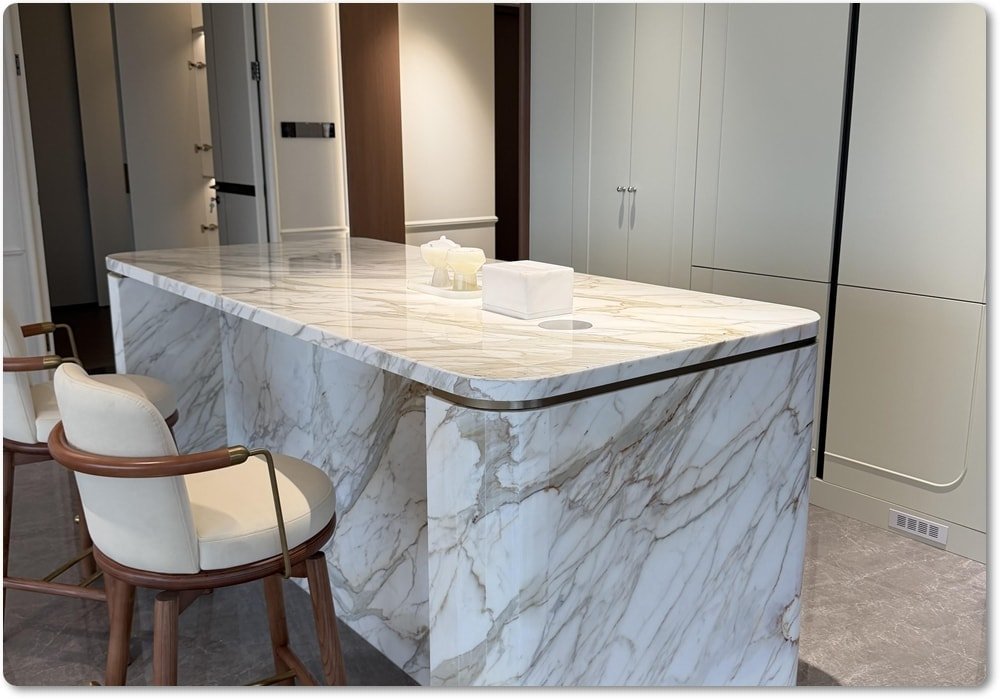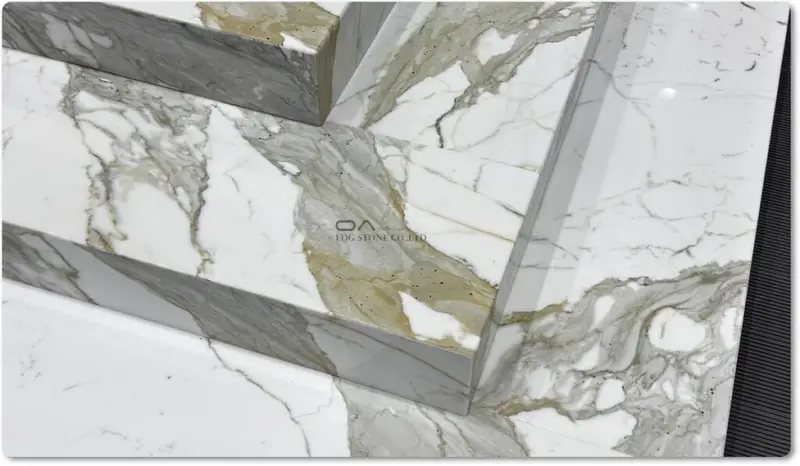
In high-end interior design, few materials can rival the soft elegance and natural artistry of travertine, limestone, and onyx. These stones are widely specified in luxury villas, boutique hotels, and statement bathrooms.
However, when it comes to bathroom vanity tops, these materials are often misunderstood—and frequently misused.
According to the United States Geological Survey, travertine, limestone, and onyx are all classified as carbonate stones, primarily composed of calcium carbonate (CaCO₃). This single characteristic defines their performance limitations, especially in wet, high-use environments like bathrooms.
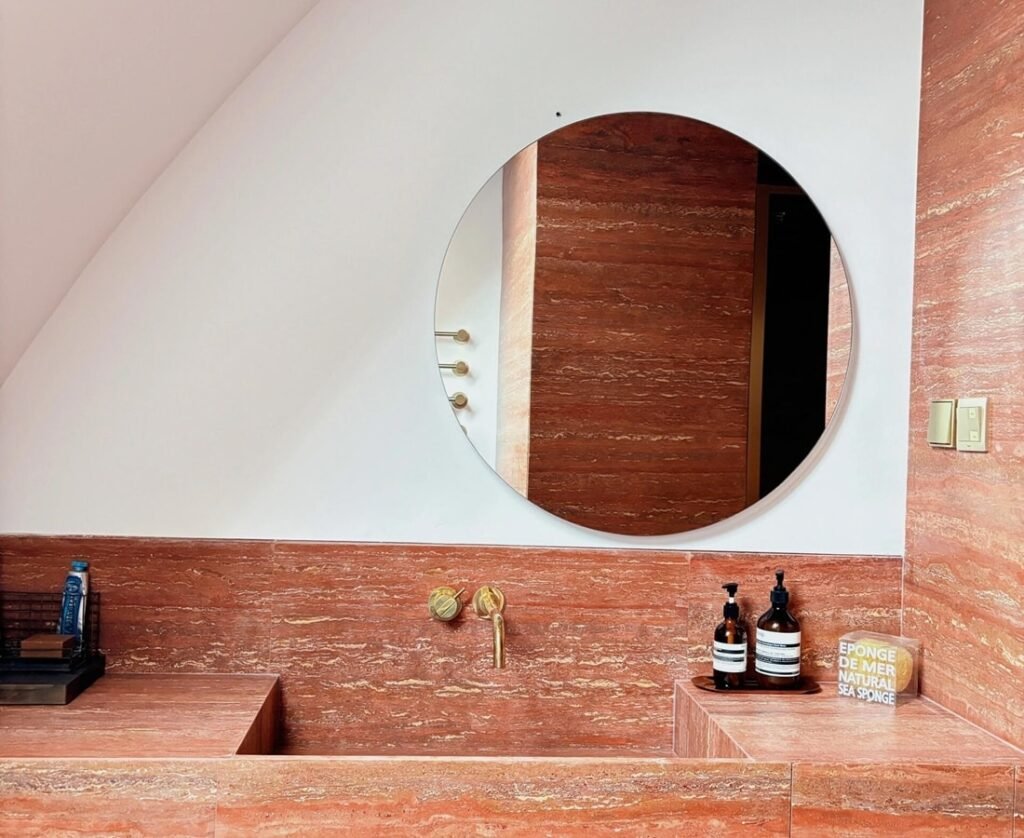
Core Material Properties You Must Understand
High Porosity — The Root of Most Problems
Compared to dense materials like granite or engineered quartz, these stones are significantly more porous:
- Travertine → Naturally filled with visible voids and holes
- Limestone → High absorption rate due to fine pore structure
- Onyx → Micro-fractures and delicate crystalline composition
What this means in real-world bathroom use:
- Water absorption is unavoidable
- Staining from cosmetics, soap, and oils happens quickly
- Bacteria and mold risk increase in humid conditions
- Long-term discoloration is common—even with sealing
👉 In short: Porosity = maintenance burden + durability risk
Acid Sensitivity — A Critical Weakness
All carbonate stones react chemically with acids.
The Natural Stone Institute confirms that acidic substances will etch calcium-based stones, permanently damaging the surface.
Common bathroom exposures include:
- Toothpaste
- Facial cleansers
- Skincare products (vitamin C, AHA, BHA acids)
- Household cleaning agents
Result:
- Surface dulling
- Etching marks (white, cloudy spots)
- Loss of polish and smoothness
👉 Unlike stains, etching cannot be cleaned—it requires refinishing
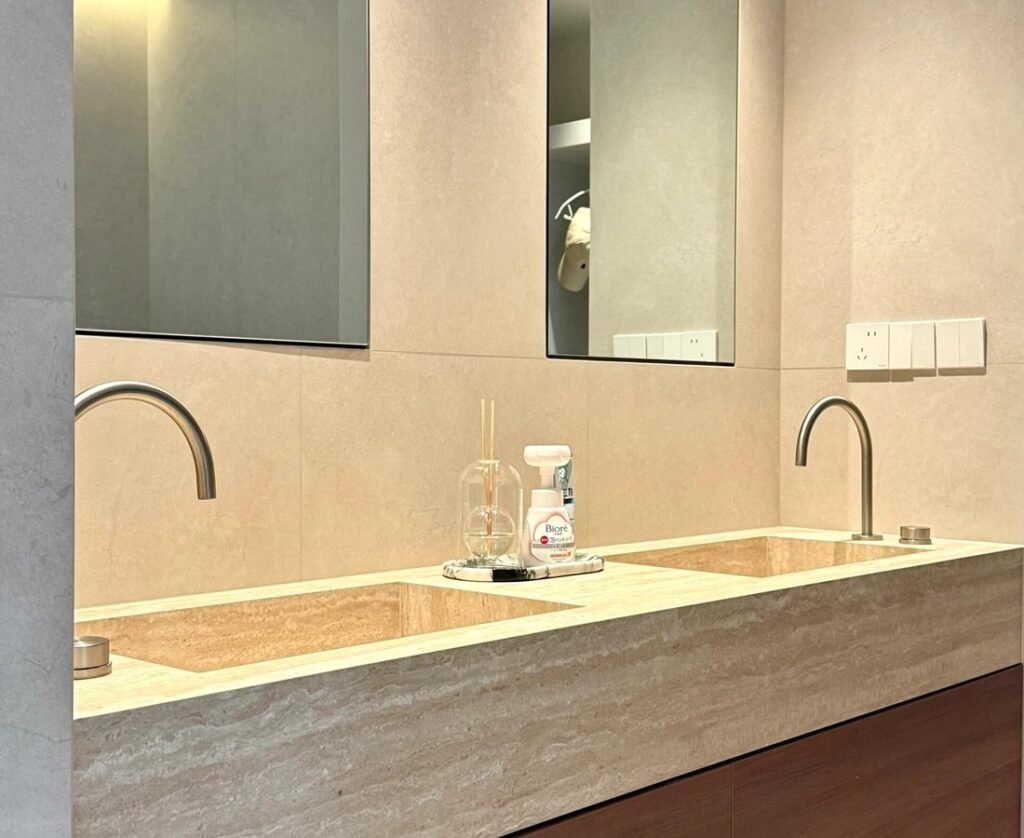
Material Comparison — Performance at a Glance
| Material | Porosity | Strength | Durability | Best Use Case |
|---|---|---|---|---|
| Travertine | High | Medium | Moderate | Decorative / low-use |
| Limestone | High | Medium | Moderate | Light-use vanities |
| Onyx | Very High | Low | Poor | Pure decoration |
👉 Key takeaway: None of these materials is ideal for heavy-use vanity tops
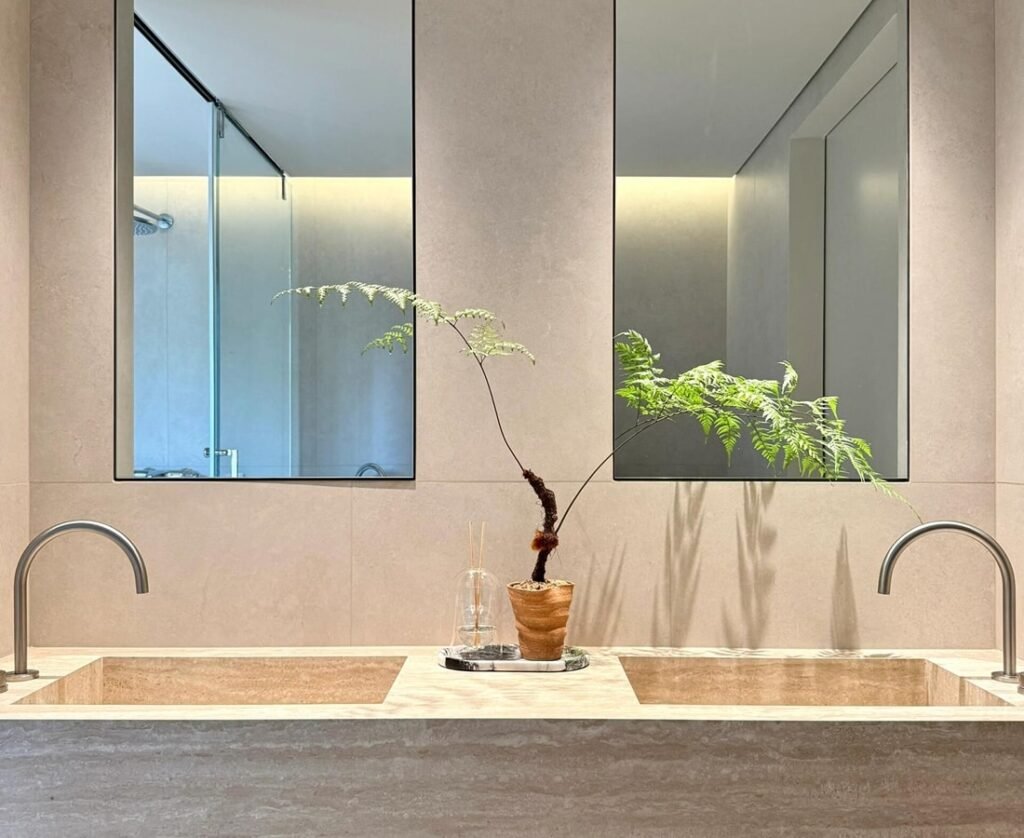
Why Designers Still Choose Them?
1. Exceptional Visual Appeal
These stones offer qualities that engineered materials struggle to replicate:
- Warm, neutral palettes
- Organic veining and movement
- Soft, calming textures
They are especially popular in spa-style and minimalist luxury interiors.
2. Demand in High-End Projects
Architects and designers still specify them in:
- Luxury hotels
- High-end residential villas
- Feature bathrooms and powder rooms
Special highlight: Onyx
- Naturally translucent
- Ideal for backlit applications
- Creates dramatic, high-value focal points
👉 However, in most cases, they are used vertically (walls), not horizontally (vanity tops)
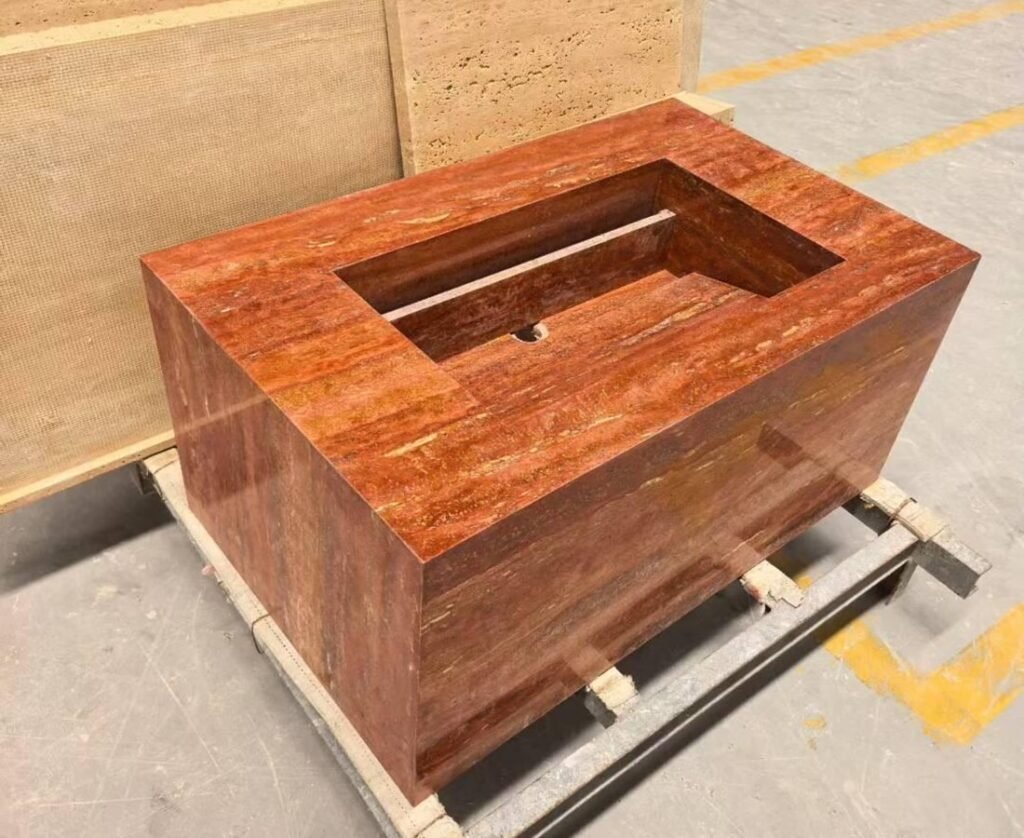
Real-World Case Studies — Failure vs Success
❌ Case 1: Residential Bathroom Vanity (Failure)
- Material: Travertine
- Usage: Daily family bathroom
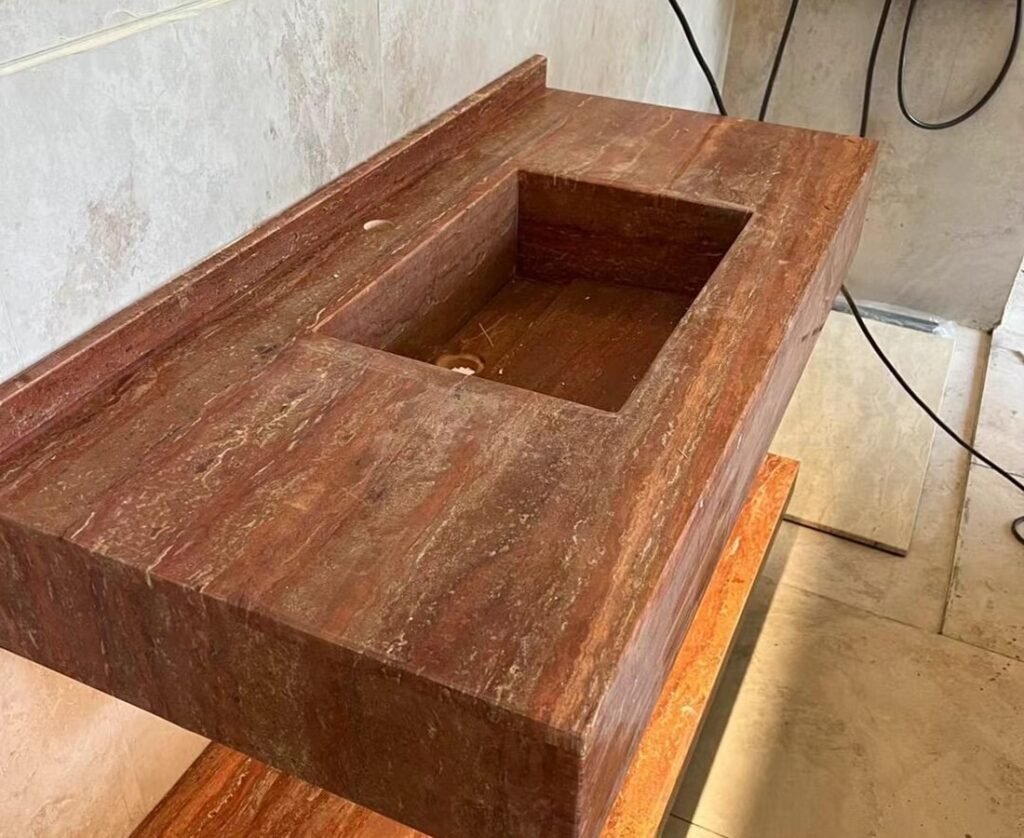
Outcome within 12 months:
- Visible staining around the sink
- Etching from toothpaste and soap
- Surface dullness and uneven color
👉 Root cause: High porosity + frequent exposure
✅ Case 2: Luxury Hotel Feature Wall (Success)
- Material: Onyx
- Usage: Backlit decorative wall
Outcome:
- Stunning visual impact
- No functional wear issues
- Long-term aesthetic retention
👉 Key difference: Zero physical interaction
Are They Suitable for Bathroom Vanity Tops?
Clear, evidence-based conclusion:
👉 Not recommended for high-frequency bathroom vanity use
Acceptable use scenarios:
- Decorative vanity tops (guest bathrooms)
- Low-traffic powder rooms
- Feature installations (non-functional areas)
Not suitable for:
- Family bathrooms
- Commercial restrooms
- High-use residential projects
Better Alternatives (2026 Recommendations)
Engineered Quartz — The Most Reliable Choice
- Non-porous
- Stain-resistant
- No sealing required
- Consistent appearance
Perfect for:
- Residential bathrooms
- Hospitality projects
- High-traffic environments
Quartzite — Natural Yet Durable
- Much lower porosity than limestone/travertine
- Higher hardness and scratch resistance
- Better chemical resistance
👉 Ideal for clients who want natural stone with performance
Procurement Strategy for Projects
For developers, designers, and contractors:
Best Practices:
- Avoid carbonate stones for primary vanity tops
- Use them only as decorative accents
- Prioritize durability over aesthetics in functional zones
Sourcing Recommendation:
Factories like EDG Stone provide:
- Marble-look quartz alternatives
- Custom fabrication with stable materials
- Project-based supply solutions (no MOQ, fast delivery)
👉 This allows you to achieve luxury aesthetics without performance risk
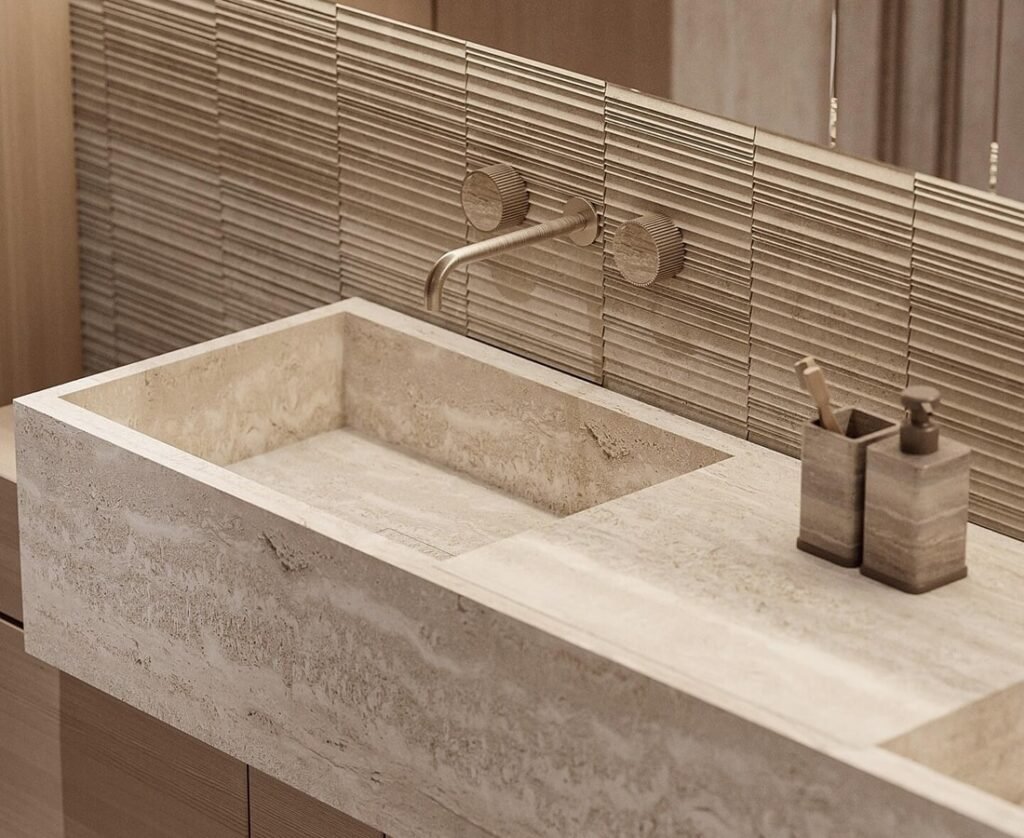
Conclusion — Design Material vs Functional Material
Travertine, limestone, and onyx are not flawed materials—they are misapplied in many bathroom vanity scenarios.
Final Insight:
- They are design-driven materials, not performance-driven ones
- Their beauty comes with clear technical limitations
- In 2026, the industry trend is shifting toward “visual + functional balance.”
👉 Use them where they shine: visual impact, not daily use