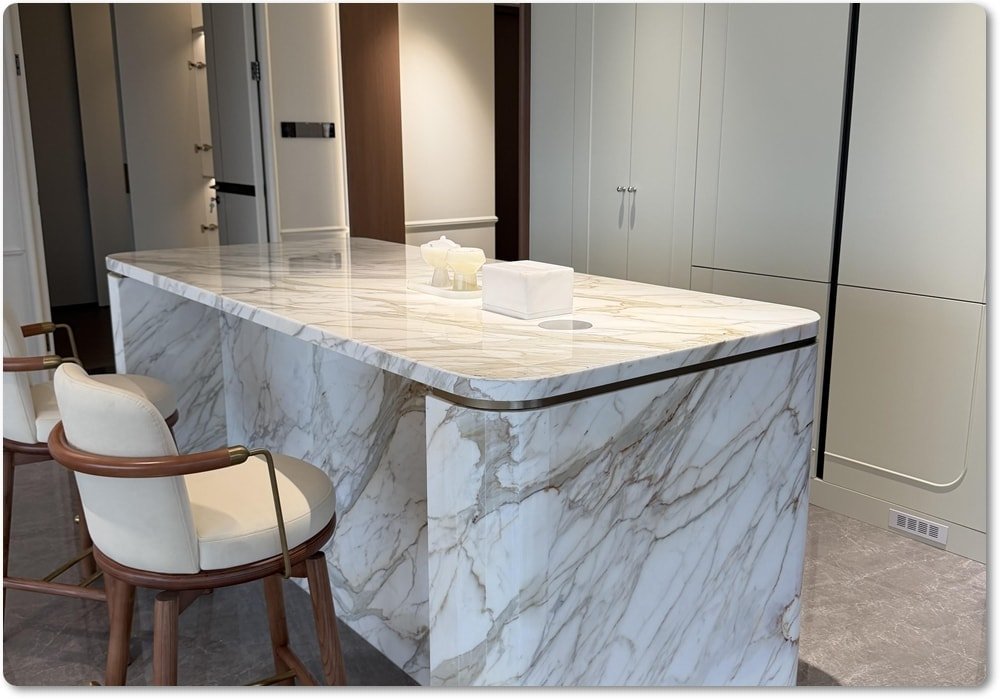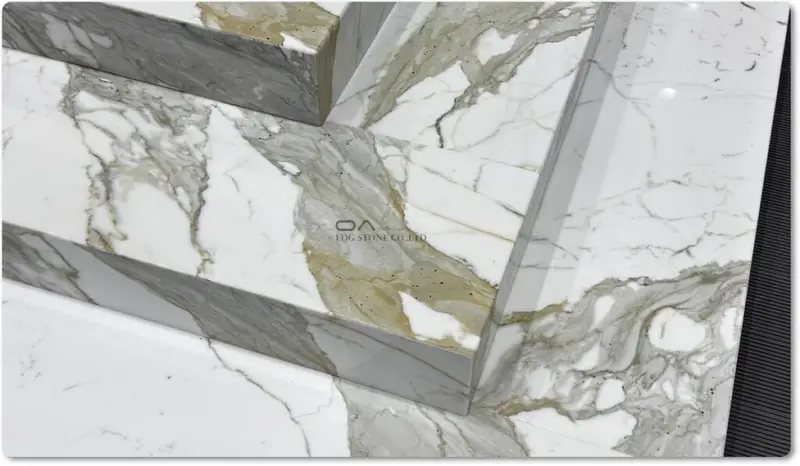
What Are Bathroom Vanity Tops? (Industry Definition & Scope)
Bathroom vanity tops refer to the countertop systems installed on bathroom cabinets, with or without integrated sinks. They serve three essential functions:
- Supporting daily washing and grooming activities
- Providing water resistance and stain protection
- Acting as a key visual design focal point
According to the United States Geological Survey, dimension stone products (including countertops) are processed to precise sizes and must meet standards for durability, aesthetic consistency, and fabrication accuracy.
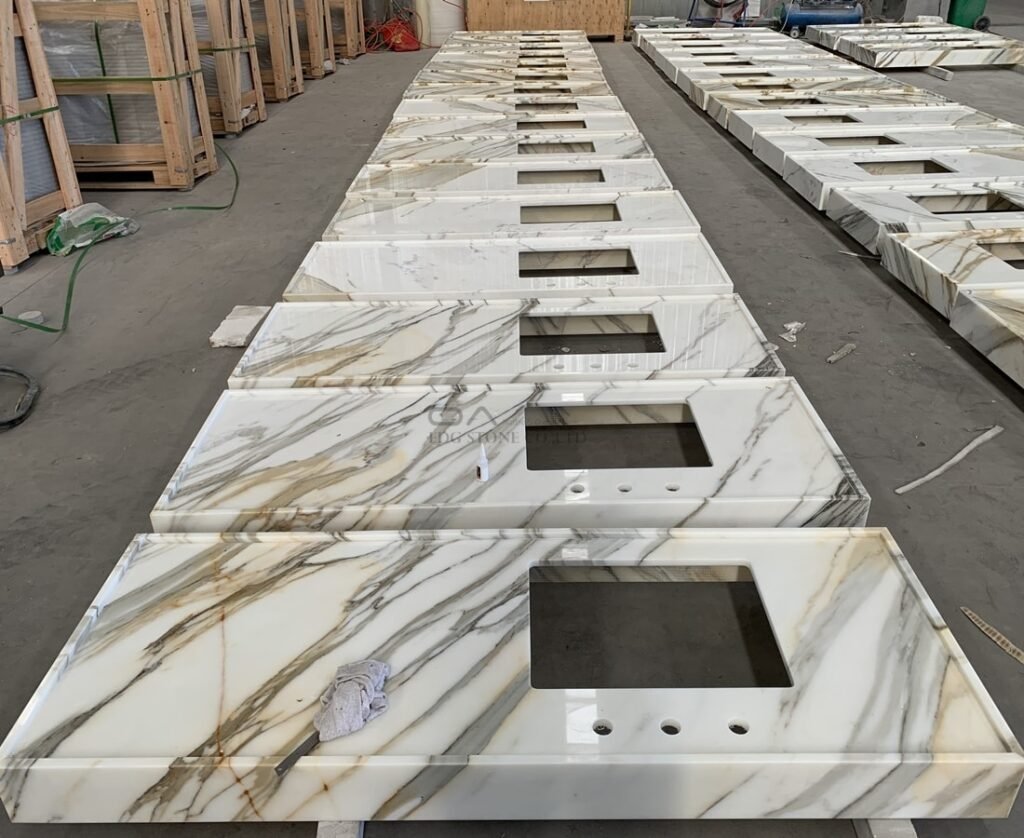
Core Classification System of Bathroom Vanity Tops
1. By Structure
Bathroom Vanity Tops Only
- No sink included
- Ideal for renovation projects
- Lower cost and flexible sink selection
Bathroom Vanity Tops with Sink
- Sink and countertop sold together
- Simplifies installation
- Common in retail channels
Integrated Sink Vanity Tops
- Seamless, molded sink + top design
- No joints → better hygiene
- Higher cost but premium appeal
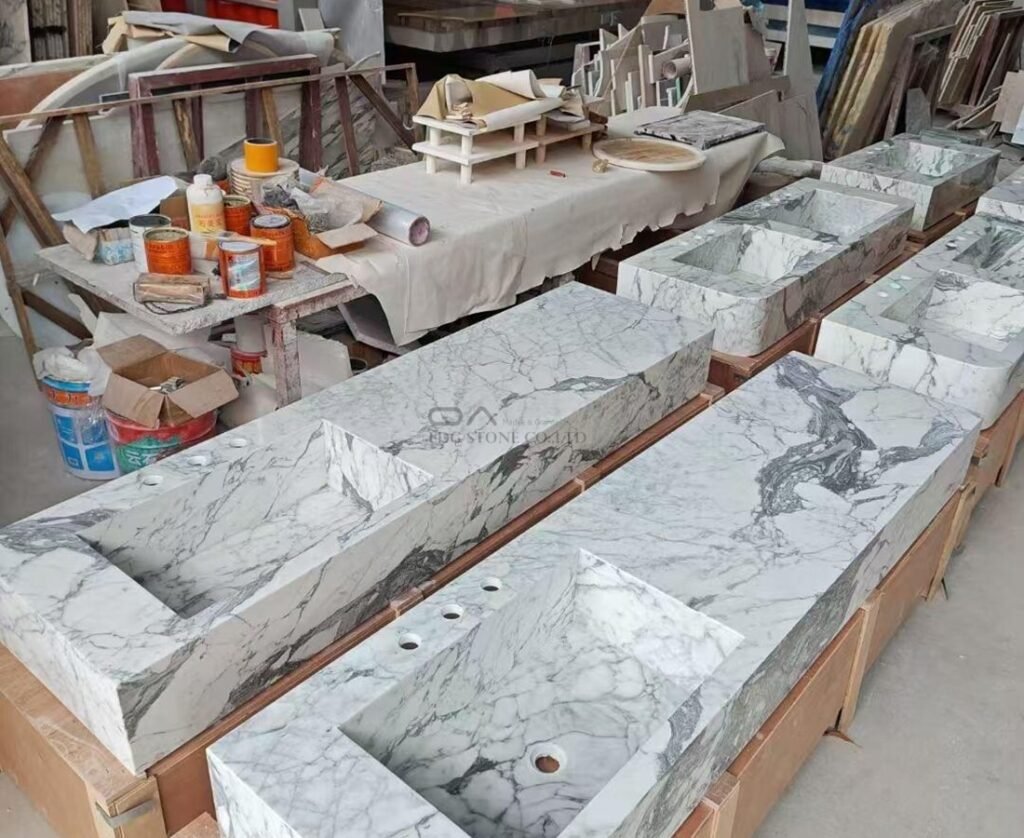
2. By Material (Key Procurement Dimension)
Quartz Bathroom Vanity Tops
👉 The mainstream choice (low maintenance + high stability)
- Non-porous
- Highly consistent color
- Ideal for residential and commercial projects
Granite Bathroom Vanity Tops
👉 Durable natural stone option
- Strong and heat-resistant
- Requires periodic sealing
Marble Vanity Tops
👉 Premium aesthetics
- Unique veining patterns
- Higher maintenance requirements
Quartzite / Travertine / Limestone
👉 Niche natural stones
- Beautiful but requires careful use
- Higher porosity risk
Artificial Stone / Laminate
👉 Budget-friendly solutions
- Lower durability
- Suitable for temporary or rental projects
Material Performance Comparison (Based on Industry Data)
| Material | Water Absorption | Maintenance | Price Level | Recommendation |
|---|---|---|---|---|
| Quartz | <0.05% | Low | Medium | ⭐⭐⭐⭐⭐ |
| Granite | 0.1–0.4% | Medium | Medium | ⭐⭐⭐⭐ |
| Marble | 0.2–2% | High | High | ⭐⭐⭐ |
| Laminate | High | Low | Low | ⭐⭐ |
📊 Data Sources:
- ASTM International (water absorption testing)
- Natural Stone Institute
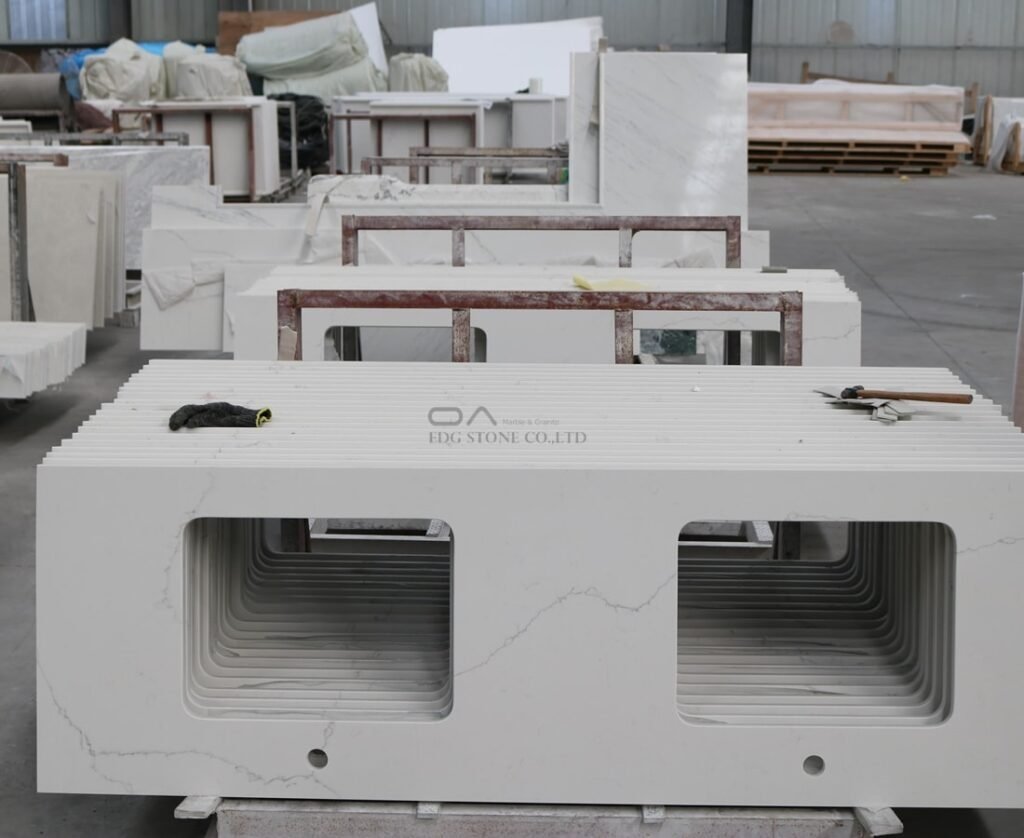
Bathroom Vanity Tops with Sink vs. Tops Only: Buying Logic
When to Choose “Tops Only”?
- Partial renovations
- Budget constraints
- Keeping existing plumbing
When to Choose “With Sink”?
- New construction
- Multi-unit or bulk projects
- Faster installation requirements
According to the National Kitchen and Bath Association, integrated systems (top + sink) reduce installation errors and improve efficiency in standardized projects.
Size & Space Planning (Single vs Double Sink)
Standard Sizes
- Single sink: 600–900 mm
- Double sink: 1200–1500 mm
Design Principles
- Two users → double sink
- Small bathrooms → single sink
👉 NKBA Recommendations:
- Minimum sink center spacing: ≥ 760 mm
- Minimum operating space: ≥ 500 mm
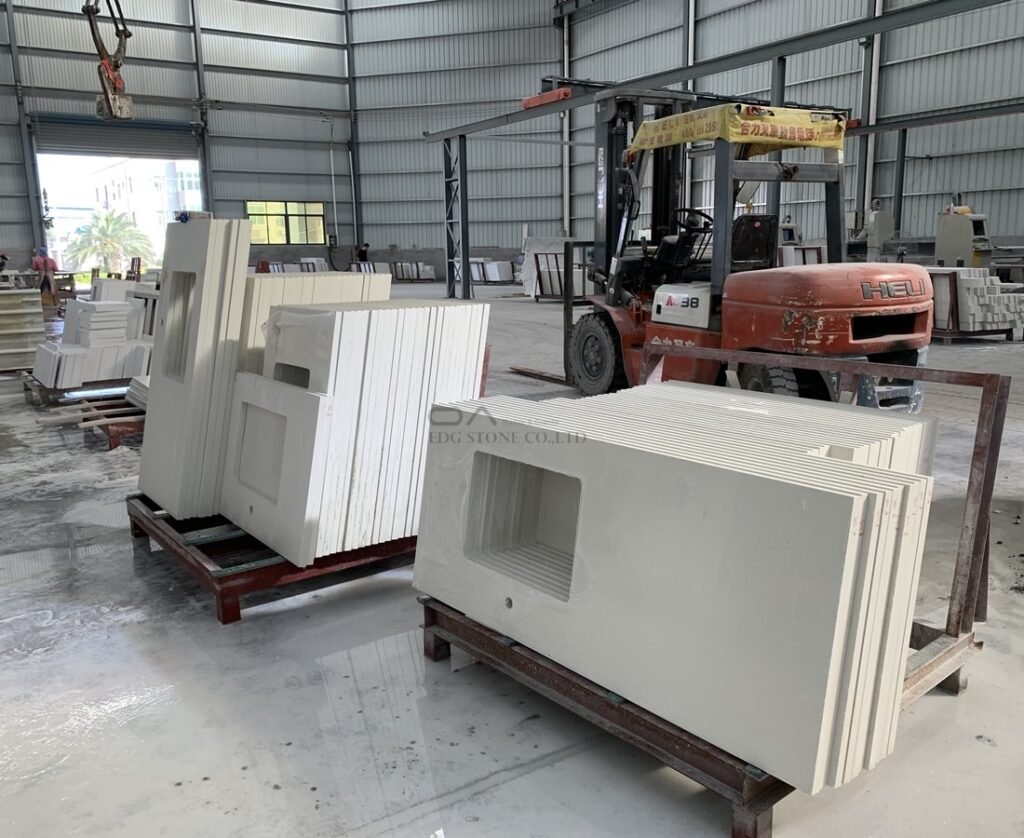
Cost Structure Breakdown (2026)
Material Costs
- Quartz: $30–120/ft²
- Granite: $40–100/ft²
- Marble: $60–150/ft²
Fabrication Costs
- Cutting
- Polishing
- Sink cutouts
Installation Costs
- $40–80/ft²
📊 Data Sources:
- Remodeling Magazine
- Home Depot
- Lowe’s
Custom Bathroom Vanity Tops: Process & Risk Control
Standard Workflow
- Measurement
- CAD design
- Slab selection
- CNC fabrication
- Quality inspection & packaging
Key Risks
- Measurement errors
- Color variation
- Shipping damage
Solutions
Working with a professional factory (e.g., EDG Stone Factory):
- Standardized production systems
- Export-grade packaging
- Batch consistency control
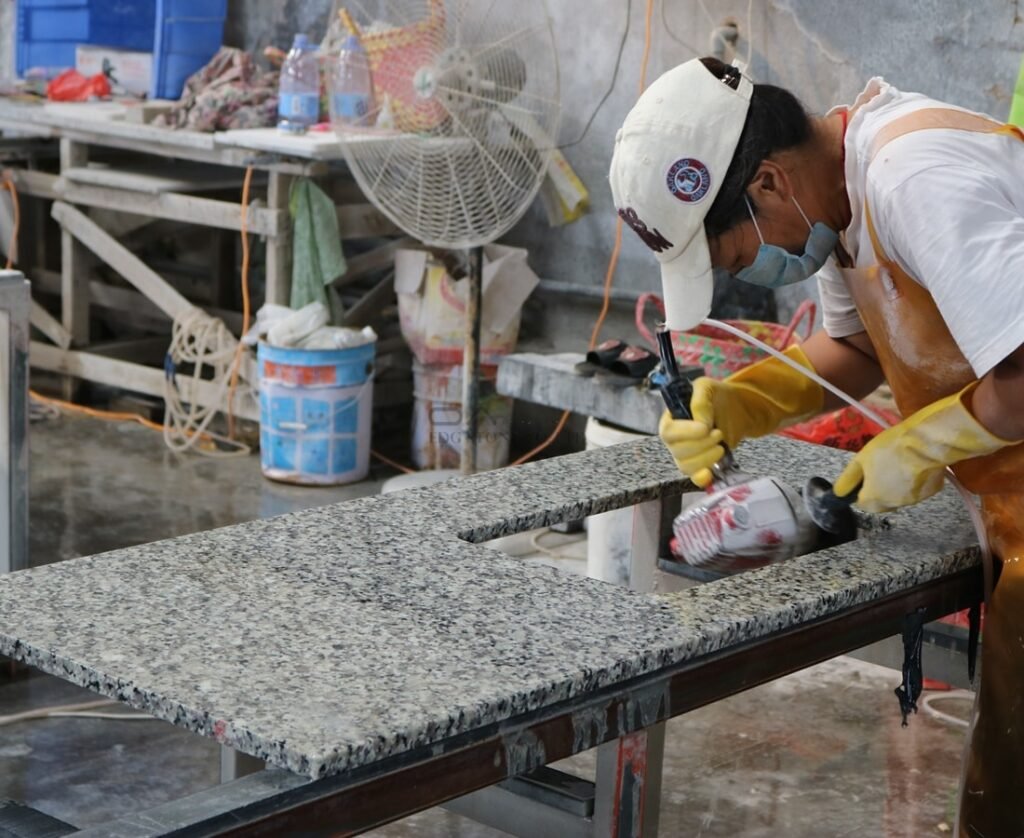
Retail vs Factory Direct: A Critical Business Decision
Retail Channels (e.g., Home Depot, Lowe’s)
Advantages:
- Ready-to-use products
- Standard sizes
Disadvantages:
- Limited customization
- Higher pricing
Factory Direct Supply
Advantages:
- 20–40% lower costs
- Full customization capability
- Ideal for bulk procurement
👉 This is the core model behind manufacturers like EDG Stone Factory.
Real Case Study (Project-Level Application)
Multi-Family Housing Project (North America)
- Material: Quartz vanity tops
- Quantity: 300 sets
- Type: Undermount sink
Results:
- 30% cost reduction
- 25% shorter lead time
- Improved installation efficiency
Key Success Factors:
- Factory prefabrication
- Standardized sizing
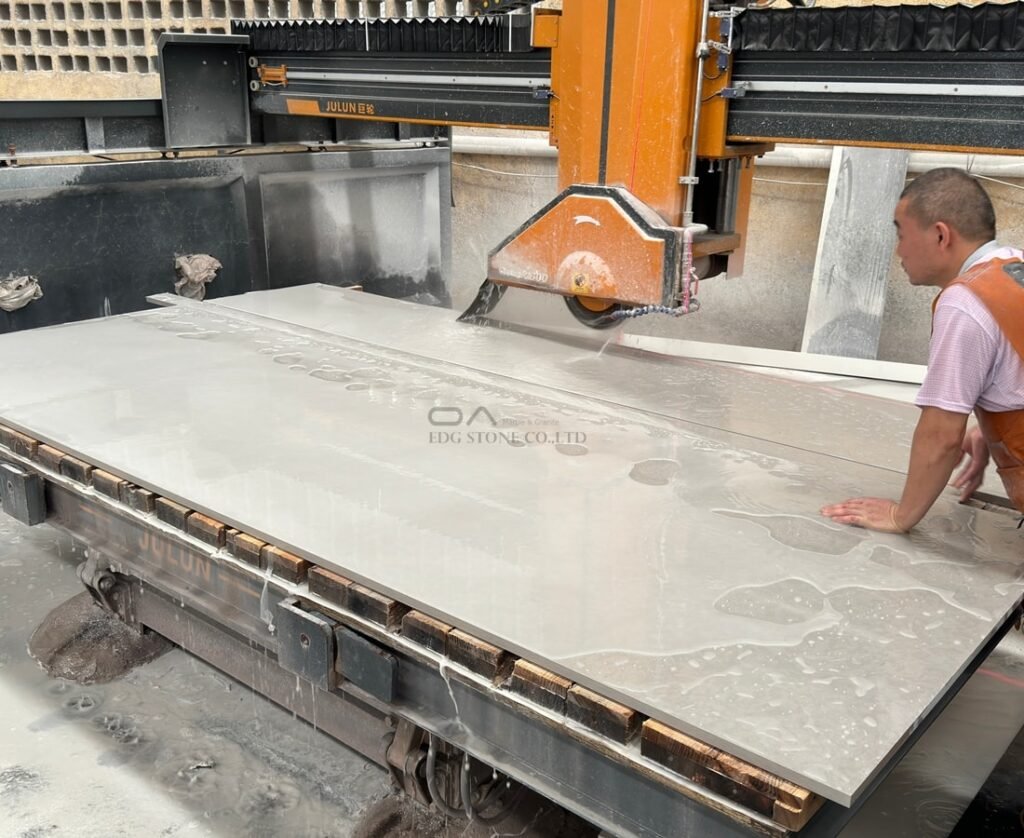
2026 Industry Trends
- Quartz dominates the market
- Customization demand is increasing
- Integrated designs are trending
- Factory-direct sourcing is expanding
👉 Core shift:
From “buying products” → “buying solutions.”
How to Choose the Right Vanity Top?
3-Step Decision Framework
- Define your budget
- Select material (Quartz recommended first)
- Choose sourcing channel (Retail vs Factory Direct)
FAQ
Q1: Which bathroom vanity top is the most durable?
Quartz and granite offer the best durability.
Q2: Is quartz better than marble?
Yes, in terms of maintenance, durability, and consistency.
Q3: Do I need custom vanity tops?
Custom fabrication is recommended for non-standard sizes or large projects.
Conclusion
Choosing bathroom vanity tops is fundamentally a multi-variable decision involving:
- Material performance
- Cost control
- Supply chain capability
In 2026:
- Quartz is the optimal solution
- Customization becomes standard
- Factory-direct sourcing is the dominant trend
For homeowners, this decision impacts daily usability.
For developers and distributors, it determines project cost, efficiency, and risk control.
👉 If your needs include:
- Bulk procurement
- Custom sizing
- Stable global supply
Then working with a professional stone manufacturer like EDG Stone Factory is a more efficient and scalable solution.
References
- United States Geological Survey
- National Kitchen and Bath Association
- ASTM International
- Natural Stone Institute
- Remodeling Magazine
- Home Depot
- Lowe’s