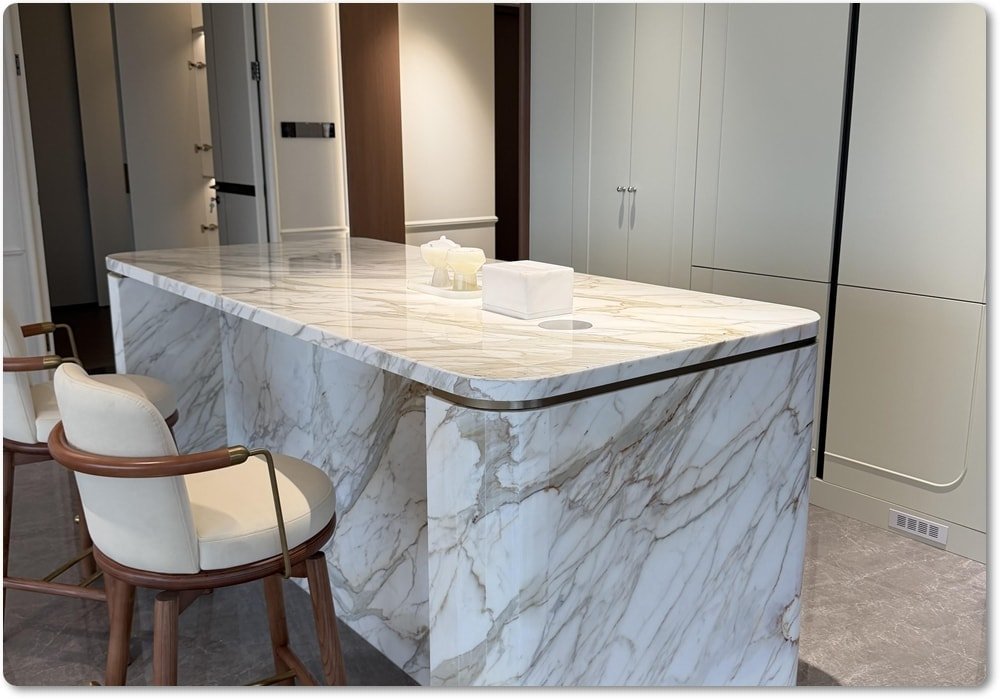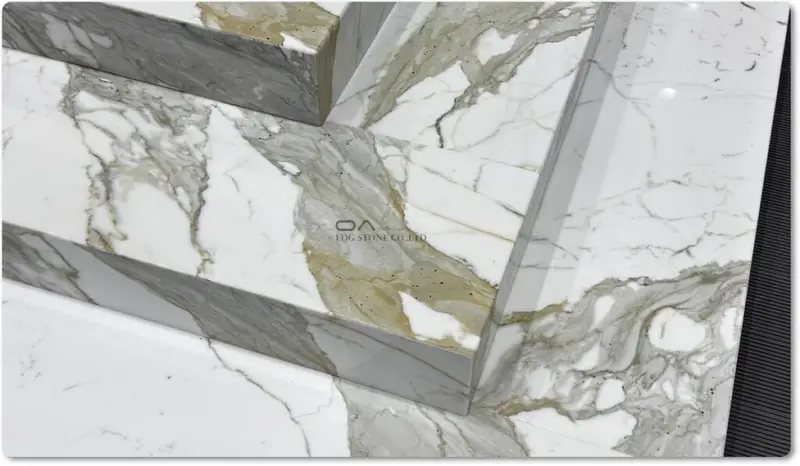
Introduction: Why Quartzite Is Gaining Momentum in Luxury Bathrooms?
In 2026, quartzite bathroom vanity tops are rapidly becoming the preferred choice for high-end residential and boutique commercial projects. Designers and developers are increasingly shifting away from traditional marble due to maintenance concerns, while still demanding the same natural elegance.
Quartzite delivers a compelling balance:
- The organic veining of marble
- The strength and resilience of granite
- Superior long-term performance under real-world use
According to the Geological Society, quartzite is a metamorphic rock formed when sandstone is subjected to intense heat and pressure, resulting in a dense structure dominated by quartz (SiO₂). This transformation is what gives quartzite its exceptional durability.
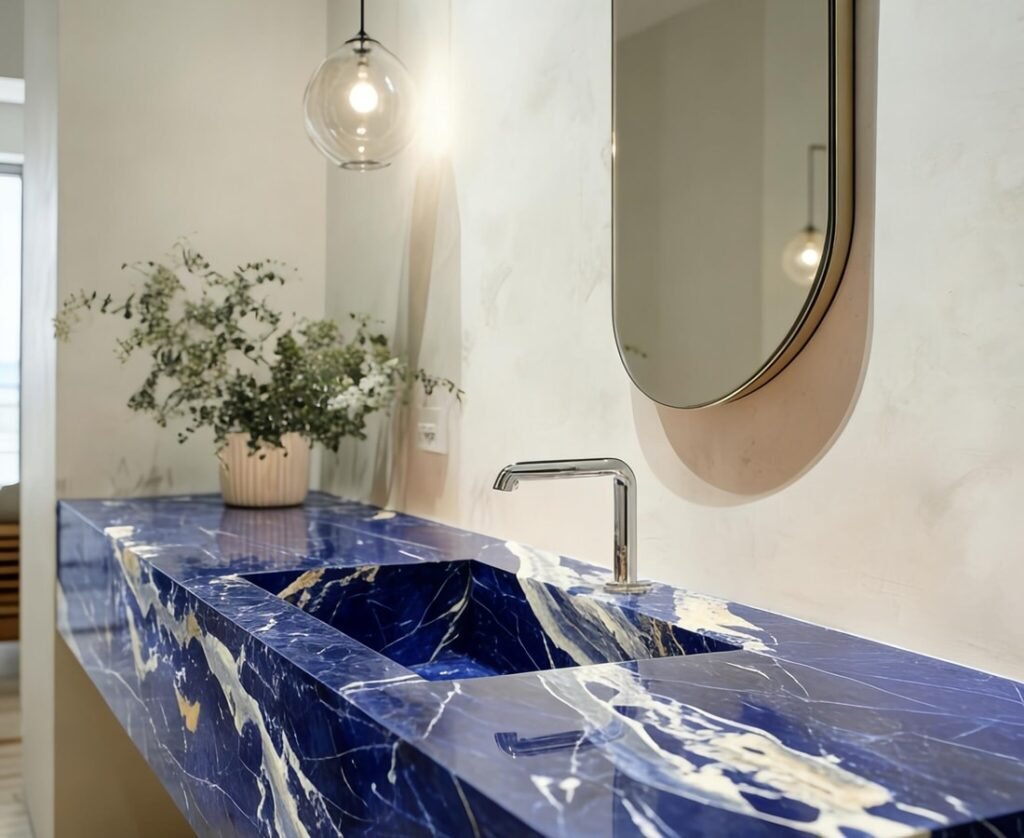
What Quartzite Looks Like in Bathroom Applications?
Quartzite surfaces often feature:
- Soft white, gray, or beige bases
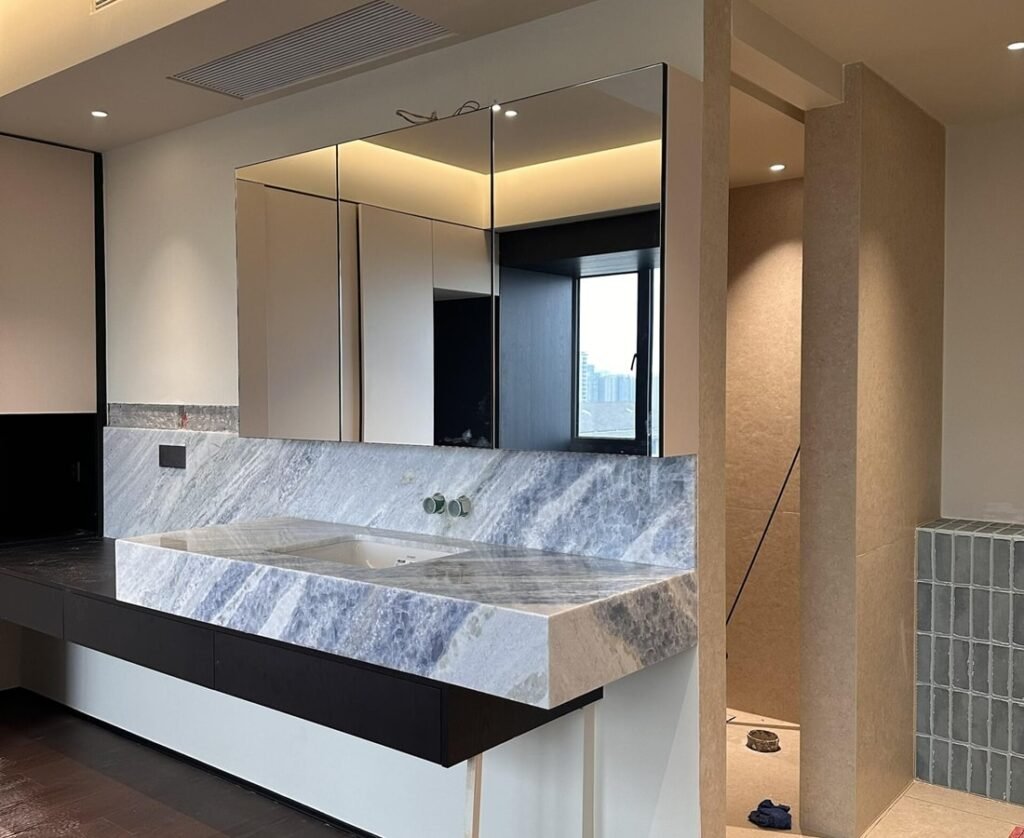
- Dramatic veining similar to Calacatta marble
- Subtle crystalline sparkle under light
This makes it ideal for:
- Floating vanities
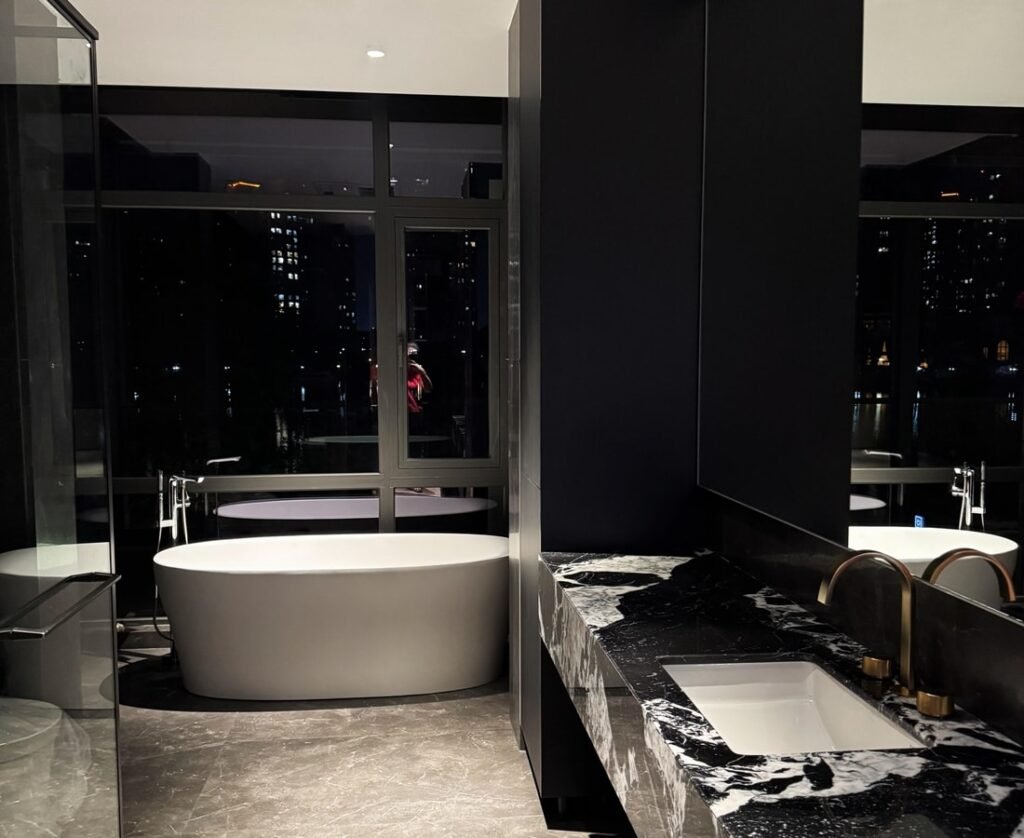
- Double-sink master bathrooms
- Spa-style interiors
Quartzite Core Performance Metrics
From a material science perspective, quartzite is one of the most robust natural stones used in interior design.
Key Properties (based on ASTM International testing standards):
- Mohs Hardness: 7+ (harder than glass and most metals)
- Water Absorption: Low
- Scratch Resistance: High
- Heat Resistance: Excellent
- UV Stability: Suitable for well-lit bathrooms
These characteristics make quartzite particularly suitable for high-use bathroom environments where durability matters.
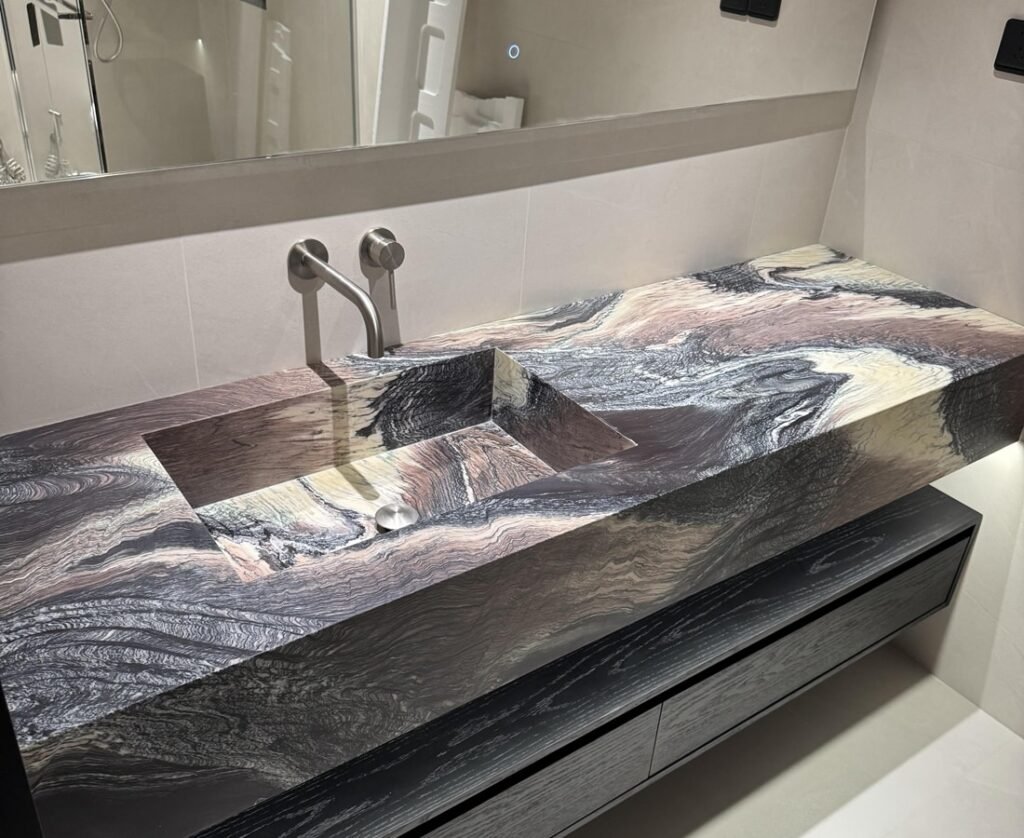
Quartzite vs Marble vs Granite: Performance Comparison
| Material | Hardness | Maintenance | Aesthetic Appeal |
|---|---|---|---|
| Quartzite | High | Medium | High |
| Marble | Low | High | Very High |
| Granite | Medium | Medium | Medium |
Key Insights:
- Quartzite vs Marble:
Quartzite is significantly more resistant to etching and scratching, making it better for bathrooms with frequent use. - Quartzite vs Granite:
While granite is durable, quartzite often offers more refined, marble-like visuals, appealing to luxury design trends.
Why Choose Quartzite for Bathroom Vanity Tops?
1. Superior Durability
Quartzite outperforms marble in:
- Scratch resistance
- Chemical resistance (less prone to etching)
- Long-term wear
This makes it ideal for family bathrooms and luxury master suites alike.
2. Structural Stability
Unlike some granites that vary in pattern and density, quartzite offers:
- More consistent slab quality
- Lower risk of micro-fractures
- Better performance during fabrication
This stability is crucial for:
- Integrated sinks
- Thin-profile vanity tops
- Large-format installations
3. Premium Aesthetic Positioning
Quartzite is widely used in:
- Luxury residences
- High-end hotels
- Designer showrooms
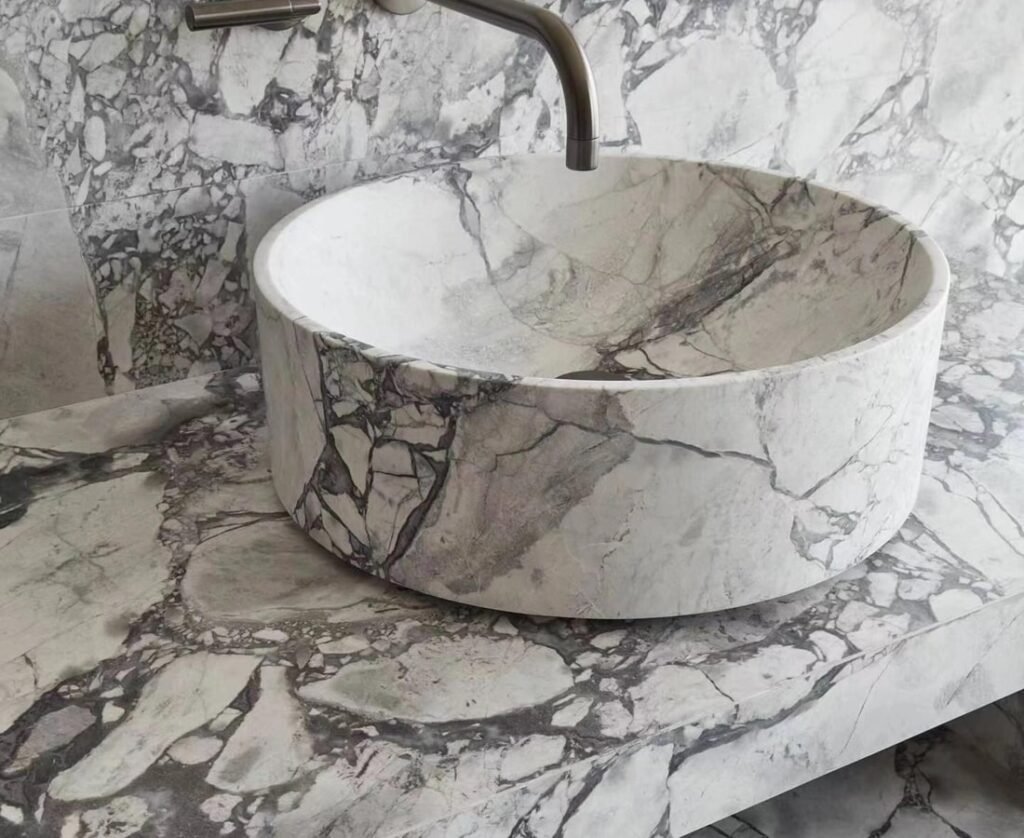
Its ability to mimic marble while outperforming it places it firmly in the premium category of bathroom materials.
Cost Analysis: Is Quartzite Worth It?
Quartzite sits in the upper-middle to premium price tier:
- Higher than granite (due to quarrying and fabrication difficulty)
- Comparable to high-end marble
- Higher fabrication cost due to the hardness
Typical Cost Factors:
- Slab rarity and origin
- Thickness and finish (polished vs leathered)
- Edge profiles and cutouts
- Installation complexity
👉 For developers and contractors, quartzite represents a higher upfront investment but lower lifecycle cost due to reduced maintenance.
Real-World Project Case Study
Project Type: Luxury Residential Bathroom
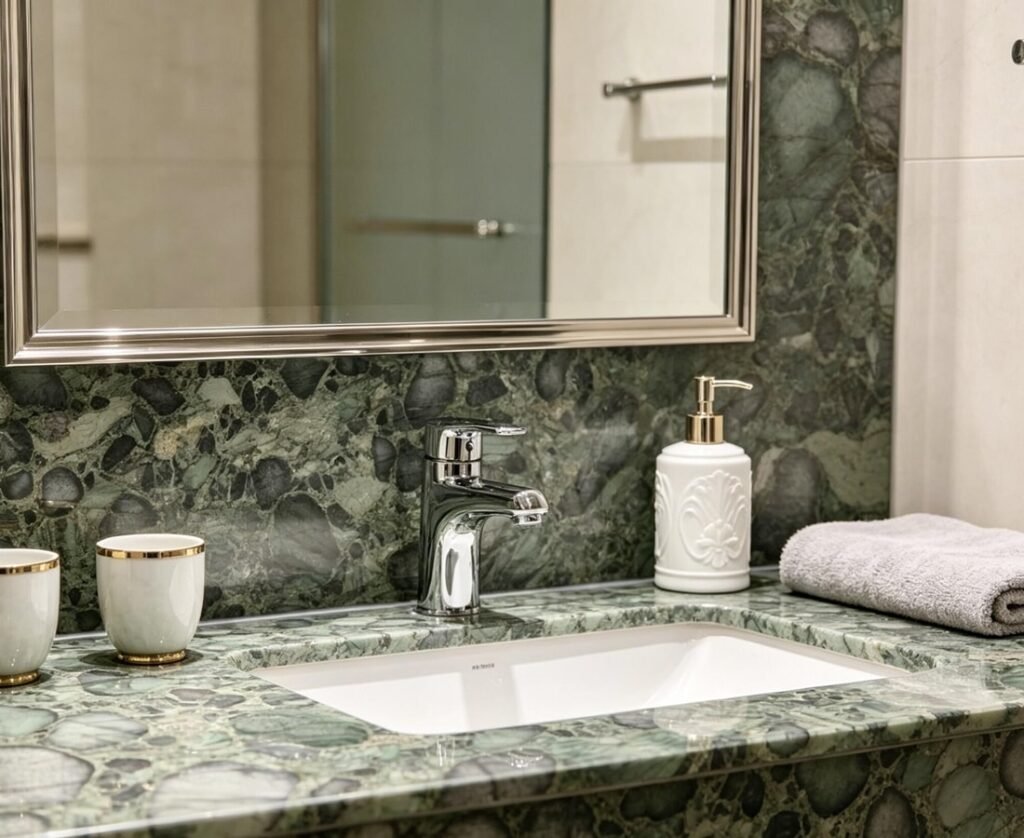
Material: White quartzite vanity tops
Scope: Double-sink master bathroom
Results:
- Service Life: 15+ years with minimal degradation
- Maintenance: Lower than marble (no frequent polishing required)
- User Feedback: High satisfaction due to durability + aesthetics
This aligns with industry trends where quartzite is replacing marble in performance-driven luxury projects.
Is Quartzite Suitable for Commercial Projects?
👉 Yes — with conditions
Best Use Cases:
- High-end hotels
- Luxury retail washrooms
- Executive office spaces
- Showroom bathrooms
Considerations:
- Higher initial cost may not suit budget projects
- Requires skilled fabrication and installation
- Lead times may be longer than for engineered stone
Supply Chain & Sourcing Strategy
Quartzite is not a beginner-friendly material for fabrication.
Key Challenges:
- High density increases cutting difficulty
- Requires diamond tooling and precision equipment
- Risk of slab variation across batches
👉 Therefore, selecting a professional stone manufacturer and supplier is critical.
Recommended Approach:
- Work with factory-direct suppliers
- Request a full slab inspection before production
- Ensure custom fabrication capability (cut-to-size, sink integration)
For global B2B buyers, partnering with experienced suppliers like EDG Stone Factory ensures:
- Consistent slab quality
- No MOQ flexibility
- Faster production timelines
- Export-ready packaging
Maintenance Guidelines for Quartzite Vanity Tops
While quartzite is durable, proper care ensures longevity:
- Seal the surface periodically (once per year recommended)
- Clean with pH-neutral stone cleaners
- Avoid prolonged exposure to strong acids
- Wipe water to prevent mineral buildup
Compared to marble, maintenance is significantly easier, but not entirely maintenance-free.
Design Trends: Quartzite in 2026 Bathroom Spaces
Emerging trends include:
- Bookmatched quartzite slabs for statement vanities
- Integrated backsplash designs
- Floating vanities with thin quartzite profiles
- Pairing quartzite with matte black or brushed gold fixtures
Quartzite aligns perfectly with the “natural luxury + performance” trend dominating modern interiors.
Conclusion: The Perfect Balance of Beauty and Performance
Quartzite stands out as the optimal intersection between durability and aesthetics in natural stone materials.
- Stronger than marble
- More visually refined than granite
- Suitable for both residential and selective commercial use
👉 If budget allows, quartzite is the best natural stone alternative to marble for bathroom vanity tops in 2026.
It delivers long-term value, reduced maintenance risk, and premium visual impact—making it a smart investment for designers, developers, and global buyers alike.