Quick Summary
Quick Summary: Quartzite bathroom vanities combine the visual elegance of marble with hardness close to granite. With excellent resistance to scratches, heat, and moisture, quartzite—especially Taj Mahal quartzite—has become a preferred choice for luxury residential and commercial bathrooms. When sourced directly from experienced manufacturers and factories, quartzite vanity tops deliver long-term value, design flexibility, and compliance with modern building and sustainability standards.

Introduction: Why Quartzite Is Redefining Bathroom Vanity Design?
Quartzite has rapidly moved from a niche natural stone to a mainstream premium material in bathroom countertop applications. Designers, developers, and wholesalers increasingly specify quartzite bathroom countertops for projects that demand both visual sophistication and structural reliability. Unlike marble, which is prized for beauty but criticized for softness, or engineered quartz, which prioritizes uniformity over natural character, quartzite strikes a rare balance.
Formed through intense geological heat and pressure, quartzite is a metamorphic stone derived from sandstone. This process creates a dense, interlocking crystalline structure that gives quartzite its exceptional hardness and durability. For bathroom environments—where humidity, cosmetics, water exposure, and daily use intersect—this performance profile is particularly valuable.
From luxury villas to five-star hotels, the quartzite vanity top is now widely viewed as a long-term investment rather than a decorative indulgence.
Aesthetics and Design Versatility of Quartzite Bathroom Countertops
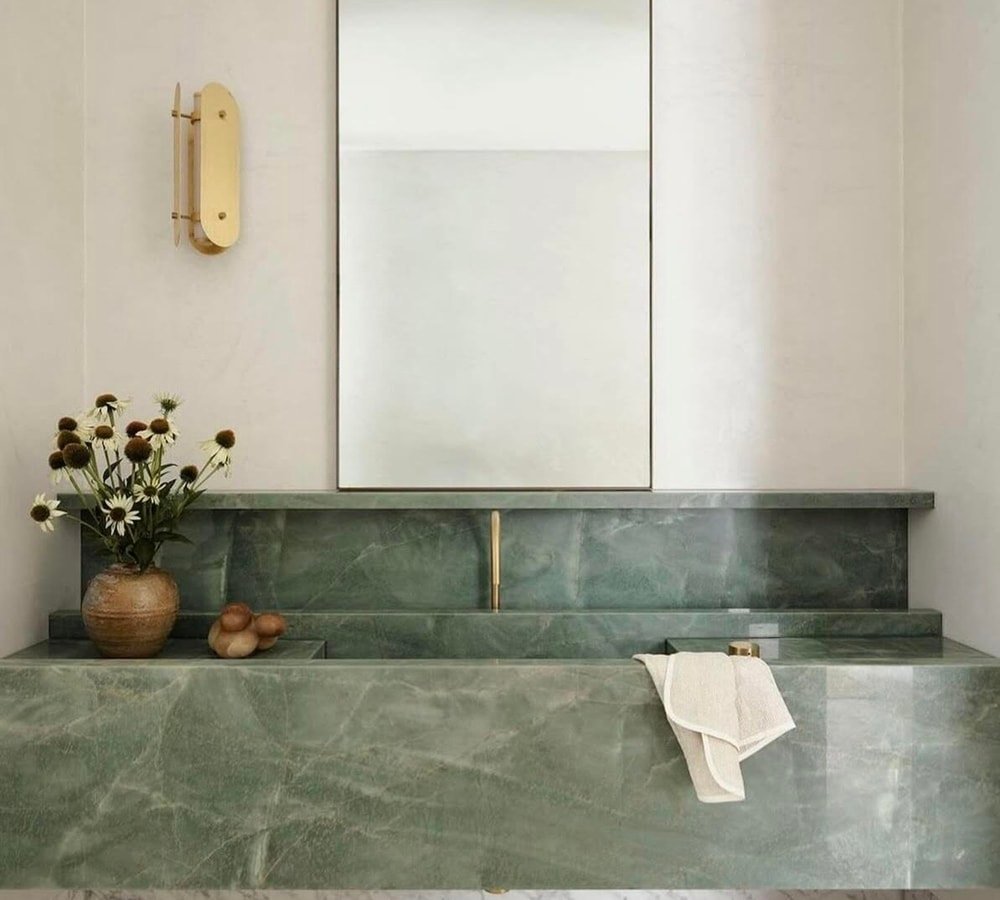
Quartzite’s most immediate appeal lies in its natural beauty. Wide varieties feature soft veining, subtle color transitions, and depth that closely resemble high-end marbles while offering significantly better durability.
Natural Color Palette and Veining
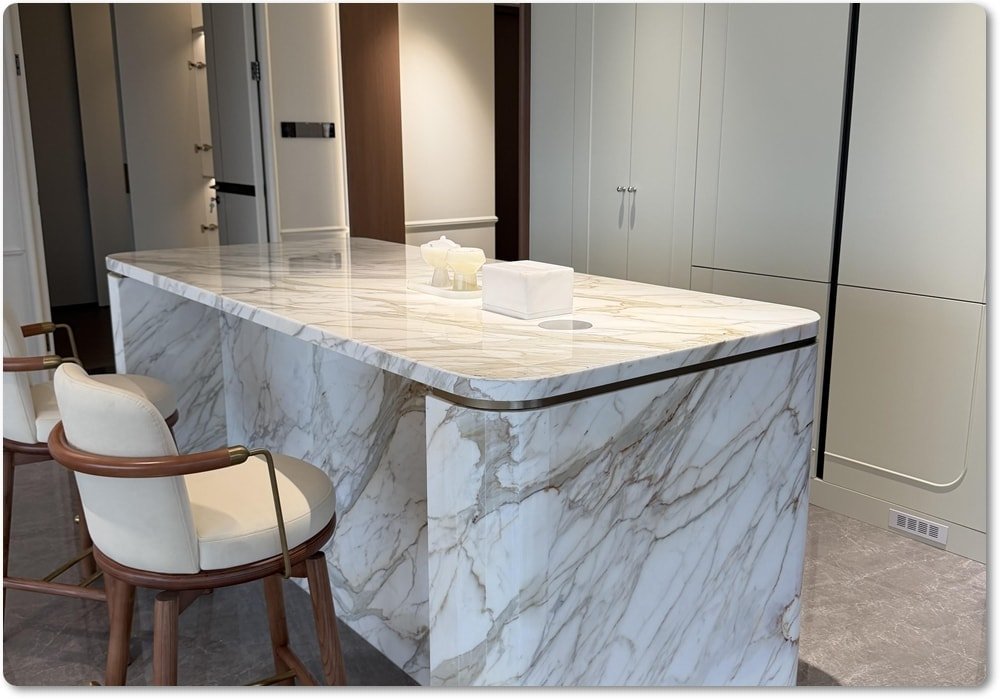
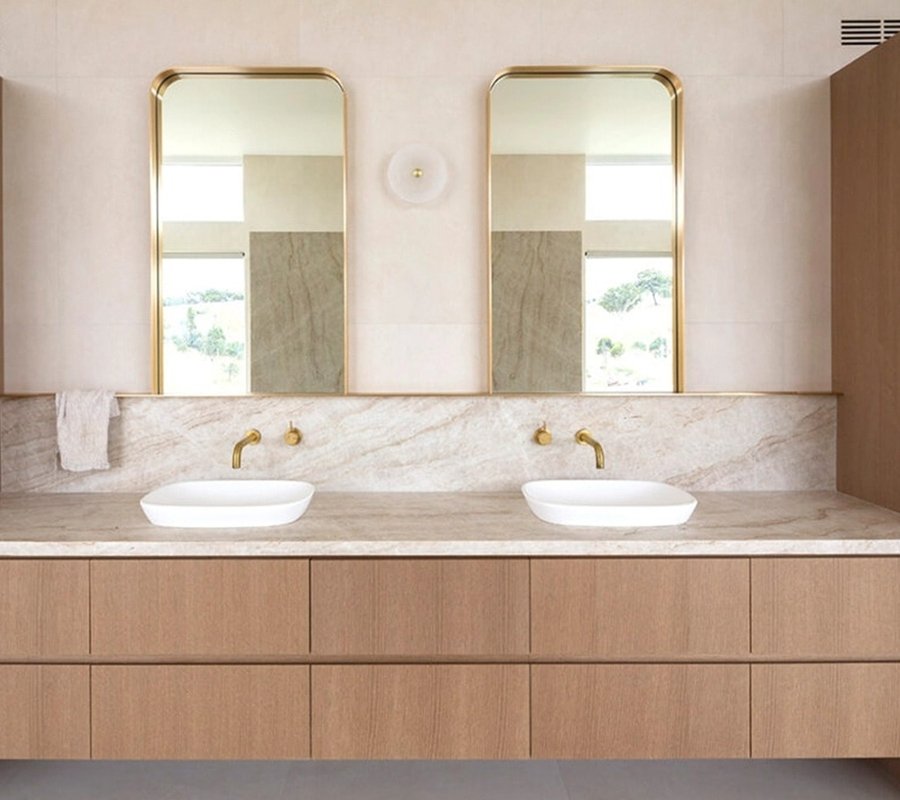
Quartzite bathroom slabs are available in a range of colors, including whites, creams, greys, beiges, and light gold tones, making them adaptable to both modern and classic interiors. Taj Mahal quartzite, in particular, has become iconic for bathrooms due to its warm ivory base and gentle linear veining that pairs well with wood, brass, and matte black fixtures.
Design Flexibility for Vanities
Quartzite can be fabricated into:
Single-slab vanity tops
Double-sink countertops for master bathrooms
Integrated backsplashes
Waterfall edges and floating vanities
Because each slab is unique, quartzite allows designers to create bespoke bathroom spaces that cannot be replicated with engineered surfaces.
Hardness, Durability, and Performance in Bathroom Environments
One of the primary reasons quartzite outperforms many other stones is its physical strength.
Hardness and Scratch Resistance
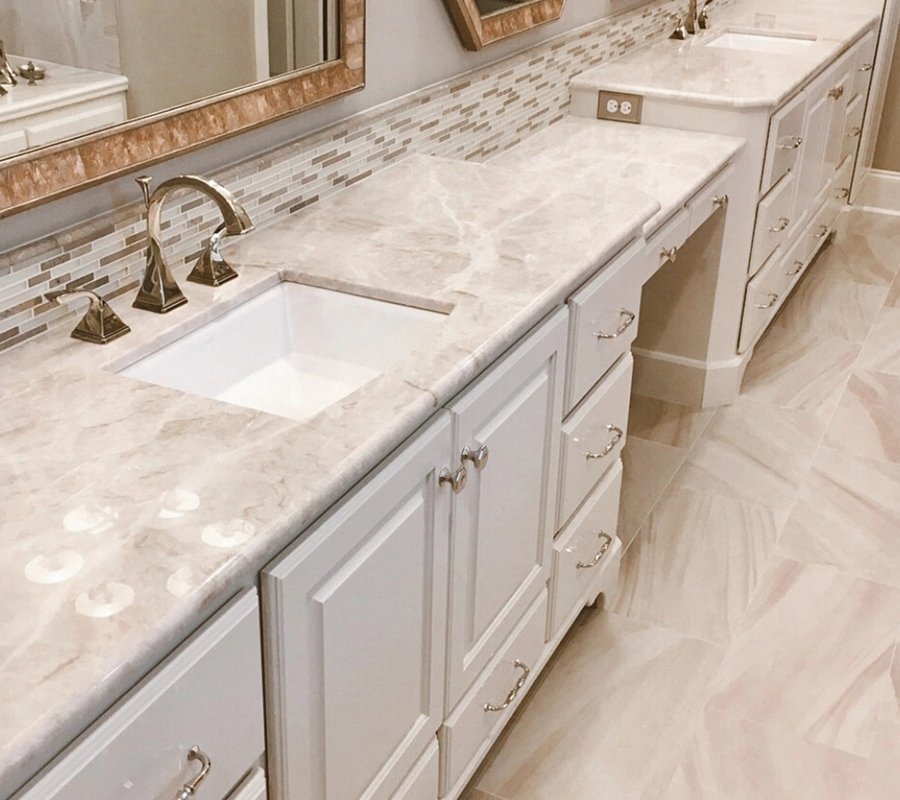
Quartzite typically measures around 6–7 on the Mohs hardness scale, making it significantly harder than marble and comparable to granite. This means it resists scratches from everyday bathroom items such as metal tools, cosmetics containers, and jewelry.
Heat and Moisture Resistance
Bathrooms often experience rapid temperature fluctuations due to hot water and steam. Quartzite’s crystalline structure allows it to withstand heat without cracking or discoloration. When properly sealed, quartzite bathroom countertops also show excellent resistance to water absorption and staining.
Longevity and Lifecycle Value
With routine sealing and basic care, quartzite vanities can last for decades. This long service life makes quartzite particularly attractive for hotels, resorts, and commercial projects where replacement costs must be minimized.
Quartzite vs Quartz: Understanding the Key Differences
Although the names sound similar, quartzite and engineered quartz are fundamentally different materials.
Composition and Performance
Quartzite is 100% natural stone, while quartz countertops are engineered using crushed quartz and resin binders. Engineered quartz offers consistency and low porosity but can be sensitive to heat and UV exposure. Quartzite, by contrast, handles heat better and provides unmatched natural aesthetics.
Visual Authenticity
Engineered quartz patterns are designed and repeatable. Quartzite patterns are formed by nature, creating depth and variation that many designers and luxury homeowners prefer for bathroom vanities.
Long-Term Considerations
From a resale and branding perspective, natural quartzite often carries a higher perceived value than engineered quartz, especially in high-end residential and hospitality projects.
Taj Mahal Quartzite: A Benchmark for Luxury Bathrooms
Among all quartzite varieties, Taj Mahal quartzite has become a benchmark material for bathroom vanity applications.
Visual Characteristics
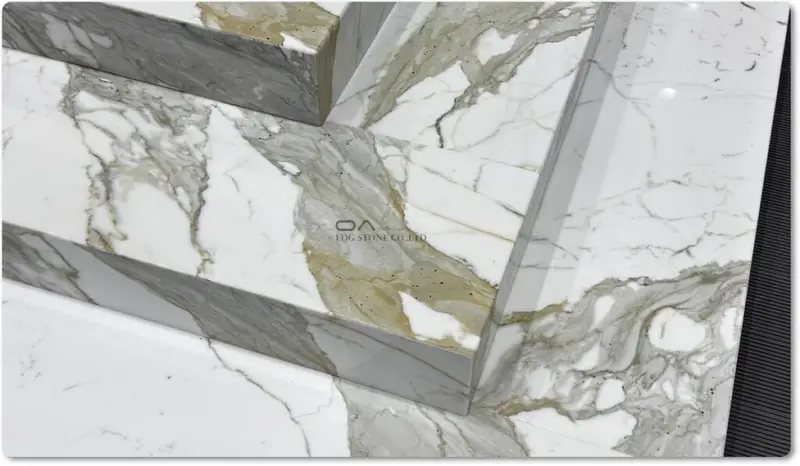
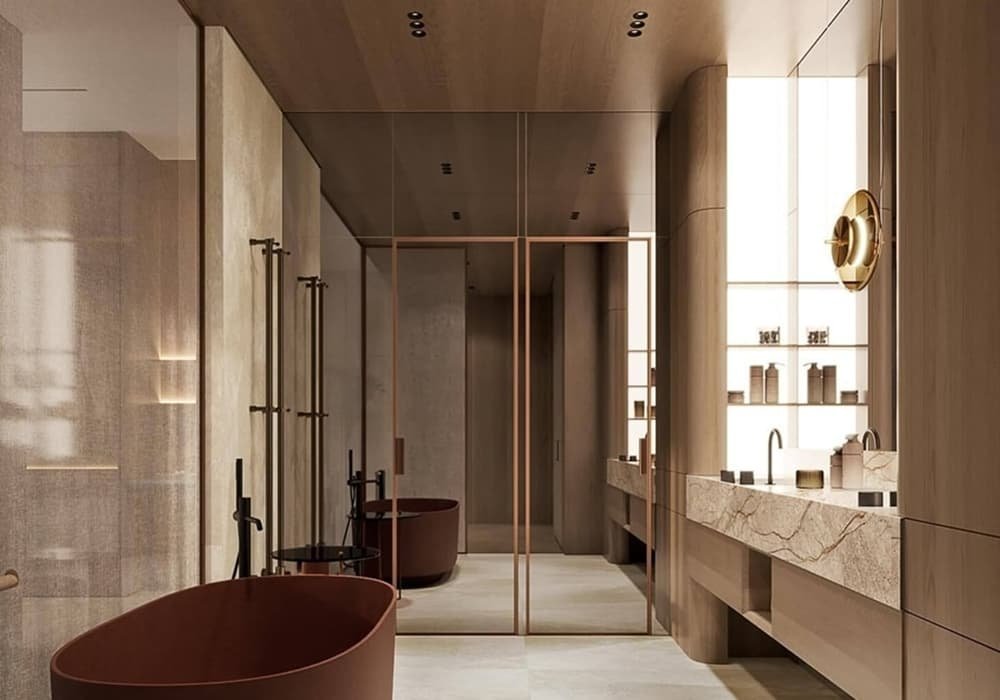
Taj Mahal quartzite features a creamy white background with subtle beige and gold veining. Its neutral tone complements a wide range of bathroom styles, from minimalist spa designs to classic luxury interiors.
Fabrication and Installation
This quartzite variety is dense and stable, making it suitable for thin vanity profiles, large-format slabs, and bookmatched installations. Professional fabrication ensures clean edges, precise sink cutouts, and seamless joints.
Market Positioning
Due to its popularity, Taj Mahal quartzite is widely specified in high-end projects. Buyers sourcing directly from quartzite manufacturers or factory wholesalers can secure consistent quality and competitive pricing for large-scale developments.
Quartzite Applications Beyond the Vanity Top
While vanity countertops are the most common use, quartzite performs exceptionally well in other bathroom applications.
Quartzite Shower Walls
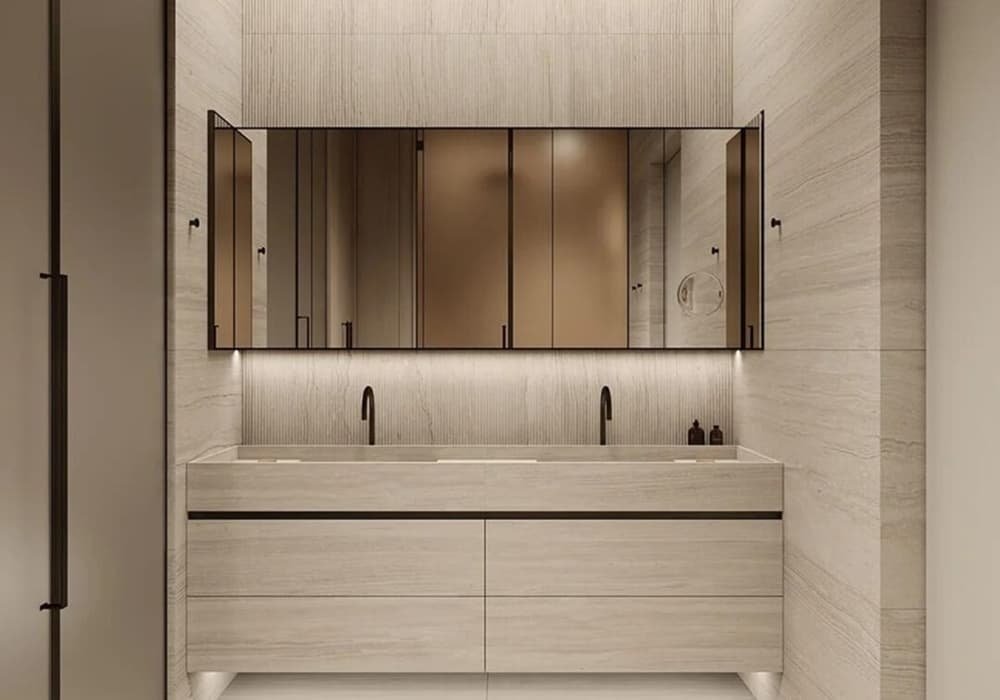
Quartzite shower walls provide a seamless, upscale look while offering strong resistance to moisture and heat. Large slabs reduce grout lines, improving hygiene and visual continuity.
Backsplashes and Feature Walls
Using quartzite behind the vanity or as a feature wall elevates the entire bathroom space and creates a cohesive stone design language.
Window Sills and Shelving
Quartzite’s strength allows it to be used for bathroom window sills, niches, and shelving without concerns about chipping or warping.
Fabrication, Finishing, and Installation Considerations
Proper fabrication is critical to unlocking the full performance of quartzite bathroom countertops.
Finishes
Polished: Enhances color and veining; easiest to clean
Honed: Soft matte appearance; slightly higher maintenance
Leathered: Textured surface with improved slip resistance
Installation Best Practices
Use stable substrates such as marine-grade plywood or cement board
Apply high-quality sealers designed for wet environments
Ensure proper slope and drainage for quartzite shower walls
Regulations, Standards, and Sustainability Trends
The global stone industry is increasingly shaped by regulatory and environmental considerations.
Health and Safety
Modern quartzite factories implement strict dust-control measures, including wet cutting and extraction systems, to reduce silica exposure during fabrication.
Environmental Responsibility
Responsible quarrying, reduced waste, and efficient water usage are becoming standard requirements for quartzite manufacturers supplying international markets.
Compliance and Market Access
For export-oriented suppliers, compliance with international building standards and sustainability reporting improves acceptance in Europe, North America, and Australia.
Market Trends and Wholesale Sourcing Insights
The demand for quartzite bathroom countertops continues to grow, driven by luxury housing, hospitality renovation cycles, and premium interior design trends.
Price Drivers
Quartzite pricing is influenced by quarry location, slab thickness, color consistency, and fabrication complexity. Taj Mahal quartzite remains in high demand due to its versatility.
Factory-Direct Advantages
Buying quartzite vanity tops directly from manufacturers or factory wholesalers offers:
Better cost control
Custom sizing and finishing
Reliable quality consistency
Cost Analysis and Return on Investment
Although quartzite often carries a higher upfront cost than quartz or marble, its durability and longevity provide strong long-term value.
Over a 10–20 year lifecycle, quartzite typically incurs lower replacement and repair costs, making it a financially sound choice for developers and hotel operators.
Real-World Use Cases
Residential projects frequently highlight quartzite vanities as a key selling feature. In hospitality settings, quartzite’s resistance to wear and moisture reduces maintenance downtime. Commercial spas value their ability to maintain appearance under constant exposure to water and heat.
FAQ: Quartzite Bathroom Countertops
What is a quartzite vanity top?
A quartzite vanity top is a bathroom countertop made from natural quartzite stone. It combines marble-like aesthetics with superior hardness, making it suitable for wet and high-use bathroom environments.
How does quartzite perform in bathrooms?
Quartzite performs exceptionally well in bathrooms due to its resistance to scratches, heat, and moisture. When properly sealed, it handles daily exposure to water, cosmetics, and cleaning products with minimal maintenance.
How is quartzite different from engineered quartz?
Quartzite is a natural stone formed by geological processes, while engineered quartz is manufactured using resin and crushed minerals. Quartzite offers better heat resistance and natural variation, while engineered quartz provides uniformity.
Is Taj Mahal quartzite suitable for shower walls?
Yes, Taj Mahal quartzite is widely used for shower walls. Its density and heat resistance make it suitable for wet environments, and its soft veining enhances luxury bathroom designs.
How do I buy quartzite bathroom countertops from a factory?
To buy quartzite bathroom countertops from a factory, evaluate the manufacturer’s certifications, slab quality, fabrication capabilities, and export experience. Factory-direct sourcing often provides better pricing and customization options.
Why: Quartzite delivers natural beauty comparable to marble while offering durability closer to granite, making it a long-term solution for premium bathrooms.
What: Common applications include vanity tops, shower walls, backsplashes, and feature walls in residential and commercial bathrooms.
Options: Buyers can choose polished, honed, or leathered finishes, custom slab sizes, and factory-fabricated vanity tops sourced directly from manufacturers or wholesalers.
Considerations: Proper sealing, professional fabrication, compliance with safety standards, and responsible sourcing are essential for maximizing performance and market acceptance.