Marble Bathroom Vanity Tops: Balancing Luxury Aesthetics with Real-World Maintenance
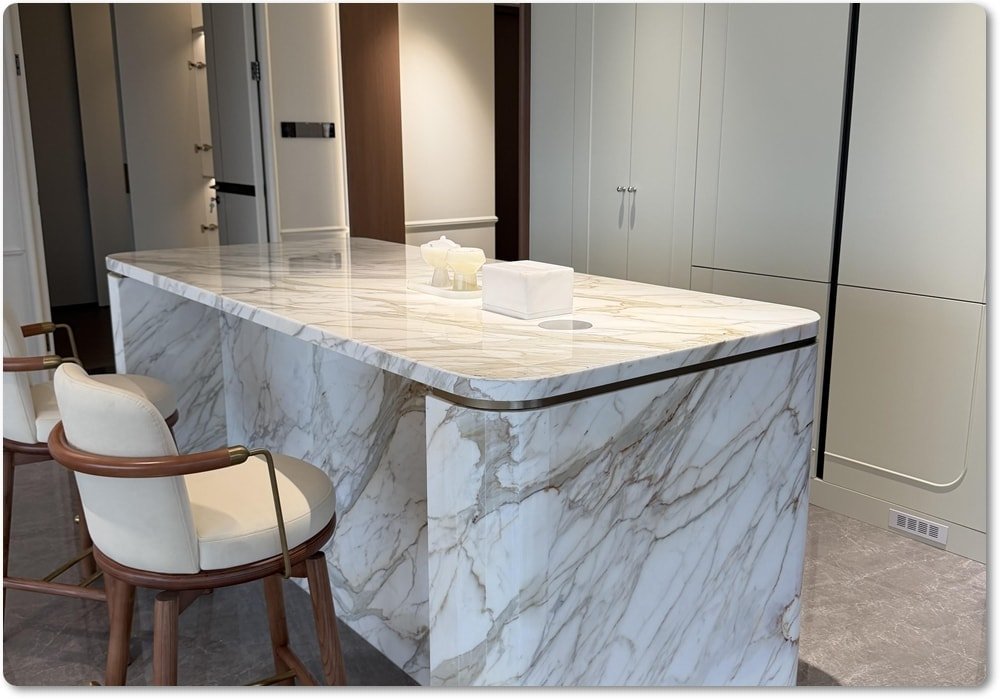
Marble has long been synonymous with luxury. From classical architecture to modern high-end interiors, it remains one of the most desired natural stones in bathroom design. However, when it comes to bathroom vanity tops, marble sits at the intersection of visual perfection and practical compromise.
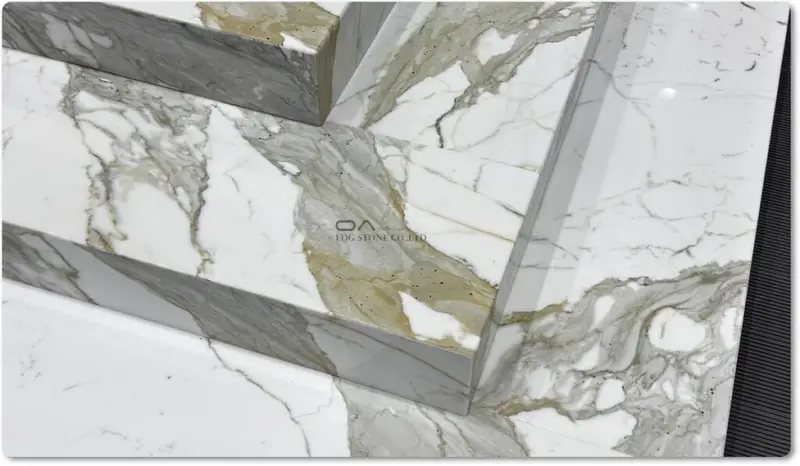
According to the Geological Society, marble is a metamorphic rock formed from limestone and composed primarily of calcium carbonate (CaCO₃). This composition is exactly what gives marble its refined veining—and also what makes it vulnerable in everyday use.
So the real question is not “Is marble beautiful?”—that’s obvious.
The real question is: Can marble perform in a bathroom environment without becoming a maintenance burden?
Understanding Marble’s Core Properties
Marble’s performance begins with its physical and chemical structure:
- Primary Composition: Calcium carbonate (CaCO₃)
- Porosity: Moderate to high compared to engineered materials
- Chemical Sensitivity: Reacts with acids (etching risk)
- Surface Hardness: Softer than granite and quartz
These characteristics define both its appeal and its limitations.
Why Marble Remains a Top Choice in Luxury Bathrooms?
1. Unmatched Aesthetic Value
Marble delivers something no engineered material can fully replicate:
- Natural veining patterns that are unique in every slab
- A soft translucency that reflects light elegantly
- A timeless association with luxury architecture and design
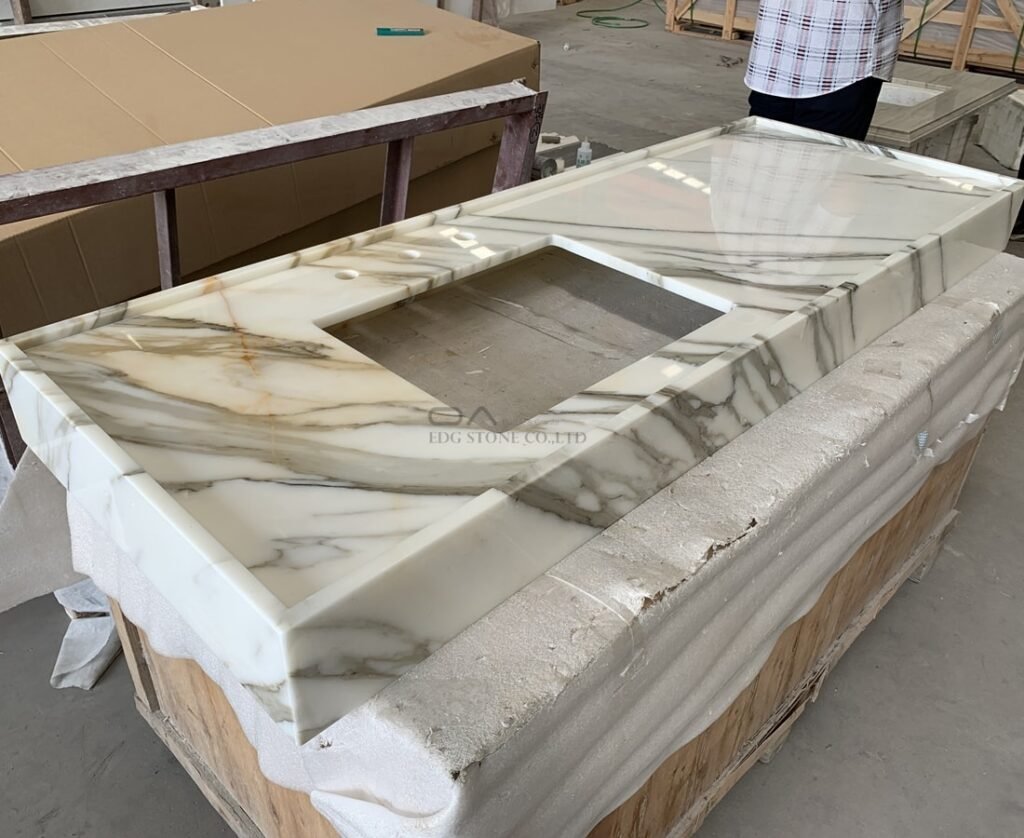
Premium varieties like Calacatta and Statuario are widely used in high-end residential and hospitality projects, where visual impact is a priority.
2. Strong Design and Property Value
In luxury real estate markets, marble is often viewed as a status material:
- Enhances perceived property value
- Aligns with premium branding (hotels, villas, show homes)
- Frequently specified by interior designers for flagship spaces
For developers and architects, marble is less about durability—and more about market positioning.
The Downsides: What You Must Realistically Expect?
1. Etching: The Most Common Issue
Because marble reacts with acids, everyday bathroom items can cause surface damage:
- Toothpaste
- Facial cleansers
- Vinegar-based cleaners
These create dull spots or marks (etching) that cannot be removed by simple cleaning.
Industry guidance from the Natural Stone Institute confirms that etching is not a defect, but a natural reaction of calcium-based stone.
2. Staining Risks
Marble’s porosity makes it vulnerable to:
- Cosmetics
- Hair dye
- Oils and lotions
Without proper sealing, these substances can penetrate the surface and leave permanent discoloration.
3. High Maintenance Requirements
Maintaining marble involves:
- Regular sealing (every 6–12 months)
- Use of pH-neutral cleaners only
- Immediate cleanup of spills
Compared to quartz, maintenance costs can be 30–50% higher over time, especially in commercial environments.
Where Marble Works Best (and Where It Doesn’t)?
Ideal Applications
- Luxury residential bathrooms (master suites)
- Hotel bathrooms (low to moderate usage rooms)
- Powder rooms (low traffic)
- Decorative vanity areas
Not Recommended For
- High-traffic family bathrooms
- Commercial/public restrooms
- Rental properties with heavy usage
In these cases, marble’s maintenance demands often outweigh its aesthetic benefits.
Real-World Case Study: Hospitality Project
Project Type: Five-star hotel
Material: Marble vanity tops
Results:
- Exceptional visual appeal aligned with luxury branding
- Guest satisfaction increased (design perception)
- Maintenance costs increased by ~40% annually
Conclusion: Marble successfully elevated the brand image—but required a dedicated maintenance strategy and budget.
Marble vs. Quartz Vanity Tops
| Criteria | Marble ⭐ | Quartz ⭐ |
|---|---|---|
| Aesthetics | ⭐⭐⭐⭐⭐ | ⭐⭐⭐⭐ |
| Uniqueness | ⭐⭐⭐⭐⭐ | ⭐⭐⭐ |
| Maintenance | ⭐⭐ | ⭐⭐⭐⭐⭐ |
| Durability | ⭐⭐⭐ | ⭐⭐⭐⭐⭐ |
| Cost Stability | ⭐⭐ | ⭐⭐⭐⭐ |
Key Insight:
- Marble = Design-first material
- Quartz = Performance-first material

How to Reduce Risk When Using Marble?
1. Apply High-Quality Sealers
Reduces the risk of absorption and staining (but does not prevent etching).
2. Avoid Acidic Cleaners
Use only stone-safe, pH-neutral products.
3. Choose the Right Finish
- Honed finish hides etching better than polished
- Matte surfaces are more forgiving in daily use
4. Work with Experienced Suppliers
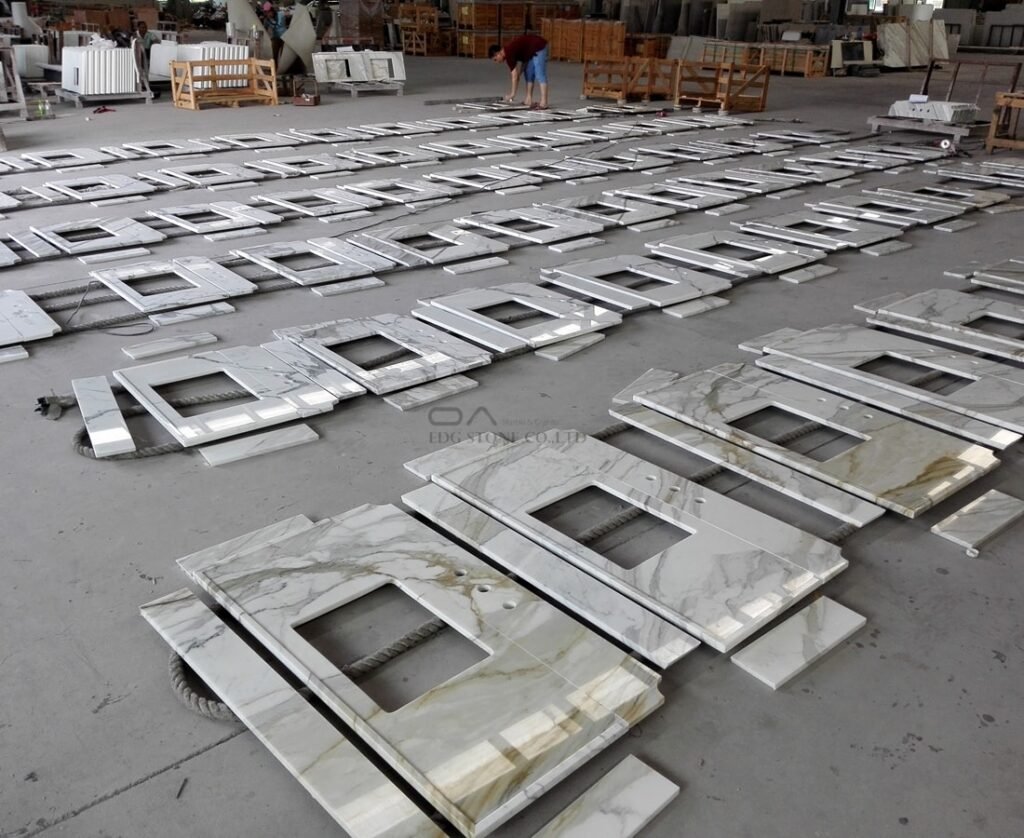
Fabrication quality (cutting, sealing, finishing) significantly affects long-term performance.
Expert Insight: Specification Strategy
Professional designers often use marble selectively:
- Combine marble vanity tops with quartz countertops in high-use zones
- Use marble as a visual focal point, not a universal surface
- Balance the budget between material cost and maintenance lifecycle
This hybrid strategy delivers luxury aesthetics without full operational risk.
Conclusion: Is Marble the Right Choice?
Marble bathroom vanity tops are not for everyone—and that’s exactly the point.
They are a statement material, chosen for:
- Visual impact
- Architectural prestige
- Luxury positioning
But they demand:
- Ongoing care
- Higher maintenance budgets
- Informed user expectations
Choose Marble If You Value:
- Design excellence
- Natural beauty
- High-end project positioning
Choose Quartz If You Value:
- Durability
- Low maintenance
- Long-term practicality
Final Thought:
Marble is not about convenience—it’s about commitment to luxury.