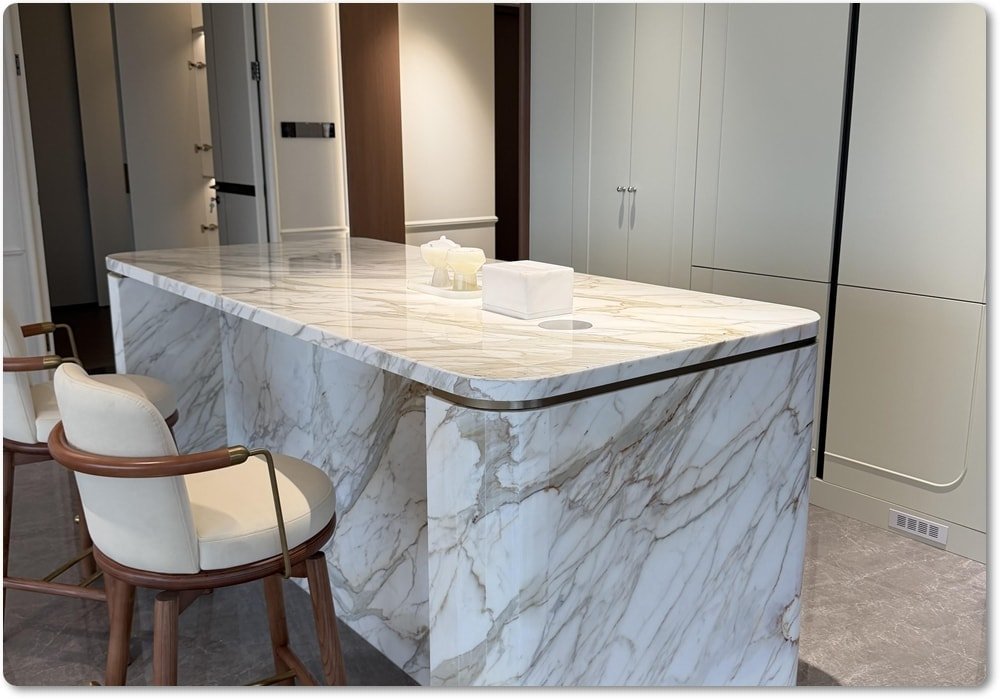
Introduction
Quartzite procurement is not a generic stone-buying decision. It is a specification-driven, risk-managed sourcing process that combines geology, fabrication engineering, export logistics, and end-use performance. In the U.S. market, dimension stone remains a meaningful industrial category: USGS estimated that in 2025, approximately 2.3 million tons of dimension stone were sold or used by U.S. producers, valued at $460 million. Quartz-based dimension stone is also explicitly addressed by ASTM C616. In contrast, common performance evaluation for dimension stone often relies on standardized methods such as flexural strength and modulus of rupture testing.
For global buyers, the implication is simple: quartzite is best procured as a technical material, not just a visual product. A reliable buying framework must evaluate the slab source, the material’s physical consistency, the manufacturing tolerances, the export packaging, and the documentation supporting customs clearance and delivery. ISO/TC 327 is also working on standardized definitions, requirements, and test methods for natural stones, including slabs and countertops, which reinforces the industry’s movement toward more rigorous, comparable procurement standards.
This whitepaper is designed for importers, distributors, fabricators, project buyers, and brand owners who need a clear, repeatable framework for buying quartzite countertops and slabs from a factory-direct OEM export partner such as EDG Stone Factory.
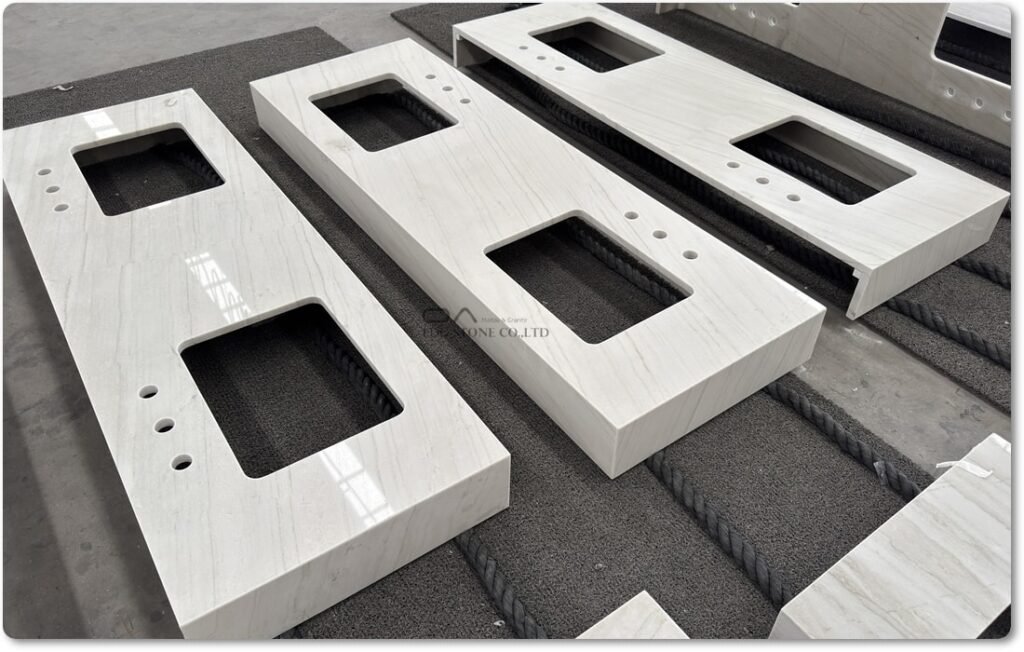
1. Why Quartzite Procurement Must Start with Material Logic?
Quartzite is a natural stone category, and the correct procurement process begins with the stone’s inherent variability. Unlike standardized manufactured goods, natural stone procurement must account for quarry origin, vein movement, background tone, batch consistency, and structural behavior under cutting and fabrication. Natural Stone Institute guidance emphasizes that stone selection, design, fabrication, and installation should be handled by qualified and experienced parties, and its technical library treats stone selection and installation as performance-sensitive decisions rather than cosmetic choices.
For buyers, this means the first question is not “What color do I like?” but rather:
- What is the intended use?
- What are the required slab thickness and finish?
- What tolerances are acceptable?
- What testing or documentation is needed?
- What shipping and customs conditions apply?
A strong procurement program treats quartzite as a material system: slab, fabrication method, finish, support structure, packing method, and destination market compliance all need to align.
1.1 Quartzite vs. General Natural Stone Buying
Quartzite should be evaluated differently from softer or more uniform stone categories because countertop performance depends on more than appearance. Standardized stone testing helps buyers compare one quartzite batch against another in a meaningful way. ASTM’s dimension stone standards include quartz-based dimension stone specifications, flexural strength testing, and modulus of rupture testing, all of which are useful when buyers need to compare options across suppliers or project requirements.
1.2 The Buyer’s Real Risk
The real risk in quartzite procurement is usually not “stone failure” in a vague sense. It is a specification mismatch. Common issues include:
- inconsistent slab tone between batches,
- finish the mismatch between the sample and the bulk order,
- incorrect packaging that causes transit damage,
- missing export documents,
- and under-specified fabrication tolerances that create site installation problems.
A robust OEM partner reduces these risks by translating the buyer’s target market requirements into a repeatable production standard.
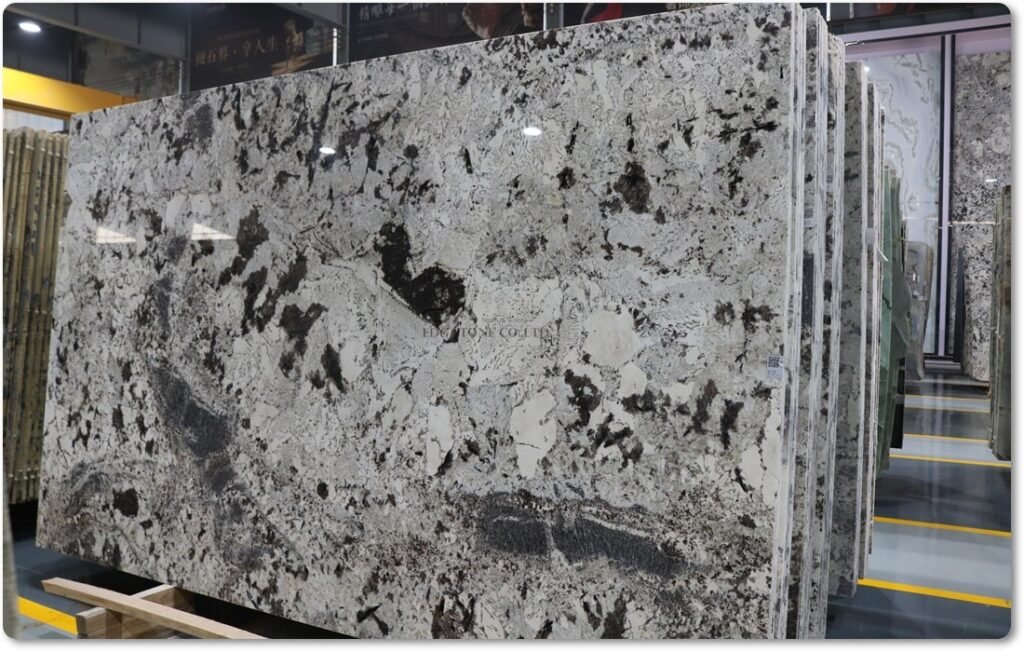
2. What Buyers Should Demand from a Factory-Direct Quartzite Program?
A factory-direct program should not mean “cheap and fast at any cost.” It should mean traceable production, clearer quality visibility, and better alignment between the source material and the project requirement.
2.1 Cost Advantages Without Compromising Control
Factory-direct sourcing can reduce layers of markup and improve communication, but the real value is not only pricing. It is visibility. Buyers can confirm slab selection criteria, thickness tolerance, finish options, and packaging standards before the goods leave the factory. This is especially important for project work where replacement slabs may be difficult to match later.
2.2 Quality Visibility
A professional OEM exporter should be able to define:
- stone variety and batch,
- slab dimensions,
- surface finish,
- calibration and thickness tolerance,
- edge and cut-to-size capability,
- photo or video slab approval,
- packing configuration,
- shipping marks,
- and inspection checkpoints.
This matters because stone quality is not just a visual judgment. ASTM and Natural Stone Institute resources show that dimension stone evaluation includes physical and performance considerations, not only appearance.
2.3 Supply Stability
For distributors and project buyers, stability matters as much as price. Quartzite procurement often fails when a buyer chooses a beautiful stone with no batch continuity. A factory with slab inventory, cut-to-size capability, and export documentation experience can support repeat orders more reliably than a purely trading-based model.
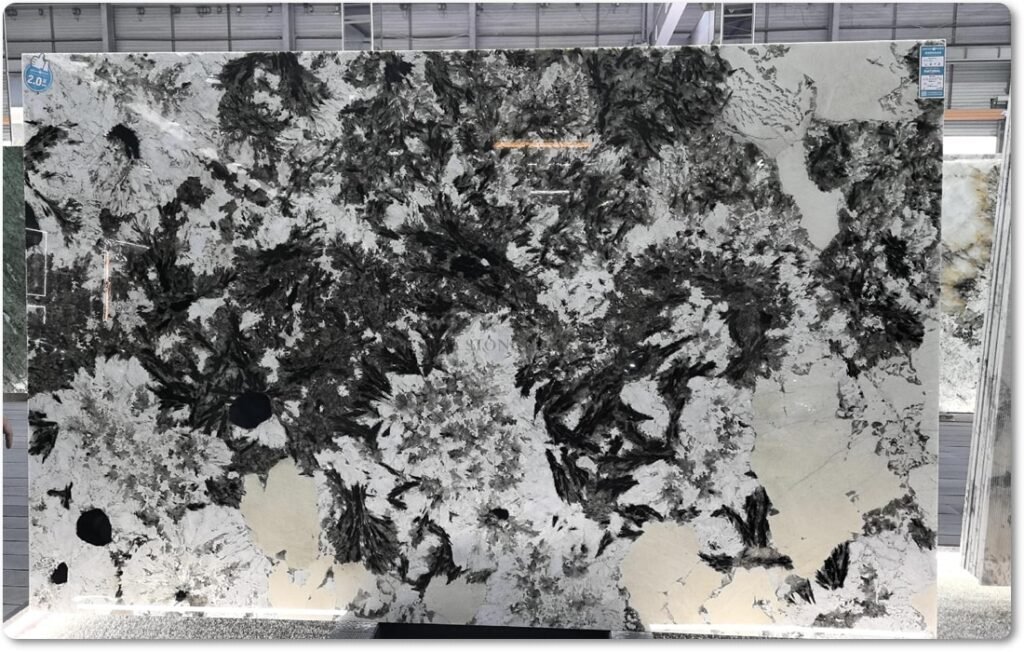
3. OEM and Custom Manufacturing Services: What a Serious Buyer Should Specify?
A serious quartzite export program should define the manufacturing scope in the purchase order itself. OEM buyers should not assume the factory will “know what to do.”
3.1 Custom Sizes
The buyer should specify:
- standard slab size,
- project cut sizes,
- thickness options,
- slab calibration requirements,
- edge detail requirements,
- and whether bookmatching or vein matching is required.
This is especially important for hospitality, retail, and multi-unit residential projects where visual consistency across multiple spaces is required.
3.2 Cut-to-Size Programs
Cut-to-size quartzite programs are ideal for projects that need reduced site fabrication or predictable installation. The factory should confirm:
- field template requirements,
- panel sequencing,
- seam planning,
- sink cutouts,
- backsplash dimensions,
- and packaging by room or by unit.
Natural Stone Institute installation standards specifically address topics such as seam placement, rodding sink cutouts, overhangs and cantilevers, joint widths, and tolerances, which shows why cut-to-size planning must be integrated with installation planning from the start.
3.3 Private Label Solutions
For distributors and brand owners, private label support can include:
- branded packaging,
- SKU labeling,
- specification sheets,
- retail-ready photography,
- and consistent naming conventions.
Private label is not only a marketing tool. It is also a supply-chain discipline that helps reduce confusion across the warehouse, sales, and installation teams.
4. Export Quality Standards: Inspection, Packaging, and Documentation
For international quartzite trade, export execution can make or break the buyer experience. A beautiful slab is not a successful shipment if it arrives damaged, undocumented, or misdeclared.
4.1 Inspection Framework
A practical inspection framework should verify:
- color consistency against the approved reference,
- visible fissures, chips, resin fill, or patching,
- thickness tolerance,
- surface finish quality,
- edge quality for cut pieces,
- pallet integrity,
- and labeling accuracy.
Where project performance matters, buyers can align inspection with established stone testing logic. ASTM C99 addresses modulus of rupture, and ASTM C880 addresses flexural strength of stone, both of which are relevant when comparing stone behavior under load.
4.2 Packaging
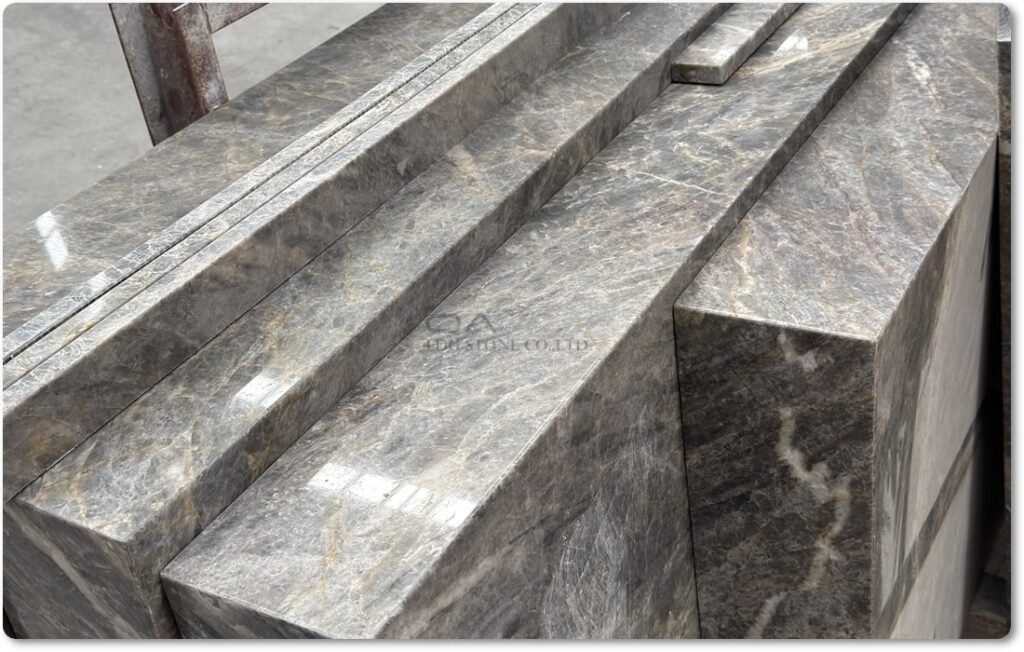
Quartzite slabs are heavy, brittle at edges, and vulnerable to transit shock if packed poorly. Packaging should be designed around:
- A-frame or crate stability,
- corner and edge protection,
- moisture protection when required,
- clear crate labeling,
- and loading balance for container optimization.
A packaging failure is a logistics failure, not a design issue. Good packaging is part of product quality.
4.3 Documentation
Trade.gov explains that common export documents include the commercial invoice, bill of lading, and packing list, and that destination countries may require special documents, certificates, or pre-shipment inspections. CBP also emphasizes the importance of accurate shipment descriptions and supporting entry information.
For quartzite exports, the standard documentation pack should usually include:
- commercial invoice,
- packing list,
- bill of lading,
- certificate of origin when needed,
- inspection or quality report when requested,
- and any market-specific customs or compliance documents.
5. International Project Support by Use Case
Quartzite procurement becomes more valuable when the supplier understands the project context, not just the product.
5.1 Residential Projects
Residential buyers typically care about:
- visual appeal,
- stain management,
- maintenance expectations,
- and a clear installation plan.
Natural Stone Institute consumer guidance notes that sealing can improve stain resistance depending on stone porosity, and care recommendations also emphasize the use of trivets and coasters to protect natural stone surfaces.
5.2 Commercial Projects
Commercial projects need predictable supply, uniformity, and documentation discipline. A hotel, retail chain, or office project cannot afford batch drift or inconsistent shipment labeling. The project buyer should request a clear approval process for master samples, production samples, and shipment photos.
5.3 Hospitality Projects
Hospitality programs require a stronger emphasis on:
- repeatable finishes,
- consistent color tone,
- coordination with interior design,
- and replacement strategy.
The best OEM model for hospitality is one where the factory can hold approved material references, prepare repeat production, and coordinate room-by-room deliveries.
6. Export Quality Meets End-Use Performance
The technical performance of quartzite is not judged only at the factory. It is judged on site, over time, under real use conditions. That is why the procurement process must include end-use engineering.
ASTM standards for dimension stone provide a common language for comparing material performance. C616 covers quartz-based dimension stone, while C99 and C880 address strength-related testing. ISO/TC 327 is also working toward international harmonization for natural stone definitions, requirements, and test methods across blocks, slabs, semifinished, and finished products.
A practical buyer should therefore ask:
- Is the slab suitable for the intended span?
- Is the finish appropriate for the use environment?
- Does the material need sealing?
- Are the support and cantilever conditions clear?
- Is the tolerance acceptable for fabrication and installation?
These are not small questions. They are the difference between a premium surface and a field problem.
7. Long-Term Partnership Framework: Annual Contracts, Inventory Planning, and Global Distribution
Quartzite procurement becomes more efficient when the supplier relationship is designed as a partnership rather than a one-off transaction.
7.1 Annual Contracts
Annual contracts can lock in:
- forecast volumes,
- product specifications,
- quality tolerances,
- packaging standards,
- and lead-time expectations.
This helps both buyer and factory plan inventory and production capacity more effectively.
7.2 Inventory Planning
Inventory planning is especially valuable for distributors and project contractors. A strong supplier should be able to support:
- reserved slabs,
- replenishment programs,
- mixed-container planning,
- and phased delivery schedules.
7.3 Global Distribution
For global distribution, the supplier must understand Incoterms, customs documentation, and destination-specific entry requirements. Trade.gov explains that Incoterms are 11 internationally recognized rules that define the responsibilities of buyers and sellers for shipment, insurance, documentation, customs clearance, and other logistical activities. ICC’s official Incoterms page likewise describes them as eleven three-letter trade terms used in contracts for the sale and purchase of goods.
That matters because the commercial terms affect cost ownership, freight responsibility, insurance responsibility, and delivery risk. The wrong term can turn a profitable order into a margin leak.
8. EDG Stone Factory Case Module: Global Quartzite Slabs & Countertops Manufacturer and Exporter
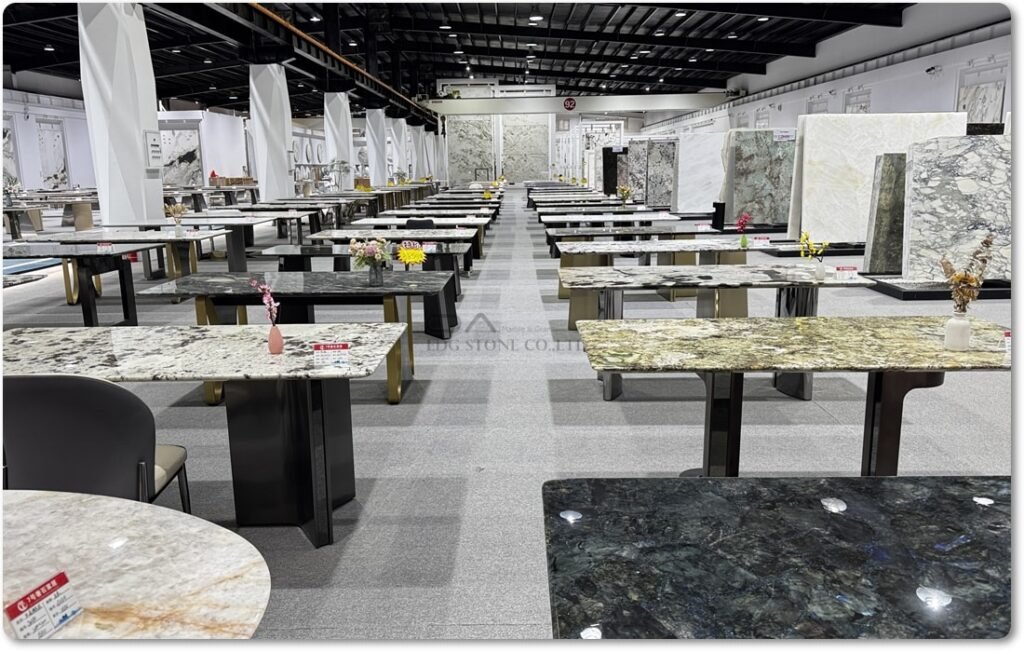
EDG Stone Factory can be positioned in the content cluster as a global quartzite slabs and countertops manufacturer and exporter with OEM capability, export-process discipline, and project-oriented support.
8.1 Case Module Positioning
EDG Stone Factory is presented here as a supplier that supports:
- quartzite slab sourcing,
- custom countertop fabrication,
- cut-to-size programs,
- private label packaging,
- export inspection,
- and project coordination across residential, commercial, and hospitality channels.
8.2 Suggested Case-Study Narrative
A good case-study narrative should show:
- project requirement,
- stone selection logic,
- fabrication solution,
- packaging and export steps,
- and installation outcome.
This structure gives the page both trust and conversion power. It also makes the page easier to reuse across the wider content cluster.
9. Future Trends in Quartzite Procurement Beyond 2026
The strongest trend beyond 2026 is likely to be more specification discipline, more traceability, and more standardized testing language. That inference follows from the industry’s current movement toward international standardization through ISO/TC 327, the continued use of ASTM stone test methods, and the persistent importance of export documentation and Incoterms in cross-border trade.
In practical terms, buyers should expect:
- more project RFQs that require documented stone data,
- more slab traceability expectations,
- more demand for pre-approved packaging standards,
- more digital sharing of slab photos and batch records,
- and more emphasis on lifecycle maintenance planning.
For suppliers, the opportunity is clear: the winners will be the factories that can combine material expertise, manufacturing control, export discipline, and market-specific support.
Conclusion
Quartzite countertops and slabs should be procured as an engineered purchasing decision built on material logic, not as an aesthetic impulse. Buyers need a supplier who can explain the stone, control the fabrication, protect the shipment, and support the project after delivery. Standards from ASTM, ISO, Natural Stone Institute guidance, and trade documentation rules from trade authorities all point in the same direction: the best results come from structured evaluation, clear specifications, and disciplined execution.
For global buyers, EDG Stone Factory fits naturally into this framework as a case module for OEM quartzite slabs and countertops, especially when the goal is to combine design flexibility, export readiness, and repeatable supply.
FAQ
1. Is quartzite a good material for countertops?
Quartzite is commonly used in countertop and slab applications, but the right choice depends on the actual stone batch, finish, porosity, and project requirements. Standardized stone evaluation and installation guidance are important because natural stone performance depends on the specific material and application.
2. Does quartzite need sealing?
Natural Stone Institute guidance says sealing can improve stain resistance depending on the stone’s porosity, so sealing should be decided based on the specific quartzite type and use case rather than assumed universally.
3. What export documents are usually required?
Common export documents include the commercial invoice, packing list, and bill of lading. Some destinations may also require certificates, special documents, or pre-shipment inspection.
4. Which standards matter most for quartzite procurement?
ASTM C616 covers quartz-based dimension stone, while ASTM C99 and ASTM C880 are useful for strength-related comparison. ISO/TC 327 is also working to standardize natural stone definitions and test methods internationally.
Internal Link Matrix (15 Articles)
Use these as cluster articles around the pillar page:
- Quartzite Slabs Procurement Guide for Importers
- Quartzite Countertops Fabrication and Installation Best Practices
- How to Evaluate Quartzite Slab Quality Before Purchase
- Quartzite Export Packaging Standards for International Shipments
- Quartzite OEM Customization Options for Distributors
- Quartzite vs. Granite vs. Marble for Project Buyers
- Quartzite Surface Finishes: Polished, Honed, Leathered, and More
- How to Build a Quartzite Inventory Program for Dealers
- Quartzite Lead Time, MOQ, and Container Planning
- Quartzite Maintenance, Sealing, and Care Guide
- Quartzite Slabs for Luxury Residential Projects
- Quartzite Slabs for Hotels, Restaurants, and Hospitality
- Quartzite Slabs for Commercial Interiors and Retail
- Export Documentation Checklist for Stone Products
- Global Stone Procurement Strategy with EDG Stone Factory
10–15 Authoritative Data Sources to Cite in the Whitepaper
These are the best-fit source families for a whitepaper on quartzite procurement and export. They are authoritative, stable, and relevant to the topic. Each item below is already reflected in the draft above.
- USGS – Dimension Stone Mineral Commodity Summaries 2026
- USGS – Dimension Stone Statistics and Information
- ASTM C616/C616M – Quartz-Based Dimension Stone
- ASTM C880/C880M – Flexural Strength of Dimension Stone
- ASTM C99/C99M – Modulus of Rupture of Dimension Stone
- ISO/TC 327 – Natural stones
- ICC – Incoterms® rules
- U.S. Trade.gov – Know Your Incoterms
- U.S. Trade.gov – Common Export Documents
- U.S. CBP – Basic Importing and Exporting
- U.S. CBP – Examples of Acceptable Cargo Descriptions
- Natural Stone Institute – Installation Standards
- Natural Stone Institute – Care for Natural Stone / Quartzite Care Guidance
- Natural Stone Institute – Dimension Stone Design Manual / Resource Library
- Trade.gov Country Commercial Guides for import documentation examples