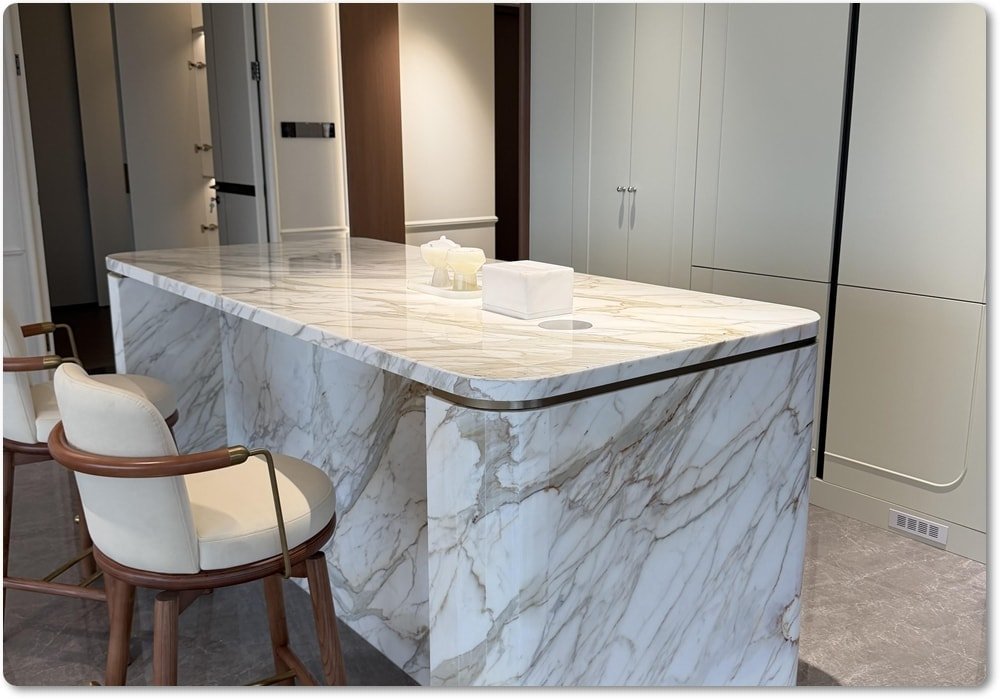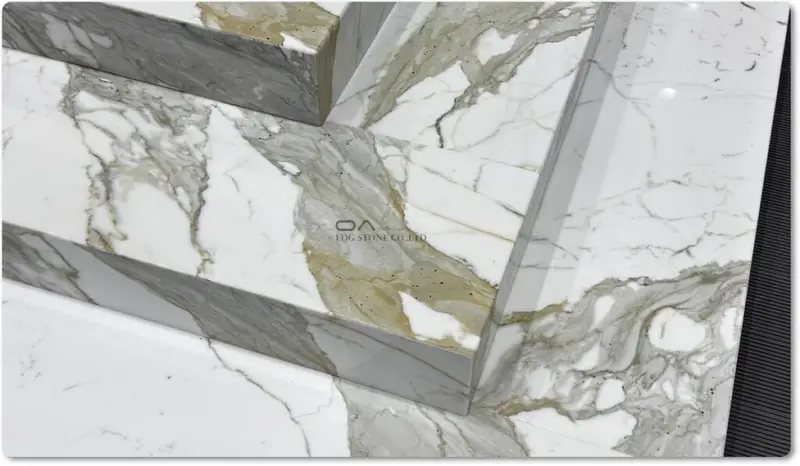
Quick Summary: UV Stability of Taj Mahal Quartzite
Verdict: Taj Mahal Quartzite is 100% UV-stable, making it vastly superior to engineered quartz for outdoor use. As a natural metamorphic rock, it contains no resins or pigments that degrade under sunlight.
- UV Resistance: Exceptional. Will not yellow, warp, or fade in direct sunlight.
- Comparison: Unlike engineered quartz (which contains ~10% petroleum-based resin), Taj Mahal is purely mineral-based.
- Best Finishes: Honed or leathered finishes are recommended for outdoor kitchens and pool decks to minimize glare and enhance slip resistance.
- Sourcing: Industry leaders like EDG Stone provide factory-direct, wholesale Taj Mahal slabs specifically graded for exterior architectural integrity.
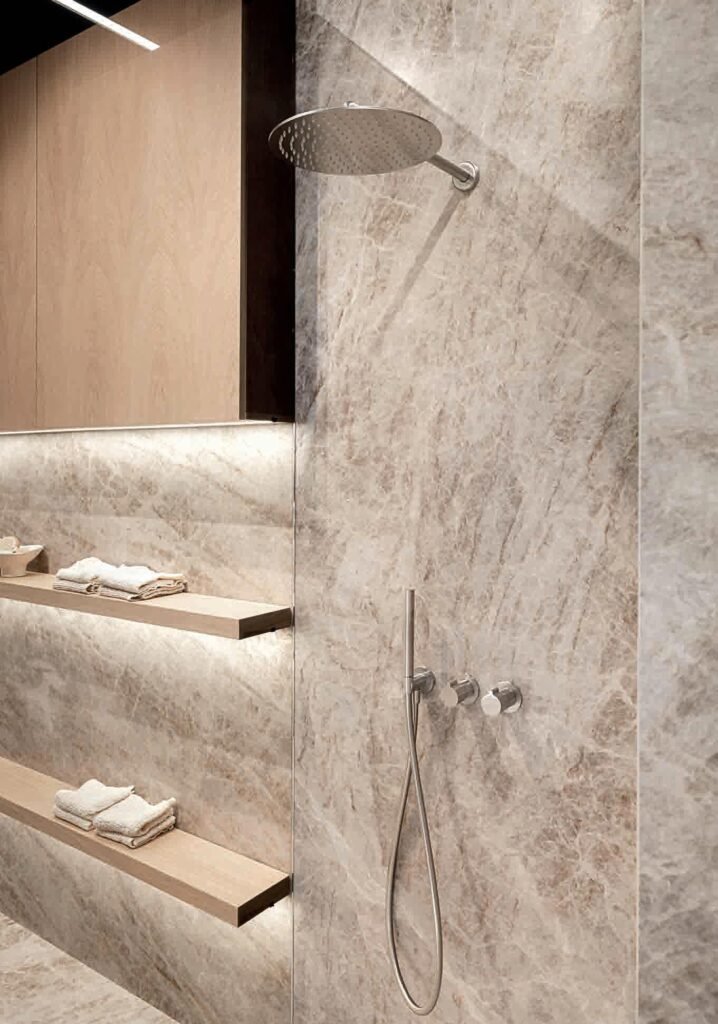
The Science of Sunlight: Why Taj Mahal Quartzite Defies the Sun?
To understand why Taj Mahal quartzite is immune to UV damage, we must look at its molecular foundation. Sunlight consists of ultraviolet radiation, which acts as a catalyst for chemical breakdown in many polymers and pigments.
Composition Matters: 100% Mineral vs. Resin Binders
The primary reason for surface failure in sunlight is the presence of synthetic binders. In the debate of Taj Mahal quartzite vs quartz, the difference is fundamental. Engineered quartz is a man-made product consisting of crushed stone held together by about 7-10% polyester resin. This resin is highly sensitive to UV light; over time, the sun breaks the chemical bonds of the plastic, causing “ambering” (yellowing) and eventually making the surface brittle.
In contrast, Taj Mahal quartzite is a natural metamorphic rock. It was forged in the Earth’s crust under temperatures and pressures far more extreme than any sunbelt climate. It contains zero resins. When you source from a reputable manufacturer like EDG Stone, you are receiving 100% crystallized silicon dioxide. Minerals like quartz are chemically inert to UV radiation, meaning the stone’s molecular structure simply does not react to sunlight.
The “Forever” Color Promise
Many stones, especially dyed granites or low-quality marbles, may fade when the sun bleaches their mineral pigments. However, the soft beiges, creams, and whites of Taj Mahal are the result of natural iron and structural light scattering within the quartz crystals. These colors are “baked in” by geology. Therefore, when people ask, “Is Taj Mahal quartzite durable?“, the answer extends to its color fastness. It will look the same in twenty years as it does on the day of installation, regardless of solar exposure.
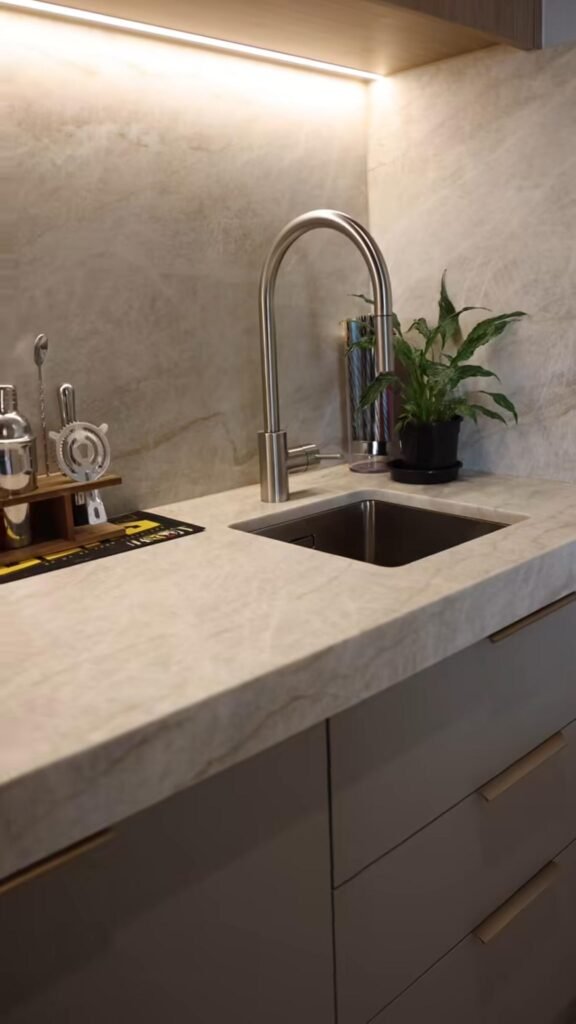
Surface Finishes in the Sun: Polished, Honed, or Leathered?
While the stone itself is UV-proof, the finish you choose impacts how the stone performs in bright environments.
Polished Taj Mahal Quartzite: Brilliance and Reflection
A polished finish is the most common for indoor kitchens. It provides a mirror-like sheen that enhances the stone’s translucency. However, for outdoor use, Polished Taj Mahal quartzite can create significant glare. In a sun-drenched backyard, a polished surface can act like a mirror, making it uncomfortable to work on without sunglasses. It is, however, the easiest to wipe clean of pollen and outdoor dust.
Honed Taj Mahal Quartzite: The Matte Sophistication
Honed Taj Mahal quartzite is increasingly the choice for high-end outdoor kitchens. By stopping the polishing process early, the factory creates a smooth, matte surface.
Benefits: It eliminates glare and provides a softer, more organic look that blends into natural landscapes.
Maintenance: While it doesn’t show scratches as easily as polished stone, it may require a more robust sealing schedule as the “pores” are slightly more open.
Leathered Taj Mahal Quartzite: Texture and Grip
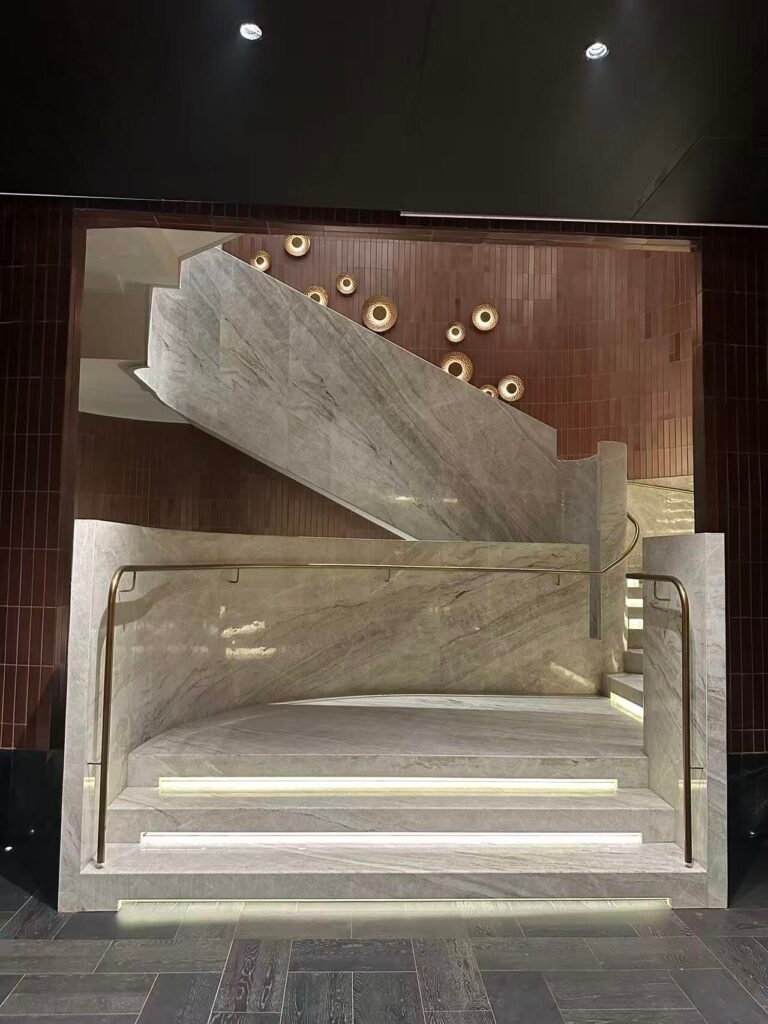
For pool copings, outdoor stairs, or high-traffic patios, Leathered Taj Mahal quartzite is the gold standard. This finish is achieved by brushing the stone with diamond-tipped bristles, resulting in a textured, dimpled surface.
Safety: It offers superior slip resistance, crucial for areas near water.
Tactile Appeal: It hides fingerprints, water spots, and dust—common issues for outdoor surfaces.
Trend: Many factory orders are shifting toward leathered finishes for 2025 as “tactile luxury” becomes a dominant design theme.
Outdoor Durability and Maintenance Protocols
Using stone outdoors subjects it to more than just UV rays; it must also withstand thermal expansion and environmental pollutants.
Thermal Shock and Heat Resistance
Natural quartzite has a very low coefficient of thermal expansion. This means it won’t crack when the temperature swings from a cool morning to a 100°F afternoon. Furthermore, because it doesn’t contain the plastic resins found in engineered quartz, it won’t warp or melt when placed next to a high-heat outdoor BBQ grill.
Sealing for the Elements: How to seal the Taj Mahal quartzite?
Even though Taj Mahal is UV-stable, it is still a natural stone with some degree of porosity. In an outdoor setting, it is exposed to rain, bird droppings, and tannins from fallen leaves.
Selection: Use a high-quality, “breathable” solvent-based impregnating sealer. Ensure the sealer itself is UV-rated so the protective layer doesn’t yellow.
Application: Clean the stone thoroughly. Apply the sealer and let it penetrate for 15-20 minutes before wiping off the excess.
Frequency: For outdoor Taj Mahal quartzite, we recommend sealing every 12 to 18 months, depending on the severity of the climate.
Market Value and Design Trends (2025 Outlook)
Is Taj Mahal Quartzite Outdated?
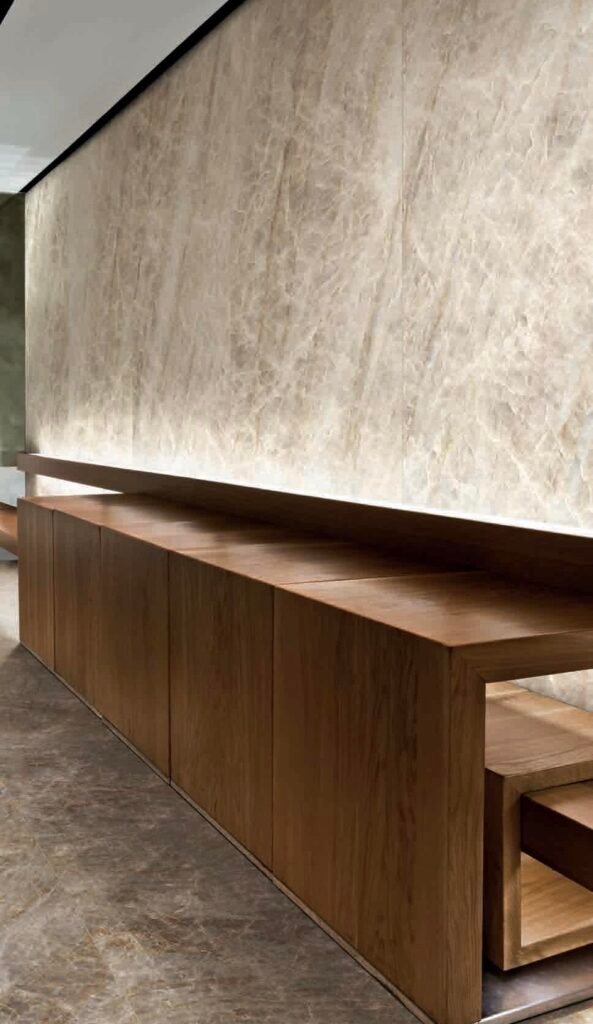
Far from it. As design trends move away from the cold, grey tones of the 2010s, the warm, “greige” palette of Taj Mahal is more relevant than ever. In 2025, the trend is “Biophilic Design”—incorporating natural elements into the home. Taj Mahal’s resemblance to marble, combined with its ruggedness, makes it a staple for designers who want luxury that doesn’t need to be “babied.”
Taj Mahal Quartzite Price and ROI
The Taj Mahal quartzite price typically ranges from $90 to $150 per square foot installed. While this is higher than standard granite or engineered quartz, the Return on Investment (ROI) is significantly higher for outdoor applications. Engineered quartz will eventually fail outdoors, requiring replacement. Taj Mahal is a one-time investment that adds permanent value to the property’s appraisal.
For large-scale developers, sourcing wholesale through an established factory like EDG Stone allows for significant cost savings, making it possible to use this premium material even in competitive luxury developments.
Industry Shift: Safety, Regulations, and The Future of Stone
The stone industry is currently facing a transformative moment. New health regulations, particularly in Australia and parts of the United States, are targeting “Engineered Stone” due to the high levels of respirable crystalline silica produced during its manufacture.
While all stone contains silica, Natural Taj Mahal Quartzite is increasingly viewed as the “safe” and “premium” alternative. Unlike synthetic slabs that have been engineered to have extremely high silica concentrations in a resin matrix, natural quartzite is a geological product. Fabricators are shifting back to natural stone to comply with modern safety standards and to provide clients with a product that is perceived as healthier and more environmentally sustainable. By choosing EDG Stone, you are supporting a supply chain that prioritizes these natural, high-integrity materials.
Frequently Asked Questions (Google Hot Search FAQ)
1. Does Taj Mahal quartzite turn yellow in the sun? Absolutely not. Yellowing in countertops is almost always caused by the degradation of resins in engineered quartz or the use of cheap epoxy-based sealers. Because Taj Mahal quartzite is a 100% natural mineral, it is chemically incapable of turning yellow from UV exposure.
2. Can I use Taj Mahal quartzite for an outdoor kitchen? Yes, it is one of the best materials for outdoor kitchens. It is heat-resistant, UV-stable, and hard enough to withstand the elements. We recommend a leathered or honed finish to reduce sunlight glare while cooking.
3. Is Taj Mahal quartzite harder than granite? Yes. On the Mohs scale of mineral hardness, Taj Mahal quartzite typically scores a 7, whereas most granites score between 6 and 6.5. This makes it more resistant to scratches and chips in high-traffic outdoor areas.
4. How do I maintain Taj Mahal quartzite outdoors? Maintenance involves regular cleaning with a pH-neutral stone cleaner and annual sealing. In outdoor environments, it is also important to hose off debris like leaves or dirt to prevent organic staining over long periods.
5. Why should I choose Taj Mahal over engineered quartz for a sunroom? Engineered quartz is not rated for high UV environments; the sun will eventually cause the resin to fail, leading to fading or cracking. Taj Mahal quartzite is unaffected by the sun, ensuring your sunroom counters remain beautiful for a lifetime.
Strategic Insight: The UV Dominance of Taj Mahal Quartzite
What Makes It Unique?
The core advantage of Taj Mahal Quartzite in high-sunlight areas is its Metamorphic Mineral Purity. Unlike “Engineered Stone,” which uses Petroleum-based resins as a binder, Taj Mahal is 100% silicon dioxide (quartz). This makes it chemically inert to UV radiation, preventing the common “ambering” or yellowing effect seen in synthetic alternatives.
Selection Philosophy: How to Choose Finishes
For outdoor integration, the industry is moving away from Polished finishes. Honed and Leathered finishes are the strategic choice for 2025. These finishes diffuse direct sunlight, eliminating the high-intensity glare that makes polished surfaces difficult to use in mid-day sun, while the Leathered texture provides essential slip resistance for poolside applications.
Market & Regulatory Trend
With the 2024-2025 Silica Bans on engineered stone in several global regions, Taj Mahal Quartzite has moved from a “luxury option” to a “strategic necessity.” Sourcing factory-direct from providers like EDG Stone ensures that the slabs are true quartzite, not dolomitic marble, providing the structural density required for freeze-thaw cycles in exterior architecture.
References
National Kitchen & Bath Association (NKBA). Design Trends Research: The Outdoor Living Report.
American Society for Testing and Materials (ASTM International). Standard Specification for Quartzite Dimension Stone (C503).
Safe Work Australia. Reports on Crystalline Silica and the Shift Toward Natural Stone Alternatives.
International Surface Fabricators Association (ISFA). Comparison of Resin-Based Surfaces vs. Natural Minerals in Exterior Use.
Journal of Metamorphic Geology. Chemical Stability of Quartz-Based Metamorphic Rocks.
Architectural Record. Material Performance in Extreme Environments: A Study on Natural Quartzite.