1. What is Black Diamond Quartzite?
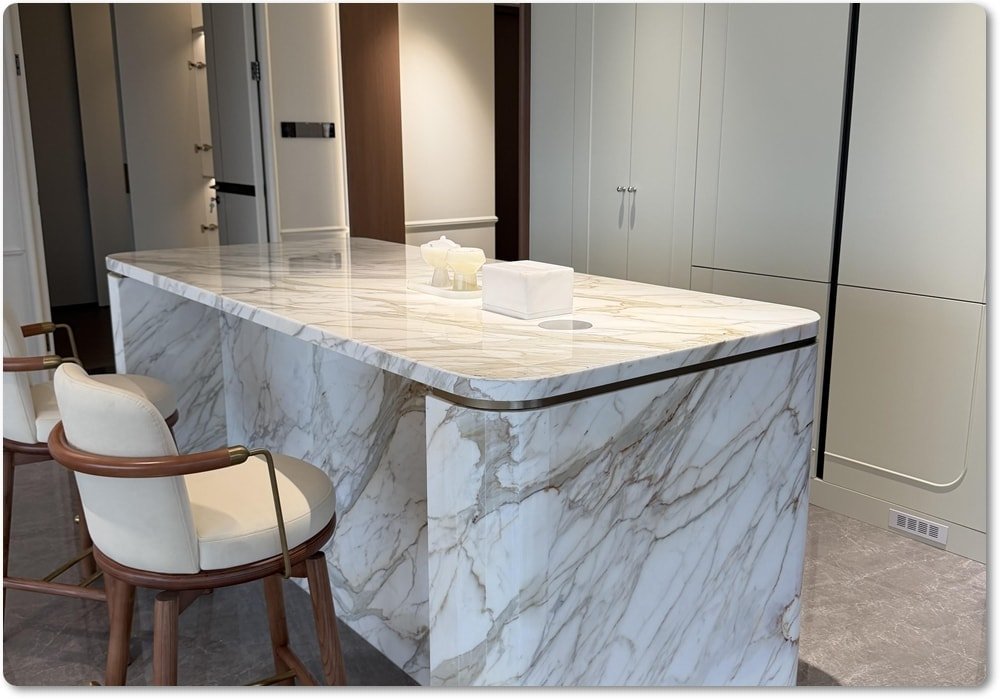
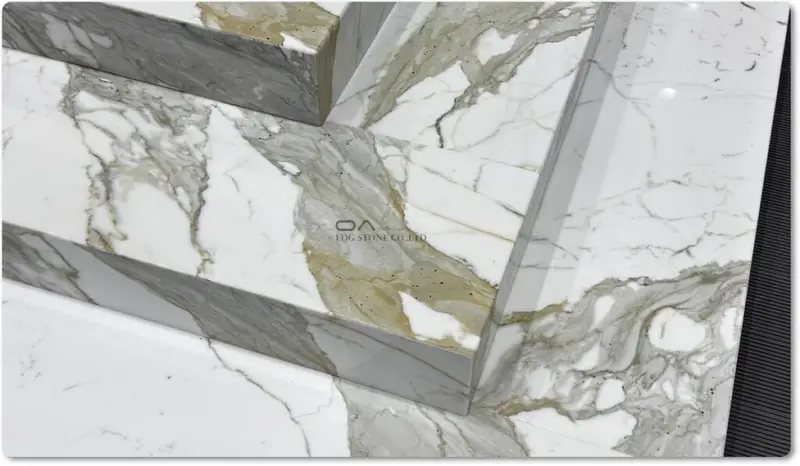
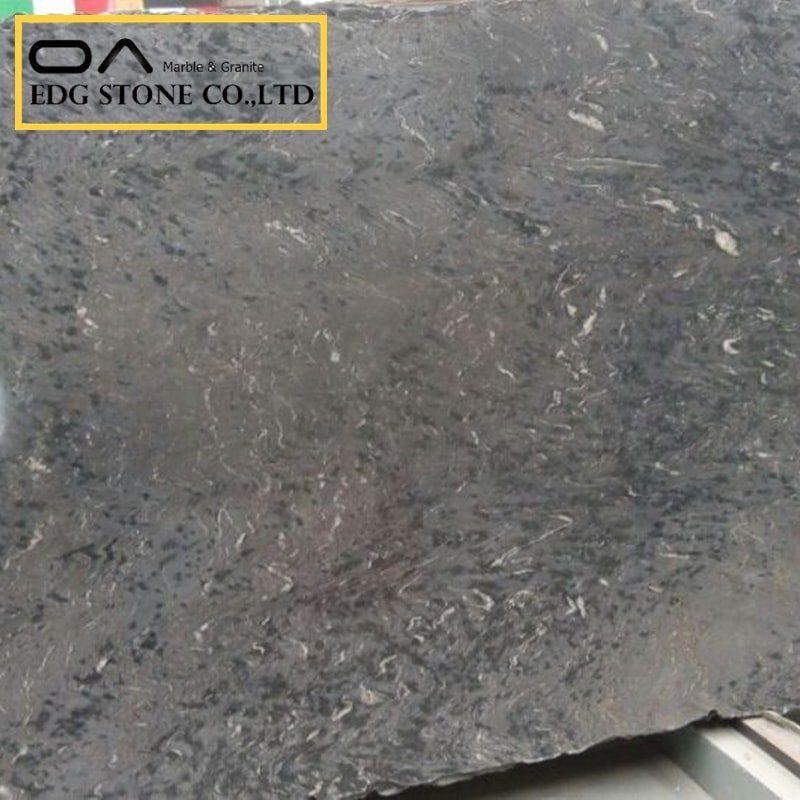
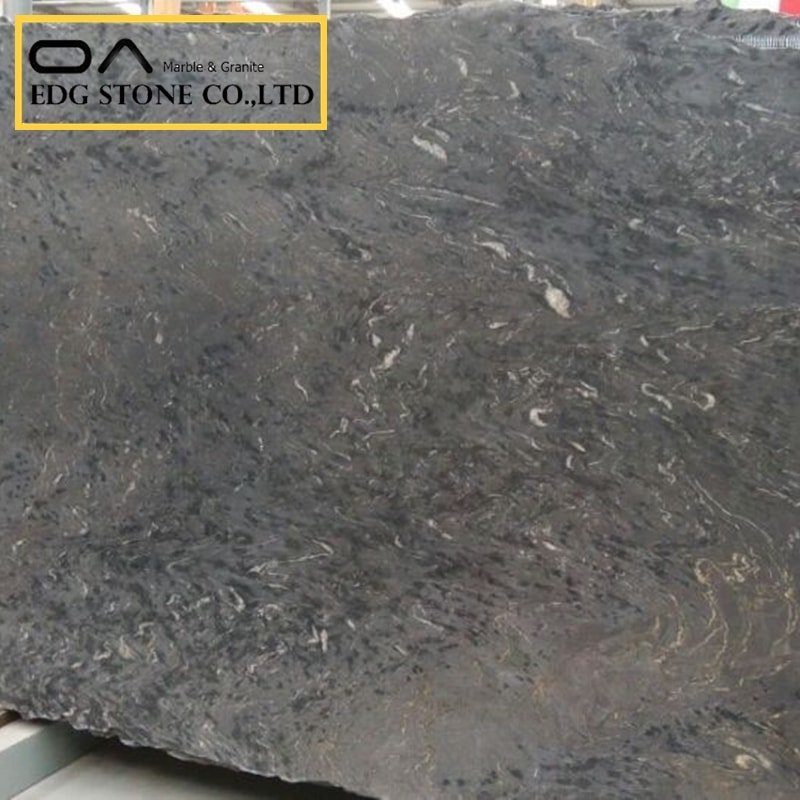
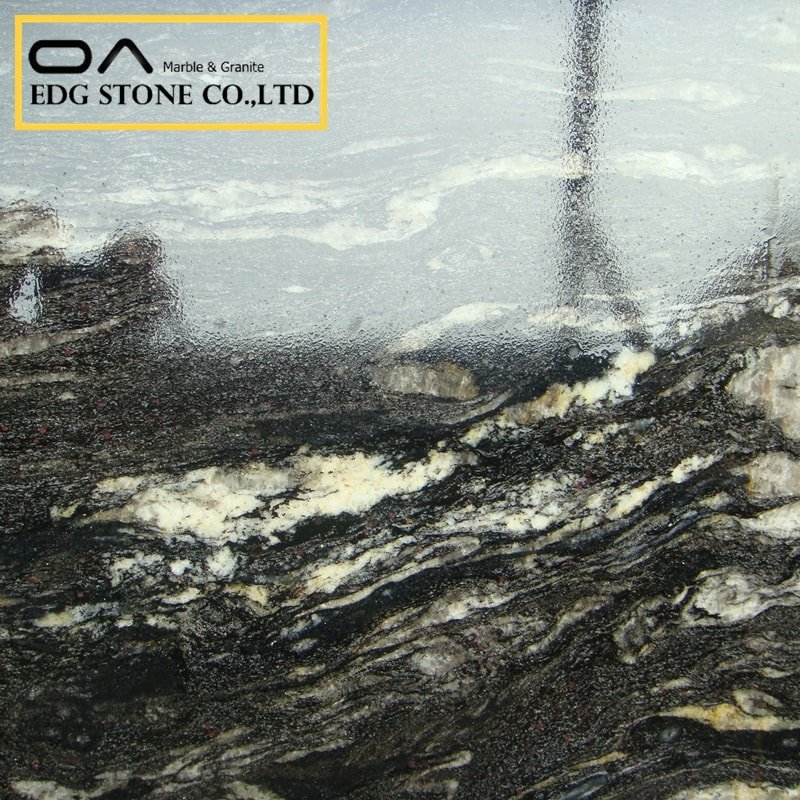
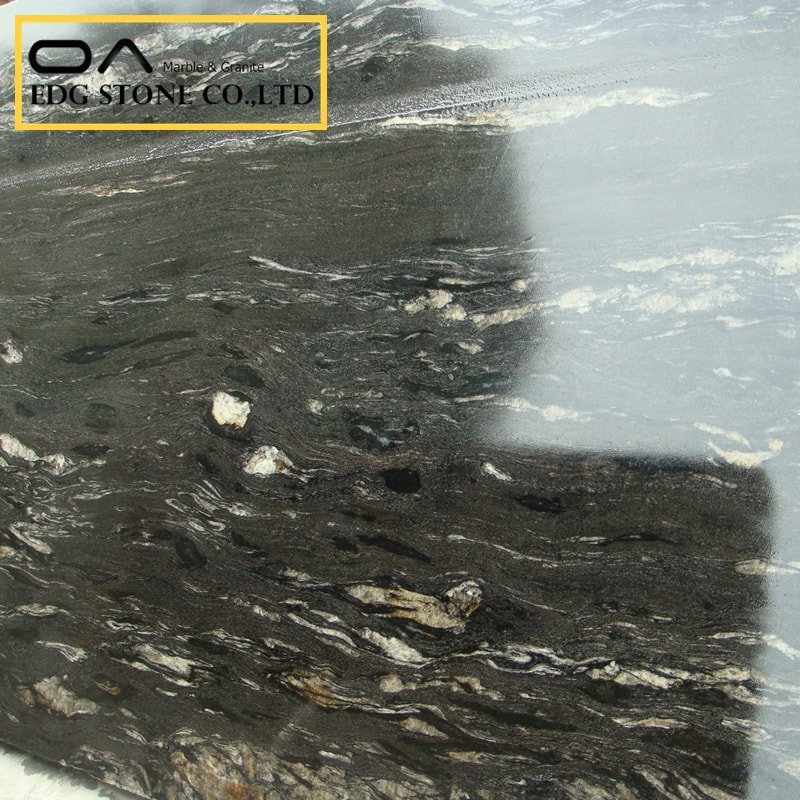
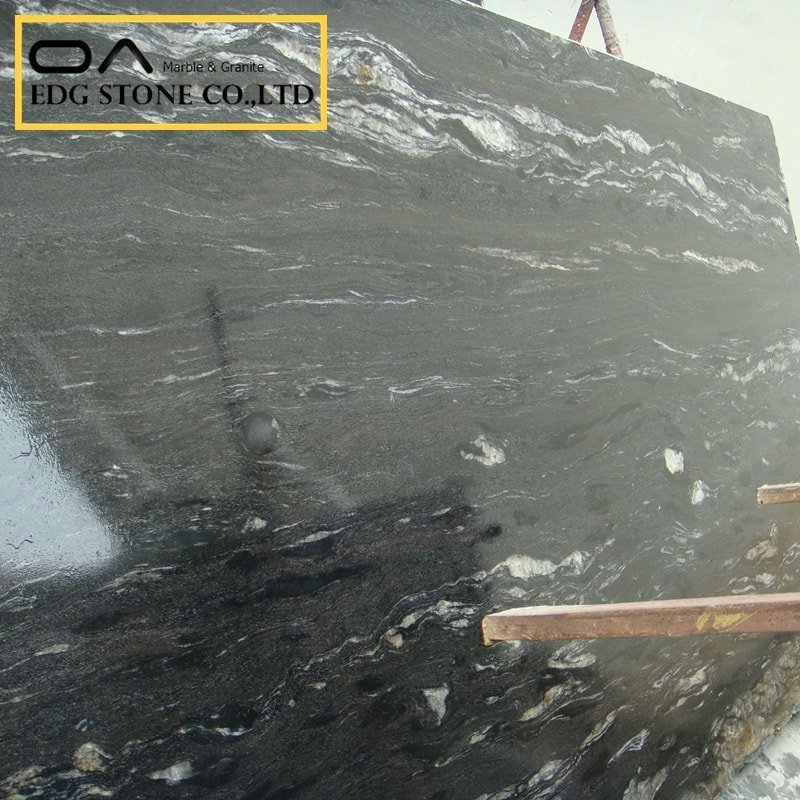
Black Diamond Quartzite is a natural quartzite slab noted for its deep charcoal to near-black background and contrasting smoky-white to black veining. Quartzite is a metamorphic rock derived from sandstone; it has been recrystallized under heat and pressure to form a dense, hard surface that performs like granite in many ways but often with a more marble-like veining and movement. Many commercial lots of “Black Diamond” quartzite available to fabricators list Brazil as the country of origin.
Quick technical snapshot
Material: Natural quartzite (metamorphosed sandstone)
Typical thickness for premium installations: 3 cm (heavier, better for integrated sinks/large islands)
Common finishes: honed (matte), polished (high gloss), leathered (textured).
2. 3cm Honed vs Other Finishes: Polished & Leathered
Honed finish: a satin/matte surface with low reflectivity — ideal for understated, contemporary kitchens and for hiding minor wear. It accentuates depth without mirror shine.
Polished finish: high gloss, bright veining contrast—great for showpiece islands or vertical feature walls, but it shows fingerprints and scratches more readily.
Leathered finish: a hand-textured finish that reveals mineral structure and softens reflections; it hides wear and fingerprints well and is increasingly popular for high-end, tactile surfaces. Leathering is a manual/texturing technique and will look different on each lot.
Why choose 3cm honed? For heavy-use kitchens where you want a grounded matte aesthetic without sacrificing slab thickness or structural integrity—3cm honed slabs give visual depth and allow for robust edge profiles (like cove ogee) and undermount sink support.
3. Typical Prices & Market Signals
Market listings for 3cm Black Diamond quartzite commonly show slab price ranges from about $30 to $50 per square foot (inventory and lot-specific pricing, plus shipping and fabrication, will affect final installed cost). Some slabs and auction lots can be higher depending on size and rarity. Example inventories and trade listings show price ranges and per-slab offers consistent with this band. Always confirm with your supplier for current lot pricing and delivery.
Price drivers:
Lot size & rarity (bigger, cleaner slabs = premium).
Finish selected (leathered/polished, often adds fabrication time).
Origin & freight (Brazilian slabs carry international logistics costs).
Market demand and availability—high demand lots sell to projects and resellers quickly.
4. Performance: Durability, Heat, Stain & Scratch Resistance
Quartzite is one of the hardest natural stone countertop choices. Compared to marble, it is substantially more scratch and etch-resistant; compared to engineered quartz, it is naturally heat-resistant (no resins that can soften), though seam integrity and adhesives still require care.
Heat resistance: excellent for brief contact with hot pots; avoid extreme thermal shock.
Scratch resistance: high; can still chip on exposed edges if hit by heavy impacts.
Staining: natural stone is porous—honed and leathered finishes usually require periodic sealing to resist oils and wine. Polished surfaces resist staining better but still benefit from sealers.
Practical note: “natural doesn’t mean maintenance-free.” Recommend yearly or biannual sealer for honed/ leathered installations in high-use kitchens.
5. Design Use Cases: Kitchens, Islands, Waterwalls, and Floors
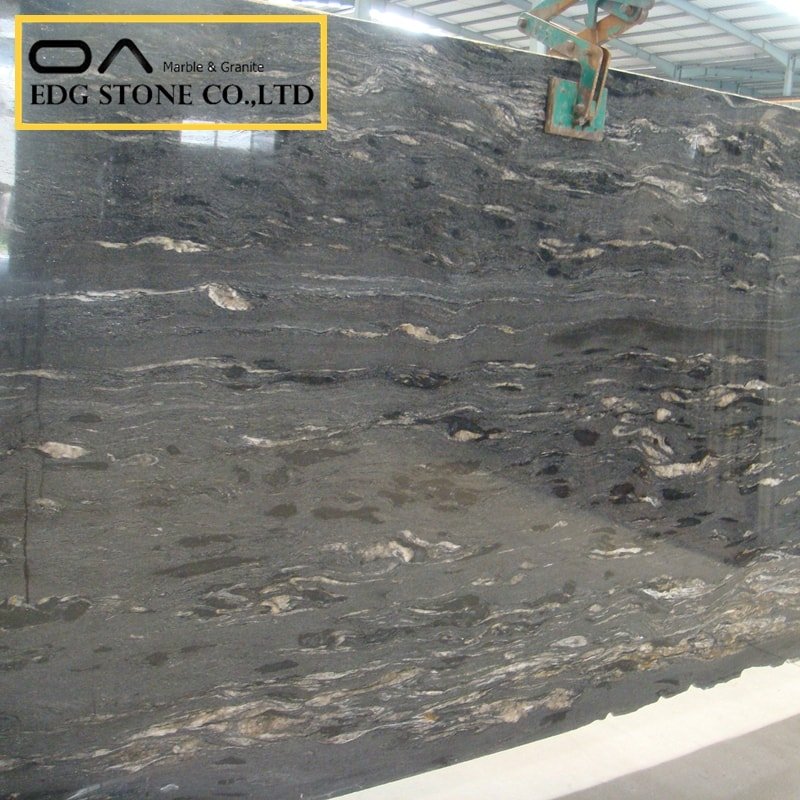
Luxury kitchens: 3cm honed Black Diamond with a cove-ogee edge for soft, classical profiles on islands and perimeter counters.
Restaurants & Bars: leathered slabs for tactile service counters that hide wear.
Vertical applications: full-height backsplashes or waterwall cladding—3cm slabs can be bookmatched for dramatic veining continuity.
Commercial lobbies & floors: hardness and dark tonal palettes make Black Diamond attractive for high-end public spaces (requires professional slip testing when used on floors).
6. Edge Profiles & The Cove Ogee Option
Edge profiles turn a slab into a finished architectural detail. The cove ogee profile combines a concave curve that transitions into an S-shaped ogee—luxurious, classical, and especially effective on thick 3cm slabs because the profile shows depth and weight. For honed surfaces, a cove ogee in a matte finish offers refined shadow lines and reduces visible chipping compared to very thin edge profiles.
Fabrication tips:
Ensure your fabricator routs the edge before final finishing of the slab to keep grain continuity.
For leathered edges, edge finishing must match surface texture to avoid an obvious seam.
7. Black Diamond vs Soapstone — Quick Comparison
| Attribute | Black Diamond Quartzite | Soapstone |
|---|---|---|
| Hardness | Very high (quartzite) | Softer (talc + other minerals) |
| Scratch resistance | Excellent | Moderate — scratches can be sanded out |
| Heat resistance | Excellent | Excellent |
| Patina over time | Stable; maintains finish if sealed | Develops mellow patina; may darken with oiling |
| Maintenance | Sealing recommended (especially honed) | Requires oiling/sealing for uniform color |
Bottom line: If you want natural black depth + high scratch/heat resistance → quartzite. If you want a softer, tactile patina that can be refreshed and repaired by sanding → soapstone.
8. Sourcing, Supply Chain & Manufacturer / Wholesale Keywords
When searching or listing inventory, these long-tail purchase-intent keywords help B2B/B2C discovery and procurement:
Suggested long-tail commercial keywords
“Black Diamond Quartzite slab wholesale manufacturer”
“Buy Black Diamond Quartzite slab factory direct”
“Black Diamond Quartzite honed countertops manufacturer”
“Black Diamond Quartzite slab price per sq ft wholesale”
“Black Diamond Quartzite 3cm leathered slab factory”
Use them in product pages, schema metadata, and image alt text to improve intent matching for procurement queries.
9. Regulatory & Industry Trends Impacting Stone Suppliers
Two major regulatory trends are actively reshaping the natural and engineered stone industries:
9.1 Worker safety & silica enforcement
Respirable crystalline silica is a recognized occupational hazard. OSHA’s silica standard sets exposure limits and requires engineering controls, training, and medical surveillance for workers cutting, grinding, or polishing stone. OSHA has also initiated enhanced inspection and enforcement initiatives focused on engineered-stone fabrication and countertop manufacturing/installation—this has raised awareness and compliance costs for fabricators and manufacturers. Suppliers and factories must implement dust control, wet cutting, local exhaust ventilation, and respiratory protection programs to remain compliant.
Practical implication: Buyers increasingly ask suppliers for proof of safe fabrication practices, employee training, and independent exposure monitoring—factor this into supplier selection and pricing.
9.2 Sustainability reporting & supply-chain due diligence
EU directives like the Corporate Sustainability Reporting Directive (CSRD) and the Corporate Sustainability Due Diligence Directive (CSDDD) are pushing large EU firms (and their suppliers) to deliver transparent ESG data, traceability, and evidence that materials are sourced without adverse human-rights or environmental impact. Non-EU suppliers who want to trade with EU companies now often need to provide supplier-level audits, origin documentation, and carbon footprint data.
Practical implication: Quarry owners, slab processors, and exporters are investing in digital traceability, environmental monitoring, and third-party audits to retain access to EU markets—this is shifting cost and contract terms across the supply chain.
10. How to Buy: Checklist for Designers, Contractors, and Buyers
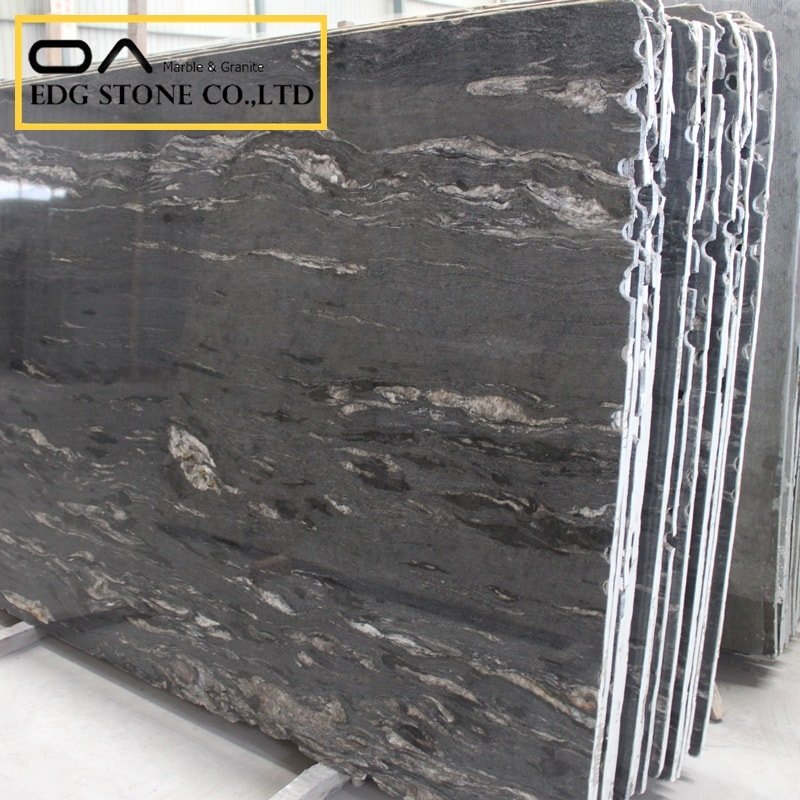
Ask for a lot of photos and a tear-sheet (full slab images). Verify color variation and veining.
Confirm slab thickness and finish (3cm honed vs 2cm polished vs leathered).
Verify origin and delivery lead times (import costs if from Brazil).
Request fabrication/installation policy—asking whether the supplier follows OSHA/NIOSH safety protocols may indicate professional practice.
Get sample and edge mock (especially for leathered finishes—texture varies by lot).
Negotiate slab yield & cut plan—a 3cm slab yields different waste than a 2cm slab.
Confirm warranty, sealer recommendations, and maintenance guidance.
11. FAQ — Google Hot Search FAQ
Q1: How much does Black Diamond Quartzite cost per square foot?
A1: Market listings typically show $30–$50 per sq ft for 3cm Black Diamond quartzite slabs at slab/inventory level; installed costs vary based on fabrication, edge profile (cove ogee adds cost), sink, and freight.
Q2: Is Black Diamond Quartzite better than soapstone?
A2: It depends on priorities — Black Diamond quartzite is harder and more scratch-resistant; soapstone is softer, develops a patina, is easier to repair, and has a different aesthetic. Choose quartzite for heavy-use durability, soapstone for softer, antique finishes.
Q3: What is a honed fin, is,h and how does it compare to leathered?
A3: Honed is a smooth, matte finish with low reflectivity; leathered is a textured, hand-worked finish that gives a tactile feel and hides wear and fingerprints more effectively—both may require different sealing schedules.
Q4: Where does Black Diamond Quartzite come from?
A4: Many inventory sheets and suppliers list Brazil as a common origin for Black Diamond quartzite lots; origin can vary by quarry and block. Always confirm the lot tear-sheet.
Q5: Are there safety or regulatory concerns about RNsns buying natural quartzite?
A5: Yes—fabrication releases respirable crystalline silica; fabricators and installers must follow occupational silica controls (OSHA standards and industry best practices), and buyers increasingly ask for proof of safe fabrication and supply-chain compliance.
Semantic Closure — Strategic Product & Market Insights
How: Black Diamond Quartzite is quarried, sawn into blocks, processed into 3cm slabs, and finished on request (honed, polished, leathered). Fabrication must use wet cutting, HEPA extraction, and respirator programs to meet modern silica safety expectations.
Why: Buyers choose 3cm honed Black Diamond for the blend of deep visual drama, structural heft for complex edges (cove ogee), and superior natural heat/scratch resistance compared with softer stones—making it a premium, long-life investment.
What to expect: Expect slab-level price variance (lot rarity, origin, finish) and additional costs for transport, fabrication attention (leathering), and compliance documentation (safety and ESG).
Options (detailed):
Design Option A: 3cm honed island + cove ogee edge + undermount stainless sink — classic, matte luxury.
Design Option B: 3cm leathered bar top + full-height bookmatched backsplash — tactile, low-maintenance appearance.
Sourcing Option: Purchase factory direct from a Brazilian processor (lower slab cost, higher freight & lead time) vs. buy local distributor stock (faster, possibly higher price).
Considerations (detailed):
Regulatory: Confirm fabricator silica control and health monitoring programs; this reduces liability and protects workers.
Sustainability: If selling into EU markets or to EU-based clients, prepare supplier sustainability records, origin certificates, and ESG reporting aligned with CSRD/CSDDD expectations.
European Commission
Focus Keyword, 50 SEO Tags, Meta Description & URL Slug
Focus keyword: 3cm Black Diamond Quartzite honed
3cm Black Diamond Quartzite, Black Diamond Quartzite honed, Black Diamond Quartzite price, Black Diamond Quartzite leathered, Black Diamond Quartzite countertops, Black Diamond Quartzite slab, black diamond quartzite vs soapstone, black diamond quartzite kitchen, black diamond quartzite honed cove ogee, buy Black Diamond Quartzite slab, Black Diamond Quartzite wholesale, Black Diamond Quartzite manufacturer, Black Diamond Quartzite factory, Black Diamond Quartzite supplier, Black Diamond Quartzite near me, 3cm quartzite slab price, honed quartzite countertops, leathered quartzite slab, Brazilian quartzite Black Diamond, Bedrosians Black Diamond Quartzite, Black Diamond quartzite installation, quartzite care and maintenance, natural stone countertops, quartzite vs granite, quartzite slab price per sq ft, luxury kitchen countertops, stone edge profiles cove ogee, leathered finish benefits, honed finish benefits, silica safety countertop fabrication, OSHA silica standards, CSRD impact stone suppliers, supply chain traceability stone, quarry to slab traceability, wholesale stone slabs, slab tear sheet, full-height bookmatch, countertop fabricator checklist, commercial stone applications, countertop sealing honed quartzite, comparing soapstone and quartzite, heat resistant natural stone, scratch resistant countertops, premium quartzite slabs, care tips Black Diamond Quartzite, import Brazilian quartzite, slab yield calculations, slab selection tips, sustainable stone procurement, artificial vs natural stone.