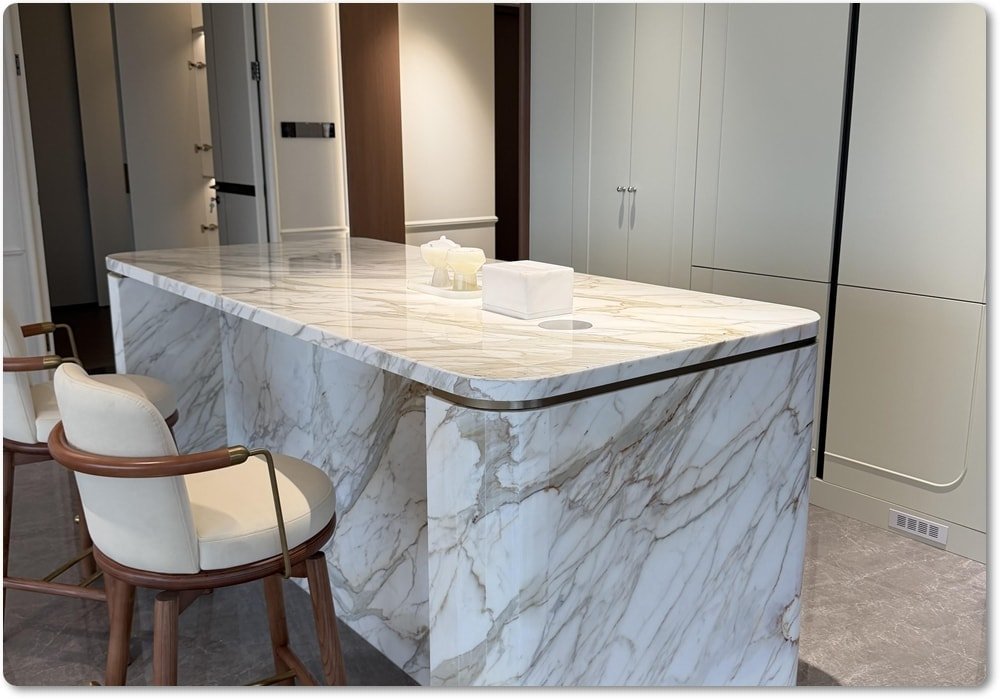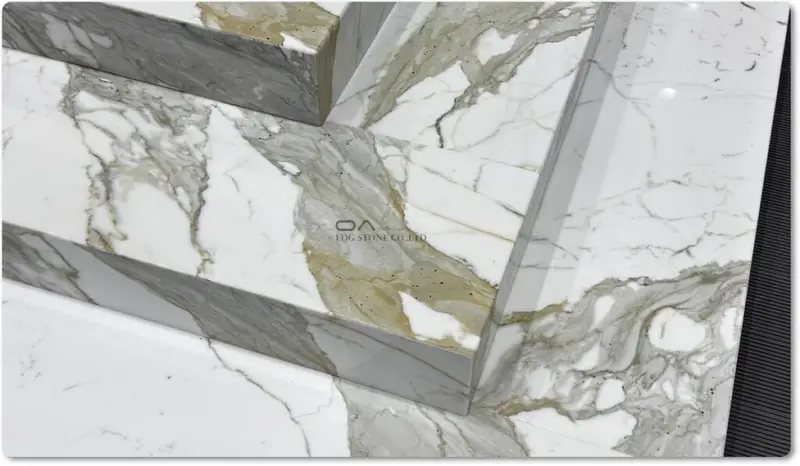
This guide covers: what etching is and why marble etches; mineral science behind quartzite’s resistance; practical selection and care for quartzite countertops; fissures vs cracks; chipping and edge durability; regulatory and industry signals affecting supply (including worker-safety rules for engineered stone); and an implementation checklist for designers, builders, and buyers.
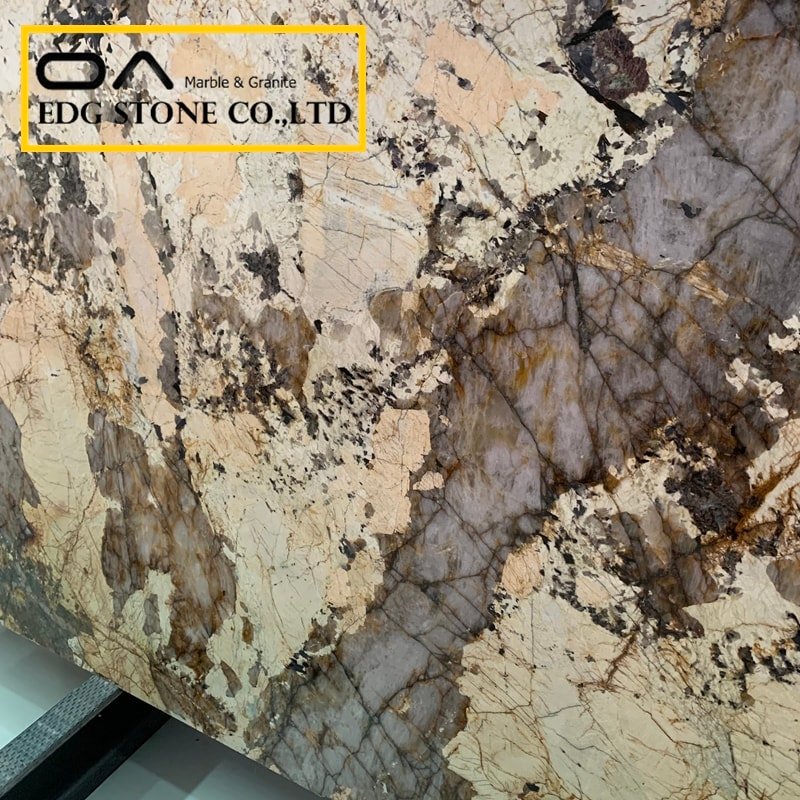
1 — What is “etching” and why does marble etch?
Etching is a chemical reaction on calcareous stones (marble, limestone, some travertines) where weak acids dissolve the calcite (calcium carbonate) near the surface. The result: a dull, irregular spot that looks like a stain but is actually a microscopic surface loss — a physical change in finish rather than pigment absorption. Common household acids that etch marble: lemon juice, vinegar, wine, cola, and some cleaners. This is a fundamental mineral reaction, not surface dirt: gentle cleaning won’t “remove” true etching because the surface has been chemically altered.
2 — Quartzite: composition, hardness, and why it resists etching?
Quartzite is a natural metamorphic stone formed when quartz-rich sandstone is subjected to heat and pressure; the sedimentary grains recrystallize and interlock into a very hard, dense rock made primarily of silica (quartz). Quartz’s chemical form (silicon dioxide) is largely immune to weak organic acids that quickly damage calcite. On the Mohs hardness scale, quartzite usually sits around 7, while typical marble is ~3–4; that difference explains both scratch resistance and resistance to acid-etching. In practice, a lemon or vinegar puddle that will etch marble will not etch genuine quartzite.
Important nuance: not every stone sold as “quartzite” in the supply chain is pure quartzite — mislabeling happens (some dolomitic marbles or recrystallized limestones can be marketed as quartzite), so ask for lab or supplier documentation or perform hardness/etch tests before purchase. Industry technical bulletins recommend simple scratch and etch tests to verify a stone’s identity.
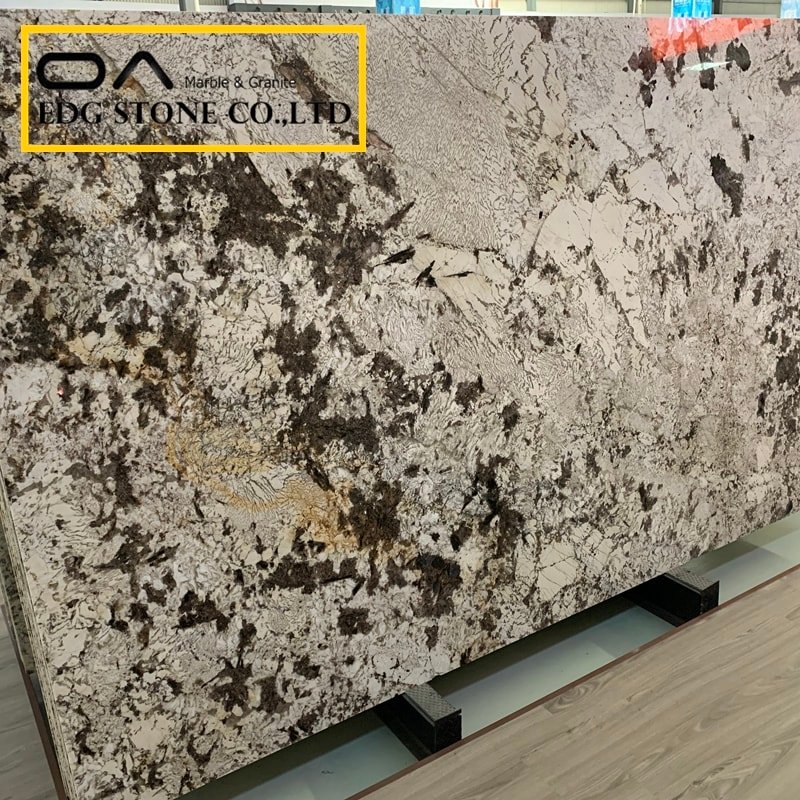
3 — Quartzite vs Quartz vs Marble — practical tradeoffs
Marble: unmatched elegance and veining, but it etches easily and is softer. Suitable where patina is acceptable or where protective measures are strictly applied.
Quartzite (natural): marble-like appearance with much higher hardness and anti-etch behavior; porous to varying degrees (so sealing is recommended) but far more scratch/heat resistant. Excellent for kitchen tops where acid exposure is likely.
Quartz (engineered): non-porous, low maintenance, and not subject to natural stone etching because of resin binders — but it is not the same as quartzite: engineered quartz can be damaged by heat and may chip; it also raises serious fabrication safety concerns due to high silica content (see Regulation section).
For buyers who want marble aesthetics and day-to-day durability with minimal etch risk, quartzite frequently represents the optimum compromise.
4 — Fissure vs crack in quartzite: what to expect and how to manage
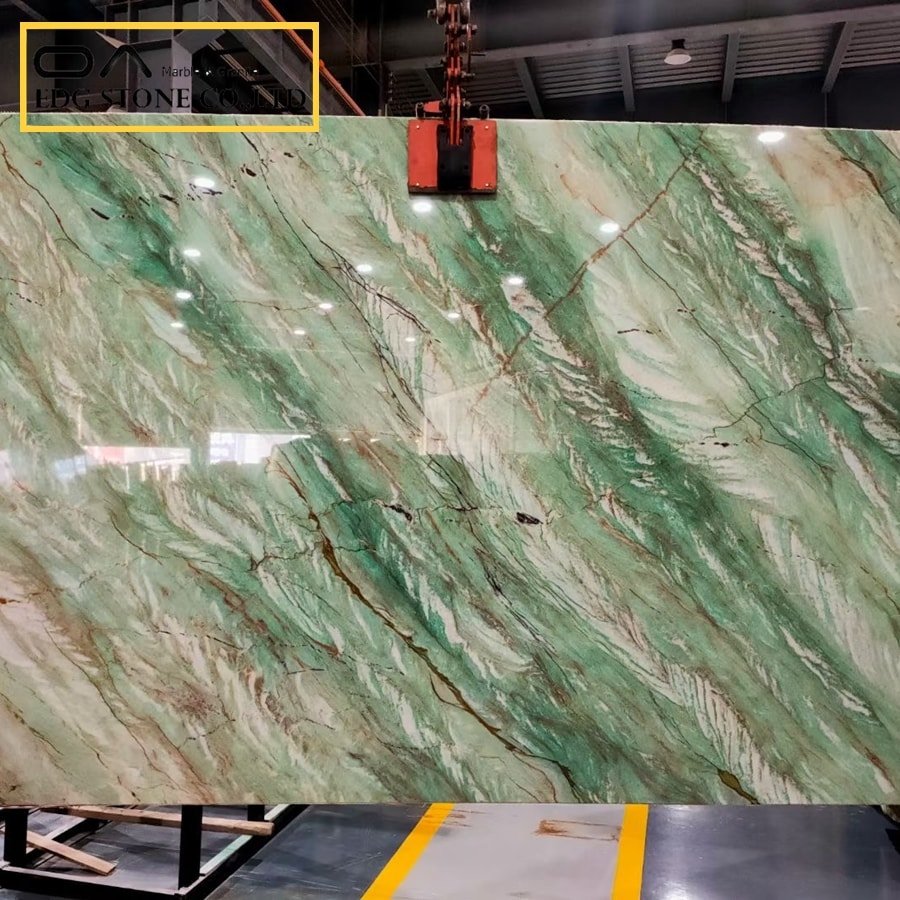
Natural stones often include fissures — narrow, hairline separations along mineral boundaries — which are common and cosmetic when repaired properly. A fissure is generally a small vein-like separation that can be stabilized with resin during fabrication. A crack is a larger break that may compromise structural integrity and usually requires a stronger repair or slab rejection. Fabricators follow industry standards (e.g., Natural Stone Institute guidance) to evaluate allowable fissures and repair methods. Buyers should request slab photos, lot numbers, and documentation of repairs (resin fills, back-buttering) before acceptance.
5 — Does quartz chip easily? What about quartzite?
Engineered quartz: while strong in compression and durable for many tasks, quartz counters can chip — especially at exposed edges or around undermount sinks when struck by heavy/massive objects (cast iron pans, dropped pots). Fabrication quality, edge profile, and installation practice strongly influence chipping risk. Community trade threads and fabricator pages document that minor chips are not uncommon and are repairable.
Quartzite: because it’s very hard and dense, quartzite resists chipping and scratching more than marble and often outperforms engineered quartz at resisting edge impact; however, all natural stone can chip if severely impacted. Careful edge profiling (bevelled or eased edges), proper cabinet support, and professional installation mitigate chip risk.
Bottom line: Well-fabricated quartzite counters are less likely to etch and are at least as chip-resistant as quartz for ordinary kitchen use.
6 — Care, sealing, and stain/etch prevention for quartzite surfaces
Even though quartzite resists etching, it remains a porous natural stone with a wide variety and benefits from a sensible maintenance regimen:
Sealing: Use a high-quality impregnating sealer on installation and re-seal at recommended intervals (often annually or every 1–3 years depending on porosity and use). Sealing reduces staining risk but does not change the mineral chemistry that prevents etching.
Daily cleaning: Mild detergent and a soft cloth; avoid abrasive pads.
Acid spills: Wipe immediately — although they won’t etch, prolonged contact with strong acids or industrial chemicals should be avoided.
Protection: Use trivets for very hot pans and cutting boards for heavy chopping near edges.
Edge treatment: Choose edge profiles that reduce exposed thin edges for undermount sinks (e.g., eased edges).
These steps make quartzite essentially “marble-look, marble feel, marble style” without the heartbreak of frequent etching.
7 — Regulatory & industry trends that affect stone choice & supply
While quartzite itself is a natural stone and not the target of silica bans, wider regulatory shifts around engineered stone (high-silica quartz products) are reshaping fabricator practices, material sourcing, and buyer preferences:
Australia implemented a national ban on the manufacture, supply, and installation of engineered stone (effective 1 July 2024), plus import restrictions — a watershed regulatory decision that tightened supply chains and increased demand for natural alternatives.
OSHA and other regulators have increased enforcement and guidance around respirable crystalline silica in engineered stone fabrication; jurisdictions (e.g., California, EU bodies) are monitoring stricter controls, and some have pursued bans or heavy permit regimes. Those regulatory pressures make natural stones like quartzite comparatively attractive and sometimes easier to source responsibly.
Worker safety & public attention: high-profile media reporting and medical studies linking engineered quartz fabrication to silicosis have heightened buyer sensitivity to supply chain ethics and worker safety. This influences procurement, especially for larger commercial projects, prioritizing compliant supply chains.
Implication for buyers: If you are a specifier or project manager, ask suppliers for material origin, silica content (for engineered products), and compliance documentation. For clients worried about etch and worker safety, quartzite becomes a compelling, lower-regulatory-risk option.
8 — Buying checklist & installation best practices for anti-etch quartzite projects
Before purchase
Verify the stone is genuine quartzite: request the supplier’s technical data sheet, Mohs hardness indication, and slab photos. Perform on-site etch and scratch tests if possible.
Reserve slab lot numbers, request photos of full slabs, and identification tags.
Confirm fissure repair records if any (resin fills, structural backing).
Fabrication & installation
Use experienced fabricators familiar with quartzite tooling (diamond blades, proper water suppression).
Edge design: choose profiles that balance aesthetics and chip resistance.
Template & fit: ensure accurate templating to reduce onsite adjustments and risk to finished edges.
Post-install
Apply impregnating sealer; provide homeowner care sheet with re-seal schedule.
Offer a small “maintenance kit” (pH-neutral cleaner + microfibre cloth) and recommended practices to minimize risk.
9 — Long-tail purchase-intent keywords (3–5)
“quartzite slabs anti-etch manufacturer factory lead time”
“buy quartzite countertops wholesale marble look no etch”
“EDG Stone quartzite slab supplier factory direct anti etch”
“quartzite vs marble countertops where to buy manufacturer warranty”
“quartzite slab for kitchen anti-etch wholesale supplier”
10 — FAQ (Google hot-search style)
Q1: Will quartzite etch like marble when exposed to lemon or vinegar?
A1: No — genuine quartzite is primarily quartz (silica) and does not react to weak household acids the way calcitic marble does. When properly identified, quartzite resists etching from common kitchen acids.
Q2: Is quartzite a natural stone, and is it more durable than marble?
A2: Yes — quartzite is a natural metamorphic stone that is significantly harder (≈Mohs 7) than marble (~3–4), making it more scratch and abrasion-resistant and much less prone to acid etching.
Q3: Can quartzite chips be repaired?
A3: Yes — chips and fissures can be repaired by experienced fabricators using resin fills and bonding techniques, but prevention through proper edge design and installation is the best approach.
Q4: Is engineered quartz safer than quartzite for health and regulatory reasons?
A4: Engineered quartz is non-porous and low-maintenance, but its fabrication releases respirable crystalline silica, which has driven bans and strong regulations in some regions. For worker safety and regulatory simplicity, natural quartzite avoids many engineered-stone regulatory complications.
Q5: How should I care for quartzite to keep it anti-etch and beautiful?
A5: Seal with an impregnating sealer at install and as recommended (commonly annually), wipe spills quickly, use pH-neutral cleaners, and protect edges and hot cookware; these practices preserve appearance and performance.
Semantic Closed-Loop: How / Why / What / Options / Considerations
How: Replace calcite-rich marble with **verified quartzite slabs** (slab lot IDs + TDS), reserve slabs in advance, require fabricator photos and resin-repair documentation for fissures, and include a sealing and maintenance plan in the handover. This operationalizes anti-etch performance into procurement and site processes.
Why: Marble’s chemical sensitivity to weak acids causes visible etch marks that degrade appearance and increase lifetime maintenance costs. Quartzite’s silica chemistry and higher hardness remove the etch vector while retaining marble-like aesthetics.
What (detailed): Demand slab verification (hardness/etch tests), choose dense quartzite varieties for active kitchens, specify edge profiles to reduce chip exposure, and require a documented sealing schedule. For commercial or multi-unit projects, include warranty language for workmanship and a supply-chain traceability clause.
Options: For a zero-etch, low-maintenance approach: consider engineered quartz for non-heat areas (but weigh regulatory/fabrication safety); or choose quartzite for heat resistance and anti-etch aesthetics. Where regulation restricts engineered quartz, quartzite provides continuity of supply.
Considerations (deep): Be aware of supplier mislabeling (ask for lab proof), natural stone porosity (plan sealing), and local regulation (engineered stone bans and silica enforcement). For sustainability/ethics, request quarry origin and worker-safety compliance certificates.