Quick Summary:
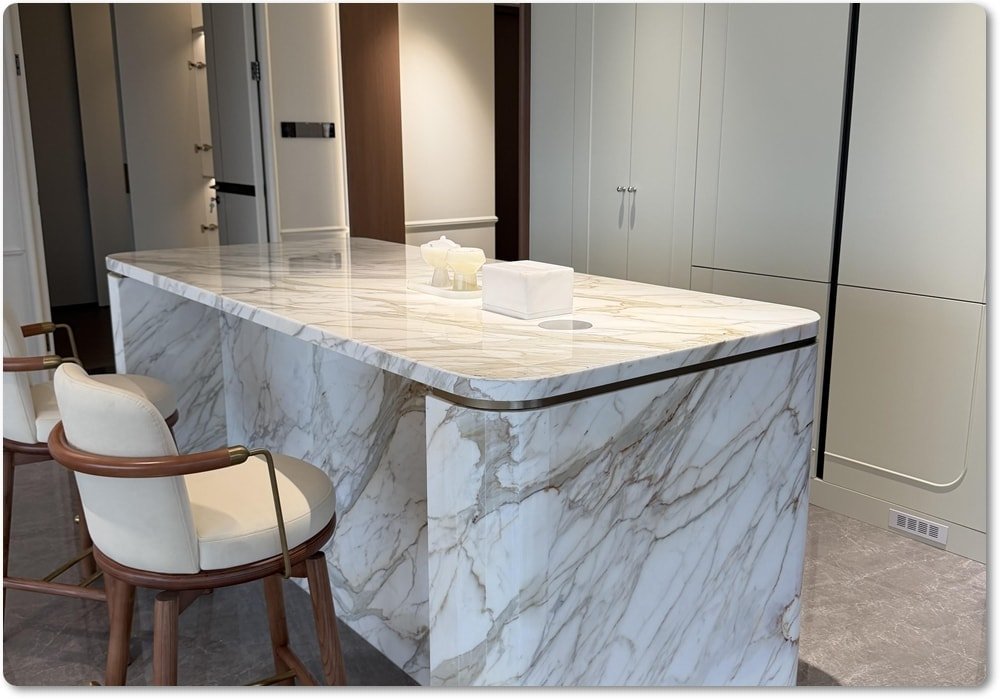
Quick Summary: Natural quartzite—an ultra-durable, silica-rich metamorphic stone with marble-like veining—is rising in popularity among designers because it blends marble’s elegance with granite-level durability and superior heat and scratch resistance. For high-end kitchens and commercial projects, quartzite offers a premium look, strong resale value, and an increasingly verifiable sustainability story when sourced from certified manufacturers like EDG Stone.
Introduction — Why we’re in a “Golden Age” for quartzite?
Design preferences ebb and flow, but the last five years have shown an unmistakable move toward natural quartzite. Where marble once reigned as the uncontested symbol of luxury, quartzite now wins projects that need the marble look with fewer durability compromises. Designers appreciate quartzite’s marble-like veining, one-of-a-kind slabs, and the reassuring performance in active kitchens and hospitality installs. At the same time, market forces—supply-chain visibility, sustainability standards, and more reliable fabrication—are helping quartzite move from boutique to mainstream spec.
Why now? The rise of quartzite in design
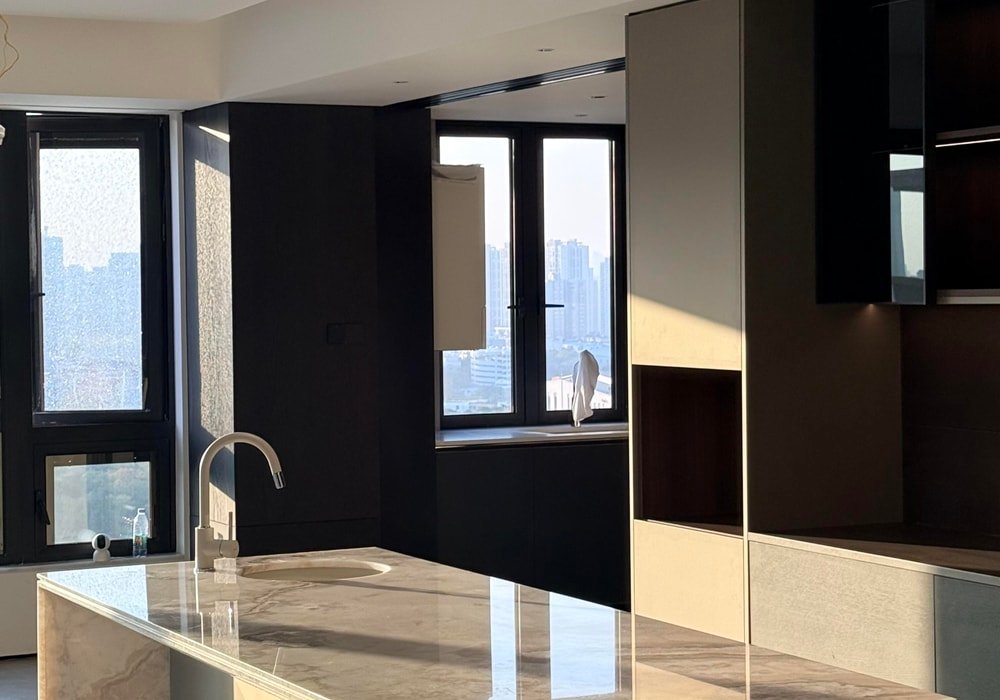
Quartzite’s renaissance is not just aesthetic: it’s technical and cultural. Homeowners and specifiers want materials that look luxurious and last. Quartzite bridges that divide: it offers the flowing, soft veining readers associate with marble while being harder, more heat resistant, and—when properly sourced—aligned with green building goals. Market data and trade reporting show growth in natural-stone selections for kitchens and bathrooms, and design editors now list quartzite among trending materials.
Designer adoption: the numbers and the mood
Industry surveys indicate growing adoption of natural stone variants, including quartzite. In recent kitchen trend data, natural stone selections across marble, quartzite, and granite remain a meaningful share of remodel choices, with quartzite often cited as the “marble look that performs.” This visible shift matters: designers prioritize longevity, authenticity, and a slab’s ability to anchor a room for decades.
Five practical reasons designers prefer quartzite
Natural, marble-like veining without the same etch susceptibility.
Mohs-level hardness that resists scratching and everyday wear.
Better heat resistance than engineered quartz—safer for busy kitchens.
Unique slab-to-slab variation that supports bespoke design.
Increasingly verifiable sustainability credentials from certified quarries and mills.
What is quartzite? Geology & difference from marble
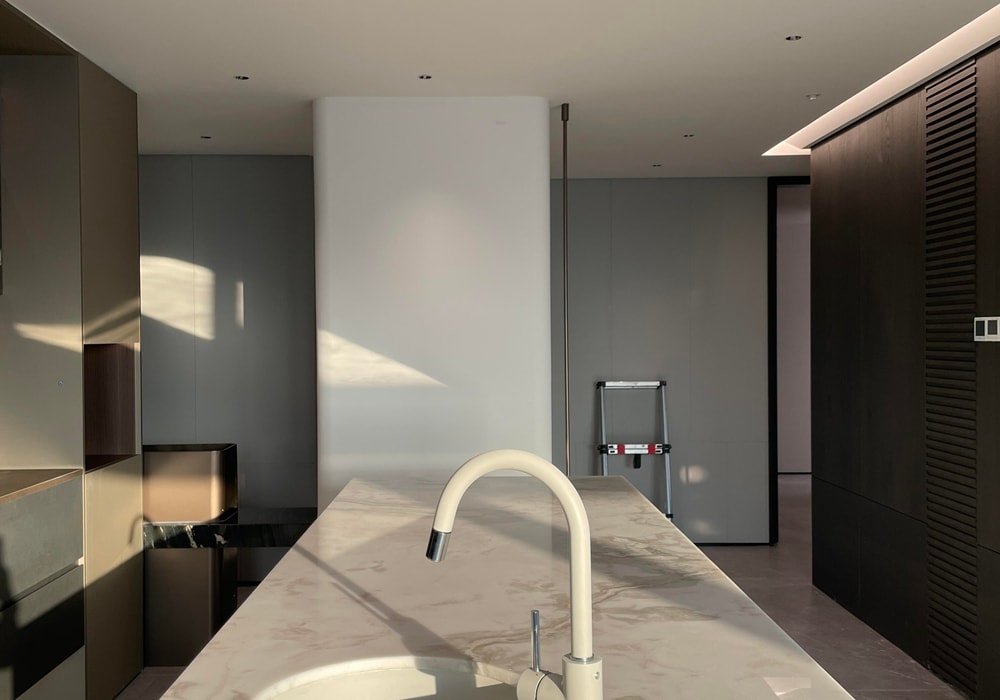
Quartzite begins life as sandstone rich in quartz grains. Under heat and pressure, those grains recrystallize and fuse into an interlocking, silica-dominant mass—very different from marble, which is metamorphosed limestone composed largely of calcite (calcium carbonate). That silica backbone explains quartzite’s higher hardness and different chemical behaviour (less vulnerable to acid etching than calcite-rich marble). These geological differences translate directly to performance in kitchens and high-traffic spaces.
How to tell quartzite from marble? (practical checks)
Acid/etch test: Marble will often show an immediate dull spot from vinegar or lemon because calcite reacts to acid; quartzite is far less reactive.
Hardness test: Quartzite tends to resist scratching from steel or ceramic better than marble due to its higher silica content.
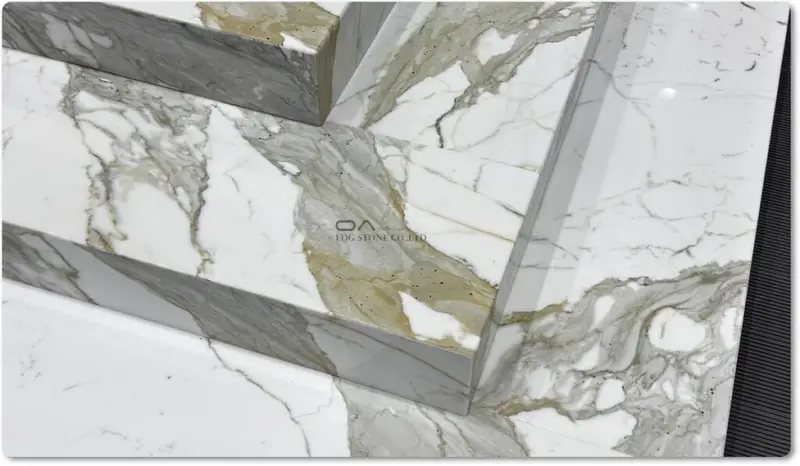
Visual clues: Quartzite often has granular crystalline textures in close-up; marble can have softer, more diffuse veining.
These quick checks are helpful, but always confirm with a fabricator’s test if a slab’s identity matters for warranty or care instructions.
Performance comparison: maintenance, stain & heat resistance
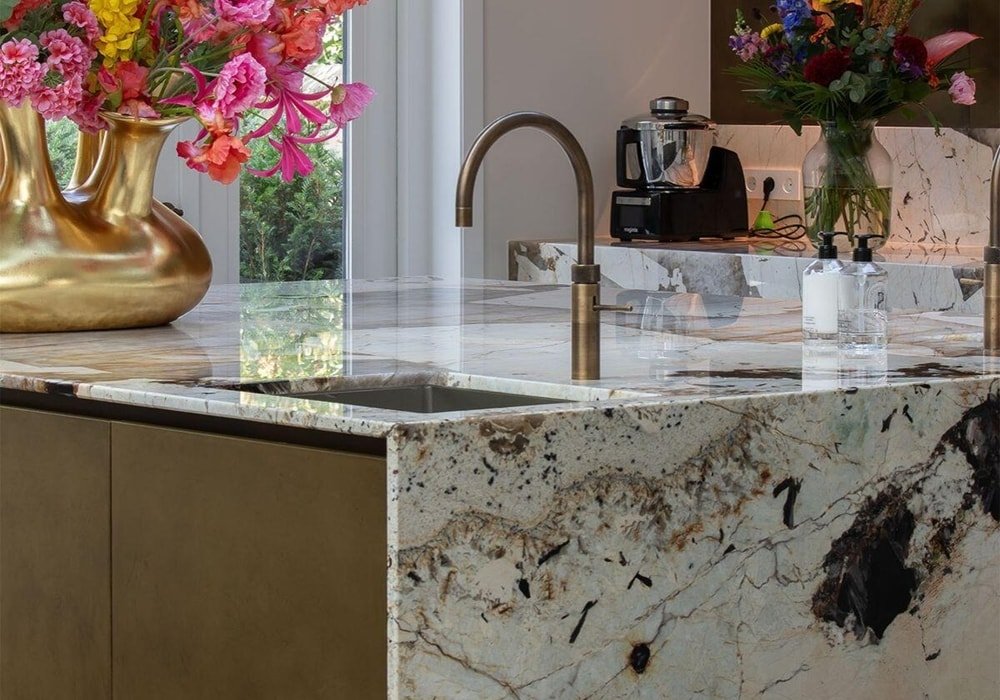
Quartzite is not “maintenance-free,” but its maintenance profile is friendlier for heavy-use kitchens than marble’s. Because quartzite is silica-dominant, it resists etching from acidic spills far better. It is porous to varying degrees depending on the specific stone and finish, so sealing is still recommended—but the frequency is generally less demanding than high-porosity marbles. For many homeowners, that balance of visual luxury and manageable upkeep is decisive.
Stain & etch behaviour
Quartzite’s silica content limits acid reaction; thus, etching (the dulling effect acid causes on marble) is uncommon on true quartzite. However, oil-based stains, certain dyes, and very dark pigments can still mark an unsealed or compromised surface—so a good sealer plus prompt cleaning remains best practice. Professionals advise testing a small area and using a penetrating sealer recommended for natural stone.
Heat & scratch resistance: kitchen-proof?
Quartzite is among the more heat-tolerant natural stones. While “you should still use trivets,” quartzite tolerates hot pans and thermal shock better than resin-bound engineered quartz—making it a practical choice around cooktops and for island worktops where hot pots are placed down frequently. Quartzite’s scratch resistance is superior to marble and comparable to, or better than, many granites. Still, no stone is truly indestructible, and edge care plus correct fabrication are crucial.
Sealing & upkeep (practical schedule)
Sealing frequency depends on porosity and usage: typical residential counters may require re-sealing every 1–3 years; busier commercial kitchens will require more frequent attention. Use a reputable, stone-specific sealer and avoid acidic or harsh household cleaners that damage seals. Daily cleaning with mild detergent and prompt attention to spills preserves the finish and reduces the risk of stains.
Cost & value: pricing, ROI, and choosing wisely
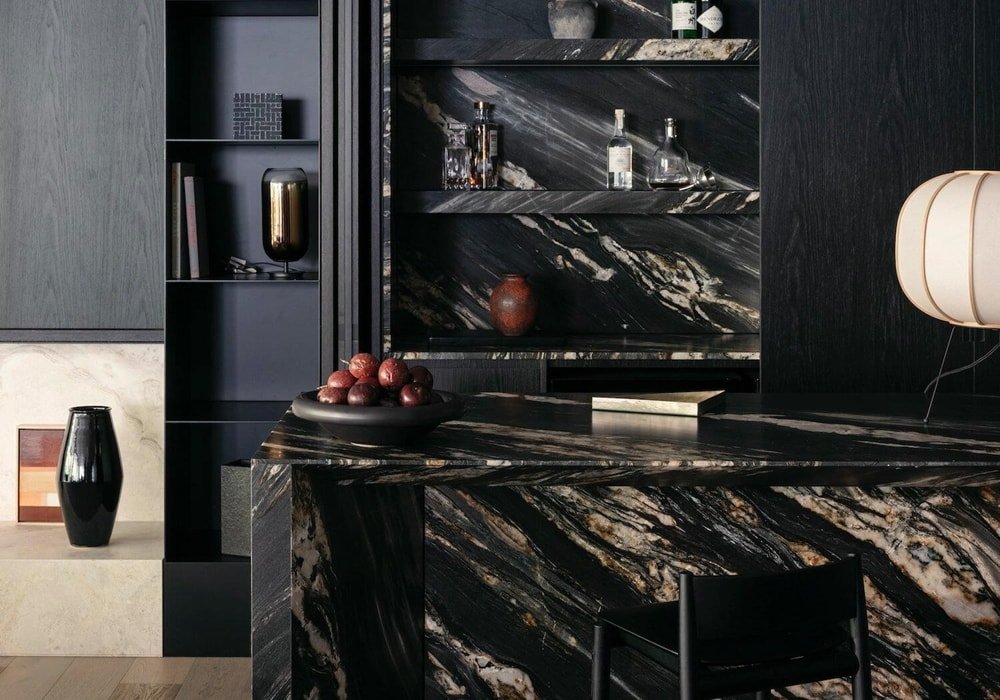
Quartzite is often priced above common granites and many engineered quartz options, but below rare marbles when those marbles are priced at the very high end. Installed costs typically vary widely: expect a general range (materials + installation) that commonly falls between moderate to premium bands,s depending on rarity, thickness, finish, and transport. Buyers pay a premium for rare veining, matched bookmatched slabs, and exotic imports. The long-term value often justifies the upfront investment: a beautiful quartzite slab can significantly enhance both resale value and durability.
Typical price signals (what you will see on quotes?)
Common quartzite slabs are found in mid-to-upper price ranges, often compared to higher-tier granites.
Exotic patterns (e.g., Taj Mahal-like quartzites) can reach premium prices well above typical slabs, depending on lot size and demand.
Fabrication & installation: complex island cuts, waterfall edges, and tight tolerances add labor cost—ask fabricators for detailed breakdowns. Market examples show slab-level prices for certain Taj Mahal-style quartzites easily rising into the high hundreds or low thousands per slab, depending on size and finish.
Return on investment: resale and longevity
A well-documented advantage: investing in quality natural stone aligns with “buy once, enjoy forever” thinking. Quartzite’s durability, paired with a timeless aesthetic, often scores well with buyers and appraisers—especially when the stone is properly maintained and the installation is high-quality.
Design uses & finishes: making quartzite sing in projects
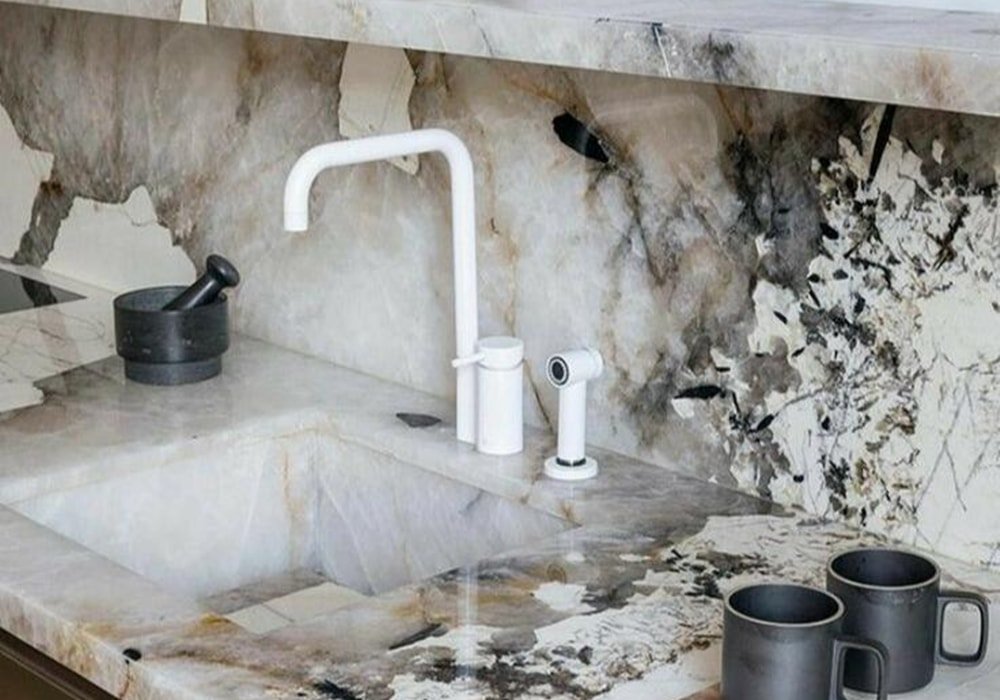
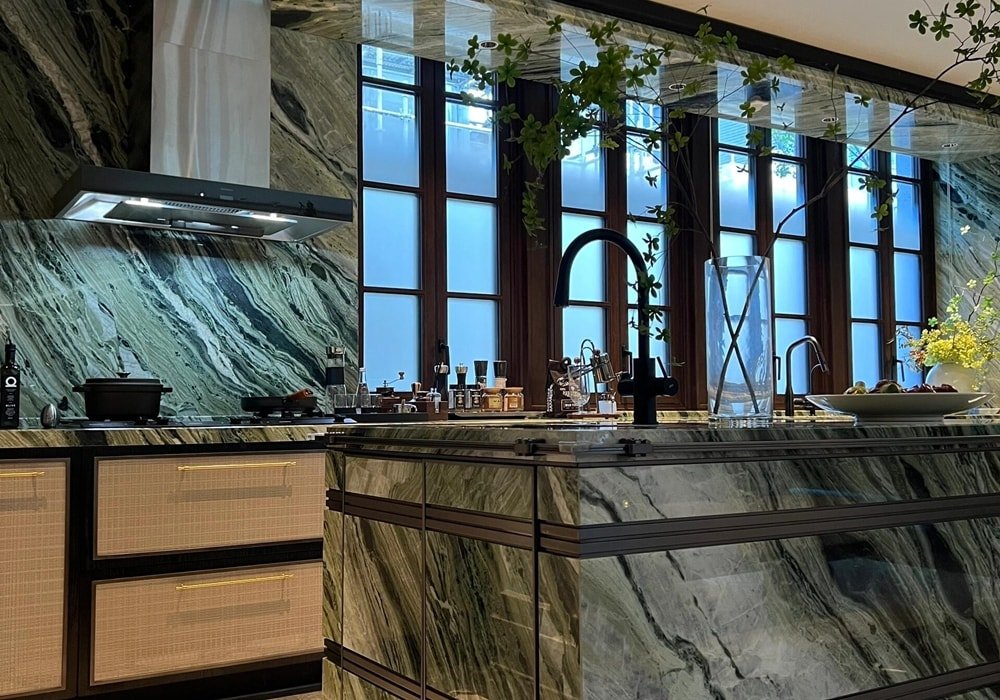
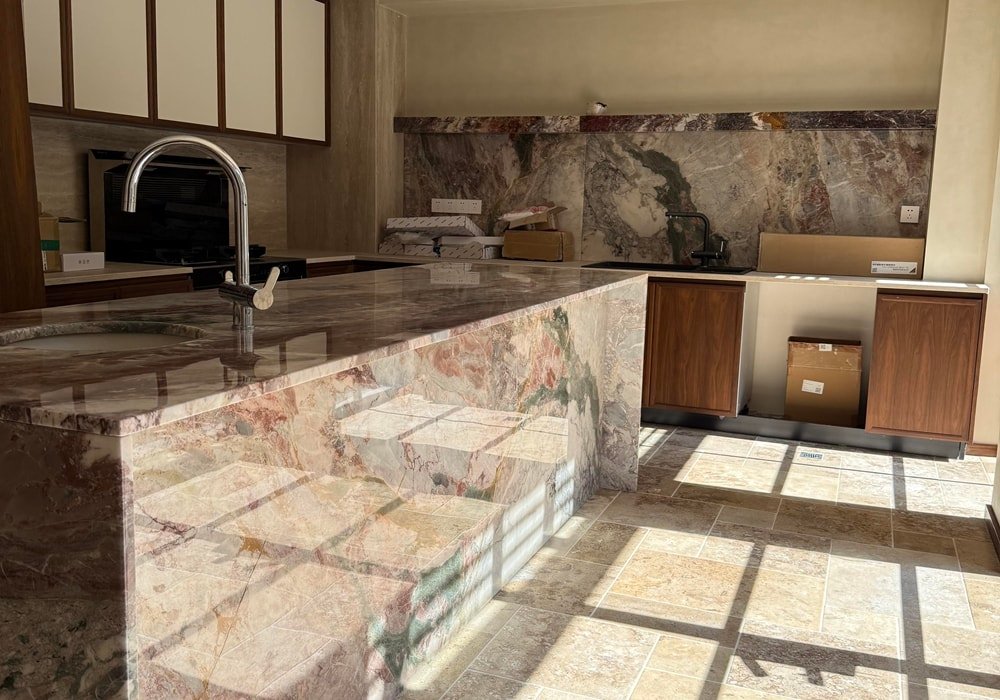
Quartzite is highly versatile: polished for glossy, reflective islands; honed for more subdued modern looks; leathered to emphasize texture and hide fingerprints; and bookmatched for dramatic two-panel statement walls. Designers often use quartzite for kitchen islands, continuous waterfall edges, baths, feature fireplace surrounds, and commercial reception desks. The stone’s visual depth makes it especially compelling, where slab continuity and dramatic veining are focal points.
Signature looks: from white marble-look quartzites to exotic colorways
White quartzites that resemble classic marbles (soft veins on pale backgrounds) are hugely popular; warm beiges and cool grays offer neutral backdrops; dramatic blues, greens, and gold-veined quartzites create statement installations. Choosing the right finish and slab orientation is as important as the slab selection itself—view full slabs in natural light before committing.
A short project case study (fabrication notes)
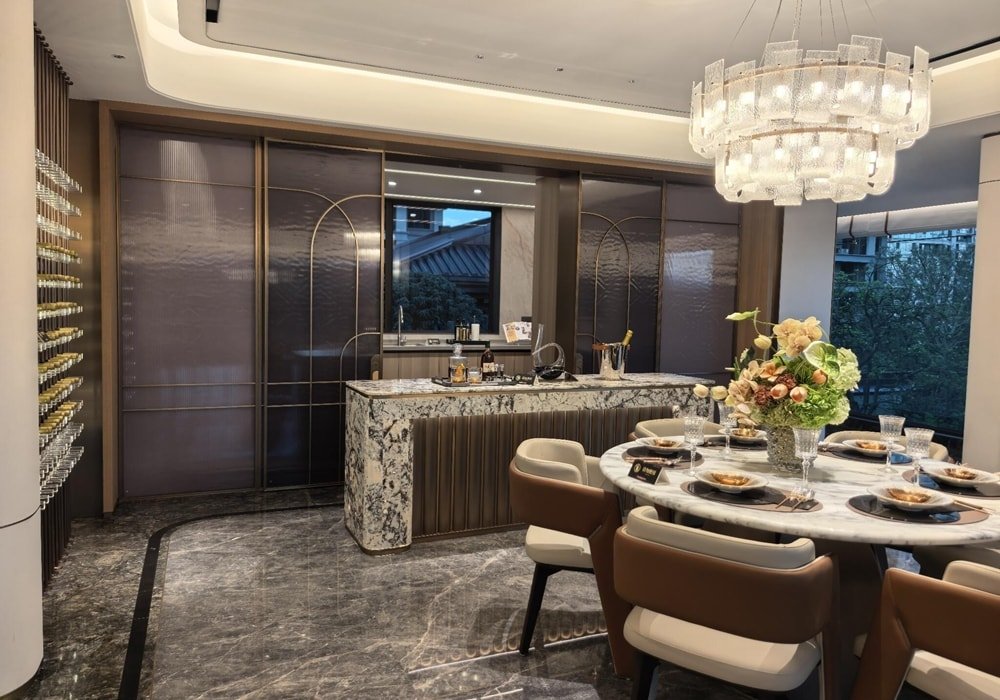
A boutique hospitality project opted for a leathered white quartzite for the bar face and polished matching islands. The leather finish hid fingerprints while still showcasing veining; bookmatching on the bar back wall created an arresting focal point. Fabricators recommended pre-drilling for bar rail fastenings and using a PVA-backed sealer on the bar-face due to higher liquid exposure. The result: a high-impact look with practical performance.
Sustainability, sourcing & regulation shaping the market
Sustainability and traceability are now procurement priorities. The Natural Stone Sustainability Standard (ANSI/NSI 373) and Natural Stone Institute programs supply a framework to evaluate stone across quarrying impacts, energy use, and community effects; responsible manufacturers increasingly pursue these verifications. For buyers who care about embodied carbon and ethical sourcing, ask suppliers for chain-of-custody documentation, quarry rehabilitation plans, and the ANSI/NSI 373 status.
Quarrying impacts & chain-of-custody
Quarries vary in environmental practice. Reputable fabricators share information on water management, dust control, waste handling, and local employment practices. Certification and transparent reporting are the best signals to customers that the stone was responsibly sourced.
Regulations & future direction
As green building requirements and customer expectations tighten, expect more manufacturers to adopt verifiable sustainability claims and to provide life-cycle and embodied-carbon disclosures. This trend will favor suppliers that can demonstrate low-impact quarrying, efficient processing, and responsible freight choices.
Buying from manufacturers, factories & wholesale: a procurement guide
Whether you are a design firm buying per-project or a contractor sourcing wholesale slabs, consider: lead times, minimum orders, inspection policies, and warranty terms. Factories and manufacturers that serve B2B clients often offer slab-hold services, sample slabs, and digital templates to reduce installation risk.
Manufacturer checklist (what to ask)
Proof of quarry & mill provenance and sustainability documentation.
Minimum quality grading and slab photos by lot.
Sample policy and refunds for damaged slabs.
Typical lead times, shipping, and customs obligations.
Fabrication capabilities (waterjet, beveling, edge profiles).
Common myths & pitfalls (myth-busting)
Myth: “Quartzite never stains.” Reality: Quartzite is stain-resistant relative to marble, but porous varieties can stain if unsealed and exposed to dyes or oils.
Myth: “All white marble look slabs labeled ‘quartzite’ are true quartzite.” Reality: mislabeling happens—always verify with a fabricator or lab test. These myths drive buyer disappointment but are avoidable with due diligence.
People also ask — quick answers
Below are concise answers to common shopper questions (short, practical):
Is quartzite a good countertop? Yes—quartzite combines the marble look with excellent hardness and heat resistance, making it an excellent choice for busy kitchens.
Is quartzite more expensive than granite? Often yes for comparable visual impact; exotic quartzites can be significantly pricier than common granites.
What’s the difference between quartz and quartzite? Quartz is an engineered product (crushed quartz + resin); quartzite is a natural, metamorphic stone composed primarily of silica.
Is quartzite a natural stone? Yes—quartzite is a naturally occurring metamorphic rock formed from sandstone.
Can I put hot pans on quartzite? Quartzite tolerates heat better than engineered quartz, but trivets are still recommended to avoid long-term thermal stress.
Why is quartzite so expensive? Rarity, quarrying difficulty, and shipping for exotic slabs raise cost; plus premium finishing and bookmatching add fabrication expense.
Can I put a hot cup of coffee on quartz? Engineered quartz may scorch under high heat—use coasters to be safe.
Can I use Clorox wipes on a quartz countertop? For engineered quartz, intermittent use is usually fine, but avoid prolonged bleach exposure; follow manufacturer guidelines.
Is quartzite high-end? Yes—quartzite is generally positioned in the high-end natural stone tier.
How long do quartzite countertops last? With proper care, decades—often a lifetime under normal residential use.
What is the best countertop for your money? It depends on priorities: engineered quartz for low maintenance, quartzite for high-end natural aesthetics and durability, and granite for cost-effective durability.
Does coffee stain quartzite? If unsealed and porous, coffee can stain—prompt cleaning and periodic sealing prevent this.
Which is better, marble or quartzite? For durability and kitchen use, quartzite; for classic softness and specific luxury aesthetics, marble—choose by performance needs.
Is quartzite better than granite? Quartzite often offers higher hardness and more dramatic veining; granite offers reliable patterns and cost options—both are durable.
Can you use Dawn dish soap on quartzite? Yes—mild dish soap and water are safe for routine cleaning.
Do quartzite countertops crack easily? No more than other stones—proper fabrication, substrate support, and avoidance of point loads prevent cracking.
Can you put hot pans directly on quartzite countertops? Short term is usually fine, but consistent direct heat can cause issues—use trivets.
What is cheaper, quartz or quartzite? Engineered quartz has a wider price range; entry-level quartz can be cheaper than many quartzites.
How can I tell if I have quartz or quartzite? A combination of vendor documentation, hardness/etch tests, and lab confirmation will identify the material.
Can you use Clorox wipes on quartzite countertops? Occasional use is usually okay if diluted and rinsed, but avoid frequent bleach exposure—follow fabricator advice.
Is quartzite maintenance-free? No—requires sealing and care, though generally less maintenance than marble.
Can you damage quartzite? Yes—hard impacts, sharp point loads, and improper cleaning can damage it.
Does quartzite yellow over time? Properly sealed quartzite should not yellow; poor-quality sealers or heavy staining may cause discoloration.
What is the most affordable quartzite color? Neutral, common patterns are usually cheaper than exotic dyed or heavily veined slabs.
How do you clean quartzite? Mild detergent, water, soft cloth; avoid acids and harsh abrasives.
What is better, granite or quartzite? Both have strengths; choose quartzite for marble-like visuals and higher heat resistance, granite for certain price points and color ranges.
What is the best countertop for a kitchen? Depends on lifestyle—quartzite and granite for active cookers, engineered quartz for low maintenance.
Does quartzite stain easily? Less than marble but still possible—sealing and prompt cleaning prevent stains.
Can you put hot pans directly on quartzite countertops? Generally okay short-term, but use trivets to avoid repeated thermal stress.
Do quartzite countertops chip easily? No more than other natural stones—proper edges and fabrication reduce chipping risk.
Which is better, quartzite or marble countertops? For kitchens and heavy use, quartzite; for sculptural, classic aesthetic with lighter use, marble.
FAQ — top 5
Q1 — What are the main differences between quartzite and marble?
Quartzite is a silica-rich metamorphic rock formed from sandstone; marble is metamorphosed limestone composed primarily of calcite. Quartzite is typically harder, more heat-resistant, and less vulnerable to acid etching than marble. Marble’s softer, calcite-rich nature makes it more prone to etch marks from citrus and acid-based cleaners; quartzite offers a look similar to marble with better everyday performance.
Q2 — Are quartzite countertops more expensive than marble?
Pricing depends on rarity and origin. Common quartzites often sit in a similar price band to mid-tier marbles, but exotic quartzites (or rare marbles) can command premium pricing. Consider slab availability, shipping, and fabrication when comparing final installed costs.
Q3 — How do I tell if my countertop is quartzite or marble?
Perform simple checks—an acid test (small drop of vinegar on an inconspicuous area) will usually etch marble but not quartzite; a hardness/scratch test can further distinguish them. Always confirm with the supplier or request a lab test for absolute certainty if the material identity affects care or warranty.
Q4 — Does quartzite need to be sealed, and how often?
Yes—most quartzites benefit from a penetrating sealer. Frequency depends on porosity and use: residential counters typically require re-sealing every 1–3 years; higher-traffic or commercial surfaces might need sealing more often. Test the surface with water (a small bead test) to gauge when re-sealing is necessary.
Q5 — Where can I buy Taj Mahal quartzite or other white quartzites (manufacturer/wholesale)?
Search for reputable stone suppliers and manufacturers who list Taj Mahal or Perla Venata (alternate trade names). Purchase options include local distributors with slab yards, direct manufacturer/factory orders for bulk needs, and specialty importers. Ask for slab photos by lot number, sample pieces, sustainability documents, and a clear return/inspection policy before purchase.
Semantic Closure — Quick Take
How: Quartzite delivers marble-like veining while its silica-dominant composition gives it superior hardness and better resistance to heat and etching in kitchen environments, making it a pragmatic luxury material.
Why: Designers prefer materials that read as authentic and last decades; quartzite answers both aesthetic and functional briefs and supports high-visibility installations that retain market value.
What to consider: Confirm stone identity with your supplier, check porosity and sealing needs, review slab photos and bookmatch options, and verify quarry/supplier sustainability documentation if green compliance matters.
Options & next steps: Choose finish (polished/honed/leathered) by use-case, request manufacturer/factory sample slabs for wholesale orders, and factor in fabrication complexity when budgeting—these steps protect your design intent and ROI.