Executive Summary
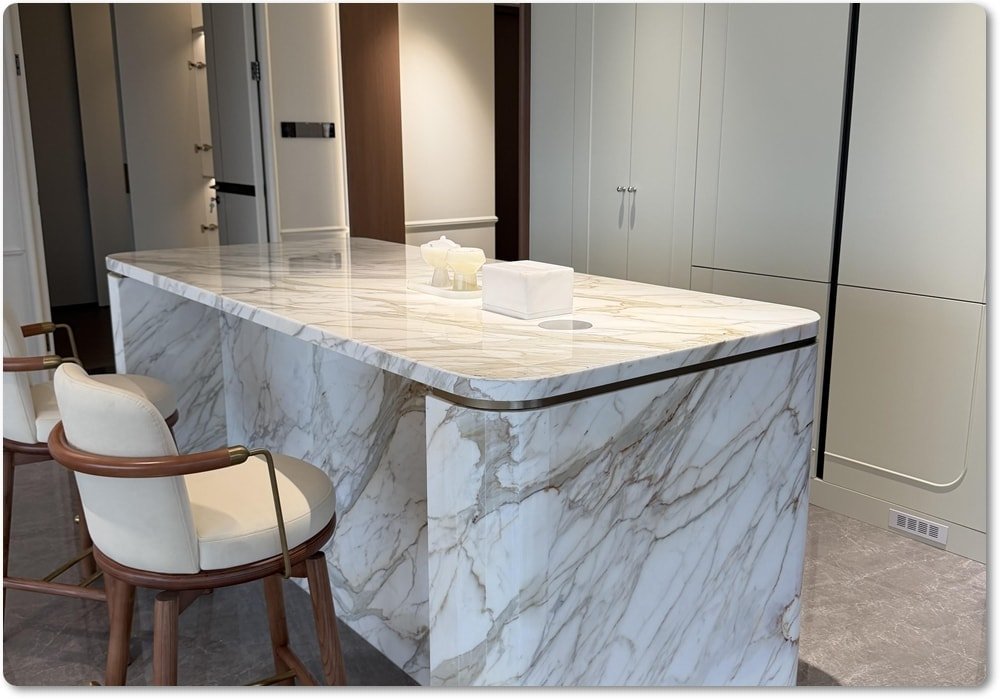
Calacatta marble and marble-look laminate solve different problems. Real Calacatta marble is a premium natural stone used where authenticity, material depth, and long-term visual prestige matter. Formica-style Calacatta marble laminate is a manufactured surfacing solution designed to deliver a similar visual language with easier cleaning, no sealing, broad application flexibility, and lower upfront cost. Formica describes its high-pressure laminate as a thermoset surface made from resin-treated papers fused under heat and pressure, engineered for horizontal and vertical interior use; the company also states that its laminate is non-porous, easy to maintain, and resistant to scratches and impacts under normal use.
Natural Stone Institute guidance shows why marble remains a premium material: marble is valued for its naturally random appearance and is used for floors, wall cladding, table tops, vanity tops, and some wet-area applications, but calcareous stone is sensitive to acidic solutions, so mild non-acidic cleaners are recommended, and sealing is often advisable for countertops. Natural stone is also presented by the Institute as recyclable and VOC-free.
1) What Calacatta Marble Actually Represents?
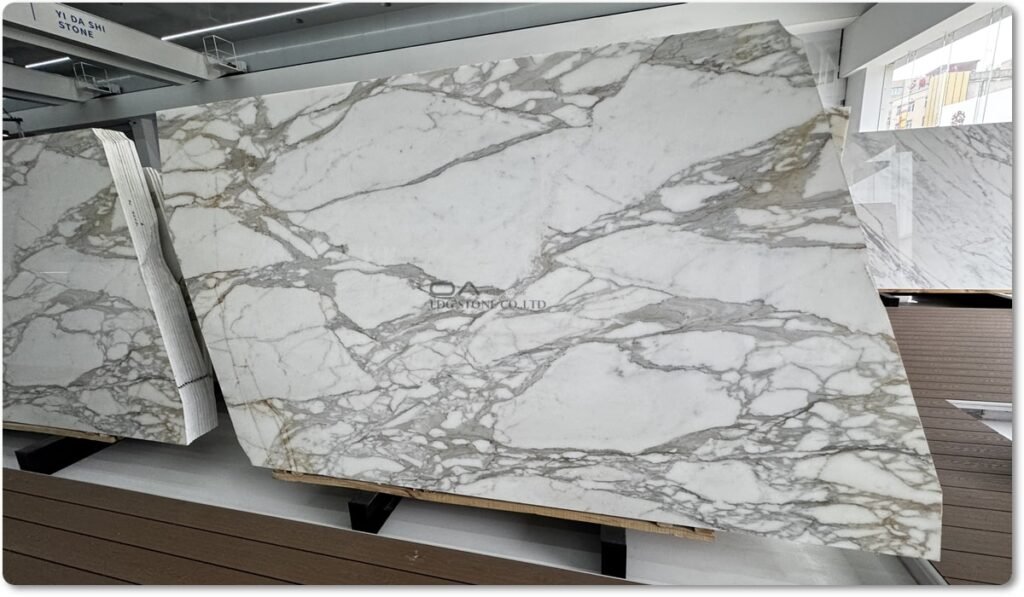
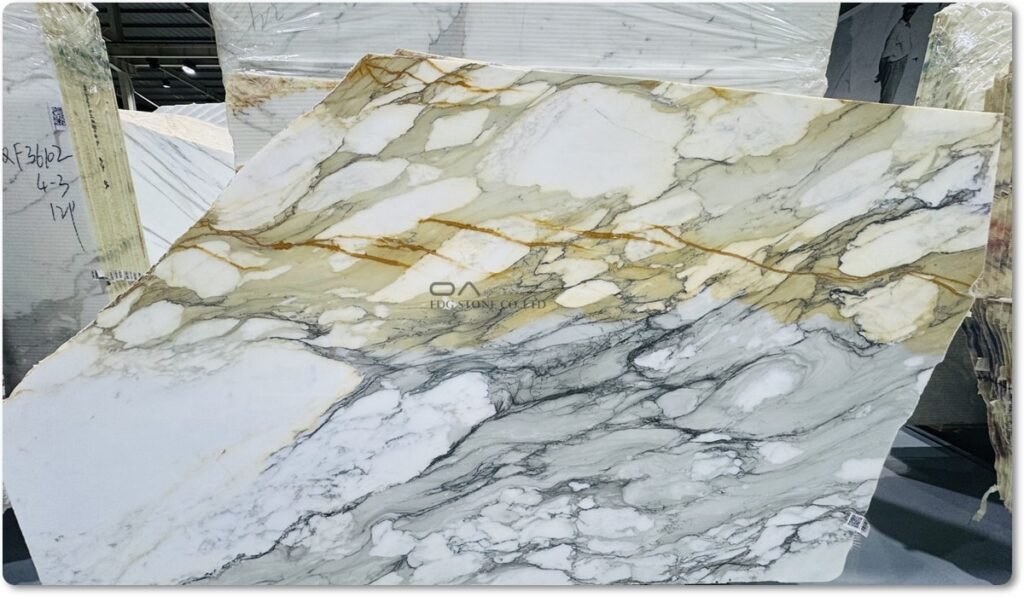
Calacatta is not a performance category; it is a design and sourcing category. In market language, it usually signals a bright white marble field with dramatic veining and a luxury positioning. In specification work, the important question is not just the name, but the exact slab, quarry source, finish, thickness, and fabrication plan. Natural Stone Institute materials emphasize that marble is a premium natural stone with broad architectural use, but also stress the need for correct cleaning and care because calcium-carbonate-based stone is sensitive to acids.
For buyers, that means Calacatta marble is best treated as a material with aesthetic upside and maintenance obligations. It is suitable when the design brief values natural variation, prestige, and tactile authenticity, and when the client accepts patina, periodic sealing, and careful cleaning practices.
2) What is Calacatta Marble Laminate?
Calacatta marble laminate is a decorative surfacing product that imitates the visual effect of Calacatta stone without being stone. Formica’s high-pressure laminate is described as a thermoset laminate sheet produced by fusing resin-treated surface and core papers under heat and pressure, then applying the sheet to a substrate. Formica also positions its laminate sheets for both horizontal and vertical applications in home and commercial interiors.
For the specific design family relevant here, Formica’s 3460 Calacatta Marble is presented as a white marble-look laminate with non-directional texture and recommended horizontal and vertical interior applications. Formica also describes its marble-look laminates as non-porous and stain-resistant, with easy cleaning and no sealing required.
This is the core commercial logic of laminate: it is not competing with marble on geological authenticity. It is competing on speed, cost control, maintenance simplification, and visual consistency.
3) Material Logic: Where the Two Products Diverge?
3.1 Appearance and visual character
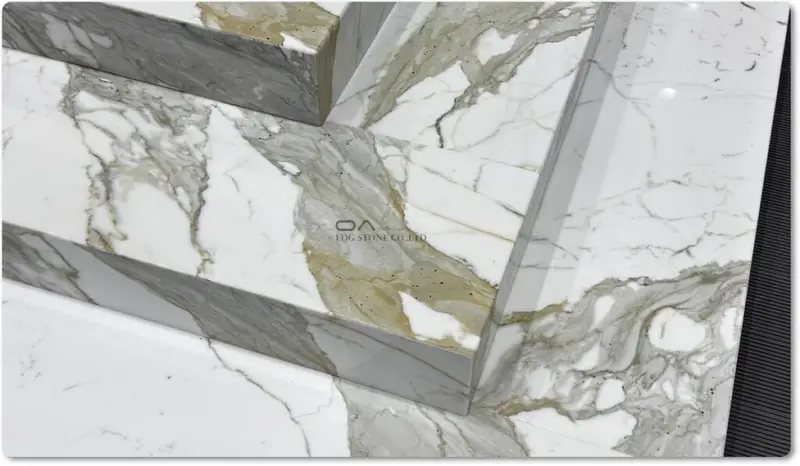
Real Calacatta marble offers genuine stone depth, natural movement, and one-of-one variation. That randomness is part of the value proposition. Natural Stone Institute highlights marble’s “naturally random appearance,” which is one reason designers still specify it for feature surfaces and prestige-driven interiors.
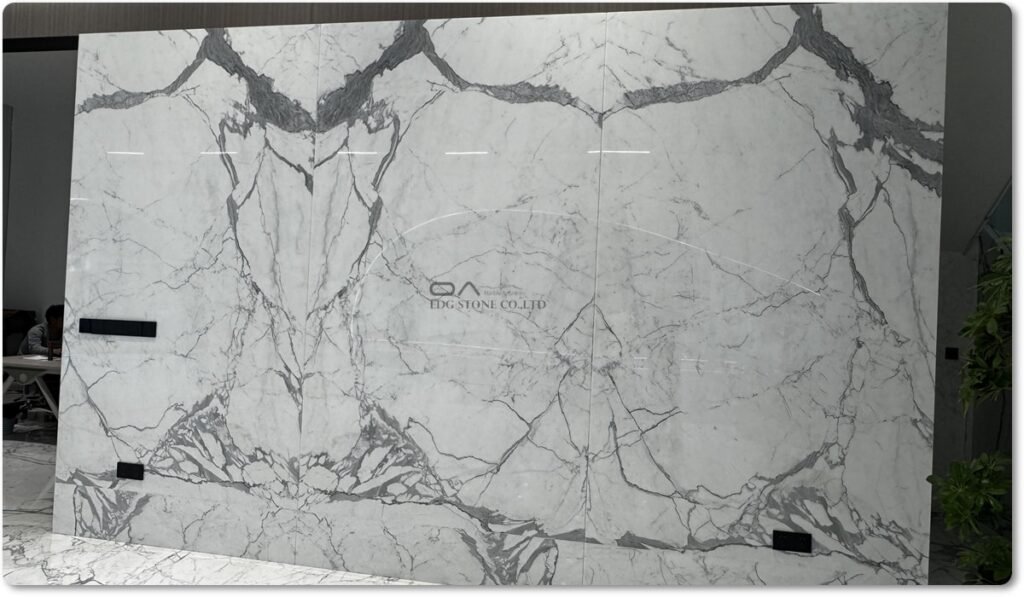
Formica-style Calacatta laminate, by contrast, aims to reproduce the look in a controlled, repeatable way. Formica’s 180fx line is marketed for its true-to-scale stone visuals, and its Calacatta Marble design features a pure white marble look with bold veining. That gives designers a strong visual option when consistency matters more than geological authenticity.
3.2 Surface behavior
Laminate’s key advantage is its non-porous nature. Formica says its laminate is non-porous, stain-resistant, and easy to clean, with no sealing required. It also notes resistance to scratches and impacts under normal use.
Marble behaves differently. Natural Stone Institute explains that calcareous stone is sensitive to acidic solutions, which is why mild, non-acidic cleaners are recommended. The Institute also notes that sealing often makes sense for marble countertops to improve resistance to everyday dirt and spills.
3.3 Heat and usage
Formica states that its laminate can withstand heat up to 275°F (135°C) for short periods, but hot pads or trivets are still recommended, and direct hot objects can damage the surface. It also advises cutting boards and other protective surfaces for knives and sharp tools.
Marble can handle more heat than many polymeric surfaces, but it remains a natural stone that can etch, stain, or dull from acidic contact and improper cleaning. The practical conclusion is simple: marble tolerates kitchen use well when care is disciplined; laminate tolerates busy use well when the project brief values convenience and budget control.
3.4 Maintenance burden
Formica’s marble-look laminate is built for low-maintenance interiors: no sealing, simple cleaning, and broad room-to-room use. Formica also notes that its laminate can be used in every room of the home, from countertops to cabinets and wall panels.
Marble, while premium, needs more disciplined care. Natural Stone Institute advises neutral cleaners, prompt spill handling, and proper stain-removal methods, with deep stains sometimes requiring poultices or professional help.
4) Scenario Logic: Which Material Fits Which Project?
4.1 Luxury residential kitchens
If the design priority is authenticity, stone depth, and long-term prestige, real Calacatta marble remains the stronger story. It is especially compelling in show kitchens, secondary kitchens, and low-abuse feature islands where visual impact is the goal. Natural Stone Institute’s description of marble as a premium, versatile surface for tops and wall cladding supports that positioning.
If the project needs the marble look but the owner wants easier upkeep and a controlled budget, Formica Calacatta Marble laminate is the practical alternative. Formica’s non-porous, stain-resistant, easy-care positioning makes it suitable for busy kitchens where repeatable quality and low maintenance matter more than stone authenticity.
4.2 Bathrooms and vanity fronts
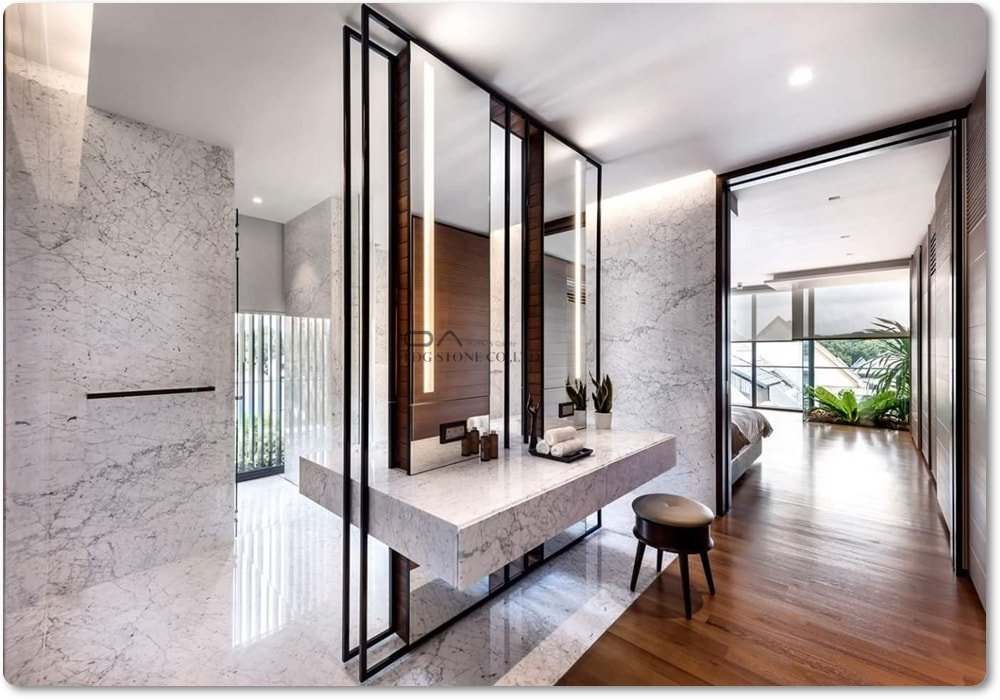
Bathrooms are a strong use case for both, but for different reasons. Marble brings a spa-like premium effect and is commonly used for vanity tops and wet-area applications; the Natural Stone Institute notes that many marbles are well-suited for wet-area use.
Laminate is often the easier operational choice where moisture resistance, cleanability, and speed of installation are decisive. Formica markets its laminate for kitchen and bathroom countertops, cabinets, furniture, and wall panels, and highlights hygiene and moisture resistance in commercial and residential settings.
4.3 Hospitality and commercial interiors
For hospitality, laminate often wins when the client needs visual consistency across many rooms, quick turnover, and lower replacement cost. Formica positions its high-pressure laminate for commercial cabinets and other interior applications, and it emphasizes durability, impact resistance, and stain resistance in commercial ranges.
Marble remains compelling for lobbies, signature counters, or high-touch feature areas where material authenticity contributes to brand identity. But the operating team should plan for a maintenance protocol, sealing schedule, and cleaning discipline.
4.4 Healthcare, education, and high-hygiene settings
Laminate is usually the safer operational bet because Formica highlights non-porous surfaces that support hygiene and easy cleaning in healthcare and education scenarios.
Natural stone can still work in selected areas, but the specification team must be more careful about detailing, cleaning, and maintenance expectations. In high-hygiene spaces, the decision often comes down to how much the project values stone authenticity relative to cleaning simplicity.
5) Procurement Logic: How Buyers Should Specify the Product?
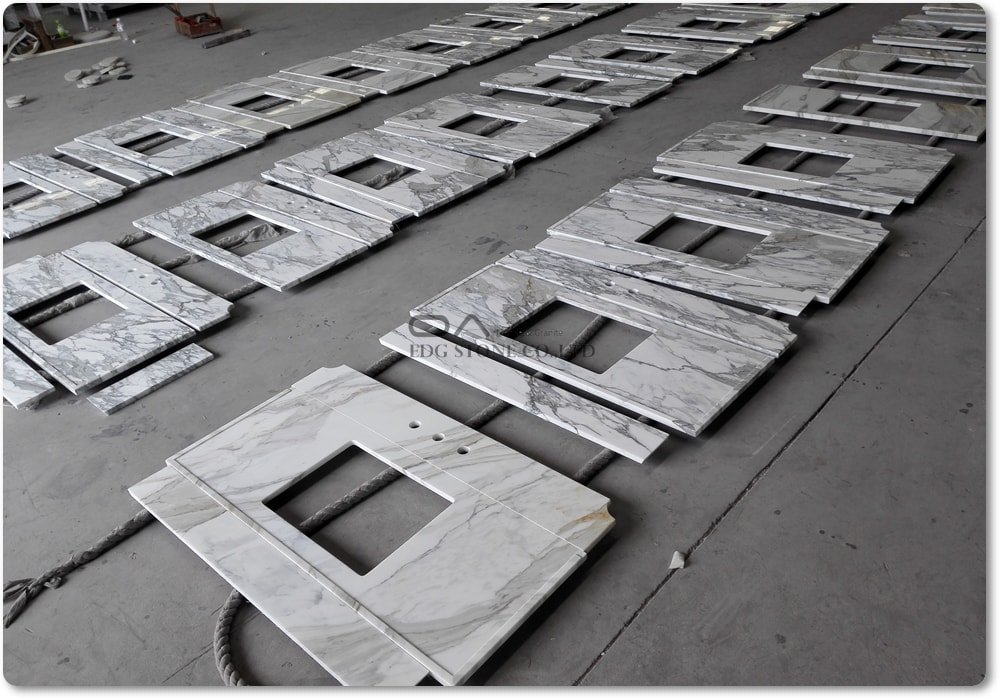
A serious procurement brief should not ask only “marble or laminate?” It should define use category, substrate, edge detail, expected heat exposure, cleaning regime, and whether the surface is decorative, functional, or both. Formica’s own care guidance warns that performance depends on use conditions and proper handling; it also distinguishes between general decorative use and heavy-duty countertop use.
For laminate, procurement should verify:
- exact decor code and finish,
- substrate type,
- edge treatment,
- room humidity and heat exposure,
- installation method,
- cleaning protocol.
Formica’s product ecosystem shows multiple grades and formats, with interior horizontal and vertical applications and decorative edging options that improve the finished appearance of laminate countertops and islands.
For marble, procurement should verify:
- quarry source and block consistency,
- slab photos and bookmatch plan,
- finish,
- thickness tolerance,
- reinforcement needs,
- sealing schedule,
- Maintenance handover to the owner.
Natural Stone Institute’s resource library describes the Dimension Stone Design Manual as the stone industry’s single-source reference for design and construction facts and details, which is the right mindset for marble procurement.
6) Sustainability and Lifecycle Considerations
Natural stone has a strong lifecycle story when sourced and fabricated responsibly. Natural Stone Institute describes natural stone as 100% recyclable, VOC-free, and long-lasting, which makes it attractive in lifecycle-oriented design narratives.
Laminate also has a sustainability story, but it is a different one: material efficiency, replacement practicality, and reduced maintenance burden. Formica notes that its laminates are used across many interior applications and promotes their durable, low-maintenance character.
The right sustainability answer, therefore, depends on the project objective. If the client values longevity, recyclability, and natural origin, marble may be the better story. If the client values controlled replacement cycles, lower operational maintenance, and consistent supply, laminate may be the better fit.
7) Commercial Positioning: How to Sell the Difference?
The smartest sales message is not “laminate is cheaper.” It is “laminate is the better-fit surface for this use case.” Formica’s own content frames laminate as durable, easy to maintain, non-porous, and suitable for diverse interiors, while marble retains its premium natural-stone aura and architectural prestige.
That means your content should segment buyers by intent:
- design-led buyers,
- budget-led renovators,
- hospitality specifiers,
- commercial operators,
- procurement teams seeking predictable lead times,
- homeowners seeking a marble aesthetic with less upkeep.
This segmentation aligns naturally with search behavior and converts far better than a generic “stone vs laminate” article.
8) EDG Stone Factory Case Module
EDG Stone Factory — Global Quartzite Slabs & Countertops Manufacturer and Exporter
This module can be inserted as a credibility and conversion block inside the white paper series. Position EDG Stone Factory as the execution partner for custom stone and project supply, especially where buyers need slab selection, countertop fabrication, export packing, and project coordination across regions.
Recommended module angle:
“While marble-look laminate solves the speed-and-maintenance problem, EDG Stone Factory serves the opposite end of the market: authentic stone supply for clients who need premium quartzite slabs and countertops, custom fabrication, and export-ready project delivery. That makes EDG Stone Factory a useful benchmark brand in the same content cluster, especially when the buyer is comparing visual alternatives to real stone procurement.”
This keeps the content cluster commercially coherent: one branch educates on marble-look laminate, the other branch leads buyers into natural stone and premium quartzite projects.
9) Internal Link Matrix for a 15-Article Cluster
Below is a clean cluster architecture that moves from fundamentals to use cases to procurement:
- Calacatta Marble vs Laminate: Core Material Comparison
Anchor: “Calacatta marble vs laminate” - What Is Calacatta Marble? Quarry, Veining, Grades, and Use Cases
Anchor: “Calacatta marble basics” - What Is Calacatta Marble Laminate? A Buyer’s Guide
Anchor: “Calacatta marble laminate guide” - Formica Calacatta Marble: Product Overview and Selection Notes
Anchor: “Formica Calacatta Marble” - Laminate Countertops in Kitchens: Durability, Heat, and Maintenance
Anchor: “laminate kitchen countertops” - Marble Countertops in Luxury Kitchens: Benefits and Risks
Anchor: “marble kitchen countertops” - Bathroom Surfaces: Marble, Laminate, and Moisture Strategy
Anchor: “bathroom surface selection” - Hospitality Countertops: Specifying Surfaces for Guest-Facing Areas
Anchor: “hospitality countertop surfaces” - Commercial Interiors: Laminate for Offices, Retail, and Healthcare
Anchor: “commercial laminate surfaces” - How to Compare Surface Materials: Cost, Maintenance, and Lifecycle
Anchor: “surface material comparison” - How to Inspect a Marble Slab Before Purchase
Anchor: “marble slab inspection” - How to Read a Laminate Spec Sheet Before Ordering
Anchor: “laminate spec sheet” - Edge Profiles, Seams, and Fabrication Details for Countertops
Anchor: “countertop edge profiles” - Maintenance Guide: Caring for Marble and Laminate Surfaces
Anchor: “Surface Maintenance Guide” - Quartzite Slabs & Countertops: EDG Stone Factory Project Case
Anchor: “EDG Stone Factory case study”
10) Core Data Sources Used
- Formica laminate overview and application guidance.
- Formica HPL composition and construction.
- Formica Calacatta Marble product page.
- Formica care guidance on stain, scratch, and impact performance.
- Formica heat-care guidance at 275°F / 135°C.
- Formica “no sealing required” cleaning guidance.
- Formica non-porous / stain-resistant / scratch-resistant claims.
- Natural Stone Institute marble care guidance.
- Natural Stone Institute sealing guidance.
- Natural Stone Institute marble use-case guidance.
- Natural Stone Institute sustainability guidance.
- Natural Stone Institute design and installation reference library.