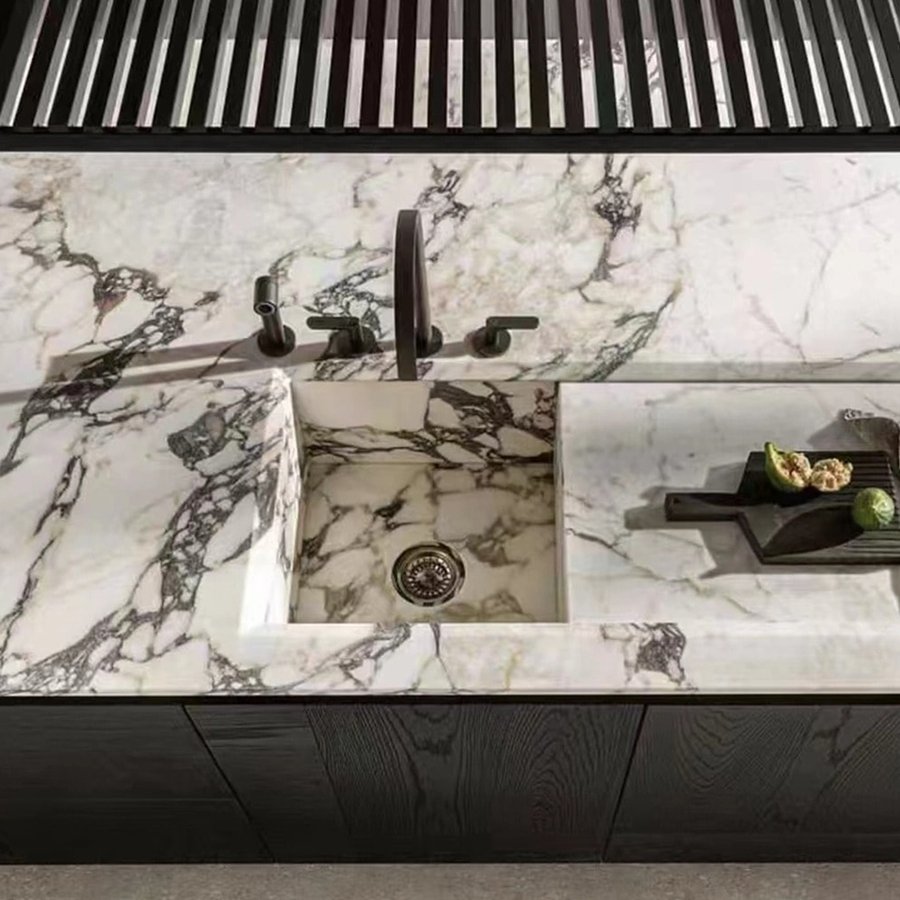
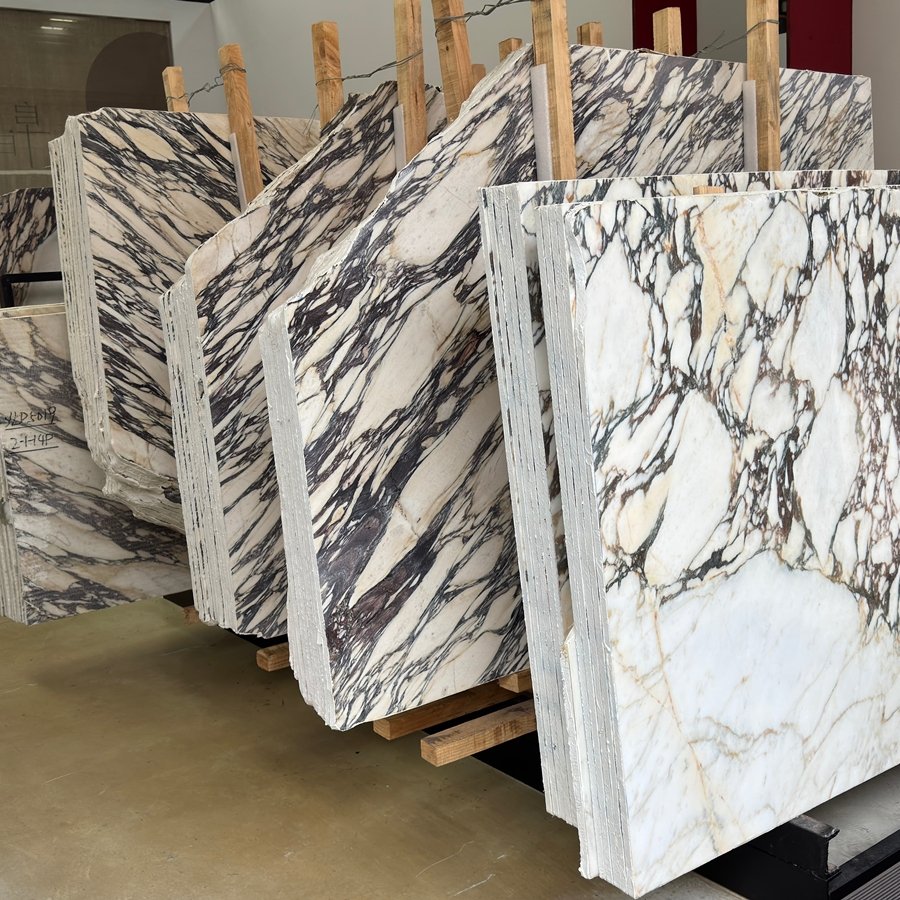
Calacatta Viola Marble — Detailed description
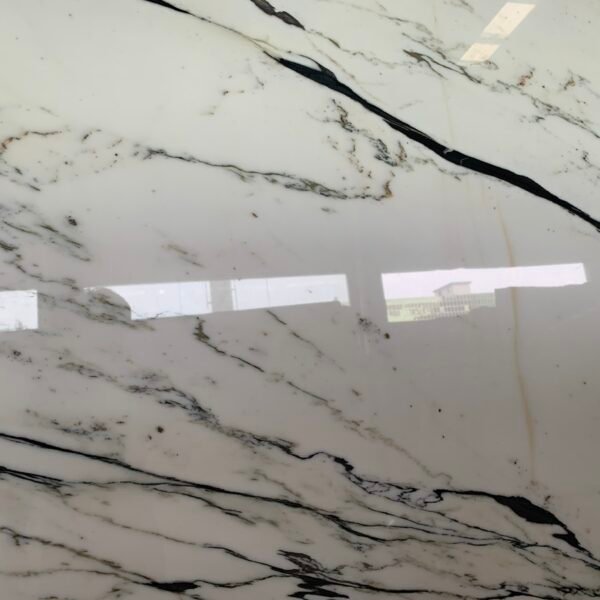
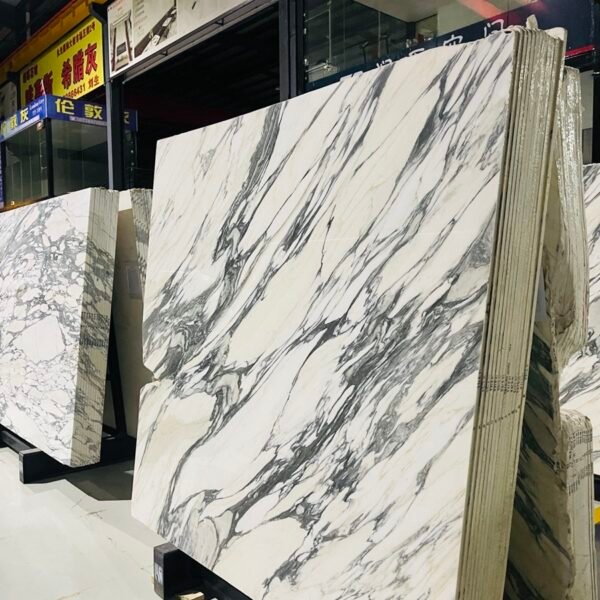
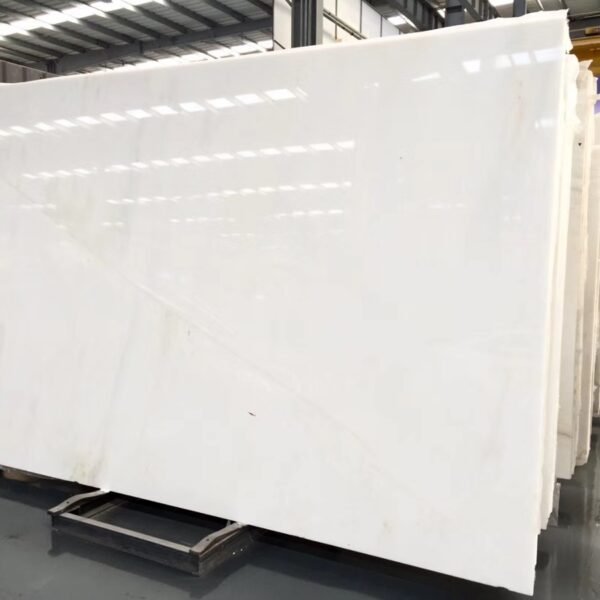
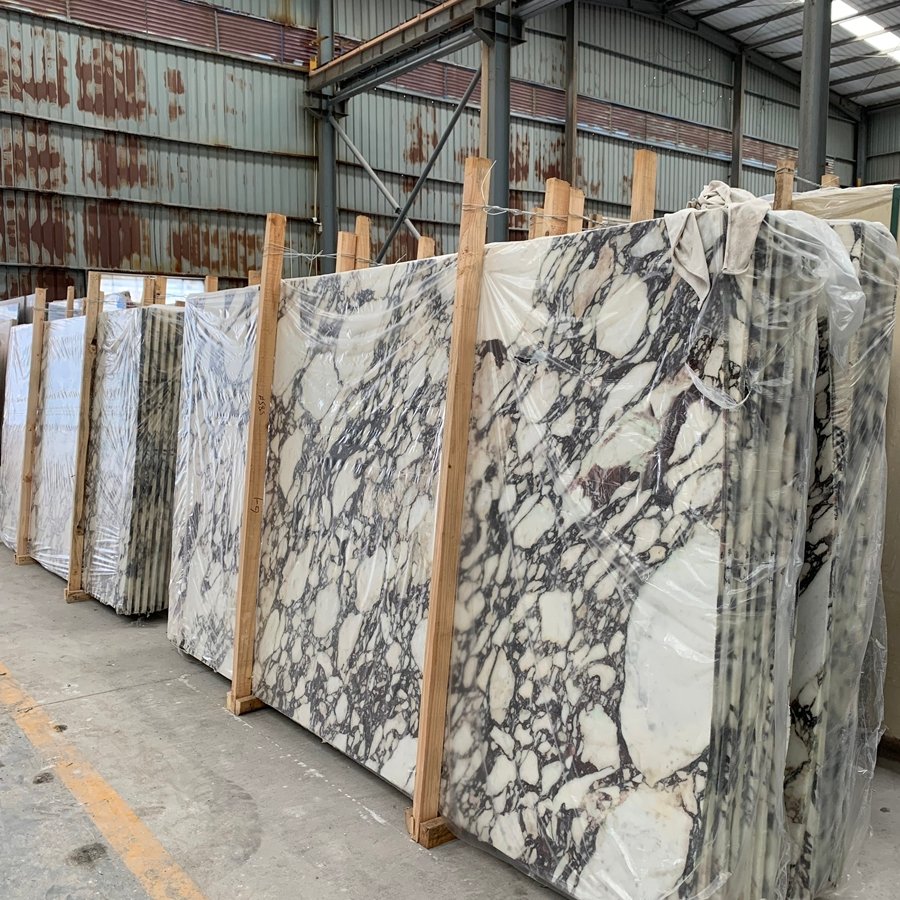
Calacatta Viola Marble is a distinctive and opulent natural stone known for its luminous white-to-cream ground punctuated by striking violet-lilac veins, occasionally threaded with warm gold highlights. This uncommon colorway sets it apart from more conventional Calacatta variants and makes it a highly decorative choice for designers aiming to introduce color nuance without abandoning a classic marble palette. The result is a surface that reads both noble and contemporary—suitable for high-end residential and boutique commercial projects seeking memorable moments.
Materially, Calacatta Viola is a metamorphosed carbonate rock with a crystalline matrix that accepts a deep polish, delivering high gloss and depth. Its veins are typically composed of mineral inclusions—iron oxides, manganese, or other trace elements—that produce the violet tones. Physically, its density and porosity are moderate: strong enough for many indoor applications but reactive to acids and susceptible to staining if unprotected. Therefore, proper sealing and routine maintenance with pH-neutral cleaners are necessary to preserve its surface integrity.
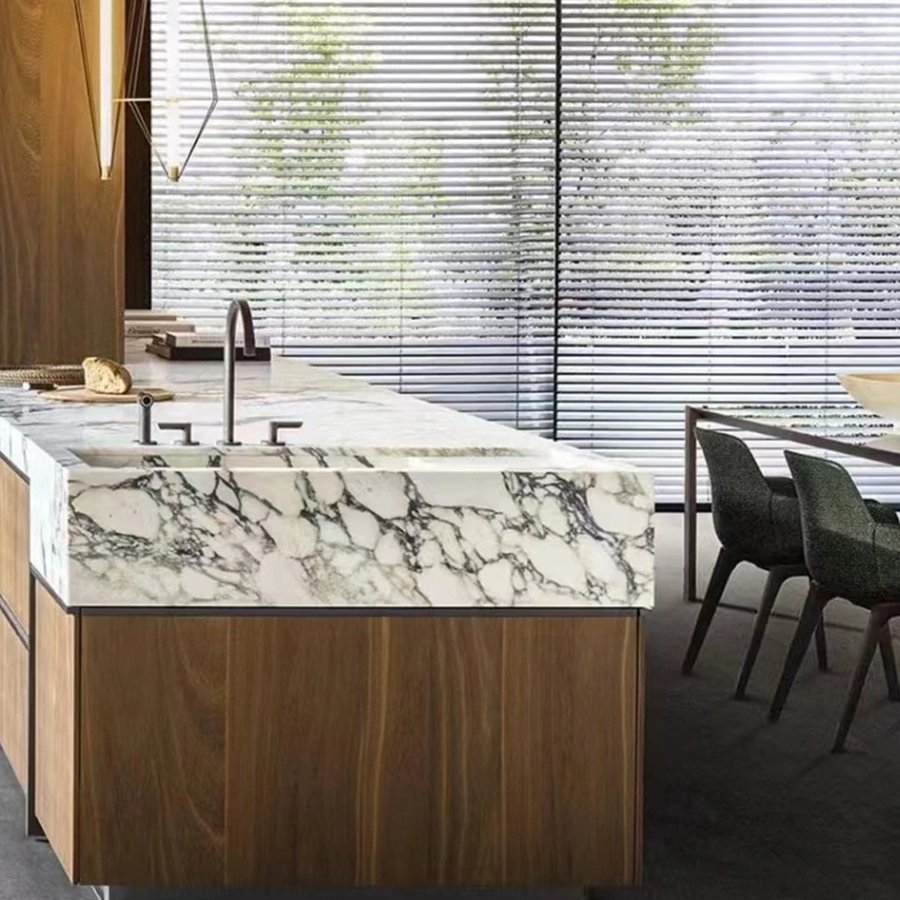
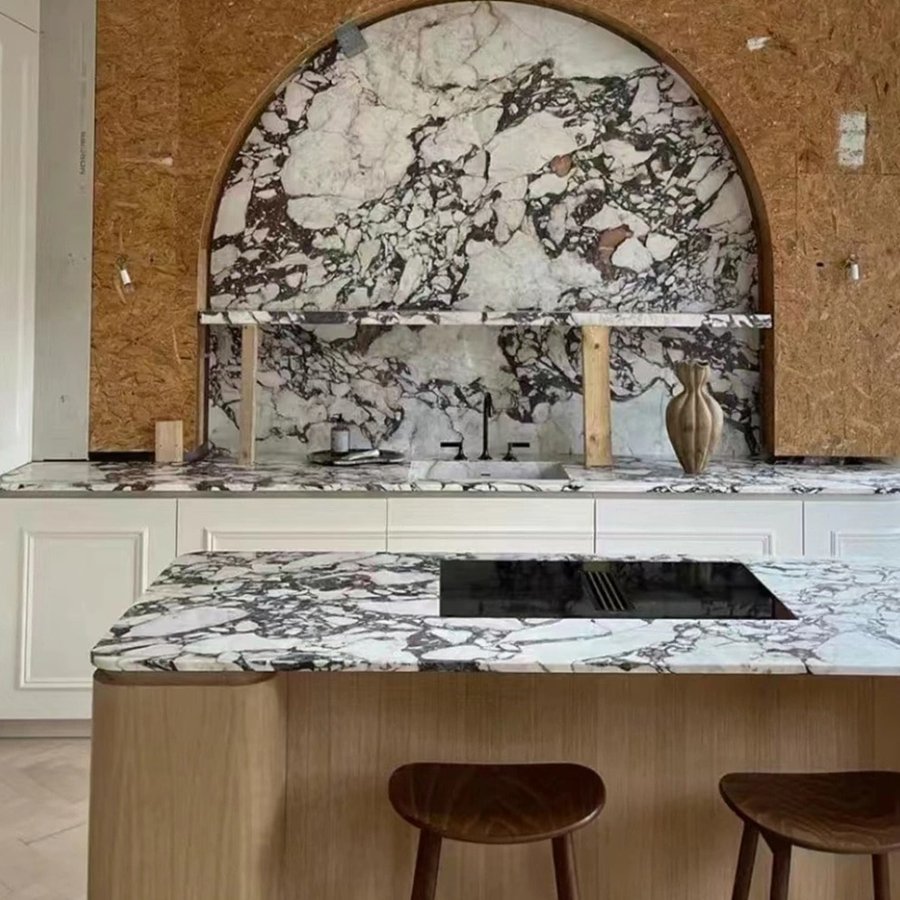
Architectural uses for Calacatta Viola focus on high-visibility, low- to medium-traffic interior applications where color drama is desirable. Statement kitchen islands and countertops are prime placements: a single, large slab or bookmatched pair transforms an island into a sculptural focal point. Designers frequently opt for waterfall countertops and matching backsplash panels to maximize veining continuity and create a cohesive visual plane.
Feature walls and fireplace surrounds are other natural applications. When bookmatched, Calacatta Violacan produces symmetrical, almost painterly patterns that anchor grand foyers, boutique hotel lobbies, or executive meeting rooms. The stone’s violet inflections introduce a subtle color narrative that pairs elegantly with warm brass fixtures, walnut cabinetry, velvet upholstery, or charcoal accents—yielding a layered palette of luxury.
In bathrooms, Calacatta Viola lends a couture feel to vanities, tub surrounds, and shower walls. Its light-reflective qualities brighten spaces while the colored veins add depth and personality. A honed or leathered finish can reduce gloss for tactile surfaces where touch and traction matter, but polished finishes maximize luminosity and color saturation.
For flooring, Calacatta Viola is best reserved for low-traffic areas or accent fields. Marble’s susceptibility to scratching and etching makes heavy-use commercial floors a less ideal match unless protective coatings and strict maintenance regimes are in place. For stair treads and threshold accents, engineered supports and careful fabrication mitigate fracture risks.
Fabrication requirements are exacting. Because striking veining can coincide with natural fissures, slab selection and templating are critical. Bookmatching and vein alignment should be planned—digital mock-ups and dry laying help ensure aesthetic objectives are met. Edge treatments and thickness choices (20mm, 30mm) influence both visual presence and structural performance; thicker slabs provide more dramatic edges and reduce the risk of breakage in cantilevered details.
Calacatta Viola is not recommended for most exterior installations: exposure to weather, pollution, and extreme temperature swings can dull polish and degrade the stone. If used outdoors, limit to covered or sheltered conditions with engineered anchors.
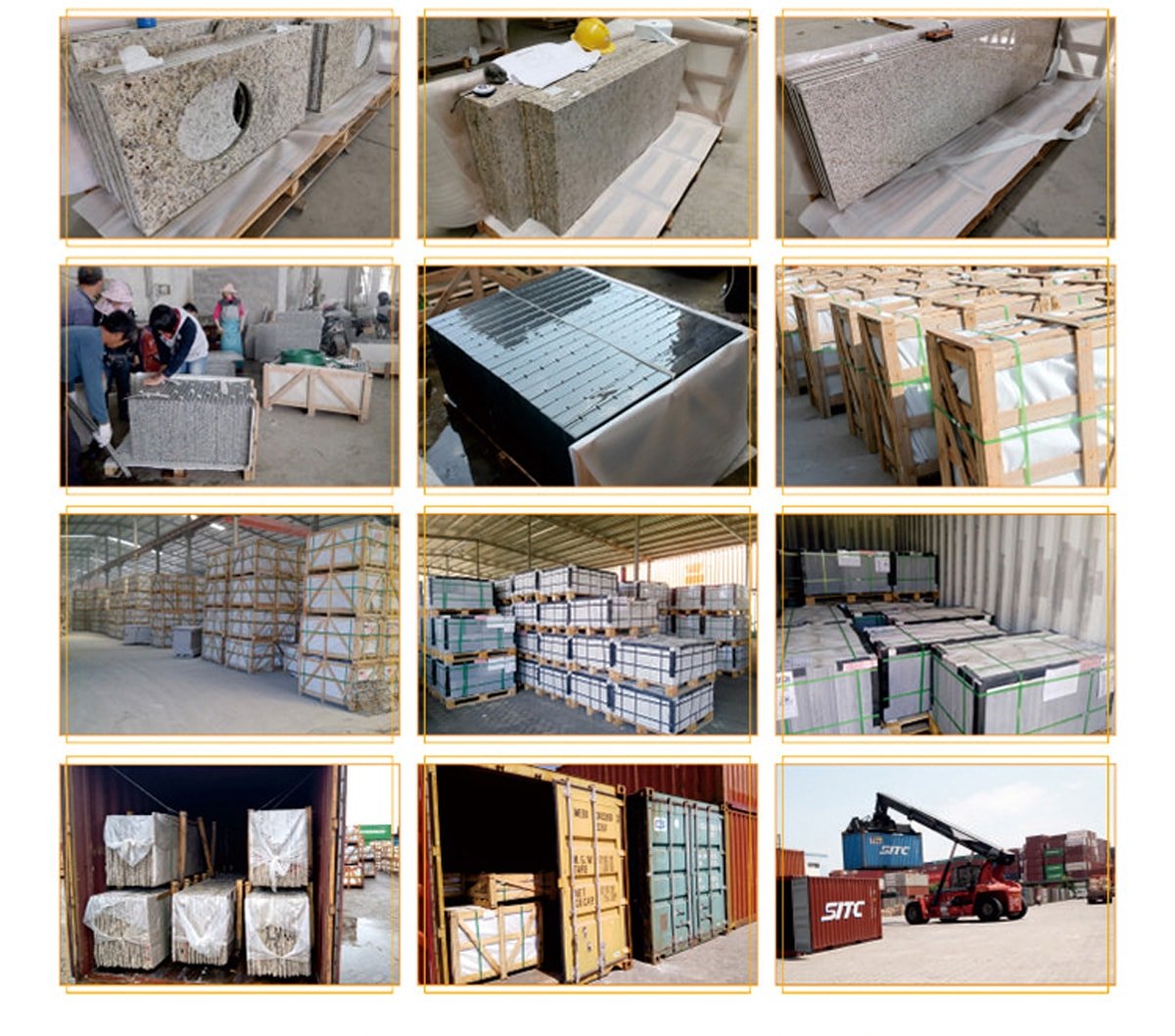
Sourcing responsibly is important—select vendors with transparent quarrying and shipping practices. When specified thoughtfully, Calacatta Viola Marble functions as a signature material that elevates interiors through rare coloration and classic marble luxury. With professional fabrication, appropriate placement, and disciplined maintenance, it rewards projects with a dramatic, enduring aesthetic that reads both exclusive and timeless.