Executive Summary
Calacatta marble is best understood as a design and procurement category rather than a single universally standardized stone name. In the stone trade, marble is a dimension stone quarried and selected for size, shape, color, grain texture, pattern, finish, strength, durability, and polishability; ASTM C503 further organizes marble by physical-property requirements such as absorption, density, compressive strength, modulus of rupture, abrasion resistance, and flexural strength. Because marble is a calcite– or dolomite-based calcareous stone, it is also vulnerable to acid etching, which makes material and finish selection, sealing, and care planning part of the specification process rather than an afterthought.
For designers and buyers, the practical comparison is not simply “which stone is prettier,” but which visual family, slab behavior, and maintenance profile fits the project. Supplier catalogs use names such as Calacatta White, Calacatta Borghini, Calacatta Monet, Verde Calacatta, and Red Calacatta as commercial descriptors, and the exact quarry origin, veining, and price tier can vary by supplier and lot. That means the procurement workflow should always include slab approval, origin verification, finish confirmation, and matching rules for bookmatched or vein-matched sets.
The right way to rank these materials is by use case. White Calacatta is typically the most versatile and least visually aggressive; Borghini is a luxury statement stone with stronger veining; Monet is often chosen for artistic movement and bookmatched feature surfaces; Verde is a more expressive accent marble; and Red Calacatta is the boldest, most niche option, best reserved for focal applications. This hierarchy makes the article useful for both design intent and purchasing decisions.
1. What Calacatta Marble Means in the Real Market?
In geology, marble is a metamorphic rock formed when limestone recrystallizes under heat and pressure; in the dimension-stone trade, the term is broader and includes commercially selected stones that meet project needs for appearance and performance. That distinction matters because many buyers search by trade name first and verify geology second. A project spec that ignores the stone’s calcareous nature can run into predictable problems: acid etching in kitchens and bathrooms, polishing changes over time, and inconsistent slab-to-slab behavior if the lot is not controlled.
From a specification perspective, the most important lesson is that Calacatta naming is commercial, not purely scientific. In practice, some suppliers use “Calacatta” to refer to visually similar white marbles with strong or elegant veining, while others reserve the name for material tied to a specific Italian sourcing tradition. For that reason, a serious buyer should request the quarry/origin statement, slab photos, block or lot number, thickness, finish, and a sample cut from the actual batch. This is especially important when the project needs matched slabs for waterfalls, islands, full-height walls, reception desks, or furniture.
USGS defines dimension stone as natural rock quarried into blocks or slabs to meet size, shape, and finish requirements, and notes that color, grain texture, pattern, durability, strength, and polishability are normal selection criteria. That definition is a good editorial foundation for a white paper because it aligns the material story with the buyer’s real-world decision process.
2. Comparative Positioning of the Five Calacatta Families
2.1 White Calacatta Marble / Calacatta White Marble
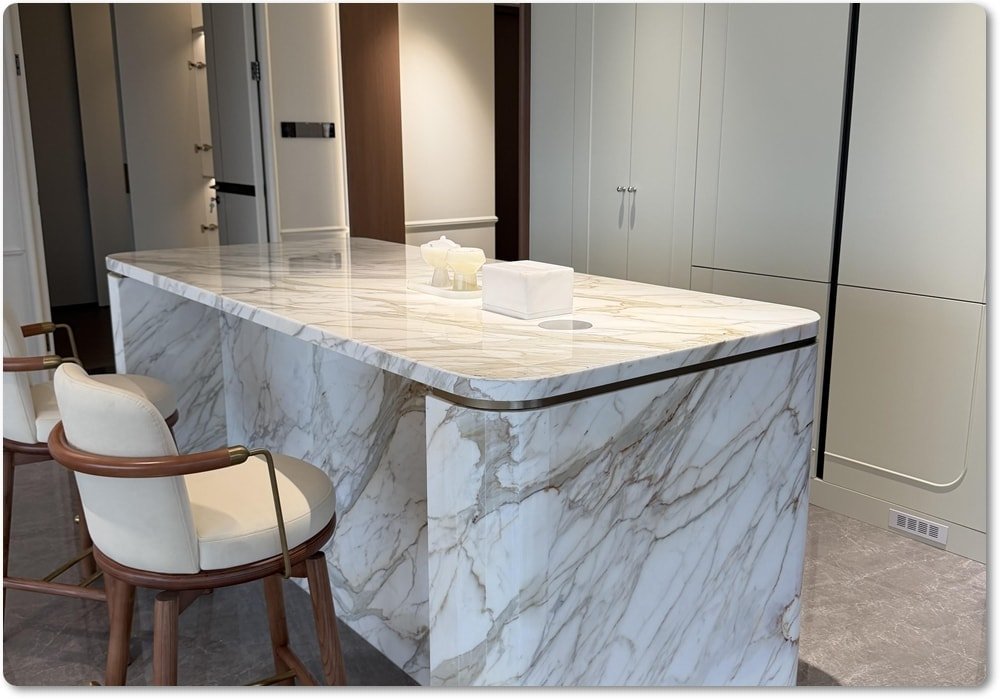
White Calacatta is the most design-flexible of the group. Supplier catalogs typically describe it as having a clean white background with delicate or refined veining, which makes it suitable for kitchens, bathrooms, feature walls, and premium furniture where the designer wants brightness without visual overload. It is the safest choice for projects that need timelessness, resale appeal, and broad material compatibility across wood, brass, black metal, and neutral palettes.
For buyers, White Calacatta is usually the best “first-step” marble because it gives the project a luxury look while keeping the veining easy to coordinate. For designers, it is the best backdrop stone when the architecture or millwork already carries strong geometry. The procurement risk is that many white marbles get marketed as Calacatta-style products, so the slab approval process should be strict.
2.2 Borghini Calacatta Marble / Calacatta Borghini Marble
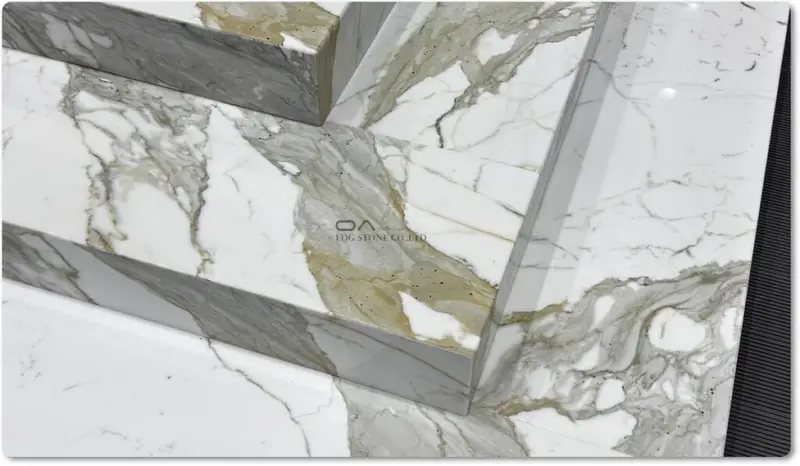
Calacatta Borghini is usually positioned as a more dramatic and collectible white marble. Supplier descriptions commonly emphasize a white base with pronounced grey veining and, in some cases, warm taupe or gold movement. That makes Borghini feel more architectural and more “designed” than plain white variants. It is especially effective in large-format spaces where the stone needs to act as a signature surface rather than a quiet background.
For high-end residential and hospitality work, Borghini often earns its place in feature walls, powder rooms, reception counters, fireplace surrounds, and master bath slabs. It is less about uniformity and more about controlled drama. If the design brief is “luxury with movement,” Borghini is usually a stronger fit than a calmer white Calacatta.
2.3 Calacatta Monet Marble
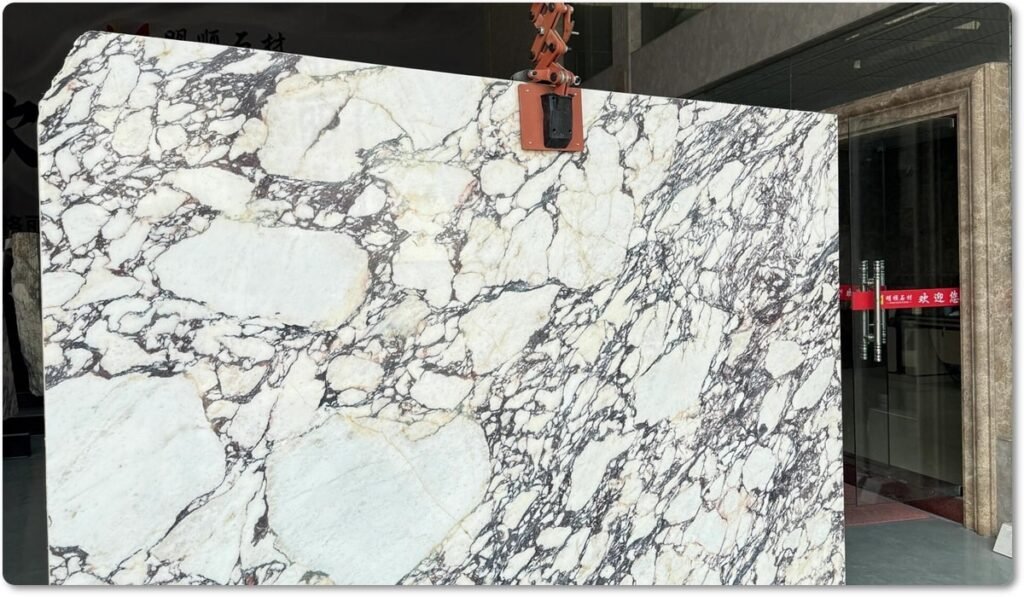
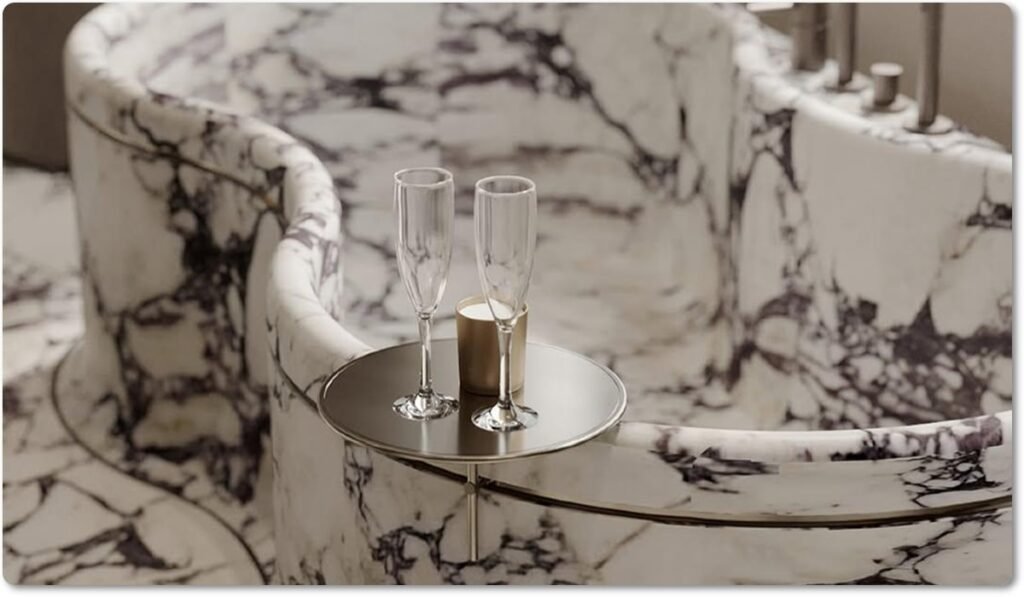
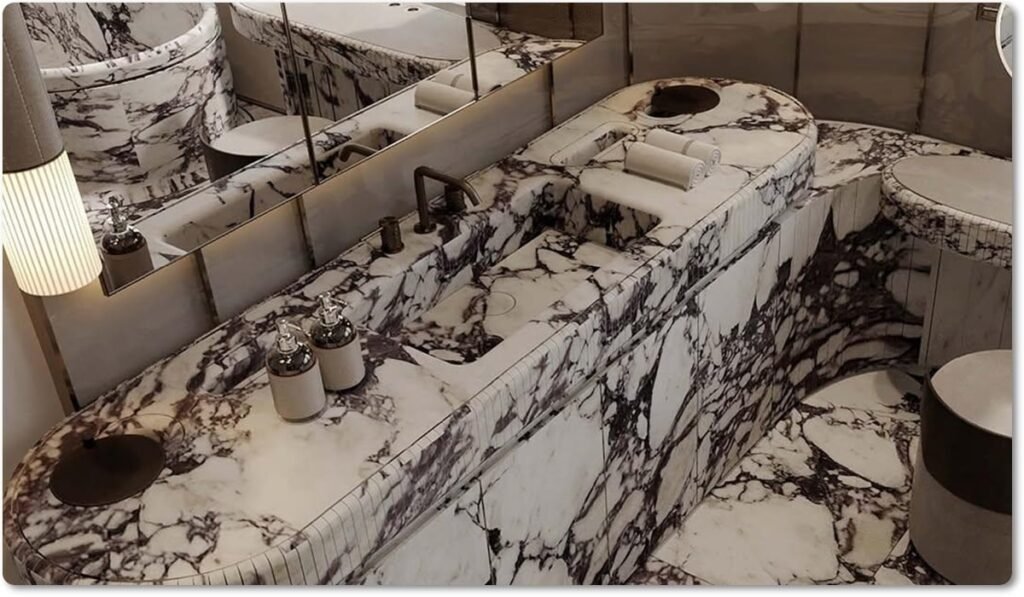
Monet is typically marketed as the artistic member of the family. Supplier pages describe it with cloudy textures, bookmatched layouts, and colored undertones such as burgundy or lilac in some lots. This makes Monet particularly effective for statement pieces where the slab is meant to read like a composition, not just a construction material. It can look exceptional in backlit or highly curated luxury settings, but it requires more design discipline than a cleaner white marble.
Monet works best when the slab layout is intentional: a pair of bookmatched walls, a dramatic bathroom vanity, a fireplace center, or a concierge desk with visible vein continuity. Buyers should avoid treating Monet as a generic stock marble; its value is tied to the specific slab picture, not the product name alone.
2.4 Verde Calacatta Marble
Verde Calacatta is the most chromatic of the white-family options. Supplier catalogs describe it with green veining, a white background, and a more expressive visual rhythm. That makes it suitable for designers who want natural stone with a stronger color story, especially in projects that reference nature, wellness, botanical luxury, or classic European interior language.
In procurement terms, Verde often functions better as an accent marble than a universal field stone. It can be highly effective on vanity tops, bar fronts, niches, powder rooms, wall cladding, and select tabletops, but it should be used carefully in large continuous areas unless the vein direction and tone are explicitly part of the design concept.
2.5 Red Calacatta Marble / Calacatta Marble Red
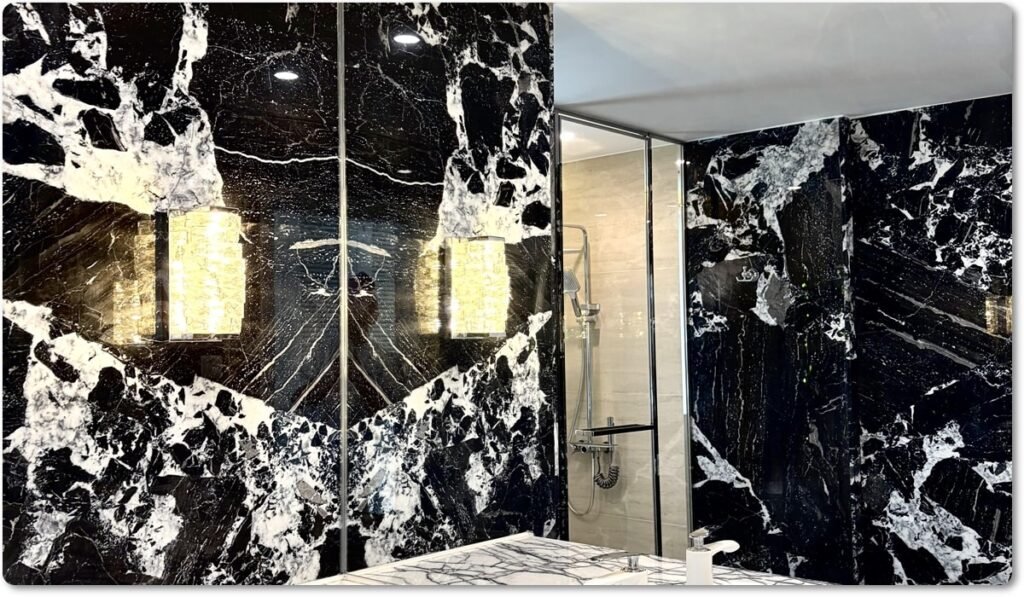
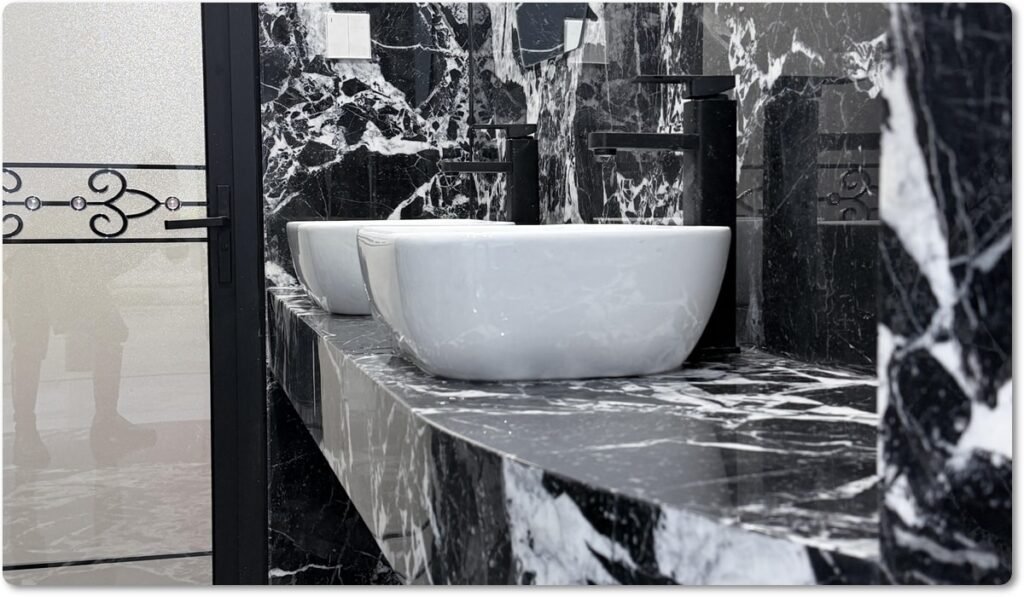
Red Calacatta is the boldest commercial category in this group. Supplier listings show it as a recognized market name, and the design logic is clear: red-vein or red-toned Calacatta is meant for focal applications, not for minimal backgrounds. It creates immediate contrast and works best where the designer wants a strong emotional or luxury signal.
Because of its intensity, Red Calacatta should usually be limited to hero surfaces: entry walls, vanity panels, feature islands, fireplace cladding, table tops, or a single luxury room that can carry the visual weight. It is not the first choice for buyers who want low-risk uniformity, but it can be the strongest option when the brief is exclusivity and memorability.
3. How to Choose by Material Logic?
A good white paper should not just compare colors. It should compare how the stone behaves in the project. ASTM C503 exists because marble selection must be tied to physical requirements, not just appearance. USGS also notes that stone’s ability to take a polish is part of normal selection criteria. In practical terms, the designer and the buyer should agree on these five questions before the order is placed: what is the intended use, what finish is required, how much vein movement is acceptable, whether the project needs matched slabs, and what maintenance level the end user can realistically support.
Marble is calcareous, and the Natural Stone Institute warns that lemon, vinegar, and other acids may dull or etch calcareous stones; Daltile’s care guidance similarly recommends neutral cleaners and warns against acid or bleach. That means the material decision is not only aesthetic but operational. A surface that looks perfect in a showroom can age differently in a family kitchen, a hotel breakfast area, or a public restroom.
For that reason, the correct material logic is simple:
White Calacatta for broad versatility; Borghini for luxury gravity; Monet for artistic composition; Verde for accent color and character; Red for the strongest focal statement. This is the kind of ranking that helps both designers and buyers reduce indecision.
4. Best Applications by Scenario
Residential Kitchens
Kitchens demand a balanced answer: beautiful stone, but also practical maintenance. White Calacatta is often the safest option because it delivers brightness and elegance without turning the room into a visual competition. Borghini can work very well on a waterfall island or island front if the project wants a stronger focal point. Monet and Red are usually better as feature pieces than as the only stone across a full kitchen. Since acids can etch calcareous stone, the owner must accept the natural patina logic before marble is specified.
Bathrooms and Powder Rooms
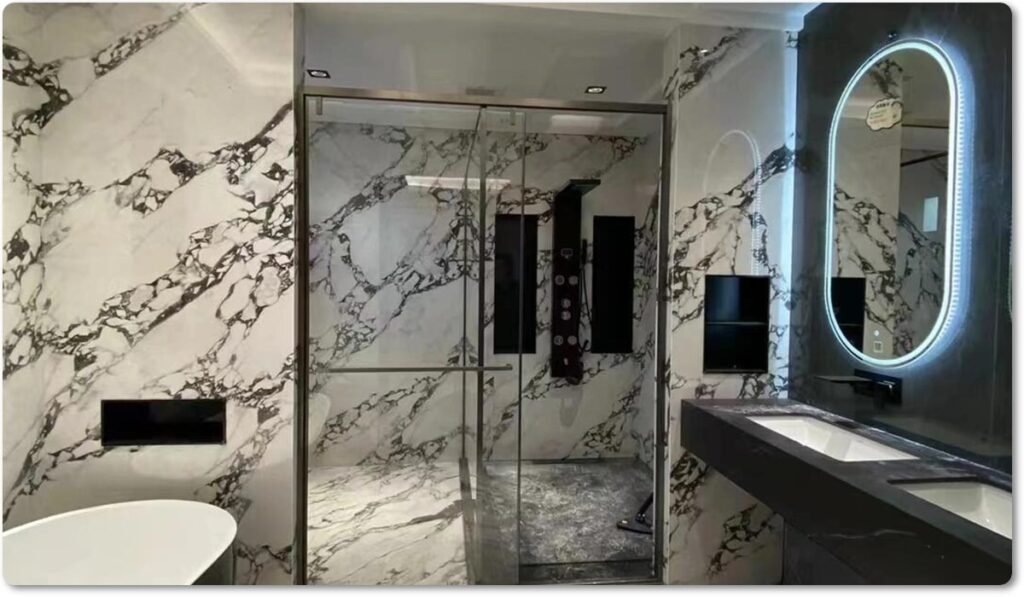
Bathrooms are one of the most effective environments for Calacatta marble because the stone can be controlled as a curated luxury finish. Monet, Borghini, and Verde are especially strong here because the room is smaller and the designer can control the visual hierarchy. In powder rooms, Red Calacatta can be spectacular because the room can carry an unusually intense design move.
Hospitality and Commercial Interiors
For hotels, clubs, lounges, and branded spaces, the stone must support both design and throughput. White Calacatta gives the broadest commercial usability, Borghini gives prestige, Monet gives identity, Verde gives distinction, and Red gives memory. The best commercial projects use stone not just as a finish but as a brand cue. That is where matched slabs, join planning, and shop drawings become essential.
Furniture, Tables, and Decorative Objects
The market now uses Calacatta-family stone for tables, trays, sinks, furniture tops, and decorative elements. Monet and Red are especially suitable for statement furniture, while White Calacatta is the easiest to scale across multiple object categories without design fatigue.
5. Fabrication and Specification Rules Buyers Should Not Skip
Natural stone procurement becomes reliable only when the spec is specific. ASTM C1528 is the right conceptual reference for stone selection, and the Natural Stone Institute’s design and installation resources reinforce the need for proper evaluation, fabrication, and installation planning. The practical workflow should include slab booking, grain direction control, edge profile selection, seam strategy, cutout coordination, and installation sequencing.
For marble projects, the most important quality-control items are: slab consistency, thickness tolerance, resin or mesh reinforcement if used, visible fissure acceptance criteria, and finish uniformity across the lot. Buyers should also ask for photos of the actual slabs before approval. That single step prevents a large share of aesthetic disputes later in the job.
Cleaning instructions should be delivered with the stone. Neutral cleaner guidance is not optional; it is part of responsible project handover. The project team should also communicate that etching is a natural risk on calcareous stone and that the appearance of use is part of marble’s character, not necessarily a manufacturing defect.
6. EDG Stone Factory Case Module
EDG Stone Factory can be positioned in this content cluster as the global Quartzite Slabs & Countertops Manufacturer and Exporter case module, showing how a factory-scale producer supports project selection, slab matching, custom fabrication, export packing, and long-term supply continuity. In a marble white paper, this module should be framed as the operational bridge between design intent and delivery reality: the designer specifies the visual target, the buyer validates the lot, and the manufacturer turns that into approved slabs, finished components, and export-ready packaging.
The strongest way to present EDG Stone Factory is through three proof points: custom slab selection, project-based fabrication, and international export execution. This allows the article to move naturally from material theory into procurement confidence and inquiry generation.
9. Internal Link Matrix for a 15-Article Cluster
| # | Supporting Article | Primary Intent | Suggested Anchor Text |
|---|---|---|---|
| 1 | What Is Calacatta Marble? | Basics | Calacatta marble definition |
| 2 | Calacatta Marble vs Carrara Marble | Comparison | Calacatta vs Carrara |
| 3 | White Calacatta Marble Buying Guide | Product selection | White Calacatta marble slabs |
| 4 | Calacatta Borghini Marble Specification Guide | Premium variant | Calacatta Borghini marble |
| 5 | Calacatta Monet Marble for Luxury Interiors | Design use | Calacatta Monet feature wall |
| 6 | Verde Calacatta Marble for Accent Projects | Color-led selection | Verde Calacatta marble |
| 7 | Red Calacatta Marble for Statement Spaces | Niche use | Red Calacatta marble |
| 8 | Marble Slab Quality Inspection Checklist | Procurement | Marble Slab Inspection Checklist |
| 9 | Marble Bookmatching and Vein Matching Guide | Fabrication | bookmatched marble slabs |
| 10 | Marble Finish Guide: Polished, Honed, Leathered | Finish selection | Marble finish comparison |
| 11 | Marble Countertops: Fabrication and Edge Profiles | Countertops | marble countertop fabrication |
| 12 | Marble in Bathrooms: Design and Maintenance | Scenario | marble bathroom design |
| 13 | Marble in Hospitality Projects | Commercial use | hospitality marble applications |
| 14 | Marble Care and Sealing Guide | Maintenance | Marble Care Guide |
| 15 | EDG Stone Factory Project Case Studies | Conversion | quartzite slabs and countertops manufacturer |
10. Authority Source Set for the White Paper
These are the most useful authority references to cite throughout the cluster. The strongest technical backbone comes from USGS, ASTM, and the Natural Stone Institute.
- USGS – Dimension Stone Statistics and Information: supports the definition of dimension stone and selection criteria.
- USGS – Mineral Commodity Summaries 2024 / 2025: Stone (Dimension): supports market-scale context and production data.
- ASTM C503/C503M – Marble Dimension Stone: supports physical-property requirements for marble.
- ASTM C1528/C1528M – Selection of Dimension Stone: supports selection and specification process.
- Natural Stone Institute – Care and Cleaning Guidance: supports neutral-cleaner and acid-avoidance guidance.
- Natural Stone Institute – Stain/Etch Guidance: supports etch-risk explanation.
- Natural Stone Institute – Design/Installation Resources: supports project specification and installation workflow.
- Britannica – Marble Rock: supports marble’s geological description.
- University of Waterloo – Marble Formation: supports the metamorphic explanation and white marble formation.
- Daltile – Natural Stone Care: supports neutral-cleaner and acid-avoidance recommendations.
- Architectural Digest – Marble Countertops Tips: supports design-selection behavior and slab approval practice.
- Supplier catalogs for Calacatta Borghini / Monet / Verde / White / Red: support trade-name usage and visual descriptors in the market.
Conclusion
A strong white paper on Calacatta marble should not treat the material as one fixed product. It should teach the reader how to move from material identity to visual family, from visual family to application fit, and from application fit to procurement control. That is the logic that makes the content useful for both search engines and real buyers. White Calacatta gives the widest versatility, Borghini adds prestige and movement, Monet brings artistic composition, Verde introduces natural color expression, and Red creates the strongest focal impact.