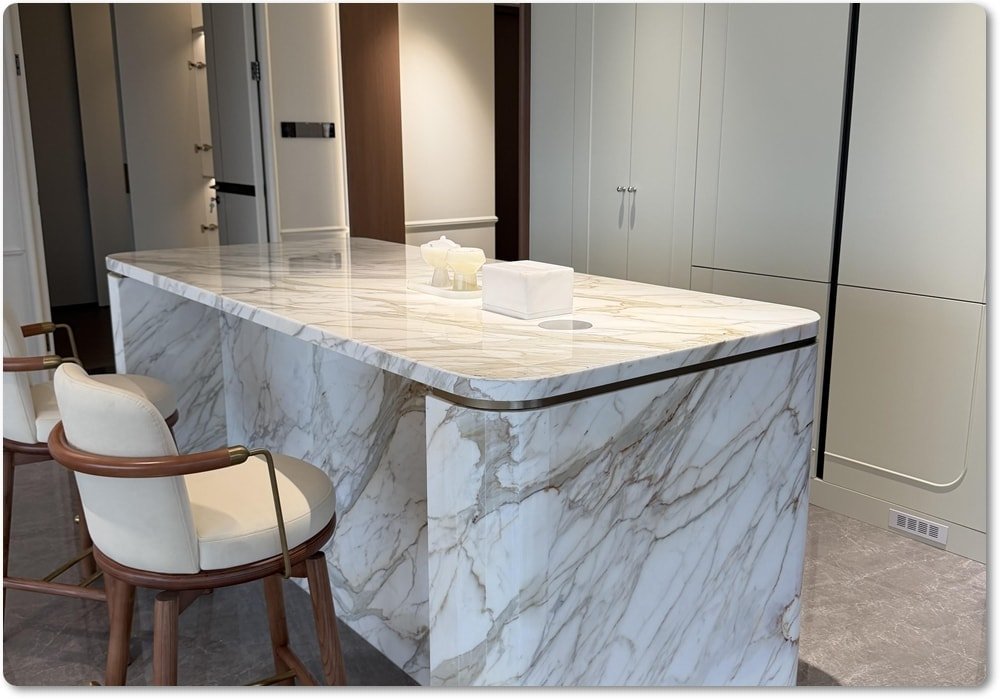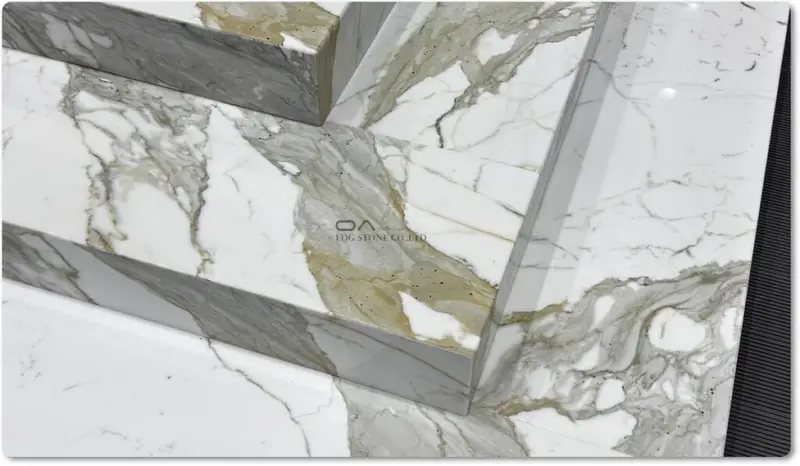
1. Executive Summary & Market Intelligence
The global architecture and interior design industries are experiencing a massive material shift. Sintered stone has evolved from a premium niche material into a dominant surface solution across residential and commercial sectors. This white paper serves as a technical blueprint for international B2B buyers, procurement managers, and real estate developers navigating the complex ecosystem of global sintered stone procurement.
[Raw Materials: Clay, Feldspar, Silica] ──> [7,500+ Ton Vacuum Pressing] ──> [1,200°C+ Kiln Firing] ──> [Finished Sintered Stone Slab]
The 2026 Global Sintered Stone Market Landscape
According to the 2025-2026 Global Engineered Stone Market Report by the International Surface Fabricators Association (ISFA), the demand for sintered stone slabs is projected to grow at a Compound Annual Growth Rate (CAGR) of 11.4% through 2030. This growth outpaces traditional granite and standard quartz surfaces.
| Metric | 2024 Market Data | 2026 Projected Data | Growth Drivers |
| Global Market Value | $4.2 Billion | $5.3 Billion | High-volume commercial construction and premium kitchen renovations |
| Primary Application | Sintered stone countertops (42%) | Sintered stone countertops & Facades (48%) | Exterior UV-resistance and interior food-safety standards |
| Top Exporting Hubs | Italy, Spain, China | Italy, China, India | Advanced production lines and raw material accessibility |
Material Composition: Sintered Stone vs. Quartz vs. Porcelain
Procurement professionals must distinguish between these materials to avoid costly supply chain and marketing errors.
Sintered Stone: Made from 100% natural minerals (silica, feldspar, clay, and mineral pigments). It undergoes high-pressure compaction (typically over 15,000 tons) and thermal sintering at temperatures exceeding 1,200°C. It contains zero resin binders.
Quartz Surfaces: Composed of roughly 90–93% quartz aggregates bound together by 7–10% polymer resins. These resins break down under UV exposure and melt at high temperatures.
Traditional Porcelain: While similar in raw ingredients, porcelain does not undergo the same extreme hyper-compaction and advanced inkjet depth printing. This makes porcelain more prone to chipping during fabrication.
2. Technical Specifications & Materials Science
Understanding the physics of a sintered stone slab is crucial for drafting clear purchase orders (POs) and maintaining precise quality control.
+-------------------------------------------------------+
| Surface Layer: High-Definition Digital Inkjet Texture  |
+-------------------------------------------------------+
| Core Layer: Hyper-Compacted Micro-Mineral Matrix       |
| (Zero Resin, Fully Vitrified, Porosity < 0.05%)       |
+-------------------------------------------------------+
Physical and Chemical Benchmarks (ISO/EN Standards)
When sourcing sintered stone slabs, your technical datasheets must mandate compliance with the following international metrics:
Water Absorption (ISO 10545-3): $\le 0.05\%$. The material is virtually non-porous, making it highly stain-resistant and hygienic.
Flexural Strength (ISO 10545-4): $\ge 50\text{ N/mm}^2$. High flexural strength prevents cracking over long spans, which is critical for cantilevered sintered stone countertops.
Mohs Hardness (EN 101): Rating of 6–8. The surface resists scratching from stainless steel cutlery and heavy kitchen utensils.
Thermal Shock Resistance (ISO 10545-9): Passing from 15°C to 145°C without cracking, surface crazing, or structural failure.
Chemical Resistance (ISO 10545-13): Class UA/ULA. Fully resistant to household chemicals, pool salts, strong acids, and alkalis.
Thickness and Application Matrices
Sintered stone production lines offer specific thicknesses tailored to distinct structural requirements:
[3mm - 6mm Thickness]   ======> Wall Cladding, Cabinet Veneers, Furniture Facings
[12mm Thickness]        ======> Standard Kitchen Countertops, Island Tops, Vanity Tops
[20mm+ Thickness]       ======> Premium Solid Countertops, Heavy-Traffic Commercial Flooring
3mm – 6mm: Optimized for interior wall cladding, exterior building facades, and cabinet door veneers. The reduced weight lowers shipping costs and structural loads.
12mm: The global standard for sintered stone countertops. It provides the ideal balance between structural integrity and weight.
20mm+: Used for premium, solid-edge countertops and heavy-traffic commercial flooring without requiring mitered edge substrates.
3. Global Factory Selection & Audit Blueprint
Selecting the right manufacturing partner is the single most critical step in successful sintered stone procurement. B2B buyers must distinguish between top-tier factories and low-tier operations that cut corners on raw materials and pressing times.
Factory Audit Flow:
[Verify Pressing Machine Tonnage] ──> [Inspect Kiln Length & Temperature] ──> [Check Raw Material Sourcing] ──> [Audit QC Lab Equipment]
Step 1: Machinery and Technology Verification
The quality of a sintered stone slab depends entirely on the machinery that creates it. During a factory audit, buyers must verify two pieces of equipment:
The Press System: Look for industry-leading continuous press systems, such as System SITI B&T (Supera) or Sacmi (Continua+). The press must deliver a minimum pressure of $450\text{ kg/cm}^2$ (or a total tonnage exceeding 15,000 to 30,000 tons depending on slab width). Insufficient pressure leaves micro-air pockets that cause slabs to crack during fabrication.
The Kiln System: The firing kiln should be long (often over 150 meters) to ensure a slow, uniform thermal curve. Slabs must remain in the kiln for a precise duration to achieve complete vitrification. Quick-firing setups produce internal stresses that lead to warping.
Step 2: Sourcing of Raw Materials
Top-tier factories import high-purity white clays and feldspars from premium European deposits. Ask the factory for their raw material country-of-origin logs. Low-grade local clays often contain iron impurities, which show up as dark spots or discoloration on finished white marble-look slabs.
Step 3: Raw Slab Production vs. Fabricated Countertops
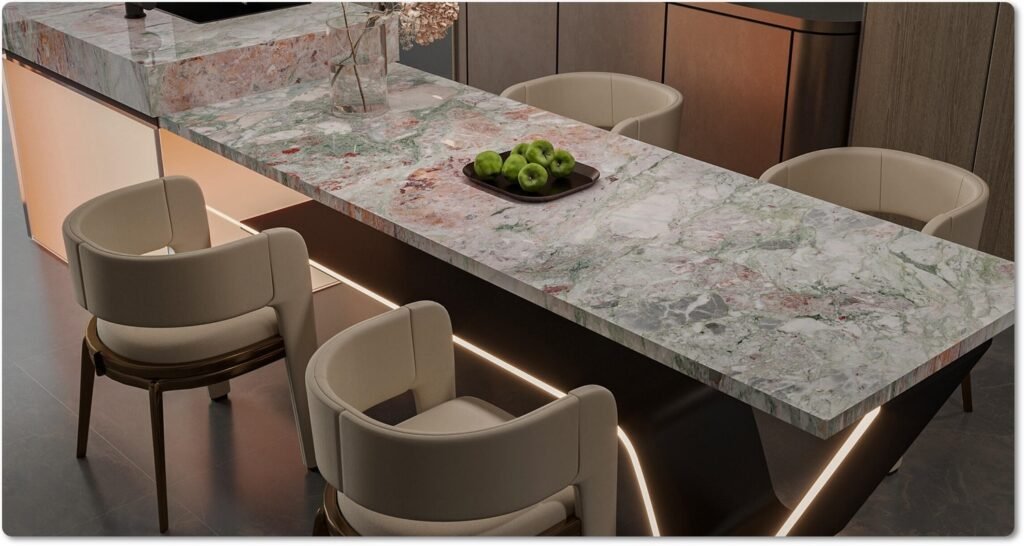
Many factories only manufacture raw slabs. They do not cut, edge, or finish them. If you are importing finished sintered stone countertops, you must choose a factory that operates a dedicated, in-house CNC fabrication workshop.
Third-party fabrication yards often lack the specialized bridge saws, waterjet cutters, and stress-relieving tools required to handle sintered stone safely, which increases breakage rates.
4. Quality Inspection (QC) Protocols
Importers must use strict, quantifiable quality control protocols. A general visual check is not enough for high-precision architectural materials.
The Five-Point Slab Inspection Protocol
+-------------------------------------------------------+
| [1] Visual Inspection: 1,000 Lux Light, No Spots/Cracks |
| [2] Dimensional Check: Length/Width ±0.5mm, Thickness   |
| [3] Flatness Deviation: Max Warp < 0.2% Across Diagonal |
| [4] Pattern & Vein Continuity: Match Approved Samples |
| [5] Internal Stress Test: Sample Trim Cut (No Cracking)  |
+-------------------------------------------------------+
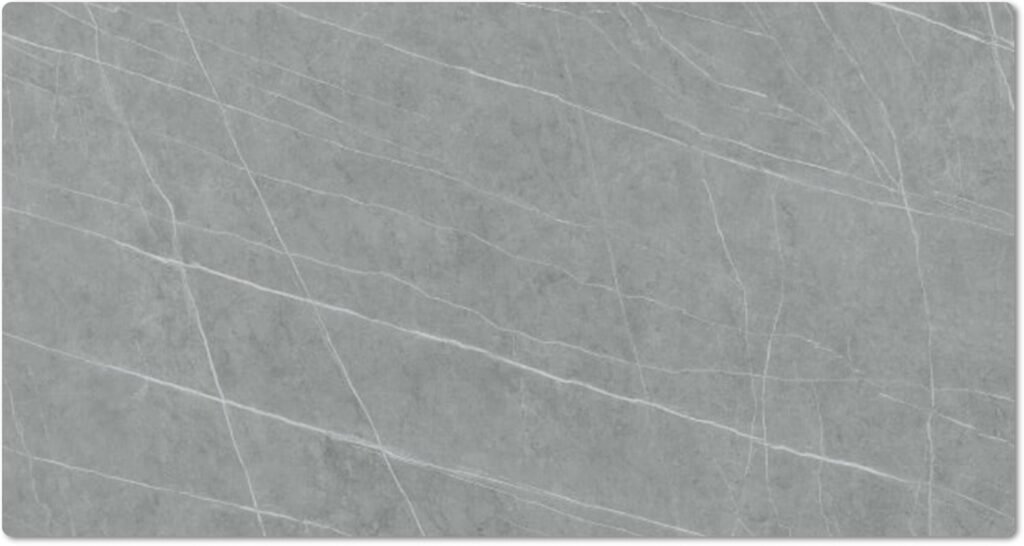
Visual and Optical Inspection: Inspect slabs under a minimum of 1,000 lux of uniform light. Check for surface pinholes, color blotches, or print lines from digital inkjet heads. Hold a straightedge against the surface to identify any surface ripples.
Dimensional and Thickness Tolerance Checks: Measure the slab at six distinct points using digital calipers. The acceptable tolerance for a premium $12\text{ mm}$ slab is $\pm 0.3\text{ mm}$. Length and width tolerances must not exceed $\pm 0.5\text{ mm}$.
Flatness and Warp Measurement: Lay the slab completely flat on a calibrated inspection table. Measure the corner-to-corner diagonal flatness using a laser leveling tool. The maximum allowable warp or deflection is less than 0.2% of the slab’s total diagonal length.
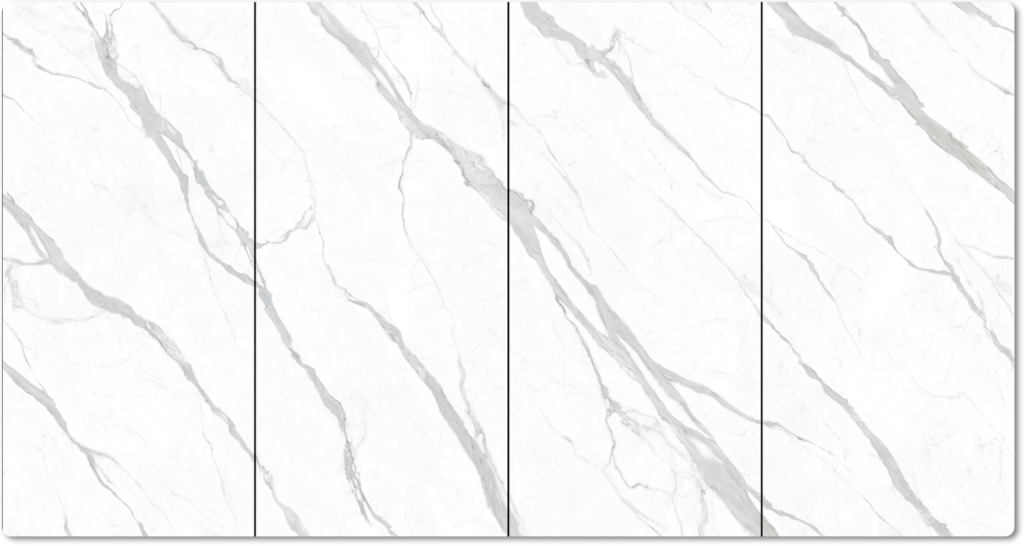
Pattern and Vein Continuity: For book-matched or continuous-vein designs (common in Calacatta and Statuario styles), cross-reference the printed vein patterns against the master digital files. Ensure the ink penetrates deep into the surface glaze to prevent ghosting or fading along mitered edges.
Internal Residual Stress Test: Request a destructive cut test on one random slab per batch. Use a high-speed CNC bridge saw to trim a $50\text{ mm}$ strip along the entire length of the slab. If the slab cracks, shatters, or pinches the blade during the cut, it contains high internal residual stress due to improper cooling in the kiln. Reject the entire batch.
5. Case Study: EDG Stone Factory’s Global Supply Model
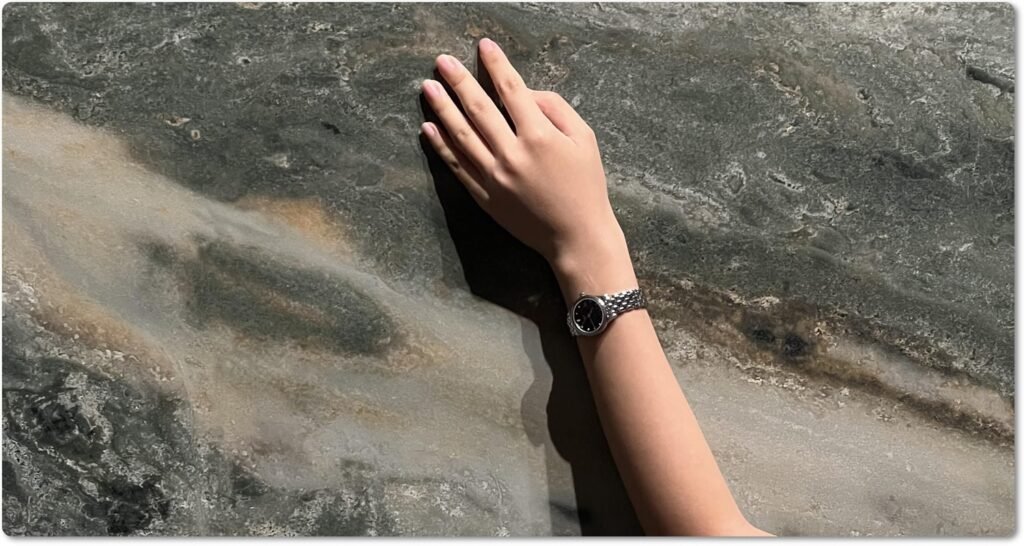
To understand how high-volume procurement works in practice, we look at EDG Stone Factory, a premier global Quartzite Slabs & Countertops Manufacturer and Exporter.
While historically recognized for processing ultra-premium natural quartzite, EDG Stone Factory has integrated advanced sintered stone production and custom fabrication into its international supply model. This integration directly addresses the core challenges that global buyers face.
EDG Stone Supply Chain:
[Advanced Raw Sourcing] ──> [Precision CNC/Waterjet Machining] ──> [Custom A-Frame Export Packing] ──> [Global Sea Freight Logistics]
Architectural Customization and OEM Operations
EDG Stone Factory bridges the gap between heavy industrial manufacturing and detailed architectural design. Their OEM system allows commercial buyers to specify exact edge profiles, custom sink cutouts with reinforced drop-in support, and matching book-matched vein configurations across thousands of square meters.
By applying natural stone fabrication techniques to engineered sintered stone, they ensure that countertops fit perfectly on-site, keeping field modifications to a minimum.
       EDG Stone Custom Mitered Edge Profile:
       +------------------------------------+
       | Sintered Stone Top Slab            |
       +-----------------+------------------+
                         |  / <--- 45° Precision Miter Joint
                         | /
                         |/  <--- Reinforced Epoxy Backing Bond
                         |
                         | Prefabricated Apron Down-Turn
Quality Assurance and Logistics
EDG Stone Factory addresses the main concern of international procurement managers: transit damage. By using reinforced solid wood A-frames, protective high-density foam interlayers, and ocean-freight container bracing, they consistently maintain an export breakage rate of under 0.3%.
This case study shows that a successful sintered stone procurement strategy requires more than just finding a low price per square meter; it requires a partner who understands heavy industrial logistics and precision fabrication.
6. Packaging, Bundling, and Ocean Freight Logistics
Sintered stone is incredibly durable once installed, but it is highly vulnerable to impact damage during transit. Poor packaging can turn a profitable import project into a total loss of broken slabs.
Advanced Export Bundling Systems
Never allow factories to pack slabs loosely in shipping containers. Mandate the use of heavy-duty, heat-treated (ISPM 15-certified) wooden A-frames or enclosed wooden crates.
  Standard Container Loading Scheme (20GP Container):
  +-------------------------------------------------+
  | [A-Frame Bundle 1]   [A-Frame Bundle 2]   [Bund|
  | (Slabs secured back-to-back with foam sheets)  |
  |                                                 |
  | ====> Heavy-Duty Timber Floor Bracing Blocks    |
  +-------------------------------------------------+
Slab-to-Slab Protection: Place high-density polyethylene (HDPE) foam sheets or protective corner guards between every single slab within a bundle. This prevents faces from rubbing together and scratching the polished or matte finishes.
Weight Distribution: A typical 20-foot general-purpose (20GP) container accommodates roughly 3 to 4 A-frame bundles, depending on the thickness of the slabs. Ensure the factory distributes weight evenly across the center line of the container to prevent shifting during ocean transport.
Maximum Loading Capacities (20GP Containers)
The following table provides standard structural loading limits for ocean transport. Ensure your logistics team cross-references these numbers against your local port’s legal weight limits:
| Slab Thickness | Average Dimensions (mm) | Slabs per Bundle | Max Bundles per 20GP | Approx. Total Weight (Tons) |
| 6mm | $3200 \times 1600$ | 15–20 | 5 | $\approx 25.5$ |
| 12mm | $3200 \times 1600$ | 10–12 | 4 | $\approx 26.0$ |
| 20mm | $3200 \times 1600$ | 6 | 4 | $\approx 26.5$ |
7. Global Import Strategy & Risk Management
Importing large quantities of sintered stone across international borders requires a clear understanding of international trade laws, customs duties, and maritime risks.
Risk Management Timeline:
[Draft Strict Technical Contract] ──> [Secure Marine Insurance (All Risks)] ──> [Verify HS Code Classification]
Mitigation of Anti-Dumping (AD) and Countervailing Duties (CVD)
The global trade landscape for engineered surfaces is heavily regulated. For example, the United States Department of Commerce and the European Commission enforce strict anti-dumping duties on certain ceramic and quartz products from specific countries.
HS Code Classification: Ensure your customs broker registers your imports under the correct Harmonized System code. Sintered stone is generally classified under HS Code 6907.21 (Unglazed ceramic flags and paving, hearth or wall tiles) or HS Code 6810.19, depending on regional customs rules. Mistaking engineered quartz for sintered stone can lead to severe fines and cargo seizures at your destination port.
Commercial Contracts and Dispute Resolution
Never wire a down payment until the factory signs a technical addendum to the purchase contract. This addendum must explicitly state:
The exact machinery brand used to press the slabs.
The maximum allowed breakage rate during transit (anything over 1.5% should trigger an immediate credit memo or replacement slab shipment).
The clear definition of acceptable versus rejectable defects based on the five-point QC protocol outlined above.
Payment terms tied directly to independent, third-party pre-shipment inspections (e.g., SGS or Intertek audits).
8. Future Market Trends (2026–2030)
The sintered stone industry is innovating rapidly. Staying ahead of these technological shifts allows procurement teams to secure high-demand materials before competitors lock up factory capacities.
Future Material Architecture:
[Through-Body Veining Matrix] ──> [Bio-Friendly Low-Silica Raw Materials] ──> [Smart Thermal Surface Integration]
Full Through-Body Veining Technology
Historically, the marble pattern on a sintered stone slab was only printed on the surface layer. If you carved a chamfer or a bullnose edge into the slab, the inner core showed up as a solid, unpatterned color.
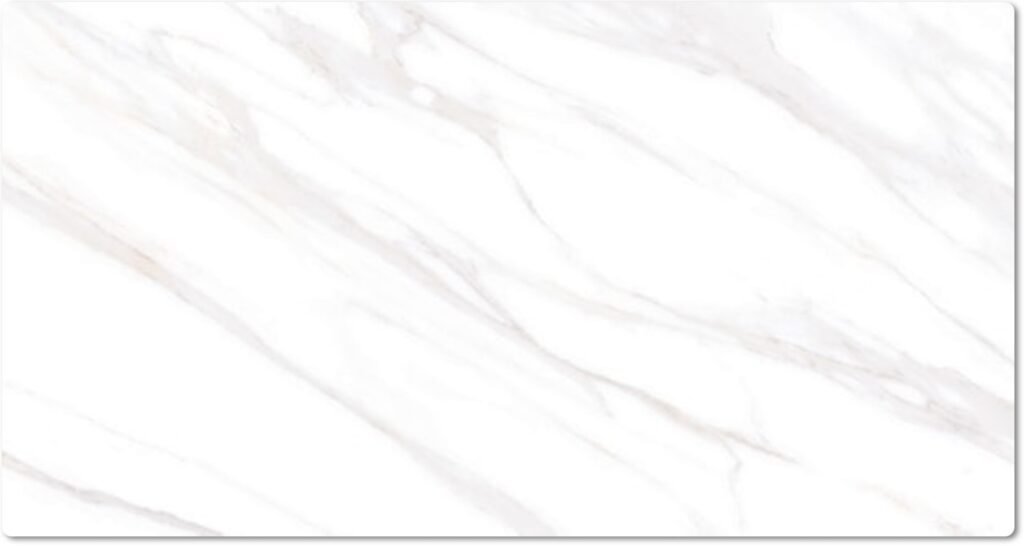
In 2026, premium factories are deploying true through-body veining. This process uses synchronized digital dry-powder distribution systems to align the internal mineral colors with the surface inkjet pattern. The result is a material that looks and finishes exactly like natural Calacatta marble throughout its entire thickness.
Low-Silica and Eco-Friendly Materials
With occupational health and safety regulations tightening globally (such as Australia’s strict bans and regulations on high-silica engineered stone), factories are pivoting toward eco-friendly alternatives.
Advanced sintered stone lines now produce slabs with under 10% crystalline silica, and some use completely silica-free mineral blends. This ensures compliance with strict international labor and environmental health regulations.
9. B2B Procurement Officer’s Ultimate Checklist
Use this checklist before approving any major sintered stone procurement order.
[ ] Factory Audit: Verified that the factory press matches or exceeds $450\text{ kg/cm}^2$ or 15,000 tons of total capacity.
[ ] Raw Materials: Confirmed the sourcing of high-purity minerals with zero added resin binders.
[ ] Certifications: Obtained copies of ISO 10545 test reports, NSF/ANSI Standard 51 certification (for direct food contact safety), and CE marking compliance documents.
[ ] Thickness Compliance: Match slab thickness to application ($6\text{ mm}$ for walls, $12\text{ mm}+$ for countertops).
[ ] Fabrication Alignment: Verified that the factory or its direct fabrication partner uses dedicated waterjet and CNC equipment optimized for sintered stone.
[ ] Stress Testing: Conducted a physical trim cut test on production-run samples to check for internal residual stress.
[ ] Logistics and Packaging: Mandated ISPM 15-certified wooden A-frame packaging with high-density foam separators between all slabs.
[ ] Trade Verification: Checked regional anti-dumping (AD/CVD) regulations and verified the accurate assignment of HS Code 6907.
10. Frequently Asked Questions (FAQ)
FAQ Schema Integration
What is the primary difference between sintered stone and quartz surfaces?
Sintered stone consists entirely of natural minerals compressed under extreme pressures and fired above 1,200°C without any resin binders. Quartz surfaces contain 7–10% resin binders, making them susceptible to UV degradation and heat damage, whereas sintered stone is completely UV-proof and heat-resistant.
Why do sintered stone slabs sometimes crack during fabrication?
Slabs typically crack during fabrication due to internal residual stresses built up during improper cooling phases in the factory kiln. Choosing suppliers that run long, slow-fired kilns prevents this issue.
What is the correct HS code for importing sintered stone slabs into the US or Europe?
Sintered stone is typically imported under HS Code 6907.21 or 6810.19, depending on regional customs configurations. Correct classification is vital to avoid anti-dumping duties tied to quartz surfaces.
Can sintered stone be used for outdoor applications?
Yes. Because it contains zero resins and has a water absorption rate under 0.05%, it will not fade under UV exposure, warp in the sun, or crack in freezing temperatures. This makes it an ideal choice for outdoor kitchens, BBQs, and building facades.
11. Reference Matrix & Content Synergy Hub
To build a robust knowledge base and optimize internal search discoverability, this white paper connects to our broader surface manufacturing and procurement content network.
       [Sintered Stone Procurement Guide (Core Master Paper)]
          │             │             │             │
          ▼             ▼             ▼             ▼
     [Matrix 1]    [Matrix 2]    [Matrix 3]    [Matrix 4]
    Quartzite vs.  Commercial     Advanced     Sustainable
    Sintered Stone  Facade CNC   Edge Miter    Low-Silica
     Sourcing      Engineering   Techniques     Surfaces
Strategic Internal Links
Quartzite Slabs Buying Guide: Read our deep dive into natural stone logistics to see how natural quartzite compares to engineered sintered stone slabs.
Commercial Kitchen Countertop Engineering: A breakdown of NSF/ANSI compliance for hospitality projects using sintered stone countertops.
Advanced Architectural Cladding Protocols: Technical guidance on mechanical fixing systems for 3mm and 6mm sintered panels on high-rise facades.
The Evolution of Modern Quartzite Processing: A look at how legacy manufacturers like EDG Stone Factory adapt their stone fabrication tooling to work with ultra-hard sintered matrices.
Preventing Structural Failures in Mitered Countertop Edges: An engineering guide to calculating structural load distribution on kitchen islands.
Verified Industry References
International Surface Fabricators Association (ISFA) – Global Surface Technology Annual Report (2025).
European Committee for Standardization (CEN) – EN 101 Ceramic Tile Test Methods and Standards Manual.
International Organization for Standardization (ISO) – Technical Data Sheet ISO 10545 (Physical Properties of Vitrified Ceramic Elements).
National Kitchen & Bath Association (NKBA) – 2026 Kitchen Design and Material Trends Report.
World Customs Organization (WCO) – Harmonized System Commodity Classification Update Core Log.