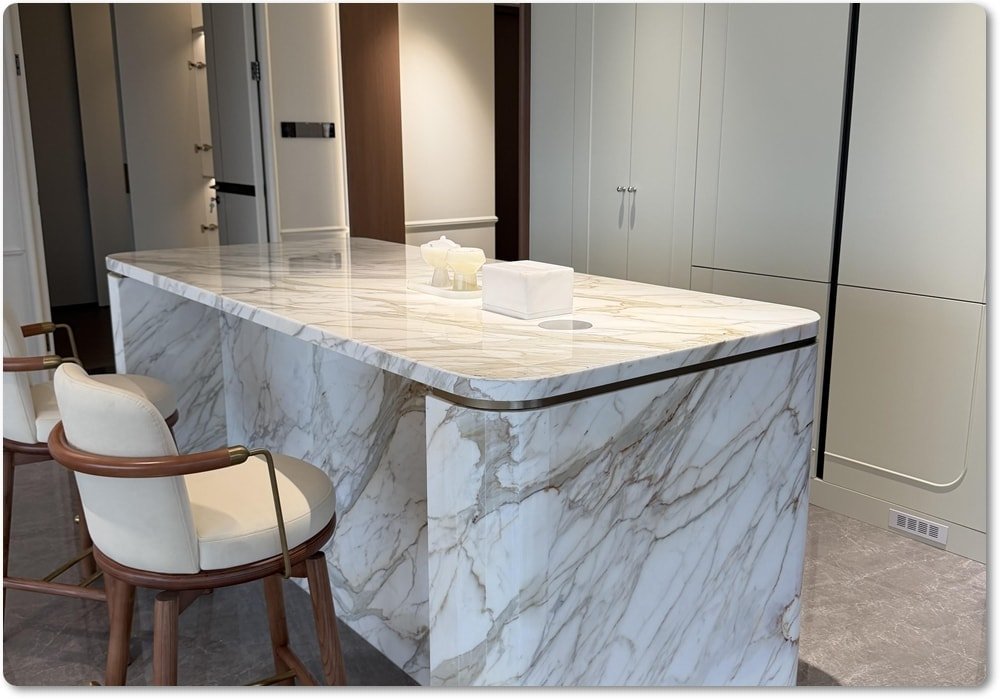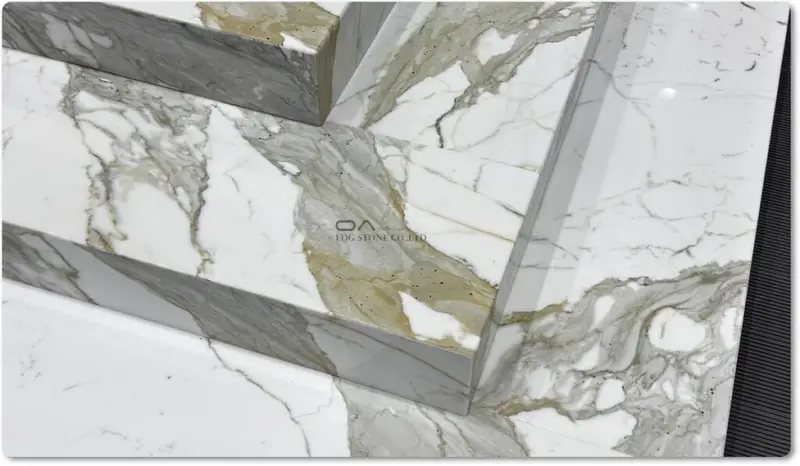
1. Executive Summary & Global Market Landscape
The high-end furniture manufacturing industry is undergoing a structural material shift. Natural stone alternatives, engineered quartz, and traditional ceramics are increasingly ceding market share to Sintered Stone. Combining extreme thermal resistance, near-zero porosity, and high mechanical flexural strength, sintered stone has evolved from a high-performance architectural cladding material into the premier substrate for luxury residential and commercial furniture.
According to data from the Grand View Research Global Surface Report, the global sintered stone market size was valued at USD 18.2 billion in 2024 and is projected to expand at a compound annual growth rate (CAGR) of 6.8% through 2030. This growth is driven by the demand for sustainable, ultra-durable materials in high-traffic interior spaces. For luxury furniture brands, designers, and real estate developers, understanding the material properties, manufacturing variables, and supply chain dynamics of sintered stone tables is critical to capturing premium market share.
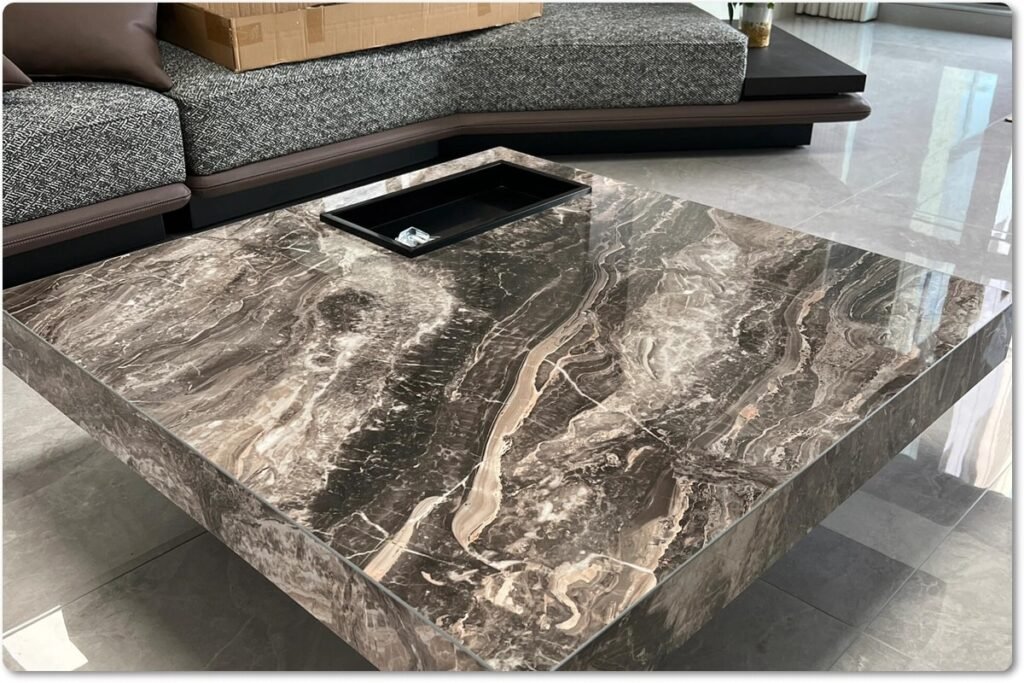
2. Technical Profile: What is Sintered Stone?
To understand why sintered stone outperforms traditional dining and coffee table surfaces, it is necessary to examine its industrial synthesis. Sintered stone is not conventional ceramic, nor is it engineered quartz. It is an advanced composite material engineered entirely from natural minerals—including silica, quartz, feldspar, and mineral oxides—processed via advanced Metamorphic Sintering Technology.
The Industrial Metamorphic Process
The manufacturing process replicates the natural formation of metamorphic rock deep within the Earth’s crust, compressed from millions of years into a matter of hours:
Ultra-Fine Raw Material Compaction: The raw mineral matrix is pulverized into a microscopic powder. It is then subjected to an intense mechanical press, typically using advanced hydraulic systems like the Sacmi Continua+ technology. The raw slab is pressed at pressures reaching 15,000 to 52,000 metric tons (or up to $400 \text{ to } 500 \text{ kg/cm}^2$), eliminating air pockets and creating a dense, compact green body.
Thermal Vitrification & Sintering: The pressed slab enters a specialized kiln spanning over 100 meters in length. It undergoes a thermal cycle peaking between 1,200°C and 1,250°C (2,192°F to 2,282°F). At this thermodynamic threshold, the mineral particles melt, fuse, and recrystallize. The process fundamentally alters the atomic structure of the minerals, forming a monolithic, ultra-dense vitreous matrix.
Material Performance Matrix
The resulting material exhibits physical properties that far exceed traditional luxury table materials like marble, granite, wood, and glass:
| Performance Metric | Sintered Stone (12mm) | Natural Italian Marble (Carrara) | Engineered Quartz |
| Mohs Hardness Scale | 7 – 8 (Scratch-proof via steel knives) | 3 – 4 (Prone to scratching) | 6 – 7 (High scratch resistance) |
| Water Absorption Rate | ≤ 0.05% (Impervious to moisture) | 0.10% – 0.50% (Porous, stains easily) | ~0.05% (Stain resistant) |
| Thermal Resistance | Up to 1,200°C (Non-combustible) | Structural failure/discoloration @ >150°C | Scorches/Resin burns @ >150°C |
| Chemical & UV Stability | Class UA (Resists all domestic acids/alkalis & UV) | Reacts with acids (etching from lemon juice) | May yellow under prolonged UV exposure |
| Flexural Strength | ≥ 50 N/mm² | ~10 – 15 N/mm² | ~40 – 50 N/mm² |
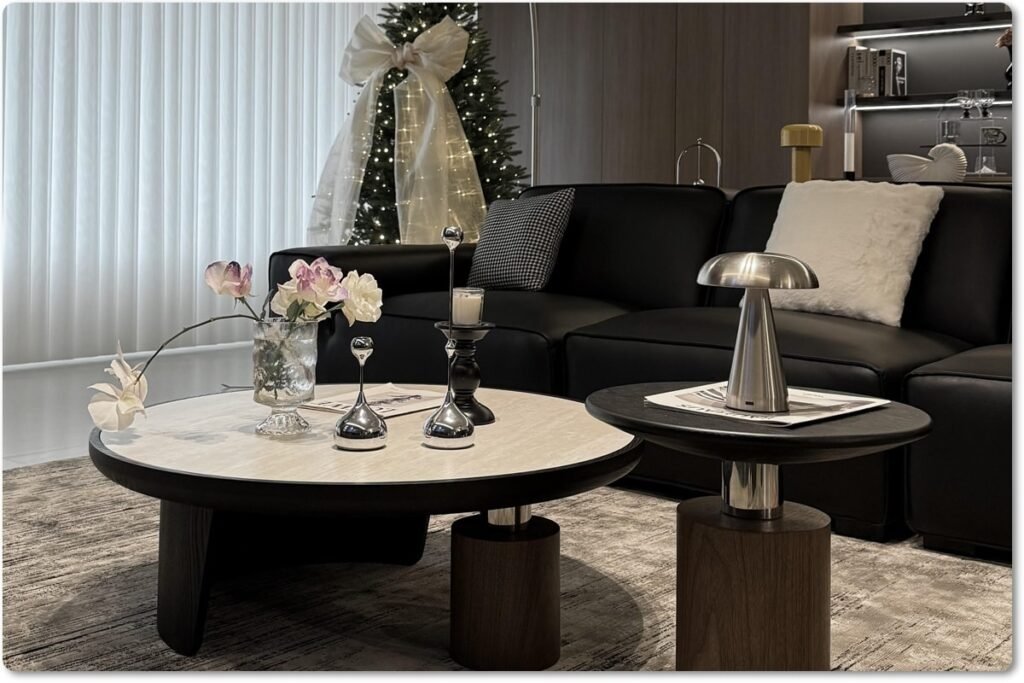
3. Product Engineering & Form Factors
Designing a sintered stone table requires a precise balance of aesthetics and mechanical engineering. Because sintered stone is an ultra-dense, non-yielding material, fabricators must carefully specify thickness, weight, edge profiles, and structural sub-tops to ensure stability and longevity.
Slab Thickness Selection Guide
The intended application determines the correct thickness selection for a tabletop. Choosing an incorrect thickness without proper structural support can lead to structural deflection or failure:
6mm Thickness (Ultra-Lightweight & Clean Aesthetics): Primarily specified for sleek, minimalist sintered stone coffee tables, nesting tables, or console tops. Due to its reduced flexural mass, 6mm tops must be fully bonded to a structural underlayment—such as high-density fiberboard (HDF), marine-grade plywood, or rigid aluminum honeycomb panels—to distribute impact loads.
12mm Thickness (The Global Industry Standard): The standard specification for high-end sintered stone dining tables, executive desks, and conference furniture. A 12mm slab provides excellent structural integrity, impact resistance, and edge-detailing versatility. It can be supported by a combination of perimeter metal frames and targeted underlayments.
15mm to 20mm Thickness (Luxury Solid Profiles): Reserved for ultra-premium architectural furniture installations where a heavy, substantial edge profile is required without utilizing a mitered drop-apron. These slabs offer maximum impact resistance and can be used with minimal mid-span framework support over spans up to 1.8 meters.
Mechanical Weights & Engineering Implications
Calculating dead load is crucial for structural leg design and logistics management. Sintered stone has a density of approximately 2,400 to 2,500 kg/m³:
A standard 1.8m × 0.9m Sintered Stone Dining Table at 12mm thickness yields a slab weight of approximately 46.6 kg (102.7 lbs), excluding the weight of the metal base and underlayment substrate.
High-End Edge Profile Options
Edge detailing alters both the visual profile and the structural impact resistance of the table top:
[ Flat Polished / Eased Edge ]    --> Crisp, modern minimalist profile.
[ Mitered Apron Edge (20-40mm) ] --> Creates the visual illusion of a thick, massive solid slab.
[ Beveled / Chamfered Edge ]      --> Slanted lower edge reduces visual mass for a floating effect.
[ Bullnose / Demi-Bullnose ]     --> Rounded profile increases safety and minimizes chipping risks.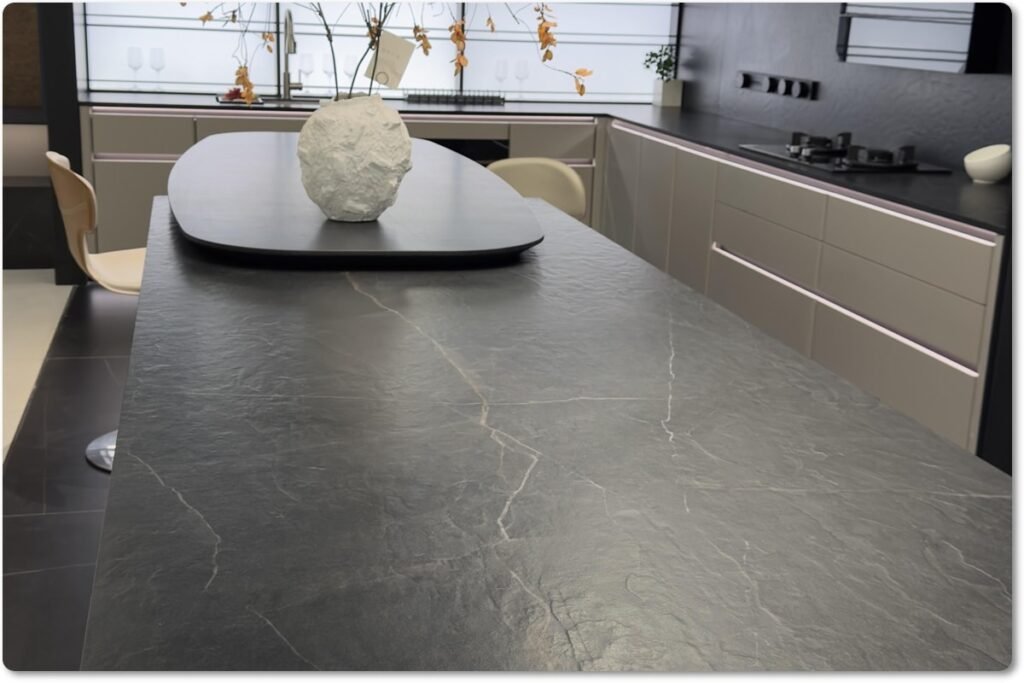
4. Architectural Applications & Interior Environments
Sintered stone tables cross the boundary between functional utility and structural design. Their chemical inertia and physical hardness make them highly effective across a range of interior environments.
Dining Tables: The Centerpiece of Luxury Residential
In high-end residential projects, the dining table is subject to constant thermal shock, food acid exposure, and mechanical impact. Traditional natural stones like marble require periodic sealing every 6 to 12 months and remain highly vulnerable to chemical etching from common substances like wine, vinegar, citrus juices, and hot cookware.
A sintered stone dining table requires no chemical sealants. Hot pans, cast iron skillets, and boiling pots can be transferred directly from the stove cooktop onto the table surface without causing discoloration, cracking, or thermal shock failure.
Coffee Tables: Structural Geometry & Nesting Dynamics
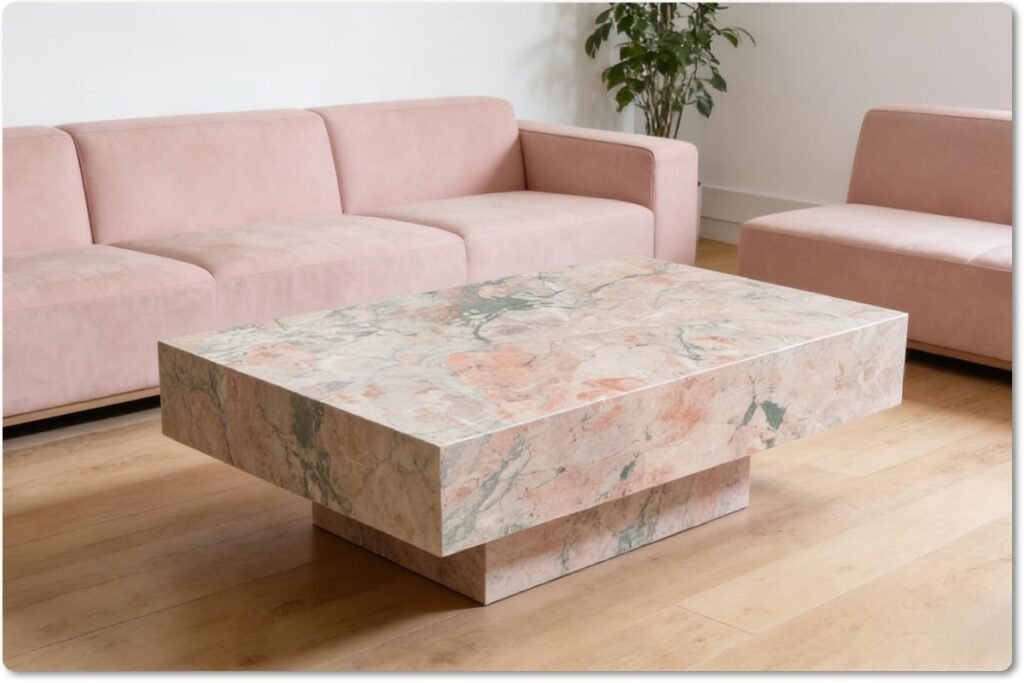
For living room environments, sintered stone coffee tables leverage the material’s high flexural strength to achieve daring geometric cantilevers and ultra-thin profiles. Designers can utilize large-format 6mm or 12mm round tops resting on minimalist, off-center bases without risk of bowing. In nesting coffee table configurations, the scratch-resistant nature of the surface prevents damage when smaller lower tables slide underneath larger upper modules.
Custom Luxury Furniture & Commercial Environments
Beyond standard tables, luxury furniture brands use sintered stone for high-end executive desks, boardroom conference tables, luxury hospitality reception desks, and outdoor kitchen dining tops. Because the mineral pigments are thermally fused at over 1,200°C, they are completely UV-stable and weatherproof. This makes them ideal for open-air luxury patios, yachts, and outdoor dining settings where traditional resin-bound quartz or natural wood would fade, warp, or crack under direct sunlight.
5. Structural Engineering: Metal Bases & Frame Substrates
A luxury tabletop is only as stable as the engineering system supporting it. Sintered stone requires a completely flat, rigid foundation to prevent torsional stress (twisting forces) that could otherwise induce cracking under heavy focal loads.
Metal Base Engineering
Premium furniture manufacturing demands high-grade metal alloys and precision fabrication:
Stainless Steel (Grade 304 & 316): The premier choice for luxury furniture. Grade 304 offers exceptional tensile strength and corrosion resistance, while Grade 316 is specified for coastal or marine environments. Finishes are typically achieved through Physical Vapor Deposition (PVD Coating), which molecularly bonds titanium nitride coatings to the steel. This provides scratch-resistant finishes in brushed champagne gold, rose gold, satin black, or chrome.
Carbon Steel & Die-Cast Aluminum: Used for complex geometric and organic leg structures. Carbon steel bases are sandblasted and coated with high-durability electrostatic thermoset powder paints, ensuring long-term rust prevention and a uniform matte or textured finish.
Sub-Top Integration: The Hidden Engineering Layer
Sintered stone should never be bolted directly to a metal base. The rigid material does not tolerate direct localized screw stress. Instead, fabricators implement an engineered sub-top substrate:
+-----------------------------------------------------------+
|          Sintered Stone Top Slab (6mm / 12mm)             |
+-----------------------------------------------------------+
|   Structural Elastic Adhesive (MS Polymer / Polyurethane)  |
+-----------------------------------------------------------+
| Sub-Top Support: Marine Plywood / HDF / Aluminum Honeycomb |
+-----------------------------------------------------------+
| Mechanical Fasteners / Bolts                              |
+-----------------------------------------------------------+
|               Metal Base Frame Structure                  |
+-----------------------------------------------------------+
Aluminum Honeycomb Panels: The gold standard for premium corporate and luxury residential tables. It provides absolute flat rigidity with nearly zero thermal expansion, adding minimal weight while absorbing impact forces.
Marine-Grade Plywood or High-Density Moisture-Resistant (HDMR) Board: Provides a dense, flat cushion that dampens sound waves (reducing the ringing sound when objects contact the table) and distributes localized impact energy safely across the metal frame.
6. Luxury Furniture Trends: Aesthetics & Finishes
The evolution of digital inkjet printing and surface texturing has allowed sintered stone manufacturers to replicate the rarest, most exclusive natural materials with realistic detail, while providing superior performance.
Surface Texture Architecture
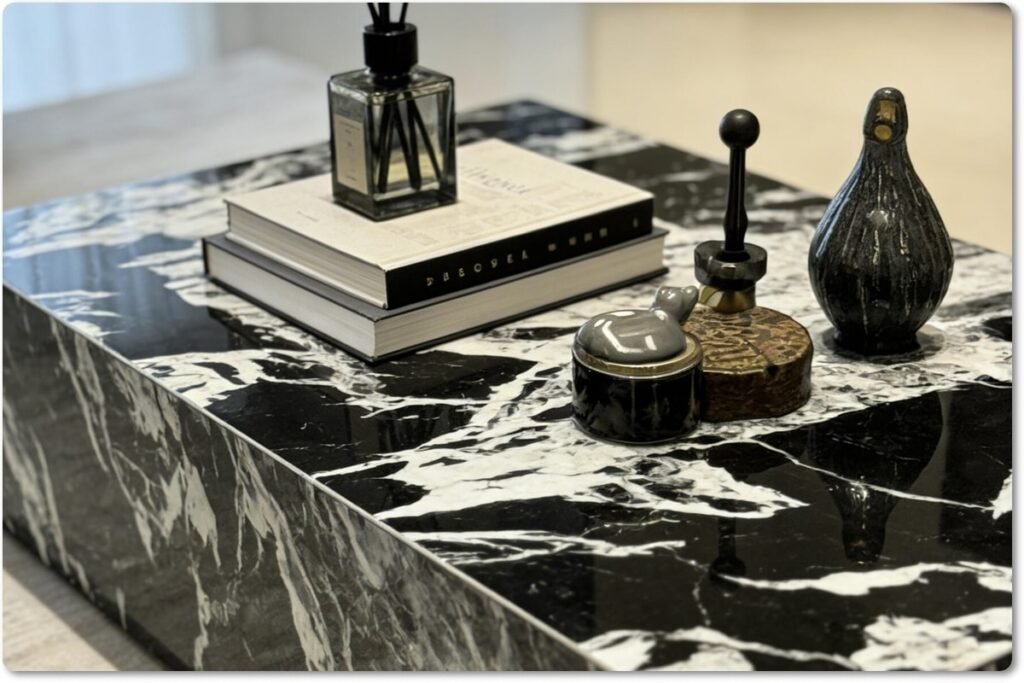
Polished (High-Gloss): Provides a mirror-like finish that accentuates color depth and intricate veining. Ideal for formal luxury dining tables. Modern high-gloss finishes utilize advanced anti-scratch nano-coatings to increase wear resistance.
Matte / Honed / Satin: A soft, smooth finish with zero glare. It offers a warm tactile experience that is highly popular in minimalist, Japandi, and contemporary European interior designs.
Fluted / Ribbed / Carved Textures: The latest trend in luxury design involves using CNC multi-axis routers to carve dimensional textures into the edges or aprons of sintered stone tables, matching the ribbed patterns trending in high-end cabinetry.
Advanced Aesthetic Matching
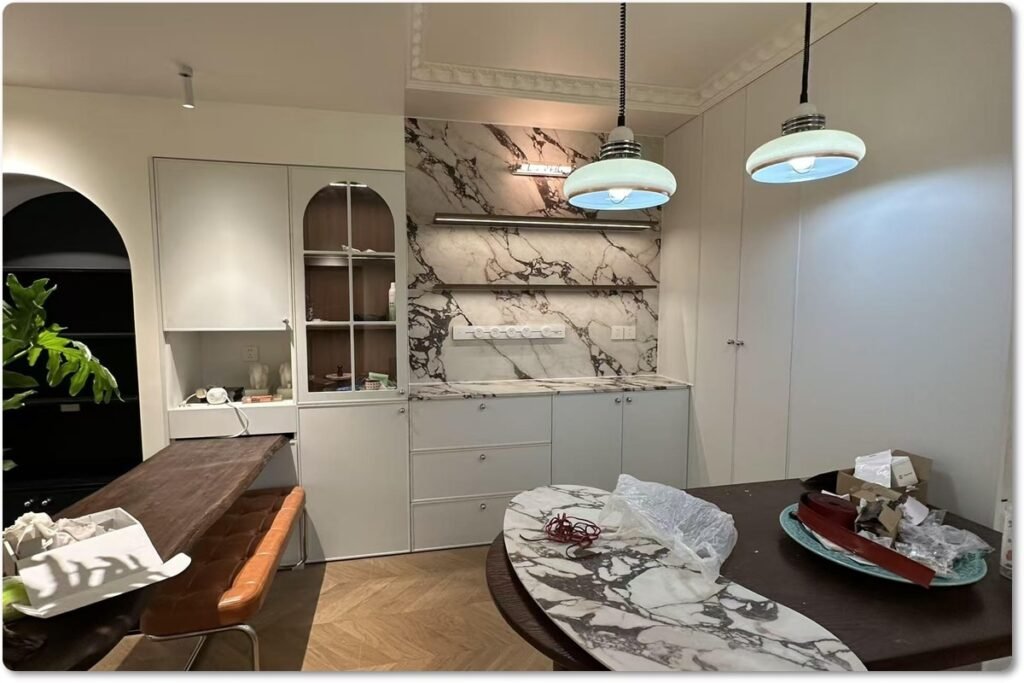
Bookmatched & Endmatched Slabs: For grand dining tables and conference installations longer than 2.4 meters, luxury manufacturers arrange two or more slabs with mirrored veining patterns. This creates a striking visual layout that mimics premium natural marble installations.
Continuous Veining: Utilizing ultra-large formats (e.g., 3200mm × 1600mm), a single continuous vein pattern can cascade smoothly from the tabletop down a mitered waterfall edge to the floor line, creating a monolithic architectural block appearance.
7. Global Manufacturing, OEM & Supply Chain Strategy
For global furniture importers, wholesale brands, and procurement managers, navigating the manufacturing landscape requires strict quality control systems and deep insight into material sourcing.
The Global Industrial Landscape
The high-end sintered stone slab sector is anchored by premium European pioneers like Neolith and Dekton (Cosentino), alongside premium tier-1 Italian brands like Laminam and System Ceramics. Over the last decade, advanced manufacturing hubs in Asia have invested heavily in identical Western production machinery—such as Sacmi presses and System digital printing lines. This allows global tier-1 factories to produce slabs that match European aesthetic standards and physical tolerances at a highly competitive scale.
OEM Manufacturing and Custom Fabricator Workflows
When sourcing custom sintered stone tables through Original Equipment Manufacturers (OEMs), the production workflow must follow precise engineering phases:
[ Phase 1: CAD/BIM Blueprint Engineering ]
                       │
                       ▼
[ Phase 2: Material Sourcing & Slab Inspection ]
                       │
                       ▼
[ Phase 3: CNC Waterjet High-Precision Cutting ]
                       │
                       ▼
[ Phase 4: Edge Profiling, Calibration & Mitering ]
                       │
                       ▼
[ Phase 5: Sub-Top Structural Bonding & Structural Cure ]
                       │
                       ▼
[ Phase 6: Multi-Stage Quality Assurance Testing ]
                       │
                       ▼
[ Phase 7: Heavy-Duty Export ISPM-15 Wood Crate Packing ]
Quality Control and Engineering Tolerances
A white-label or custom OEM manufacturing contract must stipulate these precise tolerances:
Dimensional Tolerance: $\pm 0.5\text{mm}$ across length and width using high-precision 5-axis CNC bridges.
Planarity & Warp Tolerances: Maximum deviation of $\leq 0.2\%$ across the entire diagonal length of the tabletop to ensure an absolutely flat dining surface.
Bonding Strength: Sub-top adhesion must utilize multi-component polyurethane structural adhesives with high shear strength ($\geq 3.5\text{ MPa}$) to guarantee the slab will never delaminate from its substrate during maritime shipping or transit across varied climates.
8. Case Study Module: EDG Stone Factory
Global Quartzite Slabs & Countertops Manufacturer and Exporter
While engineered surfaces like sintered stone dominate specific structural furniture applications, premium luxury design frequently requires integration with rare natural stone surfaces. For global buyers looking to diversify their product portfolios with premium natural stones alongside engineered materials, understanding the capabilities of top-tier natural stone exporters is essential.
Corporate Profile & Infrastructure
EDG Stone Factory is an industry-leading, globally integrated manufacturer and exporter specializing in ultra-premium natural stone products, with a primary focus on high-end Quartzite Slabs and Countertops. Based in China’s premium stone processing clusters, EDG Stone operates an advanced, multi-acre facility equipped with Italian Gaspari Menotti gang saws, automated Breton polishing lines, and 5-axis CNC cutting centers.
The company services commercial developers, luxury hospitality projects, wholesale stone importers, and high-end furniture brands across the United States, Canada, Australia, the United Kingdom, and the Middle East.
+-----------------------------------------------------------------------------------+
|                            EDG STONE FACTORY INTEGRATED SUPPLY CHAIN             |
+-----------------------------------------------------------------------------------+
| Global Quarry Sourcing (Brazil, Italy) -> Advanced In-House Processing (China)    |
| -> Worldwide Export Logistics (USA, Canada, Europe, UK, Middle East)               |
+-----------------------------------------------------------------------------------+
Core Competencies & Material Specialization
EDG Stone has built a global reputation for sourcing and processing exotic, high-density crystalline natural quartzites. Unlike standard granite or soft marbles, exotic quartzite demands highly specialized diamond tooling and slower, precision-calibrated slab polishing lines to prevent structural micro-fractures.
Exotic Quartzite Portfolios: The factory maintains a constant inventory of over 50,000 square meters of block and slab variations, including Taj Mahal Quartzite, Perla Venata, Patagonia, Blue Roma, and Cristallo.
Engineering Capabilities: EDG Stone specializes in translating architectural drawings into precision-cut interior components:
Bookmatched structural feature walls.
Pre-fabricated, seamless mitered waterfall countertops.
Exotic natural quartzite table tops designed with custom undersubstrates, engineered to match the structural demands of premium commercial and residential designs.
Synergistic Partnership for Global Procurement Managers
For international buyers sourcing sintered stone tables and modern engineered furniture, partnering with an established natural stone authority like EDG Stone Factory provides a comprehensive procurement advantage. It enables luxury furniture brands and real estate developers to source both high-durability engineered surfaces and rare, natural stone centerpieces under a single unified quality control protocol. This streamlines supply chains and ensures consistent structural engineering across diverse projects.
9. Industry Authority & White Paper References
To maintain rigorous scientific accuracy, the data points, material classifications, and market statistics cited throughout this document are derived from the following industry bodies, materials science research, and standard-setting organizations:
Grand View Research: Global Surface Materials Market Size, Share & Trend Analysis Report (2024-2030).
Sacmi Imola S.C.: Technical Documentation on Continua+ Ultra-High Pressure Compaction Technology for Large-Format Porous Slabs.
Cosentino Group: Material Safety Data Sheets & Technical Specifications for High-Performance Ultracompact Surfaces (Dekton Technology).
ISO 10545 Standards Matrix: International Organization for Standardization – Testing Protocols for Ceramic Tiles & Sintered Materials (Part 3: Water Absorption, Part 4: Flexural Modulus/Breaking Strength).
National Sanitation Foundation (NSF): NSF/ANSI Standard 51 – Food Equipment Materials Certification for Solid Surfacing Materials.
Neolith Group: Sintered Stone Architectural Surface Application Guide & Structural Engineering Manual.
American Society for Testing and Materials (ASTM): ASTM C373 – Standard Test Method for Water Absorption, Bulk Density, Apparent Porosity, and Apparent Specific Gravity of Fired Whiteware Products.
European Ceramic Industry Association (Cerame-Unie): Annual Industrial Sustainability Report on Carbon Reductions in Advanced Sintering Kiln Technology.
Mohs Scale of Mineral Hardness Verification: National Institute of Standards and Technology (NIST) Material Hardness Reference Materials Database.
EDG Stone Factory Internal Engineering Archive: Comparative Study on the Machining Tolerances, Tensile Strength, and Diamond-Tool Wear Rates of Brazilian Quartzite Slabs vs. Sintered Ceramic Composites (2025).