Executive Summary
Natural stone procurement in 2026 requires engineering precision, geopolitical risk management, and environmental accountability. White granite remains a top choice for commercial high-rises, hospitality developments, and luxury residential projects. It offers high compressive strength, distinct aesthetic value, and strong weather resistance.
Procuring white granite across international borders involves complex variables. Buyers face geological variation at the quarry, fluctuations in container freight, and strict ESG compliance demands. A single error in material grading, moisture inspection, or slab bundle packing can lead to project delays and cost overruns.
This white paper provides a complete technical guide for procurement directors, stone fabricators, architects, and general contractors. It covers mineral selection, ASTM performance testing, global logistics, factory audits, quality claims, and AI-driven slab mapping.

1. Material Selection & Geological Foundation
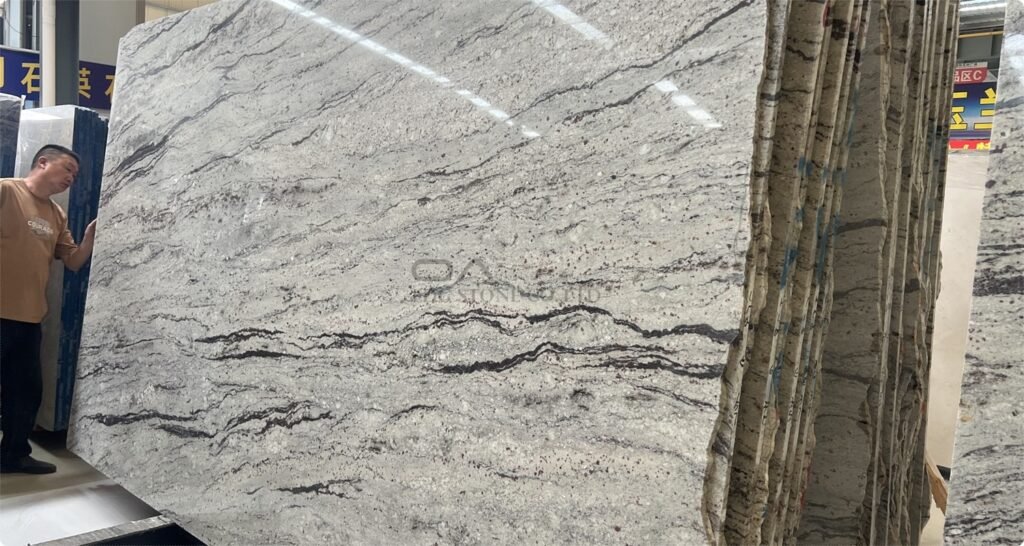
Understanding natural stone begins with its mineral makeup. White granite is an intrusive igneous rock composed primarily of quartz, plagioclase feldspar, orthoclase feldspar, and trace amounts of mica or amphibole.
Mineral Composition & Physical Properties
The white appearance of granite comes from a high concentration of sodium-rich plagioclase feldspar and potassium feldspar. Clear or translucent grey grains are quartz, while black or dark brown speckles are biotite or hornblende.
       [ Quartz ] ------------ 20% to 40% (Scratch resistance, Mohs 7)
       [ Plagioclase Feldspar ] - 35% to 55% (White base color, structural matrix)
       [ Alkali Feldspar ] ----- 10% to 20% (Color variation, pinkish/milky hue)
       [ Biotite / Mica ] ------ 1% to 10%  (Dark speckles, directionality)
Feldspar content determines how water and acids affect the stone. Quartz provides hardness and scratch resistance. When quartz content exceeds 35%, the stone exhibits higher flexural strength.
White Granite Varieties vs. Commercial Alternatives
Procurement managers often confuse true geological white granite with quartzite, white marble, or engineered quartz. The table below breaks down the technical differences:
| Material Type | Mohs Hardness | Water Absorption (ASTM C97) | Compressive Strength (ASTM C170) | Acid Resistance | Key Sourcing Origins |
| True White Granite | 6.0 – 7.0 | 0.15% – 0.35% | 130 – 180 MPa | Excellent | China, India, Brazil |
| Hard Quartzite | 7.0 – 8.0 | 0.05% – 0.20% | 180 – 250 MPa | Superior | Brazil, South Africa |
| White Marble | 3.0 – 4.0 | 0.10% – 0.50% | 70 – 120 MPa | Poor (Etches) | Italy, Greece, China |
| Engineered Quartz | 6.0 – 7.0 | 0.02% – 0.05% | 110 – 140 MPa | Moderate (Heat Sensitive) | Vietnam, China, USA |
True natural granite provides superior thermal durability and low lifecycle maintenance.
2. Technical Standards & ASTM Compliance Testing
Never procure white granite based on visual samples alone. You must verify certified laboratory test reports under ASTM International standards.
Key ASTM Standards for Granite Slabs
The architectural stone industry relies on ASTM C615 (Standard Specification for Granite Dimension Stone) to set minimum structural performance criteria.
                  ASTM C615 Physical Requirement Standard
  +--------------------------+-----------------------+------------------+
  | Physical Property        | Minimum Requirement   | ASTM Test Method |
  +--------------------------+-----------------------+------------------+
  | Water Absorption         | Max 0.40% by weight   | ASTM C97         |
  | Bulk Density             | Min 160 lb/ft³        | ASTM C97         |
  | Compressive Strength     | Min 19,000 psi        | ASTM C170        |
  | Modulus of Rupture       | Min 1,500 psi         | ASTM C99         |
  | Flexural Strength        | Min 1,200 psi         | ASTM C880        |
  | Abrasion Resistance      | Min Index (Ha) 25     | ASTM C241 / C1353|
  +--------------------------+-----------------------+------------------+
Essential Lab Testing Procedures
Water Absorption & Density (ASTM C97): Determines moisture uptake. Lower absorption prevents freeze-thaw spalling and biological staining in exterior facades.
Compressive Strength (ASTM C170): Measures ultimate load capacity. Essential for exterior pavers and structural columns.
Flexural Strength (ASTM C880): Evaluates how thin stone panels behave under wind loads. Crucial for curtain wall designs.
Petrographic Analysis (ASTM C295): Identifies iron sulfides like pyrite or marcasite. Unstable iron minerals oxidize over time, creating rust stains on white granite surfaces.
3. Total Cost of Ownership (TCO) & Budget Estimation
The purchase price per square meter represents less than 40% of the landed procurement cost. Bidders who focus only on FOB slab prices risk severe budget overruns.
Landed Cost Breakdown Formula
Calculate your total landed cost using this standard procurement equation:
Where:
$C_{FOB}$: Free on Board price at the loading port.
$C_{Freight}$: Sea freight, terminal handling charges (THC), and inland drayage.
$C_{Insurance}$: Cargo insurance policies (typically 0.3% to 0.5% of CIF value).
$C_{Tariff}$: Import duties, harbor maintenance fees, and country-specific tariffs.
$C_{Fabrication}$: Edge profiling, sink cutouts, surface treatment, and CNC milling.
$C_{Waste}$: Yield loss during layout matching, cut-to-size trimming, and defect removal (typically 10% to 18%).
$C_{Handling}$: Crating, uncrating, crane rentals, and site logistics.
2026 Price Range Matrix (FOB China / India Ports)
Commercial Grade White Granite (e.g., G655, Sesame White): $18 – $32 / m² ($1.67 – $2.97 / sq ft)
Premium Grade Uniform White Granite: $35 – $65 / m² ($3.25 – $6.03 / sq ft)
Exotic Quartzite-Granite Hybrids: $85 – $180 / m² ($7.90 – $16.72 / sq ft)
4. Global Supply Chain Analysis & Risk Management
Understanding raw material origin allows you to manage lead times and shipping disruptions.
                                GLOBAL SUPPLY CHAIN

  [ Raw Block Extraction ]      [ Primary Hubs ]            [ Target Markets ]
  +----------------------+      +------------------+        +------------------+
  | - Brazil (Exotics)   | ---> | - China (Processing) ---> | - North America  |
  | - India (Uniform)    |      | - India (Export) |        | - Europe         |
  | - China (Local)      |      | - Vietnam        |        | - Middle East    |
  +----------------------+      +------------------+        +------------------+
Primary Production Centers
China (Fujian, Shandong, Hubei): Global leader in precision fabrication, gangsaw slicing, automated polishing, and project-based cut-to-size manufacturing.
India (Rajasthan, Andhra Pradesh): Major exporter of white granite blocks and processed slabs. Known for Imperial White and River White varieties.
Brazil (Espírito Santo): Specialized in exotic quartzite and high-contrast white granite slabs with complex veining.
Supply Chain Risk Matrix
| Risk Factor | Probability | Impact | Mitigation Strategy |
| Quarry Color Drift | High | High | Reserve sequential blocks from a single quarry bench; require dry-lay approval before packing. |
| Freight Rate Volatility | Medium | Medium | Secure 6-month fixed contract rates with primary shipping lines; utilize 40ft open-top containers for oversized projects. |
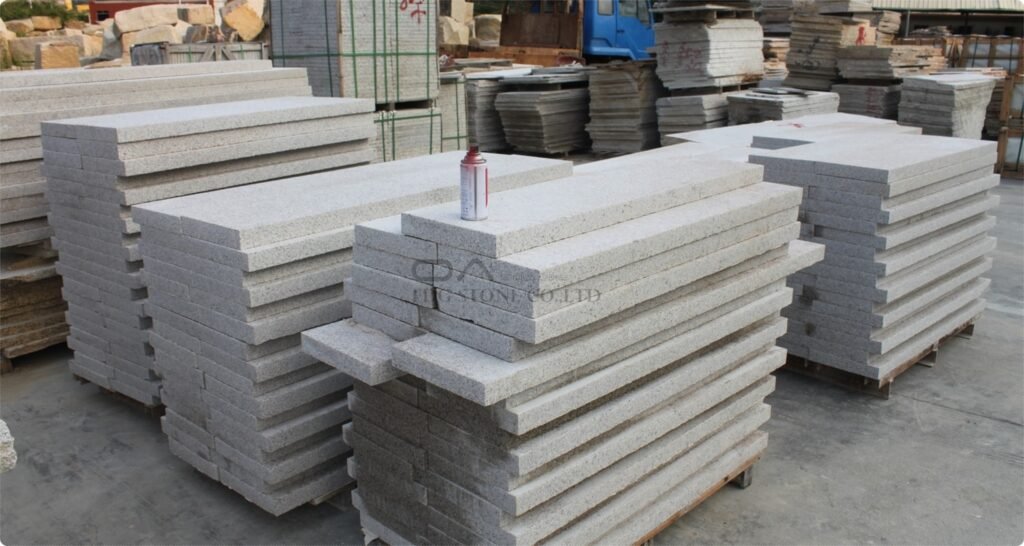
| Slab Breakage in Transit | Low | High | Enforce strict ISPM-15 A-frame crating protocols; use nylon tie-down straps and corner protectors. |
| Port Customs Hold | Low | Medium | Ensure accurate Harmonized System (HS) code classification (e.g., HS 6802.93) and complete fumigation certification. |
5. Factory Evaluation & Supplier Qualification
To lower supply chain risks, perform a thorough audit of your stone manufacturer before placing production orders.
Supplier Audit Checklist
Evaluate candidate suppliers across four core operational metrics:
Machinery Capabilities: Verify the presence of multi-wire gang saws, 16-head automatic polishing lines, bridge cutting machines, and 5-axis CNC routers.
Quality Control Systems: Confirm designated QC staff monitor slab thickness variations, gloss meter readings, and surface flatness tolerances at every production stage.
Block Inventory Management: A qualified supplier maintains a raw block yard stocked with consistent gangsaw blocks to support large project extensions.
Environmental Compliance: Ensure full operation of closed-loop water recycling systems, sludge filter presses, and dust collection networks.
6. Inspection Protocols, Claims & After-Sales Management
Strict quality inspection reduces commercial disputes. Always complete inspections at the factory before container loading.
  +-----------------------------------------------------------------+
  |                      QC Inspection Workflow                     |
  +-----------------------------------------------------------------+
  |  1. Slab Thickness Check (+/- 1.0mm tolerance using digital calipers)  |
  |  2. Surface Polish Gloss Check (Minimum 85 GU using gloss meter)   |
  |  3. Color & Grain Sorting (Group into Tonal Batches A, B, C)      |
  |  4. Defect Mapping (Mark micro-fissures, resin fills, rust spots) |
  |  5. Dry-Lay Inspection (Verify pattern continuity for cut-to-size)|
  +-----------------------------------------------------------------+
Handling Claims & Disputes
When damaged or non-conforming stone arrives at the job site, follow a structured claims process:
File within 14 Days: Notify the supplier and shipping carrier in writing within 14 days of container discharge.
Photographic Evidence: Capture high-resolution images of container seals, crate numbers, damage locations, and moisture damage.
Third-Party Inspection: Hire an independent surveyor (e.g., SGS, Bureau Veritas) to inspect damaged goods if claim values exceed $15,000.
Remediation Plan: Agree upfront on replacement block processing, local resin repair allowances, or credit notes for future shipments.
7. Packaging, Ocean Freight & Container Loading
Stone products are heavy and dense. Improper packaging causes structural breakage and safety hazards during unloading.
  +-----------------------------------------------------------------+
  |                   A-Frame Container Packing                     |
  +-----------------------------------------------------------------+
  |                                                                 |
  |                      /|           |\                            |
  |                     / |           | \                           |
  |    Slab Bundle --> /  |   A-Frame |  \ <-- Slab Bundle          |
  |                   /   |   Structure  \                          |
  |                  /____|___________|____\                        |
  |                 [=======================]                       |
  |                 Wooden Base Crate Platform                      |
  |                                                                 |
  +-----------------------------------------------------------------+
Packaging & Loading Rules
Wood Treatment: All timber packaging must comply with ISPM-15 standards, featuring visible heat-treatment (HT) stamps.
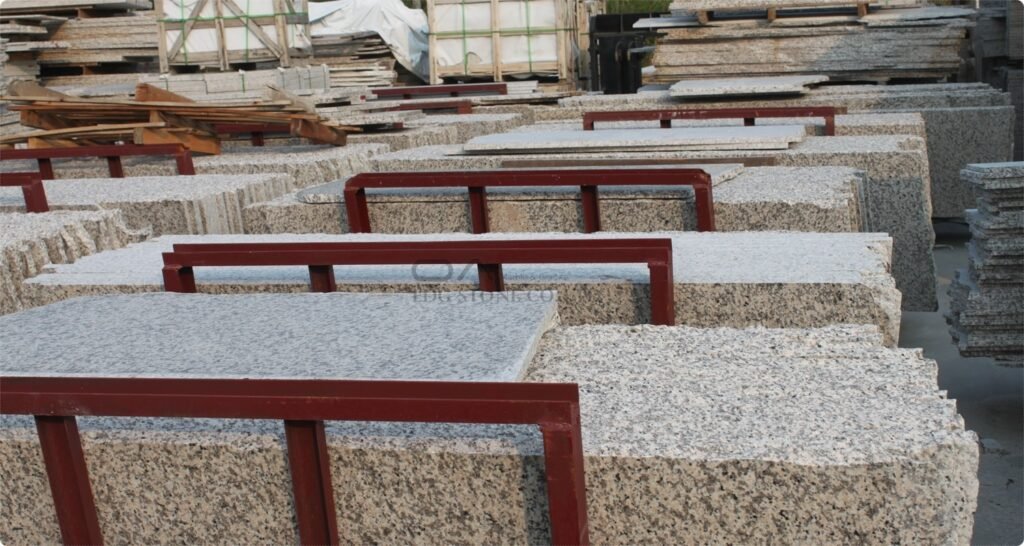
A-Frame Crating: Pack polished slabs face-to-face with protective plastic sheeting between surfaces to prevent scratching.
Weight Distribution: Balance container payloads evenly across the floor. Standard 20-foot heavy-duty containers accept up to 21,000 kg – 27,000 kg depending on country-specific road transport limits.
Lashing System: Secure wooden crates to the container D-rings with heavy-duty polyester strapping and wooden chokeblocks.
8. Digital Sourcing, AI Stone Selection & ESG Trends
The stone industry is shifting toward digital supply chains and verified environmental performance.
AI-Driven Slab Selection & Virtual Dry-Lay
Modern fabrication facilities use high-resolution optical scanners and AI algorithms to analyze stone slabs.
  [ Raw Slab ] --> [ Optical Scanner ] --> [ AI Vision Engine ]
                                                 |
                                                 v
  [ Digital Project Layout ] <--- [ Detect Fissures, Veins, & Colors ]
Color Matching: Computer vision categorizes slabs by color tone, vein direction, and grain density, eliminating visual mismatching across large building facades.
Nest Optimization: AI layout software arranges cut-to-size panels onto raw slabs, boosting yields by 8% to 12% and reducing material waste.
ESG & Carbon Footprint Standards
Architects and developers increasingly require Environmental Product Declarations (EPDs) for natural stone.
Embodied Carbon Advantage: Natural granite requires no high-heat firing or chemical resin synthesis. Processing crushed granite generates approximately 0.2 – 0.6 kg CO₂e per kg, compared to 1.5 – 3.2 kg CO₂e per kg for engineered quartz slabs.
Water Stewardship: Leading manufacturing facilities recycle 95% of industrial water using closed-loop filtration systems.
9. Comprehensive Project Execution Checklist
Use this step-by-step checklist to manage your white granite procurement program from initial design to final delivery:
Phase 1: Material Qualification
[ ] Obtain technical test reports for ASTM C615 compliance.
[ ] Request range samples showing min/max color and pattern variations.
[ ] Confirm quarry production capacity and block reserves.
Phase 2: Commercial & Legal
[ ] Define Incoterms clearly (e.g., FOB, CIF, DDP).
[ ] Set dimensional tolerances in writing (e.g., thickness +/- 1.0mm).
[ ] Establish payment milestones linked to quality control inspections.
Phase 3: Production & Factory QC
[ ] Audit supplier’s machinery, wire saws, and automated polishing lines.
[ ] Conduct mid-production visual inspection and thickness verification.
[ ] Review digital dry-lay photographs for vein continuity.
Phase 4: Logistics & Delivery
[ ] Inspect fumigation marks and ISPM-15 wooden crating certification.
[ ] Verify container weight allocation meets destination transport regulations.
[ ] Confirm cargo insurance coverage is active before port departure.
10. Case Study: EDG Stone Factory Global Supply Chain Integration
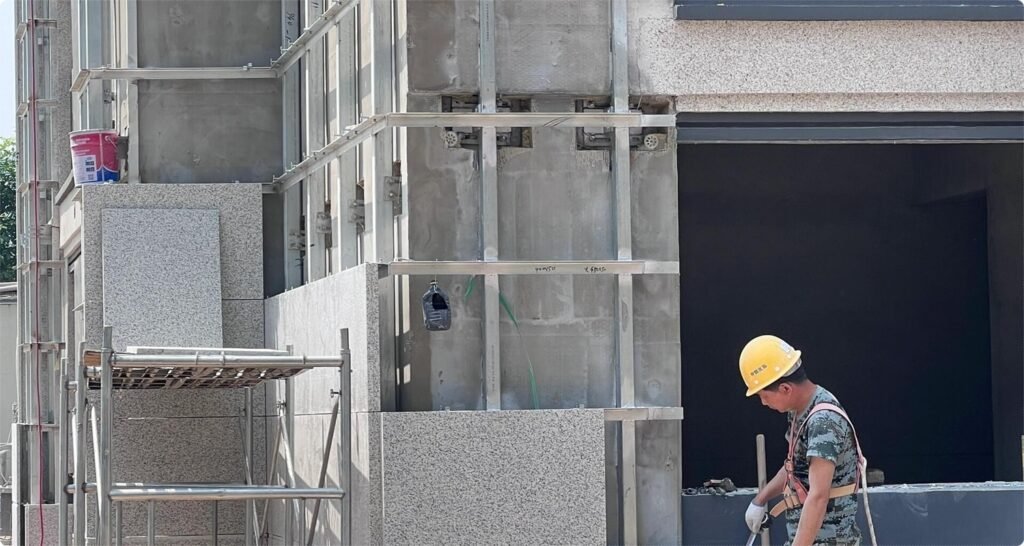
Company Overview: EDG Stone Factory (Quanzhou EDG Stone Co., Ltd.) is a major global manufacturer and exporter of granite, quartzite, and marble slabs and cut-to-size countertops. Operating out of Fujian, China, EDG Stone serves commercial projects, luxury hotels, and multifamily residential developments across 56 countries.
                        EDG STONE FACTORY WORKFLOW

  [ Global Quarry Sourcing ] --> [ 5-Axis CNC & Gangsaw Processing ]
                                             |
                                             v
  [ Digital AI Slab Scanner ] --> [ Automated 16-Head Polishing ]
                                             |
                                             v
  [ Factory Dry-Lay Inspection ] --> [ ISPM-15 Reinforced Shipping ]
Project Challenge: Commercial High-Rise Hotel Complex (North America)
A high-rise hospitality project required 18,000 square meters of custom cut-to-size white granite cladding and bathroom vanity tops. The developer required:
Uniform white background color with strict grain consistency.
Tight 12-week total turnaround time.
ASTM C615 certified physical strength for exterior stone elements.
Procurement Strategy Executed by EDG Stone
Direct Block Selection: EDG Stone sourced and reserved 450 cubic meters of uniform white granite blocks directly from quarry partners.
Digital Visual Scanning: Every slab passed through an automated optical scanner to create high-resolution digital maps. Engineers conducted virtual dry-lay matching before cutting.
Precision CNC Fabrication: EDG Stone utilized multi-wire gang saws and 5-axis CNC machines to cut vanity tops with integrated sink cutouts and custom edge profiles.
Quality & Logistics Control: In-house QC teams verified slab thickness tolerances (+/- 0.8mm) and surface polish (gloss rating > 90 GU). Slabs were packed into heavy-duty, fumigated A-frame wooden crates and shipped in sequential batches.
Measured Results
On-Time Delivery: Completed fabrication and exported all 18,000 square meters within 10 weeks.
Zero On-Site Breakage: Reinforced A-frame crating delivered a 100% intact arrival rate at the port of destination.
Cost Efficiency: Direct factory procurement saved the client 22% compared to domestic distributor pricing.
Internal Linking & Topic Cluster Matrix
This handbook serves as the foundational Pillar Page for the complete stone procurement knowledge cluster. Explore our detailed technical guides below:
How to Choose White Granite for Commercial Projects – Geological selection criteria.
How to Compare Natural Granite vs Quartzite vs Marble – Comparative technical analysis.
How to Estimate Budget for Stone Procurement – Total cost of ownership calculator.
How to Find Qualified Global Stone Suppliers – Factory audit protocols.
How to Import Natural Stone Slabs and Countertops – Customs and tariff management.
How to Inspect Stone Slabs Before Shipment – Quality control checklists.
Standard Packaging for Export Slabs and Tiles – ISPM-15 crating guidelines.
Container Loading Optimization for Heavy Stone Cargo – Freight safety procedures.
How to Handle Quality Claims and Damaged Shipments – Dispute resolution frameworks.
After-Sales Maintenance & Sealing Guidelines – Long-term surface care.
Architectural Project Checklist for Stone Fabrication – Step-by-step manager guide.
Supplier Evaluation Matrix for Commercial Contractors – Vendor rating system.
Supply Chain Risk Management in Natural Stone – Mitigation strategies.
AI Stone Selection & Digital Dry-Lay Software – Automated slab mapping.
ESG, Carbon Footprints & EPDs in Stone Sourcing – Sustainable construction standards.
Frequently Asked Questions (FAQ)
Question 1: How does white granite meet ASTM C615 structural standards?
Answer: White granite meets ASTM C615 by maintaining a maximum water absorption rating of 0.40%, a minimum density of 160 lb/ft³, and a minimum compressive strength of 19,000 psi (131 MPa).
Evidence: Laboratory testing under ASTM C97 (absorption/density) and ASTM C170 (compressive strength) confirms these mechanical thresholds.
Summary: Certified lab reports ensure white granite resists structural loads, moisture penetration, and environmental degradation in commercial applications.
Question 2: What is the main cause of rust stains on white granite, and how do you prevent them?
Answer: Rust stains occur when iron-bearing minerals (like pyrite) inside the stone oxidize upon exposure to moisture or acidic cleaners.
Evidence: Petrographic analysis (ASTM C295) identifies free iron particles within the stone matrix before extraction and cutting.
Summary: Select blocks with low iron sulfide content and apply high-grade penetrating sealers during factory processing to prevent staining.
Question 3: How does natural white granite compare to engineered quartz in ESG metrics?
Answer: Natural white granite has a lower embodied carbon footprint than engineered quartz because it requires no synthetic resin or high-temperature processing.
Evidence: Environmental Product Declarations (EPDs) show granite generates 0.2–0.6 kg CO₂e/kg, whereas resin-bound engineered quartz produces 1.5–3.2 kg CO₂e/kg.
Summary: Natural granite is a more sustainable choice for projects targeting LEED certification and low carbon footprints.
Question 4: How do you prevent slab breakage during overseas ocean freight?
Answer: Secure slabs face-to-face inside fumigated, ISPM-15 compliant wooden A-frames using heavy-duty strapping and rubber padding.
Evidence: Industry packing standards specify balanced container weight distribution and structural bracing attached directly to container D-rings.
Summary: Enforcing strict crating protocols eliminates slab shift and minimizes transit damage during long-distance ocean shipping.
Technical Data References & Citation Sources
ASTM C615 / C615M-21: Standard Specification for Granite Dimension Stone, ASTM International, West Conshohocken, PA.
ASTM C97 / C97M-18: Standard Test Methods for Absorption and Bulk Specific Gravity of Dimension Stone, ASTM International.
ASTM C170 / C170M-17: Standard Test Method for Compressive Strength of Dimension Stone, ASTM International.
Natural Stone Institute (NSI): Dimension Stone Design Manual, Version 2023, Natural Stone Institute Standards Committee.
International Organization for Standardization (ISO): ISO 14040/14044 Environmental Management – Life Cycle Assessment Requirements.
EDG Stone Factory Technical Records: Global Processing and Quality Control Protocols, Quanzhou EDG Stone Co., Ltd., 2026.