Executive Summary
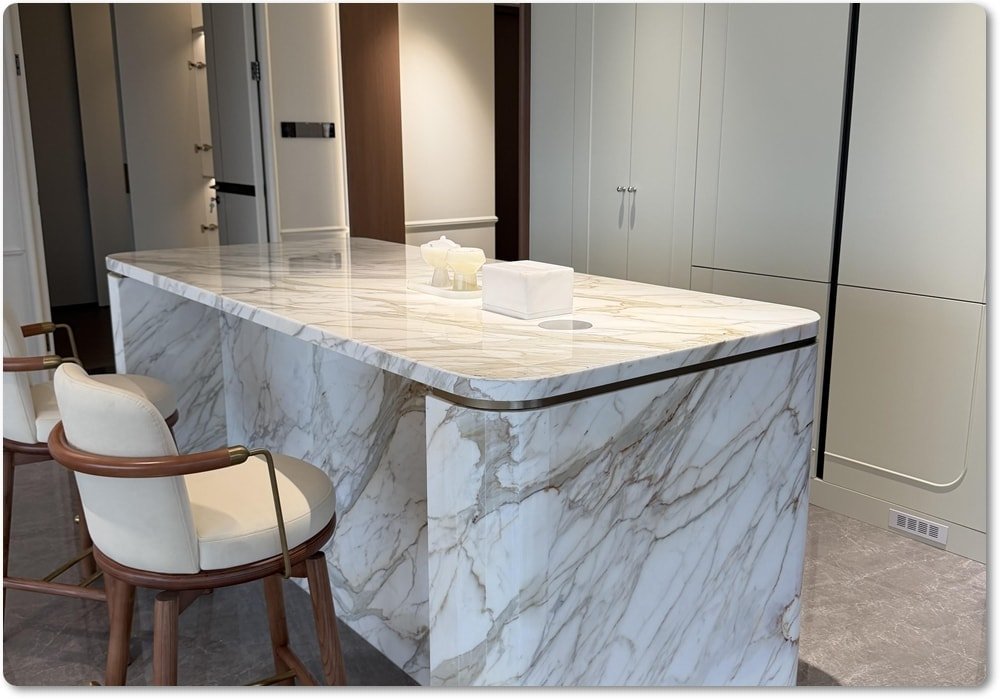
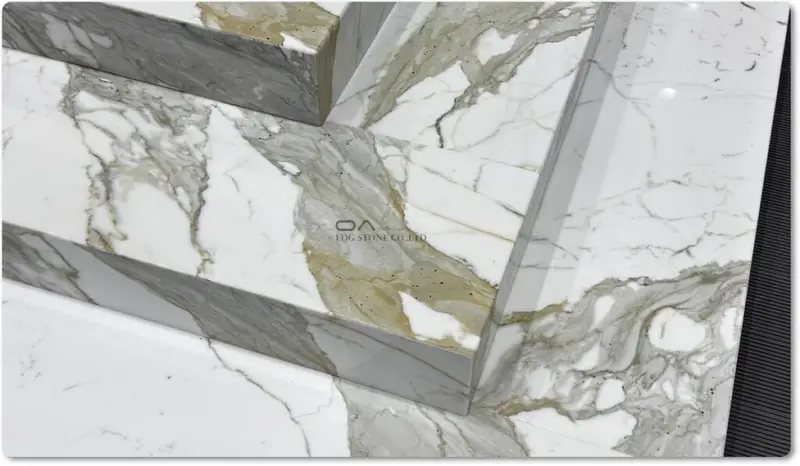
White granite remains the premier choice for high-traffic commercial spaces. Architects, civil engineers, and commercial developers favor this natural stone for its high compressive strength, low moisture absorption, and timeless aesthetics.
This white paper provides a comprehensive technical guide for specifying, testing, procuring, and installing white granite across four key commercial sectors:
                    WHITE GRANITE SPECIFICATION WORKFLOW
                                     │
 ┌───────────────────────────────────┼───────────────────────────────────┐
 │                                   │                                   │
 ▼                                   ▼                                   ▼
SECTION 1                           SECTION 2                           SECTION 3
Material Science & Testing          Geological Classifications          Commercial Applications
 ├── ASTM / EN Standards             ├── True Granites vs. Granulites    ├── Airports (High Traffic)
 ├── Petrographic Analysis           ├── Color Consistency Metrics       ├── Hotels (Stain Resistance)
 └── Durability Benchmarks           └── Mine-to-Site Sourcing           └── Offices & Luxury Housing
                                     │
 ┌───────────────────────────────────┼───────────────────────────────────┐
 │                                   │                                   │
 ▼                                   ▼                                   ▼
SECTION 4                           SECTION 5                           SECTION 6
Engineering & Fabrication           Global Supply Chains                Value Engineering
 ├── Anchorage Systems               ├── Quality Assurance (QA/QC)       ├── Cost Optimization
 ├── Surface Finishes                ├── Logistics & Packaging           ├── Lifecycle Cost Analysis
 └── Cut-to-Size Optimization        └── Case Study: EDG Stone           └── Maintenance Protocols
1. Materials Science, Physical Properties, and Testing Standards
Commercial granite selection relies on empirical data rather than aesthetic appeal alone. Structural engineers require strict compliance with international testing standards before approving stone cladding or flooring schedules.
Key Physical Properties and ASTM Benchmarks
The table below outlines the core physical properties of commercial-grade white granite alongside their standard test methods and minimum required thresholds.
| Physical Property | Test Method (ASTM) | Test Method (EN) | Required Threshold (Commercial) | Standard Unit |
| Compressive Strength | ASTM C170 | EN 1926 | $\ge 190$ | MPa |
| Flexural Strength | ASTM C880 | EN 12372 | $\ge 10.0$ | MPa |
| Absorption by Weight | ASTM C97 | EN 13755 | $\le 0.20$ | % |
| Density | ASTM C97 | EN 1936 | $\ge 2,600$ | $\text{kg/m}^3$ |
| Abrasion Resistance | ASTM C241 / C1353 | EN 14157 | $\ge 25$ | Index ($I_a$) |
| Slip Resistance (PVD) | ASTM C1028 | EN 14231 | $\ge 0.60$ (Wet/Dry) | COF |
Data Source: Standards adapted from ASTM C615 / C615M – Standard Specification for Granite Dimension Stone (ASTM International) and Dimension Stone Design Manual (Natural Stone Institute).
                       COMPRESSIVE STRENGTH SPECTRUM
                                  (MPa)
   0      40      80     120     160     200     240     280     320
   ├───┴───┼───────┴───┼───┴───┼───┴───┼───┴───┼───┴───┼───┴───┼───┤
   [  Concrete (30-50) ]
                   [   Marble (70-140)   ]
                                   [ Commercial White Granite (190-300) ]
Mineralogical Composition
White granite derives its distinct light color and physical performance from its mineral matrix:
                  MINERAL MATRIX OF COMMERCIAL WHITE GRANITE

                 Quartz (SiO2)
                 [25% - 35%]  ─── Structural Hardness (7 Mohs)
                      │
                      ├── Potassium Feldspar (K-Feldspar) [35% - 50%] ── White/Cream Background
                      │
                      ├── Plagioclase Feldspar [15% - 30%] ── Opalescence & Matrix Density
                      │
                      └── Accessory Biotite/Muscovite [< 5%] ── Dark Veining & Flecks
Quartz ($\text{SiO}_2$): $25\% – 35\%$ by volume. Provides a Mohs hardness of $7.0$, granting superior scratch resistance.
Potassium Feldspar (Microcline/Orthoclase): $35\% – 50\%$ by volume. Dictates the bright white-to-cream background tone.
Plagioclase Feldspar (Albite/Oligoclase): $15\% – 30\%$ by volume. Contributes to structural stability and low moisture absorption.
Accessory Minerals (Biotite, Muscovite, Magnetite): $< 5\%$ by volume. Creates characteristic grey or black flecks and veining.
Weathering, Acid, and Thermal Shock Resistance
High-density white granites exhibit extreme thermal stability. Dimensional change due to thermal expansion remains minimal:
Unlike calcium carbonate-based stones (such as marble or limestone), white granite resists chemical weathering from acid rain ($\text{pH} < 4.5$), atmospheric pollutants, and harsh industrial cleaning agents.
2. Geological Classifications and Global Sourcing
Not all commercial “white granites” are true geological granites. Many belong to metamorphic or plutonic rock families. Understanding these distinctions prevents unexpected material failures on site.
                  COMMERCIAL "WHITE GRANITE" CLASSIFICATIONS
                                     │
 ┌───────────────────────────────────┴───────────────────────────────────┐
 │                                                                       │
 ▼                                                                       ▼
TRUE PLUTONIC GRANITES                                  METAMORPHIC GRANULITES & GNEISSES
├── Uniform, granular grain structure                    ├── Foliated, directional veining
├── High mineral distribution stability                  ├── Dynamic visual patterns
└── Ideal for massive, multi-slab facades               └── Preferred for feature walls and countertops
    (e.g., Imperial White, Blanco Alpha)                    (e.g., Viscont White, Colonial White)
True Granites vs. Granulites and Gneisses
Plutonic Granites (e.g., Blanco Alpha, Imperial White): Formed via slow cooling of intrusive magma. They exhibit isotropic mechanical properties and consistent granular textures.
Granulites and Gneisses (e.g., Viscount White, Colonial White): Formed under high pressure and temperature. They display directional veining, foliation, and dynamic patterns. Structural engineers must evaluate anisotropic strength properties when anchoring these stones.
Material Consistency and Shading Management
Commercial projects requiring over $10,000 \text{ m}^2$ of natural stone need strict color range controls:
Range Samples: Establish three control sets—Light (Limit A), Target (Limit B), and Dark/Veined (Limit C).
Block Selection: Source blocks from a single quarry bench to maintain mineral uniformity.
Spectrophotometric Scanning: Measure $L^*a^*b^*$ color space values on polished slabs to keep delta variations within acceptable project tolerances ($\Delta E^* < 1.5$).
3. Commercial Application Protocols
High-Traffic Flooring: Airports, Transit Hubs, and Malls
High-footfall environments require materials that maintain structural integrity and slip resistance under constant abrasion.
                    AIRPORT FLOOR LINING SYSTEM (HIGH-TRAFFIC)

       [ Hydrophobic & Oleophobic Sealer ]  ── Surface Protection Layer
    ───────────────────────────────────────────
       [ 20mm/30mm Flamed+Brushed Granite ]  ── High Abrasion Resistance (Ia > 25)
    ───────────────────────────────────────────
       [ C2TE S1/S2 Polymer-Modified Mortar ] ── High-Bond Structural Adhesive
    ───────────────────────────────────────────
       [ Unbonded Reinforced Screed Bed ]  ── Load Distribution Layer
    ───────────────────────────────────────────
       [ Structural Concrete Subfloor ]    ── Foundation Substrate
Recommended Finish: Flamed and Brushed, Waterjet, or Bush-Hammered.
Min. Thickness: $20\text{ mm}$ for indoor pedestrian corridors; $30\text{ mm}$ for luggage zones and vehicle traffic areas.
Maintenance Requirements: Apply deep-penetrating oleophobic impregnators to prevent liquid stains from oil, coffee, and rubber transfer.
Hotel Lobbies, Wall Cladding, and Receptions
Luxury hotels demand flawless visual appearance combined with stain resistance:
                    VENTILATED CURTAIN WALL CLADDING DETAIL

          [ Exterior Environment ]
                    │
                    ▼
          ┌───────────────────┐
          │  30mm White       │ ── Low Moisture Absorption (<0.20%)
          │  Granite Slab     │
          └─────────┬─────────┘
                    │  (Undercut Anchor / Kerf System)
          ┌─────────┴─────────┘
          │  316 Stainless Steel Bracket
          └─────────┬─────────┘
                    │  (Air Cavity: 40-60mm)
          ┌─────────┴─────────┘
          │  Thermal Insulation Board (Mineral Wool)
          └─────────┬─────────┘
                    │
          ┌─────────┴─────────┘
          │  Reinforced Concrete / Steel Stud Structure
          └───────────────────┘
Recommended Finish: Polished, Honed, or Leathered.
Anchor System: Undercut mechanical anchors or kerf-cut stainless steel brackets. Avoid structural adhesives alone for exterior facades.
Office Interiors, Lift Lobbies, and Washrooms
Lift Lobbies: Use full-height vertical slabs with matched grain patterns (book-matching or slip-matching).
Restroom Countertops: Seal with fluoropolymer impregnators to prevent water spotting and chemical etching from liquid soaps.
4. Engineering, Anchoring, and Surface Finishes
Mechanical Anchoring Systems
For exterior cladding, structural engineers design mechanical supports based on local wind load calculations, seismic zones, and slab weight.
                      UNDERCUT ANCHOR MECHANICS (EXPANSION)

                   Stone Slab (30mm)
                 ┌───────────────────┐
                 │    ┌─────────┐    │
                 │    │  Bolt   │    │
                 │    └────┬────┘    │
                 │   /     │     \   │  <-- Expansion Sleeve expands into
                 │  /      │      \  │      drilled undercut cavity
                 └─┴───────┴───────┴─┘
Undercut Anchor (e.g., Fischer FZP-N): Creates stress-free anchorage inside a conical drilled hole. Offers higher load capacity than traditional pin systems.
Pin and Mortar Systems: Suitable for low-rise installations and interior wet-hung wall applications.
Gravity and Restraint Brackets: Distribute weight load across continuous horizontal angles attached to primary structures.
Surface Finishes and Performance Characteristics
                      SURFACE FINISH SLIP RESISTANCE (COF)

   Polished         │ ░░░░░ 0.30 - 0.40 (Dry Only)
   Honed            │ ░░░░░░░░░ 0.50 - 0.55
   Leathered        │ ░░░░░░░░░░░ 0.55 - 0.60
   Bush-Hammered    │ ░░░░░░░░░░░░░░░░░ 0.65 - 0.75
   Flamed + Brushed │ ░░░░░░░░░░░░░░░░░░░░ 0.70 - 0.85
                    └───────────────────────────────────────
                      0.0  0.2  0.4  0.6  0.8  1.0  COF (Wet)
Polished: High gloss, highlights natural colors. Ideal for walls, reception counters, and low-traffic indoor floors.
Honed: Smooth matte finish. Reduces glare in sunlit atrium floors and provides moderate slip resistance.
Flamed (Thermal): High-heat flame bursts surface crystals, creating a rough texture. Essential for outdoor paving.
Flamed + Brushed: Blasts the surface with heat, then uses abrasive brushes to soften sharp edges. Smooth to touch while retaining a slip-resistant rating ($\text{PVD} \ge 36$).
5. Global Supply Chain and Quality Assurance
Managing high-volume procurement requires rigorous quality assurance protocols across every step of the supply chain.
                   GLOBAL SUPPLY CHAIN QUALITY CONTROLS

  [ Block Quarrying ]  ── ASTM C97 Density & Absorption Pre-Screening
           │
           ▼
  [ Slab Processing ]  ── Thickness Tolerance Checks (+/- 1.0mm)
           │
           ▼
  [ Factory QA/QC ]   ── Spectrophotometer Color Sorting (Delta E < 1.5)
           │
           ▼
  [ Packaging ]        ── ISPM-15 Heat-Treated Fumigated Wooden Crates
           │
           ▼
  [ Port Logistics ]   ── Moisture Containment & Desiccant Deployment
Quarry Selection and Block Grading
Grade A Blocks: Free of open fissures, rust lines (iron oxidation spots), or soft mineral knots.
Yield Planning: Optimize block gang-saw cuts to produce maximum usable surface area with uniform grain alignment.
Packaging, Crating, and Maritime Logistics
Crating: Use fumigated, heat-treated solid timber crates complying with ISPM-15 standards.
Corrosion Protection: Wrap polished surfaces in polyethylene film with moisture-absorbing desiccants inside the container.
Container Loading: Secure crates using heavy-duty polyester strapping and timber bracing to prevent shifting during ocean transport.
6. Manufacturing Case Study: EDG Stone
Global Supply Chain Integration
EDG Stone operates as a global Quartzite Slabs & Countertops Manufacturer and Exporter, supplying commercial developments worldwide.
                    EDG STONE INTEGRATED PROCUREMENT MODEL

   Raw Block Quarrying    ── Direct Quarry Management & Block Selection
           │
           ▼
   Precision Fabrication  ── Italian Breton CNC & Waterjet Processing
           │
           ▼
   Global Logistics       ── Export to 50+ Countries with Full ASTM/EN Certs
Project Profile: International Airport Terminal Expansion
Scope: $42,000 \text{ m}^2$ of heavy-duty, high-footfall flamed and brushed white granite flooring and wall cladding.
Execution:
Material Selection: Sourced high-density white granite blocks with low iron content to prevent rust discoloration.
Precision Cutting: Used automated gang-saws and multi-head polishing lines to maintain strict dimensional tolerances ($\pm 1.0\text{ mm}$).
Testing: Conducted ASTM C170 and C880 batch testing, verifying compressive strengths above $210\text{ MPa}$.
Logistics: Shipped 180 Forty-Foot High Cube (40HQ) containers on schedule with zero breaking or damage during transit.
7. Value Engineering and Maintenance Protocols
Cost Optimization Strategies
Standardize Module Sizes: Specify $600 \times 600 \times 20\text{ mm}$ or $800 \times 800 \times 20\text{ mm}$ slabs to reduce material waste during factory production.
Select Suitable Finishes: Use flamed or shot-blasted finishes for outdoor areas. These finishes require less processing time than multi-stage fine honing or high polishing.
Local Stone Matching: Pair premium white granites with regional variations for hidden or low-visibility areas to reduce overall project costs.
                     TOTAL COST OF OWNERSHIP (20-YEAR SPAN)

   Natural White Granite   │ [ Capital Cost ] [ Min. Maint. ] ── Lowest TCO
   Engineered Stone        │ [ Capital Cost ] [ Mid. Maint. ] [ Replacement Risk ]
   Cast Porcelain Tiles    │ [ Low Cap Cost ] [ High Maint. ] [ Frequent Repairs ]
                           └─────────────────────────────────────────────────
Preventive Maintenance and Care Schedule
Daily: Clean with neutral pH cleaners ($\text{pH } 7.0 – 8.5$). Avoid acidic or ammonia-based formulas.
Annually: Perform water-drop testing to verify sealer integrity. Reapply penetrating fluoropolymer sealers if water absorbs within 15 minutes.
Stain Remediation: Use poultice pastes containing sodium bicarbonate and hydrogen peroxide to lift deeply absorbed oil or organic stains without damaging the underlying quartz matrix.
Technical Knowledge Base & FAQ (Structured Schema)
Entity Cluster Knowledge Model
What is the minimum recommended thickness for white granite floor tiles in high-traffic commercial spaces?
Answer
The minimum recommended thickness is 20 mm for indoor pedestrian spaces (e.g., hotel lobbies, office corridors) and 30 mm for heavy-footfall areas subjected to rolling loads or vehicular traffic (e.g., airport terminals, public transit plazas).
Evidence
Per the Dimension Stone Design Manual (DSI, 2023) and ASTM C615 standards, stone slabs must withstand minimum flexural stresses ($\ge 10.0\text{ MPa}$) under heavy dynamic loading. Thin-set applications under $20\text{ mm}$ risk cracking under high point loads or subfloor movement.
Summary
Always specify a minimum of $20\text{ mm}$ thickness for commercial indoor floors and $30\text{ mm}$ for exterior or high-impact zones.
How do you prevent iron-spot rust oxidation on exterior white granite facades?
Answer
Prevent rust spots by selecting granite blocks with low biotite and pyrite content, applying deep-penetrating hydrophobic sealers, and maintaining an air cavity in ventilated curtain wall designs.
Evidence
Petrographic analysis under ASTM C295 identifies free iron sulfides ($\text{FeS}_2$) within stone matrices. When exposed to water and oxygen, these minerals oxidize into iron hydroxide, creating yellow-brown rust stains on light stone surfaces.
Summary
Verify mineral composition through petrographic testing and apply six-side impregnating sealers before installation.
Why is white granite preferred over white marble for airport flooring?
Answer
White granite offers higher compressive strength ($\ge 190\text{ MPa}$ vs. $\approx 70 – 100\text{ MPa}$ for marble), superior scratch resistance ($7.0$ Mohs vs. $3.0$ Mohs), and excellent resistance to acidic cleaning agents.
Evidence
Standard airport foot traffic generates continuous mechanical wear and exposure to spilled acidic liquids. Marble, composed primarily of calcite ($\text{CaCO}_3$), chemically reacts with acidic substances and etches easily, whereas quartz-rich granite ($\text{SiO}_2$) remains unreactive.
Summary
Granite provides superior mechanical performance and lower life-cycle maintenance costs in high-traffic commercial hubs.
What anchor depth is required for undercut mechanical anchoring on 30mm granite facades?
Answer
Undercut anchors typically require a drilling depth of 15 mm to 20 mm into a $30\text{ mm}$ slab, maintaining a safety margin of at least $10\text{ mm}$ of solid stone behind the hole base.
Evidence
Structural calculations following ASTM C1354 (Strength of Individual Stone Anchorages) confirm that undercut anchors generate internal expansion forces distributed deep within the stone matrix, preventing surface spalling under wind loads exceeding $3.0\text{ kPa}$.
Summary
Engineers must verify anchor embedment depths using batch-specific pull-out tests before wall installation.
Structural Internal Linking Matrix
To explore related technical documentation, consult the following guides in our engineering knowledge base:
Comparing Natural Granite and Quartzite for High-Traffic Applications
Ventilated Exterior Curtain Wall Mechanical Anchoring Systems
Flamed and Brushed Surface Finishes for Slip-Resistant Paving
Selecting High-Density Stone for International Airport Terminals
Luxury Hotel Lobby Design: Sourcing Large Format Granite Slabs
Cost Optimization Strategies for Bulk Dimension Stone Procurement
Preventive Maintenance Manual for Commercial Natural Stone Floors
Global Supply Chain Risk Mitigation for Multi-Tier Development Projects
Seismic Design Considerations for Heavy Stone Masonry Facades
Environmental Product Declarations (EPD) for Natural Stone in LEED Projects
Authority Citations & Data Sources
ASTM International: ASTM C615/C615M – Standard Specification for Granite Dimension Stone. https://www.astm.org/c0615_c0615m-18.html
Natural Stone Institute (NSI): Dimension Stone Design Manual, Version 2023. https://www.naturalstoneinstitute.org/
European Committee for Standardization (CEN): EN 1469: Natural Stone Products – Slabs for Cladding – Requirements. https://www.cen.eu/
Deutscher Naturwerkstein-Verband e.V. (DNV): Building with Natural Stone: Technical Guidelines for Exterior Cladding.
U.S. Green Building Council (USGBC): LEED v4.1 Material and Resources Credit Guide for Natural Stone. https://www.usgbc.org/
International Code Council (ICC): International Building Code (IBC) Section 1404: Exterior Wall Coverings. https://www.iccsafe.org/
National Tile Contractors Association (NTCA): Reference Manual for Heavy Commercial Flooring Applications.
ISO Technical Committee TC 218: ISO 22970: Dimension Stone Test Methods. https://www.iso.org/
American Society of Civil Engineers (ASCE): ASCE 7-22 Minimum Design Loads for Buildings and Other Structures (Wind Load Calculations for Cladding).
British Standards Institution (BSI): BS 8298-2: Code of practice for the design and installation of natural stone cladding and lining.