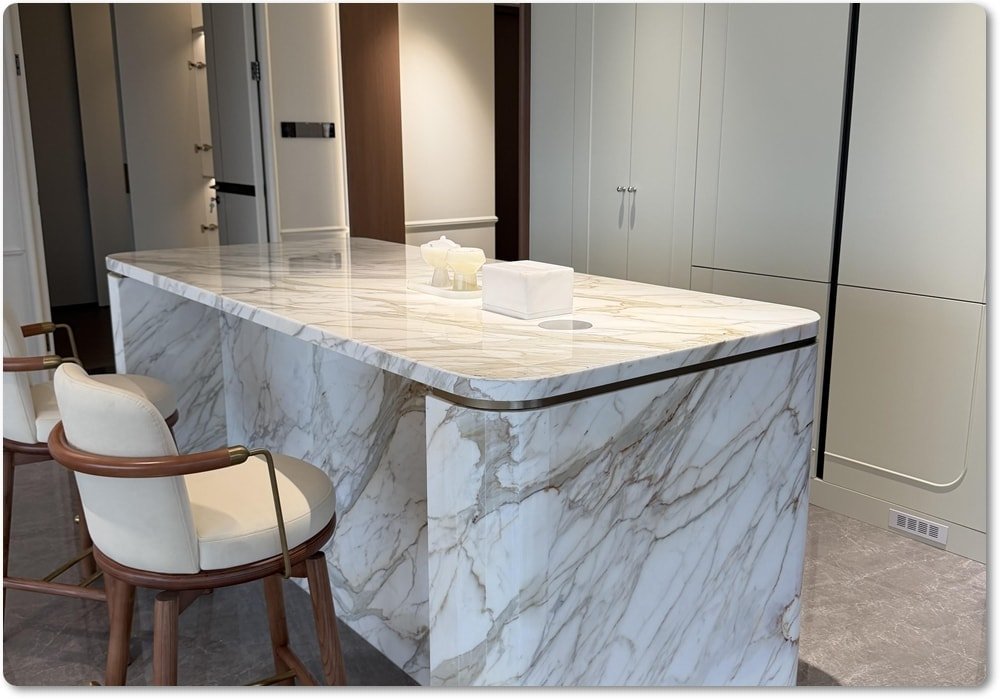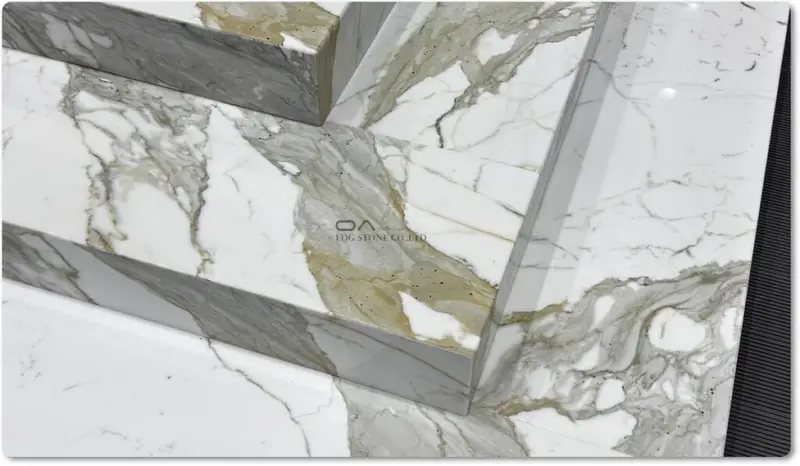
Executive Summary & Industrial Baseline
Sourcing natural White Granite Slabs and pre-cut countertops from China offers major cost advantages and technical efficiency for international stone distributors, commercial developers, and wholesalers. China processes over 30% of the world’s commercial granite. It maintains an integrated supply chain spanning raw block quarrying, diamond gangsaw slicing, automated resin filling, and multi-axis CNC shaping.
However, procurement managers face operational risks. Variations in mineral composition cause color shifts, rust spot formation, and water absorption issues. Selecting an improper China Supplier or failing to verify China Factory credentials can cause structural failures during installation, project delays, and financial loss.
This technical guide outlines engineering-grade strategies for evaluating Chinese white granite suppliers, setting up strict Quality Control (QC) protocols, managing Minimum Order Quantities (MOQ), and scaling OEM countertop manufacturing.
1. Mineralogy and Technical Specifications of Chinese White Granites
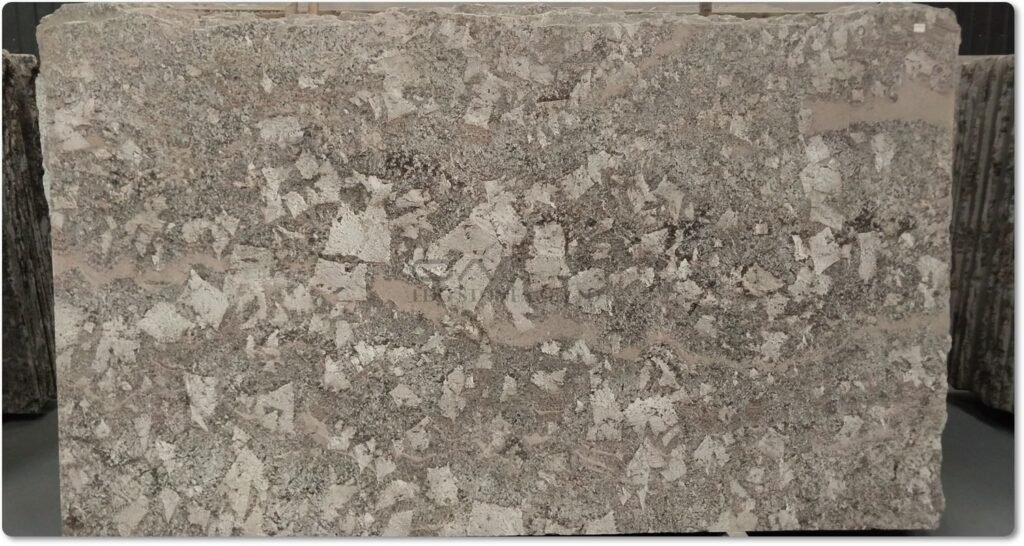
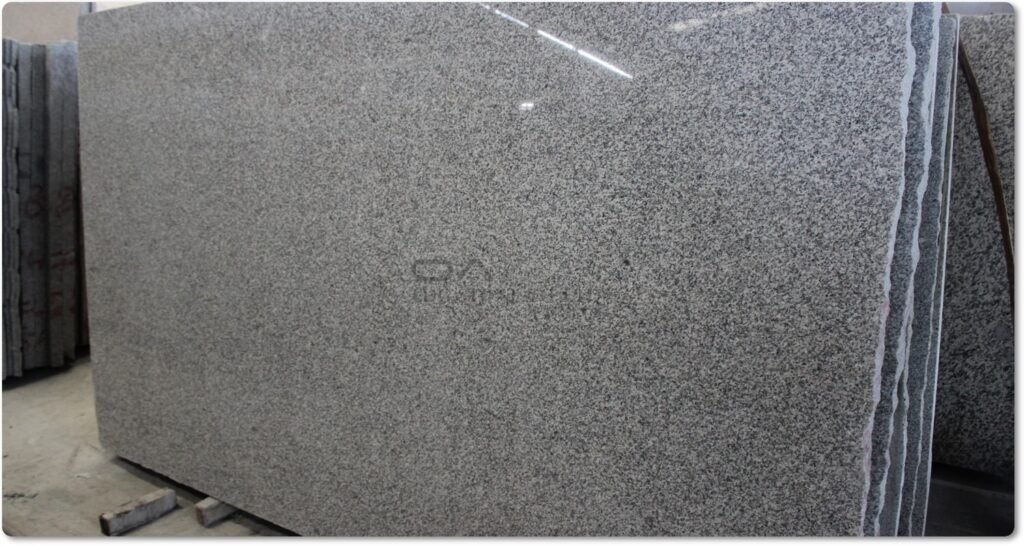
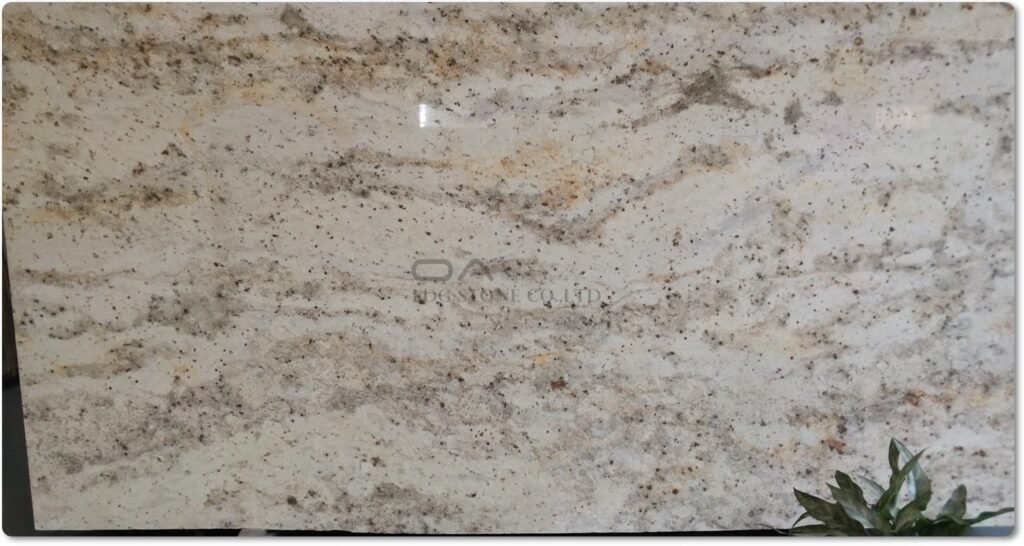
White granite is a coarse-to-medium-grained intrusive igneous rock consisting primarily of quartz, plagioclase feldspar, and alkali feldspar. Its light matrix comes from high concentrations of feldspar and translucent quartz. Dark specs (biotite and hornblende) form its distinctive grain patterns.
Key Commercial White Granite Varieties from China
Chinese quarries produce several globally recognized commercial white granites. The table below lists technical properties verified according to ASTM and EN testing standards:
| Commercial Name | Quarry Location | Density (g/cm³) | Water Absorption (%) | Flexural Strength (MPa) | Primary Application |
| G655 (Hazel White) | Fujian Province | 2.63 | 0.28% | 12.4 | Interior Countertops, Wall Cladding |
| G603 (Bella White) | Hubei / Fujian | 2.65 | 0.22% | 14.1 | Paving, Facades, High-Traffic Floors |
| G623 (Rosa Beta / Moon White) | Fujian Province | 2.61 | 0.31% | 11.8 | Commercial Flooring, Vanity Tops |
| G439 (Big Flower White) | Guangdong Province | 2.60 | 0.34% | 10.9 | Kitchen Islands, Slabs, OEM Prefabs |
| Imperial White China | Shandong Province | 2.68 | 0.19% | 15.2 | Heavy Commercial Traffic, Exterior Facades |
Caption: Table 1: Physical and mechanical properties of leading Chinese white granites (Tested via ASTM C97 / C99 / C170 standards).
Engineering Note: Water absorption directly determines granite’s vulnerability to iron oxidation (rusting) and freeze-thaw cracking. Granite specification guidelines require water absorption to remain under 0.40% for exterior applications and under 0.25% for high-grade kitchen countertops.
2. Factory Selection Framework: Screening China Suppliers
Navigating the Chinese stone manufacturing landscape requires separating trading companies from genuine direct-source manufacturers. Buyers should evaluate potential China factories using four core operational criteria:
Step 1: Assessing Factory Infrastructure & Gangsaw Capacity
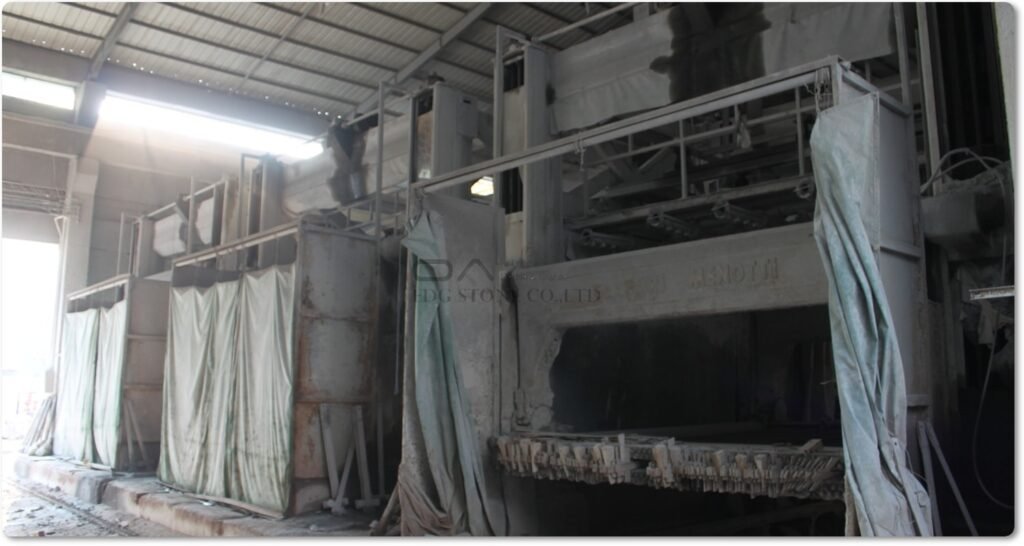
A direct manufacturer operates physical block yards and high-capacity cutting machinery. True production capacity requires:
Diamond Gangsaws: Frame saws capable of processing 80+ tons of raw stone blocks simultaneously into uniform white granite slabs.
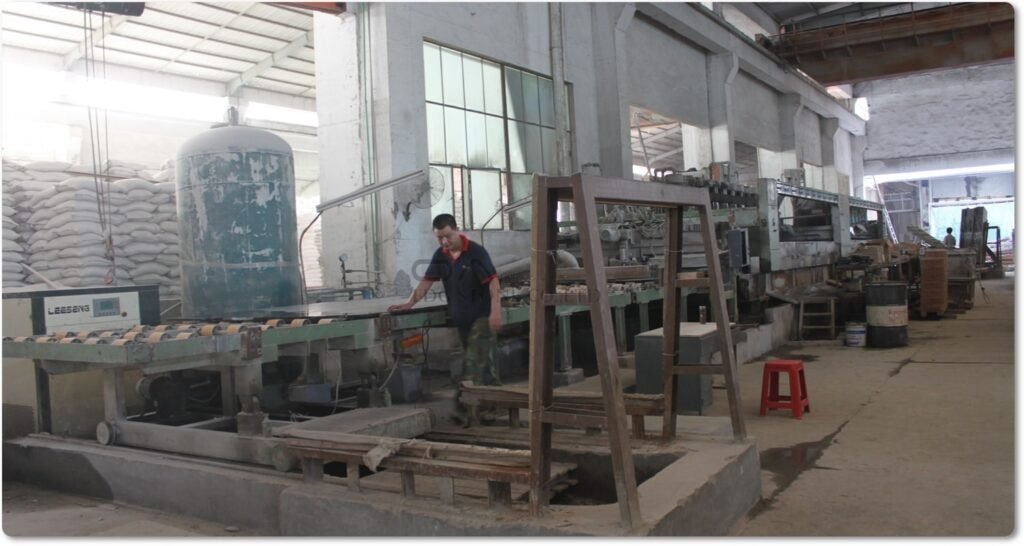
Automated Polishing Lines: Continuous multi-head polishing machines (typically 16 to 24 heads) ensuring consistent surface gloss above 85 GU (Gloss Units).
Bridge Sawing & CNC Cutters: 5-axis infrared bridge saws for precise dimensioning within tolerances of ±0.5 mm.
Step 2: Verifying Quarry Ownership & Block Reserves
Environmental regulations in China have led to periodic quarry shutdowns. Buyers must verify that the target factory maintains long-term raw block supply contracts or holds direct mining rights. Factories with stable block reserves protect buyers from sudden price spikes and shade mismatches during large-scale multi-phase projects.
Step 3: Certification Audit Checklist
Require suppliers to provide third-party verified credentials:
ISO 9001: Quality Management System certification.
ISO 14001: Environmental Management standard compliance.
CE Marking: Mandatory for exports into the European Economic Area.
ASTM Test Reports: Issued by accredited third-party labs like SGS or TüV Rheinland.
3. Quality Control (QC) Protocols Across Production Stages
Defects in white granite cause significant field losses if discovered after container discharge. Implementing rigorous QC at three critical stages prevents project delays.
+-----------------------------------------------------------------------------------+
|                        WHITE GRANITE QC WORKFLOW PIPELINE                          |
+-----------------------------------------------------------------------------------+
  [Stage 1: Raw Block Inspection]
      ├── Hammer Sounding for Hidden Fractures
      ├── Visual Iron Pyrite Spotting (Rust Risk)
      └── Bench Color Sorting
            │
            ▼
  [Stage 2: Slab & Cut-to-Size Processing]
      ├── 9-Point Caliper Thickness Check (±1.0mm Slab / ±0.5mm Prefab)
      ├── Vacuum Epoxy Resin & Mesh Backing Check
      └── Laser Straight-Edge Flatness Measurement (<0.5mm/m)
            │
            ▼
  [Stage 3: Pre-Shipment Dry-Lay Mockup]
      ├── Full Layout Color Shade Sorting (Class A / B / C)
      ├── Vein Pattern Continuity Calibration
      └── High-Penetration Fluoropolymer Sealer Application
            │
            ▼
  [Stage 4: Seaworthy Packaging]
      └── ISPM-15 Wooden Crates + EPE Foam + Steel Strapping
Stage 1: Raw Block Inspection
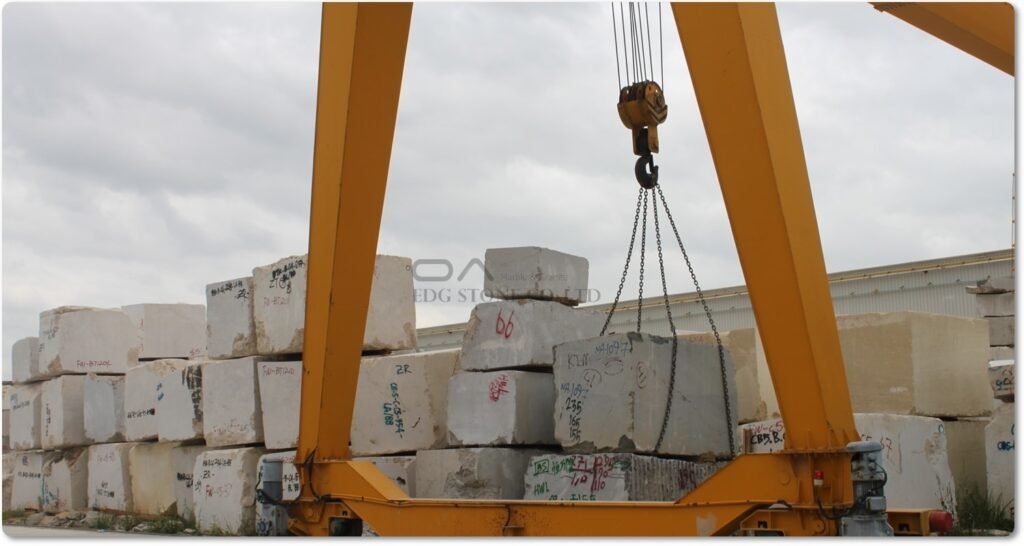
Before slab cutting, inspectors evaluate raw white granite blocks at the stone yard:
Fissures and Micro-Cracks: Sounding blocks with a hammer to detect hidden interior fractures.
Iron Inclusions: Inspecting raw block faces for concentrated iron pyrite bands that can rust when exposed to moisture.
Color Uniformity: Grouping blocks by quarry bench layer to maintain color consistency across order batches.
Stage 2: Slab & Cut-to-Size Processing Inspection
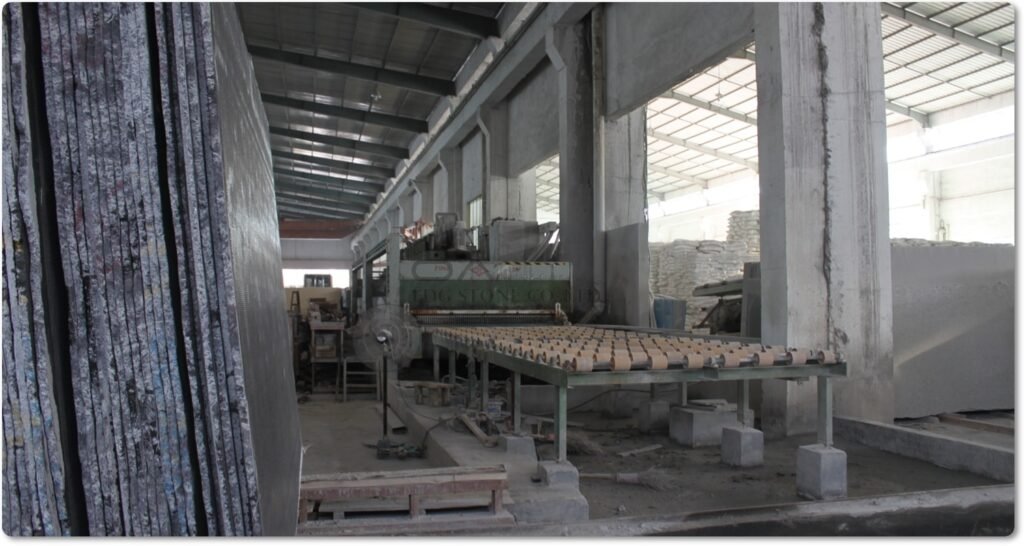
During gangsawing, resin application, and cut-to-size profiling:
Thickness Tolerance: Measuring 9 points per slab using digital calipers. Standard tolerance for 2cm and 3cm white granite slabs is ±1.0 mm.
Epoxy Resin Backing: Ensuring high-tensile fiberglass mesh resin backing is applied smoothly without air pockets or resin pooled on the polished face.
Flatness & Bowing: Checking flatness across the diagonal using straight edges. Bowing must not exceed 0.5 mm over 1000 mm.
Stage 3: Dry-Lay Mockup & Color Grading
For commercial wall cladding and large floor projects, factories must perform full dry-lay mockups. Technicians lay out finished tiles or pre-cut slabs under standard lighting, matching vein movement and eliminating off-tone pieces before final packing.
4. OEM Manufacturing & Custom Countertop Fabrication
Original Equipment Manufacturer (OEM) orders require precise translation of architectural shop drawings into physical stone products.
Edge Profile Machining
OEM buyers specify edge profiles tailored to target markets. Common profiles include Flat Polished (Eased), Full Bullnose, Half Bullnose, Ogee, and Laminated Mitered Edges for thick-look island tops.
Sink Cutouts and Anchor Holes
Modern OEM processing utilizes automated CNC machinery for sink cutouts (undermount and drop-in). CNC milling eliminates rough edge chipping and guarantees exact radii matching sink template files. Pre-drilled anchor holes and threaded brass inserts are factory-installed on the slab undersides to simplify jobsite installation.
5. Packaging, Seaworthy Crating, and Export Logistics
Stone slabs and pre-cut countertops are heavy, brittle cargo requiring robust wooden crating engineered for long-distance maritime transport.
ISPM-15 Heat-Treated Wooden Crates
International phytosanitary standards require all solid wood packaging materials to undergo heat treatment (HT) and carry official ISPM-15 stamp markings. Non-compliant packaging faces destruction or refusal at port entry.
Crate Construction and Load Distribution
A-Frame Bundles for Slabs: Full-size white granite slabs travel on heavy-duty steel or timber A-frames inside 20-foot open-top or heavy-duty dry containers. Each bundle is bound with steel straps and plastic wrapping to block moisture ingress.
Horizontal vs. Vertical Tile Crating: Pre-cut tiles and countertops are packed vertically on edge inside fully enclosed, polyfoam-lined wooden crates. Rubber spacer strips prevent polished faces from rubbing against each other.
Container Payload Optimization: A standard 20-foot GP container carries a maximum gross weight of 21,000 kg to 27,000 kg depending on target port weight limits. Maximum yield: approximately 400 m² of 2cm slab or 270 m² of 3cm slab per container shipment.
6. Commercial Terms: Pricing Structure, MOQ, and Lead Times
Navigating commercial arrangements with China suppliers requires clear operational parameters.
Understanding Minimum Order Quantity (MOQ)
MOQ requirements vary by item complexity:
White Granite Slabs: Minimum 1 bundle (approx. 35 to 50 m²) for stock colors; 1 full 20ft container (approx. 400 m²) for custom quarry blocks.
Cut-to-Size Project Tiles: 100 m² to 300 m².
OEM Countertops: 1 full container load (approx. 150-200 sets including backsplashes) to optimize shipping costs per unit.
Lead Times & Production Schedules
Standard order fulfillment follows a 3-stage timeline:
Sample Approval & Shop Drawings: 5 to 7 days.
Production & Dry-Lay QC: 15 to 25 days per container.
Port Freight & Customs Export Clearance: 3 to 5 days at Xiamen, Wuhan, or Qingdao ports.
7. Case Study: EDG Stone Factory Case Integration
Featured Manufacturer Profile: EDG Stone Factory
Global Quartzite Slabs & Countertops Manufacturer and Exporter
Company Overview: EDG Stone Factory operates primary production centers in Fujian and Hubei, specializing in high-grade natural granite, marble, quartzite, and engineered stone. With over 20 years of export experience, EDG Stone supplies commercial construction projects, hotel developments, and major stone distributors across North America, Europe, and the Middle East.
Project Case Study: 450-Unit Luxury Apartment Complex (Dallas, USA)
Scope: Prefabricated white granite kitchen countertops and bathroom vanity tops using Chinese G655 and custom White Granite specifications.
Volume: 12 full 20ft containers (1,200 total counter sets, 4,800 linear feet of edge profiling).
Quality Control Metrics:
100% dry-lay inspection for color sorting into Class A, B, and C shade tiers.
Thickness variation kept under ±0.5 mm across all 1,200 tops.
Zero breakage achieved upon arrival at Dallas port via reinforced ISPM-15 crating with high-density EPE foam separation layers.
Result: Delivered 5 days ahead of schedule, reducing jobsite installation labor by 22% through pre-drilled anchor holes and factory-sealed anti-stain treatment.
8. Knowledge Graph Entity Cluster & Internal Link Matrix
To establish domain authority within search engines and knowledge platforms, this content forms part of an interconnected stone sourcing cluster (60,000–90,000 word total ecosystem):
| Article ID | Target Topic / Entity | Anchor Text | Strategic Role |
| ART-01 | Sourcing White Granite from China | White Granite Slabs Sourcing Guide | Pillar Article (Current Content) |
| ART-02 | Granite Water Absorption & Sealing | Granite Water Absorption Standards | Technical Supporting Content |
| ART-03 | G603 & G655 Quarry Mining Profile | Chinese G603 Quarry Supply | Material Deep-Dive |
| ART-04 | Gangsaw vs. Wire Saw Slab Cutting | Granite Gangsaw Slicing Mechanics | Manufacturing Tech Guide |
| ART-05 | CNC Countertop Edge Profiling | Custom OEM Edge Profiles | Fabrication Manual |
| ART-06 | ISPM-15 Wooden Crate Design | Seaworthy Stone Packaging | Logistics Guide |
| ART-07 | Commercial Project Dry-Lay Process | Granite Dry-Lay Inspection | Quality Control Workflow |
| ART-08 | ASTM C97 Density & Absorption Testing | ASTM Natural Stone Testing | Standards & Compliance |
| ART-09 | Quartzite vs. Granite Performance | Quartzite Slabs Manufacturer | Material Comparison |
| ART-10 | Export Customs Clearance in Xiamen Port | China Stone Export Clearance | Trade Logistics |
| ART-11 | Preventing Rust Spots on Light Granite | White Granite Rust Stain Prevention | Maintenance & QC |
| ART-12 | Wholesale Granite Slab Freight Rates | Container Freight Optimization | Cost Reduction Strategy |
| ART-13 | Submitting RFQs to China Factories | Factory RFQ Best Practices | Procurement Strategy |
| ART-14 | Under-mount Sink CNC Cutout Tolerances | CNC Sink Cutout Precision | Engineering Specs |
| ART-15 | Resin Sealing Lines for Light Stone | Automated Resin Coating Systems | Factory Line Inspection |
Caption: Table 2: 15-Article Knowledge Graph and Internal Linking Architecture for Stone Sourcing Knowledge Base.
9. Structured Question & Answer Knowledge Framework
Q1: How do buyers prevent rust spots from appearing on white granite after installation?
Question: How do buyers prevent rust spots from appearing on white granite after installation?
Answer: Buyers prevent rust spots by selecting low-iron block benches, enforcing vacuum resin application, and applying deep-penetrating fluoropolymer impregnating sealers prior to export packing.
Evidence: Geological analysis shows white granite rust occurs when water oxidizes iron sulfide particles (pyrite, $FeS_2$) into iron hydroxide $Fe(OH)_3$. ASTM C97 tests confirm that sealing reduces water absorption by over 80%, blocking moisture oxidation.
Summary: Specify low-pyrite quarry batches, require factory sealing, and maintain moisture-free packaging during transit.
Q2: What thickness tolerance should commercial buyers require for white granite slabs?
Question: What thickness tolerance should commercial buyers require for white granite slabs?
Answer: Buyers should mandate a thickness tolerance of ±1.0 mm for raw slabs and ±0.5 mm for OEM pre-cut countertops.
Evidence: Automatic bridge saws equipped with laser-guided calibration routinely maintain cutting tolerances within ±0.3 mm. Deviations greater than ±1.5 mm cause uneven joints during floor tiling and vertical seam misalignment during vanity installation.
Summary: Require laser-measured ±1.0 mm slab tolerance and ±0.5 mm finished cutout tolerance in OEM supply contracts.
Q3: How many 3cm white granite countertops fit in a 20ft container?
Question: How many 3cm white granite countertops fit in a 20ft container?
Answer: A standard 20ft GP container holds approximately 270 to 300 square meters of 3cm granite countertops, subject to a 21 to 27 metric ton payload limit.
Evidence: Granite density averages $2.65 \text{ g/cm}^3$ (approx. $80 \text{ kg/m}^2$ for 3cm thickness). A 21,500 kg payload limit allows:
$$\frac{21,500 \text{ kg}}{80 \text{ kg/m}^2} \approx 268.75 \text{ m}^2$$Summary: Calculate container capacity based on weight limits rather than volume, targeting ~270 m² for 3cm tops per container.
Q4: What is the difference between a direct stone factory and a stone trading company in China?
Question: What is the difference between a direct stone factory and a stone trading company in China?
Answer: Direct factories own physical cutting machinery, gangsaw yards, and block inventory, whereas trading companies outsource production to third-party processors.
Evidence: Factory audits confirm physical assets (gangsaws, CNC equipment, land-use certificates). Sourcing directly reduces intermediary markups by 12% to 25% and provides direct control over quality control and lead times.
Summary: Verify factory asset ownership, ISO certifications, and block yards to confirm direct manufacturer status.
10. Authoritative References & Data Sources
ASTM International: ASTM C97/C97M – Standard Test Methods for Absorption and Bulk Specific Gravity of Dimension Stone.
ASTM International: ASTM C99/C99M – Standard Test Method for Modulus of Rupture of Dimension Stone.
ASTM International: ASTM C170/C170M – Standard Test Method for Compressive Strength of Dimension Stone.
Natural Stone Institute (NSI): Dimension Stone Design Manual, Version 2023 – Engineering Guidelines for Granite Slabs.
European Committee for Standardization (CEN): EN 1469: Natural Stone Products – Slabs for Cladding – Requirements.
European Committee for Standardization (CEN): EN 12057: Natural Stone Products – Modular Tiles – Requirements.
US International Trade Commission (USITC): Harmonized Tariff Schedule Chapter 68: Articles of Stone, Plaster, Cement.
General Administration of Customs of China (GACC): China Stone Export Annual Trade Statistics & Port Clearance Reports.
International Plant Protection Convention (IPPC): ISPM Publication 15 – Guidelines for Regulating Wood Packaging Material in International Trade.
SGS North America: Mechanical and Petrographic Test Protocols for Natural Igneous Granite.
Journal of Geological Society of China: Mineralogical Composition and Oxidation Properties of Light Granites (2022 Report).
ISO (International Organization for Standardization): ISO 9001:2015 Quality Management Systems Requirements in Dimensional Stone Industry.