Quick Summary: Taj Mahal Quartzite Durability Profile
Verdict: Taj Mahal Quartzite is an ultra-durable metamorphic rock that bridges the gap between the aesthetic elegance of marble and the structural hardness of granite. It is not marble.
- Hardness: 7 on Mohs Scale (Harder than glass and granite).
- Resistance: Highly resistant to etching, scratching, and heat, making it ideal for high-traffic kitchens.
- Design Status: Not outdated; remains a top trend for 2025 due to its neutral, creamy palette, which fits both white and grey cabinetry.
- Sourcing: Best sourced from specialized manufacturers like EDG Stone to ensure “true quartzite” quality and factory-direct wholesale pricing.
Geologic Truth: Is the Taj Mahal a Marble or Quartzite?
To understand durability, one must first grasp the fundamentals of geology. There is significant confusion in the market, often fueled by general search queries like “Taj Mahal quizlet” or students learning that “the Taj Mahal is an example of Mughal architecture.
Clearing the Confusion: The Monument vs. The Stone
It is crucial to distinguish the name from the namesake.
The Monument: Historically, the Taj Mahal was made of white marble and was designed to represent purity and eternal love. This marble, known as Makrana marble, is relatively soft and porous.
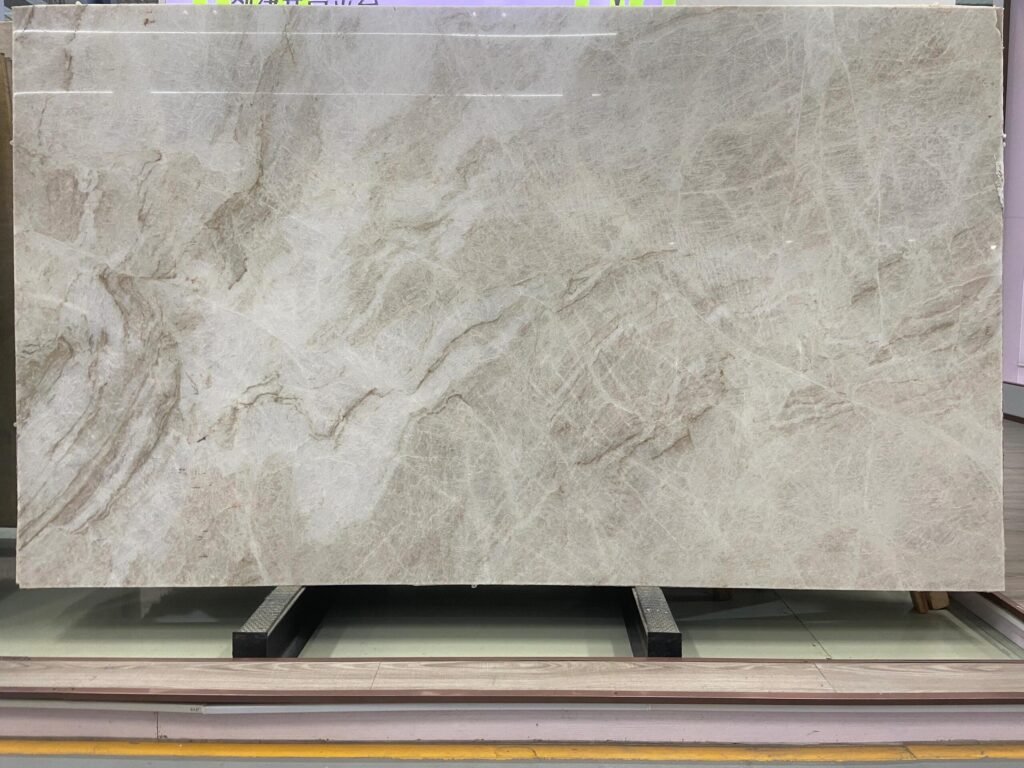
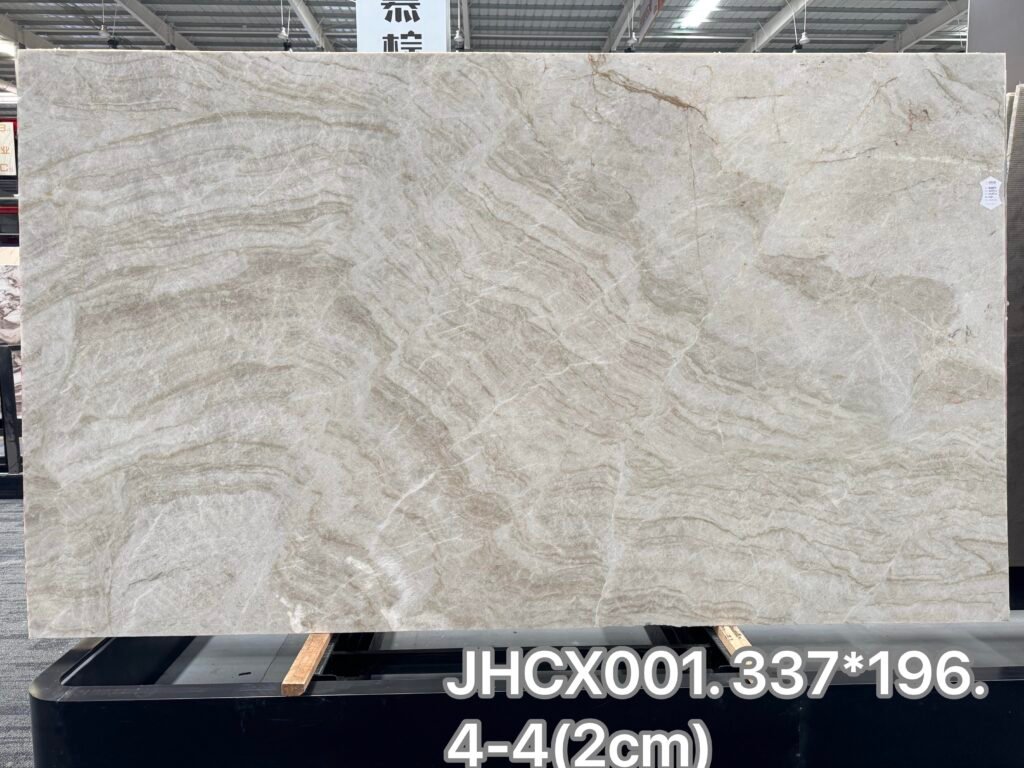
The Commercial Stone: The material known commercially as “Taj Mahal” is not marble. So, is Taj Mahal a quartzite? Yes. It is a natural quartzite quarried primarily in Brazil. It is named “Taj Mahal” solely because its creamy, translucent background evokes the beauty of the historic Indian mausoleum, not because they share the same geological DNA.
The Science of Metamorphism and Origin
Taj Mahal quartzite origin stories begin with sandstone. Millions of years ago, pure quartz sandstone was subjected to intense tectonic heat and pressure within the Earth’s crust. This process, known as metamorphism, fused the quartz grains into an incredibly dense, non-porous network.
Is Taj Mahal a true quartzite? In the stone industry, some stones labeled “soft quartzite” are actually dolomitic marbles. However, the genuine Taj Mahal is a true quartzite. It is constructed primarily of quartzite (crystallized silicon dioxide). This geological distinction is the primary reason for its ability to withstand daily abuse without losing its polished or leathered finish.
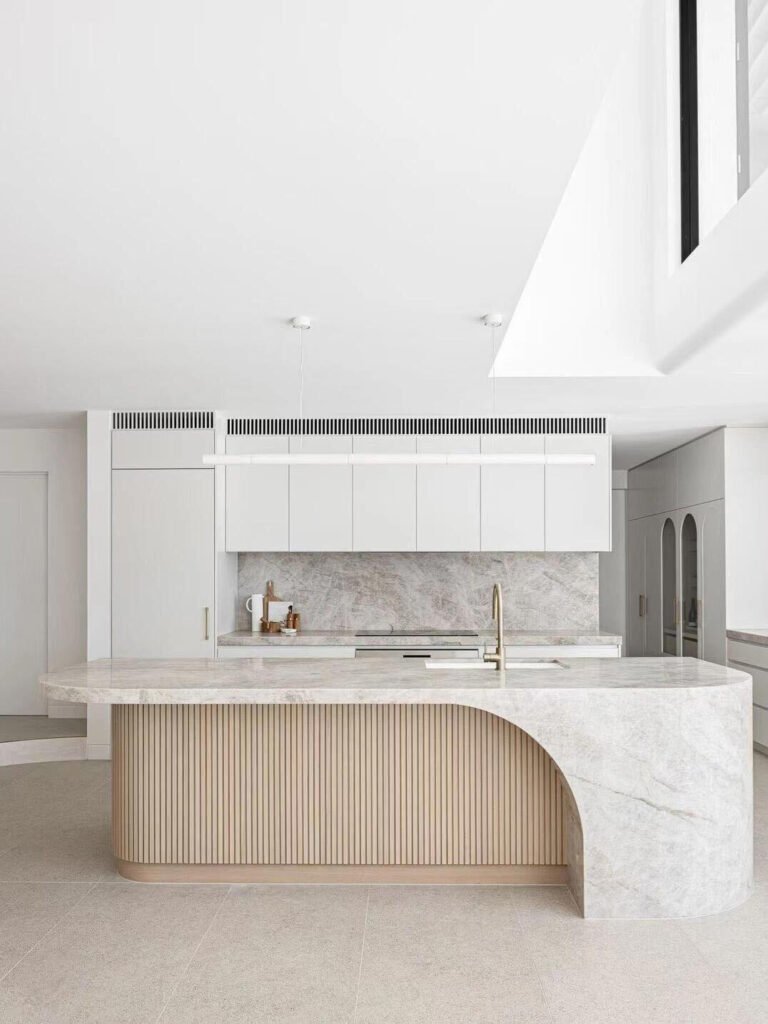
Analyzing Lifetime Durability: Hardness, Resistance, and Longevity
When evaluating Taj Mahal quartzite durability, we look at three main vectors: abrasion resistance, chemical stability, and thermal tolerance.
Mohs Hardness Scale and Scratch Resistance
The Mohs scale of mineral hardness is the industry standard for determining how easily a surface scratches.
Marble (Calcite): 3–4 (Scratches easily with a knife).
Granite: 6–6.5.
Taj Mahal Quartzite: 7.
Because Taj Mahal measures a 7 on the Mohs scale, it is harder than steel, glass, and most kitchen utensils. In a Taj Mahal quartzite kitchen, sliding pots, cutting directly on the surface (though not recommended for the sake of your knives), and heavy traffic will not leave the white scratch marks that plague darker stones or softer marbles.
Chemical Resistance: The Etching Test
One of the most significant Taj Mahal quartzite pros and cons discussions revolves only around fabrication difficulty (a con for the cutter) versus living ease (a pro for the owner). Unlike marble, true Taj Mahal quartzite does not contain calcium carbonate. Therefore, it does not react to acids.
If you spill lemon juice, tomato sauce, or vinegar on a Taj Mahal slab, it will not “etch” (leave a dull chemical burn mark). This chemical resistance is vital for maintaining the “original appearance” over long-term use.
Heat Resistance Standards
Can you put hot pans on it? Yes. As a metamorphic rock formed under extreme heat, Taj Mahal quartzite is naturally heat-resistant. It will not scorch, melt, or discolor when a hot pot is placed on it, unlike quartz (engineered stone), which is held together by resin that can burn at high temperatures.
Aesthetic Versatility: Is Taj Mahal Quartzite Outdated?
A common query in design forums is: “Is Taj Mahal quartzite outdated?” The short answer is no. In fact, it is arguably more relevant now than it was five years ago. Trends are shifting away from the stark, clinical “hospital white” of engineered quartz toward warmer, organic, and layered neutrals—exactly what Taj Mahal offers.
Kitchen Design Scenarios
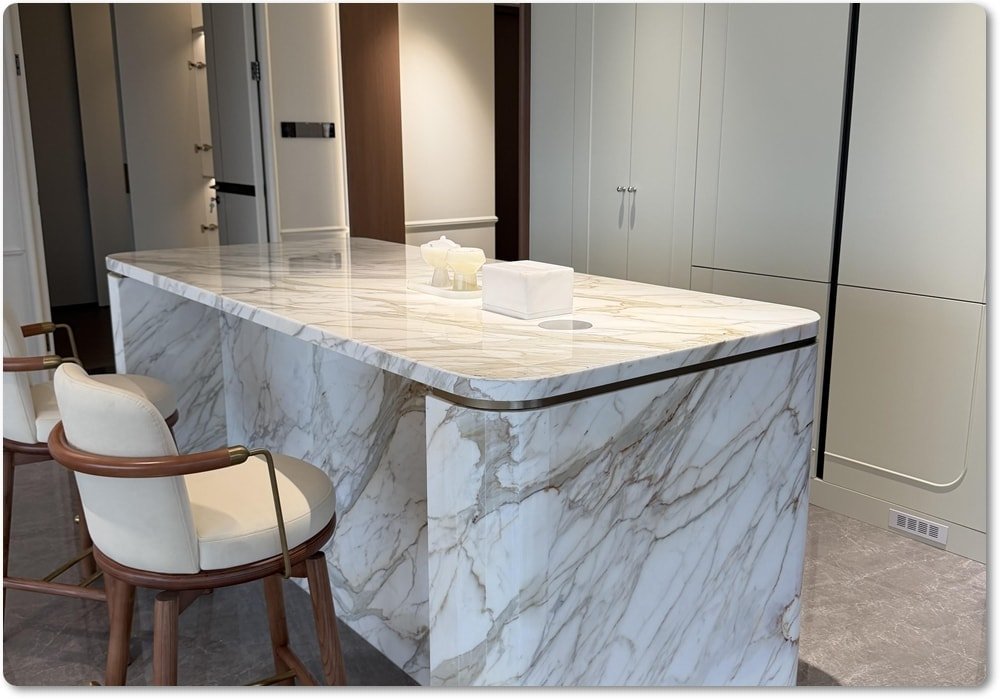
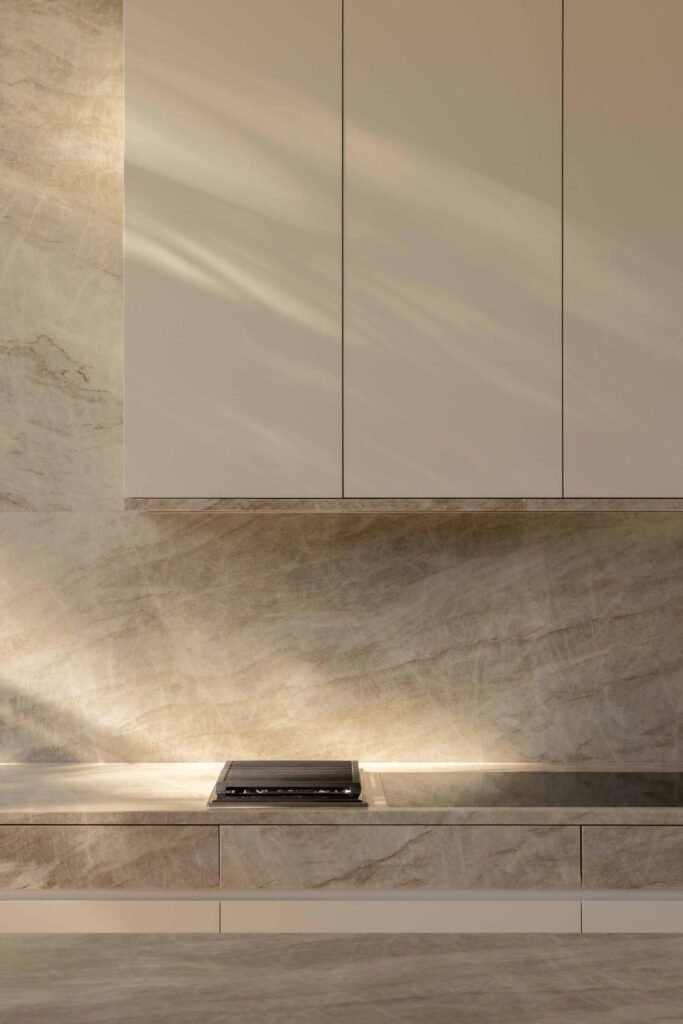
Taj Mahal quartzite kitchen pictures often showcase its chameleon-like ability to adapt to different color schemes.
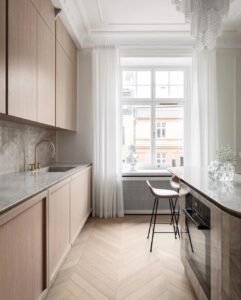
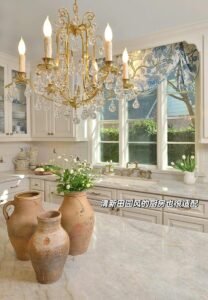
Taj Mahal quartzite kitchen with White cabinets: This is the classic pairing. The stone’s creamy background blends seamlessly with white cabinetry, while the gold and amber veining adds warmth, preventing the room from feeling sterile. It creates a “tone-on-tone” elegance that feels expansive and airy.
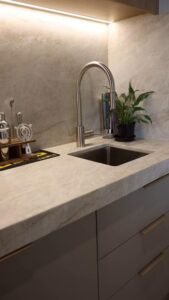
Taj Mahal quartzite with grey cabinets: For a more modern or industrial look, grey cabinetry highlights the subtle grey undertones often found in Taj Mahal slabs. The stone acts as a bridge, softening the grey joinery with its warm amber inclusions, creating a balanced, sophisticated palette.
Bathroom Applications
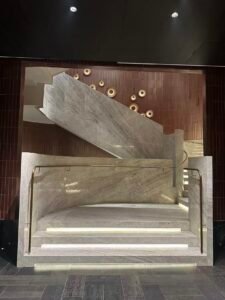
A Taj Mahal quartzite bathroom transforms a utility space into a spa. Because the stone is less porous than marble, it is excellent for wet areas, shower walls, and vanity tops. It resists the humidity and cosmetic spills (makeup, lotions) that typically stain softer stones.
Cost Analysis and Value Proposition
Understanding the Price Tags
When researching Taj Mahal quartzite cost per slab, buyers often find it sits at the upper end of the spectrum. It is generally more expensive than Carrara marble and mid-range granites, often comparable to high-end Calacatta Gold.
Extraction: It is difficult to quarry due to its hardness.
Fabrication: Cutting Taj Mahal quartzite slabs requires diamond-tipped blades and slower cutting speeds to prevent the stone from breaking, which increases labor costs.
Availability: Genuine, high-quality slabs from Brazil are in high demand globally.
Wholesale and Manufacturer Direct
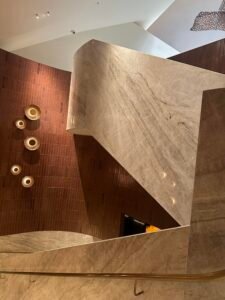
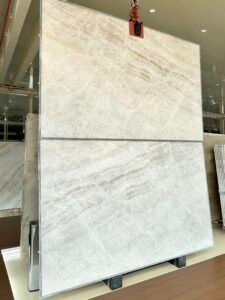
For large projects or fabrication businesses, sourcing via EDG Stone (a Taj Mahal quartzite slab wholesale factory direct provider) can significantly mitigate costs. Eliminating middlemen allows access to premium bundles where the flow of veins can be matched (book-matched) for dramatic islands or wall cladding.
Industry Insights: Regulations, Safety, and Sourcing
The stone industry is undergoing a massive regulatory shift regarding crystalline silica and worker safety.
The Shift from Engineered Stone to Natural Quartzite
Recent regulations in markets like Australia and impending discussions in the USA are scrutinizing engineered stone (quartz) due to high silica content and the risk of silicosis during fabrication. While the Taj Mahal is constructed primarily of quartzite (the monument uses marble, the stone is quartzite), the modern argument for quartzite is safety and natural purity. Unlike engineered stone, Taj Mahal quartzite is 100% natural. While it still contains silica (as all natural stones do), the industry is pivoting toward natural materials where wet-cutting protocols are strictly managed. Designers are increasingly specifying natural quartzite to “future-proof” homes against the declining popularity and potential regulatory bans of artificial high-silica composites.
EDG Stone: Quality and Export
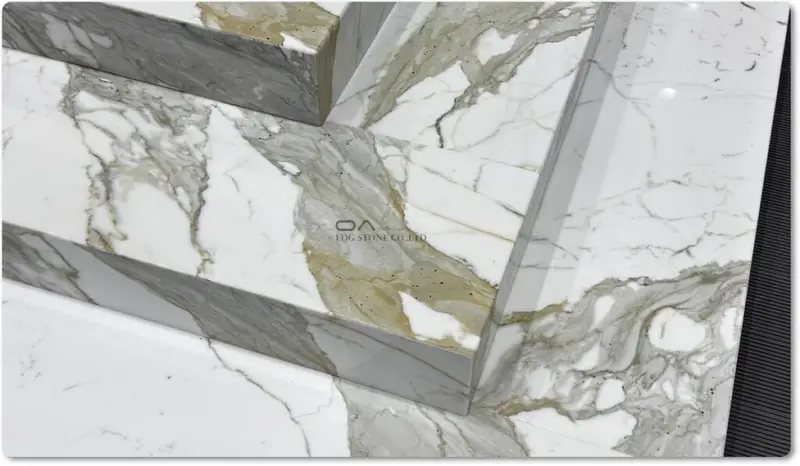
Choosing the right manufacturer is critical. Because Taj Mahal is popular, some quarries export lower-grade stones with fissures as “premium.” EDG Stone implements rigorous quality control to ensure that the “fissures” are natural geological features and not structural cracks. Whether you are looking for Taj Mahal quartzite inventory export or local installation, verifying the slab’s integrity with a flashlight test (to check for resin fills) is standard procedure at reputable factories.
Frequently Asked Questions (Google Hot Search FAQ)
1. Is Taj Mahal quartzite high maintenance? No, it is considered low maintenance. Unlike marble, it does not require constant worry about etching from acids. Regular cleaning with mild soap and water, along with annual sealing, is sufficient to keep it looking pristine for decades.
2. Does Taj Mahal quartzite need to be sealed? Yes. Although it is denser than granite, it is a natural stone and has some microporosity. A high-quality impregnating sealer applied upon installation and re-applied every 1-3 years will ensure it remains stain-proof.
3. What is the difference between Perla Venata and Taj Mahal quartzite? They are quarried from the same geological region in Brazil and are often cousins. Perla Venata tends to have a lighter, whiter background with less amber veining, while Taj Mahal typically features warmer cream tones and more distinct striations.
4. Can you put hot pans on Taj Mahal quartzite? Yes. Taj Mahal quartzite is heat-resistant and can withstand the temperature of hot pots and pans without scorching. However, using a trivet is always a best practice to avoid thermal shock in extreme cases.
5. Why is Taj Mahal quartzite so expensive? The cost is driven by its density (making it difficult and costly to quarry and cut), its origin (imported from Brazil), and its high demand as a superior, durable alternative to marble.
Core Intelligence: The Strategic Value of Taj Mahal Quartzite
Why It Matters Now (Trend & Regulation)?
As global regulations (e.g., Australia’s engineered stone ban) tighten around artificial silica composites, Taj Mahal Quartzite emerges as the premier natural alternative. It offers the “marble aesthetic” homeowners demand without the regulatory baggage of engineered stone or the fragility of calcite marble.
Comparative Advantage (The “Hard Marble” Myth)
Unlike Dolomite (often mislabeled as “soft quartzite”), Taj Mahal is 90-99% Quartz.
Equation of Value: High Mohs Hardness (7) + Acid Resistance = Lifetime ROI.
It solves the specific pain point of “luxury kitchen anxiety”—allowing users to cook freely with acids and heat.
Buying Insight
For B2B and B2C purchasers, sourcing via specialized factories like EDG Stone mitigates the risk of receiving “commercial grade” slabs with structural fissures. The trend for 2025 favors leathered finishes on the Taj Mahal to enhance its tactile, organic nature.
References
Geological Society of America. Metamorphism and the formation of Quartzite from Sandstone.
Architectural Digest. 2025 Kitchen Trends: The Return of Warm Neutrals and Natural Stone.
Houzz Industry Reports. Kitchen Countertop Materials: Popularity and Longevity Studies (2023-2024).
Occupational Safety and Health Administration (OSHA). Crystalline Silica Safety Standards in Stone Fabrication.
Gemological Institute of America (GIA). Mohs Hardness Scale and Gemological Properties of Quartzite.
Consumer Reports. Countertop Buying Guide: Granite, Marble, and Quartzite Durability Tests.