
Executive Summary
Quality consistency has become one of the most critical purchasing criteria in the global engineered stone industry. While aesthetics remain important, professional buyers increasingly evaluate suppliers based on measurable manufacturing quality, production stability, export compliance, and long-term supply capability.
For distributors, kitchen manufacturers, wholesalers, stone fabricators, and commercial developers, inconsistent slab quality can result in high downstream costs, including fabrication waste, project delays, customer complaints, warranty claims, and reputational damage. A visually attractive slab alone is no longer sufficient. Buyers must understand how quality is managed throughout the entire manufacturing process—from raw material selection and pigment control to polishing, dimensional inspection, packaging, and international logistics.
This white paper provides a systematic overview of quality control practices for Calacatta Quartz Slabs and Calacatta Quartz Countertops, following internationally recognized manufacturing principles and export procedures. Rather than focusing solely on appearance, it explains how reliable manufacturers establish quality assurance systems that minimize production variation while maintaining consistent performance across large production batches.
The document also examines:
- Incoming raw material verification
- Resin and quartz quality control
- Pigment consistency management
- Production monitoring
- Slab inspection standards
- Countertop fabrication inspection
- Packaging for ocean transportation
- Export documentation
- International compliance requirements
- Supplier evaluation criteria for global buyers
The objective is to help procurement professionals build practical supplier qualification standards while reducing purchasing risks in international stone sourcing.
Introduction
Why Quality Control Matters in Calacatta Quartz Procurement?
Unlike natural marble, engineered quartz is a highly controlled industrial product manufactured through the combination of quartz aggregates, polymer resins, pigments, and engineered veining technologies. Because the production process involves numerous variables—including raw material grading, formulation ratios, vacuum vibro-compression, curing conditions, polishing parameters, and calibration—even small deviations can affect the finished product.
These deviations may include:
- Color inconsistency
- Veining mismatch
- Thickness variation
- Resin-rich areas
- Pinholes
- Surface waviness
- Gloss inconsistency
- Edge chipping
- Dimensional inaccuracies
- Mechanical performance variation
Such issues often remain undetected until fabrication begins, when corrective measures become significantly more expensive.
According to multiple studies on engineered stone manufacturing and industrial quality management, production consistency depends not only on equipment precision but also on standardized operating procedures, process control documentation, statistical quality monitoring, and continuous inspection throughout manufacturing.
Professional manufacturers, therefore, implement quality management systems rather than relying solely on final product inspection.
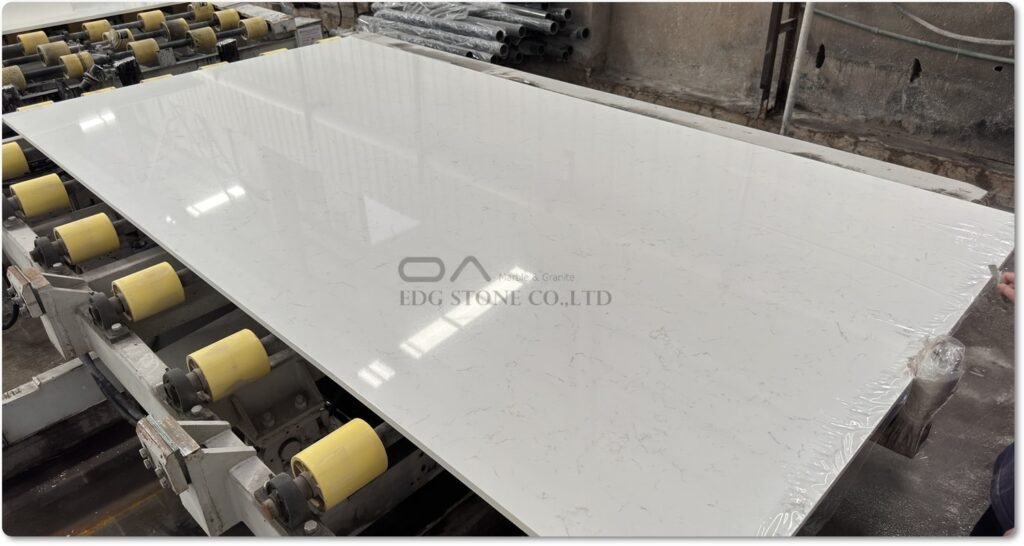
Global Demand for High-Quality Calacatta Quartz
The international market for engineered quartz continues to expand across residential, hospitality, healthcare, retail, and commercial applications. Premium Calacatta-inspired designs remain among the most requested decorative surfaces due to their marble-like aesthetics combined with greater consistency and lower maintenance requirements.
Large-scale projects—including hotels, apartments, office buildings, restaurants, and retail chains—typically require hundreds or thousands of square meters of matching slabs. In these applications, consistency between production batches becomes a critical purchasing factor.
Professional buyers commonly evaluate suppliers based on:
- Batch-to-batch color consistency
- Veining repeatability
- Surface finish quality
- Slab dimensional accuracy
- Production capacity
- Packaging reliability
- Delivery performance
- Documentation completeness
- International compliance
- Long-term supply stability
These evaluation criteria extend beyond product appearance and reflect the broader capabilities of a manufacturer’s quality management system.
Understanding the Complete Quality Control Workflow
Quality control should not be viewed as a single inspection conducted before shipment. Instead, it is a continuous process integrated throughout manufacturing.
A comprehensive quality assurance workflow generally includes the following stages:
Stage 1 — Raw Material Qualification
Inspection of:
- Quartz purity
- Particle size distribution
- Resin properties
- Pigment quality
- Decorative materials
- Packaging materials
↓
Stage 2 — Production Process Control
Monitoring:
- Mixing accuracy
- Resin dosage
- Vacuum conditions
- Pressing pressure
- Curing temperature
- Calibration
- Surface polishing
↓
Stage 3 — Finished Slab Inspection
Verification of:
- Dimensions
- Thickness
- Flatness
- Gloss level
- Veining consistency
- Color tolerance
- Surface defects
↓
Stage 4 — Countertop Fabrication Inspection
Evaluation of:
- CNC accuracy
- Sink cutouts
- Edge profiles
- Joint precision
- Surface integrity
- Packaging readiness
↓
Stage 5 — Export Compliance
Confirmation of:
- Packaging integrity
- Labeling
- Pallet stability
- Container loading
- Shipping documentation
- Customer specifications
Each stage contributes to reducing quality risks before products reach international customers.
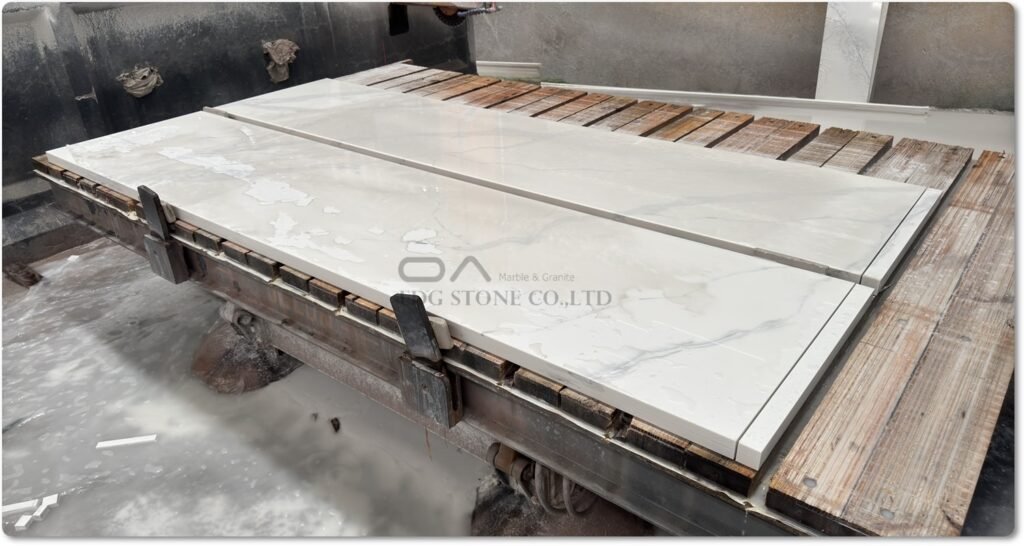
Quality Control Begins Before Manufacturing
One of the most common misconceptions among new buyers is that quality control starts after production. In reality, experienced manufacturers recognize that the foundation of product quality lies in raw material qualification.
Once inferior raw materials enter the production line, many defects become impossible—or prohibitively expensive—to correct during later stages.
For this reason, leading manufacturers establish incoming inspection procedures before production begins.
Typical incoming inspection categories include:
Quartz Aggregates
Inspection parameters:
- Mineral purity
- Moisture content
- Particle grading
- Contamination
- Whiteness
- Bulk density
Consistent quartz grading contributes to predictable mechanical properties and uniform appearance across production batches.
Polymer Resin
Resin quality directly influences:
- Flexural strength
- Impact resistance
- Surface density
- Water absorption
- Chemical resistance
- Long-term durability
Manufacturers commonly verify:
- Viscosity
- Shelf life
- Batch number
- Storage conditions
- Mixing compatibility
Proper resin management is essential because excessive or insufficient resin content can compromise slab performance.
Pigments
Color variation remains one of the leading causes of customer complaints in decorative quartz surfaces.
Quality inspection typically includes:
- Color consistency
- Particle dispersion
- UV stability
- Heat stability
- Batch traceability
Maintaining controlled pigment batches helps minimize visible differences between production runs.
Decorative Veining Materials
Premium Calacatta Quartz Slabs rely on engineered veining systems to reproduce the appearance of natural marble.
Incoming inspection generally evaluates:
- Color consistency
- Resin compatibility
- Particle stability
- Moisture control
- Distribution characteristics
Because veining is one of the defining visual features of Calacatta designs, strict control at this stage helps maintain design repeatability for large commercial orders.
Packaging Materials
Quality control also extends to packaging components, including:
- Wooden crates
- Steel reinforcement
- Foam protection
- Corner guards
- Plastic wrapping
- Moisture barriers
- Strapping materials
Although often overlooked, export packaging plays a significant role in reducing transit damage during long-distance ocean freight.
Proper packaging inspection ensures that protective materials meet the structural requirements for international transportation.
Why Early Quality Control Reduces Procurement Risk?
Industry quality management research consistently shows that identifying defects early in the production cycle is substantially more cost-effective than correcting problems after fabrication or delivery. Preventive inspection reduces material waste, minimizes rework, shortens production delays, and helps improve overall process consistency. For international buyers, this translates into lower project risk, more predictable installation schedules, and fewer warranty claims.
From a procurement perspective, suppliers that implement documented incoming inspection procedures demonstrate a stronger commitment to process control than those relying solely on final visual inspection. When evaluating manufacturing partners, buyers should therefore review not only finished products but also the supplier’s quality management system, inspection records, traceability practices, and standard operating procedures.
Continue with Part 2: Incoming Raw Material Inspection — including quartz mineral grading, resin selection, pigment qualification, supplier auditing, laboratory testing methods, statistical sampling plans, and internationally recognized inspection practices, supported by authoritative industry references.
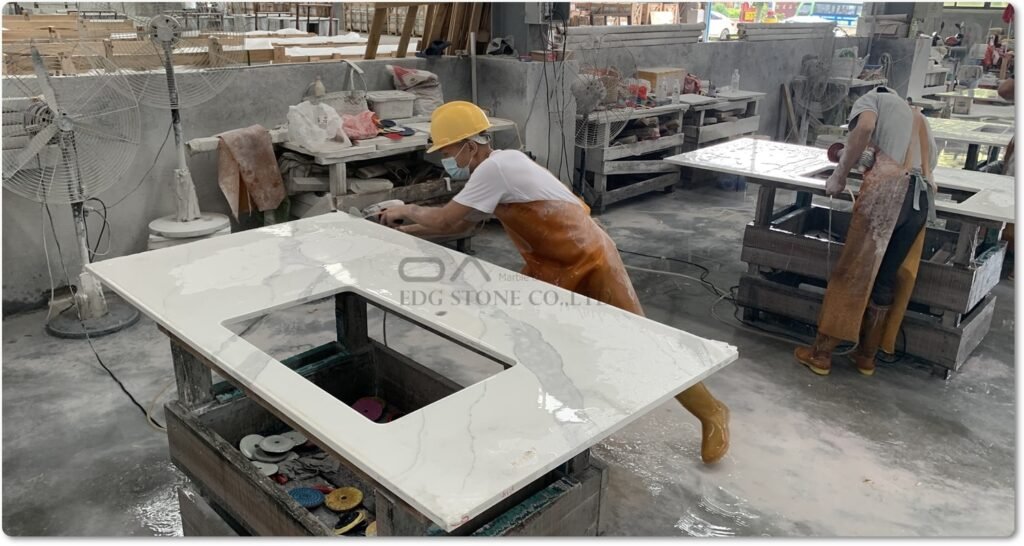
Incoming Raw Material Inspection
Why Raw Material Inspection Determines Final Product Quality?
For engineered quartz manufacturers, product quality is established long before the first slab enters the production press. Every production stage depends on the consistency of incoming raw materials. Variations in quartz particle size, resin chemistry, pigments, additives, or decorative veining materials can introduce defects that cannot be fully corrected during manufacturing.
Quality management experts often describe this principle as “quality by prevention rather than inspection.” Instead of relying solely on end-of-line inspections, manufacturers reduce variability by controlling raw materials before they enter production. This preventive approach aligns with the process-oriented philosophy of quality management systems such as ISO 9001, where consistent inputs contribute directly to consistent outputs.
For Calacatta Quartz, where buyers expect highly uniform white backgrounds and distinctive marble-inspired veining, incoming material control is especially important. Even slight differences between batches may become noticeable after installation across large commercial projects.
Establishing an Incoming Quality Control (IQC) System
An effective Incoming Quality Control (IQC) program verifies that every shipment of raw materials conforms to predefined specifications before acceptance into inventory.
Rather than inspecting only when problems occur, professional manufacturers typically implement standardized procedures covering:
- Approved supplier qualification
- Raw material specifications
- Sampling procedures
- Laboratory testing
- Batch identification
- Traceability records
- Acceptance and rejection criteria
- Corrective action procedures
Each incoming batch receives a unique identification code, enabling complete traceability from raw material to finished slab. If quality issues are later identified, manufacturers can isolate affected production lots without disrupting unrelated inventory.
This traceability system is particularly valuable for export orders, where customers may request documentation demonstrating consistent production records.
Quartz Aggregate Inspection
Quartz Purity
Quartz aggregates generally constitute the majority of the engineered stone formulation by weight. Their mineral composition directly affects mechanical performance, color stability, and polishing characteristics.
Manufacturers commonly evaluate:
- Mineral purity
- Presence of clay
- Iron contamination
- Organic impurities
- Foreign minerals
- Moisture content
Excessive impurities may cause:
- Surface discoloration
- Reduced brightness
- Lower compressive strength
- Poor resin bonding
- Uneven polishing
High-purity quartz contributes to a cleaner white background, which is especially important for premium Calacatta-inspired designs.
Particle Size Distribution
Quartz is typically blended using multiple particle sizes rather than a single uniform grade.
A controlled particle distribution helps achieve:
- Higher density
- Reduced internal voids
- Improved mechanical strength
- Better resin distribution
- Enhanced surface finish
Manufacturers generally verify particle grading through standardized sieve analysis to ensure consistency between production batches.
If oversized or undersized particles exceed specified limits, the resulting slabs may exhibit:
- Pinholes
- Uneven density
- Surface roughness
- Internal stress concentration
- Reduced edge strength
Maintaining a balanced aggregate gradation improves both structural integrity and fabrication performance.
Moisture Content Control
Moisture is one of the most closely monitored characteristics of quartz aggregates.
Excess moisture may interfere with:
- Resin mixing
- Vacuum compaction
- Polymer curing
- Surface appearance
- Mechanical strength
Manufacturers, therefore, store quartz in controlled environments and routinely measure moisture levels before production.
Proper moisture control reduces the risk of internal porosity and helps ensure stable curing conditions.
Polymer Resin Inspection
Why Resin Quality Is Critical?
Although resin typically represents a relatively small percentage of the finished slab by weight, it plays a disproportionately important role in determining product performance.
The polymer matrix binds quartz particles together, contributing to:
- Flexural strength
- Impact resistance
- Water absorption performance
- Surface density
- Chemical resistance
- Long-term dimensional stability
Variations in resin properties may lead to inconsistent curing, reduced bonding strength, or surface imperfections.
Incoming Resin Verification
Before acceptance, manufacturers commonly verify:
- Supplier certification
- Product identification
- Batch number
- Manufacturing date
- Shelf life
- Storage temperature
- Packaging condition
Laboratory testing may include:
- Viscosity measurement
- Density verification
- Gel time
- Polymerization characteristics
- Compatibility with pigments
- Compatibility with decorative veining materials
Resin stored beyond its recommended shelf life or under unsuitable environmental conditions may not cure properly, potentially affecting slab durability.
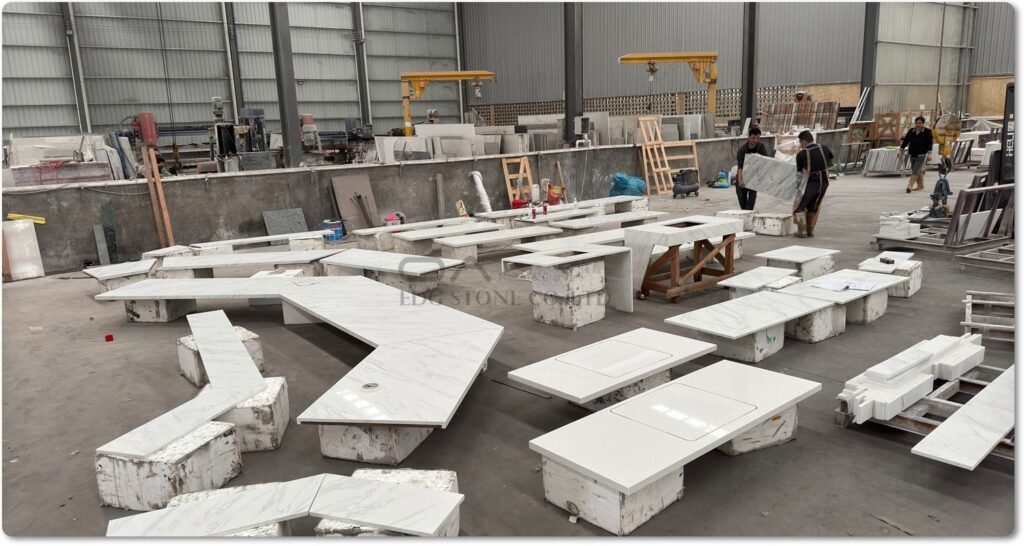
Pigment Quality Control
Maintaining Color Consistency
One of the defining characteristics of premium Calacatta Quartz is its clean, consistent white background.
Because human vision is highly sensitive to color variation, even minor pigment inconsistencies may become apparent after installation, particularly under natural daylight or across adjoining countertops.
Manufacturers, therefore, establish detailed color control procedures before production begins.
Incoming pigment inspection generally includes:
- Color reference comparison
- Batch consistency
- Particle fineness
- Dispersion characteristics
- Moisture content
- Light stability
- Heat resistance
Color-controlled storage further minimizes variation caused by environmental exposure.
Color Matching Procedures
Many manufacturers maintain master reference panels representing approved production colors.
Incoming pigment batches are compared against these references using both:
- Instrumental color measurement
- Controlled visual assessment
Instrument-based color evaluation helps reduce subjective interpretation while improving repeatability between production lots.
Consistent color management becomes increasingly important for projects requiring multiple containers delivered over extended periods.
Decorative Veining Material Inspection
Preserving the Natural Marble Appearance
Unlike monochromatic quartz surfaces, Calacatta Quartz incorporates engineered veining designed to replicate the flowing appearance of natural marble.
The decorative veining system often includes specially formulated resin mixtures, colored mineral particles, and proprietary manufacturing techniques.
Incoming inspection typically evaluates:
- Veining color consistency
- Material viscosity
- Resin compatibility
- Moisture stability
- Mixing performance
- Storage conditions
Poor-quality veining materials may produce:
- Blurred veins
- Uneven distribution
- Smearing
- Color migration
- Inconsistent marble patterns
For premium product lines, maintaining veining consistency is one of the most technically demanding aspects of quality control.
Additives and Functional Materials
In addition to quartz and resin, manufacturers may use carefully controlled additives to optimize processing and finished product performance.
Typical functional additives include:
- Curing agents
- Catalysts
- UV stabilizers
- Flow modifiers
- Processing aids
Incoming inspection confirms:
- Correct formulation
- Batch identification
- Expiration date
- Storage compliance
- Supplier certification
Any deviation from approved specifications may influence curing behavior or long-term product stability.
Supplier Qualification and Vendor Management
Quality Begins with Approved Suppliers
Reliable manufacturing depends not only on internal quality systems but also on the consistency of upstream suppliers.
Professional quartz manufacturers generally establish supplier qualification programs before purchasing raw materials.
Evaluation criteria often include:
- Manufacturing capability
- Quality certifications
- Production capacity
- Technical support
- Historical consistency
- Corrective action responsiveness
- Traceability systems
- Delivery performance
Long-term partnerships with qualified suppliers help reduce raw material variation while improving supply chain stability.
Periodic supplier reviews and performance assessments further strengthen procurement reliability.
Laboratory Testing Before Production Release
Incoming materials are typically subjected to laboratory verification before being approved for production.
Depending on the material, testing may include:
| Material | Typical Verification Items |
|---|---|
| Quartz aggregates | Particle size, purity, moisture, contamination |
| Resin | Viscosity, density, gel time, shelf life |
| Pigments | Color stability, dispersion, UV resistance |
| Veining materials | Compatibility, consistency, moisture |
| Additives | Composition verification, expiration, performance |
Materials failing to meet internal specifications are generally quarantined pending further evaluation or returned to the supplier.
This controlled release process helps prevent nonconforming materials from entering production.
Statistical Sampling Rather Than Random Guesswork
Inspecting every kilogram of incoming material is often impractical for large-scale manufacturing. Instead, quality control commonly relies on statistically based sampling plans that balance inspection efficiency with confidence in the results.
Internationally recognized standards such as ISO 2859-1 (sampling procedures for inspection by attributes) guide the determination of sample sizes and acceptance criteria based on lot size and acceptable quality levels (AQL). By applying these methods, manufacturers can evaluate incoming materials systematically while maintaining consistent decision-making across suppliers and production batches.
Using documented sampling plans also improves traceability, supports audit readiness, and demonstrates a disciplined quality management approach to international buyers.
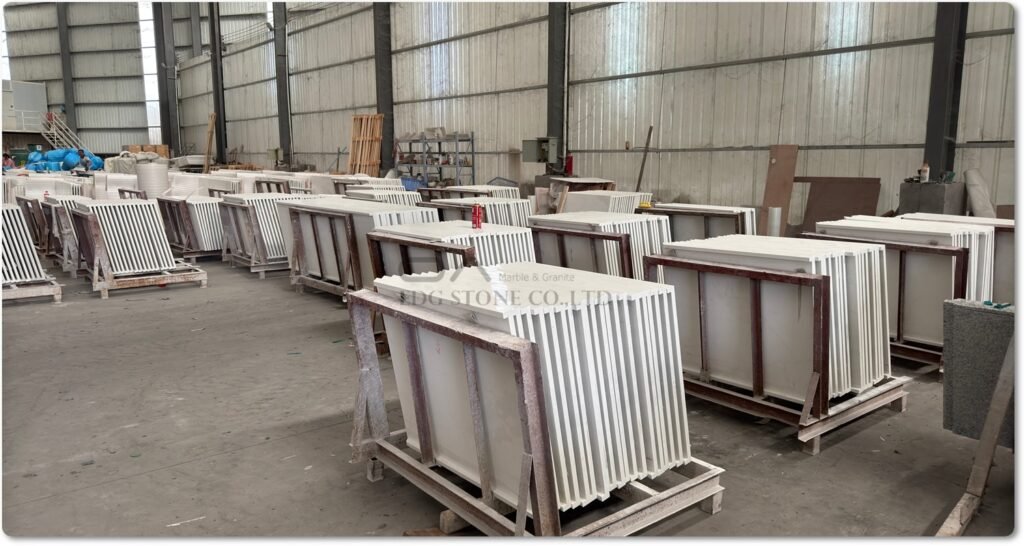
Building Traceability from Raw Material to Finished Slab
An effective traceability system links every finished slab back to its original raw material batches. Manufacturers commonly assign identification codes to incoming quartz, resin, pigments, and additives, then record their use throughout production.
A comprehensive traceability record may include:
- Raw material batch numbers
- Supplier information
- Inspection results
- Production date and shift
- Mixing records
- Press identification
- Curing parameters
- Finished slab identification
- Final inspection reports
This documentation enables manufacturers to investigate quality concerns efficiently and, if necessary, isolate only the affected production lots rather than disrupting entire inventories.
For international buyers, traceability enhances confidence in product consistency and supports quality assurance during large-scale procurement.
Production Quality Control
From Raw Materials to Finished Slabs: Controlling Process Variation
Once incoming materials have passed inspection, the focus of quality assurance shifts from material verification to process control. While high-quality raw materials are essential, they alone cannot guarantee a consistent finished product. Every stage of manufacturing introduces variables that must be monitored and controlled to ensure repeatable performance.
For Calacatta Quartz Slabs, process stability is especially important because buyers expect not only reliable mechanical properties but also consistent visual characteristics, including background color, veining distribution, gloss level, and dimensional accuracy.
Leading manufacturers, therefore,e implement In-Process Quality Control (IPQC) systems that monitor critical production parameters in real time rather than relying solely on final inspections. This preventive approach reduces variation, minimizes waste, and improves production efficiency.
Stage 1 – Digital Formula Management and Material Batching
Accurate Formulation Is the First Step Toward Consistency
The production of engineered quartz begins with a precisely controlled formulation. Each slab design has its own recipe, defining the proportions of quartz aggregates, polymer resin, pigments, decorative veining materials, and functional additives.
Modern manufacturing facilities typically use computerized batching systems to improve accuracy and reduce the risk of human error.
Key control points include:
- Quartz-to-resin ratio
- Aggregate particle distribution
- Pigment dosage
- Decorative vein composition
- Catalyst concentration
- Additive percentages
- Mixing sequence
- Batch identification
Even small deviations in formulation can influence:
- Color consistency
- Mechanical strength
- Surface density
- Water absorption
- Polishing performance
- Veining appearance
Digital batching systems automatically record production data, providing traceability for every production lot.
Stage 2 – Mixing Process Control
Achieving Uniform Material Distribution
The mixing stage determines how evenly quartz particles, resin, pigments, and decorative materials are dispersed throughout the slab.
Poor mixing may result in:
- Resin-rich zones
- Pigment streaking
- Uneven veining
- Internal voids
- Density variation
- Surface defects
Manufacturers, therefore,e monitor:
- Mixing time
- Mixer speed
- Material loading sequence
- Temperature
- Resin dispersion
- Homogeneity
Many facilities perform periodic visual and laboratory checks on mixed materials before proceeding to slab forming.
Stage 3 – Vacuum Vibro-Compression
Eliminating Internal Voids
One of the defining technologies in engineered quartz manufacturing is vacuum vibro-compression, which combines vibration, pressure, and vacuum to compact the material mixture into dense slabs.
The objectives of this process are to:
- Remove entrapped air
- Increase density
- Improve particle packing
- Enhance mechanical strength
- Reduce internal porosity
- Improve polishing performance
Critical process parameters include:
- Vacuum level
- Pressing pressure
- Vibration frequency
- Compression duration
- Material distribution
If these parameters are not properly controlled, the finished slabs may develop:
- Pinholes
- Blowholes
- Resin pockets
- Internal cracks
- Weak edge strength
- Uneven density
Because many of these defects remain invisible until fabrication, monitoring equipment performance during production is essential.
Stage 4 – Controlled Curing
Stabilizing the Polymer Matrix
After pressing, slabs undergo curing, during which the polymer resin hardens and bonds the quartz particles into a solid structure.
Curing directly influences:
- Flexural strength
- Surface hardness
- Dimensional stability
- Chemical resistance
- Long-term durability
Manufacturers typically monitor:
- Oven temperature
- Heating uniformity
- Curing duration
- Cooling rate
- Production batch identification
Insufficient curing may leave the resin incompletely polymerized, while excessive temperatures may affect surface appearance or induce internal stress.
Automated temperature recording systems help maintain repeatable curing conditions across production batches.
Stage 5 – Thickness Calibration
Maintaining Dimensional Accuracy
Following curing, slabs are calibrated to achieve the specified thickness.
Typical commercial thicknesses include:
- 12 mm
- 15 mm
- 20 mm
- 30 mm
Thickness consistency is important because it affects:
- Fabrication precision
- Edge profiles
- Installation quality
- Joint alignment
- Structural performance
Calibration equipment is routinely checked to ensure dimensional accuracy across the entire slab surface.
Measurements are commonly taken at multiple locations, including:
- Corners
- Center
- Long edges
- Short edges
Consistent calibration minimizes installation issues for downstream fabricators.
Stage 6 – Surface Polishing
Producing a Uniform Decorative Finish
Surface finishing is one of the final manufacturing stages and has a significant impact on both appearance and customer perception.
For polished Calacatta Quartz, manufacturers seek to achieve:
- Uniform gloss
- Smooth texture
- Consistent reflectivity
- Clear veining
- Scratch-free surfaces
Quality control during polishing includes monitoring:
- Abrasive sequence
- Polishing pressure
- Belt speed
- Cooling water flow
- Surface temperature
- Equipment wear
Improper polishing may produce:
- Uneven gloss
- Swirl marks
- Surface haze
- Burn marks
- Micro-scratches
Routine maintenance of polishing equipment helps ensure stable surface quality over long production runs.
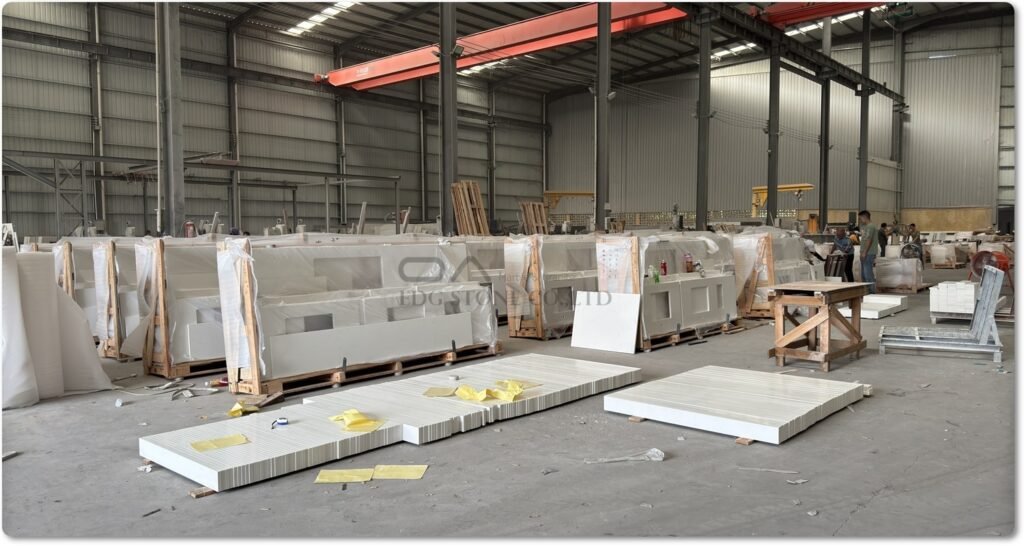
In-Process Inspection (IPQC)
Monitoring Quality During Production
Rather than waiting until slabs are complete, manufacturers perform inspections at predefined checkpoints throughout the production process.
Typical in-process inspections include:
- Material consistency after mixing
- Slab dimensions after pressing
- Thickness after calibration
- Surface quality after polishing
- Veining distribution
- Color consistency
- Edge integrity
Operators document inspection results and compare them against established acceptance criteria.
If deviations exceed allowable limits, corrective actions are implemented immediately to prevent additional nonconforming products.
Statistical Process Control (SPC)
Using Data to Reduce Variation
Many advanced manufacturing facilities apply Statistical Process Control (SPC) to monitor process stability over time.
Instead of reacting only after defects appear, SPC uses production data to identify trends before products fall outside specification.
Commonly monitored variables include:
- Slab thickness
- Gloss measurements
- Color values
- Density
- Production yield
- Equipment performance
Control charts help engineers distinguish between:
- Normal process variation
- Abnormal variation requiring corrective action
This proactive approach improves long-term consistency while reducing waste and production downtime.
Common Manufacturing Defects and Preventive Measures
Despite rigorous controls, defects can occur if production parameters drift outside established limits. Understanding the relationship between process variables and finished product quality enables manufacturers to identify root causes and implement effective corrective actions.
| Common Defect | Possible Causes | Preventive Measures |
|---|---|---|
| Pinholes | Inadequate vacuum, excessive moisture | Maintain vacuum performance, control aggregate moisture |
| Resin-rich areas | Poor material mixing | Optimize mixing time and material distribution |
| Color inconsistency | Pigment variation, inaccurate batching | Use calibrated dosing systems and approved pigment batches |
| Uneven veining | Decorative material segregation | Standardize veining application procedures |
| Thickness variation | Calibration equipment drift | Regularly calibrate grinding equipment |
| Surface haze | Improper polishing sequence | Monitor polishing pressure and abrasive wear |
| Edge chipping | Internal voids or density variation | Improve compaction and inspect slab density |
| Warping | Uneven curing or cooling | Maintain controlled curing temperatures and cooling cycles |
By recording these defects and their associated corrective actions, manufacturers establish a continuous improvement cycle that strengthens overall process capability.
Equipment Maintenance and Calibration
Reliable Machines Produce Reliable Products
Even well-designed production processes depend on properly maintained equipment.
Preventive maintenance programs typically include:
- Scheduled inspections
- Lubrication
- Calibration verification
- Component replacement
- Sensor testing
- Performance monitoring
Critical equipment requiring routine calibration includes:
- Digital weighing systems
- Mixing equipment
- Pressing systems
- Temperature sensors
- Thickness calibration machines
- Gloss meters
- Color measurement instruments
Calibration records provide objective evidence that measurement equipment continues to operate within specified tolerances.
Quality Documentation Throughout Production
A documented quality management system creates transparency and supports traceability across every stage of manufacturing.
Typical production records include:
- Batch formulation sheets
- Raw material consumption records
- Mixing logs
- Press operation reports
- Curing temperature records
- Calibration reports
- In-process inspection records
- Equipment maintenance logs
- Corrective action reports
- Final release documentation
For international buyers conducting supplier audits, these records demonstrate that quality is managed systematically rather than relying solely on visual inspection.
Continuous Improvement Through Root Cause Analysis
Quality management does not end with defect detection. Leading manufacturers investigate nonconformities using structured root cause analysis methods to prevent recurrence.
Common improvement tools include:
- Corrective and Preventive Action (CAPA)
- Root Cause Analysis (RCA)
- The “5 Whys” technique
- Fishbone (Ishikawa) diagrams
- Failure Mode and Effects Analysis (FMEA)
By addressing underlying process issues rather than treating symptoms, manufacturers improve long-term consistency, reduce scrap rates, and enhance customer satisfaction.
Container Loading Procedures
Proper container loading is essential for preventing damage during transportation.
Professional loading plans generally consider:
- Weight distribution
- Center of gravity
- Crate orientation
- Load stability
- Forklift accessibility
- Cargo restraint
Additional protective measures may include:
- Timber blocking
- Anti-slip mats
- Ratchet straps
- Airbags (dunnage bags)
- Bracing systems
Well-planned loading reduces cargo movement during vessel motion and road transportation.
Export Documentation
Documentation Supports Customs Clearance and Traceability
Accurate export documentation is essential for customs clearance, logistics coordination, payment processing, and product traceability.
Although documentation requirements vary by destination country and trade terms, a standard export package generally includes:
- Commercial Invoice
- Packing List
- Bill of Lading (or Sea Waybill)
- Certificate of Origin (when applicable)
- Fumigation or ISPM 15 declaration for wood packaging (where required)
- Insurance documents (if applicable)
- Inspection reports (upon customer request)
- Purchase order references
- Product labels and pallet identification
Manufacturers should also maintain internal production and inspection records to support traceability throughout the product lifecycle.
International Quality and Compliance Standards
Understanding the Regulatory Landscape
Global buyers increasingly expect suppliers to operate within recognized quality management frameworks. While applicable standards vary by market and product application, manufacturers should understand the role of internationally recognized specifications.
Examples include:
Quality Management
- ISO 9001 – Quality Management Systems
Environmental Management
- ISO 14001 – Environmental Management Systems
Occupational Health and Safety
- ISO 45001 – Occupational Health and Safety Management Systems
Sampling and Inspection
- ISO 2859-1 – Sampling Procedures for Inspection by Attributes
Building Materials Testing
- ASTM International test methods relevant to engineered stone performance, including flexural strength, water absorption, abrasion resistance, and dimensional stability.
Wood Packaging for Export
- ISPM 15 – International Standard for Phytosanitary Measures governing solid wood packaging materials.
It is important to note that the specific test methods or certifications required depend on the importing country’s regulations, project specifications, and customer requirements. Buyers should verify applicable standards before procurement.
Common Quality Risks During International Supply
Even well-manufactured products may encounter challenges during international logistics if preventive controls are not in place.
Common risks include:
| Risk | Preventive Measure |
|---|---|
| Edge chipping | Reinforced corner protection |
| Surface scratches | Protective film and separators |
| Moisture exposure | Waterproof wrapping and desiccants |
| Incorrect product identification | Barcode or batch labeling |
| Mixed production batches | Traceability system |
| Documentation errors | Pre-shipment document review |
| Container movement | Proper blocking and bracing |
| Delivery delays | Production scheduling and shipment planning |
A structured risk assessment process helps manufacturers minimize these issues before shipment.
Why Global Buyers Choose EDG Stone Factory?
A Case Study in Manufacturing and Export Management
For international distributors, wholesalers, project developers, and fabrication companies, selecting a supplier involves more than comparing product catalogs. Buyers increasingly evaluate a manufacturer’s operational capabilities, quality management systems, production consistency, and export experience.
EDG Stone Factory positions itself as a global Quartz Slabs & Countertops Manufacturer and Exporter, serving customers across residential, commercial, hospitality, and large-scale construction sectors.
Manufacturing Capabilities
EDG Stone Factory offers:
- Large-format engineered quartz slab production
- Custom countertop fabrication
- CNC machining
- Waterjet cutting
- Bookmatched designs
- Custom edge profiles
- OEM and private label manufacturing
- Project-specific production programs
Quality-Oriented Production
EDG Stone Factory emphasizes:
- Incoming raw material verification
- In-process production monitoring
- Finished product inspection
- Batch traceability
- Export packaging procedures
- Customer-oriented quality documentation
Global Export Experience
The company supports international buyers through:
- Custom packaging solutions
- Container optimization
- OEM labeling
- Export documentation assistance
- Project scheduling
- Multi-container supply programs
- Long-term distributor partnerships
For procurement teams seeking dependable manufacturing partners, supplier evaluation should consider documented quality systems, production capacity, communication efficiency, and long-term supply consistency in addition to product appearance.
Frequently Asked Questions (FAQ)
The following questions can be implemented directly as FAQ Schema (JSON-LD) to improve Google rich results eligibility.
1. What is the most important factor in Calacatta Quartz quality control?
The most important factor is maintaining consistency throughout the entire manufacturing process—from raw material inspection and production control to final slab inspection and export packaging.
2. Why is batch consistency important?
Large commercial projects often require multiple production batches. Consistent color, veining, and dimensions help ensure a uniform finished appearance.
3. How should buyers evaluate a quartz supplier?
Evaluate production capacity, documented quality systems, inspection procedures, traceability, export experience, packaging methods, and after-sales support—not just product samples.
4. Why are incoming raw material inspections necessary?
Raw material quality directly affects the finished slab’s appearance, strength, and long-term performance. Preventive inspection reduces downstream quality risks.
5. What defects should buyers inspect before shipment?
Common inspection items include color variation, surface scratches, pinholes, edge damage, thickness consistency, flatness, gloss, and veining continuity.
6. How can transportation damage be reduced?
Proper packaging, reinforced wooden crates, edge protection, moisture barriers, and correct container loading significantly reduce transportation risks.
7. Is third-party inspection recommended?
For large international orders or first-time suppliers, independent pre-shipment inspections can provide additional confidence that products meet contractual specifications.
8. Which international standards are commonly referenced?
Quality management systems often reference ISO 9001, while inspection procedures may reference ISO 2859-1. Performance testing frequently follows applicable ASTM standards, depending on project requirements.
9. What documents are normally included with export shipments?
Typical documents include the Commercial Invoice, Packing List, Bill of Lading, Certificate of Origin (where applicable), and any required packaging or inspection documentation.
10. How does traceability benefit buyers?
Traceability links each finished slab to its raw materials and production records, allowing manufacturers to investigate quality issues efficiently and support warranty or project documentation when required.
Conclusion
Reliable Calacatta Quartz Quality Control extends far beyond the final visual inspection. It is the result of a disciplined quality management system encompassing raw material qualification, controlled manufacturing, standardized inspections, robust packaging, and compliant export procedures. Buyers who evaluate suppliers on these broader capabilities—rather than appearance alone—are better positioned to reduce procurement risk, improve installation outcomes, and build long-term supply partnerships.
As the engineered quartz industry continues to evolve, manufacturers that invest in preventive quality assurance, traceability, continuous improvement, and internationally recognized management practices will be better equipped to meet the expectations of global distributors, fabricators, and commercial developers.
Recommended Internal Link Matrix (15-Article Cluster)
To strengthen topical authority and user navigation, link this white paper to the broader Calacatta Quartz knowledge hub:
| Anchor Text | Internal Article |
|---|---|
| Calacatta Quartz Manufacturing Process | Article 10 |
| Calacatta Quartz OEM Manufacturing | Article 15 |
| Calacatta Quartz Slab Procurement Guide | Article 2 |
| Calacatta Quartz vs Marble | Article 3 |
| Calacatta Quartz Thickness Guide | Article 4 |
| Calacatta Quartz Colors & Veining | Article 5 |
| Jumbo Calacatta Quartz Slabs | Article 6 |
| Calacatta Quartz Countertops Guide | Article 7 |
| Calacatta Quartz Edge Profiles | Article 8 |
| Calacatta Quartz Applications | Article 9 |
| Quality Standards for Quartz Slabs | Current Article |
| Calacatta Quartz Testing Standards | Article 11 |
| Quartz Surface Maintenance Guide | Article 12 |
| International Quartz Buying Guide | Article 13 |
| Choosing a Quartz Manufacturer | Article 14 |