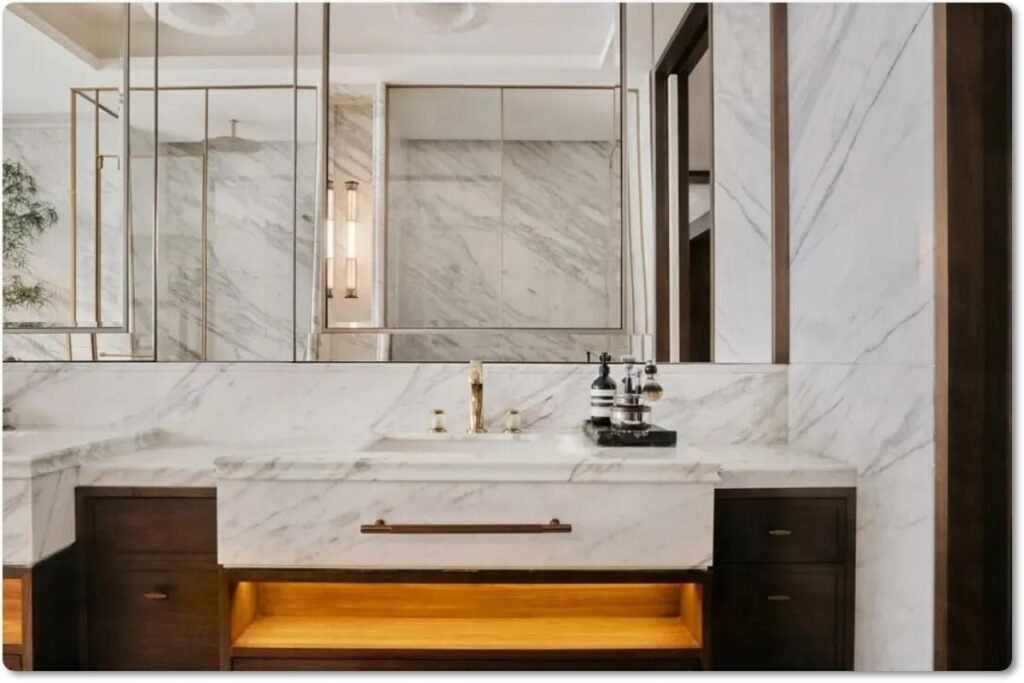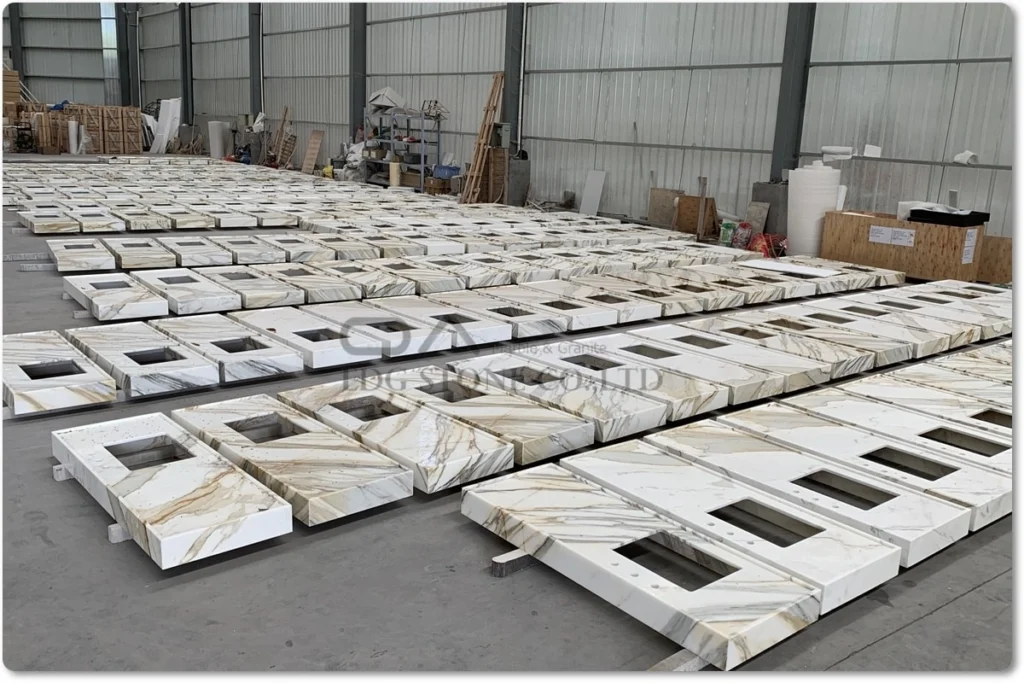
Quick Summary: Ultra-Compact Slab Sizes and Thickness
Ultra Compact Slabs: Size, Thickness, Applications and Buying Considerations
What are ultra compact slabs? Ultra compact slabs are engineered high-density surface materials designed for architectural and interior applications where durability, large-format design, low water absorption, and visual consistency are important.
Why do size and thickness matter? The dimensions and thickness of an ultra-compact slab directly influence fabrication, structural performance, transportation, installation methods, joint planning, waste rates, and total project cost.
How should buyers select the right option? Thin ultra-compact porcelain slabs are generally suitable for wall applications and renovation projects, while thicker compact slabs are typically preferred for countertops, kitchen worktops, vanity tops, furniture, and high-use surfaces.
What is changing in the market? The global architecture and construction industry is increasingly focused on material efficiency, low-maintenance surfaces, durability, sustainable construction practices, large-format design, and compliance with evolving building and environmental standards. These trends are accelerating demand for advanced ultra compact surface materials.
Key consideration: The best ultra-compact slab is not necessarily the largest or thickest option. The correct specification depends on the application, substrate, installation system, load requirements, fabrication technology, logistics conditions, and applicable local regulations.
When architects, fabricators, distributors, contractors, and homeowners search for ultra compact slabs, one of the first technical questions they ask is simple:
What sizes and thicknesses are available?
However, selecting the correct ultra compact material is more complicated than choosing between a large slab and a small slab. Dimensions affect fabrication efficiency. Thickness affects structural performance. Both influence shipping costs, installation methods, waste percentages, project budgets, and long-term durability.
For commercial projects, selecting the wrong slab specification can increase cutting waste and transportation costs. For kitchen countertops, choosing an inappropriate thickness may create unnecessary fabrication complexity. For wall applications, using a thicker material than necessary may increase structural loads and installation expenses.
This guide explains the most important ultra compact slabs sizes and thickness options, how they are used, how to compare different specifications, and what professional buyers should consider when sourcing from an ultra compact slabs manufacturer, factory, or wholesale supplier.
As a professional stone and surface material supplier, EDG Stone works with international buyers, fabricators, contractors, designers, and project developers seeking practical solutions for countertops, walls, furniture, and architectural applications.
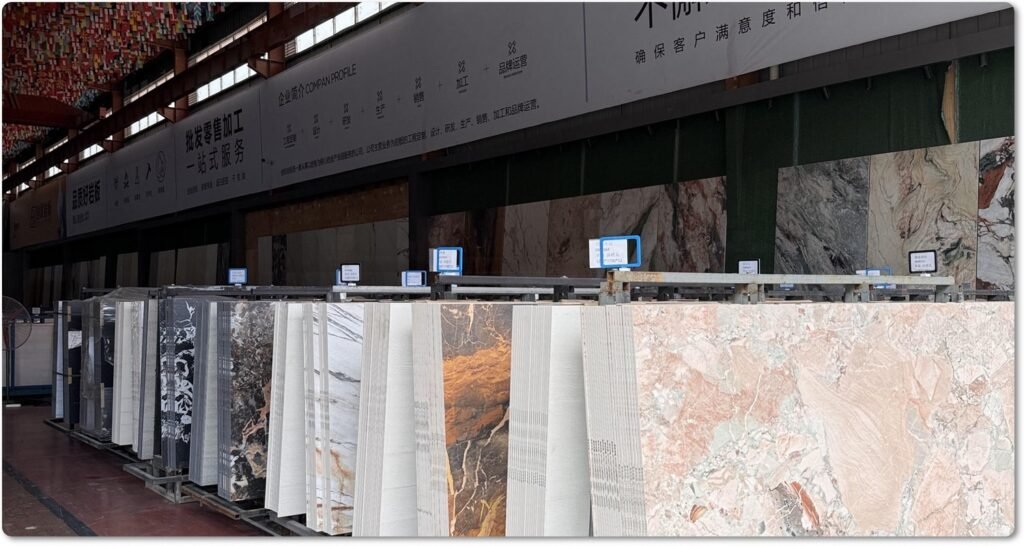
What Are Ultra Compact Slabs?
Ultra compact slabs are advanced surface materials manufactured through highly controlled industrial processes that create dense, durable, and relatively low-porosity surfaces.
The term ultra compact surface is frequently used in the construction and interior design industry to describe high-performance large-format surface materials manufactured using advanced pressing, densification, and high-temperature production technologies.
Depending on the manufacturer, ultra compact surfaces may incorporate carefully selected mineral-based raw materials and pigments that are processed under controlled conditions to achieve specific physical and aesthetic characteristics.
Common Names Used in the Market
Buyers may encounter several related terms:
- Ultra compact slabs
- Ultra compact material
- Ultra compact surfaces
- Ultra compact surface
- Ultra compact porcelain
- Ultracompact porcelain
- Compact slabs
- Large-format compact surfaces
- Sintered surface materials
- Large-format porcelain slabs
Although terminology varies between brands and manufacturers, professional buyers should always review the actual technical data sheet rather than relying only on product names.
Why Terminology Matters for Procurement
Different suppliers may use similar marketing language while offering materials with different:
- Thickness tolerances
- Density
- Water absorption characteristics
- Flexural strength
- Surface finishes
- Available dimensions
- Recommended applications
- Fabrication requirements
For this reason, B2B buyers should evaluate both the commercial description and the technical specifications.
Standard Ultra Compact Slabs Sizes
Ultra compact slabs are available in multiple formats, ranging from medium architectural panels to very large-format surfaces designed to reduce visible joints.
There is no single universal size standard because manufacturers operate different production equipment and product collections.
However, the market generally includes several major size categories.
Small and Medium Compact Slabs
Typical smaller formats may include dimensions around:
- 1200 × 2400 mm
- 1200 × 2600 mm
- 1200 × 2800 mm
- 1000 × 3000 mm
These dimensions can be practical for projects requiring easier transportation and handling.
Common Applications
Medium-sized slabs are often used for:
- Bathroom walls
- Vanity tops
- Small kitchen countertops
- Furniture surfaces
- Retail displays
- Residential renovation projects
A smaller slab can sometimes reduce handling difficulty and simplify installation in buildings with limited elevator access or narrow entrances.
Large-Format Ultra Compact Slabs
Large-format slabs are increasingly popular in contemporary architecture.
Common dimensions may include approximately:
- 1200 × 3000 mm
- 1500 × 3000 mm
- 1600 × 3200 mm
- 1600 × 3600 mm
The exact available size depends on the manufacturer and product series.
Large-format ultra compact porcelain slabs provide a major aesthetic advantage: fewer joints.
For designers, fewer joints can create a cleaner and more continuous visual appearance.
Why Large Slabs Are Growing in Popularity
Large slabs support modern architectural trends such as:
- Minimalist interiors
- Seamless wall surfaces
- Large kitchen islands
- Bookmatched designs
- Hotel lobbies
- Luxury bathrooms
- Commercial facades
- Continuous floor-to-wall concepts
Large-format design is particularly attractive for premium residential and hospitality projects.
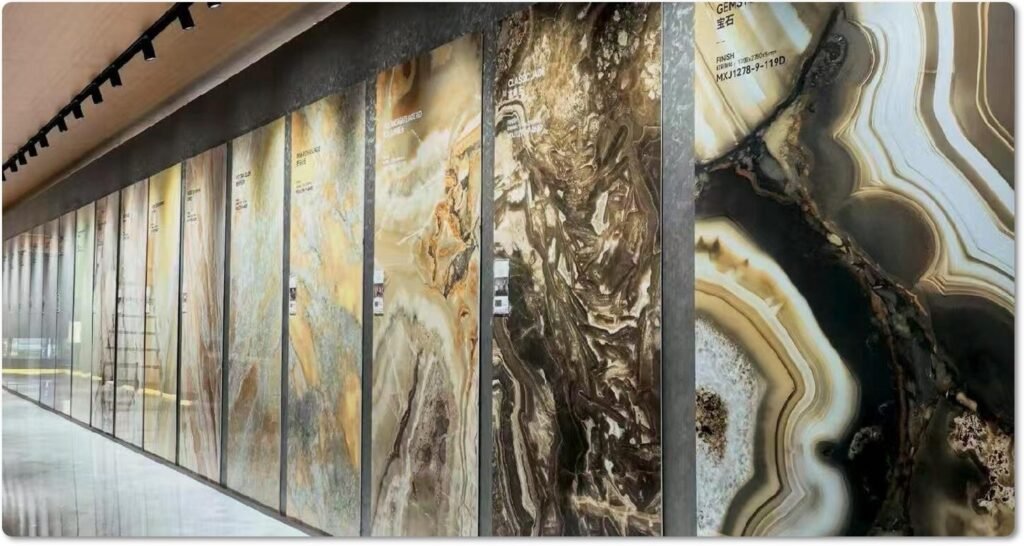
Ultra Compact Slabs Thickness Guide
Thickness is one of the most important factors when specifying an ultra compact surface.
The most common options on the market include:
3 mm Ultra Compact Slabs
3 mm materials are ultra-thin surface products primarily used where low weight and renovation efficiency are important.
Typical Applications
- Wall cladding
- Furniture overlays
- Existing surface renovation
- Decorative panels
- Lightweight architectural applications
Important Consideration
Ultra-thin slabs require careful handling.
Although advanced compact materials can offer strong technical performance relative to their thickness, thin panels may be more vulnerable to damage during:
- Transportation
- Cutting
- Handling
- Installation
Professional installation systems are therefore important.
6 mm Ultra Compact Slabs
6 mm is one of the most versatile thin-format options.
It is commonly considered for:
- Interior wall panels
- Bathroom wall cladding
- Fireplace surrounds
- Furniture surfaces
- Renovation projects
Because it is thinner than traditional stone slabs, 6 mm material can help reduce the overall weight of a finished surface system.
Why 6 mm Is Popular
The main advantages include:
- Reduced material weight
- Efficient renovation
- Large-format design possibilities
- Lower structural load
- Easier integration into wall systems
However, suitability must always be evaluated according to the installation system and manufacturer recommendations.
8 mm Ultra Compact Slabs
8 mm represents a middle-ground option for projects requiring more substantial material thickness.
Typical uses may include:
- Interior surfaces
- Furniture
- Selected flooring systems
- Commercial applications
- Custom architectural elements
Not every manufacturer offers the same size range in 8 mm.
12 mm Ultra Compact Slabs
12 mm is one of the most commercially important thicknesses for worktop applications.
It is frequently used for:
- Kitchen countertops
- Bathroom vanity tops
- Kitchen islands
- Dining tables
- Reception desks
- Commercial work surfaces
Why 12 mm Is Popular for Countertops
A 12 mm slab can provide a modern, clean profile while offering a more substantial surface than thin wall panels.
Modern kitchens increasingly use visually slim countertop profiles.
However, fabricators may use different edge treatments or structural support systems depending on the design.
For example, a countertop may visually appear to be 40 mm thick while using a thinner slab with fabricated edge construction.
This approach can create a thicker visual appearance while optimizing material consumption.
20 mm Ultra Compact Slabs
20 mm is generally selected for applications requiring a more substantial material profile.
Common applications include:
- Heavy-duty countertops
- Outdoor kitchens
- Commercial countertops
- Restaurant tables
- Large worktops
- High-use surfaces
A thicker slab can provide a more traditional solid-surface appearance.
However, thicker material also means:
- Higher weight
- Higher transportation costs
- More demanding handling
- Potentially higher material costs
Therefore, thicker is not automatically better.
The best thickness depends on the application.
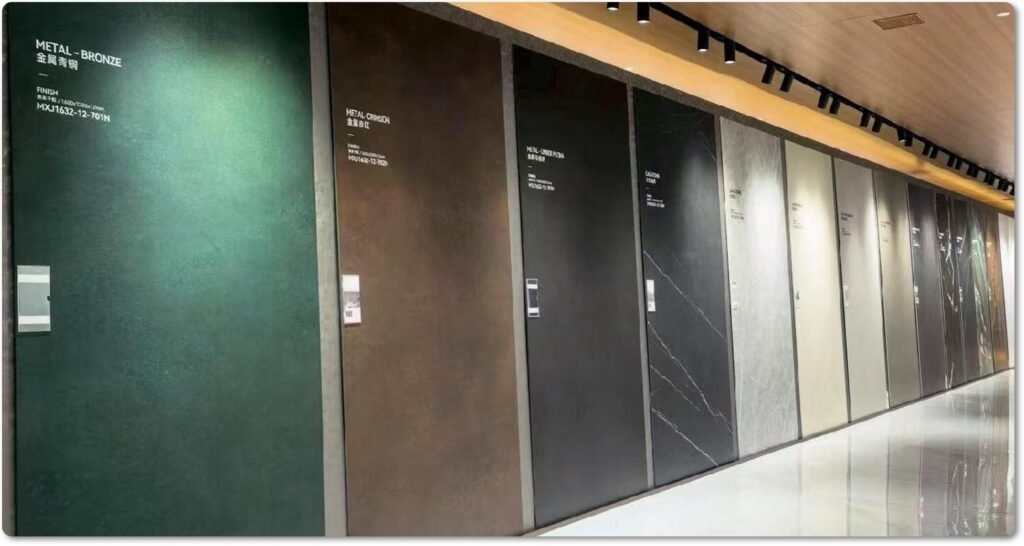
Ultra Compact Slab Size Chart
The following chart provides a practical reference for common market specifications.
| Thickness | Typical Applications | Main Advantage | Key Consideration |
|---|---|---|---|
| 3 mm | Wall renovation, decorative panels | Lightweight | Requires careful handling |
| 6 mm | Wall cladding, bathrooms, furniture | Versatile and lightweight | Installation system is critical |
| 8 mm | Interior and commercial surfaces | Balanced profile | Availability varies |
| 12 mm | Countertops and vanity tops | Popular modern worktop thickness | Requires professional fabrication |
| 20 mm | Heavy-duty worktops and outdoor applications | Substantial profile | Higher weight and logistics costs |
Important Note About Sizes
Actual slab dimensions vary by:
- Manufacturer
- Production technology
- Material collection
- Thickness
- Surface finish
- Market availability
Always request the latest technical specification sheet before placing a large commercial order.
How to Choose the Right Ultra Compact Slab Thickness
Start by considering the application.
For Wall Cladding
Recommended considerations often include:
- 3 mm
- 6 mm
- 8 mm
The primary decision factors are:
- Substrate condition
- Panel size
- Installation system
- Building height
- Local regulations
- Indoor or outdoor environment
Indoor Wall Applications
For residential bathrooms, hotel interiors, and commercial walls, thin slabs can provide an efficient large-format solution.
Exterior Applications
Facade projects require much more detailed engineering.
Wind loads, fixing systems, thermal movement, fire performance, structural conditions, and local building codes must all be considered.
For Kitchen Countertops
The most common commercial options include:
- 12 mm
- 20 mm
The choice depends on:
- Cabinet structure
- Span dimensions
- Sink cutouts
- Cooktop cutouts
- Edge profile
- Fabrication method
Countertop Cutouts Matter
A countertop is not equally strong across its entire surface.
Cutouts for:
- Sinks
- Cooktops
- Faucets
can create areas requiring careful fabrication and support.
Professional fabricators should follow manufacturer guidance for cutting, machining, reinforcement, and installation.
For Bathroom Vanity Tops
12 mm is frequently used for modern vanity designs.
Ultra compact surfaces can support:
- Floating vanities
- Integrated backsplashes
- Large-format wall matching
- Custom sink surrounds
A coordinated wall-and-vanity design can create a visually seamless bathroom environment.
For Outdoor Kitchens
Outdoor projects require additional evaluation.
Important factors include:
- UV exposure
- Temperature changes
- Moisture
- Freeze-thaw conditions
- Structural support
- Installation movement
Depending on the product and project design, you may choose thicker compact slabs for outdoor worktops.
However, local climate conditions should always influence the specification.
How Slab Size Affects Project Cost
Many buyers focus only on the price per square meter.
This can be misleading.
The true project cost depends on:
Material Utilization
A larger slab may reduce joints but increase waste if the project dimensions do not efficiently match the slab.
For example, a countertop program may generate excessive offcuts if the fabrication layouts are poorly optimized.
Shipping Efficiency
Large slabs require specialized:
- A-frame systems
- Packaging
- Containers
- Handling equipment
Shipping cost should be calculated together with material cost.
Fabrication Efficiency
Large-format slabs may allow fabricators to produce longer continuous pieces.
However, larger slabs also require suitable:
- Cutting tables
- CNC equipment
- Vacuum lifters
- Handling systems
Installation Logistics
A technically suitable slab may still be difficult to install in:
- High-rise apartments
- Renovation projects
- Narrow staircases
- Buildings with small elevators
This is why project planning must consider the entire supply chain.
Ultra Compact Slabs vs Traditional Natural Stone Thickness
Traditional natural stone slabs commonly use thicker formats for countertop fabrication.
Ultra compact materials have helped expand the market for thinner architectural surfaces.
Natural Stone
Common thicknesses include:
- 20 mm
- 30 mm
Ultra Compact Surface Materials
Common options include:
- 3 mm
- 6 mm
- 8 mm
- 12 mm
- 20 mm
This broader thickness range provides greater flexibility.
For example:
A designer may use the same visual collection across:
- Wall panels
- Vanity tops
- Kitchen countertops
- Furniture
This creates stronger design continuity.

Large-Format Ultra Compact Surfaces and Modern Architecture
Large-format architecture is becoming increasingly important.
Designers increasingly seek:
- Fewer grout lines
- Larger visual surfaces
- Seamless interiors
- Continuous material transitions
Ultra compact slabs can support this design direction.
Hospitality Applications
Hotels may use large-format surfaces for:
- Lobby walls
- Reception desks
- Guest bathrooms
- Restaurant interiors
Residential Applications
Homeowners increasingly use coordinated surfaces for:
- Kitchen countertops
- Kitchen backsplashes
- Bathroom walls
- Vanity tops
- Dining tables
Commercial Applications
Commercial projects may require:
- Durable work surfaces
- Large wall panels
- Retail interiors
- Office reception areas
Manufacturing Technology and Why Size Matters
The production of large-format compact materials requires highly controlled manufacturing processes.
A professional ultra compact slabs manufacturer must maintain consistency across:
- Thickness
- Surface quality
- Color
- Pattern
- Dimensional accuracy
Production Quality Control
Professional buyers should ask suppliers about:
Thickness Tolerance
Consistent thickness helps improve fabrication and installation accuracy.
Surface Flatness
Large slabs must be evaluated for flatness according to the relevant product specifications.
Color Consistency
For large commercial projects, batch management is important.
Packaging
Large-format slabs require appropriate protection during international transportation.
Regulations, Sustainability and the Future of Ultra Compact Materials
The building materials industry is increasingly influenced by environmental and regulatory developments.
Across major construction markets, manufacturers and project developers are paying greater attention to:
- Product environmental information
- Building energy performance
- Material durability
- Indoor environmental quality
- Waste reduction
- Circular economy principles
- Sustainable construction
Environmental Product Information
Large construction projects increasingly request documented environmental information.
Depending on the market and project requirements, buyers may encounter requests for:
- Environmental Product Declarations
- Life-cycle assessment information
- Material composition documentation
- Sustainability certifications
The exact requirements depend on the country and building certification system.
Why Durability Is Becoming More Important
Long service life can be an important part of sustainable construction.
A durable surface may reduce replacement frequency and renovation waste.
This is one reason why high-performance surface materials continue to attract interest from architects and commercial developers.
Material Efficiency
Thin ultra compact slabs can also support material-efficiency strategies in appropriate applications.
However, sustainability should not be evaluated only by thickness.
A complete assessment should consider:
- Manufacturing
- Transportation
- Installation
- Service life
- Maintenance
- End-of-life management
Fire Safety and Building Compliance Considerations
Construction regulations are becoming increasingly detailed, particularly for commercial buildings and facades.
When specifying ultra compact surfaces, buyers should evaluate relevant requirements for:
- Fire performance
- Installation systems
- Facade engineering
- Structural loading
- Building height
- Local construction regulations
Important for Facade Projects
A material’s individual technical characteristics are only one part of the final building system.
The complete assembly may include:
- Surface panel
- Adhesive or mechanical fixing
- Subframe
- Insulation
- Substrate
Therefore, facade compliance must be evaluated as a system rather than assuming that a panel specification alone determines regulatory suitability.
How to Buy Ultra Compact Slabs Wholesale?
For distributors, fabricators, and project contractors, wholesale purchasing requires more than comparing unit prices.
Step 1: Confirm Available Sizes
Ask the supplier:
- What is the maximum slab size?
- Which sizes are available in each collection?
- Are custom dimensions possible?
Step 2: Confirm Thickness Options
Not every design is available in every thickness.
Verify:
- 6 mm availability
- 12 mm availability
- 20 mm availability
Step 3: Request Technical Data
Professional buyers should request relevant information regarding:
- Thickness
- Dimensions
- Weight
- Water absorption
- Mechanical performance
- Recommended applications
Step 4: Evaluate Fabrication Compatibility
Confirm that your fabrication equipment can process the selected material.
Step 5: Review Packaging and Shipping
For international orders, discuss:
- Wooden A-frames
- Container loading
- Edge protection
- Breakage prevention
- Insurance requirements
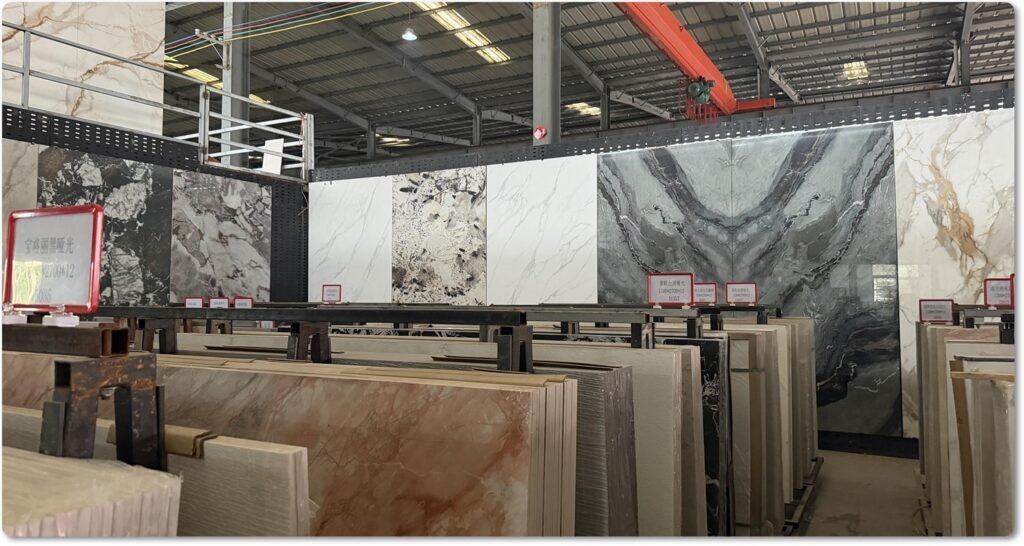
Choosing an Ultra Compact Slabs Manufacturer or Factory
When sourcing from an ultra compact slabs factory, buyers should evaluate the supplier’s overall capability.
Manufacturing Capability
Ask about:
- Production capacity
- Available sizes
- Thickness options
- Surface finishes
- Quality control
Export Experience
International suppliers should understand:
- Export packaging
- Container loading
- Documentation
- International logistics
Project Experience
A supplier with project experience may better understand:
- Quantity planning
- Batch control
- Custom cutting
- Technical drawings
- Packaging requirements
EDG Stone supports international customers sourcing stone and surface materials for residential, commercial, hospitality, and project applications.
For buyers developing a complete project, supplier coordination between material selection, fabrication, quality control, and shipping can help reduce procurement complexity.
Common Mistakes When Choosing Ultra Compact Slab Sizes
Mistake 1: Choosing the Largest Slab Without Planning Fabrication
Large slabs look impressive but may generate unnecessary waste.
Always create a cutting layout first.
Mistake 2: Choosing Thickness Based Only on Appearance
Thickness should be selected according to:
- Application
- Structural conditions
- Installation system
Mistake 3: Ignoring Logistics
Large-format slabs require specialized handling.
Check site access before ordering.
Mistake 4: Comparing Only Price Per Square Meter
Evaluate:
- Waste
- Shipping
- Fabrication
- Installation
Mistake 5: Ignoring Technical Documentation
Commercial projects should use verified specifications rather than marketing descriptions alone.
Ultra Compact Slabs Market Trends
Several major trends are influencing the future of the industry.
Trend 1: Larger Formats
Architects continue to prefer larger visual surfaces.
Trend 2: Thinner Materials
Thin materials support renovation and lightweight architectural applications.
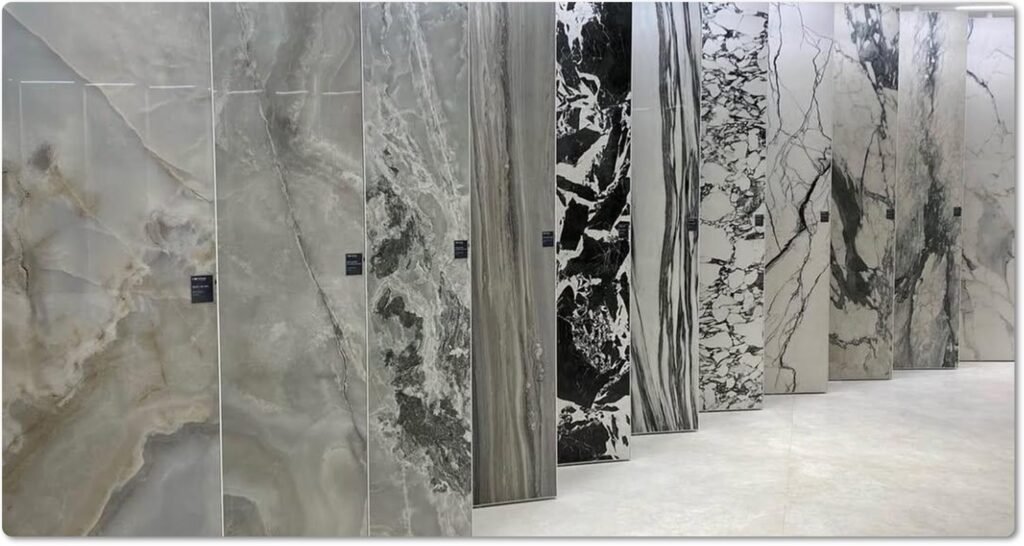
Trend 3: Marble-Look Ultra Compact Surfaces
Natural marble aesthetics remain highly popular.
Trend 4: Integrated Design Systems
The same material may be used across:
- Walls
- Countertops
- Furniture
- Bathrooms
Trend 5: More Technical Procurement
Professional buyers increasingly request:
- Technical data
- Compliance documents
- Quality control procedures
- Sustainability information
How to Select the Best Ultra Compact Slab for Your Project
The best selection process begins with five questions.
1. What Is the Application?
Wall, countertop, floor, facade, or furniture?
2. What Thickness Is Required?
Choose according to structural and functional requirements.
3. What Size Minimizes Waste?
Optimize cutting layouts.
4. What Installation Method Will Be Used?
Installation requirements can influence both thickness and size.
5. What Regulations Apply?
Commercial and architectural projects may have specific compliance requirements.
Frequently Asked Questions About Ultra Compact Slabs
What is the standard size of an ultra compact slab?
There is no single universal standard. Common ultra compact slab dimensions range from approximately 1200 × 2600 mm to large-format panels around 1600 × 3200 mm or larger, depending on the manufacturer and collection.
What thickness are ultra compact slabs available in?
Common thickness options include 3 mm, 6 mm, 8 mm, 12 mm, and 20 mm. Availability varies by manufacturer and product range.
Is 12 mm ultra compact material good for kitchen countertops?
12 mm is widely used for modern kitchen countertops and worktops. However, sink cutouts, spans, cabinet support, edge fabrication, and installation requirements should be evaluated before fabrication.
What is the best thickness for ultra compact wall panels?
Thin options such as 3 mm and 6 mm are commonly considered for wall applications. The correct choice depends on panel size, substrate conditions, installation methods, and project requirements.
Where can I buy ultra compact slabs wholesale?
Professional buyers can source ultra compact slabs from specialized manufacturers, factories, exporters, and wholesale surface material suppliers. Buyers should compare available sizes, thicknesses, technical specifications, quality control, packaging, and export capabilities.
Ultra Compact Slabs: The Complete Size, Thickness and Market Perspective
What Defines the Right Ultra Compact Slab?
The right ultra compact slab is defined by the relationship between material dimensions, thickness, application requirements, fabrication capability, installation conditions, logistics, and long-term performance. A larger or thicker slab is not automatically the better option. The best specification is the one that provides the required performance with efficient material utilization and practical installation.
Why Are Size and Thickness Becoming Strategic Purchasing Decisions?
As architecture moves toward larger visual surfaces and fewer joints, slab dimensions have become an important design and procurement variable. At the same time, thinner high-performance surfaces can support renovation efficiency and reduce material weight in appropriate applications. Buyers must therefore evaluate dimensions not only as product specifications but as factors affecting waste, transportation, fabrication, installation, and project economics.
How Is the Ultra Compact Surface Market Evolving?
The market is moving toward large-format design, thinner architectural panels, integrated wall-and-countertop concepts, marble-look surfaces, technical documentation, sustainability information, and stricter project-level compliance requirements. Architects increasingly want materials that combine visual flexibility with long service life and practical maintenance.
What Options Should Architects, Fabricators and Buyers Compare?
For walls: Compare lightweight thickness options, panel dimensions, installation systems, substrate requirements, and fire or building compliance requirements.
For countertops: Compare 12 mm and thicker options according to spans, cutouts, cabinet support, fabrication technology, edge design, and expected use.
For outdoor projects: Evaluate UV exposure, climate, temperature changes, moisture conditions, structural support, and manufacturer recommendations.
For wholesale procurement: Compare slab sizes, thickness availability, batch consistency, packaging, MOQ requirements, export capability, and technical documentation.
What Should Buyers Consider Before Making a Final Decision?
Buyers should move beyond price-per-square-meter comparisons. The total value of an ultra compact surface project depends on material utilization, cutting waste, fabrication efficiency, transportation, installation complexity, durability, and regulatory compatibility. A lower-priced slab can become more expensive when waste and logistics are poorly planned.
The Industry Direction
The future of ultra compact surfaces will increasingly be shaped by three connected forces: larger architectural formats, smarter material efficiency, and more technical procurement requirements. Manufacturers and suppliers that can provide consistent dimensions, reliable technical documentation, quality control, sustainable material information, and international project support will be increasingly valuable to global buyers.
EDG Stone Procurement Insight
For international distributors, contractors, fabricators, and project developers, the most effective sourcing strategy is to select ultra compact slabs based on the complete project system rather than a single product specification. EDG Stone supports buyers in evaluating surface materials for practical applications, helping connect product selection with fabrication requirements, project needs, quality control, and international supply considerations.
Final Takeaway
Ultra compact slabs sizes and thicknesses should be selected according to application—not simply appearance.
For lightweight wall applications, thin ultra compact surfaces may provide efficient large-format solutions. For kitchen countertops and vanity tops, 12 mm is a widely used modern specification. For heavier-duty applications, thicker options such as 20 mm may be appropriate depending on the design and structural requirements.
The most important procurement principle is simple:
Choose the size that optimizes your design and fabrication layout, and choose the thickness that meets your actual performance requirements.
As large-format architecture, sustainable construction, material efficiency, and technical compliance become increasingly important, ultra compact materials are expected to remain a significant category within the global architectural surface industry.
For distributors, fabricators, contractors, architects, and project developers looking for ultra compact slabs wholesale, working with an experienced supplier such as EDG Stone can help simplify product selection, quality planning, fabrication coordination, and international procurement.