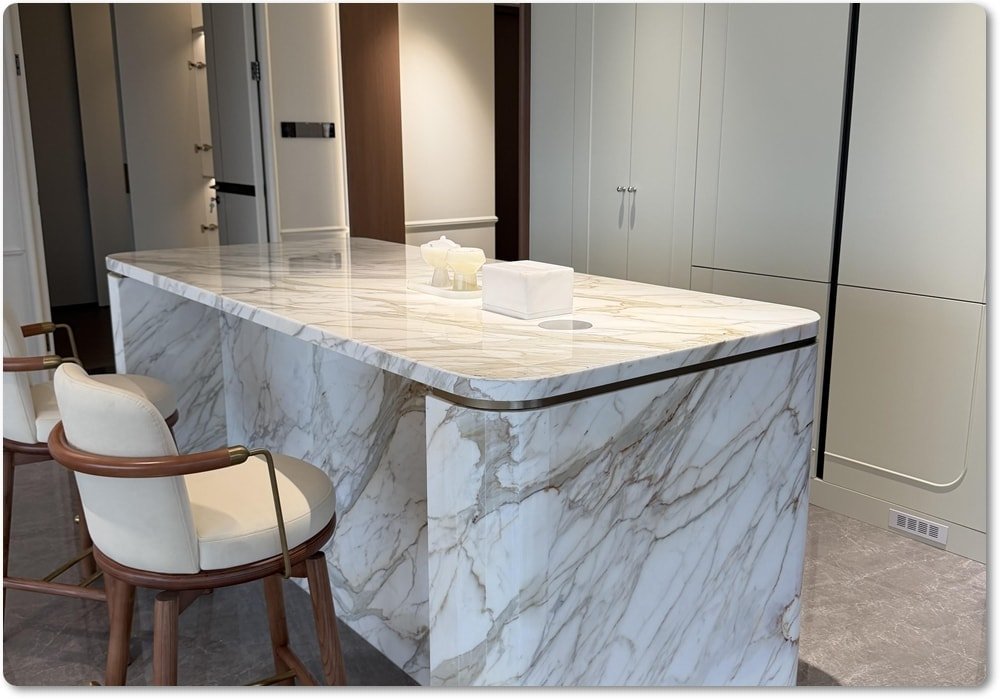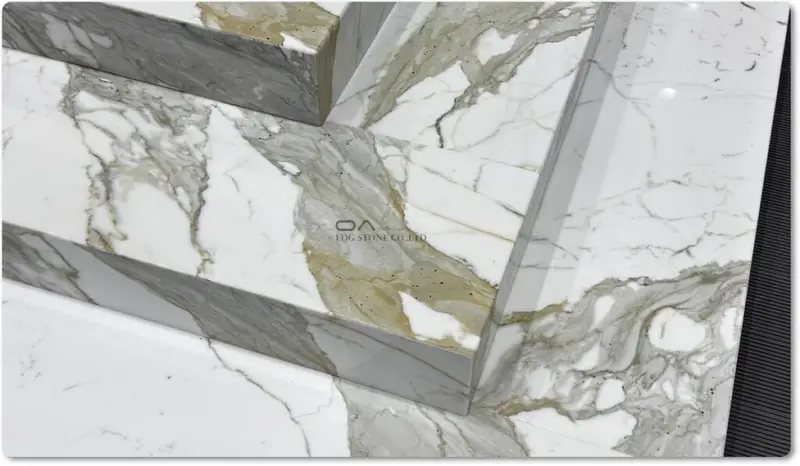
Ultra Compact Slabs vs Marble: Quick Summary
When architects, homeowners, fabricators, and global buyers compare ultra-compact slabs vs marble, they are usually asking a much larger question:
Should a project prioritize natural beauty or engineered performance?
The answer is not simply that one material is better than the other.
Marble and ultra-compact material belong to two different categories of premium surfaces. Marble has been used in architecture for thousands of years and remains one of the world’s most recognizable luxury natural stones. Ultra-compact slabs, on the other hand, represent the growing demand for highly engineered surfaces designed to meet modern expectations for durability, hygiene, heat resistance, and easier maintenance.
For kitchens, bathrooms, hotel projects, commercial interiors, and large-scale developments, the decision increasingly depends on how the surface will actually be used.
At EDG Stone, we work with natural stone and modern surface materials for international projects, wholesalers, fabricators, developers, and interior professionals. This guide explains the differences between Ultra Compact Countertops and marble, including performance, appearance, maintenance, fabrication, cost considerations, and future industry trends.
What Are Ultra Compact Slabs?
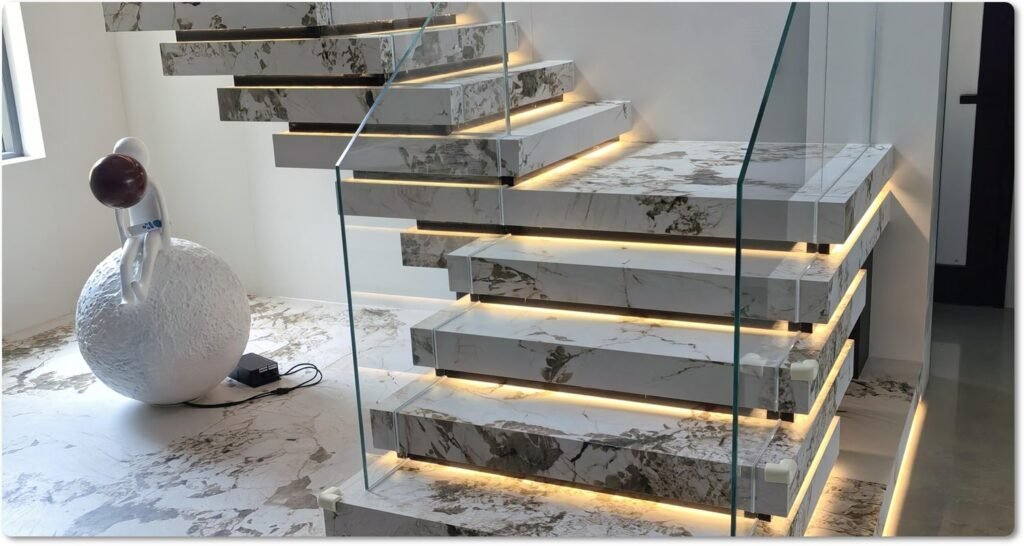
Ultra compact slabs are advanced engineered surface materials manufactured through highly controlled industrial processes.
Depending on the manufacturer and technology, these surfaces may be described using terms such as:
- Ultra compact slabs
- Ultra compact material
- Ultra compact surfaces
- Ultracompact porcelain
- Sintered stone
- Large-format compact surface
- High-performance architectural surface
The terminology can vary between brands and markets.
Generally, ultra-compact materials are produced using selected mineral raw materials that are processed under controlled manufacturing conditions involving extremely high pressure and/or high temperatures. The objective is to create a dense surface with strong resistance to moisture, stains, heat, and everyday wear.
Ultra-compact slabs are increasingly used for:
- Kitchen countertops
- Bathroom vanity tops
- Kitchen islands
- Wall cladding
- Flooring
- Fireplace surrounds
- Outdoor kitchens
- Facade applications
- Commercial interiors
- Hospitality projects
One reason for their growing popularity is that modern construction projects increasingly require surfaces that combine large-format design with predictable technical performance.
What Is Marble?
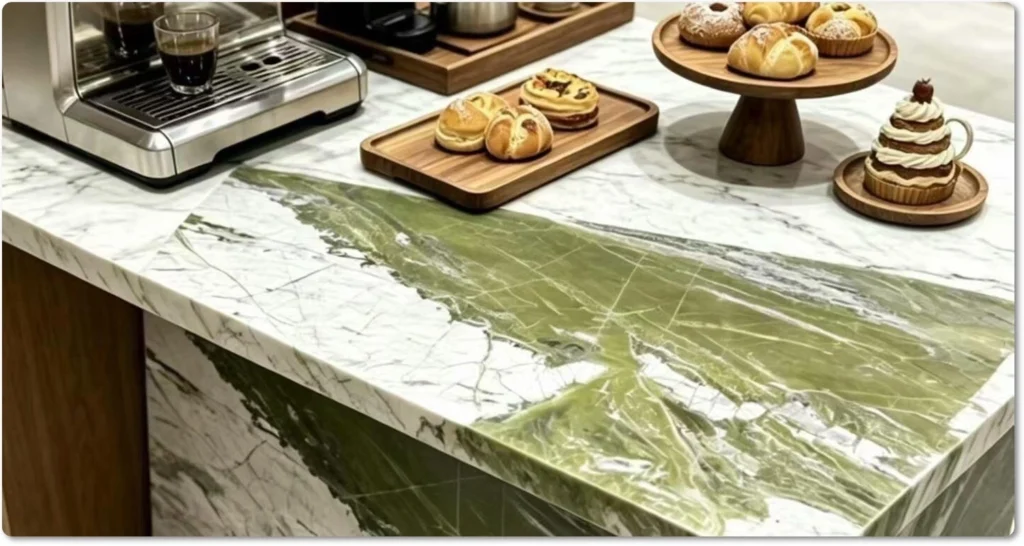
Marble is a natural stone formed through geological processes over millions of years.
Unlike engineered ultra-compact material, marble is quarried directly from natural stone deposits. Each block has its own mineral composition, color variation, veining, and geological characteristics.
This is one of marble’s greatest advantages.
No two natural marble slabs are the same.
Popular marble varieties include:
- Calacatta Marble
- Carrara Marble
- Statuario Marble
- Arabescato Marble
- Nero Marquina Marble
- Volakas Marble
- Emperador Marble
Marble is widely used for:
- Luxury countertops
- Bathroom vanity tops
- Feature walls
- Hotel lobbies
- Flooring
- Fireplace surrounds
- Furniture
- Coffee tables
- Decorative wall panels
The value of marble is not only technical.
It is also emotional, architectural, and visual.
Natural veining creates a level of individuality that engineered materials can imitate but cannot completely duplicate.
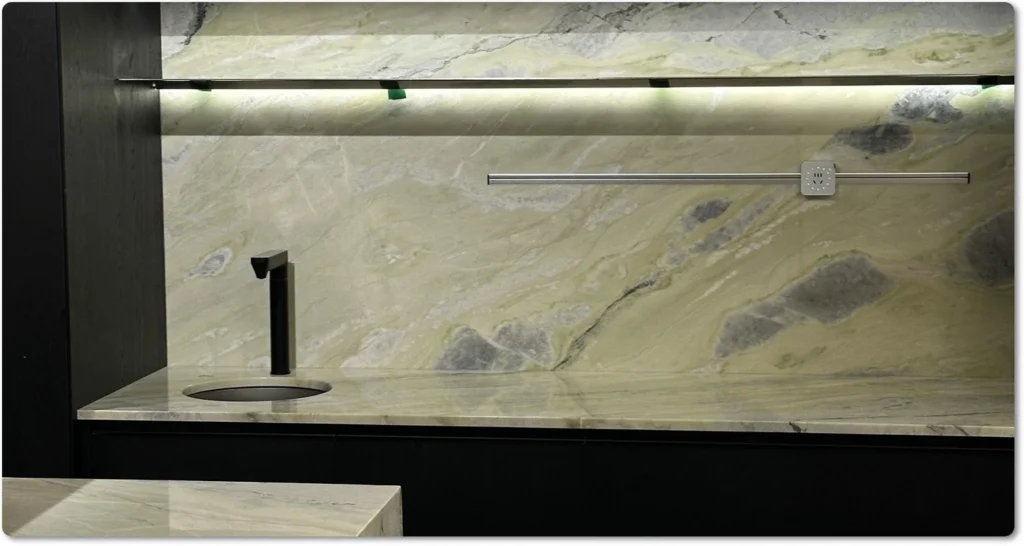
Ultra Compact Slabs vs Marble: The Main Difference
Ultra Compact Slabs vs Marble at a Glance
Ultra-compact slabs are engineered primarily for predictable performance and durability. Marble is a natural geological material valued primarily for its unique appearance, authenticity, and luxury character. Ultra-compact surfaces generally require less maintenance, while marble requires more care but offers unmatched natural variation.
| Category | Ultra Compact Slabs | Marble |
|---|---|---|
| Material Type | Engineered surface | Natural stone |
| Appearance | Controlled and consistent | Naturally unique |
| Heat Resistance | Generally excellent | Good, but requires care |
| Stain Resistance | Generally very high | Lower without protection |
| Maintenance | Low | Moderate to high |
| UV Resistance | Often excellent | Depends on stone and application |
| Natural Variation | Controlled | Extremely high |
| Porosity | Usually very low | Naturally porous |
| Repairability | Can be challenging | Often repairable/polishable |
| Luxury Character | Modern and technical | Timeless and natural |
The most important point is this:
Ultra-compact slabs are designed to perform consistently. Marble is valued because nature creates something that cannot be repeated exactly.
Appearance: Can Ultra Compact Slabs Replace Marble?
Why Marble-Look Ultra Compact Slabs Are Growing
One of the fastest-growing design categories in the surface industry is the marble-look ultra compact slab.
Modern printing and manufacturing technologies allow manufacturers to reproduce visual patterns inspired by:
- Calacatta marble
- Statuario marble
- Carrara marble
- Arabescato marble
- Travertine
- Onyx
- Granite
This gives designers access to a more controlled visual appearance while benefiting from engineered surface performance.
However, there is still an important distinction.
Marble Has Natural Depth
Natural marble often contains:
- Mineral variation
- Natural crystal structures
- Organic veins
- Fossil characteristics
- Unexpected color movement
These characteristics create visual depth that is difficult to reproduce perfectly.
A printed marble pattern may look extremely realistic, especially from a distance.
But natural stone has geological complexity throughout the slab.
Ultra Compact Material Offers Visual Consistency
For large commercial projects, consistency can be a major advantage.
A hotel, apartment development, or retail chain may need:
- Matching slabs
- Predictable colors
- Repeatable patterns
- Easier material selection
Ultra-compact slabs can make this process more predictable.
Best Choice for Appearance
Choose marble when:
- Natural uniqueness is important.
- The project is luxury-focused.
- Veining and geological authenticity matter.
- The material itself is part of the design story.
Choose ultra-compact slabs when:
- Design consistency is important.
- The project requires many matching surfaces.
- Low maintenance is a priority.
- A marble-inspired appearance is preferred.
Durability: Which Material Performs Better?
Ultra Compact Slabs Are Designed for High-Performance Applications
Ultra-compact surfaces are increasingly selected because modern kitchens and commercial spaces create demanding conditions.
These conditions include:
- Heat
- Moisture
- Food stains
- Cleaning chemicals
- UV exposure
- Heavy traffic
- Daily abrasion
Because ultra-compact materials are engineered for performance, they are often particularly suitable for high-use environments.
However, buyers should always verify the technical specifications of the exact product.
Not every ultra-compact slab has identical performance.
Different manufacturers may offer different:
- Thicknesses
- Surface finishes
- Technical standards
- Recommended applications
- Fabrication requirements
Marble Durability: Strong but Not Maintenance-Free
A common misunderstanding is that natural stone is fragile.
This is not accurate.
Marble is a durable architectural material that has survived for centuries in buildings around the world.
However, marble is more chemically sensitive than many engineered surfaces.
Acidic substances may cause etching.
Examples include:
- Lemon juice
- Vinegar
- Wine
- Certain cleaning products
Marble may also absorb liquids if it is not properly protected and maintained.
This does not mean marble is unsuitable for kitchens.
It means the user must understand the material.
A homeowner who wants a completely maintenance-free countertop may prefer an ultra-compact material.
A homeowner who appreciates natural aging and patina may prefer marble.
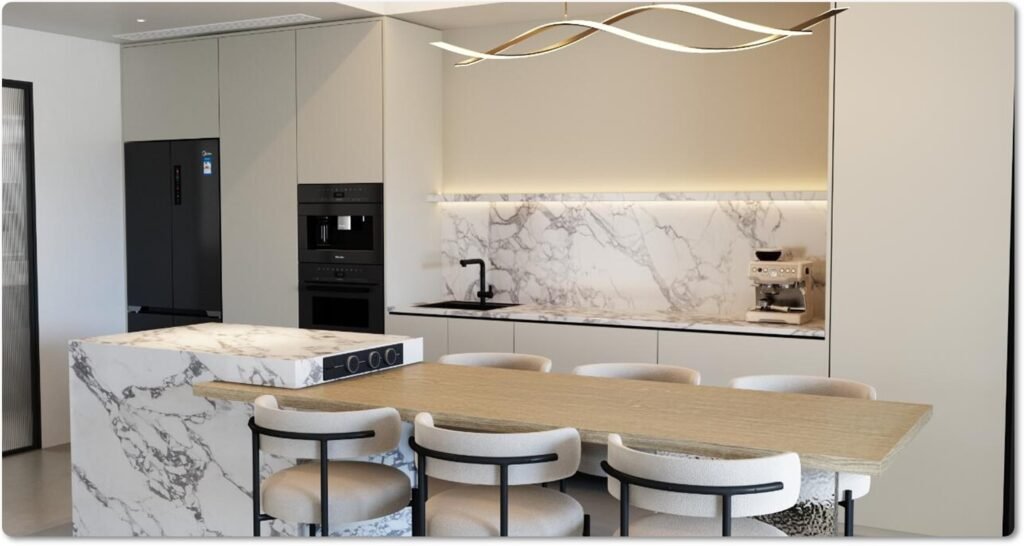
Heat Resistance: Ultra Compact Countertops vs Marble
How Heat Changes the Surface Selection Decision
Heat resistance is one of the most important reasons buyers consider Ultra Compact Countertops.
Ultra compact surfaces are generally engineered to tolerate demanding thermal conditions.
This makes them attractive for:
- Kitchen countertops
- Outdoor kitchens
- Fireplace areas
- Hospitality projects
However, “heat resistant” should never be interpreted as “indestructible.”
Manufacturers may have different recommendations regarding:
- Direct contact with extremely hot cookware
- Thermal shock
- Installation conditions
- Expansion joints
Always follow the technical instructions for the specific product.
Marble also has good natural heat tolerance, but sudden temperature changes and improper use can create risks.
For everyday kitchen use, both materials can perform well when properly installed and used.
The difference is that ultra compact material is generally designed specifically for predictable high-performance surface applications.
Stain Resistance and Porosity
Why Low Porosity Is Changing the Countertop Market
One of the strongest advantages of ultra compact material is its typically low porosity.
Low water absorption can provide benefits for:
- Kitchen countertops
- Bathrooms
- Food preparation areas
- Commercial spaces
Ultra compact surfaces are generally easier to maintain because liquids are less likely to penetrate the material.
Marble, by comparison, is naturally porous to varying degrees.
Different marble types can have very different absorption characteristics.
Therefore, marble countertops often benefit from:
- Proper sealing
- Regular maintenance
- Immediate cleaning of spills
- Appropriate stone cleaners
For busy family kitchens or commercial projects, this difference can significantly affect long-term maintenance costs.
Ultra Compact Surface vs Quartz: Where Does Marble Fit?
Understanding the Three-Way Comparison
Buyers frequently search for:
- ultra compact surface vs quartz
- ultra compact countertops vs quartz
- Ultra-compact slabs vs marble
- Quartz vs marble countertops
These materials solve different design problems.
Ultra-Compact Surface vs Quartz
Quartz countertops are engineered surfaces commonly used for residential interiors.
Ultra-compact slabs often offer stronger advantages in areas such as:
- UV exposure
- Heat resistance
- Outdoor applications
However, quartz remains a popular option because of its:
- Wide color selection
- Established fabrication network
- Consistent appearance
Marble vs Quartz
Marble offers natural beauty and geological authenticity.
Quartz offers a more controlled and lower-maintenance surface.
Ultra Compact vs Marble
This comparison is increasingly important for luxury projects.
The real question is:
Do you want natural luxury or engineered performance?
For many projects, the answer may actually be both.
A luxury hotel might use:
- Natural marble in the lobby
- Ultra-compact slabs in restaurant workspaces
- Marble feature walls in suites
- Ultra-compact vanity tops in high-use bathrooms
Material selection should follow application requirements.
Maintenance: Which Surface Is Easier to Live With?
Ultra Compact Slabs Usually Require Less Routine Maintenance
For buyers looking for convenience, ultra compact slabs are generally easier to maintain.
Daily cleaning usually involves:
- Water
- Mild cleaning products
- Soft cloths
Because of their dense surface structure, they generally require less maintenance than natural marble.
Marble requires a more careful maintenance strategy.
Marble Maintenance Considerations
Marble owners should understand:
- Sealing requirements
- Acid sensitivity
- Etching
- Surface patina
- Appropriate cleaners
Some luxury homeowners consider this part of the natural character of marble.
Others prefer a surface that remains visually consistent with minimal maintenance.
There is no universally correct choice.
It depends on lifestyle.
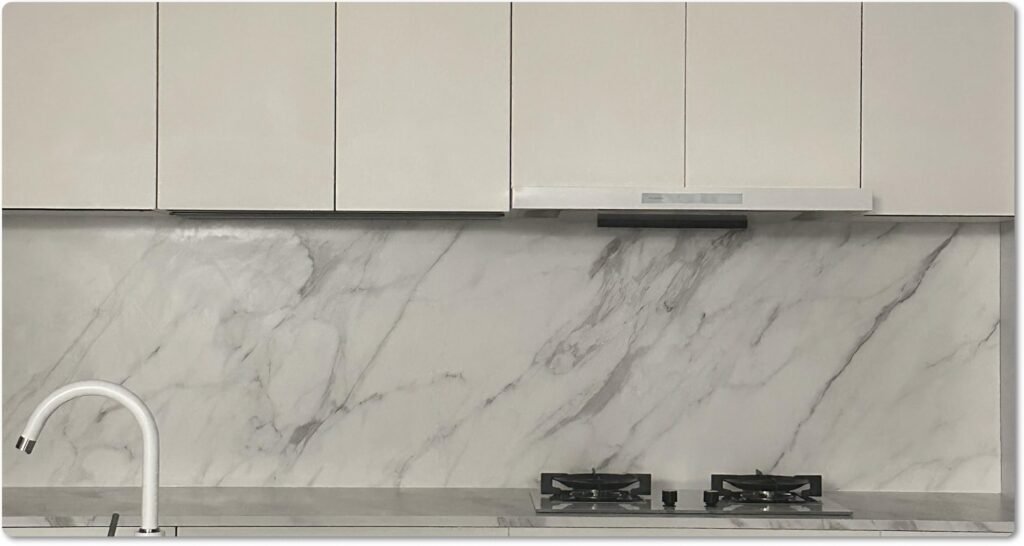
Fabrication: A Critical Difference for Contractors and Buyers
Why Fabrication Experience Matters
Material selection should never be separated from fabrication.
Both marble and ultra-compact slabs require professional processing.
However, the fabrication challenges are different.
Marble Fabrication
Marble can be processed using established stone fabrication techniques.
Experienced factories can perform:
- Cutting
- Polishing
- Edge profiling
- CNC processing
- Waterjet cutting
- Bookmatching
Marble can also be restored and refinished in many cases.
Ultra Compact Slab Fabrication
Ultra compact slabs can require specialized tools and fabrication knowledge.
Fabricators may need to consider:
- Blade selection
- Cutting speed
- Water cooling
- Edge processing
- Stress points
- Transportation
- Installation
Improper fabrication can increase the risk of damage.
For international projects, buyers should work with suppliers and fabricators experienced in the exact material category.
Cost: Are Ultra Compact Slabs More Expensive Than Marble?
Purchase Price Is Only Part of the Real Cost
The cost comparison between ultra-compact slabs and marble depends on many factors.
These include:
- Material origin
- Brand
- Thickness
- Slab size
- Design
- Fabrication
- Transportation
- Installation
- Project quantity
Premium ultra-compact countertop brands can be expensive.
Premium Italian marble can also be extremely expensive.
Therefore, it is impossible to say that one category is always cheaper.
A better calculation is:
Total Installed Cost + Maintenance Cost + Expected Service Life + Design Value
For example, a commercial project may save money over time by choosing a lower-maintenance material.
A luxury residence may accept higher maintenance because the natural marble significantly increases perceived design value.
Ultra Compact Countertop Brands: What Buyers Should Compare
Do Not Choose Only by Brand Name
When researching ultra compact countertop brands, buyers should compare technical specifications rather than relying only on marketing.
Important factors include:
Technical Performance
Ask for:
- Water absorption data
- Flexural strength
- Scratch resistance
- Heat performance
- UV resistance
- Chemical resistance
Available Sizes
Large-format slabs can reduce the number of joints.
However, larger slabs may also require more careful:
- Shipping
- Handling
- Fabrication
- Installation
Thickness Options
Popular applications may use different thicknesses depending on:
- Countertops
- Walls
- Flooring
- Furniture
Design Availability
For commercial projects, buyers should confirm:
- Batch consistency
- Repeat availability
- Future supply
- Project color matching
Industry Trends: Why Ultra Compact Materials Are Growing
Performance, Sustainability and Digital Traceability Are Reshaping Surface Materials
The global surface industry is moving beyond simple questions about appearance.
Architects, developers and procurement teams increasingly want information about:
- Material performance
- Product traceability
- Environmental information
- Technical documentation
- Compliance
- Lifecycle considerations
This trend is especially relevant in Europe.
The revised EU Construction Products Regulation, Regulation (EU) 2024/3110, is building a framework that strengthens product information and includes a construction Digital Product Passport system designed around machine-readable, structured, and searchable product information.
The broader EU Ecodesign for Sustainable Products Regulation also establishes the Digital Product Passport framework and focuses on improving sustainability, circularity, traceability, and access to product information across applicable product categories.
What Does This Mean for Stone and Surface Suppliers?
The future of material marketing is becoming more data-driven.
Manufacturers and suppliers increasingly need to prepare structured information about:
- Product identity
- Technical performance
- Material composition
- Manufacturing information
- Compliance documents
- Sustainability information
- Installation guidance
For B2B suppliers, this means a product page is no longer just a product catalog.
It is becoming a digital technical information hub.
This is also important for AI search.
Search engines and AI systems increasingly benefit from content that clearly answers:
- What is the product?
- How is it used?
- Why should buyers choose it?
- What alternatives exist?
- What technical considerations matter?
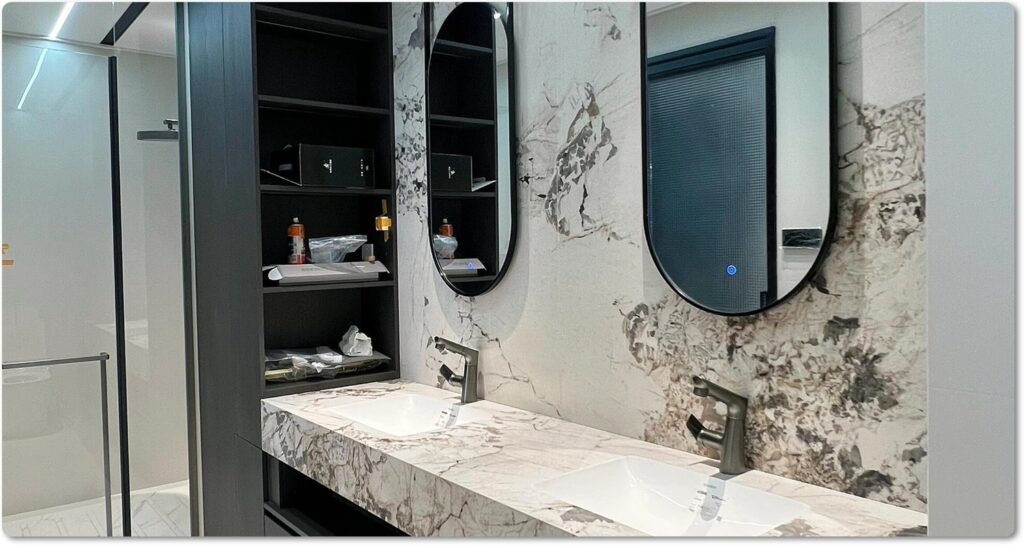
Natural Marble vs. Ultra-Compact Material: Sustainability Considerations
The Sustainability Question Is More Complex Than “Natural vs Artificial”
It is tempting to assume that natural marble is automatically more sustainable because it comes from nature.
The reality is more complicated.
Marble extraction, processing, and transportation require:
- Quarry operations
- Energy
- Water
- Cutting
- Transportation
Ultra compact material also requires industrial manufacturing and energy.
Therefore, sustainability should be evaluated based on multiple factors.
Important Sustainability Questions
Buyers should ask:
- Where was the material produced?
- How far will it be transported?
- What is its expected service life?
- Can it be reused?
- What environmental documentation is available?
- What is the maintenance requirement?
A material that lasts for decades can provide significant lifecycle value.
The best sustainability decision depends on the entire project.
Which Material Is Better for Kitchen Countertops?
Ultra Compact Countertops vs Marble Kitchen Countertops
For busy kitchens, ultra-compact countertops are often the more practical choice.
They are particularly suitable for homeowners who want:
- Low maintenance
- Strong stain resistance
- Heat performance
- Consistent appearance
Marble countertops are better suited to buyers who value:
- Natural beauty
- Luxury design
- Unique veining
- Architectural authenticity
Best for Busy Families
Ultra-compact slabs
Best for Luxury Statement Kitchens
Natural marble
Best for Outdoor Kitchens
Ultra-compact material, depending on the specific product specifications
Best for Boutique Luxury Design
Marble
Which Material Is Better for Commercial Projects?
Commercial Material Selection Requires a Different Strategy
Commercial projects should consider more than appearance.
Key decision factors include:
- Traffic level
- Cleaning frequency
- Replacement availability
- Technical compliance
- Installation complexity
- Maintenance costs
Ultra-compact slabs are often highly attractive for:
- Hotels
- Restaurants
- Retail spaces
- Office buildings
- Apartment developments
Marble remains highly valuable for:
- Hotel lobbies
- Reception areas
- Luxury residences
- Feature walls
- High-end retail
The best projects often combine both.
Buying Ultra Compact Slabs from a Manufacturer or Wholesale Supplier
How to Choose an Ultra Compact Slabs Manufacturer or Wholesale Supplier
For international buyers, sourcing is not only about finding the lowest price.
A professional supplier should be able to provide:
Technical Information
Including:
- Product specifications
- Thickness
- Available finishes
- Recommended applications
Fabrication Capability
For countertop projects, suppliers should understand:
- Cut-to-size production
- CNC processing
- Edge finishing
- Sink cutouts
- Cooktop cutouts
Quality Control
Important checks include:
- Surface inspection
- Color consistency
- Dimensional accuracy
- Packaging inspection
Export Packaging
Large slabs require professional export packaging to reduce transportation risks.
For wholesale and project buyers, packaging quality can be as important as product quality.
Why EDG Stone Supports Both Natural Stone and Modern Surface Materials
One Project Does Not Always Need One Material
At EDG Stone, we believe material selection should be based on project requirements rather than a single product category.
A successful surface project may combine:
- Natural marble
- Granite
- Quartzite
- Quartz
- Sintered stone
- Porcelain slabs
- Ultra-compact surfaces
For example:
A luxury apartment may use marble in the living room and ultra-compact material in the kitchen.
A hotel may use natural stone for decorative architectural elements while selecting high-performance slabs for high-use areas.
The best material strategy is not:
“Which material wins?”
It is:
“Which material performs best in this specific application?”
How to Choose Between Ultra Compact Slabs and Marble?
What: Ultra-compact slabs are engineered high-performance surfaces, while marble is a natural geological stone with unique visual characteristics.
Why: Buyers choose ultra-compact material for durability, low maintenance, and predictable performance. Buyers choose marble for natural beauty, exclusivity, and timeless luxury.
How: Select the material based on application conditions, maintenance expectations, design requirements, fabrication capability, and total lifecycle value.
Options: For high-use kitchens and commercial areas, ultra-compact slabs are often a practical option. For luxury feature spaces, statement countertops and natural architectural design, marble remains one of the strongest premium choices.
Consideration: The future surface market will increasingly combine material performance with digital traceability, structured technical data, sustainability information, and compliance documentation. The strongest suppliers will provide not only slabs, but also reliable product information that architects, contractors, search engines and AI systems can understand.
FAQ: Ultra Compact Slabs vs Marble
Frequently Asked Questions About Ultra Compact Slabs and Marble
1. Are ultra compact slabs better than marble?
Ultra-compact slabs are generally better for low-maintenance and high-performance applications, while marble is often better for projects that prioritize natural beauty and a unique luxury appearance. The best material depends on the application.
2. Can ultra compact slabs look like real marble?
Yes. Modern ultra compact slabs can reproduce marble-inspired colors and veining very effectively. However, natural marble still offers unique geological variation and depth that cannot be perfectly duplicated.
3. Are ultra compact countertops good for kitchens?
Yes. Ultra-compact countertops are widely considered suitable for kitchens because of their strong resistance to stains, moisture, and everyday use. Buyers should always follow the manufacturer’s installation and use recommendations.
4. Is marble more expensive than ultra-compact material?
Not always. Prices depend on the marble variety, slab quality, ultra-compact brand, fabrication requirements, shipping, and installation. Premium materials in either category can be expensive.
5. What is the difference between ultra compact surface vs quartz?
Ultra-compact surfaces and quartz are both engineered materials, but they are manufactured using different technologies and can have different performance characteristics. Ultra compact materials are often selected for heat resistance, UV exposure, and large-format architectural applications, while quartz remains highly popular for indoor countertops.
Final Semantic Insight: Ultra Compact Slabs vs Marble in the Future Surface Market
The Surface Decision Is No Longer Only About Appearance.
What is changing?
The global countertop and architectural surface market is moving toward a combination of design, performance, sustainability, compliance, and digital product information. Buyers increasingly want to understand not only how a material looks, but also how it performs, how it is manufactured, how it should be installed,d and how its technical information can be verified.
Why does ultra-compact material continue to grow?
Ultra compact slabs respond to modern demand for large-format surfaces with predictable performance, low maintenance and broad application possibilities. They are particularly relevant for kitchens, hospitality, commercial interiors and projects where operational durability matters.
Why does marble remain important?
Marble cannot be reduced to technical performance alone. Its value comes from geological authenticity, natural variation, architectural history, and emotional connection. In luxury interiors, natural marble remains a powerful design material.
What are the best options?
Choose ultra-compact slabs for demanding, high-use, and lower-maintenance applications. Choose marble when natural uniqueness and timeless luxury are central to the project. Combine both materials when different spaces require different performance and design characteristics.
What should buyers consider before purchasing?
Evaluate application requirements, maintenance expectations, technical specifications, fabrication capability, installation conditions, logistics, project quantity, compliancedocumentationo,n and long-term lifecycle value.
The key industry trend:
Future-leading surface suppliers will combine premium materials with structured technical information, machine-readable product data, traceability,ty and transparent documentation. This approach will support architects, developers, procurement teams, search engines and AI-powered discovery platforms.
Bottom Line:
Ultra-compact slabs are not replacing marble everywhere, and marble is not the best solution for every application. The future of the surface industry is material specialization: using the right material, in the right place, for the right performance and design objective.
Work with EDG Stone for Ultra Compact Slabs and Natural Stone Projects
Whether you are sourcing ultra compact slabs, Ultra Compact Countertops, marble slabs, kitchen countertops, vanity tops or custom stone products, EDG Stone can support international buyers with material sourcing and project-oriented stone solutions.
From natural marble to modern engineered surfaces, the right solution starts with understanding your application, design requirements and performance expectations.
Contact EDG Stone to discuss your next wholesale, commercial or custom surface project.