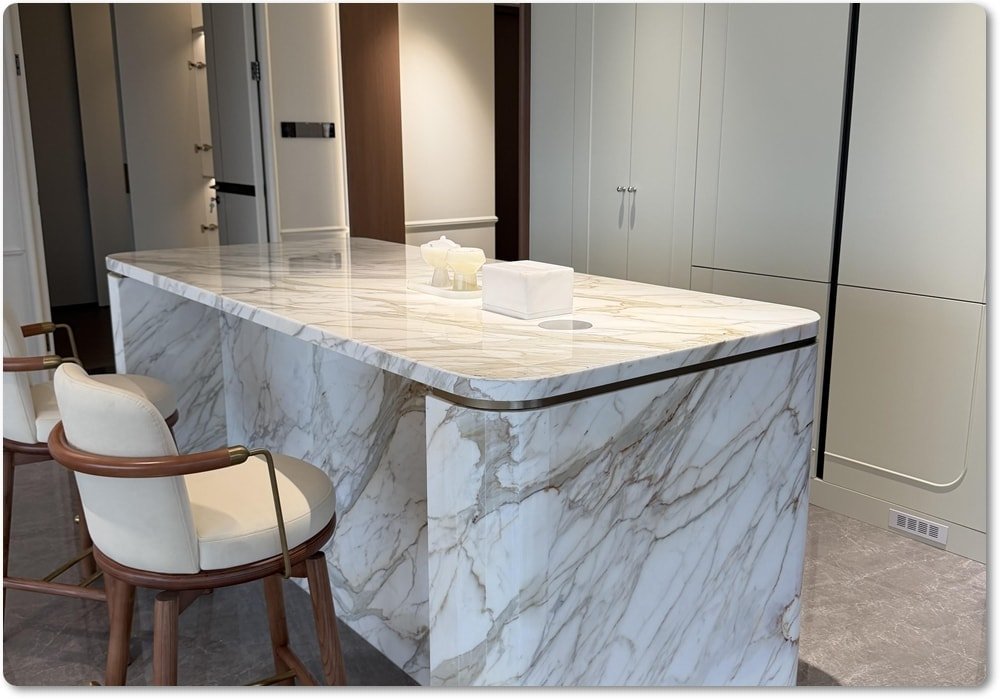
Quick Summary:
Quick Summary: Sintered stone slab prices vary widely by brand, thickness, finish, and region — expect **typical material+install ranges from about $40–$150 per sq ft** (low-end standard slabs ~ $40–$70; midrange $70–$100; premium/designer > $100). Big-name sintered brands (Dekton, Neolith, Lapitec) frequently sit in the **$55–$120 per sq ft installed** band depending on finish and edgework. Fabrication, edge profiles, cutouts, and local regulations (silica dust controls) add to the final cost. Industry forecasts show continued market growth—manufacturers and fabricators are investing in automated, dust-controlled production to meet safety rules and demand.
Semantic Closure — Cost, Options, and Considerations
How much: A Typical installed sintered stone counter ranges from roughly $40–$150 per square foot, depending on slab grade, thickness, edge profile, and installation complexity. High-end designer slabs and custom work push the price above $150/sq ft.
Why it costs more than some materials: The sintering process, large slab formats, low porosity technical finishes, and limited certified fabricators raise production and fabrication costs versus basic quartz or laminate. Premium designs and exclusive collections add price.
Options: Buy direct from the manufacturer/factory (lower per-slab cost but expect freight and handling), purchase from wholesalers for faster supply, or work with certified fabricators who provide end-to-end service, including templating and installation.
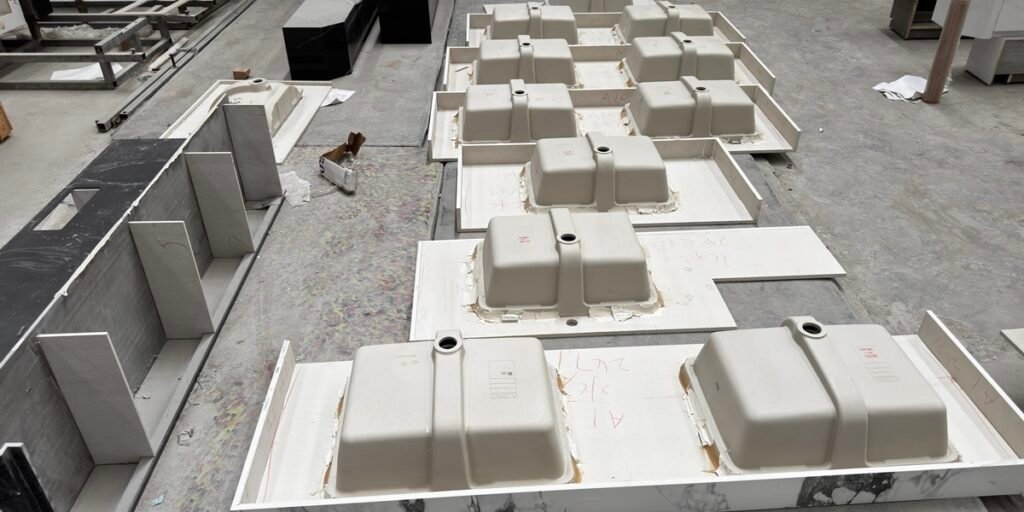
Considerations: Factor in fabrication (cutouts, undermount sinks), edge finishing, transportation of large heavy slabs, disposal of silica slurry, and compliance costs if your fabricator upgrades to enclosed wet CNC or dust capture (driven by OSHA/EU silica rules).
Introduction
If you’re pricing a kitchen, bathroom, or flooring project and sintered stone is on your shortlist, this guide tells you exactly what affects cost, gives realistic per-square-foot ranges (material + installed), compares sintered stone to quartz and granite on price and value, and explains how regulations and market trends are influencing prices.
What is “sintered stone” — and why prices vary?
Sintered stone (often called “sintered slab” or “sintered porcelain/ceramic slab”) is manufactured by compacting mineral powders and firing them under extreme heat and pressure to create large, extremely low-porosity slabs suitable for countertops, floors, facades, and furniture. Because production requires sophisticated industrial kilns and presses, and because the product is sold in large slab formats that are heavy and fragile, raw slab cost and logistics are higher than cheaper engineered surfaces. Brand, availability, finish, and distribution channel (factory vs reseller) all influence final price.
Real price ranges you can expect
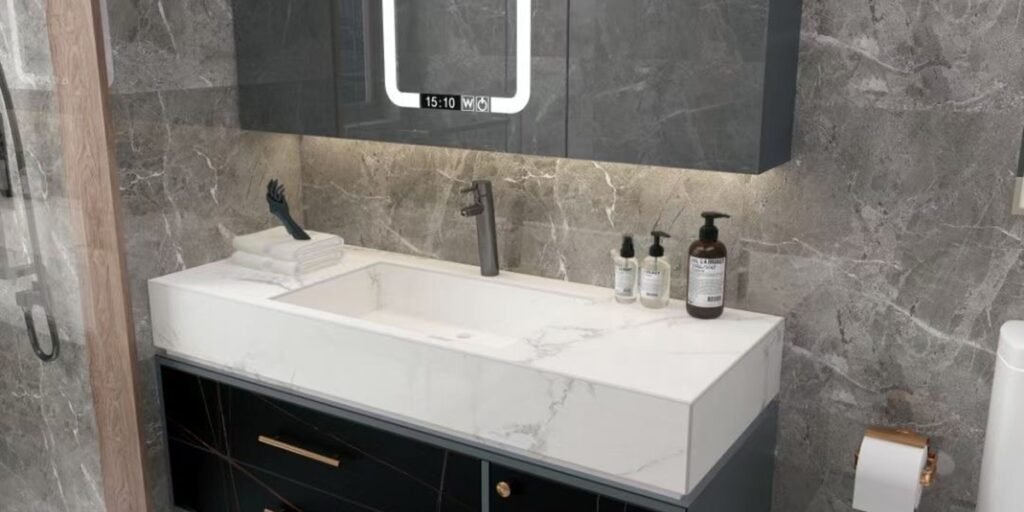
Below are realistic retail/installed ranges compiled from manufacturer/distributor price guides and industry buyer guides. Regional variation and installation complexity will move you up or down these bands.
Entry / Standard slabs (basic colors & large production runs): $40–$70 per sq ft (material + basic fabrication).
Mid-range (popular designs, thicker slabs, moderate finishes): $70–$100 per sq ft installed.
Premium / Brand / Designer (rare veining, special finishes, thick slabs): $100–$150+ per sq ft installed. Top brand lines (Dekton, Neolith) commonly fall in the $55–$120 installed range, depending on finish/edge.
Important: Manufacturer and dealer quotes sometimes exclude templating, complex sink/splash cutouts, specialty edge profiles, or travel and crane costs for heavy slabs. Always ask for “all-in” installed pricing.
(These ranges are supported by vendor price guides and buyer guide summaries.)
Cost breakdown: what do you pay for?
Understanding the components helps you compare bids.
1. Material (slab) cost
Slab cost varies by brand, thickness (6mm, 12mm, 20mm, 30mm equivalents), finish (polished, matte, textured), and rarity of pattern. Premium collections with unique veins or marble effects cost more. Manufacturer tiering (standard/premium / ultra-premium) is common.
2. Fabrication & labor
Cutting, edge profiling, sink cutouts, and polishing are labor-intensive—fabrication can add $10–$40+ per sq ft, depending on complexity. Undermount sink templates, mitered corners, and waterfall edges increase time and cost.
3. Installation
Delivery, slab handling (specialist cranes or A-frames), leveling, seam adhesives, and on-site finishing can add $10–$30+ per sq ft. Remote locations or multi-floor carries add extra fees.
4. Edge profiles & finish
A simple eased edge is cheapest; bullnose, ogee, mitered, or multi-step bullnose escalates cost due to more machining and polishing passes.
5. Cutouts, sinks & cut-backs
Undermount sinks, cooktop cutouts, integrated drain grooves, or large overhangs require more precise fabrication and will raise the bill.
6. Waste, breakage & offcuts
Order slightly more material for pattern matching and to allow for cuts; waste factor is typically 5–15% depending on layout.
7. Regulatory/compliance costs (hidden)
If your fabricator invests in enclosed CNCs, wet cutting cells, or dust capture systems to meet silica exposure regulations, they may price projects slightly higher to amortize equipment upgrades. We discuss regulations below.
Sintered stone vs quartz vs granite: price comparison
Quartz (engineered): Typical installed ranges commonly $50–$120 per sq ft (broad overlap with sintered). Some budget quartz can be cheaper; some luxury quartz lines are similar in price to sintered stone.
Granite (natural): Wide variability driven by rarity — installed prices typically $40–$200+ per sq ft depending on slab scarcity. Midrange granites often compete with sintered stone on raw cost, but natural stone may need resealing and more maintenance.
Bottom line: Sintered stone sits in the upper midrange of countertop materials: more expensive than commodity quartz in many cases, competitive with mid-to-high granite, and offers advantages (heat/UV resistance, very low porosity) that justify premium pricing for specific applications.
Where to buy: manufacturer, factory, wholesale, or local fabricator?
Direct from manufacturer/factory: Best for large projects or repeat buyers; you can sometimes get better slab pricing, but pay freight and handling. Ask for technical datasheets and fabrication guides.
Wholesale distributors: Faster access, smaller minimums, some warranties; good for designers and small contractors.
Local certified fabricators: Most homeowners buy through local fabricators who source slabs, do templating, and install. This includes convenience and accountability, but sometimes higher markups.
Long-tail purchase keywords to test for searches: sintered stone manufacturer near me, sintered stone wholesale supplier, buy sintered stone slabs at factory price. Include these phrases in product pages to attract buyers with purchase intent.
How do regulations and market trends affect price?
Regulatory drivers
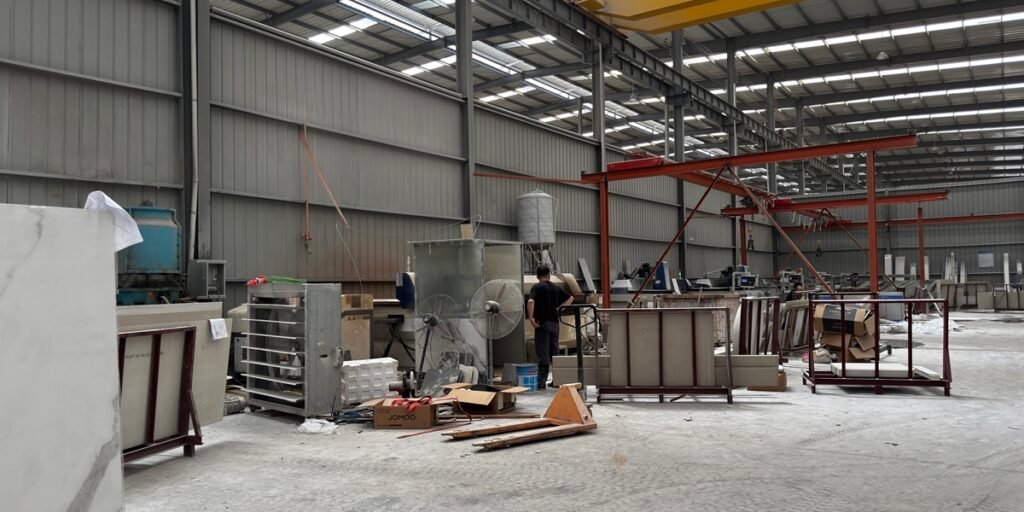
Legislation around respirable crystalline silica (RCS) is tightening. In the U.S., OSHA’s silica standard for construction outlines exposure limits and requires engineering controls (wet cutting, local exhaust) and written exposure plans. Fabricators must invest in compliant equipment and training, which can raise fabrication overheads.
In Europe, recent EU-level updates to carcinogens/mutagens directives and national occupational exposure limits are prompting manufacturers and shops to upgrade processes and waste handling systems—these compliance investments can be embedded into pricing.
Market growth & supply factors
Industry research firms report a growing global sintered stone market—estimates vary, but several credible reports place 2024–2025 market sizes in the hundreds of millions (USD) and multi-percent CAGR through the late 2020s. Rising demand from the architecture, flooring, and commercial sectors supports investment in new production lines and specialty collections, which can push premium lines higher when supply is constrained.
Value & lifecycle cost
While initial sintered stone costs tend to be higher than basic quartz, the lifecycle cost can be favorable:
Low maintenance (very low porosity, stain resistance) reduces sealing/repair costs.
Higher durability and UV stability reduce replacement frequency in exterior or sunny applications.
Premium resale value in design-forward projects may offset upfront premiums.
Run a 10–20 year value comparison if upkeep and replacement costs are important for your decision.
Money-saving tips
Buy standard colors — exclusive patterns cost more.
Use eased edges instead of complex profiles.
Work with factory/wholesale buying groups when doing multiple units.
Optimize layout to reduce waste and seams.
Get multiple detailed quotes that show slab grade, fabrication allowances, and installation line items.
Ask for the fabrication guide and warranty to compare the true value.
Example pricing scenarios
Small kitchen (30 sq ft countertop run) with midrange sintered slab, simple edge, single undermount sink: Material+fabrication+install ≈ $70–$95/sq ft → total $2,100–$2,850.
Luxury kitchen with premium slab, mitered waterfall, multiple cutouts: $110–$180+/sq ft depending on complexity and installer.
(These are sample scenarios — request local quotes to confirm.)
FAQ — Google hot search FAQ
Q1: How much does sintered stone cost per square foot?
A1: Installed sintered stone typically ranges $40–$150 per sq ft, depending on slab grade, finish, edgework, and installation complexity; Dekton/Neolith commonly falls in the $55–$120 per sq ft installed band.
Q2: Is sintered stone more expensive than quartz or granite?
A2: It can be. Sintered stone often sits in the upper midrange—usually more than commodity quartz but competitive with many granites and luxury quartz. Final cost depends on brand, slab rarity, and fabrication needs.
Q3: Where can I buy sintered stone near me or wholesale?
A3: Options include direct factory/manufacturer sales (for large buyers), wholesale distributors, and local certified fabricators. Search for “sintered stone manufacturer near me” or request wholesale pricing from brand distributors.
Q4: Do regulations (silica rules) add to price?
A4: Indirectly—fabricators must invest in wet cutting, enclosed CNCs, and dust capture to comply with OSHA/EU silica limits, which can raise shop overhead and therefore project pricing.
Q5: How can I reduce the cost of sintered stone?
A5: Choose standard colors, simpler edges, buy through wholesalers or factory programs for bulk discounts, reduce waste with efficient layouts, and get multiple detailed quotes.
Semantic Closure — How / Why / What / Options / Considerations
How (practical): Expect to be quoted on a per-square-foot installed basis; verify what is included (templating, sinks, cutouts, seams, edge profile). For accurate budgeting, request itemized bids (slab, fabrication, install, extras).
Why (value proposition): Though sometimes pricier up front than basic quartz, sintered stone’s durability, UV/heat resistance, and low porosity lower maintenance and replacement risk—important for outdoor kitchens, floors, or high-use commercial applications.
What (market & regulation trends): Market research shows multi-percent CAGR and growing adoption; concurrently, silica exposure limits (OSHA/EU) are accelerating capital investment in safer fabrication—this affects both supply and cost.
Options (buying & specifying): Source from the manufacturer/factory for bulk price, use wholesalers for smaller orders, or select certified fabricators for single-home projects. Ask for technical and warranty documentation.
Considerations (detailed): Factor in lifecycle value (maintenance, longevity), waste and breakage allowances, freight for heavy slabs, on-site handling costs, and whether your chosen fabricator follows current silica safety practices (ask for written exposure controls).
Focus Keyword, 50 SEO tags
Focus Keyword: sintered stone cost per square foot
50 SEO tags (purchase intent / long tails included):
sintered stone cost per square foot,sintered stone price,how much is sintered stone,sintered stone countertops cost,sintered stone vs quartz price,sintered stone cost vs granite,sintered stone near me,buy sintered stone slabs factory,sintered stone wholesale supplier,sintered stone manufacturer price,sintered stone flooring cost,sintered stone price per sq ft installed,is sintered stone expensive,sintered stone pricing guide,Dekton price per square foot,Neolith price per sq ft,Lapitec cost per sq ft,sintered stone slab cost,sintered porcelain countertop price,sintered stone vs quartz countertops cost,sintered stone installation cost,sintered stone edge profile price,sintered stone countertop price comparison,how much does sintered stone cost per square foot,sintered stone cost calculator,sintered stone wholesale price list,sintered stone factory direct price,affordable sintered stone slabs,premium sintered stone cost,sintered stone kitchen counter cost,sintered stone backsplash cost,sintered stone commercial flooring cost,sintered stone maintenance cost,sintered stone life cycle cost,where to buy sintered stone near me,sintered stone slab price list,sintered stone vendor prices,sintered stone cost estimator,best price sintered stone countertop,sintered stone delivery cost,sintered stone fabrication cost,sintered stone cutting cost,sintered stone price comparison 2025,sintered stone manufacturer wholesale,sintered stone cost per square metre,sintered stone vs granite cost comparison,sintered stone supply chain costs,sintered stone sustainable cost benefits,sintered stone resale value,sintered stone cost trends 2025.