Quick Summary:
Quick Summary: Sintered stone is a kiln-fired, high-density engineered slab that combines ceramic performance with stone aesthetics. For dining and occasional tables, it’s an excellent choice because it resists scratches, heat, and UV fading, cleans easily, and is available in thin, large-format panels that enable elegant, slim tabletops. Tradeoffs: higher upfront cost, specialist fabrication (diamond tooling/CNC/waterjet), and potential for brittle chips under sharp point impact. Fabricators must also manage silica dust during cutting—so pick a certified shop that uses wet cutting or an enclosed dust-collection system.
Semantic closure
What it is: A non-resin, high-temperature sintered slab (brands: Dekton, Neolith, Lapitec, and many others) that behaves like porcelain/ceramic but in large stone-like formats.
Why it matters for tables: Exceptional scratch, stain, heat, and UV resistance, plus thin slab options for stylish, lightweight tabletops.
Main tradeoffs: Cost and fabrication complexity; chips can occur under heavy point impacts; shop safety/compliance (silica) matters.
Introduction
Sintered stone is one of the fastest-growing materials in contemporary interiors and furniture design. It’s used for kitchen counters, cladding, flooring, and increasingly for dining and occasional tables. If you’re shopping for a table or specifying furniture for hospitality, you probably want a candid answer: Are sintered stone tables good? The short version: yes — for most uses, sintered stone tables combine aesthetic versatility with long-term performance, but they require the right fabrication, design details, and an understanding of cost and safety implications.
This guide covers: what sintered stone is, how sintered stone tabletops compare to marble and other materials, real-world pros and cons, price expectations, design and fabrication tips, care and maintenance, regulatory and safety points (silica), and buying routes (manufacturer/factory/wholesale/fabricator).
What is sintered stone?
Sintered stone is a manufactured slab produced by compressing mineral powders (including silica, natural minerals, and pigments) and firing them at extremely high temperatures and pressures. The result is a dense, vitrified slab with very low porosity and excellent thermal, chemical, and mechanical resistance compared to resin-based engineered stone. Unlike quartz (which contains polymer binders), sintered stone is essentially a ceramic/porcelain product produced in large panels and often sold under brand names such as Dekton, Neolith, and Lapitec.
How does sintered stone perform as a tabletop material?
Durability: scratch, heat, and stain resistance
Sintered stone ranks highly on scratch and abrasion resistance: everyday cutlery, plates, and cups are unlikely to mar the surface in normal use. It also tolerates hot items better than resin-based surfaces because it contains no polymer binder that can discolor or deform under thermal stress. These properties make it especially attractive for dining tables and outdoor café tables.
UV & outdoor performance
Many sintered stone collections are formulated to resist UV fading and freeze-thaw conditions, which is why you’ll see manufacturers and designers specifying sintered stone for outdoor tabletops and terrace furniture. Outdoor reliability is a key differentiator compared to many engineered quartz products.
Weight & format advantages
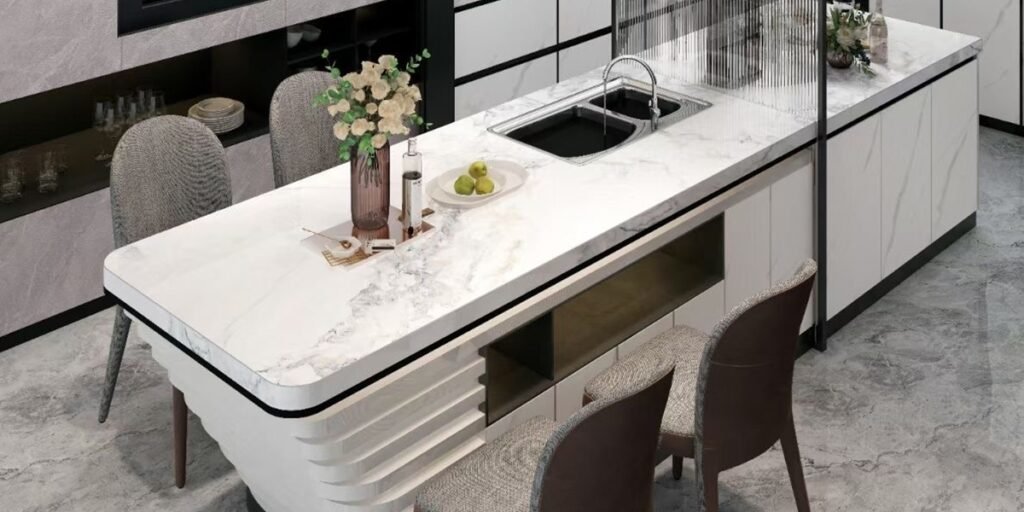
Sintered slabs are available in large, thin formats (for example, 6–12 mm panels), which reduce weight while giving large spans without many seams. The thin-slab option lets designers create elegant, slender tabletops with waterfall edges and slim profiles that would be heavy and expensive in natural stone.
Sintered stone vs marble for dining tables
Visual & tactile differences
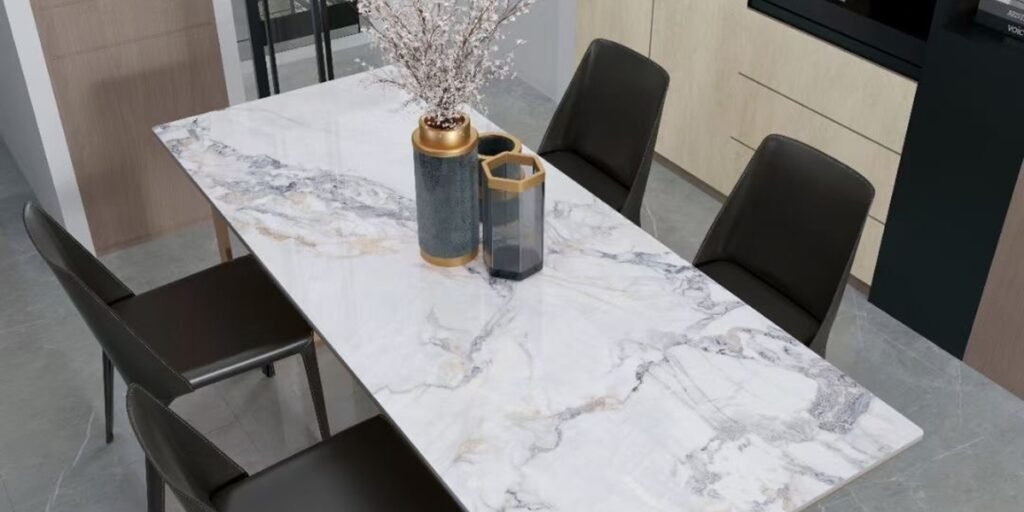
Sintered stone can convincingly mimic marble veins and patterns while offering a homogenized consistency from slab to slab. Natural marble, on the other hand, has unique, unpredictable veining and a depth that many buyers prize. If you want perfect pattern repeatability or are matching multiple tabletops, sintered stone offers better consistency.
Practical performance
Scratch & stain: Sintered stone wins — less porous and more scratch resistant.
Heat: Sintered stone tolerates hot pans better.
Repair & patina: Marble develops patina and is easier to refinish locally when worn; sintered stone is very durable, but chips may be harder to repair invisibly.
Weight and installation
Sintered stone in thin formats is lighter and easier to handle than thick marble slabs, reducing shipping and installation complexity and sometimes overall project cost despite higher per-square-foot material price.
Pros & cons
Pros
High scratch and abrasion resistance. Ideal for heavy-use dining tables and restaurant settings.
Excellent heat resistance; safe for hot dishes. No resin to soften or discolor.
Low porosity and stain resistance. Easy to clean and maintain
UV and weather resistant (outdoor capable). Good for patio furniture and alfresco dining.
Large formats and thin profiles enable sleek tabletops and minimal seams.
Cons
Higher upfront cost than commodity quartz or laminate — expect premium pricing for designer ranges. (Pricing section below.)
Fabrication complexity: requires diamond tooling, CNC, or waterjet; not all furniture makers have the capability. Expect to work with specialized fabricators.
Brittle chips under concentrated impact: while scratch-proof, thin edges can chip if hit by a very hard, sharp object. Design supports and edge detailing reduce this risk.
Repair: local repairs are possible but often require sa pecialist, and color/pattern matching can be tricky.
How much do sintered stone tables cost?
Pricing for sintered stone varies by brand, finish, thickness, fabrication complexity, and region, but recent buyer guides and industry sources show a typical range for sintered stone surfaces of roughly $60–$150 per square foot installed for countertops and slabs — tabletop projects fall within similar bands depending on fabrication and base design. If you purchase a finished table from a furniture maker, expect prices from about $800 for simple small tables to $3,000–$6,000+ for large designer pieces with premium slabs and custom bases.
Money-saving tips: choose standard slab colors, simple edge profiles (eased edge), and buy through wholesale or factory channels for bulk orders. Ask for itemized quotes that separate material, fabrication, and installation.
Design & engineering tips for long-lasting table tops
1. Choose the correct thickness and reinforcement
Thin slab formats (6–12 mm) look great but require substrate reinforcement — a furniture maker will often glue the sintered top onto a lightweight substrate (aluminum honeycomb or plywood) or use a braced steel base to prevent flex and reduce risk of cracking.
2. Edge profiles & overhangs
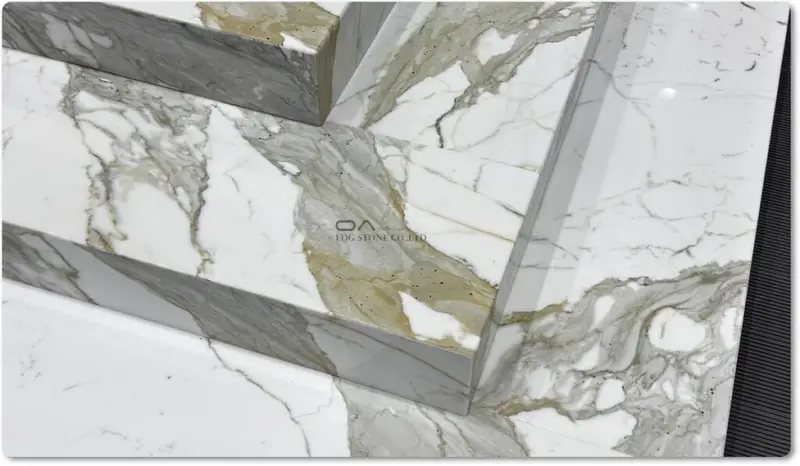
Avoid ultra-thin unsupported overhangs. If you want a waterfall edge, ensure adequate support heads and consider slightly thicker edges (12–20 mm equivalent) or internal supports at corners.
3. Joints & seams
Sintered stone can be mitered for near-invisible seams if properly fabricated. For tables, plan layouts to minimize seams under load points (e.g., center of a dining table).
4. Attachment to bases
Use discrete mechanical anchors or adhesive bonding recommended by the slab brand; ensure drill holes are performed by experienced fabricators — improper fixing can create stress points and chips.
Fabrication & safety: silica and workplace controls
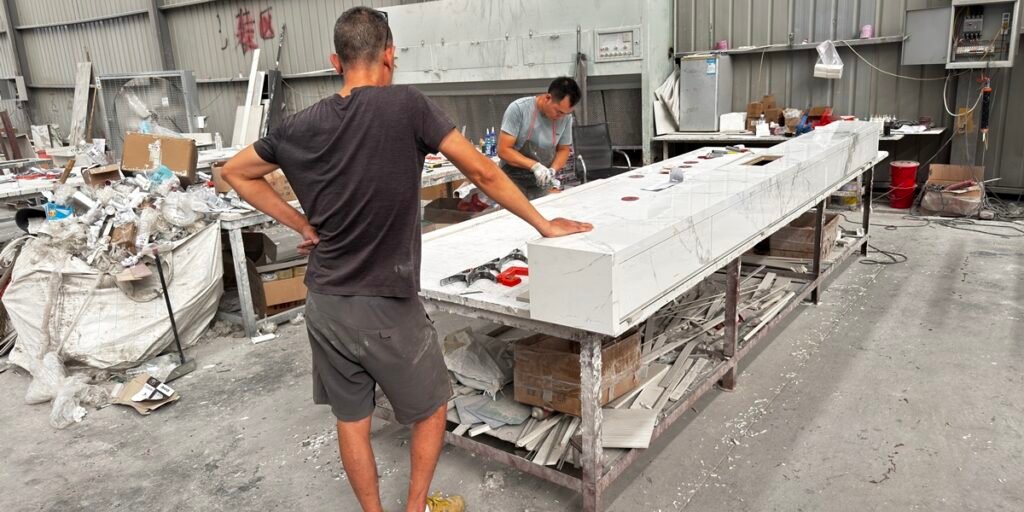
Cutting and profiling sintered stone generates fine dust that may contain crystalline silica. Fabricators must follow exposure controls — wet cutting, enclosed CNC with extraction, or appropriate HEPA-filtered vacuums and respirators — because respirable crystalline silica is a known health hazard. In the U.S., OSHA’s silica standard (29 CFR 1926.1153) provides the legal framework for construction and fabrication operations, requiring engineering controls, exposure assessment, and training. Choose fabricators who document their silica control measures and provide a written plan.
Care & maintenance for sintered stone tables
Daily cleaning: soft cloth and mild detergent; avoid abrasive scouring pads.
Stain removal: most food and drink stains wipe away; for stubborn residues, use manufacturer-recommended cleaners.
Heat: while sintered stone tolerates heat, use trivets for very hot items to avoid thermal shock at unsupported overhangs.
Avoid sharp point impact: prevent dropping heavy cast objects on thin edges.
Sealing: generally not required — low porosity is a benefit.
Are sintered stone tables right for outdoor furniture?
Yes — many sintered stone ranges are formulated for exterior use and demonstrate strong UV and freeze/thaw resistance. That makes them an excellent option for café and restaurant outdoor tables, terraces ,and poolside furniture. For outdoor use, choose collections and finishes that the manufacturer explicitly rates for exterior applications and confirm warranty/UV testing.
Buying routes: manufacturer, factory, wholesale, or custom fabricator?
Manufacturer/factory direct: Good for bulk orders or custom palette — lower per-unit slab cost, but factorin freight and handling.
Wholesale distributors: Useful for smaller runs and quicker availability.
Local certified fabricators/furniture makers: Best for single bespoke tables — they manage templating, cutting, edgework, and base attachment. Confirm they have experience with sintered stone and documented silica controls.
Long-tail purchase keywords for SEO: sintered stone dining table manufacturer, sintered stone table factory wholesale, buy sintered stone table slab near me.
Real-world use cases & examples
Restaurants & hospitality: Durable, low-maintenance outdoor and indoor dining tops.
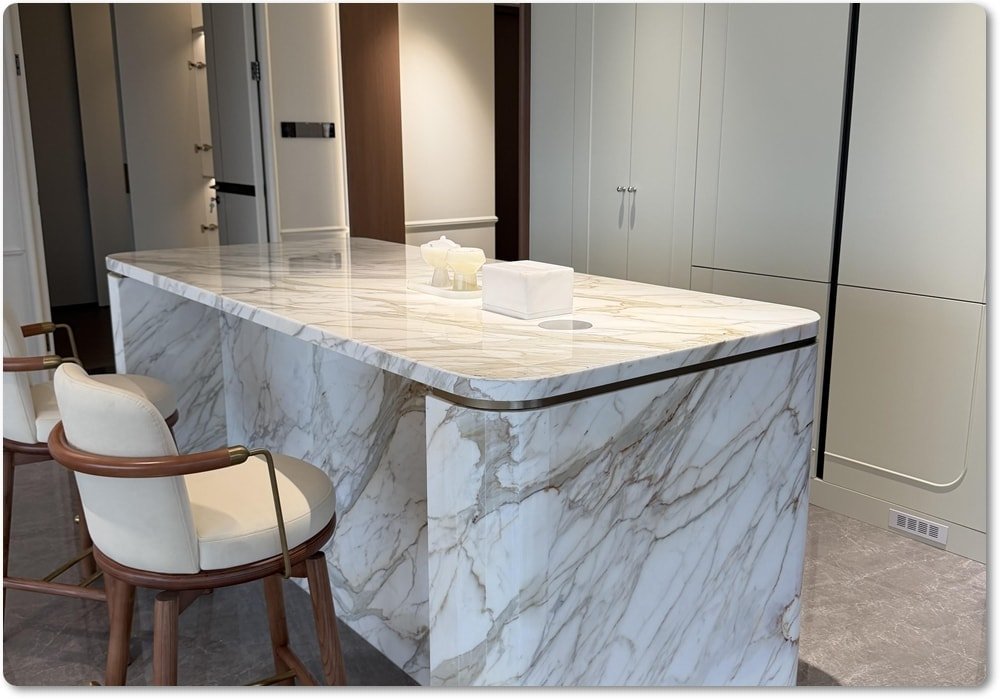
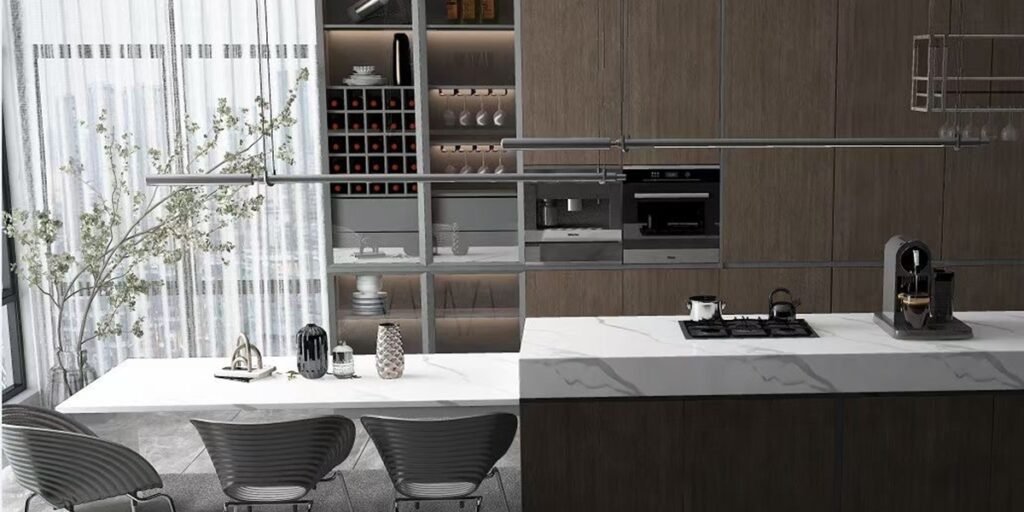
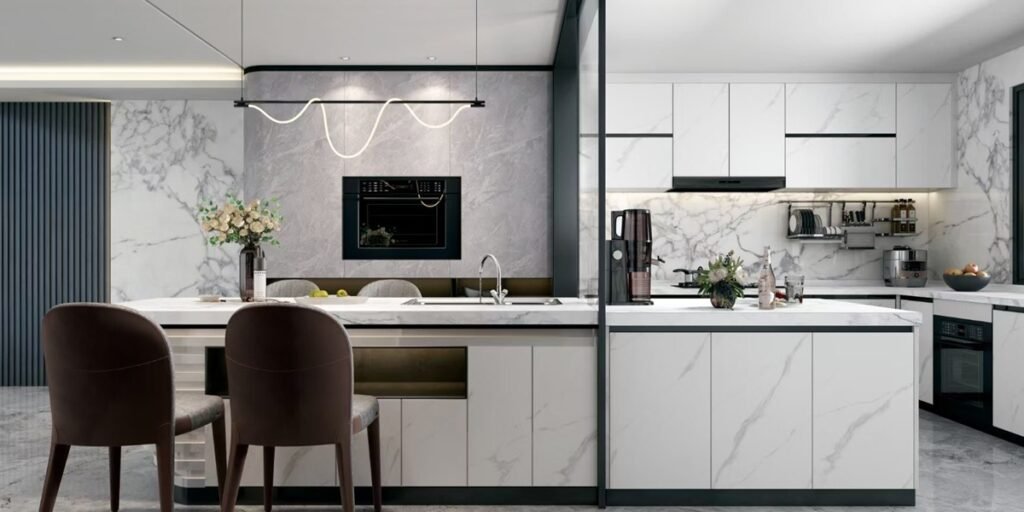
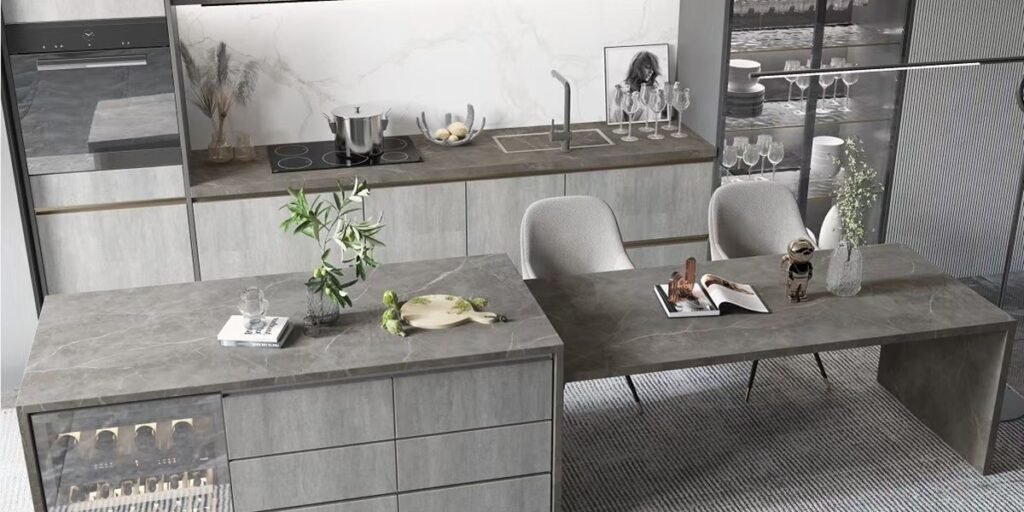
Residential kitchens: Sleek waterfall island tables that double as prep and dining surfaces.
Designer coffee tables: Thin, large-format tops that deliver a luxurious stone look without massive weight.
Commercial precincts: High-traffic surfaces that must resist scratching and staining.
Troubleshooting & common questions
Q: Will sintered stone chip?
A: It can under sharp, concentrated impact. Good design (supported edges, thicker profiles where needed) minimizes risk.
Q: Can I cut sintered stone at a local workshop?
A: Only if the shop has diamond tooling and proper wet cutting or enclosed dust extraction; otherwise, use certified fabricators.
Q: Does sintered stone need sealing?
A: No — generally not required because of extremely low porosity.
FAQ — Google hot search FAQ
Q: Are sintered stone tables good?
A: Yes — they offer excellent scratch, heat, and stain resistance, consistent patterns, and thin slab formats suited for elegant tabletops. Choose reputable slabs and certified fabricators for the best results.Q: How much do sintered stone tables cost?
A: Price varies widely; expect material+fabrication ranges similar to sintered countertop pricing (~$60–$150/sq ft installed) and finished table prices typically from several hundred to several thousand dollars, depending on size and base.Q: Is sintered stone better than marble for dining tables?
A: For durability and low maintenance, yes — sintered stone outperforms marble in scratch, stain, and heat resistance, though marble retains unique natural beauty and patina that some buyers preferQ: Can sintered stone be used outdoors?
A: Yes — many sintered stone products are rated for outdoor use and resist UV fading and freeze/thaw, but confirm the manufacturer’s outdoor rating and warranty.Q: What safety measures should fabricators take?
A: Use wet cutting or enclosed CNC with extraction, HEPA vacuums for dry grinding, respiratory protection when needed, and follow OSHA silica standards and local regulations
Semantic Closure — How / Why / What / Options / Considerations
How: Sintered stone tables are created by cutting, profiling, and finishing thin or full-thickness sintered slabs; thin panels are often bonded to lightweight substrates or mechanically fixed to bases. Use certified fabricators with diamond tooling and wet cutting or enclosed dust extraction.
Why: Buyers choose sintered stone for real-world durability (scratch, heat, UV), design flexibility (thin slabs, large formats), and low maintenance — ideal for hospitality and modern residential tables.
What (options): Options range from factory-direct slab purchase (cheaper per sq ft but adds freight/fabrication) to finished table purchases from furniture makers (convenience, design). Consider the manufacturer brand, finish, thickness, and warranty.
Considerations (detailed): Budget for fabrication (edgework, cutouts), shipping, and base engineering; avoid unsupported thin spans; verify fabricator’s silica controls and warranty coverage; assess whether outdoor rating is required by use case.
Focus Keyword + SEO
Focus Keyword: sintered stone dining table
50 SEO tags/keywords (mix of purchase intent & long tails):
sintered stone dining table,are sintered stone tables good,what is sintered stone,sintered stone table top,sintered stone vs marble dining table,is sintered stone dining table good,how expensive is sintered stone,sintered stone review dining table,sintered stone dining table review,buy sintered stone table manufacturer,sintered stone table factory wholesale,sintered stone tables for sale,sintered stone coffee table,sintered stone outdoor table,sintered stone table cost per sq ft,sintered stone resistance scratch heat UV,sintered stone tabletop fabrication,sintered stone table edge profiles,sintered stone thin slab table top,sintered stone vs quartz table,sintered stone table installation tips,sintered stone table maintenance,sintered stone table pros and cons,best sintered stone brands Dekton Neolith Lapitec,sintered stone table base ideas,sintered stone restaurant tables,sintered stone table price guide 2025,sintered stone table lifespan,sintered stone table warranties,sintered stone table repair chips,sintered stone table design inspiration,sintered stone table wholesale supplier,sintered stone table remnant sale,buy sintered stone slab for table,sintered stone table bespoke furniture maker,sintered stone table outdoor warranty,sintered stone table UV resistant,sintered stone table heat resistant,sintered stone table scratch proof,sintered stone table vs marble cost,sintered stone table export factory price,sintered stone table large format slabs,sintered stone table sustainable materials,sintered stone table cutting edge technology,sintered stone table safety silica controls,sintered stone table care cleaning guide,sintered stone table nonporous surface,where to buy sintered stone tables near me,sintered stone table manufacturer direct,sintered stone luxury dining table.