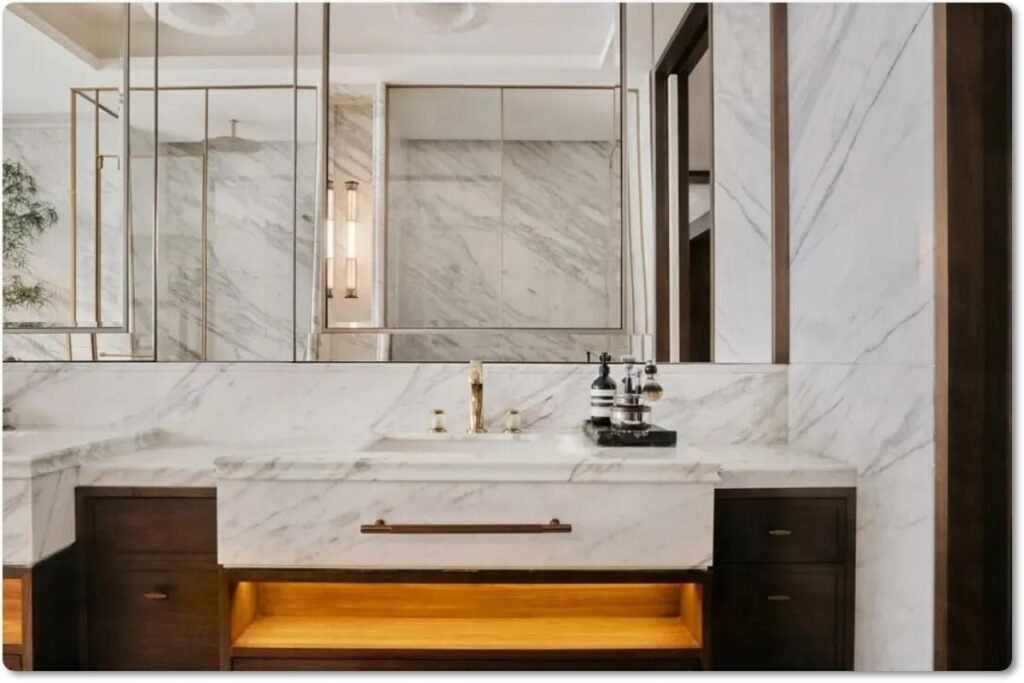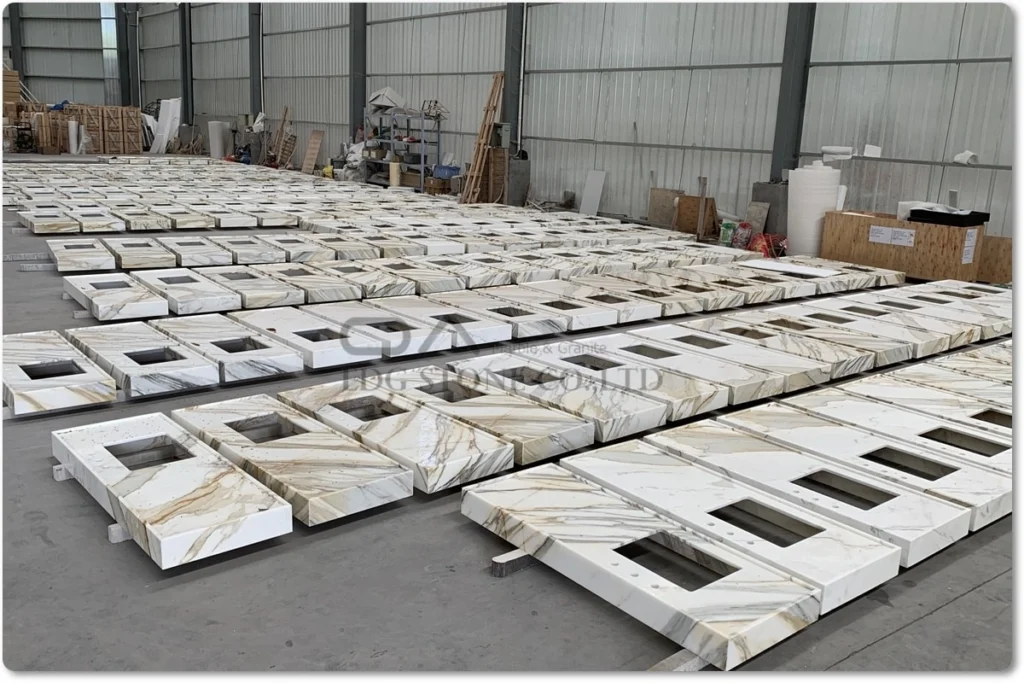
Quick Summary
What Are Ultra-Compact Slabs for Outdoor Kitchens?
What: Ultra-compact slabs are high-density surface materials engineered for demanding architectural and countertop applications.
Why: They are increasingly selected for outdoor kitchens because outdoor countertops must handle sunlight, rain, temperature changes, grease, food preparation, and frequent cleaning.
Where: Outdoor kitchens, BBQ islands, garden kitchens, rooftop terraces, poolside bars, hospitality projects, restaurants, and luxury residential spaces.
Key Consideration: Material performance alone is not enough. Proper fabrication, structural support, drainage, expansion considerations, appliance clearances, and professional installation are essential for long-term performance.
Best Buying Option: Work with an experienced ultra-compact slabs manufacturer, factory, or wholesale supplier capable of providing slab specifications, fabrication support, customized dimensions, and project documentation.
Outdoor living is no longer a small extension of indoor living. In many residential and hospitality projects, the outdoor kitchen has become a major architectural feature that combines cooking, dining, entertainment, landscaping, and premium materials.
As this market continues to evolve, the countertop has become one of the most important material decisions.
That is where ultra-compact slabs for outdoor kitchens are gaining increasing attention.
An outdoor countertop must perform in conditions that are fundamentally different from an indoor kitchen. It may be exposed to direct sunlight, ultraviolet radiation, rainwater, humidity, grease, high temperatures, temperature fluctuations, and repeated cleaning.
For this reason, architects, contractors, fabricators, distributors, and homeowners are increasingly searching for materials such as:
- Ultra compact kitchen surfaces
- Ultra compact slabs
- Slabs for outdoor kitchen
- Ultra compact countertops
- Ultra compact countertop
- Ultra compact porcelain countertop
- Outdoor kitchen countertop slabs
- UV-resistant outdoor countertops
- Outdoor sintered stone countertops
- Ultra compact slab manufacturer
- Ultra compact slabs factory
- Ultra compact countertops wholesale
This guide explains how ultra-compact surfaces work in outdoor kitchens, what buyers should evaluate before purchasing, how the market is changing, and why professional sourcing and fabrication are becoming increasingly important.
What Are Ultra-Compact Slabs?
Ultra-compact slabs are high-density engineered surface materials produced through advanced manufacturing processes designed to create extremely compact and durable slabs.
Depending on the manufacturer and product technology, these materials may be associated with categories such as:
- Ultra-compact surfaces
- Sintered stone
- Compact surfaces
- Large-format porcelain surfaces
- Ultra-compact porcelain
- Technical ceramic slabs
The exact composition and manufacturing process can vary between brands and factories. However, the general objective is similar: creating a dense architectural surface with controlled physical and aesthetic properties.
How Is an Ultra-Compact Surface Different From Traditional Stone?
Natural stone is formed by geological processes over millions of years.
Ultra-compact materials are engineered through industrial manufacturing processes.
This difference affects how the materials are evaluated.
Natural marble, granite, and quartzite are often selected because of their unique natural patterns.
Ultra-compact slabs are often selected because buyers want a combination of:
- Consistent design
- Large-format dimensions
- Technical surface performance
- Low porosity
- Controlled color options
- Modern architectural aesthetics
- Compatibility with contemporary fabrication
For outdoor kitchen projects, this engineered consistency can be particularly valuable.
Why Density Matters for Outdoor Countertops
An outdoor countertop can encounter water, food oils, dirt, temperature changes, and cleaning chemicals.
A dense surface structure can help reduce the tendency of the material to absorb liquids compared with more porous materials.
However, buyers should not assume that every slab marketed as “compact,” “porcelain,” or “sintered” has identical performance.
Always request technical information from the supplier.
Important specifications may include:
- Water absorption
- Flexural strength
- Surface hardness
- Thermal resistance
- UV stability
- Chemical resistance
- Recommended applications
- Available thicknesses
For commercial projects, architects and procurement teams should evaluate documentation rather than relying only on marketing terminology.
Why Ultra Compact Countertops Are Becoming Popular for Outdoor Kitchens
The growth of outdoor kitchens is closely connected to larger trends in residential design and hospitality.
Homeowners increasingly want outdoor spaces that function like complete living environments rather than simple patios.
A modern outdoor kitchen may include:
- BBQ grills
- Pizza ovens
- Sinks
- Refrigerators
- Storage cabinets
- Bar seating
- Dining areas
- Outdoor fireplaces
- Poolside entertainment areas
The countertop becomes the central working surface connecting these elements.
Outdoor Conditions Are More Demanding Than Indoor Conditions
Indoor kitchen countertops usually operate in relatively stable environments.
Outdoor countertops do not.
They may experience:
Direct Sunlight
Long-term exposure to sunlight can affect some materials.
UV stability is therefore an important consideration when selecting slabs for outdoor kitchens.
Rain and Moisture
Outdoor surfaces may be exposed to rainwater, humidity, condensation, and water from sinks.
Low water absorption can be an important performance characteristic.
Temperature Changes
A countertop may become extremely hot in direct sunlight and then cool rapidly during the evening.
Thermal movement and installation design should therefore be considered.
Food and Grease
Outdoor cooking often involves:
- Oils
- Sauces
- Wine
- Coffee
- BBQ grease
- Marinades
The surface should be practical to clean.
Physical Use
Outdoor countertops may be used for:
- Food preparation
- Serving
- Dining
- Entertaining
- Equipment placement
Durability and proper structural support are essential.
Ultra Compact Slabs vs Traditional Materials for Outdoor Kitchens
Choosing the right outdoor kitchen countertop depends on design priorities, budget, maintenance expectations, and climate.
Ultra Compact Countertops vs Marble
Marble is one of the world’s most iconic luxury materials.
Its natural veining and depth are difficult to reproduce perfectly.
However, outdoor applications can create additional maintenance considerations.
Some natural marbles may require more careful maintenance because of their mineral composition and sensitivity to certain substances.
Ultra compact slabs can provide an alternative for buyers who want:
- Marble-inspired designs
- More consistent patterns
- Lower maintenance requirements
- Large-format slabs
- Contemporary technical surfaces
This is why marble-look ultra-compact porcelain countertops are increasingly used in modern outdoor projects.
Ultra-Compact Slabs vs Granite
Granite remains a popular outdoor countertop material.
Many granites offer excellent durability and natural beauty.
The major advantage of natural granite is authenticity: every slab is naturally unique.
Ultra Compact slabs may offer advantages where buyers prioritize:
- Controlled colors
- Consistent patterns
- Large-format designs
- Thin profiles
- Modern aesthetics
Both materials can be excellent choices depending on the project.
Ultra Compact Countertops vs Quartz
Quartz countertops are widely used indoors.
However, buyers should carefully check whether a specific engineered quartz product is recommended by its manufacturer for permanent outdoor exposure.
This is particularly important because prolonged UV exposure and high temperatures can affect some engineered materials.
For outdoor kitchens, project teams should never assume that an indoor countertop product automatically qualifies for outdoor installation.
Always follow the specific manufacturer’s technical recommendations.
Ultra Compact Porcelain Countertop vs Natural Stone
This comparison usually comes down to priorities.
Choose natural stone when the project prioritizes:
- Geological authenticity
- Unique slabs
- Natural variation
- Luxury natural aesthetics
Consider ultra-compact porcelain or similar compact surfaces when the project prioritizes:
- Consistency
- Contemporary design
- Technical performance
- Large-format surfaces
- Lower maintenance
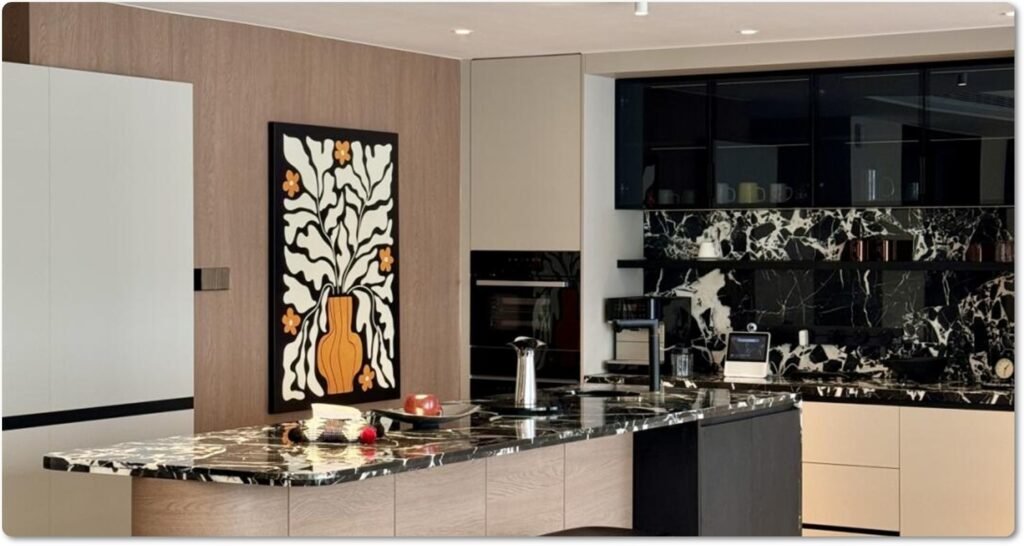
What Makes a Good Slab for an Outdoor Kitchen?
Not every slab is automatically suitable for an outdoor kitchen.
Professional buyers should evaluate several technical factors.
UV Resistance
UV exposure is one of the most important considerations.
Outdoor kitchen countertops may receive years of direct sunlight.
Before purchasing, ask the supplier:
Is this specific ultra compact slab recommended for permanent outdoor installation?
Do not rely only on product photographs.
Request the manufacturer’s technical documentation.
Water Resistance
Outdoor surfaces are exposed to rain, humidity, and cleaning.
Low water absorption can help improve suitability for wet environments.
However, installation details are equally important.
Water can enter surrounding structures through:
- Poorly sealed joints
- Improper drainage
- Appliance openings
- Incorrect countertop slopes
A good slab cannot compensate for poor installation design.
Thermal Performance
Outdoor countertops may experience rapid temperature changes.
The project design should consider:
- Direct sunlight
- Hot cookware
- Grills
- Pizza ovens
- Outdoor fireplaces
Always follow the manufacturer’s recommendations regarding direct heat exposure.
Surface Maintenance
Outdoor kitchens are exposed to dust, pollen, grease, and environmental debris.
Choose a finish that matches the intended use.
Popular finishes may include:
- Polished
- Honed
- Matte
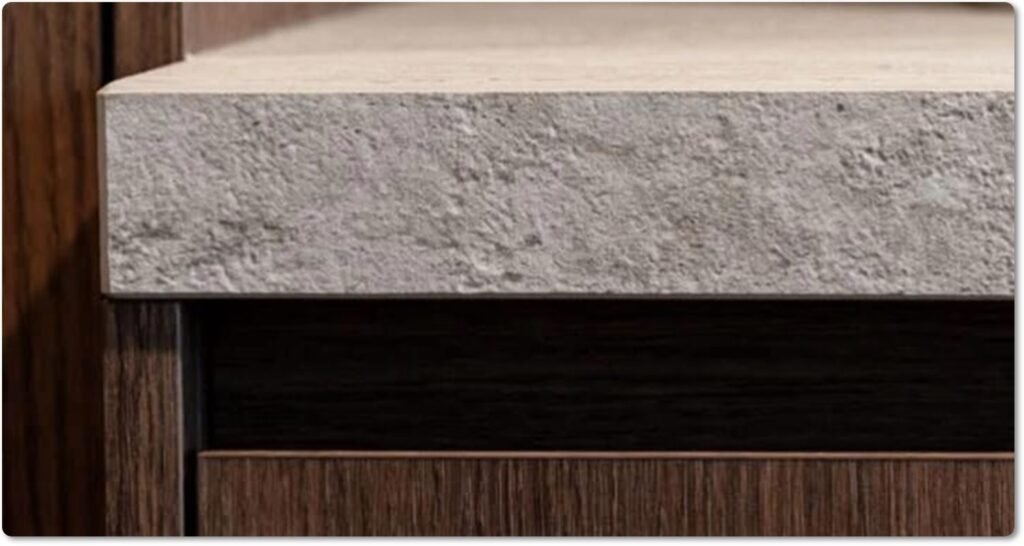
- Textured
- Leather-like textures
- Anti-slip finishes
The right finish depends on whether the slab is used for countertops, walls, flooring, or bar surfaces.
How to Choose the Right Thickness for Ultra Compact Outdoor Countertops
Thickness is an important design and engineering decision.
Common options may include:
6mm Ultra Compact Slabs
Often used for:
- Wall cladding
- Furniture surfaces
- Lightweight applications
Structural suitability depends on the application.
12mm Ultra Compact Countertops
A common option for countertop applications.
Advantages may include:
- Modern appearance
- Reduced weight
- Efficient material usage
Proper support is essential.
20mm Ultra Compact Slabs
Suitable for projects seeking a more substantial visual appearance.
Potential applications include:
- Outdoor countertops
- BBQ islands
- Bar counters
- Commercial surfaces
Laminated or Mitered Edges
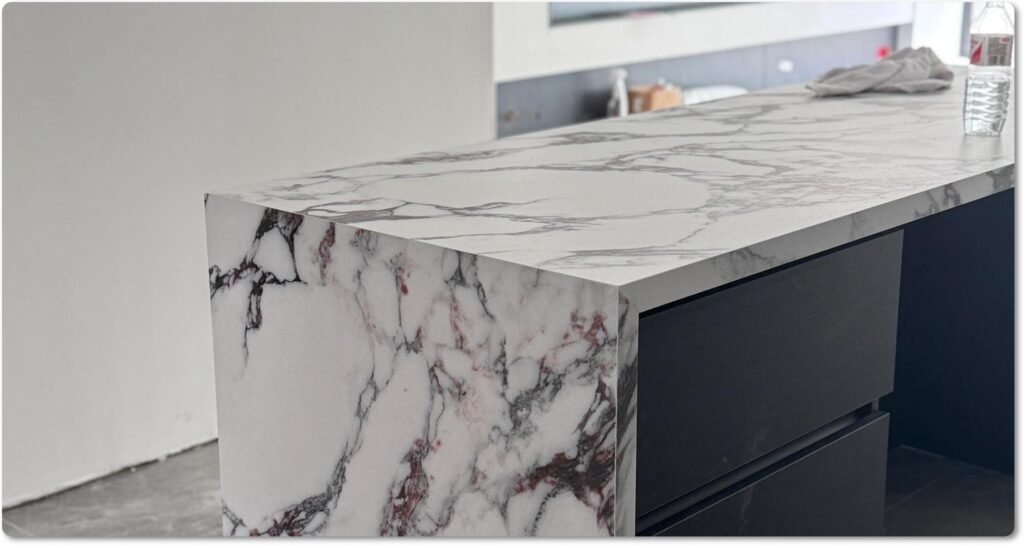
Some luxury outdoor kitchens use edge fabrication to create the appearance of a thicker countertop.
For example, a thinner slab may be fabricated with a mitered edge to create a visually substantial profile.
This approach can provide:
- A premium appearance
- Modern design flexibility
- Reduced material weight
Fabrication quality is extremely important.
How Are Ultra-Compact Slabs Fabricated for Outdoor Kitchens?
Ultra-compact surfaces require professional fabrication equipment and experience.
Step 1: Project Measurement
Accurate measurements are essential.
Fabricators must account for:
- Cabinet dimensions
- Appliance openings
- Sink cutouts
- Overhangs
- Seams
- Structural support
Step 2: Digital CAD Layout
Professional projects increasingly use CAD drawings to plan slab cutting.
A digital layout can help:
- Reduce waste
- Optimize slab usage
- Plan seam locations
- Confirm appliance dimensions
Step 3: CNC or Waterjet Cutting
Depending on the fabrication facility, slabs may be processed using:
- CNC machines
- Bridge saws
- Waterjet systems
- Specialized cutting tools
Step 4: Edge Processing
Popular edge options include:
- Straight edge
- Eased edge
- Mitered edge
- Custom profile
Step 5: Dry Layout and Quality Inspection
Before packing or installation, professional suppliers should inspect:
- Dimensions
- Surface condition
- Edge quality
- Cutout accuracy
- Pattern continuity
For international projects, this stage is particularly important.
Design Ideas for Ultra Compact Outdoor Kitchens
Modern Marble-Look Outdoor Kitchen
White marble-look ultra-compact slabs can create a bright luxury aesthetic.
Popular design combinations include:
- White surface
- Black aluminum cabinets
- Stainless steel appliances
- Natural wood accents
Dark Contemporary Outdoor Kitchen
Dark grey or black ultra-compact countertops work well with:
- Concrete
- Metal
- Dark cabinetry
- Modern architecture
Travertine-Look Outdoor Kitchen
Travertine-inspired surfaces are increasingly popular in Mediterranean and resort-style architecture.
They can work particularly well with:
- Beige walls
- Natural wood
- Outdoor landscaping
- Warm lighting
Large Waterfall BBQ Island
A waterfall design uses the same slab material across the horizontal countertop and vertical side panels.
This creates a continuous architectural appearance.
For ultra-compact slabs, fabrication accuracy is essential to achieve clean visual continuity.
Ultra-Compact Kitchen Applications Beyond the Countertop
One of the advantages of large-format slabs is design continuity.
The same material can potentially be used across multiple architectural elements.
Applications may include:
Outdoor Kitchen Countertops
The primary preparation and serving surface.
BBQ Islands
A durable surface around grills and cooking equipment.
Outdoor Bar Tops
Suitable for entertainment and hospitality spaces.
Outdoor Dining Tables
Ultra-compact slabs can also be fabricated into tabletops.
Outdoor Wall Cladding
Matching wall surfaces can create a complete architectural system.
Poolside Bars
Large-format surfaces are increasingly used in hotels and resorts.
The 2026 Market Trend: Outdoor Surfaces Are Becoming More Technical and More Traceable
The future of ultra-compact slabs is not only about appearance.
It is increasingly about performance data, sustainability information, traceability, and digital documentation.
For example, the European Union’s updated Construction Products Regulation, Regulation (EU) 2024/3110, entered into force on January 7, 2026, and modernizes the framework for construction-product information, sustainability, traceability, and digital systems. The transition toward structured and machine-readable product information is an important direction for construction-material supply chains.
This trend matters to international stone and surface suppliers.
Buyers Increasingly Want More Than a Beautiful Slab
Professional buyers increasingly ask for:
- Technical data sheets
- Product identification
- Performance documentation
- Installation guidance
- Sustainability information
- Batch traceability
- Factory quality-control information
The EU’s broader Digital Product Passport infrastructure also became operational in July 2026, reinforcing the direction toward structured, searchable product information across supply chains.
For manufacturers and exporters, this creates a strategic opportunity.
The future supplier will not simply sell a slab.
The future supplier will provide a digital product information system.
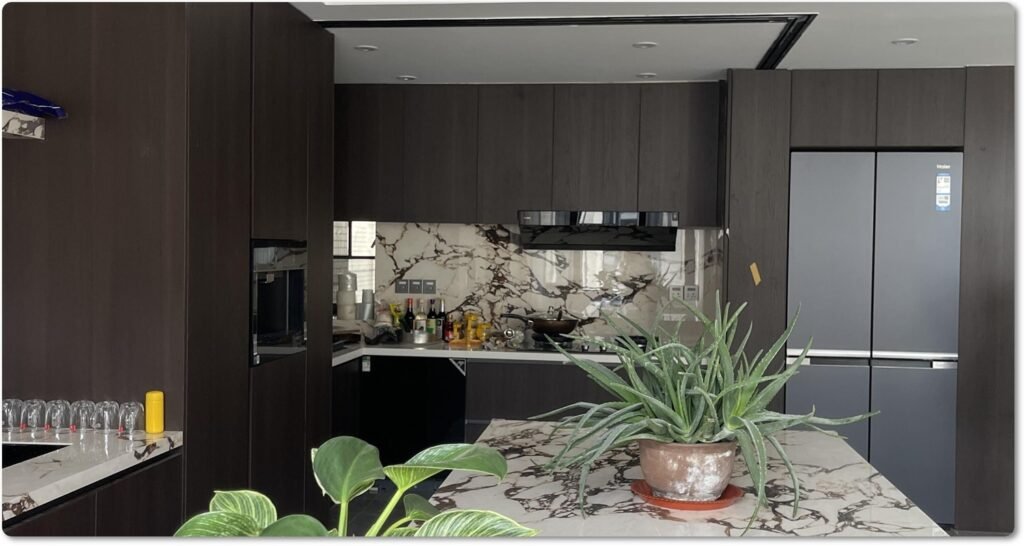
Why Technical Documentation Matters for Outdoor Kitchen Projects
Architects and contractors need reliable information.
A product page should ideally provide more than photographs.
Useful documentation may include:
- Product name
- Material category
- Available dimensions
- Thickness
- Surface finish
- Recommended applications
- Cleaning guidance
- Fabrication recommendations
- Installation recommendations
Search and Product Documentation
Structured product information is also important for AI discovery.
AI systems increasingly work better when information is:
- Clearly labeled
- Semantically organized
- Consistent
- Machine-readable
- Supported by technical context
This means manufacturers should structure product pages around real buyer questions.
Instead of writing:
Our slabs are high quality and beautiful.
A stronger statement is:
This ultra compact slab is available in specified thicknesses and finishes and can be fabricated for outdoor kitchen countertops, BBQ islands, bar tops, and customized architectural surfaces.
The second version is clearer for:
- Buyers
- Search engines
- AI systems
- Architects
- Procurement teams
How to Buy Ultra Compact Slabs for Outdoor Kitchen Projects?
The sourcing process should begin with project requirements.
Step 1: Define the Application
Ask:
- Residential or commercial?
- Outdoor countertop or wall?
- Full sun or covered area?
- Standard kitchen or BBQ island?
- Required slab thickness?
Step 2: Choose the Design
Popular categories include:
- Marble look
- Concrete look
- Travertine look
- Granite look
- Solid color
- Metal effect
Step 3: Request Technical Information
Ask the supplier for:
- Technical data
- Recommended applications
- Available dimensions
- Thickness options
- Surface finishes
Step 4: Confirm Fabrication Requirements
Discuss:
- Sink cutouts
- Cooktop cutouts
- BBQ openings
- Edge profiles
- Waterfall panels
Step 5: Order Samples
Samples are particularly useful for evaluating:
- Color
- Texture
- Surface finish
- Design compatibility
Step 6: Confirm Packaging and Shipping
Large-format slabs require professional export packaging.
International buyers should confirm:
- A-frame packaging
- Wooden crates where appropriate
- Corner protection
- Container loading methods
- Insurance requirements
Choosing an Ultra Compact Slabs Manufacturer, Factory, or Wholesale Supplier
Searching for an ultra-compact slabs manufacturer is different from simply buying a few slabs locally.
For wholesale and project buyers, supplier capability matters.
What Should Wholesale Buyers Evaluate?
Manufacturing or Supply Capacity
Can the supplier support:
- Small orders?
- Wholesale orders?
- Container shipments?
- Large projects?
Custom Fabrication
Can the supplier provide:
- CNC cutting?
- Custom sizes?
- Edge processing?
- Sink cutouts?
- CAD support?
Quality Control
Ask about:
- Surface inspection
- Dimension inspection
- Packing inspection
Export Experience
International suppliers should understand:
- Container loading
- Export documentation
- International packaging
EDG Stone: Ultra Compact Slabs for Outdoor Kitchen Projects
EDG Stone supplies stone and surface solutions for international residential and commercial projects.
For buyers searching for:
- Ultra compact slabs wholesale
- Ultra compact countertops manufacturer
- Ultra compact kitchen supplier
- Outdoor kitchen countertop slabs
- Ultra compact porcelain countertop factory
EDG Stone can support projects with material sourcing, customized fabrication, technical coordination, and export-oriented packaging.
Typical Project Applications
EDG Stone can support applications including:
- Outdoor kitchen countertops
- BBQ countertops
- Outdoor bar tops
- Poolside surfaces
- Restaurant outdoor kitchens
- Hotel terrace kitchens
- Residential garden kitchens
For customized projects, the recommended process includes:
- Project inquiry
- Material selection
- Technical confirmation
- CAD drawing review
- Fabrication planning
- Quality inspection
- Export packaging
- International shipment
Important Installation Considerations for Outdoor Ultra Compact Countertops
Material selection is only one part of the project.
Installation quality can significantly affect long-term performance.
Provide Proper Structural Support
Countertops must be supported according to the material and application requirements.
Unsupported spans can increase the risk of damage.
Consider Thermal Movement
Outdoor installations experience temperature changes.
The installation system should follow professional recommendations regarding movement and joint design.
Plan Water Drainage
Outdoor kitchens should avoid designs where water remains trapped around:
- Seams
- Cabinets
- Appliance cutouts
Use Qualified Fabricators
Ultra-compact slabs can require specialized fabrication knowledge.
The lowest-cost fabricator is not always the best choice.
Are Ultra-Compact Countertops Safe for Food Preparation?
Food-contact suitability should be evaluated according to the specific product, application, and applicable regulations.
For commercial food equipment, standards such as NSF/ANSI 51-2025 establish requirements for materials used in food equipment and address factors including material composition and cleanability. However, buyers should not assume that every countertop automatically carries certification under this standard; certification and compliance must be verified for the specific product and intended use.
For normal residential kitchen use, buyers should follow:
- Manufacturer guidance
- Local regulations
- Proper cleaning procedures
Always verify product-specific documentation.
Ultra Compact Slabs for Outdoor Kitchens: Advantages and Considerations
Key Advantages
Ultra compact surfaces may offer:
- Modern designs
- Large-format slabs
- Dense surface structures
- Low-maintenance potential
- Outdoor application potential
- Consistent appearance
- Multiple thickness options
Key Considerations
Buyers should also evaluate:
- Fabrication difficulty
- Installation quality
- Structural support
- Edge processing
- Product-specific outdoor suitability
- Technical documentation
The best outdoor countertop is not determined by marketing language.
It is determined by the combination of:
Material + Design + Fabrication + Installation + Maintenance.
The Future of Outdoor Kitchen Countertops
The next generation of outdoor kitchens will become more integrated.
Instead of combining many unrelated materials, architects will increasingly create continuous material systems.
A single ultra-compact surface may extend across:
- Countertops
- Bar tops
- Waterfall panels
- Dining tables
- Wall cladding
At the same time, the market is moving toward better product transparency.
Future buyers will increasingly expect suppliers to provide:
- Digital specifications
- Product traceability
- Sustainability information
- Technical documentation
- Installation guidance
The suppliers that combine material quality with information quality will have a significant advantage.
Frequently Asked Questions About Ultra Compact Slabs for Outdoor Kitchens
1. Are ultra compact slabs good for outdoor kitchens?
Ultra-compact slabs can be an excellent option for outdoor kitchens when the specific product is rated or recommended for outdoor use and is professionally fabricated and installed. Buyers should verify UV performance, water resistance, thermal behavior, thickness, and installation requirements with the manufacturer.
2. What is the best material for an outdoor kitchen countertop?
There is no single best material for every project. Popular options include granite, quartzite, porcelain-based surfaces, ultra-compact slabs, and other technical surfaces. The best choice depends on climate, sunlight exposure, maintenance expectations, budget, and design preferences.
3. Can ultra compact countertops stay outside in direct sunlight?
Some ultra-compact surfaces are designed for outdoor applications and strong UV exposure. However, buyers should always confirm the specific manufacturer’s outdoor-use recommendations rather than assuming every compact slab has identical UV performance.
4. What thickness is best for an ultra compact outdoor countertop?
Common countertop thicknesses include approximately 12mm and 20mm, depending on the product and project design. The correct thickness should be determined based on structural support, span, fabrication design, and manufacturer recommendations.
5. Where can I buy ultra compact slabs wholesale for outdoor kitchen projects?
Wholesale buyers should work with experienced ultra compact slabs suppliers or manufacturers that can provide technical specifications, available dimensions, customized fabrication, professional quality control, export packaging, and international project support.
Ultra-Compact Slabs for Outdoor Kitchens
What Is the Core Value of Ultra-Compact Slabs in Outdoor Kitchens?
The Material Is Not Just a Countertop—It Is Part of the Outdoor Architecture
Ultra-compact slabs are increasingly used in outdoor kitchens because modern projects require surfaces that connect cooking, dining, entertainment, and architecture. A single large-format surface can visually unify countertops, BBQ islands, bar areas, waterfall panels, and adjacent wall surfaces.
Why Are Buyers Moving Toward Technical Surface Materials?
The outdoor environment is more demanding than the indoor environment. Buyers are increasingly evaluating UV exposure, moisture, heat, maintenance, and long-term appearance. This is driving demand for materials supported by clearer technical information rather than visual marketing alone.
How Should Buyers Choose the Right Option?
The correct selection process starts with the environment, not the color. Buyers should first define sunlight exposure, climate, cooking equipment, structural design, and maintenance expectations. Only after these requirements are established should they compare slab designs, thicknesses, finishes, and suppliers.
What Are the Most Important Procurement Considerations?
- Confirm that the specific slab is suitable for the intended outdoor application.
- Request technical documentation rather than relying only on marketing claims.
- Evaluate thickness together with structural support and fabrication design.
- Confirm UV, moisture, thermal, and cleaning requirements.
- Select experienced fabricators for cutting, edges, seams, and appliance openings.
- For international projects, evaluate packaging, quality control, and export capability.
What Is the Industry Direction for 2026 and Beyond?
The surface-material industry is moving toward a combination of performance, sustainability, traceability, and digital product information. Regulatory developments in the European construction-products market are reinforcing the importance of structured, machine-readable, and accessible product information. For manufacturers and suppliers, future competitiveness will increasingly depend on both the quality of the physical slab and the quality of the information supplied with it.
Who Should Consider Ultra Compact Slabs?
Ultra compact slabs may be particularly relevant for homeowners, architects, interior designers, landscape designers, contractors, hospitality developers, kitchen manufacturers, distributors, and wholesalers planning modern outdoor kitchens, BBQ areas, poolside bars, terraces, and commercial entertainment spaces.
Bottom Line: The best ultra-compact countertop for an outdoor kitchen is not simply the most expensive slab or the most visually attractive design. The best solution is the slab that matches the project’s environmental conditions, technical requirements, fabrication capabilities, installation system, and long-term maintenance expectations.
Conclusion: Are Ultra Compact Slabs the Future of Outdoor Kitchens?
Ultra-compact slabs are becoming an increasingly important option in the outdoor kitchen market.
Their appeal comes from a combination of:
- Contemporary design
- Large-format possibilities
- Dense engineered surfaces
- Outdoor application potential
- Design consistency
- Low-maintenance potential
However, successful projects depend on more than selecting a beautiful slab.
Professional buyers should focus on:
Product suitability + technical documentation + fabrication quality + installation design + supplier capability.
For residential, hospitality, commercial, wholesale, and customized projects, working with an experienced supplier can help reduce sourcing and fabrication risks.
If you are looking for ultra-compact slabs for outdoor kitchens, ultra-compact countertops, slabs for outdoor kitchen projects, or an experienced ultra-compact slabs manufacturer and wholesale supplier, EDG Stone can support customized material sourcing and international project requirements.
Contact EDG Stone to discuss your next outdoor kitchen countertop project and request product specifications, available designs, customized fabrication options, and wholesale solutions.