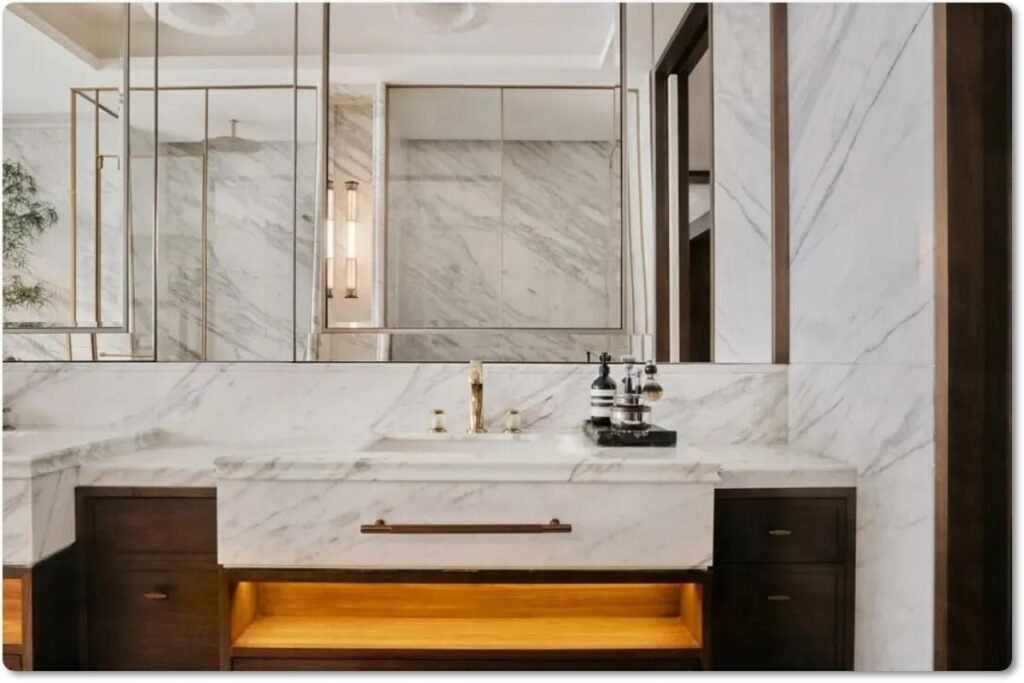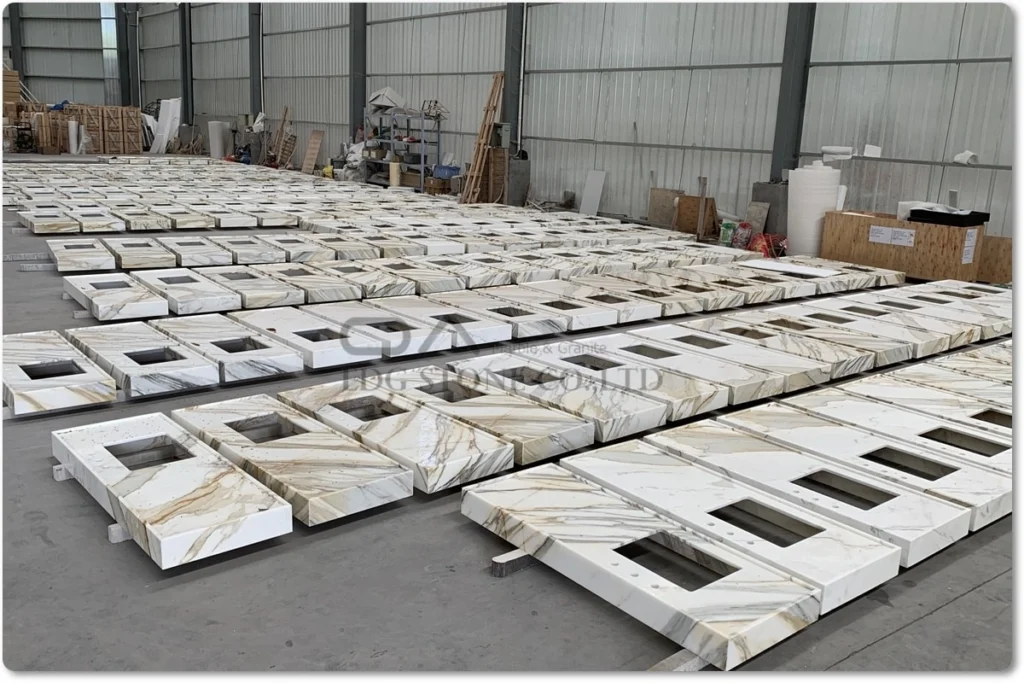
How much do ultra-compact slabs cost in 2026? The answer depends on the material specification, slab size, thickness, surface finish, brand, order volume, country of origin, freight, fabrication, and installation requirements.
For buyers comparing ultra-compact slab prices, ultra-compact porcelain, ultra-compact material, and ultra slabs, the key distinction is between the slab price and the final installed cost. A factory-direct wholesale price can be dramatically different from a retail countertop price because fabrication, transportation, inventory, installation, taxes, and distributor margins may represent a substantial portion of the final project cost.
For international buyers, the purchasing decision is even more complex. An ultra compact slabs factory, ultra compact slabs wholesaler, or ultra compact slabs exporter may quote on an FOB, EXW, CIF, or other trade basis. In contrast, a retailer or contractor may quote a finished countertop by square foot.
Ultra Compact Slabs Price: Quick Summary
Quick Summary: Ultra compact slabs are high-performance large-format surfaces generally produced through highly controlled sintering, compaction, and firing processes. In 2026, publicly available market references show that premium ultra-compact/sintered porcelain materials can range from roughly the mid-$20s to $60+ per sq. ft. at the material level depending on brand, collection, and specification, while finished countertop projects can commonly reach approximately $60–$150+ per sq. ft. after fabrication and installation. Factory-direct export pricing can be lower, but buyers must compare slab size, thickness, finish, packing, yield, freight, breakage allowance, fabrication and Incoterms before deciding which quotation is actually cheaper.
The most important takeaway is simple:
Do not compare an ultra-compact slab factory price with a retailer’s installed price as if they were the same product.
A professional procurement comparison should normalize the quotation according to:
- Price per square meter or square foot
- Slab dimensions
- Thickness
- Surface finish
- Pattern and color
- MOQ
- Number of slabs
- Packaging
- Loading efficiency
- Incoterms
- Freight
- Insurance
- Fabrication
- Installation
- Taxes and duties
- Warranty and technical documentation
- Breakage and replacement policy
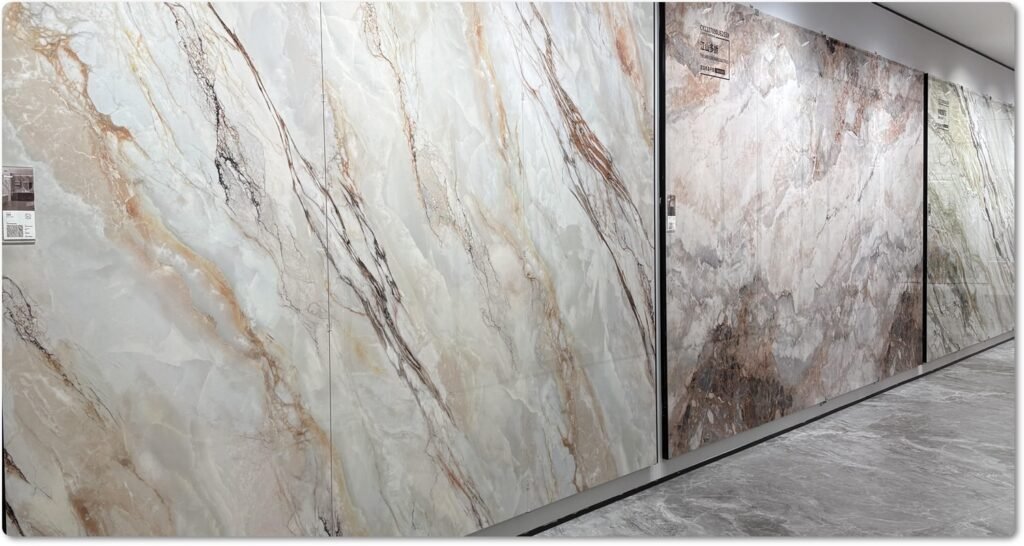
What Are Ultra Compact Slabs?
Ultra compact slabs are large-format engineered surfaces manufactured by combining mineral raw materials under controlled pressure, heat and sintering processes to create a dense, durable slab.
The terminology varies across markets. Buyers may encounter:
- Ultra compact slabs
- Ultra-compact surfaces
- Ultracompact surfaces
- Ultra compact porcelain
- Sintered stone slabs
- Sintered porcelain slabs
- Compact slabs
- Large-format porcelain slabs
- Porcelain countertops
- Ultra slabs
- High-performance porcelain surfaces
Not every product marketed with these terms has the same composition or manufacturing process. Therefore, professional buyers should evaluate the technical specifications rather than relying only on marketing terminology.
Ultra Compact Material vs. Traditional Porcelain
Traditional porcelain and ultra compact surfaces overlap significantly, but the term “ultra compact” generally emphasizes a high-density, high-performance surface designed for demanding architectural applications.
Depending on the product, applications can include:
- Kitchen countertops
- Bathroom vanity tops
- Wall panels
- Flooring
- Backsplashes
- Furniture
- Cabinet fronts
- Exterior cladding
- Outdoor kitchens
- Commercial interiors
- Hospitality projects
- Retail interiors
- Multifamily developments
Why Are Ultra Compact Slabs Becoming More Popular?
The category has several characteristics that appeal to architects, designers, and commercial buyers:
- Large-format dimensions
- Low water absorption
- High resistance to staining
- Good heat resistance
- Strong UV performance for suitable outdoor-rated products
- Low routine maintenance
- Contemporary stone-look designs
- Marble-inspired patterns
- Lightweight thin-panel options
- Compatibility with modern architectural design
However, ultra compact surfaces can also require specialized fabrication equipment and experienced installers. This becomes particularly important for sink cutouts, inside corners, narrow strips, large islands and mitered edges.
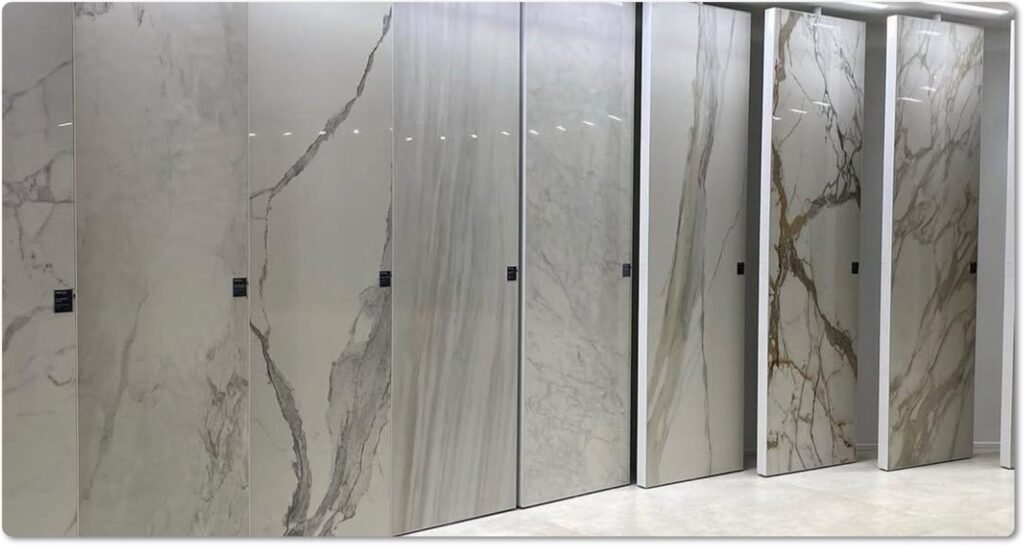
How Much Do Ultra Compact Slabs Cost in 2026?
The first question most buyers ask is:
“What is the ultra-compact slab price per square foot?”
There is no single global price.
Publicly available 2026 pricing references show a broad range. One current pricing guide places material-only porcelain/sintered surfaces around $25–$65 per sq. ft., with installed porcelain countertop projects commonly around $60–$120 per sq. ft.
Another 2026 comparison lists material prices for major ultracompact brands in approximately the $18–$45 per sq. ft. range, although actual retail and project pricing varies by collection and market.
For premium branded ultracompact surfaces, public retail references can be higher. For example, one current U.S. retailer lists a Dekton 2 cm slab at $1,455 per slab, while another product reference lists a retail price around $39.64 per sq. ft. for a specific Dekton color.
These numbers should be treated as market reference points rather than universal prices.
Indicative 2026 Price Structure
| Purchasing Level | Indicative Price Range | Usually Includes |
|---|---|---|
| Factory / Export Material | Quote-based | Slab only |
| Wholesale Material | Approx. $20–$60+/sq. ft. | Slab, depending on specification |
| Premium Retail Slab | Approx. $30–$70+/sq. ft. | Material through distributor |
| Fabricated Countertop | Approx. $45–$90+/sq. ft. | Material + fabrication |
| Installed Countertop | Approx. $60–$150+/sq. ft. | Material + fabrication + installation |
| Premium / Complex Projects | $100–$160+/sq. ft. | High-end material + complex fabrication |
Important: These are broad planning ranges, not an EDG Stone quotation. Actual prices vary by market, product, size, thickness, finish, color, order quantity, shipping, fabrication complexity, and commercial terms.
For example, current 2026 public references for Dekton installed countertops range from approximately $55–$150 per sq. ft., while another North American market guide reports approximately $70–$160 per sq. ft. installed.
Ultra Compact Slabs Price Per Square Foot vs. Per Slab
International buyers frequently make oneserioust mistake:
They compare price per square foot without comparing the actual slab yield.
A large slab may have a higher price per square foot but produce a lower finished countertop cost because fewer slabs are required.
Example
Imagine two suppliers:
Supplier A
- Slab size: 126″ × 63″
- Price: $1,500/slab
- Approximate gross area: 55.1 sq. ft.
Supplier B
- Slab size: 128″ × 64″
- Price: $1,600/slab
- Approximate gross area: 56.9 sq. ft.
Supplier A:
$1,500 ÷ 55.1 ≈ $27.22/sq. ft.
Supplier B:
$1,600 ÷ 56.9 ≈ $28.12/sq. ft.
Supplier A appears cheaper.
But this does not necessarily mean Supplier A provides the lower project cost.
If Supplier B’s slab dimensions provide better nesting for your kitchen island, backsplash, or vanity project, the actual material utilization may be better.
The Real Metric: Cost per Usable Square Foot
Professional buyers should calculate:
Usable Material Cost = Total Material Cost ÷ Usable Finished Area
This is more meaningful than simply comparing nominal slab prices.
What Factors Affect Ultra-Compact Slab Prices?
1. Slab Size
Large-format slabs generally require more sophisticated production, handling, and transportation.
Typical market sizes may include large formats around:
- 120″ × 60″
- 126″ × 63″
- 128″ × 63″
- 130″ × 64″
- Larger project-specific formats
Some major brands now offer ultra-large formats exceeding approximately 130 inches in length. A current retail specification for Dekton, for example, lists standard formats around 126–129 inches and ultra-large formats around 130–131 inches depending on collection and technology.
Larger slabs can reduce seams, but they may increase:
- Handling difficulty
- Packaging requirements
- Container loading complexity
- Breakage risk
- Installation requirements
2. Thickness
Thickness is one of the most important variables inultra-compact slab pricing.
Common specifications may include:
- 6 mm
- 8 mm
- 10 mm
- 12 mm
- 20 mm
The ideal thickness depends on the application.
6–8 mm
Often used for:
- Wall cladding
- Cabinet fronts
- Backsplashes
- Furniture panels
- Decorative surfaces
10–12 mm
Often used for:
- Kitchen countertops
- Bathroom vanity tops
- Interior surfaces
- Commercial countertops
20 mm
Often selected for:
- Premium countertops
- Islands
- Outdoor kitchens
- Structural-looking applications
- Mitered edges
- Waterfall designs
A thicker slab does not automatically mean a better product. The correct specification depends on structural design, fabrication method and intended use.
3. Color and Pattern
A basic solid color generally has a different price structure from a highly engineered marble-look design.
Premium designs may include:
- Calacatta patterns
- Statuario patterns
- Arabescato patterns
- Taj Mahal-inspired designs
- Travertine looks
- Concrete effects
- Natural stone reproduction
- Bookmatch patterns
Veining can significantly affect material utilization because fabricators may need to orient slabs to achieve visual continuity.
This is especially important for:
- Waterfall islands
- Bookmatched walls
- Large hotel vanities
- Reception counters
- Feature walls
4. Surface Finish
Possible finishes include:
- Polished
- Matte
- Honed
- Satin
- Textured
- Natural
- Structured
Special finishes can increase production complexity and therefore influence pricing.
5. Order Quantity
Wholesale purchasing normally benefits from scale.
A buyer ordering:
- 5 slabs
- 20 slabs
- 100 slabs
- 500 slabs
- Full-container quantities
may receive very different commercial pricing.
This is why the search terms ultra compact slabs wholesale, ultra compact slabs factory, and ultra compact slabs exporter are particularly relevant to contractors, distributors, and importers.
Ultra Compact Slabs Factory Price vs. Retail Price
A factory quotation and a retail quotation serve different purposes.
Ultra Compact Slabs Factory
A factory-direct supplier may quote:
- EXW
- FOB
- CIF
- CFR
- FCA
depending on the buyer’s location and purchasing arrangement.
The quotation may cover only the slabs.
Ultra Compact Slabs Wholesaler
A wholesaler normally adds:
- Inventory
- Local warehousing
- Handling
- Financing
- Domestic transport
- Stock risk
- Customer service
Therefore, wholesale prices can be higher than factory prices.
Ultra Compact Slabs Retailer
A retailer may add:
- Showroom
- Samples
- Local inventory
- Sales staff
- Marketing
- Warranty administration
- Local delivery
- Customer support
Consequently, retail prices can be significantly higher.
Ultra Compact Slabs Fabricator
A fabricator may quote a finished countertop including:
- Slab
- Measurement
- CNC cutting
- Sink cutouts
- Cooktop cutouts
- Edge treatment
- Miter fabrication
- Polishing
- Reinforcement
- Delivery
- Installation
This is why a $30/sq. ft. slab cannot be directly compared with a $100/sq. ft. installed countertop.
How to Buy Ultra Compact Slabs From a Factory
For buyers searching ultra compact slabs buy, purchasing directly from a manufacturer can be attractive for larger projects.
A professional RFQ should contain at least:
Product Requirements
- Product name
- Color
- Pattern
- Finish
- Thickness
- Slab dimensions
- Quantity
- Application
- Indoor/outdoor use
- Required technical standards
Commercial Requirements
- Target quantity
- Packaging requirements
- Incoterm
- Destination port
- Payment terms
- Lead time
- Sample requirements
- Replacement policy
Quality Requirements
Ask the manufacturer for:
- Technical data sheet
- Water absorption
- Flexural strength
- Surface characteristics
- Abrasion resistance
- Thermal performance
- Chemical resistance
- UV suitability
- Slip resistance where applicable
- Test reports
- Quality-control procedures
The exact tests required depend on the destination market and application.
How to Compare Ultra Compact Slabs Factory Quotations
A professional procurement table should look like this:
| Item | Supplier A | Supplier B | Supplier C |
|---|---|---|---|
| Slab Size | 126″ × 63″ | 128″ × 64″ | 130″ × 64″ |
| Thickness | 12 mm | 12 mm | 12 mm |
| Finish | Matte | Polished | Matte |
| Price/Slab | $X | $X | $X |
| Price/m² | $X | $X | $X |
| MOQ | X | X | X |
| Packing | A-frame | A-frame | Wooden crate |
| Container Loading | X slabs | X slabs | X slabs |
| Lead Time | X days | X days | X days |
| Incoterm | FOB | FOB | CIF |
| Test Reports | Yes/No | Yes/No | Yes/No |
| Replacement Policy | X | X | X |
This makes it easier to identify the true landed cost.
Ultra Compact Slabs Landed Cost: The Number Buyers Should Actually Watch
For international procurement, the most useful formula is:
Landed Cost = Product Cost + Export Packing + Inland Freight + Ocean Freight + Insurance + Duties + Customs + Local Delivery + Other Applicable Charges
For example:
A supplier offering $25/sq. ft. may not actually be cheaper than another supplier offering $28/sq. ft. if the first supplier:
- Uses inefficient packaging
- Loads fewer slabs per container
- Has higher breakage
- Requires longer lead times
- Has higher freight
- Offers weaker technical documentation
The cheapest factory quotation is therefore not always the cheapest supply chain.
Why Packaging Matters in Ultra Compact Slabs Export
Ultra compact surfaces are engineered for performance, but large slabs remain vulnerable to handling damage.
For international ultra compact slabs export, packaging should be treated as part of the product specification.
A professional export package may include:
- Reinforced wooden A-frame
- Protective separators
- Corner protection
- Surface protection
- Moisture protection where required
- Identification labels
- Slab numbers
- Container loading plan
- Shock-resistant securing
- Photographic loading records
For international buyers, the objective is not simply:
“How much does the slab cost?”
It is:
“How much usable material arrives at my warehouse in saleable condition?”
That is a much better procurement question.
Ultra Compact Slabs vs. Quartz: Which Is More Cost-Effective?
Ultra compact surfaces and quartz are not identical products.
| Factor | Ultra Compact / Sintered Surface | Quartz |
|---|---|---|
| Heat Resistance | Generally excellent | More limited |
| UV Performance | Often excellent for suitable products | Product dependent |
| Porosity | Very low | Very low |
| Sealing | Generally not required | Generally not required |
| Fabrication | Specialized | More familiar |
| Impact Sensitivity | Requires proper handling | Generally more forgiving |
| Outdoor Applications | Strong option | Product dependent |
| Design | Stone/porcelain aesthetics | Extensive |
| Price | Mid-to-premium | Entry-to-premium |
| Fabrication Network | Growing | Very established |
The best choice depends on the application.
For an indoor residential kitchen, quartz may offer a very competitive overall value.
For outdoor kitchens, façades, high-UV environments or high-temperature applications, an appropriately specified ultra compact surface may provide stronger performance characteristics.
Ultra Compact Slabs for Outdoor Kitchens
Outdoor kitchens are one of the strongest application opportunities for ultra compact surfaces.
Outdoor countertops must consider:
- UV exposure
- Temperature changes
- Rain
- Moisture
- Food stains
- Heat
- Cleaning chemicals
- Freeze-thaw conditions where applicable
Not every porcelain or sintered product should automatically be considered suitable for every outdoor environment.
Buyers should request written confirmation from the manufacturer regarding:
“Is this exact product, thickness and finish approved for outdoor use?”
This is more reliable than assuming that every product within the same material category has identical performance.
Ultra Compact Bathroom Vanity Tops
Bathroom applications typically require:
- Water resistance
- Easy cleaning
- Low maintenance
- Precise sink cutouts
- Consistent dimensions
- Clean edge treatment
For hotel and multifamily projects, the purchasing advantage is often standardization.
For example, a project may require:
- 100 vanity tops
- 500 vanity tops
- 1,000 bathroom units
In these cases, the buyer should evaluate not only price but also:
- Dimensional consistency
- Batch consistency
- Packaging
- Replacement pieces
- CNC accuracy
- Production capacity
- Labeling
- Installation drawings
Ultra Compact Slabs for Hotels and Multifamily Projects
Large-scale projects require a different pricing strategy from residential retail.
A hotel project may prioritize:
- Consistent color
- Batch availability
- Reproducibility
- Fabrication accuracy
- Packaging
- Delivery schedule
- Replacement capability
- Documentation
- Project management
- Long-term supply
For this reason, a professional ultra compact slabs manufacturer should be evaluated as a supply-chain partner rather than simply as a material vendor.
A supplier that can provide slabs plus CNC fabrication can potentially reduce coordination between:
Factory → Distributor → Fabricator → Contractor
by combining more stages under one supply relationship.
2026 Regulations and Compliance Trends Affecting Ultra Compact Slabs
The future of the ultra compact surface industry is increasingly connected to traceability, technical documentation, sustainability and digital product information.
This is particularly important for exporters selling into Europe.
EU Construction Products Regulation 2024/3110
The EU’s revised Construction Products Regulation, Regulation (EU) 2024/3110, establishes a modern framework for construction products and supports the green and digital transition. The main part of the new framework became applicable in January 2026, while the old and new frameworks coexist during the transition.
The regulation strengthens areas including:
- Product information
- Technical documentation
- Market surveillance
- Traceability
- Sustainability information
- Digital product information
- Declaration of Performance and Conformity
- Digital Product Passports
This matters to an ultra compact slabs exporter because international buyers increasingly need more than a price list.
They may need:
- Product identification
- Technical performance
- Intended use
- Compliance documents
- Safety information
- Sustainability information
- Traceability
Digital Product Passport
The revised EU framework provides for a construction Digital Product Passport system.
The European Commission describes the DPP as a machine-readable system designed to improve access to product information throughout the product lifecycle. The framework includes product identification, performance and conformity information, technical documentation, instructions and other relevant data.
The European Commission’s current indicative timeline points toward Q2 2027 for the delegated act concerning construction materials and DPP requirements under the CPR framework.
This does not mean every ultra compact slab automatically requires a DPP today.
Instead, it signals a major direction for the industry:
Construction material procurement is moving from “price + product photo” toward “price + performance + traceability + digital documentation.”
For manufacturers and exporters, preparing product data now can create a competitive advantage.
Why Digital Product Data Will Become a Competitive Advantage
A future-ready ultra-compact slab manufacturer should be able to organize information such as:
Product Identity
- Product code
- Collection
- Color
- Finish
- Thickness
- Slab size
Technical Information
- Water absorption
- Flexural strength
- Abrasion resistance
- Chemical resistance
- Thermal properties
- UV performance
- Slip resistance where applicable
Supply Chain
- Manufacturing location
- Batch
- Production date
- Packaging
- Shipment
- Destination
Sustainability
- Raw material information
- Recycled content where applicable
- Environmental documentation
- Lifecycle information where applicable
The new EU framework explicitly emphasizes accurate, complete and up-to-date product information and machine-readable, structured and searchable digital data.
This has an interesting connection with AI search.
A manufacturer that publishes structured, consistent and technically precise product information is easier for both traditional search engines and AI systems to understand.
What Is Driving Ultra Compact Slabs Demand?
The market is being shaped by several major architectural trends.
Large-Format Architecture
Designers increasingly prefer fewer seams and continuous visual surfaces.
Marble-Look Surfaces
High-resolution porcelain and sintered technologies can reproduce the appearance of:
- Calacatta marble
- Statuario marble
- Travertine
- Quartzite
- Concrete
- Limestone
Outdoor Living
Outdoor kitchens and exterior entertaining spaces are expanding the need for UV- and weather-resistant surfaces.
Hospitality
Hotels require durable, standardized surfaces across bathrooms, guest rooms, restaurants and public areas.
Multifamily Construction
Large apartment developments prioritize:
- Standardized dimensions
- Repeatability
- Cost control
- Easy maintenance
- Large purchasing volumes
Sustainability and Documentation
European regulations are pushing manufacturers toward more transparent product data and lifecycle information.
The broader stone and mineral-products industry already relies heavily on quantified information about material flows, production, imports and exports. USGS maintains extensive dimension-stone statistics covering production, trade, consumption and unit values.
How Can Buyers Get the Best Ultra Compact Slabs Price?
The lowest price is not always the best purchase.
Instead, buyers should negotiate around total value.
Ask for Factory-Direct Pricing
If the order is large enough, ask:
“Can you quote your factory-direct export price?”
Ask for Multiple Thickness Options
For example:
- 8 mm
- 12 mm
- 20 mm
A suitable thinner slab may reduce material cost for wall or furniture applications.
Optimize Container Loading
Ask the factory:
“How many slabs can you load per 20GP or 40HQ container?”
Compare Slab Yield
Calculate the usable square footage rather than nominal square footage.
Standardize Colors
Using fewer colors across a project can simplify:
- Purchasing
- Inventory
- Fabrication
- Replacement
- Quality control
Purchase Full Slabs
For larger projects, buying complete slabs may provide better control over:
- Color
- Batch
- Pattern
- Yield
- Replacement
What Should You Ask an Ultra Compact Slabs Manufacturer?
Before placing an order, ask these 15 questions:
- What is the exact slab size?
- What thicknesses are available?
- What is the actual FOB price?
- What is the MOQ?
- How many slabs fit in one container?
- What is the gross and net weight?
- What packing method is used?
- What is the lead time?
- What technical tests are available?
- Is the product suitable for outdoor applications?
- What fabrication recommendations are provided?
- What is the breakage/replacement policy?
- Can the factory provide samples?
- Can the factory provide project-specific documentation?
- Can the factory support long-term wholesale supply?
These questions help turn a simple quotation into a professional procurement evaluation.
Why Buy Ultra Compact Slabs From EDG Stone?
EDG Stone supplies natural stone, engineered stone and large-format surface solutions for international buyers and project applications.
For buyers looking for an ultra compact slabs factory, ultra compact slabs wholesaler, or ultra compact slabs exporter, the purchasing discussion should focus on more than price.
EDG Stone can position ultra compact materials around:
- Factory-direct sourcing
- Wholesale supply
- Export packaging
- Container loading
- Project quantities
- Custom fabrication
- Kitchen countertops
- Bathroom vanity tops
- Wall panels
- Furniture applications
- Hospitality projects
- Multifamily projects
- Custom stone fabrication
For project procurement, buyers should provide the required slab size, thickness, finish, color, quantity and destination so the quotation can be calculated using the correct commercial basis.
Request an Ultra Compact Slabs Quote
If you are sourcing ultra compact slabs for a distributor, contractor, hotel, multifamily project, kitchen manufacturer or architectural project, request a quotation based on your actual project requirements.
A useful RFQ should include:
Color + Size + Thickness + Quantity + Application + Destination + Incoterm
This allows the manufacturer to calculate a more meaningful factory or export price.
How to Read an Ultra Compact Slabs Price Quote
A professional quotation should clearly separate:
Material
The slab price itself.
Packing
Export crates, A-frames and protective materials.
Fabrication
CNC cutting, sink cutouts, edge processing and other services.
Freight
Ocean, air, truck or local transportation.
Insurance
If applicable under the selected trade term.
Taxes and Duties
Destination-market charges where applicable.
Installation
Usually excluded from factory export quotations.
A buyer should never assume that “price per square foot” means the same thing across different suppliers.
Ultra Compact Slabs Price: The Five Biggest Cost Drivers
If you only remember five factors, remember these:
1. Product Specification
Thickness, size, finish and design influence the base price.
2. Quantity
Higher volumes can improve purchasing economics.
3. Yield
The real cost depends on how much usable material comes from each slab.
4. Logistics
Packaging and container loading can materially influence landed cost.
5. Fabrication
Specialized fabrication can substantially increase the final project price.
Ultra Compact Slabs Buying Guide: Best Purchasing Strategy
For a small residential project, buying from a local retailer or fabricator may be the simplest solution.
For a medium commercial project, a distributor or wholesaler can provide useful inventory and local service.
For large hotel, multifamily, retail or architectural projects, direct factory sourcing may become more attractive.
Small Quantity
Consider:
- Local distributor
- Retailer
- Fabricator
Medium Quantity
Consider:
- Wholesaler
- Distributor
- Direct manufacturer
Large Quantity
Consider:
- Factory-direct sourcing
- OEM/private-label supply
- Export container orders
- Factory fabrication
- Project-specific production
The correct channel depends on volume, location, schedule and technical requirements.
The Future of Ultra Compact Slabs Pricing
The future pricing model will likely become increasingly sophisticated.
Buyers will not simply ask:
“How much is one slab?”
They will increasingly ask:
- What is the landed cost?
- What is the usable yield?
- What is the lifecycle cost?
- What documentation is available?
- What is the environmental profile?
- What is the replacement lead time?
- Can the product be digitally traced?
- Can the manufacturer supply consistent batches?
- Can the product meet project-specific compliance requirements?
This change is particularly relevant as the EU construction-product framework moves toward stronger digital information and traceability requirements.
For manufacturers, this means the competitive advantage will increasingly come from combining:
Product + Price + Quality + Logistics + Documentation + Data
rather than competing only on the lowest FOB price.
Frequently Asked Questions About Ultra Compact Slabs Price
1. How much do ultra compact slabs cost per square foot?
In 2026, publicly available market references indicate that material-only porcelain and sintered surfaces can commonly fall around $25–$65+ per sq. ft., while finished countertop projects can reach approximately $60–$120+ per sq. ft. depending on brand, location, fabrication and installation. Premium branded ultracompact surfaces can exceed these ranges.
2. Are ultra compact slabs cheaper when buying directly from a factory?
Potentially, especially for wholesale and project quantities. However, buyers must include packaging, freight, duties, breakage, fabrication, inventory and other costs before deciding whether a factory-direct quotation provides the lowest total landed cost.
3. What is the difference between ultra compact slabs wholesale and retail pricing?
Wholesale pricing generally relates to larger-volume material purchasing, while retail pricing may include distributor inventory, showroom expenses, local delivery and customer service. Retail countertop pricing can also include fabrication and installation.
4. Is ultra compact porcelain more expensive than quartz?
It depends on the product and market. Material prices overlap considerably, but ultra compact or sintered surfaces can carry higher fabrication requirements. Their potential advantages in heat, UV and outdoor applications may justify the additional cost for certain projects.
5. How do I find a reliable ultra compact slabs manufacturer?
Look for a supplier that can provide clear slab specifications, consistent production, technical documentation, samples, export packaging, container-loading information, quality-control procedures and a documented replacement policy. For large projects, request references, test reports and project-specific documentation before placing a bulk order.
What Buyers Should Understand Before Purchasing Ultra Compact Slabs
Ultra Compact Slabs: Buyer Insight, Options, Considerations and Market Direction
What are ultra compact slabs?
Ultra compact slabs are high-density engineered surfaces designed to combine large-format aesthetics with demanding performance characteristics. They are commonly associated with sintered porcelain and other high-performance compact surface technologies, although product compositions and manufacturing processes differ by manufacturer.
Why are ultra compact slabs becoming important?
Their large format, stone-inspired aesthetics, low maintenance requirements and suitability for demanding interior and exterior applications make them increasingly relevant to kitchens, bathrooms, hospitality, multifamily housing, commercial interiors, furniture and selected exterior applications.
How should buyers compare ultra compact slabs prices?
Buyers should compare equivalent slab sizes, thicknesses, finishes, colors, quantities and commercial terms. The correct comparison is not simply price per square foot. A better calculation is the total landed cost divided by the usable finished area after considering slab yield, packaging, transportation, fabrication and potential waste.
Why can two factories quote very different prices?
Differences can come from raw materials, manufacturing technology, slab size, thickness, design, surface finish, production scale, quality-control requirements, packaging, order quantity and export logistics. A lower quotation may also exclude costs that another supplier has already included.
What should project buyers consider beyond price?
Professional buyers should consider technical performance, color consistency, slab availability, batch consistency, fabrication requirements, packing quality, container loading, documentation, replacement capability and lead time. For commercial projects, supply reliability can be more valuable than a small difference in material price.
How is regulation changing the industry?
The European Union’s revised Construction Products Regulation is strengthening product information, technical documentation, traceability and digital product information. The construction Digital Product Passport framework is part of this transition. This means manufacturers increasingly need to organize product information in structured, accurate and machine-readable formats.
What is the best purchasing option?
For small quantities, local distributors and fabricators can be practical. For medium quantities, wholesalers can provide a balance between price and local service. For large hotel, multifamily, commercial and architectural projects, direct factory sourcing can provide greater control over pricing, specifications, production and logistics.
What is the long-term competitive advantage?
The strongest manufacturers will increasingly compete through a combination of product quality, factory pricing, reliable export logistics, technical documentation, fabrication capability, digital product information, and supply-chain transparency. The future of ultra-compact slabs is therefore not simply about producing a cheaper slab; it is about delivering a verifiable and reliable surface solution from factory to finished project.
Final Buyer Perspective
The best ultra compact slabs price is not necessarily the lowest number on a quotation.
The best price is the one that produces the lowest total cost of ownership and usable finished material while maintaining the required quality, delivery schedule, documentation and project performance.
For importers, wholesalers, contractors, architects and developers, this means evaluating the complete supply chain:
Factory → Quality Control → Packaging → Container Loading → Export → Import → Fabrication → Installation → Project Performance
That is the more accurate way to evaluate an ultra compact slabs factory, ultra compact slabs wholesaler, or ultra compact slabs exporter in 2026.
EDG Stone can support buyers looking for factory-direct and project-oriented stone and surface sourcing, including slab supply, export packing, custom fabrication and international project requirements.