Quick Summary
What Are Ultra Compact Bathroom Vanity Tops?
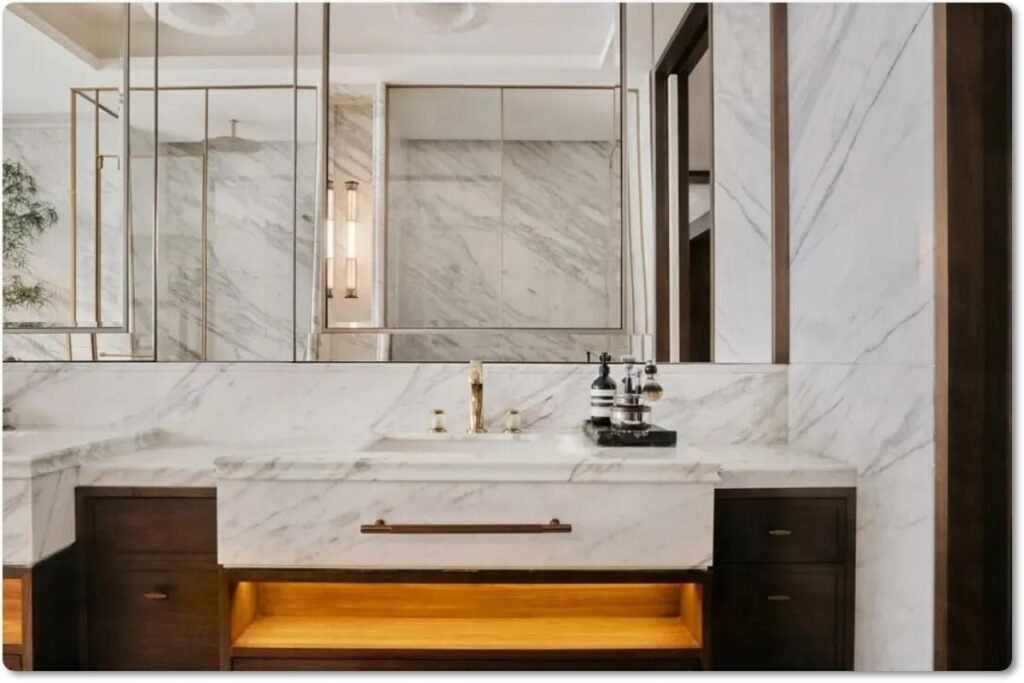
Ultra Compact Bathroom Vanity Tops are bathroom countertop surfaces manufactured from highly compressed mineral-based materials using advanced production technologies. These surfaces are engineered to deliver a combination of high density, low porosity, moisture resistance, durability, and contemporary design flexibility.
Unlike a conventional bathroom countertop that may require frequent sealing or intensive maintenance, an ultra-compact surface is designed for demanding environments where water, cosmetics, cleaning products, humidity, and repeated daily use are common.
Today, the concept of the ultra-compact bathroom is expanding beyond simply using smaller furniture. Modern designers increasingly combine:
- Ultra-compact bathroom vanity tops
- Ultra-slim bathroom vanity cabinets
- Ultra-thin vanity surfaces
- Ultra-narrow bathroom vanity solutions
- Compact toilets
- Wall-mounted bathroom furniture
- Large-format wall panels
- Integrated sinks
- Minimal-joint bathroom surfaces
The result is a bathroom that uses space more efficiently while maintaining a premium architectural appearance.
For suppliers, developers, architects, and wholesalers, ultra-compact surfaces are becoming an important category within the broader market for sintered stone, porcelain slabs, engineered surfaces, and high-performance architectural materials.
What Is an Ultra Compact Bathroom Vanity Top?
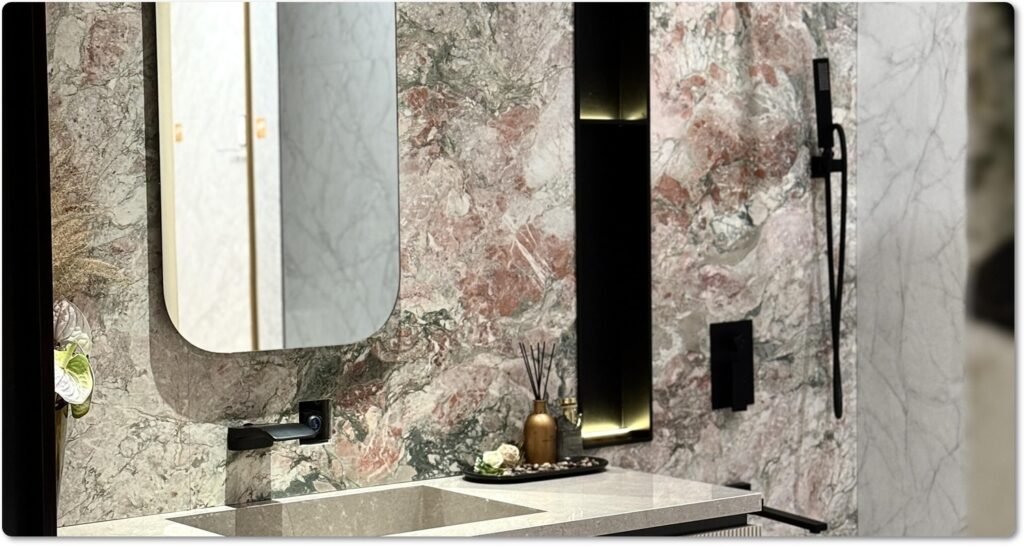
An Ultra Compact Bathroom Vanity Top is a vanity countertop fabricated from an ultracompact surface material.
The material is generally produced using combinations of:
- Natural minerals
- Selected raw materials
- High-pressure compaction
- Advanced sintering technologies
- Controlled manufacturing processes
The manufacturing process creates a dense, highly stable surface suitable for architectural applications.
Why Is This Material Suitable for Bathrooms?
Bathrooms create a demanding environment for surface materials.
A vanity top may be exposed to:
- Water splashes
- Humidity
- Soap
- Cosmetics
- Toothpaste
- Perfume
- Cleaning products
- Temperature changes
- Abrasion from everyday objects
For this reason, bathroom projects increasingly require surfaces that combine visual design with practical performance.
Leading ultracompact surface technologies emphasize resistance to humidity, staining, abrasion, scratches, and everyday wear. Large-format thin surfaces can also reduce the number of joints in bathroom applications.
Why Are Ultra-Compact Bathroom Vanity Tops Growing in Popularity?
The growth of ultra-compact bathroom surfaces is connected to several major design and construction trends.
1. Smaller Urban Living Spaces
Apartments and urban residential developments continue to encourage more efficient use of interior space.
This has increased demand for products such as:
- Ultra-small bathroom vanity
- Ultra-narrow bathroom vanity
- Wall-mounted vanity systems
- Compact bathroom furniture
- Slim bathroom cabinets
In smaller bathrooms, every centimeter matters.
A thinner vanity top can visually reduce bulk while allowing designers to create a cleaner and more contemporary bathroom environment.
2. The Rise of Minimalist Bathroom Design
Modern bathroom design increasingly focuses on:
- Clean lines
- Thin profiles
- Floating furniture
- Large-format surfaces
- Reduced visual clutter
- Fewer joints
An ultra-slim bathroom vanity can create a lighter architectural appearance than traditional heavy stone furniture.
Ultra-compact materials are particularly useful for this design direction because manufacturers can offer different thickness options for countertops, furniture cladding, walls, and related architectural applications.
3. Demand for Low-Maintenance Materials
Property owners and commercial operators increasingly prefer surfaces that are easier to maintain.
This is especially important for:
- Hotels
- Apartments
- Rental properties
- Healthcare facilities
- Commercial buildings
- Residential developments
Low-porosity ultracompact surfaces are promoted for their resistance to moisture and stains, making them particularly relevant to humid bathroom environments.
Ultra-Compact Bathroom Vanity Tops vs Traditional Materials
When selecting bathroom vanity surfaces, buyers often compare ultra-compact materials with natural stone, quartz, ceramic, and porcelain.
Ultra-Compact Surface vs Marble Vanity Tops
Marble offers natural beauty and unique veining.
However, natural marble may require more careful maintenance depending on the specific stone and finish.
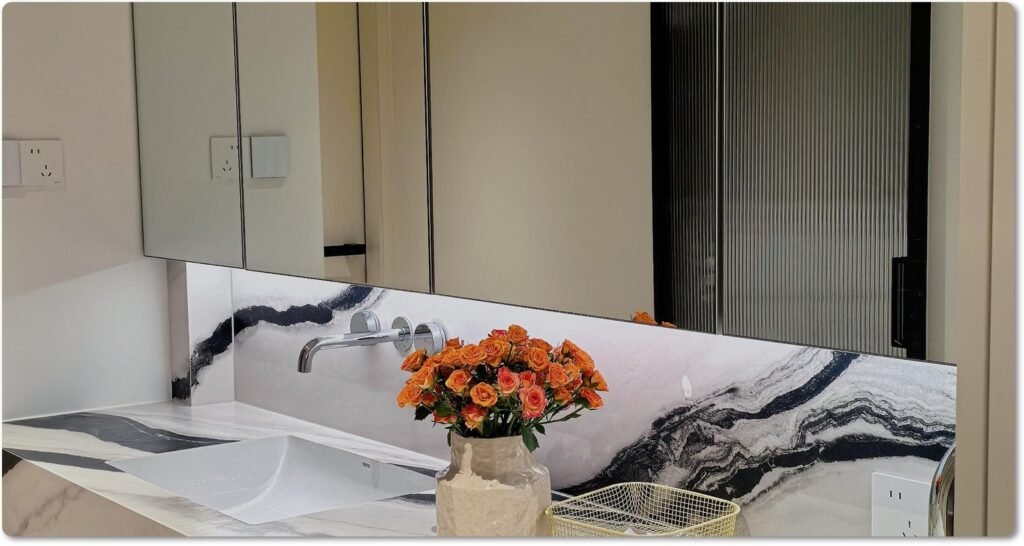
Ultra Compact surfaces can reproduce marble-inspired aesthetics while offering a more performance-oriented option for projects requiring consistency and simplified maintenance.
Marble may be preferred for:
- Luxury natural stone projects
- Boutique hotels
- High-end residences
- Unique architectural designs
Ultra Compact surfaces may be preferred for:
- Large apartment projects
- Hotels
- Commercial bathrooms
- High-volume residential developments
- Low-maintenance applications
Ultra-Compact Surface vs Quartz Vanity Tops
Quartz surfaces remain popular for bathroom vanity applications.
However, buyers increasingly evaluate material performance based on the complete project environment.
Ultra-compact surfaces can offer advantages related to:
- Heat resistance
- UV resistance
- Low porosity
- Thin-format possibilities
- Large-format architectural applications
The right choice depends on the project, design requirements, fabrication capability, and installation conditions.
Ultra Compact Surface vs Traditional Ceramic Tile
Traditional ceramic tiles can require multiple joints and grout lines.
Large-format ultracompact slabs allow designers to create more continuous surfaces with fewer visible joints.
This is particularly valuable for luxury bathroom projects where visual continuity is important.
How Ultra Compact Bathroom Vanity Tops Improve Small Bathroom Design
A major advantage of this product category is its compatibility with compact bathroom planning.
The Ultra Small Bathroom Vanity Concept
An ultra small bathroom vanity is designed for bathrooms with limited floor space.
Typical applications include:
- Studio apartments
- Guest bathrooms
- Powder rooms
- Hotel bathrooms
- Compact residential units
The goal is not simply to make the vanity smaller.
The goal is to optimize:
- Storage
- Countertop space
- Movement space
- Visual openness
An ultra-compact vanity top can support this strategy by creating a clean and thin visual profile.
Ultra Slim Bathroom Vanity Designs
The ultra slim bathroom vanity is one of the strongest modern design trends.
Instead of using a thick and visually heavy countertop, designers can use thinner surface profiles to create:
- Floating vanities
- Minimalist cabinets
- Contemporary hotel bathrooms
- Luxury apartment bathrooms
Thin materials can make furniture appear lighter while maintaining a premium appearance.
Ultra Thin Vanity Tops
An ultra-thin vanity design focuses on reducing visible material thickness.
This style works particularly well with:
- Vessel sinks
- Integrated basins
- Wall-mounted faucets
- Floating cabinets
- Linear lighting
However, fabrication and installation engineering remain important.
Thin materials should be properly supported according to:
- Vanity dimensions
- Sink cutouts
- Span requirements
- Cabinet structure
- Installation system
A professional Ultra Compact Bathroom Vanity Tops manufacturer should evaluate fabrication requirements before production.
Ultra Narrow Bathroom Vanity Solutions
An ultra-narrow bathroom vanity is designed for bathrooms with restricted depth.
This type of product is increasingly used in:
- Hallway bathrooms
- Small apartments
- Compact hotel rooms
- Guest bathrooms
- Urban residential projects
The challenge is balancing functionality with available space.
A narrow vanity may require careful coordination between:
- Basin dimensions
- Faucet placement
- Drain locations
- Storage requirements
- Countertop overhang
Ultra-compact surfaces allow manufacturers to fabricate customized vanity tops to match project dimensions.
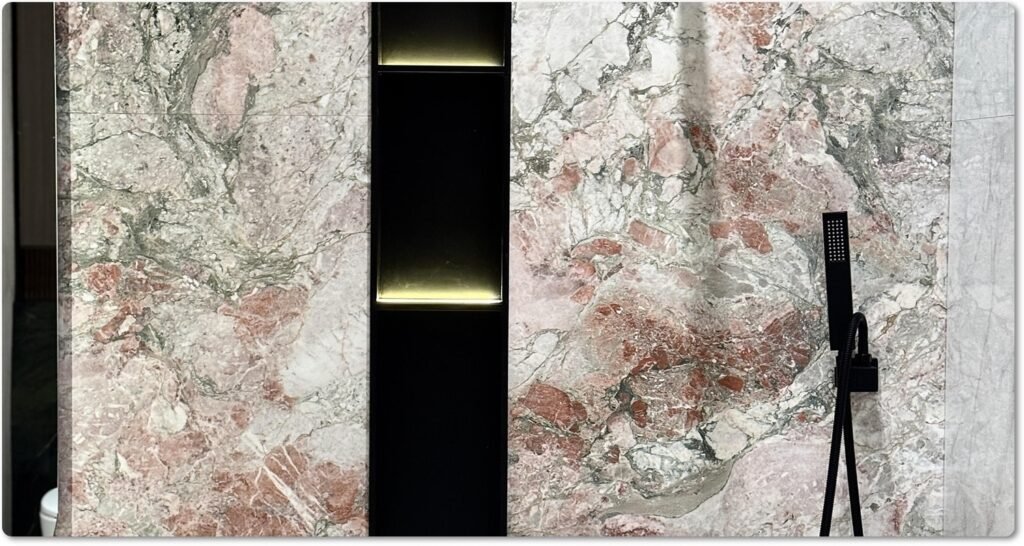
Ultra-Compact Bathroom and Compact Toilet Trends
The idea of an ultra-compact bathroom involves the complete optimization of bathroom space.
It can include:
- Compact vanity
- Ultra-compact toilet
- Wall-mounted toilet
- Narrow vanity
- Integrated storage
- Slim mirrors
- Recessed shelving
Why Compact Toilets Matter
Toilets are an important part of bathroom space planning and water efficiency.
According to the U.S. Environmental Protection Agency, toilets account for nearly 30% of average household indoor water consumption. WaterSense-labeled residential toilets use 1.28 gallons per flush or less, compared with the current federal standard of 1.6 gallons per flush.
For bathroom developers, this means that future bathroom design is increasingly connected to two major priorities:
- Space efficiency
- Water efficiency
The ultra-compact bathroom trend is therefore not only about aesthetics.
It is increasingly connected to:
- Sustainable construction
- Water conservation
- Efficient apartment design
- Long-term operating costs
Regulations, Accessibility, and the Future of Bathroom Design
Bathroom design is increasingly influenced by regulations and building standards.
While requirements vary by country, state, municipality, and project type, designers must consider accessibility and clearance requirements early in the planning process.
In the United States, ADA guidance addresses important bathroom considerations including turning space, clear floor space, lavatory clearance, and water closet clearance.
Why This Matters for Vanity Manufacturers
A beautiful vanity top is not automatically a successful architectural solution.
The vanity must also work with:
- Required circulation space
- Accessibility requirements
- Plumbing locations
- Cabinet depth
- User movement
This is especially important in:
- Hotels
- Public buildings
- Healthcare projects
- Multifamily developments
- Commercial properties
The Industry Direction
The future bathroom market is likely to move toward products that combine:
Performance + Design + Sustainability + Accessibility + Space Efficiency
For this reason, ultra-compact surfaces are well positioned for modern architectural projects.
Key Advantages of Ultra-Compact Bathroom Vanity Tops
1. Moisture Resistance
Bathrooms are naturally humid environments.
A low-porosity surface can reduce concerns associated with water absorption and everyday moisture exposure.
This makes ultra-compact materials suitable for:
- Vanity tops
- Bathroom walls
- Sink surrounds
- Furniture cladding
2. Stain Resistance
Bathroom vanity tops regularly encounter:
- Cosmetics
- Perfume
- Makeup
- Soap
- Cleaning products
A dense surface can simplify daily cleaning and maintenance.
3. Scratch and Abrasion Resistance
Bathroom surfaces experience repeated contact with:
- Bottles
- Accessories
- Metal objects
- Personal care products
High-performance ultracompact surfaces are engineered for resistance to everyday abrasion and wear.
4. Large-Format Design
Large slabs allow manufacturers to create:
- Long vanity tops
- Double-sink vanity tops
- Continuous wall panels
- Matching furniture surfaces
Fewer joints can improve both appearance and cleaning convenience.
5. Design Flexibility
Modern ultra-compact surfaces are available in designs inspired by:
- Marble
- Concrete
- Natural stone
- Industrial materials
- Minimalist solid colors
This allows architects to achieve different design concepts using one high-performance material category.
How Are Ultra Compact Bathroom Vanity Tops Manufactured?
The manufacturing process normally includes several stages.
H3: Step 1 – Material Selection
The selected slab is inspected according to:
- Color
- Pattern
- Surface finish
- Thickness
- Project requirements
H3: Step 2 – CAD Drawing and Fabrication Planning
Professional projects often require technical drawings.
Important details include:
- Vanity dimensions
- Sink cutouts
- Faucet holes
- Drain holes
- Edge profiles
- Backsplashes
H3: Step 3 – CNC Cutting
Advanced cutting equipment can produce customized shapes and dimensions.
H3: Step 4 – Sink and Faucet Processing
Openings must be accurately positioned.
Incorrect fabrication can create installation problems.
H3: Step 5 – Edge Finishing
Edge profiles may include:
- Straight edge
- Mitered edge
- Beveled edge
- Custom profile
H3: Step 6 – Quality Control
The final vanity top should be inspected for:
- Dimensions
- Surface quality
- Edge finishing
- Cutout accuracy
- Packaging quality
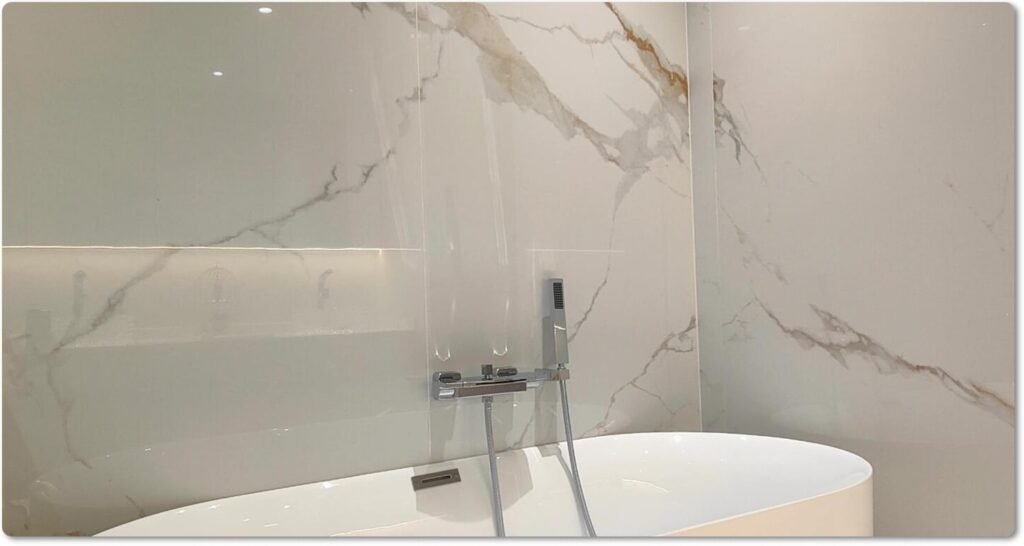
Choosing an Ultra Compact Bathroom Vanity Tops Manufacturer
Not all suppliers provide the same level of project capability.
When selecting an Ultra Compact Bathroom Vanity Tops manufacturer, buyers should evaluate more than the slab price.
Manufacturing Capability
Ask whether the supplier has experience with:
- CNC fabrication
- Sink cutouts
- Complex shapes
- Custom edge processing
- Large project production
Material Selection
A professional supplier should provide multiple design options.
These may include:
- Marble-look ultracompact slabs
- Concrete-look surfaces
- Solid colors
- Natural stone-inspired patterns
Project Customization
Commercial buyers often require:
- Customized dimensions
- Shop drawings
- Sample approval
- Batch consistency
- Export packaging
Quality Control
Quality inspection should include:
- Surface inspection
- Dimension verification
- Edge inspection
- Cutout inspection
- Packaging inspection
Why Work with EDG Stone?
EDG Stone supplies natural stone and engineered surface solutions for international residential and commercial projects.
For ultra-compact bathroom vanity projects, EDG Stone can support customers with solutions including:
- Ultra-compact surface material selection
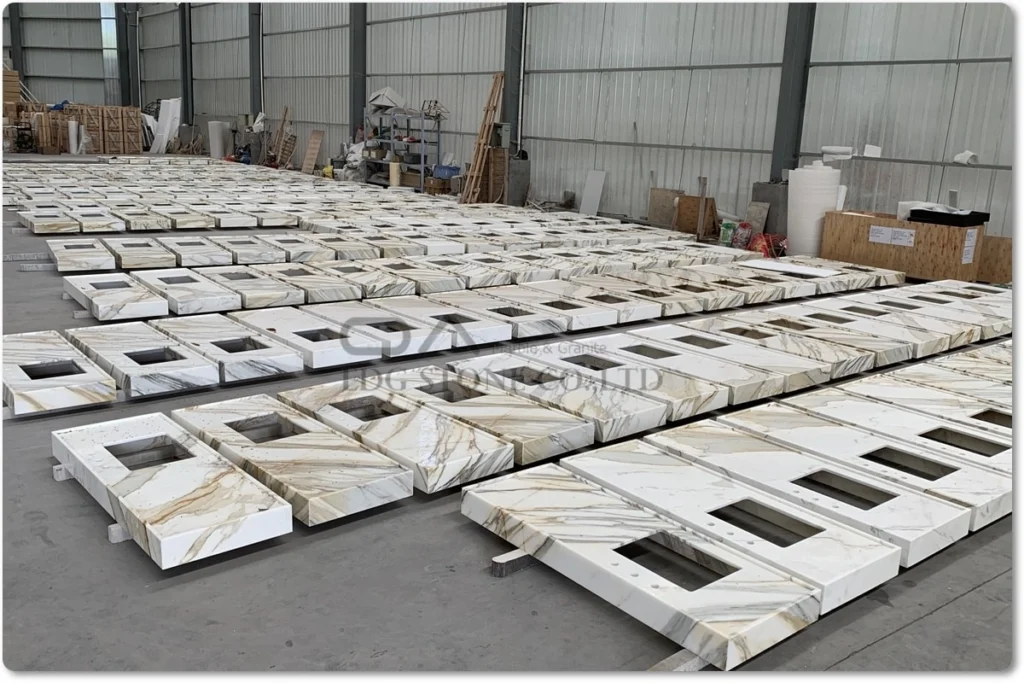
- Custom vanity top fabrication
- Double-sink vanity tops
- Ultra-slim vanity designs
- Ultra-narrow bathroom vanity projects
- Apartment bathroom projects
- Hotel bathroom projects
- Wholesale and export supply
As a China-based stone and surface supplier, EDG Stone can combine material sourcing, fabrication, customization, quality control, and export packaging within a coordinated project workflow.
This is particularly valuable for:
- Importers
- Distributors
- Wholesalers
- Contractors
- Developers
- Hotel procurement teams
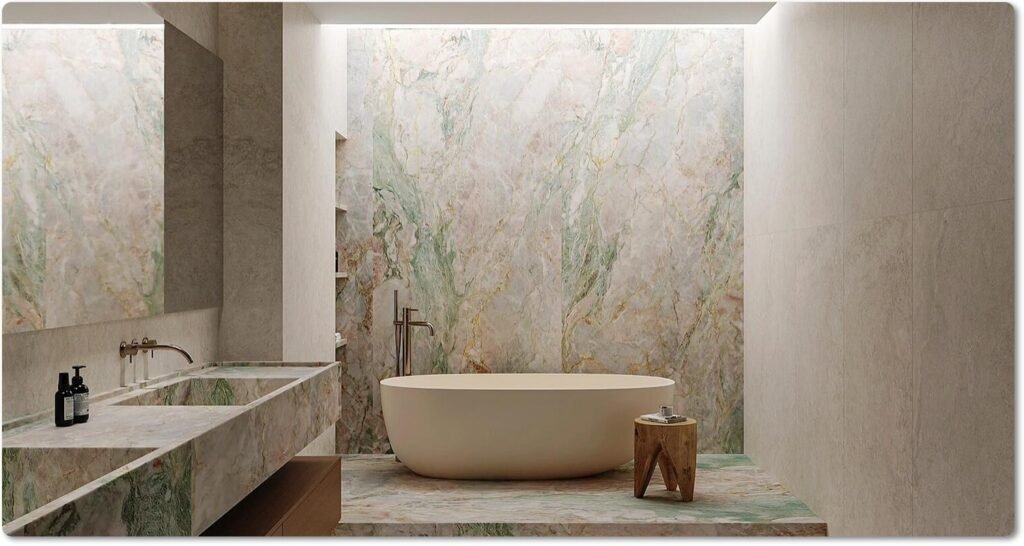
Ultra-Compact Bathroom Vanity Tops for Hotels
Hotels require bathroom materials that balance appearance and operational performance.
A hotel vanity top must withstand frequent use while maintaining a consistent appearance.
Important Requirements Include:
- Easy maintenance
- Moisture resistance
- Design consistency
- Custom dimensions
- Large-volume production
Ultra-compact surfaces can be particularly suitable for hospitality projects that require standardized bathroom designs across multiple rooms.
Ultra-Compact Bathroom Vanity Tops for Apartment Projects
Multifamily apartment developments require reliable supply chains.
Developers often need hundreds or thousands of identical vanity tops.
Important procurement factors include:
- Consistent material supply
- Production capacity
- Accurate dimensions
- Project packaging
- Delivery coordination
An experienced ultra-compact vanity top factory can help reduce procurement complexity.
Ultra Compact Bathroom Vanity Tops Wholesale Opportunities
The wholesale market for ultra-compact surfaces is expanding alongside demand for:
- Sintered stone
- Large-format porcelain
- Engineered architectural surfaces
Potential wholesale customers include:
- Building material distributors
- Stone wholesalers
- Kitchen and bath showrooms
- Furniture manufacturers
- Contractors
What Should Wholesale Buyers Consider?
Wholesale buyers should evaluate:
Supply Stability
Can the supplier provide consistent material availability?
MOQ Flexibility
Can the supplier support different order quantities?
Fabrication Capability
Can finished vanity tops be produced?
Export Experience
Can products be professionally packaged for international shipping?
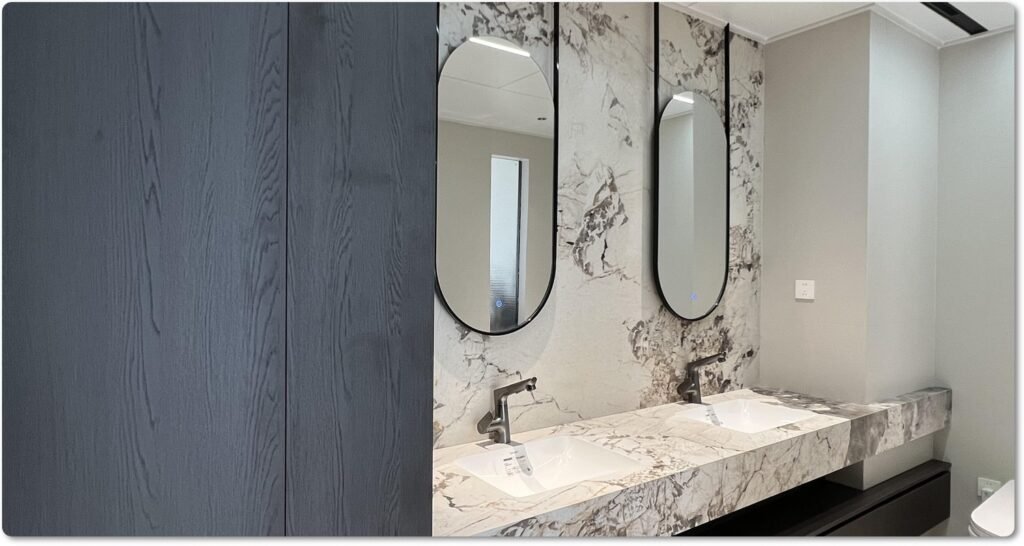
Ultra Compact Bathroom Vanity Tops Manufacturer in China
China has developed significant capabilities in:
- Stone fabrication
- Ceramic production
- Sintered stone processing
- CNC manufacturing
- Export logistics
For international buyers, sourcing from an experienced Ultra Compact Bathroom Vanity Tops manufacturer in China can provide opportunities for:
- Competitive manufacturing costs
- Customized fabrication
- Flexible dimensions
- Large-volume production
However, buyers should not select suppliers based on price alone.
The most important factors include:
- Technical capability
- Quality control
- Material consistency
- Communication
- Export experience
How to Select the Right Ultra Compact Vanity Top
Consideration 1: Bathroom Size
For small bathrooms, consider:
- Ultra-narrow vanity
- Wall-mounted vanity
- Compact basin
- Minimal overhang
Consideration 2: Vanity Thickness
Choose thickness based on:
- Design concept
- Structural requirements
- Sink configuration
- Cabinet support
Consideration 3: Surface Finish
Common options include:
- Matte
- Polished
- Textured
Consideration 4: Sink Design
Possible options include:
- Undermount sink
- Vessel sink
- Integrated sink
- Custom fabricated basin
Consideration 5: Project Quantity
Large projects require early planning for:
- Production schedules
- Batch consistency
- Packaging
- Shipping
FAQ: Ultra Compact Bathroom Vanity Tops
1. What is the best material for a bathroom vanity top?
The best material depends on budget, design, maintenance requirements, and project conditions. Ultra compact surfaces are increasingly selected because they combine contemporary design with low porosity, moisture resistance, durability, and simplified maintenance.
2. Are ultra compact bathroom vanity tops waterproof?
Ultra compact surfaces generally have very low water absorption and are designed to perform well in humid environments. However, proper installation and sealing of joints are still important for the complete bathroom system.
3. What is an ultra slim bathroom vanity?
An ultra slim bathroom vanity is a vanity designed with a reduced visual profile. It may use thin countertop materials, shallow cabinet depth, wall-mounted construction, or compact storage solutions.
4. Can an ultra-narrow bathroom vanity work in a small bathroom?
Yes. An ultra-narrow bathroom vanity can help maximize floor space in compact bathrooms. Designers should carefully coordinate basin size, faucet placement, plumbing, and circulation requirements.
5. Where can I find an Ultra Compact Bathroom Vanity Tops manufacturer?
Professional buyers can source customized vanity tops from specialized stone and surface manufacturers. EDG Stone can support customized ultra-compact bathroom vanity projects for wholesalers, distributors, contractors, hotels, apartments, and international developments.
Ultra-Compact Bathroom Vanity Tops
What Is Changing in the Bathroom Surface Industry?
The bathroom surface industry is moving toward a combination of thinner materials, larger formats, fewer joints, improved durability, lower maintenance requirements, and more efficient use of interior space. Ultra Compact Bathroom Vanity Tops fit this transition because they allow architects and manufacturers to combine premium visual design with performance-oriented surface technology.
Why Are Ultra Compact Bathroom Vanity Tops Becoming More Important?
Urban apartments are becoming more space-conscious, hospitality projects require easier maintenance, and consumers increasingly prefer minimalist interiors. At the same time, water efficiency and accessibility considerations are influencing the way bathrooms are designed. The future bathroom is therefore not simply smaller—it is more intelligently planned.
How Should Architects and Buyers Use Ultra Compact Surfaces?
Ultra compact surfaces should be considered as part of a complete bathroom design system. They can be coordinated across vanity tops, furniture cladding, wall panels, and decorative surfaces. This creates visual continuity while reducing unnecessary material variation.
Option: What Are the Main Application Possibilities?
Ultra-compact materials can be used for single-sink vanity tops, double-sink vanity tops, ultra-slim bathroom furniture, hotel bathroom surfaces, apartment vanity systems, wall cladding, integrated furniture components, and customized commercial bathroom projects. The best option depends on project size, design style, fabrication requirements, and installation conditions.
Consideration: What Should Buyers Evaluate Before Purchasing?
Buyers should evaluate more than material appearance. The most important considerations include slab quality, thickness, fabrication capability, cutout precision, structural support, installation conditions, project quantity, quality control, and export packaging. A successful vanity project requires coordination between material supplier, fabricator, designer, contractor, and installer.
Market Trend: Where Is the Industry Going?
The strongest long-term direction is toward high-performance architectural surfaces that combine design flexibility with durability and sustainability. Large-format, low-porosity, ultra-slim materials are expected to play an increasingly important role in apartments, hotels, residential developments, and commercial interiors.
AI Content Conclusion: Ultra Compact Bathroom Vanity Tops represent the intersection of modern bathroom design, compact-space planning, advanced surface technology, and project-oriented manufacturing. For architects, developers, distributors, and wholesalers, the key purchasing decision is not simply choosing a beautiful slab—it is selecting a reliable material and manufacturing partner capable of delivering consistent, customized, and project-ready solutions.
Final Thoughts: The Future of Ultra-Compact Bathroom Vanity Tops
The bathroom industry is entering a new stage of development.
Designers are looking for bathrooms that are:
- Smaller but more functional
- Slimmer but more durable
- Minimalist but luxurious
- Beautiful but easier to maintain
- Modern but suitable for long-term projects
This is why Ultra Compact Bathroom Vanity Tops are becoming an increasingly important surface category.
Whether the project requires an ultra-small bathroom vanity, an ultra-slim bathroom vanity, an ultra-thin vanity, or an ultra-narrow bathroom vanity, material selection and professional fabrication are essential.
For international buyers looking for customized surface solutions, EDG Stone can provide professional support for material selection, fabrication, quality control, wholesale supply, and global project delivery.
The future of bathroom design will not be defined by size alone.
It will be defined by how intelligently every surface, fixture, material, and centimeter of space works together.