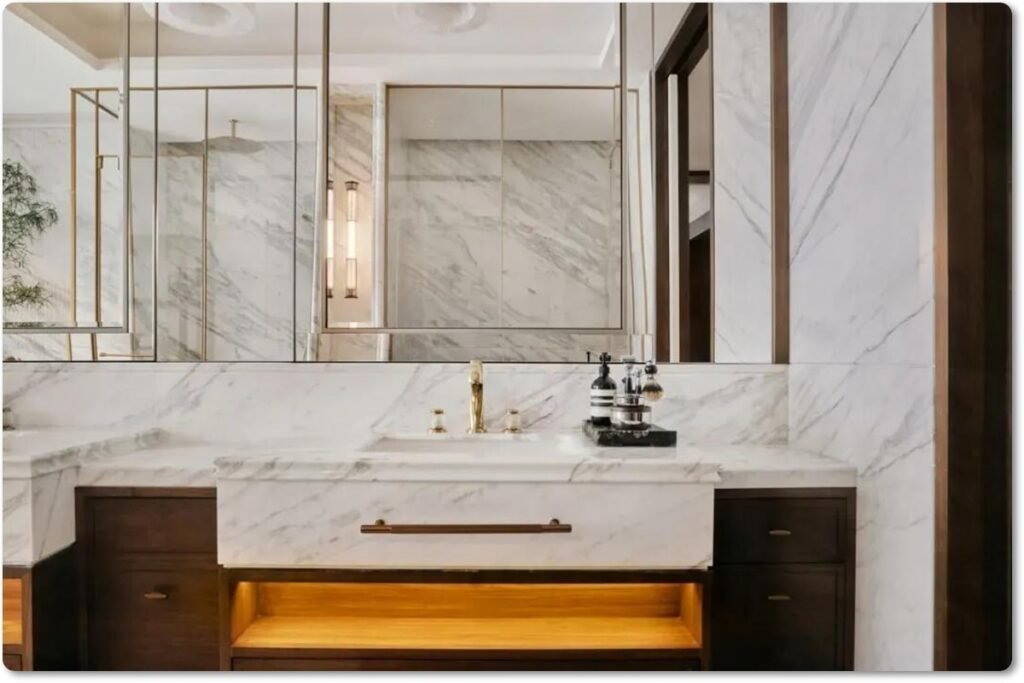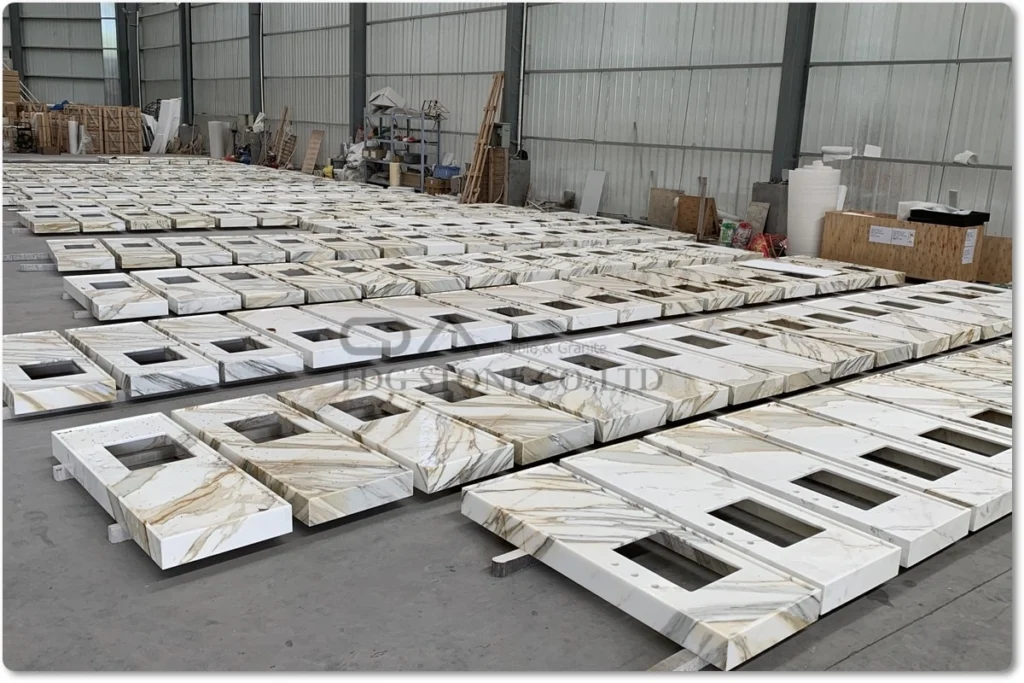
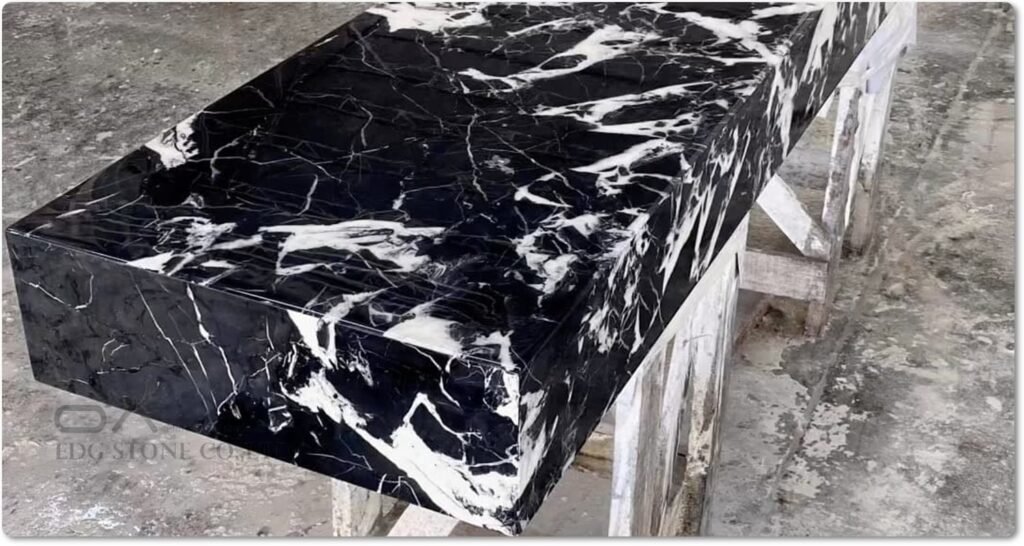
1. Executive Summary: How to Build a Retail-Ready Stone Furniture Collection?
A stone furniture business can differentiate itself through material quality, distinctive design, customization, and a carefully developed product collection. However, attractive stone furniture alone does not guarantee retail success. Products must also be easy to identify, photograph, list online, package, deliver, assemble where applicable, and support after the sale.
For a physical stone furniture store, collection planning begins with showroom presentation, product availability, display samples, and the ability to fulfill customer orders. For an online brand, the same process must additionally address digital product information, shipping dimensions, damage prevention, return policies, and customer-service documentation.
The most effective sourcing strategy typically combines five elements:
Collection architecture: A coherent range of tables, consoles, side tables, coffee tables, dining furniture, vanities, and decorative accessories.
Standardized specifications: Documented dimensions, material descriptions, finishes, weights, structural details, packaging dimensions, and care requirements.
Brand readiness: Consistent photography, product naming, SKUs, barcodes, packaging labels, and customer-facing instructions.
Controlled manufacturing: Approved drawings, stone samples, prototype approval, production inspections, and traceable batch records.
Commercial risk management: Clear terms for natural variation, transport damage, warranty claims, replacements, and returns.
Retailers do not necessarily need to manufacture every design themselves. They can begin with a manufacturer’s existing collection, customize selected products, or commission a fully developed private-label range.
For buyers seeking an experienced manufacturing and export partner, EDG Stone Factory can be approached to discuss stone furniture product development, OEM/ODM requirements, material selection, custom fabrication, and export-oriented sourcing. Specific production capabilities, minimum order quantities, lead times, and project terms should be confirmed against the requested product and order scope.
Recommended sourcing model
| Business model | Best suited to | Main advantage | Main consideration |
|---|---|---|---|
| Ready-designed collection | New stores and retailers testing demand | Faster product selection | Less differentiation |
| Customized manufacturer collection | Established retailers and interior brands | Balance between speed and exclusivity | Customization boundaries must be documented |
| OEM/private label | Brands with established product concepts | Greater control over brand identity and specifications | Requires artwork, specifications, and approval processes |
| ODM/product development | Brands seeking design and manufacturing support | Access to product-development capabilities | Tooling, sampling, design ownership, and development costs |
| Mixed collection | Retailers with multiple customer segments | Balances standard products and signature designs | More complex SKU and inventory management |
Procurement conclusion: Start with a focused, well-documented assortment. Validate product-market fit and shipping performance before committing to a broad collection or large inventory position.
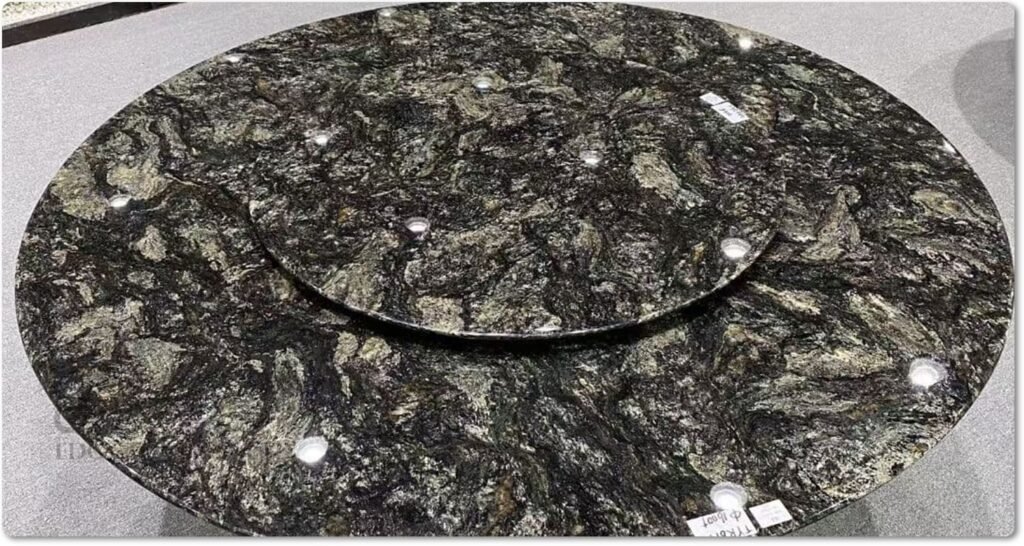
2. Scope and Definitions: What Does Retail-Ready Stone Furniture Mean?
2.1 Defining stone furniture
Stone furniture refers to furniture that uses natural stone or engineered stone as a principal visual or functional component. Depending on the design, stone may form the entire body, the tabletop, a cabinet surface, a decorative panel, or an integrated part of a mixed-material structure.
Typical materials include:
Marble: Often selected for expressive veining, decorative surfaces, coffee tables, consoles, and dining tables.
Granite: Used where its particular appearance and measured performance suit the intended application.
Quartzite: Selected for distinctive natural patterns and project-specific performance requirements.
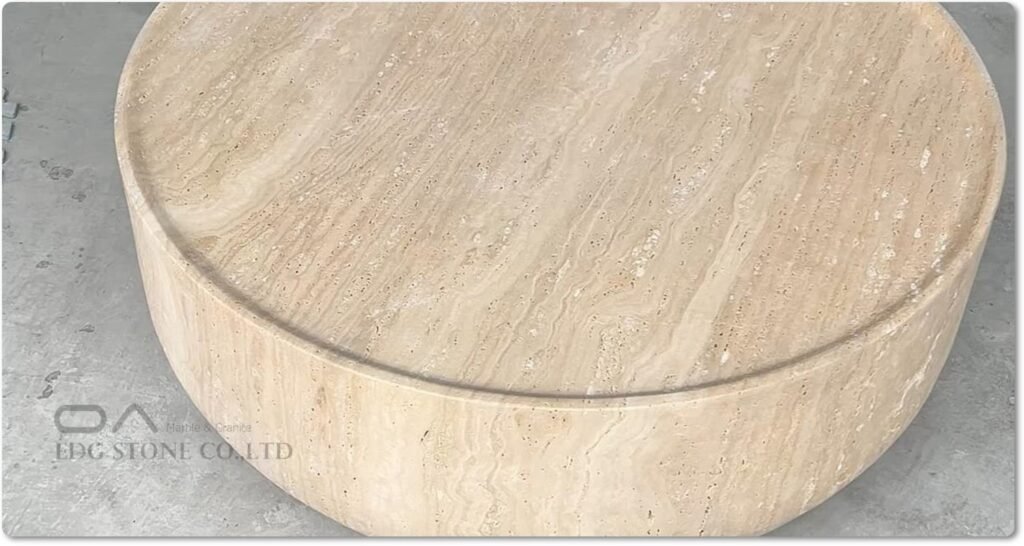
Travertine and limestone: Frequently considered for understated, textured, or architectural collections.
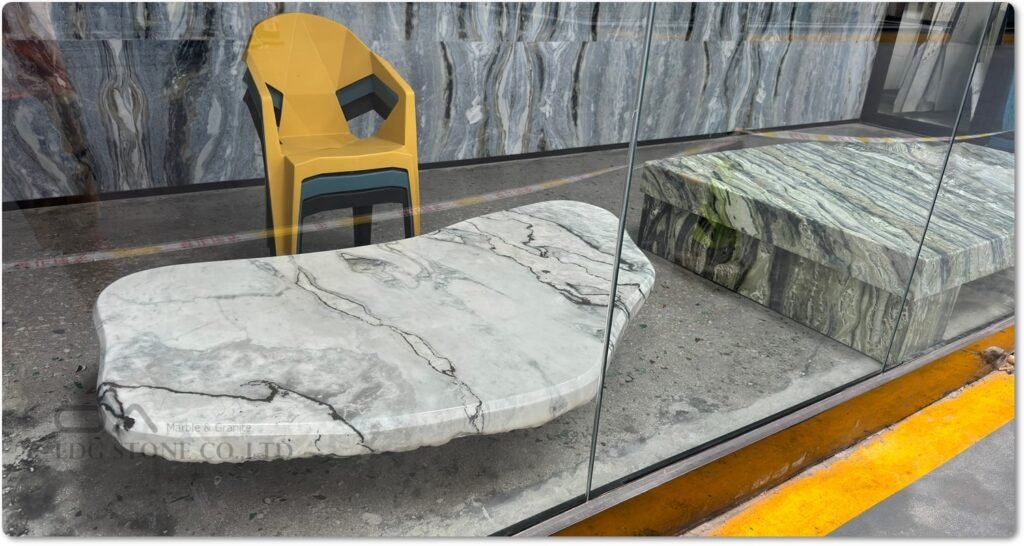
Onyx: Used in selected decorative designs, subject to material characteristics and construction requirements.
Engineered stone and porcelain surfaces: Options for designs requiring specified appearance, thickness, and fabrication characteristics. Their composition and handling requirements differ from those of natural stone.
Mixed-material furniture: Combinations of stone with wood, metal, glass, or other components.
Material names alone do not establish product suitability. The actual stone, finish, thickness, support design, fabrication method, and intended use must be evaluated together.
2.2 Product categories for a stone furniture store
A coherent collection may include the following categories.
| Category | Representative products | Retail considerations |
|---|---|---|
| Living room | Coffee tables, side tables, nesting tables | Weight, edge safety, stability, room-scale photography |
| Dining | Dining tables, pedestal tables | Support design, span, loading, handling |
| Entryway | Console tables, accent tables | Depth, wall clearance, packaging dimensions |
| Bedroom | Bedside tables, decorative furniture | Surface care, footprint, coordination |
| Bathroom | Stone vanities and selected furniture | Water exposure, installation, sealing where applicable |
| Commercial interiors | Reception desks, hotel side tables, custom consoles | Project drawings, repeatability, installation responsibility |
| Accessories | Trays, plinths, decorative objects | Smaller shipping units, finish consistency, gift packaging |
Not every category belongs in every store. A design-led boutique may benefit from a limited collection with distinctive materials, whereas a distributor may prioritize repeatable dimensions, predictable packaging, and a wider range of price points.
2.3 Key sourcing terms
Stone furniture vendor: A business that supplies furniture to a retailer, brand, or project buyer. The vendor may be a manufacturer, exporter, wholesaler, or intermediary.
Stone furniture reseller: A business that purchases products for resale without necessarily manufacturing or substantially modifying them.
Stone furniture manufacturer: A business that fabricates or assembles furniture or its components. Confirm which production steps occur in-house and which are subcontracted.
OEM: In this article, OEM describes manufacturing products to a buyer’s approved design, specification, or branding requirements. Commercial definitions can vary, so the purchase agreement should define responsibilities.
ODM: Original Design Manufacturing generally refers to a supplier offering design and product-development capabilities that can be adapted for a buyer’s brand.
Private label: Products marketed under the retailer’s or brand owner’s name, subject to the relevant contractual, intellectual-property, labeling, and regulatory requirements.
Stone International Furniture Collection: This phrase is included as a search term requiring identity verification. It should not automatically be treated as a generic category, a verified brand name, or an EDG Stone collection. If a buyer intends to reference a particular business, verify its official website, legal or trading identity, current catalog, and brand ownership before making comparisons or claims about affiliation.
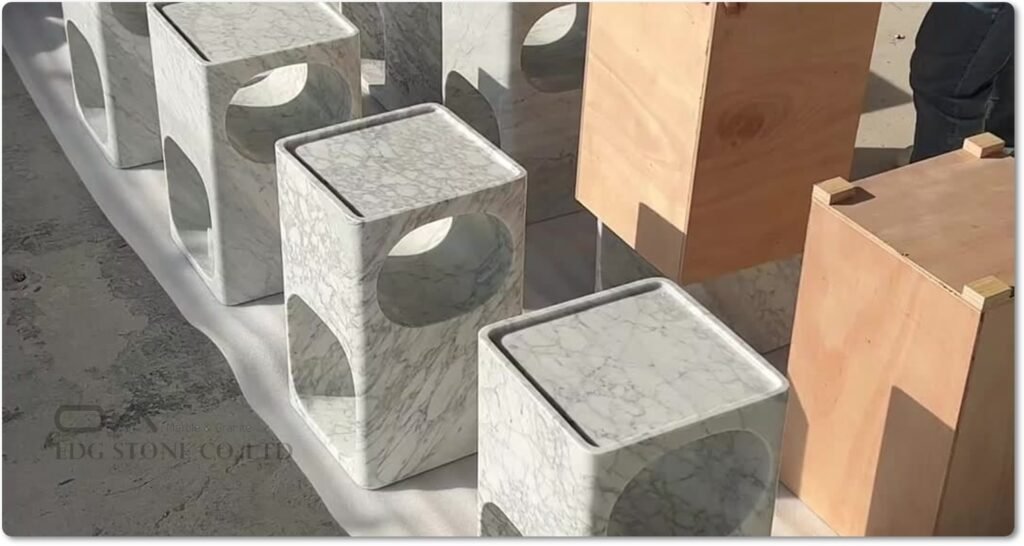
3. Technical Evaluation: Materials, Structure, Specifications, and Retail Readiness
3.1 Build a balanced collection instead of a random catalog
A collection should be designed around a recognizable customer proposition. Consider three complementary product groups.
Core products
These establish the collection’s everyday commercial offering. Examples include side tables, compact coffee tables, and standard console designs.
Prioritize manageable dimensions, clearly defined finishes, repeatable specifications, and packaging that can be tested and standardized.
Signature products
These create visual differentiation. Examples include bookmatched marble tables, sculptural pedestal bases, unusual stone combinations, or distinctive natural textures.
Signature designs can support higher-value positioning, but their material yield, fabrication complexity, weight, and replacement difficulty must be evaluated before launch.
Complementary products
These increase collection coherence and may support additional sales. Examples include matching plinths, trays, smaller accent tables, and coordinated consoles.
A useful planning method is to group products by material family, design language, room application, and price positioning. This helps buyers create coordinated collections rather than disconnected individual SKUs.
Do not assume every item should be stocked in every color. Some products may be offered as stocked finishes, while others remain made-to-order.
3.2 Establish a complete product specification
Every retail SKU should have a controlled specification sheet.
| Specification field | Required information |
|---|---|
| Product identity | Collection name, model, SKU, revision |
| Overall dimensions | Length, width, height, and applicable tolerances |
| Stone material | Material type, commercial name, source information where available |
| Stone construction | Thickness, edge profile, fabrication method, reinforcement where applicable |
| Finish | Polished, honed, brushed, textured, or another precisely defined finish |
| Base and supports | Material, dimensions, attachment method, finish |
| Weight | Net product weight and packaged gross weight |
| Assembly | Components, hardware, tools, steps, warnings |
| Packaging | Carton or crate dimensions, protective materials, handling instructions |
| Retail data | Barcode/GTIN where required, country-of-origin information where applicable |
| Maintenance | Cleaning method, spill response, sealant information where relevant |
| Quality control | Inspection criteria, sample approval reference, inspection records |
Dimensions should be stated in a consistent unit system. For international retailers, publishing both metric and imperial measurements can reduce customer confusion.
Distinguish between the product’s net weight and its shipping weight. For stone furniture, the difference can materially affect courier eligibility, delivery arrangements, freight costs, and customer handling requirements.
3.3 Evaluate the stone itself
Natural stone is a geological material, not a mass-produced decorative film. Even within a named material category, appearance and physical properties can vary.
Assess:
Veining, color distribution, and background tone.
Visible fissures, filled areas, resin treatment, and repairs.
Surface finish and consistency.
Edge quality and corner condition.
Absorption and other relevant physical properties.
Suitability for the intended indoor or outdoor application.
Compatibility with adhesives, metal components, supports, and cleaning products.
Where technically relevant, buyers can reference ASTM International’s dimension-stone methods and guides. ASTM C97/C97M-26 addresses absorption and bulk specific gravity testing for dimension stone, while ASTM C1528/C1528M-26 guides on selecting dimension stone. These are material-evaluation references, not blanket certifications for a finished furniture product. The applicable method and acceptance criteria should be selected for the actual material and use case. ASTM C97/C97M-26 and ASTM C1528/C1528M-26.
3.4 Evaluate structure, stability, and workmanship
A beautiful stone top can still fail commercially if its support system is poorly designed.
Stone thickness and unsupported spans
Thickness must be evaluated in relation to the stone’s characteristics, dimensions, geometry, support points, and expected loads. There is no single thickness suitable for every table design.
Base and attachment design
Review the center of gravity, support footprint, attachment hardware, adhesive system where applicable, and resistance to foreseeable movement during use.
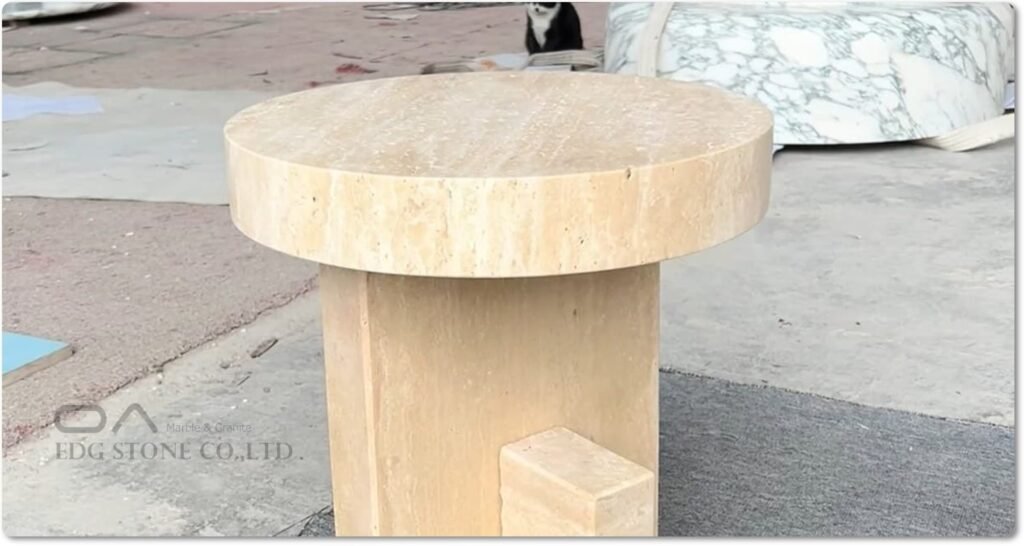
For pedestal tables, inspect the relationship between tabletop size, base geometry, and stability. For long dining tables, evaluate the actual support configuration and loading conditions.
Edges and corners
Specify acceptable edge profiles, dimensional tolerances, finish quality, and allowable cosmetic defects. Sharp corners, fragile projections, and poorly protected edges may create avoidable handling and consumer-safety risks.
Assembly and maintainability
Determine whether the product is fully assembled, partially assembled, or flat-packed. Confirm whether the retailer, delivery company, installer, or end customer is responsible for assembly.
Where furniture is intended for commercial settings, request testing or engineering evidence appropriate to the product category and applicable market requirements.
3.5 Create retail photography and product content
Product photography is part of quality communication, not merely marketing decoration.
A strong product listing should include:
A primary image showing the complete product.
Front, side, and rear views where useful.
Close-ups of the stone pattern, edges, finish, and base.
A dimension diagram.
A room-setting image showing scale and styling.
An image or diagram explaining assembly where relevant.
Packaging or component images when these help explain delivery and setup.
Use consistent lighting, color management, framing, and background treatment across the collection.
For natural stone, distinguish between representative imagery and the exact piece being sold. If the exact slab or tabletop is allocated to an order, photographs of that specific item provide stronger expectation management than a generic material image.
Avoid promising identical veining or color across products unless the actual manufacturing and selection process supports that promise.
3.6 Design a practical SKU and barcode system
A SKU is an internal inventory identifier. It is not automatically a universal product identifier.
A practical SKU format might be:
EDG-CT-MAR-001-HON
Where the segments identify the brand or range, product category, material family, model, and finish.
The exact format is a business choice. Keep it consistent, readable, and flexible enough to accommodate future products.
Retailers that need standardized product identification should evaluate GS1 Global Trade Item Numbers (GTINs) and the appropriate barcode format. GS1 explains that GTINs identify trade items and that barcode selection depends on where the code is scanned. The brand owner responsible for the product specification is generally responsible for assigning its GTIN under GS1 rules. A retailer should not assume a manufacturer’s existing barcode can automatically be reused for a different branded product. GS1 GTIN guidance and GS1 barcode guidance.
Before launch, test that:
Each sellable variant has the correct product identifier.
Barcode labels scan reliably.
The SKU matches the purchase order and carton records.
Product images and specifications match the corresponding model.
Carton labels distinguish individual units, sets, and multipacks where applicable.
3.7 Packaging labels and assembly instructions
Packaging should protect the product while making warehouse handling and consumer setup straightforward.
A retail-ready packaging system may identify:
Brand and product name.
Model or SKU.
Package number, such as carton 1 of 2.
Product dimensions and packaged weight.
Handling and orientation instructions.
Relevant warnings.
Assembly instructions or a QR code linking to the correct manual.
Manufacturer, importer, or responsible business information where required.
Country-of-origin markings and other market-specific disclosures where applicable.
Do not assume that a QR code replaces legally required information on a physical label.
Assembly documentation should identify all components, fasteners, tools, assembly steps, tightening instructions, stability precautions, and care instructions. If a product is heavy or requires two people to lift safely, the instructions should make that clear.
3.8 Regulatory and compliance considerations for 2026
Regulatory requirements depend on the destination market, product type, intended use, and the role of the manufacturer, importer, distributor, or retailer.
European Union — product safety: Regulation (EU) 2023/988, the General Product Safety Regulation (GPSR), has applied since 13 December 2024. Relevant businesses should assess product identification, traceability, safety documentation, warnings, and information required for distance sales. Applicability and specific duties depend on the product and the economic operator’s role.
European Union — packaging: Regulation (EU) 2025/40 on packaging and packaging waste generally applies from 12 August 2026, subject to its provisions, transitional arrangements, and specific implementation dates. Businesses placing packaged goods on the EU market should check applicable packaging, labeling, producer-responsibility, and national implementation requirements before shipment.
United States — product claims and origin: Retail descriptions, origin statements, and material claims should be accurate and substantiated. Importers should verify applicable U.S. Customs and Border Protection country-of-origin marking requirements and any product-specific federal, state, or local requirements.
Product safety: A table, cabinet, vanity, or other furniture item may face different requirements depending on its design and market. For example, tip-over concerns, sharp edges, stability, load-bearing behavior, and anchoring requirements must be assessed where relevant. A standard that applies to one furniture category should not be automatically applied to all stone furniture.
Environmental and material claims: Claims such as “sustainable,” “recyclable,” “non-toxic,” or “100% natural” should be supported by evidence appropriate to the specific product and jurisdiction. A natural stone top does not establish that every component, adhesive, coating, or package is natural or environmentally preferable.
For every target market, maintain a compliance file that records applicable rules, responsible parties, supporting evidence, approved labels, and review dates. Obtain specialist advice where product classification or legal obligations are uncertain.
4. Procurement Checklist: From Product Selection to Retail Launch
A repeatable procurement process reduces ambiguity between the retailer, brand owner, and manufacturer.
Step 1: Define the target customer
Identify whether the collection serves design-led consumers, value-conscious households, luxury interiors, hospitality, or another segment.
Document the expected retail price range, preferred materials, product sizes, room applications, and the main reasons customers would choose the collection.
Step 2: Select a launch assortment
Begin with a manageable set of products that share a recognizable visual identity. Include enough variety to test customer preferences without creating unnecessary inventory complexity.
Decide which products will be stocked, which will be made to order, and which will be available only as custom options.
Step 3: Request complete supplier information
Request a current catalog, dimensional drawings, material descriptions, finish samples, packaging specifications, product weights, assembly instructions, and indicative commercial terms.
For OEM/ODM work, also request information about prototype development, design revisions, tooling, exclusivity, and intellectual-property ownership.
Step 4: Evaluate samples and prototypes
Inspect a physical sample under realistic lighting. Review color, veining, finish, edges, base construction, dimensions, and packaging.
For a new design, approve a complete prototype rather than relying exclusively on a stone chip or rendering. A small sample can help establish material appearance, but it cannot prove the stability or workmanship of the finished furniture.
Step 5: Approve the specification and reference sample
Issue a written specification and identify the approved sample or reference images. Record the permitted variations and the criteria that would constitute rejection.
For natural stone, specify whether the buyer approves a general material range, a selected slab, or individual finished pieces.
Step 6: Validate the retail assets
Review product titles, descriptions, photography, dimensions, SKU structure, barcode allocation, packaging artwork, country-of-origin information, and instructions.
The retailer should approve the final content before labels or packaging are printed in volume.
Step 7: Test packaging and delivery
Confirm the shipping configuration, lifting method, pallet or crate requirements, protection for corners and edges, and suitability for the intended transport route.
Conduct documented packaging and handling trials appropriate to the product’s weight, fragility, and distribution channel. Do not assume that a package proven for local delivery will perform equally well through international freight and parcel networks.
Step 8: Run a pilot order
Use a small commercial order to validate actual production consistency, delivery performance, assembly experience, customer feedback, and damage patterns.
A pilot order should generate measurable evidence rather than simply demonstrate that the factory can make one attractive sample.
Step 9: Set acceptance and payment milestones
Define inspection stages, acceptable tolerances, documentation requirements, and the process for handling nonconforming products. Align payment milestones with the agreed commercial contract.
Step 10: Review the launch before scaling
Track sales by SKU, gross margin, damage claims, return reasons, packaging performance, and time required to resolve customer issues.
Use these findings to revise the assortment, specifications, and packaging before increasing order volumes.
Retail-readiness checklist
Product specification approved.
Material sample or exact-piece approval documented.
Prototype and structural checks completed as applicable.
Product photography and dimensions verified.
SKU and barcode records validated.
Packaging labels approved.
Assembly and care instructions finalized.
Destination-market compliance reviewed.
Shipping and damage-reporting procedures documented.
Returns, warranty, and replacement terms agreed.
Pilot order reviewed before scaling.
5. Cost and Risk Factors: Understanding the Total Cost of a Stone Furniture Collection
5.1 Product cost is only one part of landed cost
The purchase price is an important starting point, but it is not the final cost of making a product available for sale.
A retailer should calculate:
Landed cost per sellable unit = product purchase cost + packaging cost + allocated freight and insurance + applicable import duties and taxes + customs and handling charges + inspection and other allocated import costs.
The treatment of recoverable taxes, domestic distribution, and overhead depends on the retailer’s accounting and tax arrangements. Separately calculate fulfillment, marketplace fees, payment fees, customer acquisition, returns, and warranty expenses when assessing profitability.
For stone furniture, the following factors can materially affect the commercial outcome:
Stone type, grade, availability, and slab yield.
Table dimensions, thickness, edge profiles, and material waste.
CNC machining, waterjet cutting, polishing, and other fabrication.
Base materials, metalwork, hardware, and assembly.
Prototype development, custom tooling, and design revisions.
Branded packaging, printed instructions, labels, and protective inserts.
Product weight, crate dimensions, shipment volume, and handling requirements.
Inspection, replacement stock, freight damage, and after-sales service.
5.2 MOQ and small-batch testing
A minimum order quantity (MOQ) can refer to a single model, a finish, a material batch, a packaging component, or an entire purchase order. Ask the supplier to define precisely which interpretation applies.
A low MOQ may help a retailer validate demand, but unit costs can be higher because setup, sampling, packaging, and production preparation are distributed across fewer units.
For pilot orders, negotiate a clearly defined scope rather than assuming a factory will offer the same pricing, lead time, or customization options available for repeat production.
5.3 Natural variation and customer expectations
Natural variation is a commercial risk when product pages imply exact visual uniformity.
The retailer should decide which level of control is appropriate:
Material-range selection: The buyer approves an acceptable range of colors and patterns.
Batch approval: The buyer reviews photographs or samples of the production batch.
Individual-piece approval: The exact finished item is approved before dispatch, where practical.
Matched-set approval: Multiple pieces are selected and reviewed together when visual coordination is important.
Describe the chosen approach in the purchase order and customer-facing product information. Do not promise exact visual matching when the material and process cannot reliably provide it.
5.4 Transport damage and returns
Stone furniture can be vulnerable to impact at corners, concentrated loads, movement inside the package, and inadequate support during handling. Heavy products can also incur higher collection and replacement costs.
The risk-control plan should include:
Packaging designed for the product’s weight and geometry.
Photographs of packaging and loading where useful.
Clear handling instructions and package identification.
Pre-shipment inspection records.
A documented claims window and evidence checklist.
Defined responsibilities for carrier claims, replacement manufacturing, and freight costs.
A process for distinguishing manufacturing defects from transport damage and customer-caused damage.
Do not assume every transport incident is automatically covered by insurance. Verify policy wording, exclusions, packaging conditions, reporting deadlines, and required evidence with the insurer or freight provider.
5.5 Build a return and after-sales policy before launch
A practical policy should explain how customers request help, what evidence they must provide, how the business assesses a claim, and what remedies may be available under the applicable contract and consumer law.
Specify procedures for:
Visible damage at delivery.
Damage discovered after unpacking.
Missing hardware or components.
Incorrect dimensions or product variants.
Manufacturing defects.
Natural stone variation within the disclosed acceptance range.
Assembly difficulties.
Products that cannot be safely used.
Returns of custom-made or made-to-order goods, subject to applicable law.
The retailer should not assume that a no-return policy for customized goods overrides statutory consumer rights. Legal requirements vary by market and transaction type.
6. Supplier Evaluation: Choosing a Stone Furniture Vendor or Manufacturer
The right stone furniture vendor should be evaluated on more than catalog appearance or quoted unit price.
6.1 Manufacturing and sourcing capability
Ask which processes are performed in-house and which are outsourced. Depending on the product, relevant processes may include stone selection, cutting, CNC machining, waterjet work, edge finishing, polishing, metal fabrication, assembly, inspection, and export packaging.
Request evidence appropriate to the project, such as production photographs, process descriptions, quality records, and a sample inspection report. Do not treat machinery ownership alone as proof of finished-product quality.
6.2 Documentation and communication
A retail-focused supplier should be able to work with controlled drawings, product specifications, sample approvals, revision records, and packaging artwork.
Evaluate how the supplier handles:
Specification changes.
Material substitutions.
Sample-to-production differences.
Defect reporting.
Production delays.
Replacement parts.
Documentation updates.
Confidentiality and design ownership.
Clear written communication is particularly important when a brand uses custom dimensions, branded packaging, or a product design that must remain consistent across repeat orders.
6.3 OEM, ODM, and private-label readiness
Before selecting a supplier, establish the desired level of customization.
Catalog selection: Choose existing products and agree on available materials, sizes, and finishes.
Customized collection: Adapt selected designs while keeping the core manufacturing platform.
Private-label development: Apply the buyer’s brand identity to approved products, labels, packaging, and supporting documentation.
OEM/ODM development: Define design responsibilities, prototype milestones, tooling ownership, permitted modifications, exclusivity, production rights, and treatment of design files.
A written agreement should distinguish ownership of the buyer’s pre-existing designs from supplier-developed designs, manufacturing know-how, and jointly developed intellectual property. Brand use and confidentiality should also be explicitly agreed.
6.4 Supplier scorecard
Use a weighted scorecard to compare suppliers consistently. The weights below are a suggested starting framework, not an industry benchmark.
| Evaluation category | Suggested weight |
|---|---|
| Product quality and workmanship | 25% |
| Technical documentation and specification control | 15% |
| Packaging and export capability | 15% |
| Communication and project management | 10% |
| OEM/ODM and private-label support | 10% |
| Commercial competitiveness | 10% |
| Delivery reliability and capacity planning | 10% |
| After-sales and replacement support | 5% |
| Total | 100% |
Score each supplier from 1 to 5 against documented evidence. A low price should not compensate for a serious safety, traceability, or packaging weakness.
6.5 Why consider EDG Stone Factory?
EDG Stone is a Chinese stone products manufacturer and exporter whose product and fabrication scope includes natural stone products and custom fabrication. For retailers developing stone furniture collections, EDG can be contacted to discuss material options, custom product concepts, fabrication requirements, and export packaging expectations.
Potential cooperation can be explored through three routes:
Collection sourcing: Discuss suitable existing product concepts and material combinations.
OEM/ODM development: Submit drawings, reference images, dimensions, and branding requirements for feasibility review.
Private-label projects: Define product specifications, approved finishes, labels, packaging, and quality-control milestones.
Product availability, furniture-specific manufacturing arrangements, minimum order quantities, lead times, testing, and commercial terms must be confirmed for the actual project. Buyers should request relevant samples, drawings, and documentation before making a sourcing decision.
7. Practical RFQ Template: Stone Furniture Retail and Private-Label Sourcing
Copy the following template into an email or procurement document and complete the relevant fields.
Stone Furniture OEM/ODM and Retail Collection RFQ
A. Buyer and brand information
Company name:
Website and brand:
Contact person:
Destination market(s):
Sales channels: Physical store / E-commerce / Marketplace / Wholesale / Contract projects
Target customer and retail price range:
B. Collection requirements
Product categories:
Estimated number of designs:
Estimated quantities per design:
Initial pilot quantity:
Expected repeat-order volume:
Stocked, made-to-order, or mixed model:
Required launch date:
C. Material and technical specifications
Preferred stone material:
Commercial material name or reference:
Color and veining preferences:
Surface finish:
Dimensions and tolerances:
Stone thickness and edge profile:
Base and structural materials:
Intended application:
Relevant loading, stability, or performance requirements:
Required drawings or CAD files:
D. OEM/ODM and branding
Existing catalog / Modified design / New product development:
OEM or ODM requirements:
Brand logo and artwork:
Private-label packaging:
Barcode/GTIN requirements:
Design confidentiality:
Exclusivity requirements:
Ownership of drawings, tooling, and developed designs:
Sample and prototype approval process:
E. Retail-readiness requirements
Product photography:
Dimension diagrams:
SKU format:
Barcode placement:
Product labels:
Assembly instructions:
Care and maintenance guide:
Country-of-origin and destination-market information:
Required compliance documents:
F. Packaging and logistics
Individual retail packaging:
Export carton or wooden crate:
Protective corner and edge materials:
Package dimensions and gross weight:
Palletization requirements:
Shipping destination:
Preferred Incoterms® rule and named place:
Freight and insurance responsibilities:
Required packing and loading photographs:
G. Quality assurance
Approved reference sample:
Acceptable natural variation:
Inspection stages:
Dimensional tolerances:
Workmanship acceptance criteria:
Packaging test requirements:
Third-party inspection, if required:
Defect and replacement procedure:
Claim notification period and required evidence:
H. Commercial proposal
MOQ by model and finish:
Unit price by quantity tier:
Sample and prototype charges:
Tooling and development costs:
Packaging costs:
Production lead time:
Sample lead time:
Payment terms:
Quote validity:
Warranty and after-sales terms:
Supplier response requested: Please provide a product proposal, itemized quotation, technical specifications, relevant production evidence, sample options, packaging details, and a proposed timeline for sample approval, production, inspection, and shipment.
Suggested pilot-order acceptance record
| Checkpoint | Acceptance evidence | Status |
|---|---|---|
| Material | Approved sample or piece-specific reference | Pass / Hold / Fail |
| Dimensions | Measured against approved drawing | Pass / Hold / Fail |
| Finish and edges | Visual inspection under agreed conditions | Pass / Hold / Fail |
| Structure | Relevant assembly and stability checks | Pass / Hold / Fail |
| Branding | Approved artwork and correct identifiers | Pass / Hold / Fail |
| Packaging | Documented packing inspection and agreed tests | Pass / Hold / Fail |
| Documentation | Correct manuals, labels, and product data | Pass / Hold / Fail |
The buyer and supplier should agree on acceptance criteria before production. Record deviations, corrective actions, and the person authorized to approve shipment.
8. Frequently Asked Questions: Stone Furniture Store and Brand Sourcing
1. How do I start a stone furniture store?
Choose a target customer, select a focused product collection, establish target retail margins, and source physical samples. Confirm product specifications, photography, packaging, and shipping costs before launching the assortment. Start with a manageable pilot and use sales and damage data to guide expansion.
2. How do I find a reliable stone furniture vendor?
Evaluate product quality, technical documentation, production processes, packaging, communication, and after-sales support. Ask for a sample, drawings, a detailed quotation, and evidence of relevant inspection procedures. Compare suppliers against the same written specification rather than comparing prices alone.
3. Can I create a private-label stone furniture collection with a manufacturer?
Yes, subject to the manufacturer’s capabilities and agreed commercial terms. A private-label project may involve branding existing designs, adapting dimensions or finishes, or developing new products. Confirm artwork approval, design ownership, confidentiality, packaging, minimum quantities, and product responsibilities in writing.
4. What is the difference between OEM and ODM stone furniture?
OEM generally means manufacturing to a buyer’s approved design or specification. ODM generally involves a supplier contributing existing designs or product-development capabilities. Actual usage varies by supplier, so the agreement should clearly define who creates the design, who owns it, who pays development costs, and what modifications or resale rights are permitted.
5. How can a retailer manage natural stone color and veining differences?
Approve a representative sample or selected piece, document the acceptable visual range, and use realistic photography. For high-value products or coordinated sets, consider piece-specific approval before shipment. Explain natural variation clearly on product pages and distinguish acceptable geological variation from defects that violate the agreed specification.
6. Do stone furniture products need barcodes?
Not every product is subject to a universal legal barcode requirement, but many retailers and marketplaces require standardized product identification. Check channel requirements and consider GS1 GTINs where appropriate. Ensure each branded product and sellable variant is identified correctly and that labels match the actual product.
7. What should be included in stone furniture packaging?
Packaging should protect the stone, edges, corners, base, and hardware against foreseeable transport and handling conditions. It should also support safe lifting, clear identification, warehouse handling, and consumer setup. The exact package depends on product weight, dimensions, transport mode, and destination.
8. How do I reduce shipping damage and return costs?
Use packaging designed and tested for the product, document pre-shipment condition, provide handling instructions, and establish a claims procedure before the first order. Track damage by SKU, packaging configuration, and shipping route. Correct recurring causes rather than relying exclusively on replacement shipments.
9. Is the Stone International Furniture Collection an EDG Stone product line?
The phrase alone does not establish brand ownership or affiliation. Verify the intended brand through official business and catalog sources. Do not present it as an EDG Stone collection or claim a partnership unless that relationship is independently confirmed and authorized.
10. What information should I send to a stone furniture manufacturer for a quotation?
Provide product references or drawings, dimensions, material and finish preferences, estimated quantities, branding requirements, packaging expectations, destination market, shipping destination, and desired delivery schedule. For a new design, include the prototype requirements, approval process, and any relevant safety or performance criteria.
9. References: Standards, Identification, and Regulatory Resources
The following primary sources provide a starting point for technical evaluation and retail-readiness planning. Always verify the current version and applicability to the specific product and market.
ASTM International — ASTM C97/C97M-26, Standard Test Methods for Absorption and Bulk Specific Gravity of Dimension Stone. Relevant to physical-property evaluation of natural dimension stone.
https://store.astm.org/c0097_c97m-26.htmlASTM International — ASTM C1528/C1528M-26, Standard Guide for Selection of Dimension Stone. Guides evaluating and selecting dimension stone.
https://store.astm.org/c1528_c1528m-26.htmlASTM International — ASTM C880/C880M-25, Standard Test Method for Flexural Strength of Dimension Stone. Relevant where flexural behavior is an appropriate material consideration.
https://store.astm.org/GS1 — Global Trade Item Number (GTIN). Product-identification guidance for standardized trade-item identification.
https://www.gs1.org/standards/id-keys/gtinGS1 — Barcodes. Explains barcode types and their supply-chain applications.
https://www.gs1.org/standards/barcodesEuropean Union — Regulation (EU) 2023/988, General Product Safety Regulation.
https://eur-lex.europa.eu/eli/reg/2023/988/ojEuropean Union — Regulation (EU) 2025/40, Packaging and Packaging Waste Regulation.
https://eur-lex.europa.eu/eli/reg/2025/40/ojU.S. Federal Trade Commission — Complying with the Made in USA Standard. Guidance relevant to substantiating origin-related marketing claims.
https://www.ftc.gov/business-guidance/resources/complying-made-usa-standardU.S. Customs and Border Protection. Consult official guidance on country-of-origin marking, import requirements, and the product’s specific tariff classification.
https://www.cbp.gov/U.S. Consumer Product Safety Commission. Consult applicable product-specific furniture safety rules and guidance when relevant to the proposed design.
https://www.cpsc.gov/
Important limitation: These sources do not constitute a universal certification checklist for all stone furniture. The appropriate requirements depend on product classification, intended use, construction, destination market, and the responsibilities of each party in the supply chain.
10. EDG Stone CTA: Develop Your Next Stone Furniture Collection
From product concept to a retail-ready stone furniture range
Building a successful stone furniture brand requires a coordinated approach to material selection, product design, manufacturing specifications, packaging, and customer experience.
EDG Stone invites furniture retailers, wholesalers, online brands, designers, and importers to discuss suitable stone product concepts and custom fabrication requirements.
Whether you are building a new collection, extending an existing furniture catalog, or exploring private-label opportunities, a structured RFQ helps establish the technical and commercial requirements before sampling and production begin.
To prepare a sourcing inquiry, share:
Your target market and customer profile.
Product references, sketches, or CAD drawings.
Preferred stone materials, colors, and finishes.
Target dimensions and estimated quantities.
OEM/ODM and private-label requirements.
Packaging, labeling, and retail documentation needs.
Destination and preferred delivery schedule.
The next step is to assess product feasibility, agree on a specification, review samples or prototypes, and establish a documented quality and packaging plan.
Contact EDG Stone to discuss stone furniture sourcing, custom fabrication, and private-label project requirements.