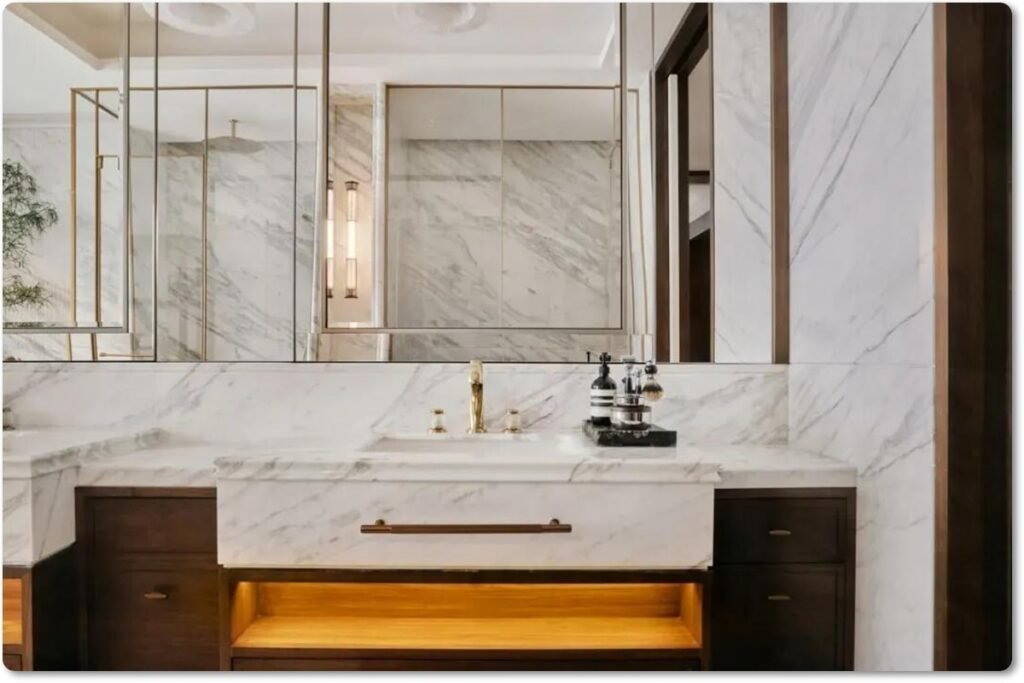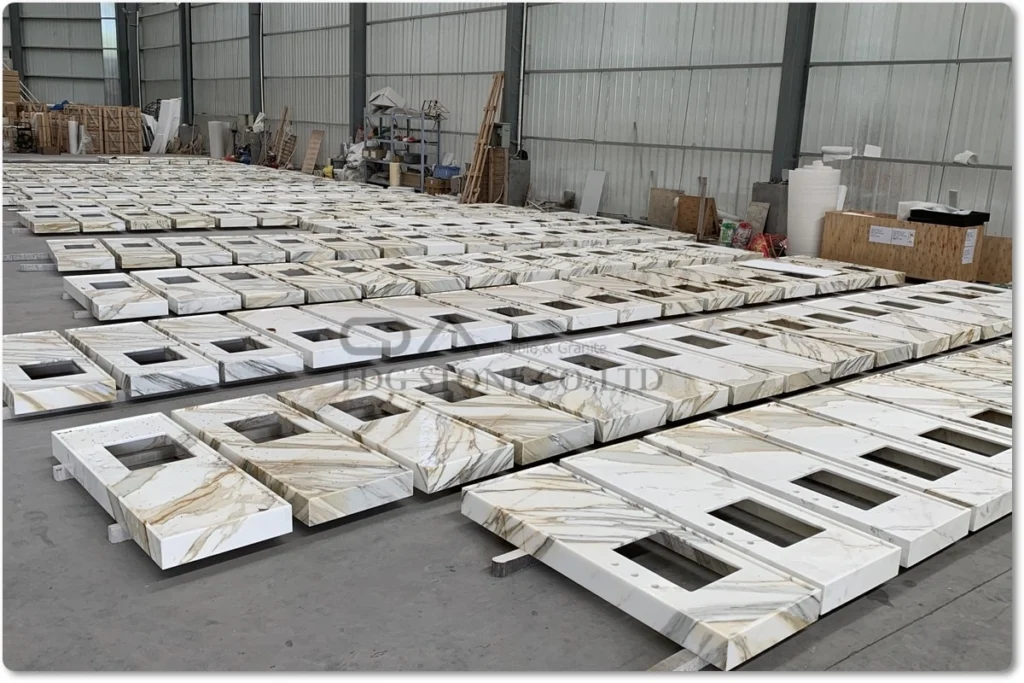
Outdoor stone furniture offers a distinctive combination of material character, architectural permanence, and design flexibility. Stone garden tables, benches, dining sets, and sculptural seating can complement contemporary villas, traditional gardens, hotel terraces, public landscapes, and outdoor hospitality spaces.
However, purchasing outdoor stone furniture involves more than selecting an attractive marble, granite, travertine, or quartzite color. A product that performs well on a covered patio in a mild climate may experience staining, surface deterioration, cracking, instability, or corrosion when installed in a coastal environment or a region with repeated freezing and thawing.
For commercial buyers, the procurement process should therefore begin with the intended application and environmental exposure rather than a material name alone.
This guide explains how to specify outdoor stone furniture, assess material and structural risks, compare suppliers, calculate relevant costs, and prepare an RFQ for garden furniture, patio tables, benches, and hotel landscape projects. It is intended to help buyers make evidence-based purchasing decisions without assuming that every natural stone product is suitable for every outdoor environment.
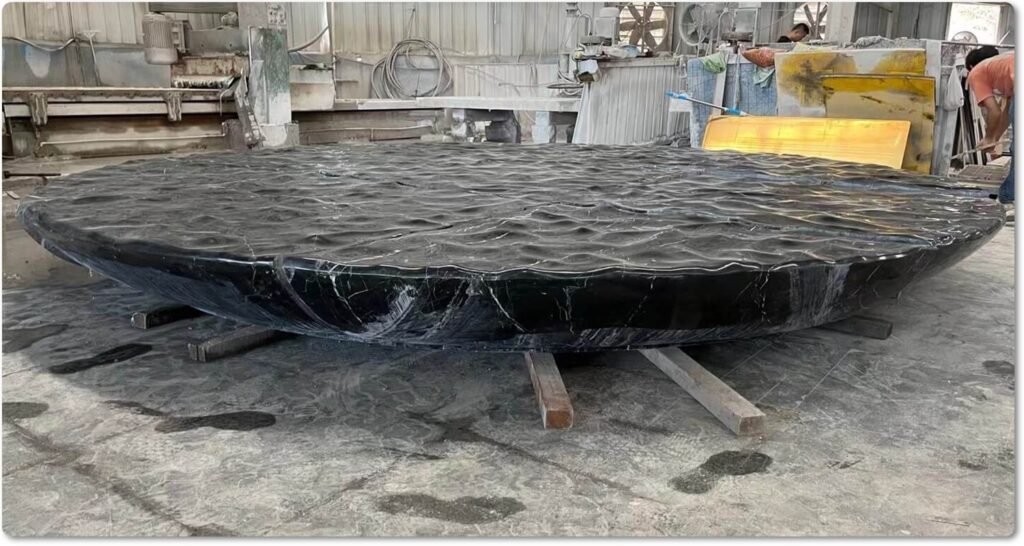
1. Scope and Definitions
1.1 What Is Outdoor Stone Furniture?
Outdoor stone furniture refers to furniture designed for exterior use in gardens, courtyards, patios, terraces, outdoor dining areas, and landscaped commercial environments.
Depending on the design, a product may be manufactured entirely from stone or combine stone with metal, wood, concrete, glass, or engineered supporting components.
Common product categories include:
Stone garden tables and dining tables.
Outdoor marble and granite side tables.
Stone garden benches and sculptural seating.
Patio tables and coordinated outdoor furniture sets.
Stone stools, plinths, and occasional tables.
Hotel terrace furniture and outdoor dining furniture.
Landscape seating, entrance features, and bespoke architectural furnishings.
For B2B procurement, the distinction between decorative stone objects and functional furniture is important. A decorative plinth may support limited loads, whereas a dining table must accommodate foreseeable service loads, movement, and handling. A public bench may also require anchoring, accessibility coordination, and additional resistance to misuse.
1.2 Natural Stone, Engineered Stone, and Composite Products
Outdoor furniture can incorporate several different material categories.
| Material category | Typical examples | Key procurement consideration |
|---|---|---|
| Natural stone | Granite, marble, travertine, quartzite, limestone | Performance varies by geological characteristics, quarry, finish, and fabrication |
| Engineered quartz | Resin-bound quartz composite | Verify manufacturer restrictions for exterior exposure, UV stability, temperature, and warranty |
| Porcelain or sintered surfaces | Large-format porcelain slabs and sintered materials | Check the manufacturer’s exterior-use specification, panel thickness, support requirements, and impact resistance |
| Stone and metal combinations | Stone tops with stainless steel or aluminum frames | Evaluate connections, differential movement, drainage, and corrosion |
| Stone and wood combinations | Stone tops with timber bases or details | Consider moisture movement, wood durability, drainage, and maintenance |
These categories are not interchangeable. An engineered quartz countertop designed primarily for interior applications should not automatically be specified for a garden table exposed to sunlight and weather. Likewise, a porcelain slab approved for outdoor paving does not automatically have the structural capacity to serve as an unsupported tabletop.
Always verify the intended use of the complete product system.
1.3 Define the Outdoor Exposure Before Selecting Materials
Outdoor exposure should be described in measurable, project-specific terms.
Consider the following environmental conditions:
Rainfall: Frequent wetting, standing water, wind-driven rain, or intermittent showers.
Freeze-thaw: Repeated freezing and thawing while the stone or supporting assembly is wet.
Temperature variation: Seasonal extremes, rapid temperature changes, and direct solar heating.
Salt exposure: Sea spray, airborne coastal salts, deicing salts, or salt-containing cleaning products.
Humidity: Persistent moisture, shaded areas, and limited opportunities for drying.
Ultraviolet radiation: Prolonged direct sunlight affecting sealers, adhesives, coatings, and certain composite materials.
Ground conditions: Soil movement, uneven paving, settlement, or poor drainage beneath furniture.
Usage intensity: Residential use, hotel dining, commercial terraces, or public landscaping.
A covered garden terrace in a warm climate and an exposed coastal hotel terrace in a freezing climate represent different procurement scenarios. The material specification, support system, finish, and maintenance plan should reflect those differences.
1.4 Who Should Use This Procurement Guide?
This guide is particularly relevant to buyers sourcing outdoor stone furniture in commercial quantities, including:
Landscape architects and landscape contractors.
Hotel groups and hospitality procurement teams.
Outdoor furniture wholesalers and distributors.
Stone furniture manufacturers and importers.
Residential developers and luxury villa contractors.
Commercial property managers and design-build companies.
OEM and ODM buyers requiring customized dimensions, finishes, or combinations of materials.
The recommendations apply to both individual bespoke pieces and larger procurement programs. Larger projects require additional attention to batch consistency, dimensional tolerances, replacement availability, installation logistics, and documented approval procedures.
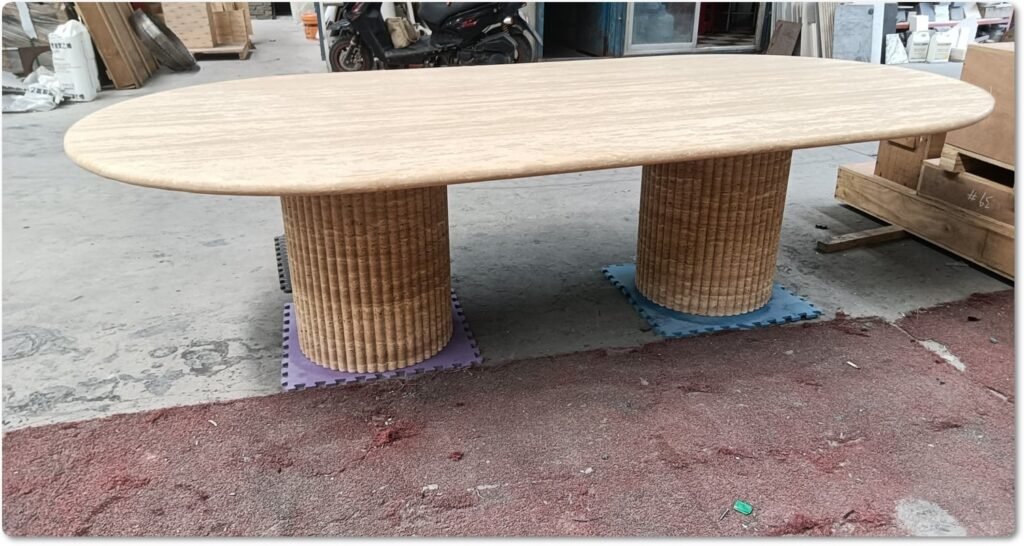
2. Technical Evaluation: Material Selection and Outdoor Performance
2.1 Compare Stone Materials by Application, Not by Reputation
No universal ranking can determine the best stone for every outdoor furniture project. Different varieties within the same stone category can exhibit substantially different porosity, mineral composition, weathering behavior, and mechanical properties.
The following matrix is a preliminary selection aid, not a declaration that any material is universally weatherproof.
| Material | Potential applications | Issues to investigate |
|---|---|---|
| Granite | Garden dining tables, benches, side tables, commercial terraces | Water absorption, mineral composition, surface finish, staining, and project-specific freeze-thaw behavior |
| Marble | Sculptural tables, decorative benches, luxury garden furniture | Acid sensitivity, surface etching, staining, moisture, weathering, and local climate |
| Travertine | Garden tables, covered patio furniture, architectural outdoor pieces | Open pores, filling system, water retention, surface treatment, and freeze-thaw suitability |
| Limestone | Garden seating, landscape features, custom tables | Porosity, mineral composition, erosion, salt exposure, and maintenance |
| Quartzite | Selected premium tables and furniture components | Confirm the actual stone identity, mineral composition, absorption, structural properties, and finish |
| Porcelain or sintered material | Selected outdoor tabletops and furniture cladding | Manufacturer-approved exterior use, support spacing, edge impact, thermal movement, and connection details |
Granite
Some granite varieties are selected for outdoor applications because of their mechanical properties and relatively low water absorption. Nevertheless, the term “granite” alone does not establish performance.
Mineral composition, microcracks, quarry variability, finish, fabrication damage, and local environmental exposure all matter. The project specification should identify the actual material and require appropriate test evidence when exposure warrants it.
Marble
Marble can deliver distinctive veining and a refined architectural appearance. Its suitability depends on the specific variety and application.
Calcium-carbonate-rich marble can react with acidic substances. Outdoor exposure to acidic rainwater, food, beverages, cleaning chemicals, or certain maintenance products may cause surface etching or changes in appearance. Polished surfaces may also lose their original visual character over time.
For premium outdoor dining furniture, buyers should determine whether natural weathering is acceptable or whether a more consistent appearance is required.
Travertine and Limestone
Travertine and limestone are frequently considered for warm-toned landscape designs. Their performance depends on pore structure, mineral composition, finishing, and any filling or treatment applied during manufacture.
A filled travertine surface may behave differently from an unfilled or brushed surface. Buyers should request samples that represent the final production finish and ask how the product is expected to perform under the intended wetting, drying, and temperature conditions.
Quartzite
The commercial name “quartzite” should be verified rather than treated as a performance guarantee. Stone sold under similar trade names can differ in composition and physical properties.
Where a project requires high resistance to moisture, weathering, or mechanical stress, the supplier should identify the actual material and provide relevant test documentation rather than relying on the category name.
2.2 Water Absorption and Moisture Management
Water absorption is a useful indicator of a stone’s interaction with water, but it does not independently predict all aspects of outdoor durability.
A lower absorption value may be advantageous in certain conditions, particularly where repeated wetting and freezing occur. However, the result must be interpreted alongside pore structure, existing cracks, mineral composition, specimen condition, and the product’s actual design.
For relevant natural stone products, ASTM C97/C97M provides test methods for absorption and bulk specific gravity, and density, as specified in the applicable edition.
When reviewing a test report, buyers should check:
Whether the tested sample represents the specified stone variety.
Whether the report identifies the test method and edition.
Whether the results include units and test conditions.
Whether the values relate to the actual project material and not an unrelated stone from the same supplier.
Whether additional durability testing is required for the exposure conditions.
Drainage Is as Important as Material Selection
A durable stone can still experience avoidable problems if the design traps water.
Procurement drawings should identify:
Tabletop geometry and any intended drainage direction.
Whether the furniture is level, sloped, or intentionally shaped to retain water.
Whether the base allows water to escape.
Whether hollow sections or concealed cavities can collect moisture.
Whether the underside can dry after rainfall.
Whether stone-to-metal interfaces trap water or debris.
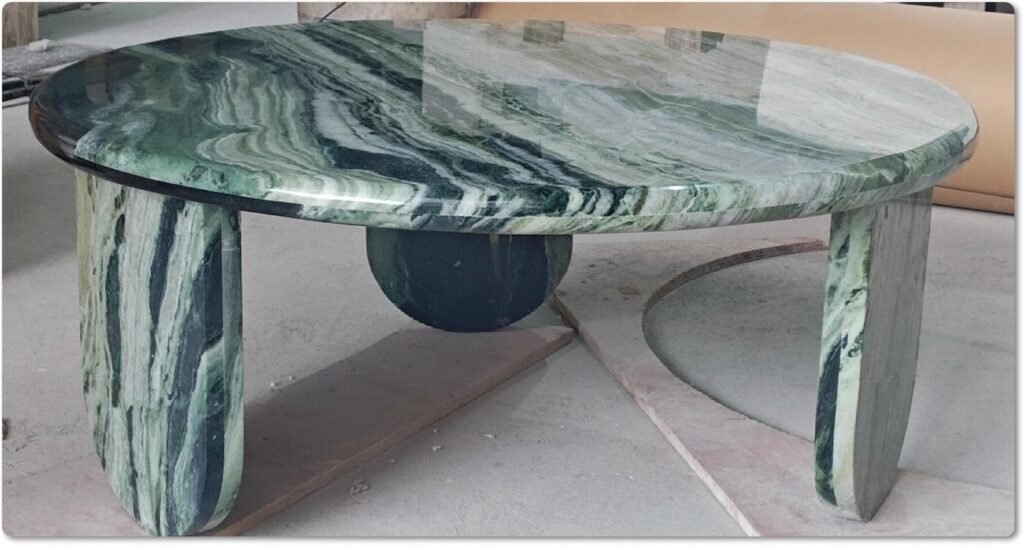
Drainage requirements must be compatible with the product’s function and appearance. Do not add slopes, holes, or drainage openings without confirming that they are appropriate for the design.
2.3 Freeze-Thaw Resistance
Freeze-thaw exposure is a significant consideration when wet stone or a wet furniture assembly experiences repeated freezing and thawing.
Water within pores, cracks, joints, and interfaces can contribute to deterioration under suitable conditions. The risk depends on the stone, moisture condition, temperature history, geometry, and construction details.
ASTM C666/C666M addresses the resistance of concrete to rapid freezing and thawing. It is not a universal natural stone furniture qualification test. Buyers should not accept a concrete freeze-thaw result as proof that a stone tabletop or bench has passed a stone-specific durability evaluation.
For natural stone, ask the supplier or project consultant to identify an applicable test method or an appropriate project-specific evaluation. EN 12371 is a relevant European test standard for natural stone frost resistance, where applicable.
Before approval, establish:
Whether the product is expected to remain outdoors throughout winter.
Whether surfaces and joints will remain wet during freezing conditions.
Whether the specific stone has been evaluated for the relevant exposure.
Whether supports, adhesives, fillers, sealers, and fasteners are compatible with the same environment.
Whether installation details prevent avoidable water retention.
A product approved for a covered patio in a mild climate should not automatically be approved for an exposed terrace in a region with repeated wet freeze-thaw cycles.
2.4 Salt, Coastal Exposure, and Chemical Compatibility
Coastal projects require more than a general claim of weather resistance.
Salt can accumulate on stone surfaces and within porous materials. Depending on the material and conditions, crystallization, staining, surface deterioration, or corrosion of adjacent metal components may occur.
Deicing salts can introduce additional risks, particularly where wetting, freezing, and drying occur repeatedly.
For coastal or salt-exposed projects, specify:
The type and expected intensity of salt exposure.
Whether the stone and finish have relevant supporting test evidence.
The proposed cleaning and rinsing routine.
Fastener and connector material grades.
The drainage and drying strategy.
Compatibility of sealers, adhesives, fillers, and coatings.
Inspection and replacement requirements for vulnerable components.
Stainless steel is not a single universal solution to corrosion. Alloy grade, surface condition, crevices, deposits, chloride concentration, and maintenance can affect performance. Specify suitable corrosion resistance for the actual environment and obtain professional advice for severe marine exposure.
2.5 Surface Finish, Slip Resistance, and Usability
Surface finish influences appearance, cleaning, water behavior, tactile comfort, and potential slip risk.
Common finishes include polished, honed, brushed, sandblasted, flamed where appropriate, and textured finishes. Availability and suitability vary by stone type.
| Finish | Potential advantages | Points to verify |
|---|---|---|
| Polished | Strong color definition and reflective appearance | Surface etching, glare, staining, and behavior when wet |
| Honed | Lower sheen and a restrained appearance | Cleaning, stain resistance, and wet-surface behavior |
| Brushed or textured | Tactile variation and visual texture | Dirt retention, cleanability, finish consistency, and slip-related use |
| Sandblasted | Matte texture for selected materials | Surface uniformity, erosion, and maintenance |
| Flamed | Textured finish on suitable stones | Suitability for the specific material, edge quality, and cleaning requirements |
A tabletop is not the same as a walking surface. Slip-resistance requirements should be determined by the intended use and relevant local regulations. A stone tabletop generally requires evaluation for food-service usability and cleaning, while a bench seat requires attention to comfort, water retention, and edge treatment.
Where furniture forms part of an accessible route or doubles as a step, landing, or retaining element, additional building and accessibility requirements may apply.
For hotel terraces and other hospitality environments, specify the required performance rather than simply requesting a “non-slip finish.”
2.6 Structural Design: Thickness, Support, and Stability
Stone furniture is a structural assembly. A visually attractive slab can fail if its thickness, support spacing, edge geometry, or connection design is inappropriate.
The required thickness depends on the stone’s properties, unsupported span, tabletop dimensions, cutouts, edge profile, loading, handling conditions, and support arrangement.
There is no single tabletop thickness that is suitable for every stone garden table.
Stone Thickness and Unsupported Span
The supplier should identify:
Finished slab thickness and permitted tolerance.
Tabletop length and width.
Unsupported span between support points.
Position and dimensions of cutouts.
Any cantilevered or overhanging sections.
Expected service loads and foreseeable handling loads.
Whether reinforcement or a concealed subframe is required.
For large tables, a structural engineer or suitably qualified designer may need to review the complete assembly. Stone should not be treated as a uniform material with predictable strength based solely on thickness.
Base Design and Stability
A table base must resist foreseeable lateral forces, tipping, and uneven loading. A bench must provide appropriate support across the seating surface and remain stable on the specified installation surface.
Review:
Base footprint relative to the tabletop.
Center of gravity and potential tipping direction.
Connection details and fastener locations.
Support pads and contact areas.
Floor slope and surface irregularities.
Anchoring requirements for high-wind, public, or otherwise exposed locations.
Safe lifting and installation arrangements.
If a table will be used by the public or in a hotel, consider predictable misuse, including people leaning against edges or applying concentrated loads.
Do not assume that a heavy product is automatically stable. Weight can improve resistance to some movement but also increases installation risks and does not replace a suitable base design.
2.7 Metal Hardware, Adhesives, and Mixed-Material Interfaces
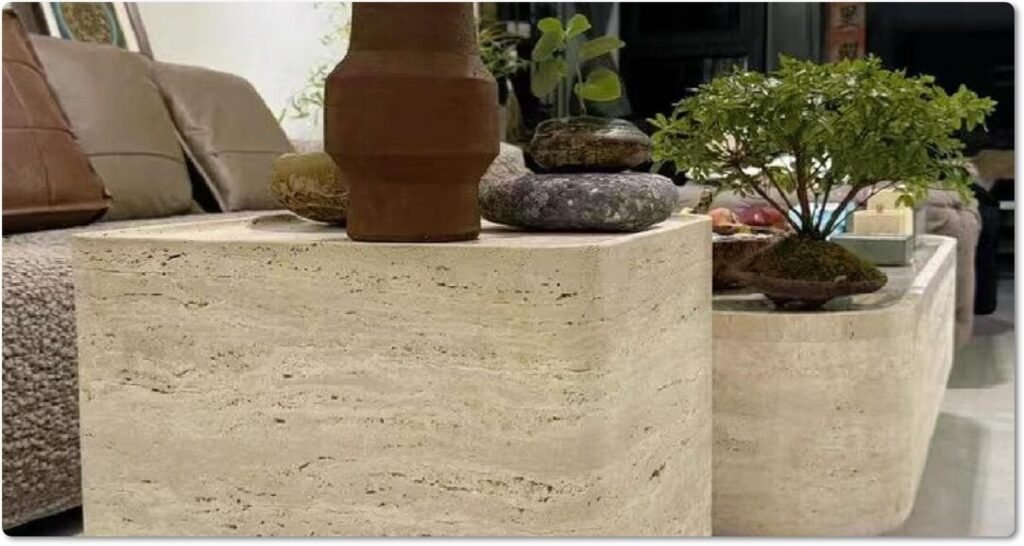
Outdoor stone furniture often combines stone with stainless steel, aluminum, timber, polymers, adhesives, or concealed mechanical connectors.
The complete assembly must accommodate environmental exposure and the different movement characteristics of its components.
For metal parts, identify the proposed alloy or grade, finish, exposure conditions, and maintenance requirements. For adhesives and sealants, verify exterior suitability, temperature range, moisture compatibility, and compatibility with the stone.
Particular attention should be paid to:
Water-trapping crevices.
Corrosion around fasteners.
Differential thermal expansion.
Adhesive degradation or loss of bond.
Stress concentrations near cutouts.
Staining caused by unsuitable sealants or metal contact.
Replaceability of damaged components.
Where the stone and frame are expected to move differently as temperatures change, the connection should be designed to accommodate that movement rather than rigidly constraining the assembly without engineering justification.
2.8 Weight, Packaging, Handling, and Installation
Stone garden furniture can be significantly heavier than furniture made from wood or hollow metal.
For an initial estimate, the mass of a solid rectangular stone component can be calculated as:
Mass (kg) ≈ Length (m) × Width (m) × Thickness (m) × Density (kg/m³).
For example, a hypothetical stone tabletop measuring 1.8 m × 0.9 m × 0.04 m, using an assumed density of 2,700 kg/m³, has an estimated stone mass of approximately 175 kg.
This estimate excludes the base, reinforcement, packaging, and other components. The assumed density is illustrative, not a specification for a particular stone.
The supplier should provide component weights, packed dimensions, lifting instructions, and the estimated gross shipment weight. The installation team should confirm that access routes, lifting equipment, floor loading, and final positioning arrangements are adequate.
For export projects, also confirm:
Crate dimensions and total shipment volume.
Protection for corners, edges, and finished surfaces.
Separation of stone from metal components where necessary.
Moisture management within packaging.
Lifting points and handling instructions.
Applicable wood-packaging requirements for international shipments.
Whether installation hardware and assembly drawings are included.
2.9 Quality Control and Acceptance Criteria
A quality inspection plan should distinguish material appearance, dimensional accuracy, structural performance, and packaging quality.
Before mass production, approve a representative sample or first article showing the actual material, finish, edge treatment, joint details, and hardware.
A practical inspection plan may cover:
| Inspection area | Example verification |
|---|---|
| Material identity | Approved stone variety, source identification where available, and sample match |
| Appearance | Veining, color variation, natural fissures, repairs, and agreed acceptance criteria |
| Dimensions | Length, width, thickness, height, and specified tolerances |
| Fabrication | Edge profiles, cutouts, joints, and visible machining quality |
| Structure | Support layout, connections, stability, and applicable load evaluation |
| Finish | Surface consistency, staining, chips, and agreed visual standards |
| Hardware | Material grade, finish, fit, and corrosion suitability |
| Packaging | Crate condition, internal protection, labeling, and handling instructions |
Natural stone contains inherent variation. Procurement documents should define acceptable variation and distinguish natural characteristics from unacceptable defects.
Avoid relying on a single generic phrase such as “A-grade quality.” Use measurable tolerances, reference samples, approved drawings, and written acceptance criteria wherever possible.
3. Procurement Checklist: From Project Brief to Installation
3.1 Step 1 — Define the Project Environment
Before requesting quotations, document the installation location and exposure.
Record the country, region, elevation where relevant, seasonal temperature range, expected freezing conditions, rainfall, coastal exposure, and whether the furniture is covered or fully exposed.
For a commercial project, also identify cleaning chemicals, deicing practices, irrigation systems, poolside exposure, and expected use intensity.
A supplier cannot responsibly confirm suitability for an unspecified environment.
3.2 Step 2 — Establish Product Dimensions and Intended Use
Prepare a schedule for every product type.
Include tabletop dimensions, seat height, bench length, base geometry, finish, edge profile, target quantity, and whether the product is freestanding or anchored.
Specify the intended load cases and use environment. If the furniture is for a public area, hospitality venue, or high-traffic setting, request a suitable structural assessment.
3.3 Step 3 — Shortlist Materials and Finishes
Select two or three candidate materials based on the desired aesthetic and technical requirements.
Request samples that match the intended production finish. Evaluate the surface under natural and artificial light, and consider wet appearance, staining, cleanability, and expected weathering.
For projects involving several production batches, establish an approved color range and an inspection method for maintaining consistency.
3.4 Step 4 — Request Technical Evidence
Ask for relevant test reports, product data, fabrication drawings, material identification, and maintenance recommendations.
The required evidence depends on the risk level of the project. A small sheltered garden side table may need a simpler approval process than a large public bench in a freezing coastal environment.
Where laboratory testing is unavailable, the supplier should state that limitation clearly rather than presenting unsupported claims as proven performance.
3.5 Step 5 — Review Drawings and Prototypes
Before production, approve:
Overall dimensions and tolerances.
Stone thickness and support positions.
Cutouts, joints, and edge details.
Base dimensions and attachment points.
Drainage and water-management details.
Hardware specifications.
Assembly instructions.
Lifting and handling points.
For complex furniture, a prototype or first-article inspection can reveal assembly problems before they affect the entire order.
3.6 Step 6 — Confirm Packaging and Delivery Logistics
Confirm whether products will be shipped fully assembled, partially assembled, or as separate components.
Check crate design, total weight, gross dimensions, stacking restrictions, unloading equipment, delivery access, and whether the destination site has suitable storage space.
For international procurement, clarify who is responsible for customs clearance, duties, insurance, unloading, and final installation.
3.7 Step 7 — Establish Inspection and Warranty Terms
The purchase order should define the inspection stage, approval method, acceptable natural variation, defect reporting procedure, remedy process, and warranty limitations.
Clarify whether the warranty covers the stone alone or the complete assembly, including frames, adhesives, connectors, finishes, and installation-related conditions.
Weather exposure, maintenance, improper lifting, impact damage, and ground movement may affect warranty coverage. These limitations should be disclosed before the order is placed.
3.8 Buyer Approval Checklist
Use the following list during supplier evaluation.
Outdoor location and climate exposure documented.
Stone variety and finish identified.
Material samples approved.
Relevant technical reports reviewed.
Freeze-thaw and salt exposure addressed where applicable.
Tabletop thickness and support design reviewed.
Base stability and anchoring requirements confirmed.
Drainage and water-retention risks evaluated.
Hardware, adhesives, and sealants specified.
Component weights and lifting requirements documented.
Drawings, tolerances, and acceptance criteria approved.
Packaging, shipment, unloading, and installation arrangements confirmed.
Maintenance and warranty terms agreed.
Production inspection and final acceptance procedures established.
4. Cost and Risk Factors
4.1 What Determines Outdoor Stone Furniture Cost?
The purchase price reflects more than the stone itself. The complete cost depends on the material, design, fabrication complexity, supporting structure, finish, quality requirements, packaging, logistics, and installation.
| Cost component | Factors affecting cost |
|---|---|
| Stone material | Variety, grade, availability, block or slab yield, and sourcing requirements |
| Fabrication | Cutting, CNC machining, edge profiles, polishing, drilling, and custom geometry |
| Structural support | Base material, reinforcement, connectors, and engineering requirements |
| Surface treatment | Filling, sealing, coating where appropriate, and finish-specific processing |
| Quality assurance | Samples, inspection, testing, documentation, and prototypes |
| Packaging | Custom crates, internal supports, protective materials, and handling provisions |
| Logistics | Weight, volume, shipping mode, delivery location, and unloading |
| Installation | Labor, lifting equipment, anchoring, and site preparation |
| Lifecycle maintenance | Cleaning, resealing where specified, repairs, and replacement components |
A low factory quotation may exclude structural review, special packaging, test reports, or installation support. Buyers should compare quotations on a like-for-like basis.
4.2 Initial Price Versus Lifecycle Cost
A product with a lower purchase price may become more expensive if it requires frequent maintenance, replacement hardware, repairs, or early replacement.
A simplified lifecycle-cost framework is:
Lifecycle cost = Purchase price + Logistics + Installation + Expected maintenance + Expected repairs and replacement − Residual value, where applicable.
For a realistic comparison, buyers should use the same evaluation period, maintenance assumptions, currency, and cost boundaries for every supplier.
Avoid assigning an assumed lifespan without evidence. Instead, request documented performance information, warranty terms, and maintenance intervals applicable to the actual product and environment.
4.3 Major Procurement Risks
Risk 1: Selecting by Appearance Alone
A sample can look excellent indoors while the final product performs poorly in its intended environment.
Mitigation: Evaluate material properties, finish, structural design, and exposure requirements before approval.
Risk 2: Treating All Stone Within a Category as Equivalent
Two commercially similar stones can differ in porosity, mineral composition, fissures, and durability.
Mitigation: Identify the specified material and connect technical evidence to the actual production batch or approved material source.
Risk 3: Using Insufficient Support
Large or overhanging tabletops can develop excessive deflection, cracking, or connection failures if the support arrangement is inadequate.
Mitigation: Require dimensioned drawings and suitable structural review for complex or high-risk designs.
Risk 4: Ignoring Salt and Moisture at Connections
A stone surface may remain visually acceptable while concealed metal connectors corrode or trapped moisture damages interfaces.
Mitigation: Specify suitable materials, drainage, inspection access, and maintenance procedures.
Risk 5: Underestimating Weight and Site Access
Stone furniture can be difficult or unsafe to move if the weight and lifting arrangements are not established early.
Mitigation: Request component weights and handling instructions before shipment, and verify site access and lifting equipment.
Risk 6: Failing to Define Natural Variation
Unclear expectations can lead to disputes about veining, color, fissures, repairs, and finish consistency.
Mitigation: Use approved samples, written appearance standards, and agreed inspection tolerances.
4.4 How Climate and Regulations Influence Procurement?
Outdoor furniture procurement is affected by local building requirements, workplace safety, environmental rules, and the conditions under which the product will be installed.
Requirements vary by jurisdiction and intended use. A residential garden table does not automatically fall under the same regulatory framework as fixed public seating or furniture integrated into a commercial building project.
Buyers should determine whether their project requires:
Structural calculations or professional design approval.
Anchoring or wind-load considerations.
Accessible route and seating coordination.
Slip-resistance evaluation for adjacent walking surfaces.
Chemical and environmental compliance for coatings and treatments.
Documentation for imported timber packaging.
Product labeling, installation instructions, or specific warranty disclosures.
The appropriate standard should be selected for the product and the intended test. A test standard applicable to concrete, for example, should not be presented as a direct qualification of an entire natural stone furniture assembly.
5. Supplier Evaluation: Choosing a Qualified Outdoor Stone Furniture Manufacturer
5.1 What Should a Qualified Supplier Provide?
A reliable supplier should be able to explain the relationship between the selected material, manufacturing process, structural design, and intended outdoor exposure.
For a commercial project, request the following documentation.
| Required document | What it should establish |
|---|---|
| Product specification | Material identification, dimensions, finish, and intended use |
| Material test reports | Relevant physical properties and durability test results |
| Technical drawings | Dimensions, support positions, joints, hardware, and assembly |
| Material samples | Representative appearance and production finish |
| Quality plan | Inspection stages, tolerances, and acceptance criteria |
| Packaging specification | Crate design, component protection, and handling instructions |
| Installation guidance | Lifting, positioning, anchoring, and assembly requirements |
| Maintenance instructions | Cleaning products, inspection intervals, and approved treatments |
| Warranty statement | Coverage, exclusions, duration, and claim procedures |
| Commercial quotation | Unit pricing, tooling or sample costs, lead time, and delivery terms |
A supplier should not claim universal outdoor suitability simply because a product is made from natural stone. Strong suppliers identify the conditions under which their products are intended to be used and disclose limitations.
5.2 Factory, Wholesaler, or Trading Supplier?
Different supplier types can serve different purchasing needs.
Manufacturer or factory: May offer direct control over material selection, fabrication, dimensions, finishes, and custom production. Buyers should verify actual production capability, quality systems, and responsibility for subcontracted components.
Wholesaler or distributor: May provide product availability, consolidated purchasing, local stock, and established delivery arrangements. Confirm whether customization and technical documentation are available.
Design-and-fabrication supplier: May coordinate product development, drawings, mixed materials, prototypes, and project-specific fabrication. Clarify which party takes responsibility for engineering and final assembly.
The best option depends on project size, complexity, lead time, customization, and the level of technical support required.
5.3 Questions to Ask Before Placing an Order
Which specific stone variety will be supplied?
Can the supplier provide test results relevant to the planned outdoor exposure?
Is the proposed finish suitable for the intended application and maintenance routine?
How are the tabletop and seating components supported?
What hardware, adhesives, and sealants are used?
How is drainage managed?
What tolerances and natural variations are acceptable?
How are products inspected before shipment?
How are heavy components packed, lifted, and installed?
What documentation, warranty coverage, and after-sales support are provided?
5.4 Why OEM and ODM Capability Matters
For retailers, wholesalers, hospitality groups, and landscape contractors, OEM and ODM capabilities can support product differentiation.
OEM production may involve manufacturing to the buyer’s design and specification. ODM services may include supplier-developed designs adapted to the buyer’s requirements.
Potential customization includes:
Table dimensions and base configurations.
Stone colors, veining selection, and surface finishes.
Edge profiles and geometric details.
Stone-and-metal combinations.
Coordinated tables, benches, stools, and side tables.
Branding, packaging, and project-specific labeling.
Before commissioning a custom design, establish drawing ownership, tooling costs, prototype approval, permitted substitutions, production tolerances, and intellectual property terms.
For large projects, confirm that any change to the stone source, support arrangement, hardware, or finish requires written approval.
6. Practical RFQ Template for Outdoor Stone Furniture
The following template can be copied into an email or procurement specification when requesting quotations from an outdoor stone furniture manufacturer, factory, wholesaler, or custom fabricator.
6.1 Copy-Ready Request for Quotation
Subject: RFQ — Outdoor Stone Furniture for Garden, Patio, or Landscape Project
Dear Sales Team,
We are sourcing outdoor stone furniture for a residential, hospitality, commercial, or landscape project and would like to receive your technical proposal and quotation.
Please review the following requirements and identify any additional information needed to confirm product suitability.
A. Project Information
Project name:
Destination country and city:
Project type: Residential / Hotel / Restaurant / Commercial / Public Landscape / Other
Installation environment: Fully exposed / Partially covered / Covered
Expected climate conditions:
Coastal or salt exposure: Yes / No / To be confirmed
Freeze-thaw exposure: Yes / No / To be confirmed
Target delivery date:
B. Product Requirements
Product type: Garden table / Dining table / Bench / Side table / Stool / Custom furniture
Quantity by product:
Overall dimensions:
Required stone thickness, if specified:
Preferred stone variety:
Alternative materials acceptable:
Surface finish:
Edge profile:
Color and appearance requirements:
Base and supporting structure:
Freestanding or anchored:
Required accessories:
C. Technical Requirements
Please provide:
Material identification and available test reports.
Relevant water absorption and density data.
Applicable frost-resistance evidence where needed.
Information on salt exposure and maintenance where relevant.
Dimensioned fabrication and assembly drawings.
Proposed support arrangement and structural information.
Hardware, adhesive, and sealant specifications.
Drainage and water-management details.
Product weight and lifting instructions.
Recommended cleaning and maintenance procedures.
D. Quality and Approval
Sample or prototype availability:
Proposed inspection process:
Dimensional tolerances:
Acceptable natural stone variation:
Production inspection documentation:
Warranty duration and exclusions:
Procedure for reporting defects:
E. Packaging and Logistics
Packaging type:
Individual product and crate dimensions:
Net and gross weight:
Estimated shipment volume:
Assembly requirements:
Installation instructions:
Estimated production lead time:
Delivery terms and destination:
Unloading equipment requirements:
F. Commercial Offer
Please quote:
Unit price by product and quantity.
Sample or prototype cost.
Custom design or tooling charges.
Packaging costs.
Estimated production lead time.
Payment terms.
Shipping options and applicable delivery terms.
Warranty conditions.
Quotation validity.
Please identify any specification that cannot be confirmed by available test evidence, and recommend a suitable evaluation method where necessary.
We look forward to reviewing your proposal, technical documents, and material samples.
Best regards,
[Buyer Name]
[Company Name]
[Email Address]
[Telephone / WhatsApp]
6.2 Suggested Supplier Comparison Scorecard
Buyers can use the following weighted framework to compare shortlisted suppliers. The weights are illustrative and should be adjusted to the project’s priorities.
| Evaluation category | Suggested weight |
|---|---|
| Material suitability and supporting evidence | 25% |
| Structural design and fabrication quality | 20% |
| Customization and production capability | 15% |
| Quality assurance and inspection | 15% |
| Packaging, logistics, and installation support | 10% |
| Commercial competitiveness | 10% |
| Communication and after-sales support | 5% |
| Total | 100% |
Score each supplier against the same criteria. A low quotation should not compensate for an unresolved safety concern or missing technical evidence.
7. Frequently Asked Questions: Outdoor Stone Furniture
7.1 What Is the Best Stone for Outdoor Garden Furniture?
There is no universally best stone. Granite, marble, travertine, limestone, and quartzite can all be considered for particular applications, but suitability depends on the specific variety, finish, structural design, climate, moisture exposure, and maintenance plan. Select the stone only after defining the project conditions and reviewing relevant evidence.
7.2 Is Marble Suitable for Outdoor Stone Furniture?
Some marble varieties can be used outdoors when their characteristics and the product design are appropriate for the environment. However, marble can be sensitive to acidic substances, and some varieties may experience staining, surface etching, or weathering. Buyers should evaluate the specific stone, finish, exposure, and acceptable long-term appearance before approval.
7.3 Can Stone Garden Furniture Be Left Outside in Winter?
It depends on the stone, the amount of moisture it absorbs or retains, the number and severity of freeze-thaw cycles, the supporting assembly, and local installation conditions. Request applicable frost-resistance evidence and confirm that the base, connectors, joints, and finishes are also appropriate for the environment. Do not assume every stone table or bench can remain outdoors throughout winter.
7.4 How Do You Maintain Outdoor Stone Furniture?
Use a cleaning and maintenance procedure approved for the specific stone and finish. Remove debris, avoid unapproved acidic or aggressive cleaners, and inspect joints, connectors, sealants, and support pads periodically. Where salt exposure is relevant, an appropriate rinsing routine may be necessary. Sealers should be used only when recommended for the particular material and application; sealing does not make every stone waterproof or eliminate the need for maintenance.
7.5 How Do I Find an Outdoor Stone Furniture Manufacturer or Wholesale Supplier?
Prepare a clear RFQ describing the intended use, climate, product dimensions, stone preferences, quantities, finish, structural requirements, and delivery destination. Shortlist manufacturers or wholesalers that can provide representative samples, technical documentation, fabrication drawings, quality-control procedures, packaging specifications, and clear commercial terms. For complex projects, prioritize demonstrated technical capability and evidence over unsupported claims of universal weather resistance.
8. References and Technical Resources
The following standards and institutional resources can help buyers establish an appropriate technical specification. Confirm the current edition, scope, applicability, and any local requirements before incorporating a standard into a purchase order.
ASTM International — ASTM C97/C97M, Standard Test Methods for Absorption and Bulk Specific Gravity of Dimension Stone. Relevant to the assessment of water absorption and bulk specific gravity. Use the edition specified in the project documents.
ASTM International — ASTM C99/C99M, Standard Test Method for Modulus of Rupture of Dimension Stone. Provides a method for evaluating the modulus of rupture of dimension stone specimens. It does not independently qualify a complete furniture design.
ASTM International — ASTM C170/C170M, Standard Test Method for Compressive Strength of Dimension Stone. Relevant to compressive strength testing of dimension stone; interpretation should reflect the intended application and loading conditions.
ASTM International — ASTM C880/C880M, Standard Test Method for Flexural Strength of Dimension Stone. Relevant when evaluating flexural strength characteristics of dimension stone. Test orientation, specimen preparation, and other conditions should be considered.
European Committee for Standardization (CEN) — EN 12371, Natural Stone Test Methods: Determination of Frost Resistance. A relevant European method for evaluating natural stone under frost exposure, subject to the applicable edition and project requirements.
European Committee for Standardization (CEN) — EN 14231, Natural Stone Test Methods: Determination of the Slip Resistance by Means of the Pendulum Tester. Relevant to slip-resistance evaluation of natural stone surfaces where the method and application are appropriate.
European Committee for Standardization (CEN) — EN 14157, Natural Stone Test Methods: Determination of Abrasion Resistance. Relevant when abrasion resistance is a material-selection consideration.
Natural Stone Institute — Dimension Stone Design Manual and technical resources. Industry resources for stone selection, design, installation, and maintenance. Consult the current edition and relevant sections.
International Organization for Standardization (ISO) — ISO 9223, Corrosion of Metals and Alloys: Corrosivity of Atmospheres — Classification, Determination and Estimation. A resource for understanding atmospheric corrosivity when specifying exposed metal components. Its classification is not a direct qualification of the complete furniture assembly.
International Plant Protection Convention (IPPC) — ISPM 15, Regulation of Wood Packaging Material in International Trade. Relevant to regulated solid-wood packaging used in international shipments, subject to destination-country requirements and applicable exemptions.
U.S. Access Board — Accessibility Guidelines and applicable ADA requirements. Relevant when outdoor furniture is integrated into covered facilities, public spaces, or accessible routes subject to applicable U.S. accessibility rules. Project-specific legal applicability should be confirmed.
U.S. Occupational Safety and Health Administration (OSHA) — Materials Handling and Storage, 29 CFR 1910.176. A U.S. workplace safety resource relevant to the safe handling and storage of materials in covered workplaces. Applicable requirements depend on the operation and jurisdiction.
U.S. Environmental Protection Agency (EPA) — Safer Choice and other applicable cleaning-product resources. Useful background when evaluating cleaning-product selection. Compatibility with a specific stone must still be verified with the stone supplier.
Important technical note: Standards do not all evaluate the same property. Absorption, compressive strength, flexural strength, abrasion, frost resistance, slip resistance, and atmospheric corrosion are different performance questions. A result from one test should not be used as proof of compliance with an unrelated requirement.
Where this article does not provide a verified numerical market statistic, it does not invent one. Procurement decisions should be based on traceable material data, applicable standards, project specifications, and evidence relevant to the actual product and installation environment.
9. EDG Stone: Custom Outdoor Stone Furniture for Garden, Patio, and Landscape Projects
9.1 From Material Selection to Finished Furniture
Outdoor stone furniture projects require coordination between material selection, design, fabrication, support systems, finishing, packaging, and installation.
EDG Stone works with natural stone products and custom fabrication requirements for international B2B buyers. For outdoor furniture inquiries, buyers can provide reference photographs, dimensions, preferred materials, drawings, target quantities, and destination details to establish the scope of a project-specific quotation.
Potential project requirements include:
Custom stone garden tables and outdoor dining tables.
Stone benches and coordinated seating pieces.
Patio side tables and sculptural furniture.
Natural stone components for landscape and hospitality projects.
Custom dimensions, edge profiles, and surface finishes.
Stone-and-metal or other mixed-material designs, subject to specification.
Fabrication drawings, sample approval, and export packaging coordination.
9.2 How to Start an Outdoor Stone Furniture Inquiry
To help assess your project, please provide:
Product type and reference images.
Overall dimensions and estimated quantity.
Preferred stone variety and surface finish.
Project location and climate exposure.
Whether the products will be covered or fully exposed.
Any freezing, coastal salt, or other demanding environmental conditions.
Required delivery date and destination.
Drawings, installation requirements, or technical specifications, if available.
EDG Stone can then review the requested scope, identify information that needs confirmation, and discuss suitable material and fabrication options. Final outdoor suitability should be established from the selected material, product design, supporting evidence, and intended installation conditions.
Request a Quote: https://edgstone.com/contact/
Explore EDG Stone: https://edgstone.com/
For wholesalers, landscape contractors, hotel procurement teams, and importers, the objective is to develop outdoor stone furniture that meets the project’s aesthetic requirements while addressing material performance, structural design, logistics, and long-term maintenance.
10. Semantic Synthesis: How to Specify Outdoor Stone Furniture with Confidence
What Defines a Successful Outdoor Stone Furniture Project?
A successful project combines an appropriate stone variety, a suitable surface finish, a structurally sound furniture design, environmental compatibility, and a practical maintenance strategy. Material selection is only the starting point; the complete product and installation conditions determine whether the solution is appropriate.
Why Does Outdoor Suitability Depend on More Than Stone Type?
Stone names describe broad material categories, not a universal level of weather resistance. Geological characteristics, water absorption, pore structure, fissures, mineral composition, surface treatments, and fabrication details can vary. A product’s performance also depends on drainage, supporting components, connectors, exposure, and maintenance.
Which Options Should Commercial Buyers Compare?
Buyers should compare at least three dimensions:
Material options: Candidate stones or approved exterior-rated alternative materials.
Construction options: Solid stone, stone with concealed support, or a mixed-material assembly.
Finish options: Polished, honed, brushed, or textured finishes, selected according to appearance, cleaning, and functional requirements.
Each option should be evaluated against the same project brief. A more expensive material is not necessarily the most suitable, and a lower initial price is not necessarily the lowest lifecycle cost.
What Should Buyers Consider Before Approving a Supplier?
Before approval, confirm the supplier’s ability to identify the actual material, provide appropriate technical evidence, fabricate to approved drawings, manage natural variation, protect heavy components during shipment, and provide usable installation and maintenance guidance.
For complex public, hospitality, or exposed coastal projects, unresolved structural or durability questions should be addressed before production rather than left to the installation team.
How Are Outdoor Furniture Requirements Evolving?
Outdoor furniture procurement increasingly intersects with whole-life cost evaluation, repairability, traceable product specifications, corrosion-resistant hardware, and more detailed project documentation. These are useful procurement directions, but individual requirements should be tied to the applicable jurisdiction, contract, or project performance criteria rather than described as universal new legal obligations.
Where environmental product declarations, recycled-content claims, responsible sourcing evidence, or other sustainability documentation are required, buyers should specify the relevant reporting framework and request verifiable documents. Such claims should not be inferred from the use of natural stone alone.
What Is the Most Reliable Procurement Method?
The most reliable method is to define the environment first, select candidate materials second, evaluate the complete structural assembly third, and confirm evidence, samples, packaging, and installation requirements before production approval.
This process reduces the risk of choosing a visually attractive product that is unsuitable for the intended conditions. It also gives manufacturers and buyers a shared basis for comparing quotations and documenting acceptance.
Final procurement principle: Specify the environment, verify the material, assess the complete assembly, document the acceptance criteria, and confirm the maintenance plan. Outdoor stone furniture should be selected for its intended application—not on the assumption that every natural stone product can withstand every climate.