1. Executive Summary: Choosing the Right Stone Furniture Supplier in Melbourne
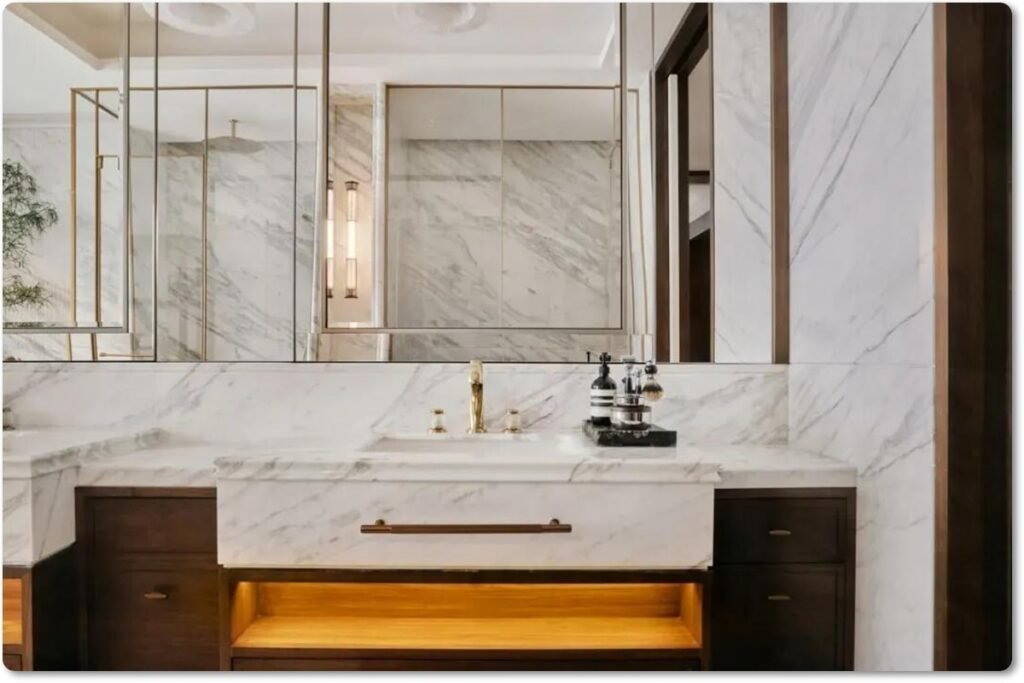
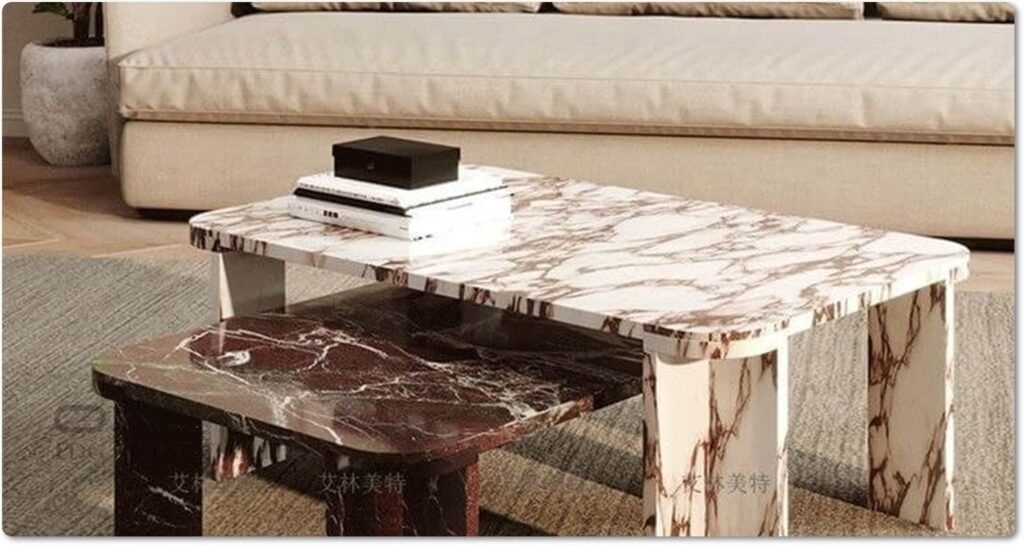
Stone furniture brings the visual character of natural materials into residential interiors, hospitality environments, retail spaces and commercial developments. Marble coffee tables, travertine dining tables, granite consoles, quartzite side tables and custom stone reception desks can become defining elements of an interior design scheme.
For buyers searching for stone furniture Melbourne, the important question is not simply where to purchase a table. It is which sourcing model can deliver the required appearance, technical performance, commercial value and project reliability.
There are four principal sourcing routes:
Local furniture retailers: Suitable for buyers who want to see finished products and purchase standard designs.
Design-led suppliers and showrooms: Useful for projects requiring material advice, coordinated interiors or access to designer collections.
Australian importers and wholesalers: Appropriate for retailers, resellers and project buyers seeking locally managed supply.
Overseas manufacturers: Worth evaluating for custom dimensions, material selection, private-label products, repeat orders and larger procurement programmes.
None of these routes is automatically superior. A local supplier may offer a shorter delivery route but have limited customisation options. A factory-direct supplier may provide more control over production, but the buyer must manage international freight, import procedures, inspection, delivery coordination and any agreed local installation arrangements.
The correct comparison is the total cost of obtaining an approved, usable product at the required Melbourne delivery address, not the quoted price of the furniture alone.
Who should use this guide?
This guide is intended for:
Australian furniture importers and wholesalers building a stone furniture range.
Furniture brands developing OEM or ODM collections.
Interior designers specifying stone furniture for residential and commercial projects.
Architects and procurement consultants preparing technical schedules.
Hotels, restaurants, serviced apartments, and luxury residential developers.
Retailers comparing local inventory with factory-direct imports.
Buyers who have searched for “stone furniture near me” but cannot find a suitable design, material, quantity, or lead time locally.
The recommendations focus on procurement decisions rather than presenting an unverified directory of Melbourne businesses. EDG Stone should be evaluated as an overseas manufacturing option, not assumed to be a Melbourne-based retailer.
2. Scope and Definitions: Understanding Stone Furniture Procurement
2.1 What counts as stone furniture?
Stone furniture refers to freestanding or integrated furniture products incorporating natural stone or engineered mineral-based surfaces as a primary visual or functional component.
Common product categories include:
Marble coffee tables, side tables, and dining tables.
Travertine stools, consoles and occasional tables.
Granite outdoor tables and garden benches.
Quartzite dining tables and premium statement furniture.
Stone-top cabinets, desks, vanities and bedside tables.
Stone reception counters and custom hospitality furniture.
Wood-and-stone combinations using timber, metal or other supporting materials.
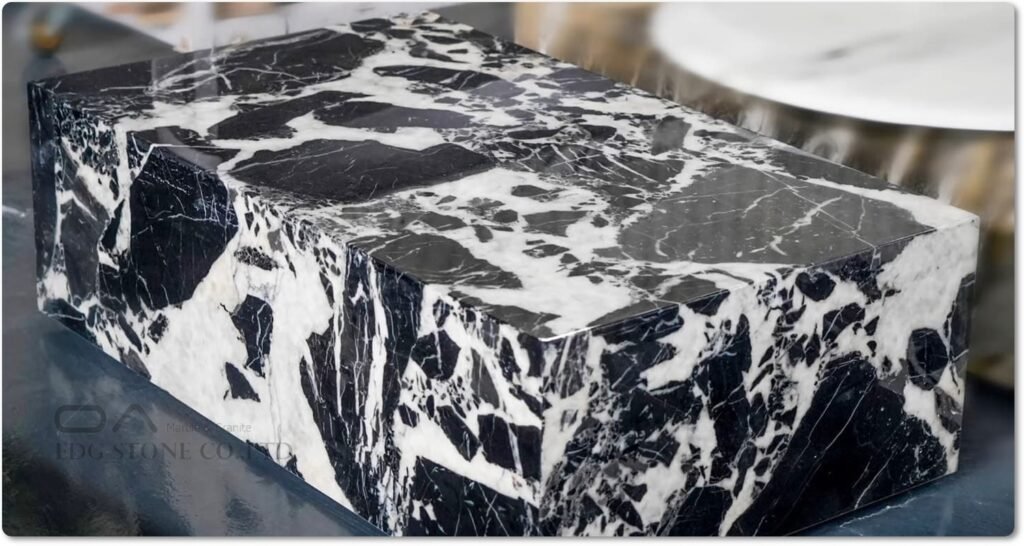
Custom sculptural furniture and architectural interior elements.
Material categories must be distinguished carefully. Natural marble, granite, travertine and quartzite are geological materials. Engineered quartz and sintered surfaces are manufactured products with different compositions and performance characteristics. They should not be described as interchangeable materials simply because they can all create a stone-like appearance.
For procurement, the material specification should identify the actual product, not just its colour or commercial name.
2.2 The four main sourcing models
| Sourcing model | Main advantage | Main limitation | Best suited to |
|---|---|---|---|
| Melbourne-area retailer | Physical inspection and local communication | Selection may be limited to available stock | One-off purchases and standard products |
| Design showroom or specialist supplier | Design advice and access to curated collections | Customisation and pricing vary | Designer-led interiors |
| Australian importer or wholesaler | Potentially established logistics and repeat supply | Product range depends on its supplier network | Retailers and project buyers |
| Overseas factory-direct manufacturer | Greater control over custom production and material selection | International logistics and import responsibilities | Custom orders, private labels and repeat procurement |
A business may operate across more than one model. For example, an Australian wholesaler may import products from an overseas factory while providing local warehousing and distribution.
Ask every supplier which functions it performs directly and which it subcontracts. The term “manufacturer” alone does not establish ownership of a factory, access to raw materials, fabrication capability, or responsibility for final delivery.
2.3 What does “stone furniture near me” actually mean?
The search phrase stone furniture near me reflects local purchasing intent, but it does not necessarily mean that a buyer requires a manufacturer located within Melbourne.
A nearby supplier may offer convenient access to a showroom but have no suitable stock. Conversely, an overseas manufacturer may offer a better match for a custom project if the buyer has sufficient time and a clear delivery plan.
Evaluate local relevance through practical questions:
Can I inspect the exact product or a representative sample?
Is the item physically stocked in Victoria?
Can the supplier confirm the dispatch location?
Is delivery available to my postcode?
Who handles unloading and installation?
Where are after-sales claims processed?
Can the supplier meet the project quantity and specifications?
3. Technical Evaluation: Materials, Structure, Fabrication and Quality
Stone furniture must be evaluated as a complete product. The stone surface, supporting structure, joints, finish, packaging, and intended application all influence its performance.
3.1 Material selection for Melbourne projects
Marble
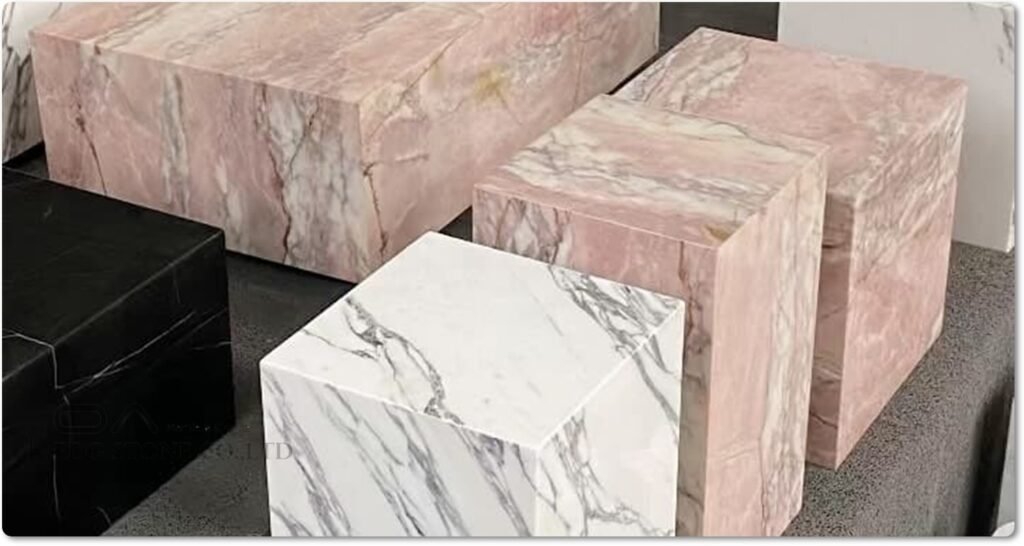
Marble is popular for coffee tables, dining tables, consoles, and premium interior furniture because of its distinctive veining and colour variation.
Procurement considerations include:
Natural variation between slabs and individual pieces.
Susceptibility to scratching and etching from certain substances.
Porosity and the need for an appropriate sealing and maintenance plan.
Edge vulnerability, particularly around thin profiles and projecting corners.
The relationship between surface finish and cleaning requirements.
Polished marble provides a reflective appearance, while honed marble offers a lower-sheen finish. Neither finish eliminates the need to understand the material’s limitations.
Travertine
Travertine is frequently specified for contemporary, Mediterranean-inspired, and organic interiors.
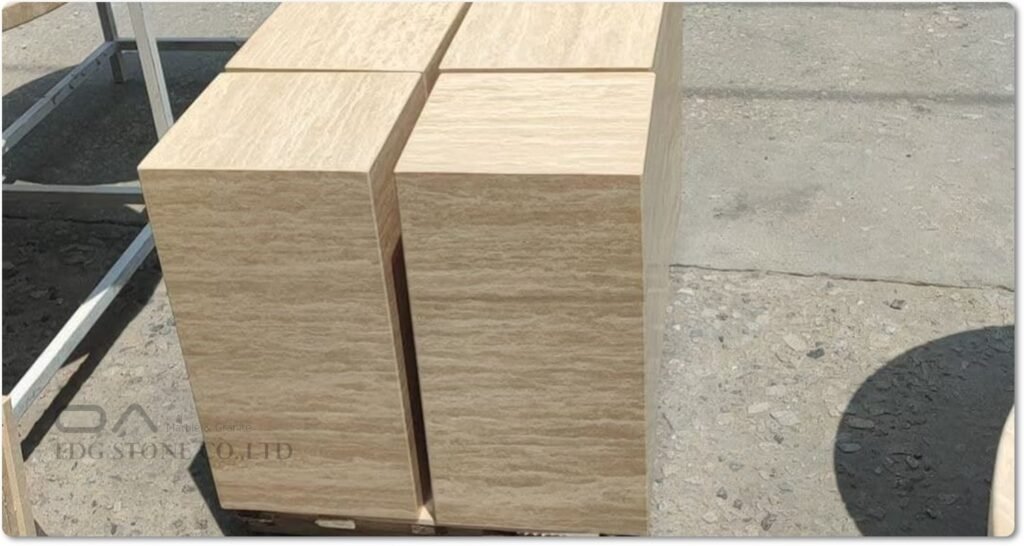
Its natural pores, filled or unfilled surface, and variation in density can influence appearance and maintenance. Buyers should state whether they require filled travertine, unfilled travertine, or a particular approved sample.
For furniture with narrow legs, thin sections, or cantilevered surfaces, confirm that the proposed construction accommodates the material’s properties.
Granite
Granite is often considered for surfaces that require good resistance to everyday wear. However, performance varies by stone type, finish, fabrication,n and use conditions.
For outdoor furniture, evaluate more than hardness. Water exposure, thermal movement, finish, structural support, fixings, gs and the local environment all matter.
Quartzite
Natural quartzite is used in premium furniture where the design calls for a distinctive natural stone surface. The term should be verified because commercial stone naming can be inconsistent.
Request material identification, slab photographs, approved samples,les and a clear description of any resin treatment or reinforcement used in the finished product.
Engineered surfaces
Engineered quartz and sintered mineral surfaces may provide consistent colour or particular design effects. Their composition, fabrication requirements, edge details and installation instructions differ from those of natural stone.
Do not assume that a test report for one surface product applies to another product from the same supplier.
3.2 Dimensions, thickness and tolerances
A furniture quotation should specify finished dimensions rather than relying on a photograph or a general product name.
For each item, record:
Overall length, width and height.
Stone thickness and any laminated or built-up edge.
Base dimensions and material.
Finished weight, if available.
Edge profile and corner radius.
Surface finish and sheen expectations.
Joint locations and assembly method.
Permitted dimensional tolerances.
Packaging dimensions and gross weight.
A dining table that fits a showroom display may be unsuitable for an apartment lift, narrow corridor or project access route. The dimensions of the packed product can be as important as the dimensions of the finished furniture.
Use approved shop drawings to resolve conflicts between architectural dimensions, furniture dimensions and installation clearances before production.
3.3 Structural design and stability
Stone is heavy and relatively brittle compared with many furniture materials. A technically acceptable design must account for both material behaviour and the complete load path.
Inspect or request documentation covering:
The stone slab’s support arrangement.
Base geometry and stability.
Mechanical fixings, adhesives and connection details.
Overhangs and unsupported spans.
Assembly instructions and required tools.
Floor protection and load distribution.
Intended use and any load restrictions.
For tall consoles, narrow bases, cantilevered tops or public-facing furniture, stability and tip-over risks deserve particular attention.
Where the furniture will be used in a hotel, restaurant, workplace, or other commercial setting, request an appropriate assessment of the complete assembly. A material strength statement is not a substitute for evaluating the finished furniture.
There is no single universal structural test that automatically certifies every type of stone table or console. Select test methods according to the product, its intended use and applicable project requirements.
3.4 Fabrication quality and appearance
Stone furniture quality depends on more than the stone’s colour.
A pre-shipment inspection should assess:
Surface chips, cracks and unacceptable repairs.
Edge straightness, consistency and polish.
Flatness and dimensional accuracy.
Colour and veining against the approved sample.
Base alignment and connection security.
Visible adhesive residue or poorly finished joints.
Assembly fit and stability.
Protective pads and floor-contact surfaces.
Correct product identification and packing labels.
Natural stone has inherent variation. A procurement contract should define acceptable variation rather than requiring every item to be visually identical when the material cannot reasonably support that expectation.
For bookmatched, highly veined or premium statement furniture, approve the actual slab or production layout whenever possible.
3.5 Australian safety and product obligations
Australia’s product safety regime includes mandatory standards for certain regulated product categories. Applicability depends on the specific product and its characteristics; do not assume that every stone furniture item is covered by one universal furniture certification.
The Australian Competition and Consumer Commission explains that mandatory product safety standards can specify requirements for design, construction, performance, finish, packaging or labelling. Buyers should check the relevant product category and current requirements before sale. Official ACCC product safety guidance.
For commercial projects, distinguish between:
Legal requirements applicable to the product.
Contractual specifications issued by the client.
Project-specific engineering or stability requirements.
Voluntary standards adopted as part of the procurement specification.
If a product is marketed for a specific use, obtain evidence that its construction is suitable for that use. Never treat a generic factory statement as proof of compliance with every Australian requirement.
4. Procurement Checklist: From Local Search to Delivery in Melbourne
A structured process reduces the risk of selecting a supplier on appearance or headline price alone.
Step 1: Define the project before searching
Prepare a product schedule with the following information:
Product type and intended application.
Quantity and required delivery date.
Preferred stone species, colour and finish.
Dimensions and acceptable tolerances.
Base material and construction.
Residential or commercial use.
Indoor or outdoor exposure.
Budget and required service scope.
Delivery postcode and site access conditions.
If the project requires several related pieces, group them by product family and material. This helps suppliers quote consistently and may improve production planning.
Step 2: Shortlist local suppliers and overseas manufacturers separately
When searching for stone furniture near me, use local-intent searches to identify retailers or showrooms that can provide physical inspection and confirmed local delivery.
Separately, search for specialist stone furniture manufacturers, factories, wholesalers and OEM suppliers.
Do not assume a supplier has local inventory based on its website’s geographic keywords. Verify the actual stock location, sample availability, dispatch point and delivery arrangements.
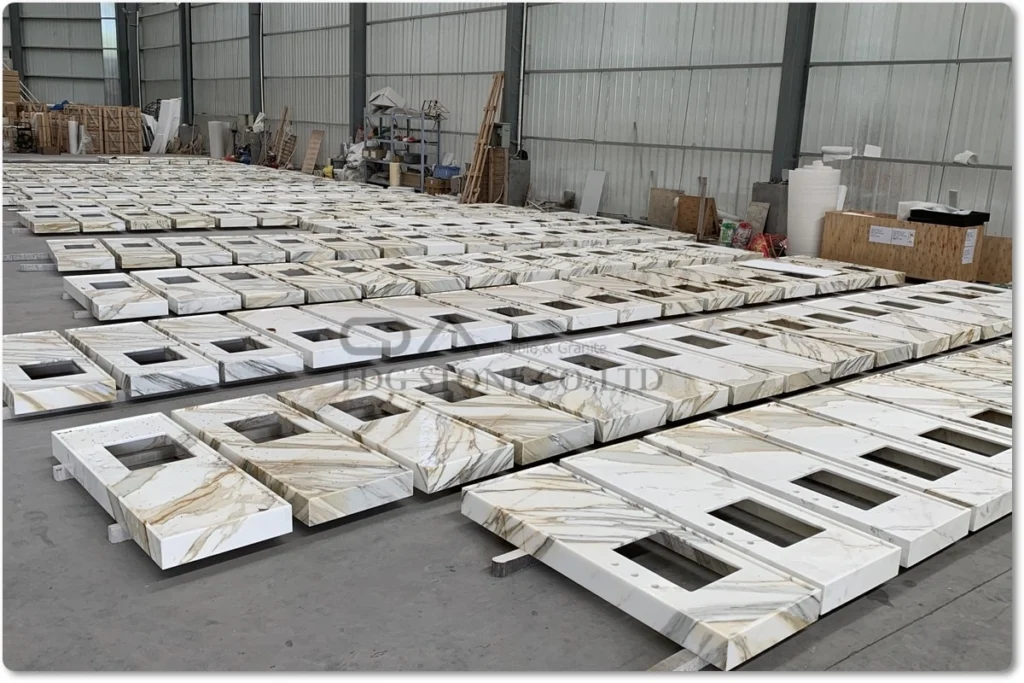
For overseas manufacturers, request a company profile, factory photographs or video, relevant production examples, and a clear description of the manufacturing processes performed in-house.
Step 3: Approve the material and technical specification
Request representative material samples or detailed photographs in suitable lighting. For a significant order, agree on how natural variation will be assessed.
Before production, approve:
Dimensioned drawings.
Material and finish.
Edge profiles.
Base and connection details.
Assembly requirements.
Inspection criteria.
Packing method.
Product labels and shipping marks.
Keep the approved documents attached to the purchase order or incorporated into the contract.
Step 4: Confirm stock and production capacity
For local suppliers, ask whether the quoted item is physically available, reserved for the order, or subject to replenishment.
For factory-direct orders, ask about:
Material availability and reservation.
Sample or prototype approval.
Production lead time after approval.
Batch consistency for multiple units.
Factory inspection arrangements.
Packing completion and shipping readiness.
Distinguish production time from transit time. A statement such as “four weeks lead time” is incomplete unless the supplier defines when the period starts and what it includes.
Step 5: Verify the import pathway
Before confirming a purchase from overseas, identify the importer of record and the party responsible for customs clearance, duties, taxes, biosecurity compliance and destination delivery.
For Australian imports, the Department of Agriculture, Fisheries and Forestry’s Biosecurity Import Conditions system (BICON) is an important starting point for checking applicable import conditions. Requirements depend on the goods and packaging.
Wooden pallets, crates and other solid-wood packaging deserve particular attention. Australia’s published guidance explains the application of ISPM 15 and the requirements for timber packaging and dunnage. Non-compliant packaging can require treatment on arrival or other costly action. Australian Government timber packaging guidance.
Step 6: Plan the final delivery and installation
Before dispatch, confirm:
Whether delivery is kerbside, to the building entrance or to the final room.
Whether unloading equipment is required.
Whether a forklift, tail-lift vehicle or specialist stone-handling equipment is needed.
Whether access restrictions affect the delivery vehicle.
Whether the building has lift, doorway or floor-load limitations.
Whether assembly is included.
Who is responsible for positioning, levelling and final inspection.
What happens if access is unavailable on the booked delivery date.
Stone furniture can be damaged when moved without adequate support or suitable handling equipment. Installation responsibility should be explicit rather than left to assumptions between the seller, carrier and site contractor.
Step 7: Inspect and close out the order
Use a documented receiving process. Photograph the packaging before opening, record any visible transport damage and compare the delivered goods with the purchase order.
If damage occurs, notify the responsible parties within the contractually specified time, preserve packaging where practical, and collect photographs and delivery records. Contractual reporting deadlines and insurance notification requirements should be checked before shipment.
5. Cost and Risk Factors: Local Purchase vs Factory-Direct Import
A low ex-factory price does not necessarily produce the lowest delivered cost. Buyers should compare offers on an equivalent scope.
5.1 What makes up the total landed cost?
For an imported order, a practical cost model is:
Total landed and project-ready cost =
Product price + samples and tooling + export packing + origin transport and handling + export documentation + international freight + insurance + applicable duty + import taxes and non-recoverable charges + customs brokerage + port and terminal charges + destination transport + unloading + assembly or installation + expected damage and claims costs.
The exact components depend on the agreed Incoterm, shipment route, tax treatment and delivery scope.
For example, an EXW quotation may leave the buyer responsible for a much wider range of origin-side activities than a quotation under a suitable delivered arrangement. A CIF price covers specified cost, insurance and freight to the named destination port, but does not automatically include Australian import clearance, import taxes, destination transport or installation.
Use the current ICC Incoterms® rules and name the precise place or port in the contract. Incoterms allocate specified responsibilities, costs and risks; they do not replace the full sales contract.
5.2 A simple landed-cost worksheet
The following is an illustrative calculation only, not a current freight quote or an estimate of actual Australian duty rates.
| Cost item | Illustrative amount (AUD) |
|---|---|
| Furniture purchase price | $12,000 |
| Export packing and origin handling | $1,000 |
| International freight and insurance | $2,500 |
| Customs brokerage and destination charges | $1,000 |
| Applicable duty and non-recoverable import costs | $500 |
| Final delivery and unloading | $1,000 |
| Illustrative total | $18,000 |
| Illustrative cost per 10 units | $1,800 |
This example assumes ten units and uses arbitrary figures to demonstrate the calculation. The $500 line is not an Australian tariff determination. Actual duty depends on classification, customs value, origin and applicable trade measures; import GST and recoverable tax treatment must be assessed separately.
The correct comparison should also account for inspection costs, installation, expected breakage, spare parts and any additional local storage or handling.
5.3 How to calculate a fair comparison?
Request at least two comparable quotations:
A local supplier quotation with confirmed stock, delivery and any installation charges.
An overseas factory quotation with product specifications, packing, Incoterm, shipment assumptions and a clear list of excluded charges.
Compare the same product, quantity, finish, packaging standard, delivery address and service scope.
A local quotation may carry a higher unit price but lower uncertainty for a short-deadline order. A factory-direct quotation may be more attractive for repeatable products or a customised collection, provided the order volume and schedule justify the import process.
5.4 Main risks and their controls
| Risk | Practical control |
|---|---|
| Colour or veining differs from expectations | Approve representative samples and, where appropriate, actual slab layouts |
| Furniture arrives damaged | Specify protective packaging, handling points, insurance and a claims process |
| Product is unstable or poorly supported | Review drawings, connections and relevant assembly testing |
| Delivery misses the project deadline | Build in approval, production, transit and customs buffers |
| Unexpected import charges arise | Obtain a written landed-cost breakdown and confirm classification with a customs broker |
| Timber packaging fails biosecurity checks | Confirm packaging material, treatment and documentation before dispatch |
| Local installation is not included | Contract separately for unloading, assembly, positioning and site access |
| After-sales responsibility is unclear | Agree on claim evidence, remedies, replacement parts and communication procedures |
5.5 Tax, customs and consumer-law considerations
Importers should verify tariff classification, customs value, country-of-origin information, applicable duties and GST treatment with the relevant Australian authorities or a licensed customs broker. Do not assume that a supplier’s product description alone determines the correct tariff classification.
The Australian Border Force provides official guidance for importers, including import declarations and customs processes: https://www.abf.gov.au/importing-exporting-and-manufacturing/importing.
The Australian Consumer Law may also be relevant to downstream sales and certain business purchases. The ACCC explains that businesses can qualify as consumers for some purchases, subject to statutory criteria and exclusions, including exclusions for goods acquired for resupply or use in production. Whether particular protections apply depends on the transaction. ACCC consumer guarantees for businesses.
Importers and retailers should not assume that an overseas manufacturer’s commercial warranty removes any obligations they have under Australian law. Contract terms, marketing representations, product suitability and the actual transaction all matter.
6. Supplier Evaluation: Local Retailers, Importers and Overseas Factories
The best supplier is the one that can demonstrate capability relevant to your product and project, rather than simply presenting an attractive catalogue.
6.1 Supplier evaluation scorecard
Use the following scorecard as a starting point. The weights are suggested procurement criteria, not an industry standard.
| Evaluation criterion | Suggested weight |
|---|---|
| Material and fabrication capability | 20% |
| Product quality and inspection system | 20% |
| Technical drawings and customisation | 15% |
| Delivered cost transparency | 15% |
| Lead-time reliability | 10% |
| Packaging and shipping capability | 10% |
| After-sales and claims process | 10% |
| Total | 100% |
Score each supplier from 1 to 5 against the evidence provided. Calculate the weighted result by multiplying each criterion’s score by its weight and dividing by 5.
For example, a supplier scoring 4 out of 5 for a criterion weighted at 20% earns 16 percentage points for that criterion.
Do not use the total score to override a critical failure. A supplier that cannot meet a mandatory dimension, safety requirement, delivery deadline or material specification should not be selected simply because its overall score is high.
6.2 What should a local Melbourne supplier provide?
Ask for:
The business’s legal identity and contact details.
Confirmation of physical stock and dispatch location.
Product specifications and available finishes.
Delivery coverage and access requirements.
Written pricing and lead-time conditions.
Warranty terms and after-sales procedures.
Installation scope, if offered.
Evidence of any required product compliance.
The process for handling damage and missing items.
Where physical inspection is important, arrange to inspect the actual item or a clearly identified representative sample.
6.3 What should an overseas stone furniture factory provide?
Request:
A company profile and verifiable business identity.
Relevant product photographs and completed-project examples.
Material specifications and sample-approval procedures.
Dimensioned drawings and fabrication details.
Quality-control checkpoints and inspection records.
Written production lead times and capacity assumptions.
Packaging specifications and shipment photographs.
Export documentation capability.
Clear Incoterm and delivery scope.
Written terms for defects, damage, spare parts, and replacement arrangements.
For OEM and ODM projects, also clarify drawing ownership, permitted design changes, tooling costs, exclusivity, packaging artwork and approval rights.
A supplier’s certificate, factory photograph or product test report should be checked for authenticity, scope and relevance to the product being purchased.
6.4 Choosing a supplier by project type
| Project scenario | Sourcing route worth prioritising |
|---|---|
| One standard table needed urgently | Local retailer with verified stock |
| Bespoke residential furniture | Design specialist or capable custom manufacturer |
| Multiple tables for a hotel project | Compare local project suppliers with factory-direct production |
| Retail collection under a private label | Overseas OEM/ODM factory and local distribution options |
| Recurring wholesale orders | Manufacturer or importer with documented repeat-production controls |
| Complex installation at a commercial site | Supplier with a clearly defined technical and installation scope |
These are starting points, not universal rules. Always compare actual quotations and evidence.
7. Practical RFQ Template: Buying Stone Furniture from an Overseas Factory
A good request for quotation (RFQ) allows suppliers to quote the same requirements and helps the buyer identify hidden exclusions.
Copy and adapt the following template.
7.1 Copy-ready English RFQ email
Subject: RFQ – Stone Furniture Supply for Melbourne, Australia
Dear Sales Team,
We are sourcing stone furniture for an Australianproject/retaill programme and would like to request a detailed quotation for the products listed below.
Please review our requirements and confirm your production capability, technical specifications, lead time, and export arrangements.
1. Buyer and project information
Company name:
Contact person:
Project or collection name:
Delivery suburb and postcode in Melbourne, Victoria:
Intended use: Residential / Hospitality / Retail / Commercial / Wholesale
Target delivery date:
2. Product specifications
Product type: Coffee table / Dining table / Side table / Console / Other
Quantity per model:
Stone material and colour:
Stone thickness:
Surface finish:
Edge profile:
Overall dimensions (L × W × H):
Base material and finish:
Assembly requirements:
Indoor or outdoor use:
Reference images or drawings: Attached / To follow
3. Technical and quality requirements
Please provide dimensioned drawings, available material samples, applicable tolerances, connection details, quality-control procedures,s and relevant test reports where applicable.
Please also explain how natural stone variation is managed and how the final product will be checked against the approved sample.
4. Quotation and commercial terms
Please state:
Unit price and total price.
Currency and quotation validity.
Sample charges and tooling costs, if applicable.
Minimum order quantity, if any.
Production lead time after drawing and sample approval.
Available Incoterms® rule and named place.
Estimated packing dimensions and gross weight.
Export packing and documentation charges.
Payment terms.
Warranty and after-sales conditions.
5. Packaging and shipping
Please describe the proposed packaging, including corner protection, internal cushioning, crate or pallet construction, moisture protection where relevant, handling labels and package identification.
If solid timber packaging is proposed, please confirm the intended treatment and documentation arrangements applicable to Australian import requirements.
Please provide the estimated shipment schedule, freight assumptions and the information required for our customs broker to assess import clearance.
6. Inspection and delivery
Please confirm whether pre-shipment inspection can be arranged and whether photographs, inspection records and packing photographs can be supplied before dispatch.
Please identify which party is responsible for international freight, insurance, import clearance, Australian destination delivery, unloading and installation under the proposed quotation.
We would appreciate a quotation based on the specifications above, with any exclusions clearly identified.
Kind regards,
[Name]
[Company]
[Email]
[Telephone]
7.2 Pre-production approval checklist
Before releasing the purchase order for production, confirm each item below.
Product dimensions and tolerances approved.
Stone material, colour and finish approved.
Sample or slab selection procedure agreed.
Edge profile and visible joints approved.
Base, fixings and assembly details reviewed.
Intended use and relevant performance requirements confirmed.
Inspection criteria and defect definitions documented.
Packaging and shipping marks approved.
Incoterm, named place and payment terms agreed.
Importer responsibilities and documentation confirmed.
Delivery, unloading and installation arrangements confirmed.
Claims, replacement parts and after-sales process agreed.
7.3 Pre-shipment and arrival inspection
At pre-shipment inspection, compare the finished product with the approved drawing and sample. Record dimensions, finish, assembly fit, visible damage, labels, ls and packaging condition.
At arrival, check the external packaging before opening, photograph damage, verify quantities,ies and record any discrepancy against the packing list.
Do not sign a statement that goods are in perfect condition if visible damage exists. Follow the carrier’s delivery procedures and the contract’s notification requirements.
8. Frequently Asked Questions: Stone Furniture Melbourne
1. Where can I buy stone furniture in Melbourne?
You can investigate Melbourne-area furniture retailers, design showrooms, specialist stone suppliers, and Australian importers. Confirm whether the exact product is in stock, whether you can inspect it, and whether delivery to your address is included. For custom designs or wholesale quantities, overseas manufacturers may also be worth comparing.
2. How do I find stone furniture near me?
Search by the specific product and material, such as “marble coffee table Melbourne,” “travertine dining table Melbourne,” or “stone furniture showroom near me.” Then verify the business address, actual stock location, delivery postcode coverage, and after-sales arrangements. Search results alone do not establish local inventory.
3. Is buying stone furniture directly from a factory cheaper?
It can reduce some intermediary costs, particularly for custom or repeat orders, but savings are not guaranteed. International freight, packing, customs clearance, applicable duties, taxes, local delivery, inspection,n and potential damage must be included in the comparison.
4. How long does imported stone furniture take to arrive in Melbourne?
The total lead time includes material selection, drawing approval, production, packing, export handling, international transit, customs clearance,ce and final delivery. It varies by product, supplier, shipment route, ute and current logistics conditions. Request a stage-by-stage schedule rather than relying on a single estimated number of weeks.
5. What documents should I request when importing stone furniture into Australia?
Common commercial documents include a sales invoice, packing list, transport document,ment and information needed for customs classification and valuation. Additional documents may be required depending on the product, origin, packaging and import conditions. Verify the requirements with Australian Border Force, DAFF/BICON and your customs broker before dispatch.
9. References and Official Resources
The following sources provide a starting point for checking Australian import, packaging and consumer-law obligations. Requirements can change, so confirm the current rules for the actual product and shipment before placing an order.
Australian Border Force (ABF) — Importing goods into Australia, customs and import procedures.
https://www.abf.gov.au/importing-exporting-and-manufacturing/importingDepartment of Agriculture, Fisheries and Forestry (DAFF) — ISPM 15: The international standard for solid wood packaging material.
https://www.agriculture.gov.au/import/goods/timber-packaging/ispm-15Department of Agriculture, Fisheries and Forestry (DAFF) — Timber and bamboo packaging requirements.
https://www.agriculture.gov.au/biosecurity-trade/import/goods/timber-packagingAustralian Government, Product Safety Australia / ACCC — Product safety standards and compliance.
https://www.productsafety.gov.au/business/understand-product-safety-rules/product-safety-standards-and-how-to-complyAustralian Competition and Consumer Commission (ACCC) — Consumer rights and guarantees for businesses.
https://www.accc.gov.au/business/selling-products-and-services/consumer-rights-and-guaranteesAustralian Competition and Consumer Commission (ACCC) — Warranties and consumer guarantees.
https://www.accc.gov.au/business/selling-products-and-services/warrantiesInternational Plant Protection Convention (IPPC) — International Standards for Phytosanitary Measures, including ISPM 15.
https://www.ippc.int/International Chamber of Commerce (ICC) — Incoterms® rules and international trade responsibilities.
https://iccwbo.org/business-solutions/incoterms-rules/Natural Stone Institute — Natural stone technical information, care and maintenance resources.
https://www.naturalstoneinstitute.org/Standards Australia — Australian standards catalogue and access to applicable standards.
https://www.standards.org.au/Australian Government legislation register — Competition and Consumer Act 2010, including the Australian Consumer Law in Schedule 2.
https://www.legislation.gov.au/C2004A00109/latest/text
Technical note: This guide is a procurement resource, not legal, tax, engineering or customs advice. It does not claim that one particular furniture standard applies to every stone furniture product. Buyers should confirm relevant requirements based on the specific product, intended use, contract, and destination.
10. EDG Stone CTA: Explore Factory-Direct Stone Furniture Sourcing
Source stone furniture for Australian retail and commercial projects
For Australian importers, furniture brands, designers and project procurement teams, factory-direct sourcing can be worth evaluating when standard local collections do not meet the required material, dimensions, design or order quantity.
EDG Stone is a China-based stone products manufacturer and exporter. Buyers considering a factory-direct relationship can discuss project-specific stone products, custom fabrication requirements and export packing arrangements.
Depending on the product and project scope, the procurement discussion may cover:
Marble, travertine, granite and quartzite selection.
Custom stone furniture dimensions and finishes.
Drawing review and fabrication requirements.
Sample and production approval.
Packaging and international shipping coordination.
Export documentation and agreed inspection procedures.
Repeat orders and product development for furniture brands.
The availability of a particular furniture design, manufacturing process, sample, lead time or shipping arrangement must be confirmed for each enquiry. EDG Stone should not be treated as a Melbourne showroom or local installation provider unless those services are independently confirmed.
Ready to compare a factory-direct option?
Send your product references, dimensions, quantities, material preferences and required Melbourne delivery date so that the project can be evaluated against a clear technical and commercial scope.
Explore EDG Stone: https://www.edgstone.com/
Explore stone countertop manufacturing capabilities: https://edgstone.com/stone-countertops-manufacturer/
Contact EDG Stone through the enquiry options available on its website.
Semantic Closure: What Australian Buyers Should Know Before Sourcing Stone Furniture?
Stone Furniture in Melbourne: Procurement Insights and Buying Decisions
What is the best way to source stone furniture in Melbourne?
The best sourcing method depends on whether the priority is immediate availability, physical inspection, custom design, wholesale pricing, or repeat production. Local retailers and importers can simplify some delivery and communication tasks, while overseas factories can offer additional options for custom fabrication and product development. Compare the complete scope before selecting a supplier.
How should buyers compare local supply with overseas manufacturing?
Compare approved product specifications, delivered cost, lead time, inspection rights, packaging, import responsibilities, and remedies for damage or defects. A fair comparison uses the same dimensions, materials, quantity,y and delivery requirements for every supplier. Neither the local nor factory-direct model is automatically cheaper or safer.
Why are packaging and import preparation important for stone furniture?
Stone furniture can be heavy, brittle and sensitive to poorly planned handling. Packaging should support the product’s weight and geometry, protect vulnerable edges, es and limit movement during transit. Australian importers must also assess applicable customs and biosecurity requirements, including requirements for solid timber packaging.
What should a buyer verify before approving production?
Approve the material, dimensions, edge details, base construction, connections, finish, tolerances, inspection criteria, and packaging specification. For complex or commercial furniture, evaluate the complete assembly and intended use rather than relying solely on a statement about the stone material.
Which sourcing option is suitable for wholesale and project procurement?
Wholesale buyers and project teams should evaluate manufacturers and importers on repeatability, documentation, quality controls, order capacity, delivered cost, and after-sales arrangements. A reliable RFQ process allows multiple suppliers to respond against the same requirements and makes commercial differences easier to identify.
What does “stone furniture near me” tell a buyer?
It signals a preference for local convenience, but the buyer should verify the actual showroom, inventory, delivery,y and service coverage. When local options do not meet the specification, a properly assessed overseas supplier may remain a viable alternative.
Overall procurement conclusion:
Successful stone furniture procurement is a coordinated decision involving material selection, technical design, supplier capability, commercial terms, packaging, import compliance,ce and final delivery. Buyers should choose the sourcing route that best matches the product specification and project risk, with responsibilities documented before payment and production.
The information in this guide is intended to support informed sourcing decisions. Specific product compliance, import conditions, costs, lead times,mes and service availability should be verified for each order.