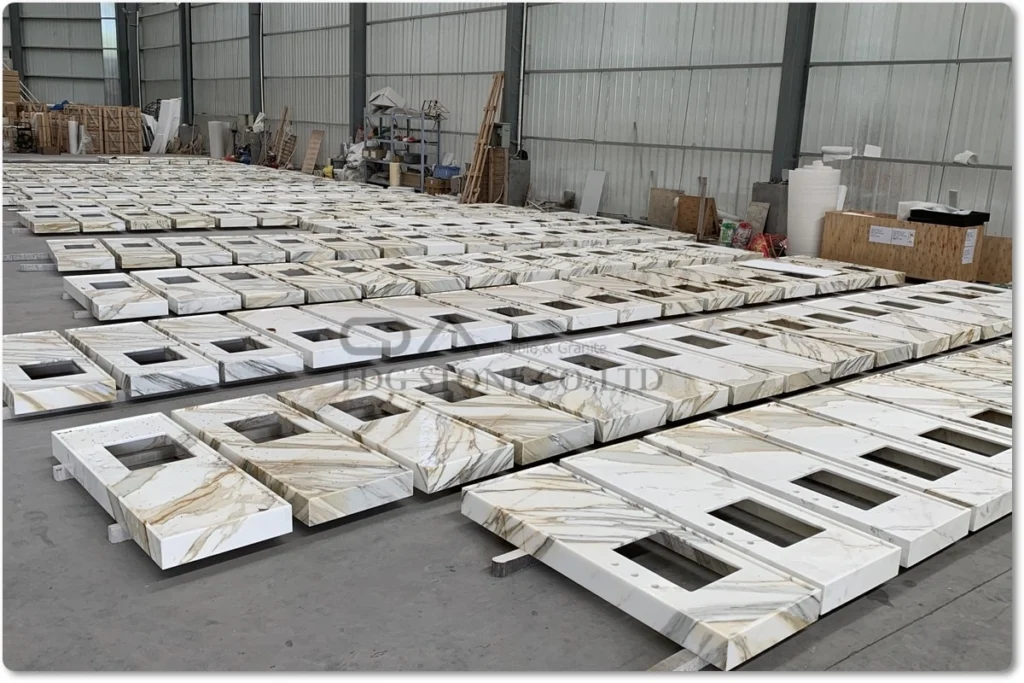
Stone furniture procurement is a coordinated process involving material selection, product engineering, fabrication, finishing, inspection, packaging, transportation, and after-sales support. A supplier that produces an attractive sample may not necessarily have the systems, equipment, material access, or production controls required to deliver hundreds of matching pieces for a hotel, apartment development, or retail furniture collection.
For commercial buyers, the objective is therefore not simply to find a stone furniture manufacturer with a competitive quotation. It is to establish a repeatable supply process that controls quality, cost, delivery, and product consistency from the first sample through subsequent purchase orders.
A practical stone furniture procurement strategy should answer five questions:
Can the supplier manufacture the specified product within the agreed technical and commercial scope?
Can the supplier demonstrate that the selected material and finished product meet the acceptance criteria?
Can the supplier reproduce the approved sample across a production batch and future orders?
Can the supplier protect finished products during export packing, container loading, transportation, and delivery?
Can the supplier resolve discrepancies through documented corrective actions rather than informal assurances?
This guide provides a supplier scorecard, a milestone-based procurement workflow, a quality-control framework, and a copy-ready request for quotation (RFQ) template for professional B2B purchasing.
It also explains how buyers can evaluate a stone furniture factory or wholesale supplier according to the risk profile of their project, rather than relying on a single universal checklist.

1. Scope and Definitions: Understanding Stone Furniture Procurement
1.1 What Is Stone Furniture?
Stone furniture refers to furniture products that use natural stone or engineered stone as a primary or significant component. Depending on the design, stone may form the complete product, a structural element, a decorative surface, or a tabletop supported by another material.
Common categories include:
Tables: Dining tables, coffee tables, side tables, console tables, and conference tables.
Seating: Stone benches, sculptural stools, and furniture incorporating stone components.
Bedroom and living room furniture: Nightstands, cabinets, sideboards, and accent pieces.
Bathroom furniture: Stone vanity units, vanity tops, integrated basins, and related components.
Hospitality furniture: Reception desks, restaurant tables, hotel-room furniture, and bespoke public-area pieces.
Outdoor furniture: Stone benches, garden tables, and products designed for appropriate exterior conditions.
Custom furniture: Architectural furniture, sculptural pieces, coordinated furniture collections, and made-to-order designs.
The procurement requirements differ substantially across these categories. A decorative stone tabletop, a load-bearing bench, and a bathroom vanity exposed to moisture should not be evaluated using identical technical criteria.
1.2 Material Categories and Their Procurement Implications
| Material category | Typical procurement considerations |
|---|---|
| Marble | Veining, color variation, porosity, staining sensitivity, finish, and repairability |
| Granite | Mineral variation, machining requirements, surface finish, and application-specific performance |
| Quartzite | Material identification, natural variation, fabrication behavior, and performance verification |
| Limestone and travertine | Porosity, filling, surface texture, moisture exposure, and maintenance |
| Onyx and translucent stone | Fragility, backing or reinforcement design, lighting integration, and handling |
| Engineered quartz | Product-specific composition, fabrication requirements, and applicable market regulations |
| Porcelain or sintered surfaces | Thickness, edge details, impact behavior, support design, and manufacturer instructions |
| Mixed-material furniture | Compatibility between stone, wood, metal, glass, adhesives, and mechanical fasteners |
Material names alone do not establish product suitability. Natural stone varies between geological sources, blocks, slabs, and production batches. Engineered surfaces also differ by manufacturer, formulation, thickness, and technical documentation.
Buyers should specify the actual material, finish, thickness, permitted variation, intended application, and required evidence instead of relying on descriptions such as “premium marble” or “commercial-grade stone.”
1.3 Key Supplier Terms
Stone furniture supplier: A business that supplies stone furniture or related components. It may manufacture products directly, coordinate subcontractors, or source finished goods from other producers.
Stone furniture manufacturer: A business that undertakes manufacturing activities, such as cutting, CNC machining, edge processing, polishing, assembly, or other defined production operations. The specific activities performed in-house must be verified.
Stone furniture wholesaler: A business focused on supplying products in commercial quantities, often using stocked inventory, established product collections, or consolidated sourcing.
Stone furniture procurement: The end-to-end purchasing process covering requirements, sourcing, technical review, commercial negotiation, production approval, inspection, delivery, and supplier performance management.
These roles can overlap. A company may manufacture certain components while subcontracting metalwork, upholstery, or specialist finishing. Buyers should evaluate the actual production and accountability structure rather than assuming that every company describing itself as a factory performs every operation internally.
1.4 Match the Procurement Model to the Buyer
Hotels: Prioritize design consistency, durability for the intended use, coordinated delivery, replacement parts, and maintenance requirements.
Residential developers: Prioritize approved specifications, batch consistency, schedule coordination, installation interfaces, and defect resolution.
Multifamily apartment projects: Prioritize repeatable dimensions, practical finishes, packaging efficiency, installation readiness, and replacement-unit availability.
Furniture brands: Prioritize intellectual property protection, product development, repeatability, labeling, photography, SKU control, and private-label requirements.
Wholesalers and distributors: Prioritize a stable product range, landed cost, replenishment planning, packaging durability, and commercially viable order quantities.
The appropriate stone furniture supplier is the one whose verified capabilities, operating model, and risk controls fit the buyer’s actual requirements.
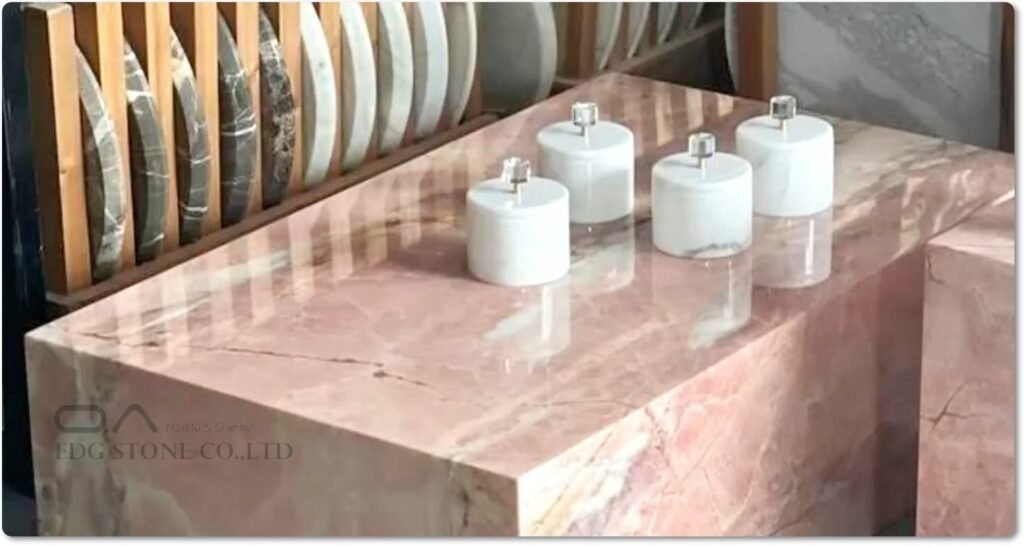
2. Technical Evaluation: Materials, Structure, Fabrication, and Quality
2.1 Material Selection and Traceability
A professional procurement specification should identify the material sufficiently well to control purchasing and inspection.
At a minimum, record:
Commercial material name and, where available, geological or product identification.
Quarry, country of origin, or manufacturing source when known and relevant.
Slab, block, batch, or production lot reference where traceability is available.
Nominal thickness and permitted dimensional variation.
Surface finish, edge finish, filling, resin treatment, and sealing requirements.
Approved color range, veining characteristics, and visual variation.
Applicable technical test reports and their sample identification.
Intended application and foreseeable exposure conditions.
For natural stone, photographs of the approved slab or selected material batch can support visual acceptance. However, a photograph alone cannot establish structural strength, water absorption, or long-term performance.
When the appearance is particularly important, buyers should define whether approval applies to an individual slab, a coordinated batch, a range of acceptable patterns, or a representative sample.
2.2 Physical Properties and Test Evidence
Material testing should be selected according to the product, application, and potential failure mode.
Relevant examples include:
| Property or concern | Potential reference | Procurement application |
|---|---|---|
| Water absorption and bulk specific gravity | ASTM C97/C97M | Comparing relevant dimension-stone characteristics |
| Compressive strength | ASTM C170/C170M | Evaluating compressive strength of dimension stone |
| Modulus of rupture | ASTM C99 | Assessing a specified bending-related material property |
| Flexural strength | ASTM C880 | Evaluating flexural behavior of dimension stone |
| Abrasion resistance | ASTM C1353 | Relevant to specified abrasion exposure and use conditions |
| Slip resistance | Applicable methods such as ANSI A326.3 | Relevant when the surface is intended for an application where slip performance matters |
ASTM C97/C97M-25 is an active edition listed by ASTM International for testing absorption and bulk specific gravity of dimension stone. ASTM C170/C170M-24a is another published edition covering compressive-strength testing. The Natural Stone Institute provides an overview of dimension-stone standards and testing resources. See the references at the end of this article.
These tests are not interchangeable, and no single test establishes that a complete piece of furniture is safe or suitable for every application.
A stone tabletop may pass a material test but still fail because of inadequate support, an unsuitable overhang, a poorly designed joint, or damage introduced during transportation.
Procurement rule: Require test evidence that corresponds to the specified material, relevant product batch where appropriate, and actual use conditions. Do not request laboratory tests simply to accumulate documents without identifying the risk they are intended to address.
2.3 Structural Design and Load-Bearing Performance
Stone furniture requires particular attention to weight, support geometry, joints, and handling.
For a stone table, review:
The dimensions, thickness, and geometry of the top.
The location and area of support beneath the stone.
Unsupported spans and overhangs.
The type and location of mechanical fasteners, adhesives, or reinforcement.
The base material, rigidity, stability, and resistance to overturning.
The method used to lift, move, install, and maintain the assembled product.
Any relevant load, stability, or durability testing.
The appropriate design depends on the specific product. A thick stone slab does not automatically eliminate the need for engineering review.
For large, cantilevered, unusually thin, or heavily used products, consider a documented design review and a product-specific test plan. Where a product is intended for public or commercial use, identify any applicable furniture safety requirements in the destination market.
2.4 Fabrication Accuracy and Visual Quality
A supplier’s quality plan should define how it controls:
Overall dimensions and thickness.
Squareness, flatness, and alignment.
Edge profiles, corner radii, and polishing.
Cutouts, drilled holes, grooves, and assembly interfaces.
Surface chips, cracks, scratches, pits, and unacceptable repairs.
Color and veining consistency within the agreed tolerance.
Bonding, reinforcement, and connections between components.
Assembly stability and product-specific functional performance.
Use measurable criteria wherever possible.
For example, specify the permitted dimensional deviation for each critical dimension, the acceptable range of surface defects, and the visual reference used for color approval. Avoid vague requirements such as “perfect finish” or “best quality.”
Natural stone has inherent variation. A reasonable acceptance system distinguishes natural characteristics that were approved in advance from workmanship defects that fall outside the agreed limits.
2.5 Packaging Is Part of Product Quality
For international procurement, packaging should be treated as an engineered part of the product specification.
The supplier should explain how it will protect:
Corners, edges, polished surfaces, and fragile details.
Stone-to-metal or stone-to-wood connections.
Large tabletops against bending or localized impact.
Individual products against movement within the package.
Finished goods against moisture and handling damage where relevant.
Packaging should be evaluated against product weight, geometry, center of gravity, lifting points, stacking conditions, handling equipment, and the expected shipping route.
Buyers should request packaging drawings or photographs, package dimensions, gross weight, handling instructions, and loading plans when relevant. Wood packaging used in international trade may also be subject to destination and route requirements, including applicable ISPM 15 treatment and marking rules.
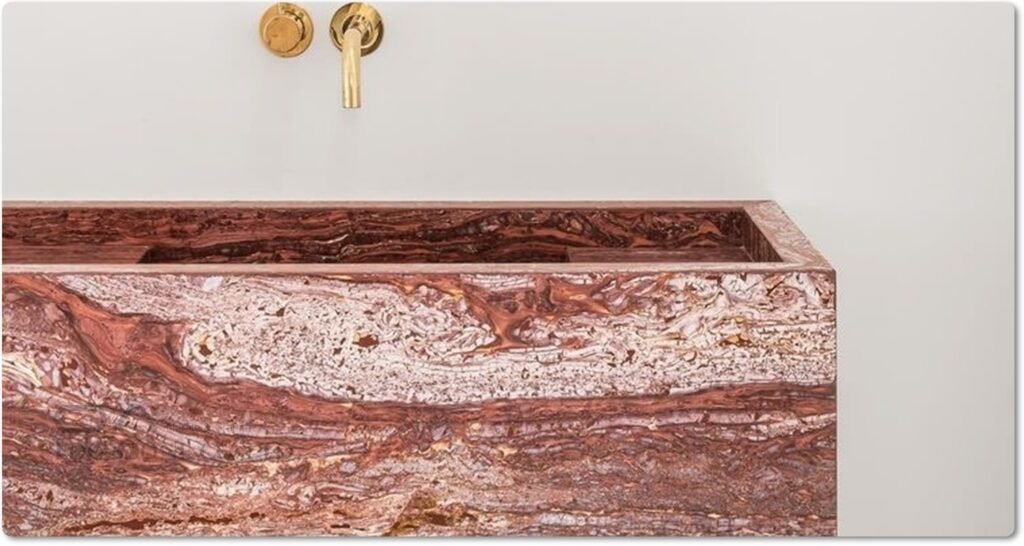
3. Procurement Checklist: From Supplier Qualification to Repeat Orders
3.1 Stage One — Define the Procurement Brief
Before contacting a stone furniture factory or wholesaler, prepare a written purchasing brief.
Include:
Product drawings, dimensions, and quantities.
Material and finish requirements.
Intended application and destination market.
Reference photographs or approved design files.
Target delivery date and shipping destination.
Required packaging and labeling.
Inspection requirements and acceptance criteria.
Budget range or quotation format, where appropriate.
Expected initial order and potential replenishment demand.
A complete brief makes supplier quotations more comparable and reduces the risk that a low quotation simply excludes essential work.
3.2 Stage Two — Prequalify Suppliers
Request evidence of actual manufacturing and supply capability.
A practical prequalification package includes:
Company and production-site information.
Description of in-house processes and outsourced operations.
Relevant product photographs and completed-project examples.
Equipment and process information appropriate to the product.
Quality-control procedures and sample inspection records.
Material sourcing and batch identification practices.
Export packing examples and shipping experience.
Production capacity, lead-time assumptions, and order constraints.
References or other verifiable evidence where available.
An ISO 9001 certificate, if presented, should be checked for its validity, issuing certification body, scope, and relationship to the actual production site. Certification can support confidence in a quality management system, but it does not guarantee that every individual product will conform to the buyer’s specification.
3.3 Stage Three — Approve the Sample
Sample approval should be a documented decision rather than an informal exchange of photographs.
The sample record should identify:
Supplier and product reference.
Material name and source or batch information, where available.
Dimensions and thickness.
Surface and edge finishes.
Color and visual characteristics.
Assembly components and hardware.
Relevant packaging method.
Inspection findings and unresolved issues.
Approval status, date, and authorized approver.
For a large or complex order, distinguish between a material sample, a finish sample, and a fully representative product sample. These serve different purposes.
A small stone chip may establish color and finish but cannot demonstrate the structural stability, assembly quality, or packaging protection of a complete table.
3.4 Stage Four — Approve the First Article
The first article is the initial production unit manufactured using the intended production process.
It is particularly valuable for customized products, new designs, products with tight tolerances, and orders involving multiple materials.
Check the first article against the approved drawings and sample, including critical dimensions, interfaces, finish, assembly, and packaging requirements.
For larger orders, agree in writing whether production can continue before formal first-article approval. If the first article fails, define the correction process and whether the supplier must remake and resubmit it.
3.5 Stage Five — Conduct In-Process Inspection
In-process inspection helps identify defects before they become expensive to correct.
The inspection plan may cover:
Incoming material identification.
Cutting dimensions and material condition.
CNC machining and cutout accuracy.
Edge processing and surface finishing.
Assembly, bonding, and reinforcement.
Trial assembly and functional checks.
Identification of reworked or nonconforming components.
Inspection frequency should reflect risk, order size, process stability, and the consequences of failure. A small repeat order of an established product may need fewer production checkpoints than a new, high-value hospitality project.
3.6 Stage Six — Complete Pre-Shipment Inspection
Before release, verify the agreed finished-product criteria.
A pre-shipment inspection can include:
Quantity and product identification.
Dimensional measurements.
Visual finish and material consistency.
Assembly and functional checks.
Review of corrective actions and unresolved nonconformities.
Packaging condition, protection, and labeling.
Carton or crate counts, weights, and dimensions.
Shipping documents and product-specific requirements.
If an acceptance sampling plan is used, agree on the sampling method, sample size, defect classifications, and acceptance or rejection rules in advance. Do not invent an inspection level or assume that a particular sampling standard automatically fits every stone furniture order.
3.7 Stage Seven — Record Delivery Feedback
Procurement does not end when the shipment leaves the factory.
After arrival, record:
Visible shipping damage.
Missing or incorrect items.
Installation or assembly difficulties.
Dimensional or finish discrepancies.
Packaging performance.
Time required to resolve claims.
Feedback from installers, property managers, or end users.
Use this information to determine whether the problem originated in material selection, fabrication, inspection, packaging, transportation, installation, or an unclear specification.
The objective is not merely to assign responsibility. It is to prevent recurrence in future orders.

4. Cost and Risk Factors: Evaluating Total Procurement Cost
4.1 Compare Total Cost, Not Just Unit Price
The lowest unit quotation may not represent the lowest overall procurement cost.
A useful comparison model is:
Total landed procurement cost = product cost + tooling and sampling + inspection and testing + packaging + freight and insurance + import duties and applicable taxes + destination handling + installation-related costs + expected quality and replacement costs.
The actual calculation depends on the delivery terms, destination, contract, and the costs included in each quotation. Avoid counting the same expense twice.
For a commercial project, compare suppliers using the same specifications, quantity, delivery basis, packaging requirements, and inspection scope.
4.2 Require a Transparent Quotation
A professional stone furniture quotation should identify:
Material and product specifications.
Dimensions, thickness, and finish.
Unit price and quantity tiers.
Sample or prototype charges.
Tooling, templates, or engineering charges.
Assembly and hardware costs.
Packaging specifications and charges.
Inspection and testing costs.
Production lead time and shipment assumptions.
Payment terms and quotation validity.
Exclusions, assumptions, and potential additional charges.
Ask the supplier to separate one-time development costs from recurring production costs. This makes future repeat-order pricing easier to evaluate.
4.3 Identify the Main Risk Categories
Material risk: Color variation, inconsistent sourcing, unsuitable properties, or insufficient batch availability.
Technical risk: Incorrect dimensions, inadequate support, unsuitable joints, or incomplete drawings.
Production risk: Unstable processes, subcontractor delays, inconsistent finishing, or insufficient capacity.
Commercial risk: Excluded costs, unclear delivery terms, payment disputes, or uncontrolled specification changes.
Logistics risk: Inadequate protection, incorrect package dimensions, handling damage, or documentation errors.
Compliance risk: Failure to identify applicable destination-market requirements, product-safety obligations, chemical restrictions, labeling rules, or import conditions.
Continuity risk: Inability to reproduce a discontinued material, replace damaged items, or maintain consistent product specifications across future orders.
Each risk should have an owner, a prevention measure, and a response plan.
4.4 Establish Risk-Based Procurement Milestones
A practical procurement plan uses milestones to release decisions and payments only after the corresponding requirements have been met.
| Milestone | Required evidence | Release condition |
|---|---|---|
| Supplier qualification | Capability information and verified documents | Supplier meets minimum qualification criteria |
| Contract and specification | Approved drawings, scope, price, and terms | Commercial and technical agreement completed |
| Sample approval | Sample record and documented decision | Buyer approves the defined sample scope |
| First-article approval | Inspection results and corrective actions, if any | Critical requirements pass |
| Production inspection | Inspection records and material traceability | Production meets agreed in-process criteria |
| Pre-shipment release | Final inspection and packing records | Shipment requirements are satisfied |
| Delivery review | Receiving inspection and feedback | Issues are recorded and assigned |
| Repeat-order review | Supplier scorecard and corrective-action status | Continued supply is approved |
Payment stages should be negotiated separately and aligned with the contract, commercial risk, and applicable law. Inspection approval and payment release are related commercial controls, but they are not automatically the same contractual event.
4.5 Apply More Controls to Higher-Risk Orders
Use additional approval points when an order involves:
A new supplier or production site.
A newly developed product.
Large or unusually shaped stone components.
Structural or load-bearing requirements.
Expensive or difficult-to-replace materials.
Tight dimensional tolerances.
Several subcontracted production processes.
A large project with multiple delivery dates.
A strict installation schedule or limited replacement window.
For established products with a strong quality history, reduce unnecessary duplication while retaining the essential controls for material identity, critical dimensions, final quality, and packaging.

5. Supplier Evaluation: A Weighted Stone Furniture Supplier Scorecard
5.1 The 100-Point Supplier Evaluation Model
Use the following scorecard to compare qualified stone furniture manufacturers, suppliers, and wholesalers on a consistent basis.
| Evaluation category | Weight | Evidence to request |
|---|---|---|
| Technical capability | 20 | Drawings, process details, equipment scope, sample and first-article results |
| Quality management | 20 | Inspection procedures, records, nonconformance reports, corrective actions |
| Material traceability | 15 | Material identification, batch records, sourcing information, relevant test reports |
| Quotation transparency | 15 | Itemized pricing, exclusions, tooling, packaging, and delivery assumptions |
| Export packaging and logistics | 15 | Packing specifications, protection details, loading plans, shipping documentation |
| Production planning and communication | 10 | Capacity assumptions, milestone schedule, escalation contacts, change control |
| Repeat-order and service capability | 5 | Reorder records, specification control, replacement process, performance reviews |
| Total | 100 |
These weights are a recommended purchasing framework, not an industry-wide statistical benchmark. Buyers should adjust them to reflect project priorities. For a fragile, high-value product, increase the emphasis on technical capability and packaging. For a retail collection, replenishment and SKU consistency may deserve additional weight.
5.2 How to Score Each Category?
Use a consistent five-level rating:
1 — Unverified: Little usable evidence; major questions remain.
2 — Weak: Partial evidence with material gaps.
3 — Acceptable: Minimum requirements are demonstrated.
4 — Strong: Documented controls and relevant supporting records.
5 — Excellent: Consistent, verifiable evidence supported by performance history and corrective-action capability.
Calculate the weighted result as:
Weighted points = category weight × category rating ÷ 5.
For example, a rating of 4 out of 5 for a category weighted at 20 points earns 16 points.
A high total score should not override a critical failure. If a supplier cannot meet a mandatory safety requirement, refuses an essential inspection, or cannot demonstrate the agreed production capability, the buyer should resolve that issue before award regardless of the overall score.
5.3 Supplier Documents and Evidence Checklist
Before placing a substantial order, request the following where applicable:
Company and production
Company identity and production-site details.
Process and subcontractor scope.
Relevant equipment and manufacturing photographs.
Production planning and capacity assumptions.
Technical and quality
Product drawings and revision control.
Approved sample records.
Inspection checklists and measurement records.
Material test reports where relevant.
Nonconformance and corrective-action records.
Product-specific assembly or installation instructions.
Materials and traceability
Material identification and batch references.
Source information where available.
Approved color and finish references.
Resin, adhesive, reinforcement, or hardware specifications where relevant.
Commercial and logistics
Itemized quotation and exclusions.
Lead-time assumptions.
Packaging specification and package dimensions.
Export documentation responsibilities.
Agreed delivery terms and insurance responsibilities.
Warranty, claim, replacement, and spare-part arrangements.
Do not treat the volume of paperwork as proof of competence. The most useful evidence is current, relevant to the actual product, traceable to the production process, and consistent with what the supplier can demonstrate.
5.4 Supplier Audit: Questions to Ask During a Factory Review
A factory audit should verify processes rather than focus only on machinery or showroom presentation.
Ask the supplier to demonstrate:
How incoming stone is identified and checked.
How the approved material is connected to production batches.
How operators access the latest drawing revision.
How dimensions and surface defects are measured and recorded.
How nonconforming pieces are segregated.
How rework is approved and reinspected.
How production changes are communicated to the buyer.
How packaging is selected and tested or validated.
How subcontracted operations are controlled.
How repeat orders are matched to previous specifications.
For remote audits, request a live walkthrough or a dated evidence package tied to the relevant production area. A video tour is useful, but it does not replace verification of documents, measurements, and product-specific controls when those are necessary.
6. Practical Procurement Execution: From RFQ to Long-Term Supply
6.1 Use One Controlled Specification for Every Supplier
Send the same technical package to all shortlisted suppliers.
A standardized specification should contain:
Product ID and revision number.
Drawings and dimensional tolerances.
Material and finish requirements.
Approved visual references.
Quantity and delivery schedule.
Inspection and acceptance requirements.
Packaging and labeling instructions.
Required compliance documentation.
Commercial quotation fields.
If a supplier proposes an alternative material, finish, construction, or packaging method, require the deviation to be documented and approved before it becomes part of the order.
This process prevents buyers from comparing quotations that appear similar but contain different product specifications.
6.2 How EDG Stone Can Support Project-Based Procurement?
EDG Stone can be considered as a potential stone fabrication and export partner for projects involving natural-stone components and custom stone products. For each inquiry, buyers should confirm the exact product category, manufacturing scope, materials, quantities, engineering requirements, and delivery conditions that EDG Stone can undertake for that project.
Depending on the agreed scope, procurement discussions may cover:
Custom stone components manufactured to approved drawings.
Material selection and visual sample review.
CNC machining, waterjet cutting, edge processing, and cut-to-size fabrication where applicable.
Coordination of dimensions and interfaces with other furniture components.
Project quantity planning and production milestones.
Quality inspection and approval records.
Protective export packaging and container-loading coordination.
Shipping documentation and communication with the buyer’s logistics partners.
For a furniture design combining stone with metal, wood, glass, or other materials, buyers should establish which party is responsible for each component, assembly operation, engineering decision, and final inspection. The actual scope should be confirmed before a quotation is treated as complete.
Recommended practice: Provide EDG Stone with the drawings, material references, quantity schedule, destination, packaging requirements, and target delivery date. This allows the team to assess feasibility and identify information required before final pricing.
Explore the relevant product and fabrication categories on EDG Stone, or submit a project inquiry through the website to discuss a suitable sourcing arrangement.
6.3 Build a Repeat-Order System
Repeat orders should not depend on an individual’s memory or old email attachments.
Create a controlled product specification library containing:
Product ID and approved drawing revision.
Material name and approved visual reference.
Dimensions and tolerances.
Surface and edge finishes.
Hardware and assembly requirements.
Packaging design and labeling.
Inspection criteria.
Previous order and batch records.
Approved deviations and corrective actions.
Reorder lead time and supplier contact.
For materials with significant natural variation, document whether future orders must match a reserved batch, an approved range, or a representative reference. If an exact match cannot be guaranteed, agree on the acceptable variation before production.
6.4 Establish a Written Quality Agreement
A quality agreement should define responsibilities before manufacturing begins.
Include:
Applicable drawings, specifications, and revisions.
Critical-to-quality characteristics.
Sampling and inspection procedures.
Approval requirements for materials and first articles.
Rules for substitutions and deviations.
Nonconformance reporting and corrective actions.
Access to inspection records.
Packaging and identification requirements.
Claim notification and evidence requirements.
Responsibilities for rework, replacement, and dispute resolution.
The agreement should be proportionate to the commercial risk and consistent with the purchase contract. It should not rely on ambiguous phrases such as “zero defects” without defining measurable acceptance criteria and the process for handling nonconforming goods.
6.5 Monitor Supplier Performance After Every Order
Use a supplier performance review at agreed intervals, such as after each project or quarterly for recurring business.
| KPI | What to measure |
|---|---|
| On-time delivery | Shipments meeting the agreed delivery milestone |
| First-pass acceptance | Products or batches accepted without rework |
| Defect rate | Recorded defects using a defined denominator |
| Packaging damage | Damage incidents relative to shipments or units |
| Response time | Time to acknowledge and respond to an issue |
| Corrective-action closure | Actions completed and verified by the agreed deadline |
| Specification compliance | Conformity with the approved drawings and materials |
| Reorder consistency | Results compared with the approved previous production |
Define the measurement method before comparing suppliers. For example, defect rate per unit and defect rate per shipment are not interchangeable.
Review trends rather than isolated incidents. A supplier with a documented problem-solving process may be more suitable for long-term partnership than one that reports few problems but cannot provide reliable inspection records.

7. Practical RFQ Template: Copy-Ready Supplier Inquiry and Inspection Fields
The following template can be adapted for a stone furniture factory, manufacturer, wholesaler, or project supplier.
7.1 Request for Quotation (RFQ)
Project information
Buyer / Company:
Project name:
Destination country and city:
Intended application:
Required delivery date:
Estimated initial order quantity:
Forecast repeat-order quantity:
Shipping destination and preferred delivery terms:
Product specification
Product name and SKU:
Drawing number and revision:
Length × width × height:
Stone thickness:
Material name and source, if specified:
Surface finish:
Edge profile:
Color and veining requirements:
Hardware, base, reinforcement, and assembly requirements:
Critical dimensions and tolerances:
Intended load or performance requirements, where applicable:
Quality and documentation
Required material test reports:
Sample requirements:
First-article approval requirements:
In-process inspection requirements:
Pre-shipment inspection requirements:
Acceptance criteria:
Required product labels and installation instructions:
Applicable destination-market compliance requirements:
Packaging and delivery
Packaging type:
Corner and surface protection:
Individual package dimensions and gross weight:
Pallet or crate requirements:
Wood packaging treatment or marking requirements, if applicable:
Loading and handling requirements:
Export documentation:
Production lead time:
Estimated dispatch and transit assumptions:
Commercial quotation
Unit price and quantity tiers:
Sample or prototype charge:
Tooling or engineering charge:
Assembly and hardware cost:
Packaging cost:
Inspection or testing cost:
Delivery terms and included services:
Payment terms:
Quotation validity:
Exclusions and assumptions:
Warranty and claims procedure:
Supplier confirmation
Actual manufacturing location:
In-house processes:
Outsourced processes:
Production capacity available for this order:
Proposed milestone schedule:
Main technical risks or unresolved questions:
Name and contact details of the responsible project representative:
7.2 Sample and First-Article Approval Record
| Inspection item | Acceptance requirement | Result |
|---|---|---|
| Material identity | Matches approved specification | Pass / Fail / N/A |
| Color and veining | Within documented visual acceptance range | Pass / Fail / N/A |
| Dimensions | Within specified tolerances | Pass / Fail / N/A |
| Thickness | Within specified tolerance | Pass / Fail / N/A |
| Surface finish | Meets approved reference and defect criteria | Pass / Fail / N/A |
| Edge profile | Matches drawing and approved sample | Pass / Fail / N/A |
| Assembly and stability | Meets product-specific requirements | Pass / Fail / N/A |
| Hardware and interfaces | Match approved specification | Pass / Fail / N/A |
| Packaging | Meets agreed protection requirements | Pass / Fail / N/A |
| Documentation | Required records complete | Pass / Fail / N/A |
Decision: Approved / Approved with documented conditions / Rejected
Comments and corrective actions:
Approver / Date / Drawing revision:
This form is a practical template, not a substitute for a product-specific engineering assessment or a formally agreed inspection standard.
7.3 Suggested RFQ Comparison Table
Before awarding an order, compare suppliers using the same scope.
| Comparison field | Supplier A | Supplier B | Supplier C |
|---|---|---|---|
| Technical compliance | |||
| Material traceability | |||
| Sample status | |||
| First-article requirements | |||
| Unit price | |||
| One-time development cost | |||
| Packaging and inspection cost | |||
| Lead time | |||
| Delivery terms | |||
| Relevant quality evidence | |||
| Repeat-order arrangements | |||
| Weighted score | |||
| Unresolved risks |
Do not award solely on the total score. Record the reason for selection, the critical risks accepted, and the controls required before production release.
8. Frequently Asked Questions: Stone Furniture Supplier Selection
1. How do I choose a reliable stone furniture supplier?
Start by defining the product specification and acceptance criteria. Then verify the supplier’s actual manufacturing scope, material traceability, quality records, sample approval process, quotation transparency, packaging capability, and relevant delivery history. Use a weighted scorecard, but treat mandatory technical and safety requirements as pass-or-fail conditions.
2. What is the difference between a stone furniture manufacturer and a supplier?
A manufacturer undertakes defined production operations, while a supplier may manufacture products directly or coordinate supply through other businesses. Some companies perform fabrication in-house and outsource other components. Buyers should verify the actual production location, process ownership, subcontracting arrangements, and responsibility for finished-product quality.
3. What should buyers inspect before approving a stone furniture sample?
Confirm the material, color range, dimensions, thickness, surface finish, edge profile, assembly components, and relevant functional characteristics. For a representative product sample, also assess stability and workmanship. Record the approved reference, unresolved deviations, and inspection decision in writing.
4. How can buyers reduce stone furniture damage during international shipping?
Specify packaging according to product weight, geometry, fragility, and shipping conditions. Require suitable edge and surface protection, restraint against internal movement, clear handling instructions, and verified package dimensions. Review loading arrangements and document the packing condition before dispatch. Packaging effectiveness should also be evaluated using receiving and damage records.
5. How can a buyer maintain consistent quality across repeat orders?
Use a controlled specification library, approved drawing revisions, material identification, documented visual references, written quality criteria, and retained inspection records. Compare each repeat order against the approved standard, monitor supplier performance, and require corrective action when recurring discrepancies appear.
9. References: Standards, Regulatory Guidance, and Technical Resources
The following sources support the procurement principles and technical examples discussed in this article. Always verify the current edition, applicability, and destination-market requirements before incorporating a standard into a contract.
ASTM International — ASTM C97/C97M-25, Standard Test Methods for Absorption and Bulk Specific Gravity of Dimension Stone. The standard covers relevant material testing methods and identifies their scope and limitations.
https://store.astm.org/c0097_c0097m-25.htmlASTM International — ASTM C170/C170M-24a, Standard Test Method for Compressive Strength of Dimension Stone. A reference for the specified compressive-strength testing of dimension stone.
https://store.astm.org/c0170_c0170m-24a.htmlNatural Stone Institute — ASTM International Standards. An industry resource describing material specifications, test methods, and application-related standards for natural stone.
https://www.naturalstoneinstitute.org/stoneprofessionals/astm/Natural Stone Institute — Natural Stone Testing Services. Information on material characterization, physical testing, and project-specific testing resources.
https://www.naturalstoneinstitute.org/resources/natural-stone-testing-services/International Organization for Standardization — ISO 9001:2026, Quality Management Systems — Requirements. ISO lists the sixth edition as published on September 16, 2026. Buyers should verify the certification scope and applicable transition arrangements when evaluating a supplier’s quality management system.
https://www.iso.org/standard/9001International Organization for Standardization — ISO 9001: What Does It Mean in the Supply Chain? Guidance on purchasing information, supplier controls, approvals, and monitoring within a supply chain.
https://www.iso.org/publication/PUB100304.htmlEuropean Union — Regulation (EU) 2023/988, General Product Safety Regulation (GPSR). The regulation has applied since December 13, 2024, and establishes a general product-safety framework for consumer non-food products within its scope. Buyers should determine the obligations applicable to their product, role, and market.
https://eur-lex.europa.eu/eli/reg/2023/988/ojEuropean Commission — GPSR Business Guidance, Official Journal notice published November 21, 2025. Additional guidance for businesses on the EU General Product Safety Regulation.
https://eur-lex.europa.eu/eli/C/2025/6233/oj/engInternational Plant Protection Convention — ISPM 15, Regulation of Wood Packaging Material in International Trade. Relevant when wood packaging materials fall within the standard’s scope and applicable import requirements.
https://www.ippc.int/ASTM International — ASTM C99, C880, and C1353. Additional references for modulus of rupture, flexural strength, and abrasion-resistance testing, respectively. Select the appropriate current edition and test scope for the application.
https://www.astm.org/
Important standards note: A material test method does not, by itself, establish that a complete furniture product complies with every applicable safety, stability, durability, labeling, or consumer-product requirement. Verify the requirements that apply to the finished product, its intended use, and its destination market.
10. EDG Stone CTA: Build a More Reliable Stone Furniture Supply Partnership
Turn a One-Time Purchase into a Repeatable Procurement Process
Reliable stone furniture sourcing begins with clear specifications and continues through sample approval, production controls, packaging, delivery feedback, and repeat-order planning.
For hotel projects, residential developments, multifamily properties, furniture collections, and wholesale supply programs, buyers should seek a production partner that can clearly define its manufacturing scope, communicate technical limitations, document agreed quality requirements, and coordinate delivery responsibilities.
EDG Stone welcomes inquiries concerning suitable natural-stone fabrication, custom stone components, and project-based export supply. The exact scope, production feasibility, materials, quantities, and logistics arrangements should be confirmed for each project before an order is placed.
To request a project quotation, prepare the following:
Product drawings or reference photographs.
Material and finish preferences.
Dimensions, quantities, and project schedule.
Destination country and delivery requirements.
Packaging, inspection, and documentation requirements.
Expected repeat-order or long-term supply needs.
Visit EDG Stone to explore stone products and fabrication services, or contact the team through the website to discuss a project-specific quotation and supplier qualification process.
The long-term objective is straightforward: establish a documented, measurable, and repeatable supply relationship in which product quality, commercial scope, and delivery expectations are clear to both buyer and manufacturer.
How to Build a Reliable Stone Furniture Procurement System in 2026?
What defines a qualified stone furniture supplier?
A qualified supplier demonstrates that its manufacturing or sourcing capabilities match the required product scope and that material identity, fabrication quality, inspection, packaging, and delivery responsibilities are documented. Supplier status should be supported by verifiable evidence rather than a company description alone.
Why should procurement decisions extend beyond unit price?
Stone furniture has interdependent material, structural, manufacturing, and logistics risks. An apparently inexpensive product can generate additional costs through rework, inconsistent replacement pieces, damaged shipments, installation delays, or unclear commercial exclusions. Comparing suppliers on equivalent specifications and total landed cost provides a more meaningful purchasing basis.
How should buyers organize the procurement process?
The recommended sequence is supplier qualification, specification agreement, sample approval, first-article approval, controlled production, in-process inspection, pre-shipment release, receiving inspection, and supplier performance review. Each milestone should have a defined owner, required evidence, and release condition.
Which procurement option is most suitable?
Standard products: Favor a supplier with established specifications, stable production, and clear replenishment arrangements.
Customized furniture: Favor a supplier able to interpret drawings, document deviations, coordinate components, and support prototype and first-article approval.
Hospitality and multifamily projects: Emphasize dimensional consistency, installation interfaces, delivery coordination, packaging, and replacement planning.
Furniture brands and distributors: Emphasize SKU control, repeatability, private-label requirements where applicable, packaging presentation, and predictable wholesale terms.
What should buyers consider before approving a supplier?
Verify mandatory safety and market requirements first. Then assess the supplier’s technical capability, quality evidence, material traceability, quotation transparency, production planning, packaging, and corrective-action process. Use a weighted scorecard for comparison, but never allow a high average score to conceal a critical failure.
What changes when the buyer expects repeat orders?
Procurement should evolve from individual order management into supplier relationship management. Maintain approved drawings, material references, inspection criteria, packaging specifications, production records, and performance data. Review deviations after each order and use the findings to improve the next production cycle.
Industry direction and purchasing implications
In 2026, procurement teams should place greater emphasis on documented product specifications, traceable quality decisions, clear supply-chain responsibilities, and market-specific product-safety obligations. The EU General Product Safety Regulation has applied since December 13, 2024, while ISO published the 2026 edition of ISO 9001 on September 16, 2026. These developments reinforce the importance of verifying applicable legal requirements and maintaining effective quality-management processes; they do not mean that every stone furniture item automatically falls under the same regulatory obligations or that ISO certification alone guarantees product conformity.
Practical conclusion
The strongest long-term sourcing strategy combines verified supplier capability, application-specific technical requirements, written acceptance criteria, risk-based inspection, protective export packaging, and a repeat-order feedback loop. This approach enables buyers to compare stone furniture manufacturers and wholesalers more consistently while creating a clearer basis for project quotations and long-term supply partnerships.