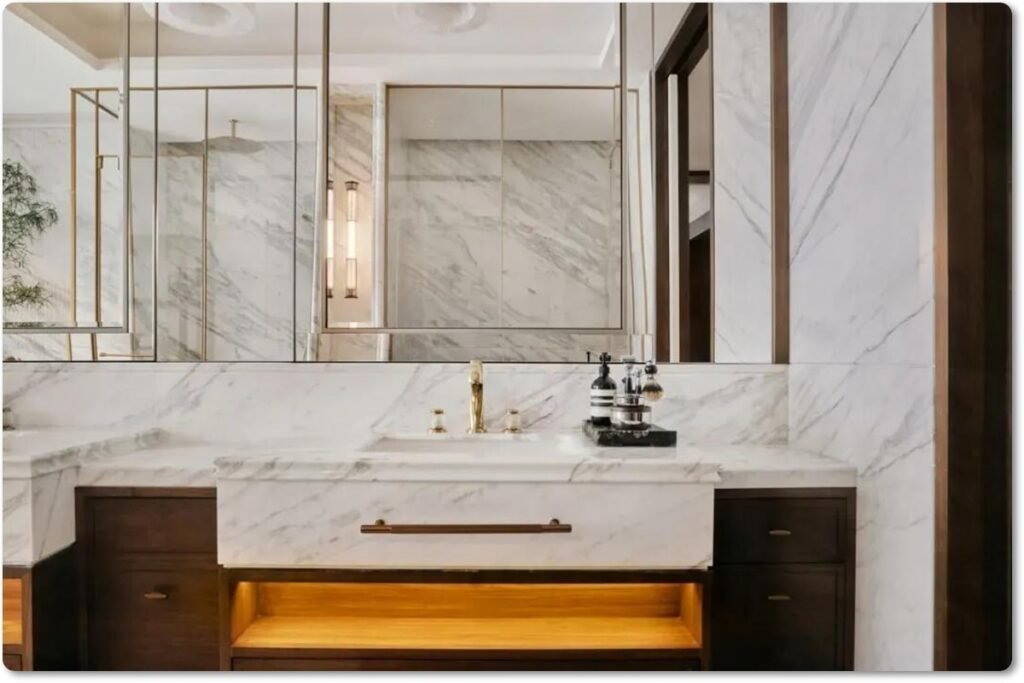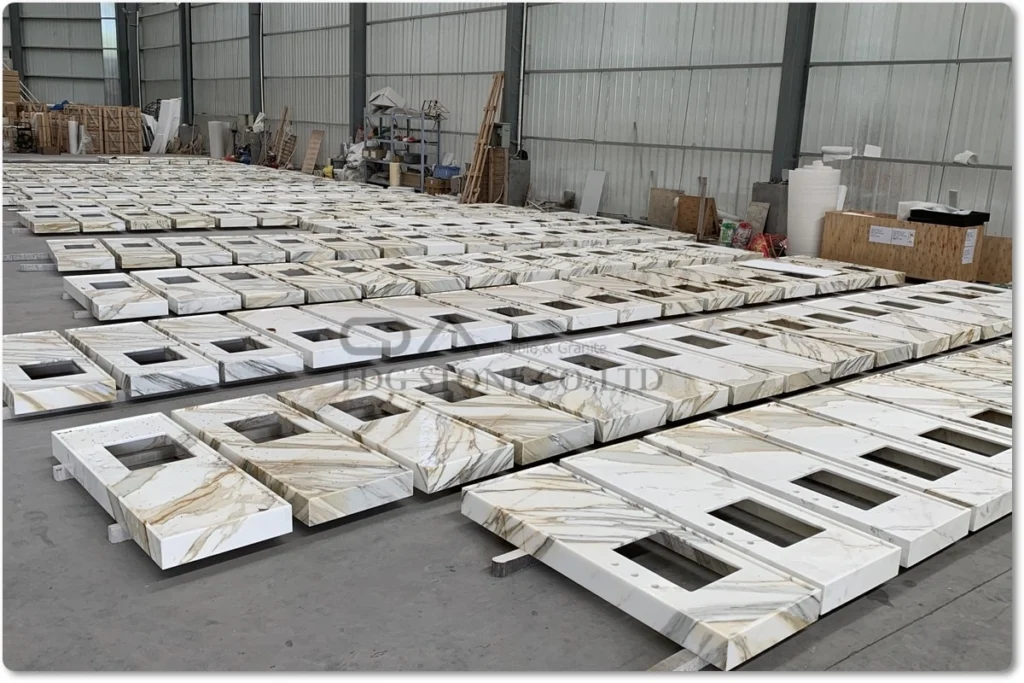
Stone Furniture: Quick Summary
What is stone furniture? Stone furniture incorporates natural stone or manufactured stone surfaces into functional and decorative furniture, including coffee tables, dining tables, side tables, consoles, and custom furniture.
Which materials are commonly used? Marble, granite, travertine, natural quartzite, and onyx are popular natural stone options. Wood, metal, and glass can be combined with stone to create different designs and structural solutions.
What should buyers evaluate? Material suitability, finished weight, structural support, surface finish, maintenance, fabrication tolerances, packaging, and delivery requirements.
Who is this guide for? Furniture importers, wholesalers, designers, architects, hospitality buyers, and commercial project procurement teams.
WHITE PAPER 01 · FUNDAMENTALS
An Essential Guide for Furniture Importers, Wholesalers, Interior Designers, Architects, Hospitality Buyers, and Commercial Project Procurement Teams
Quick Summary: What Is Stone Furniture?
Stone furniture is furniture that incorporates natural stone or engineered stone into its functional or decorative structure. Common products include marble coffee tables, stone dining tables, granite console tables, travertine side tables, stone-topped cabinets, and custom furniture combining stone with wood, metal, or glass. Natural stone furniture is valued for its distinctive patterns, substantial appearance, durability when properly specified, and suitability for residential, hospitality, and commercial interiors. Successful procurement requires evaluating not only the stone’s color and finish but also its weight, structural support, fabrication quality, transport packaging, installation requirements, and maintenance needs. For wholesale and project buyers, the best solution is one in which material selection, furniture engineering, custom fabrication, and export logistics are coordinated from the beginning.
Article scope: Material selection, furniture categories, design combinations, engineering considerations, procurement procedures, supplier evaluation, cost and risk management, and international sourcing.
Intended readers: Furniture manufacturers, importers, distributors, wholesalers, interior designers, architects, hospitality procurement teams, and developers sourcing furniture for residential or commercial projects.
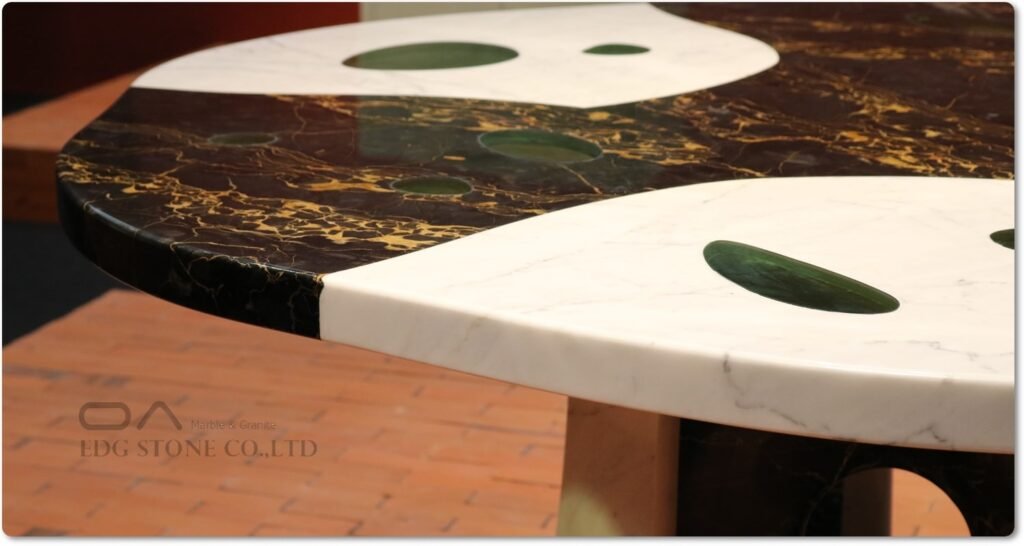
1. Executive Summary: Procurement Conclusions and Who This Guide Is For
Stone furniture has evolved from a niche luxury furnishing category into a broader design solution for residential interiors, hospitality environments, retail spaces, offices, and bespoke architectural projects. Natural stone offers a combination of geological character, visual depth, and material permanence that many conventional furniture surfaces cannot reproduce.
However, stone furniture is not simply ordinary furniture made heavier by replacing a wood panel with stone. It is a product category in which material properties, structural engineering, edge fabrication, finishing, handling, and installation must be considered together.
1.1 Key Procurement Conclusions
For commercial buyers, five principles should guide stone furniture purchasing.
Select stone according to application, not appearance alone. Marble may be suitable for a decorative coffee table or a carefully maintained dining surface, while granite may be preferable where resistance to abrasion and routine use is a priority. Neither choice eliminates the need to evaluate the specific stone.
Treat the furniture structure as seriously as the stone. The base, frame, joints, support spacing, and connection method determine whether the finished product can safely carry its intended loads.
Calculate finished-product weight before production. Stone thickness, table dimensions, the base material, and packaging can materially affect handling equipment, shipping arrangements, floor-loading considerations, and installation costs.
Specify the surface finish and acceptance criteria in writing. Polished, honed, brushed, and other finishes have different visual characteristics and maintenance implications. Samples and measurable inspection criteria reduce disputes.
Evaluate the entire supply chain. Stone sourcing, slab selection, fabrication, furniture assembly, quality control, export packing, and after-sales support should be assessed as a coordinated process.
1.2 Who Should Use This Guide?
| Buyer type | Primary procurement priority |
|---|---|
| Furniture importers and wholesalers | Repeatable quality, packaging, commercial pricing, and supply consistency |
| Interior designers and architects | Material appearance, proportions, finish, and design coordination |
| Hotels and hospitality groups | Durability, cleanability, repairability, and replacement planning |
| Residential furniture retailers | Visual appeal, product differentiation, and manageable delivery requirements |
| Developers and contractors | Drawings, quantities, installation logistics, specifications, and schedule control |
| Custom furniture brands | OEM/ODM capabilities, design confidentiality, prototypes, and production scalability |
For buyers sourcing stone furniture from China, EDG Stone can support natural stone selection, custom stone fabrication, made-to-order furniture components, and coordinated supply for project requirements. Buyers should confirm the scope of furniture assembly, base fabrication, packaging, and installation support for each quotation.
The recommended next step is to browse the EDG Stone Furniture product collection and identify the product type, stone material, dimensions, finish, and customization requirements before submitting an RFQ.
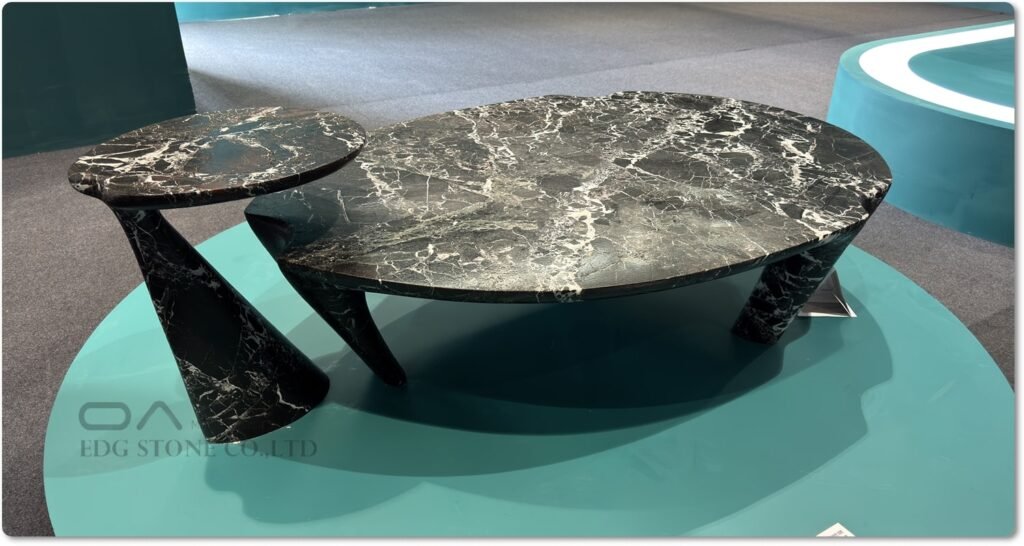
2. Scope and Definitions: Understanding Stone Furniture
2.1 What Is Stone Furniture?
Stone furniture is a broad category of furniture in which stone serves as a tabletop, panel, decorative component, structural element, or substantial part of the finished product.
Common examples include:
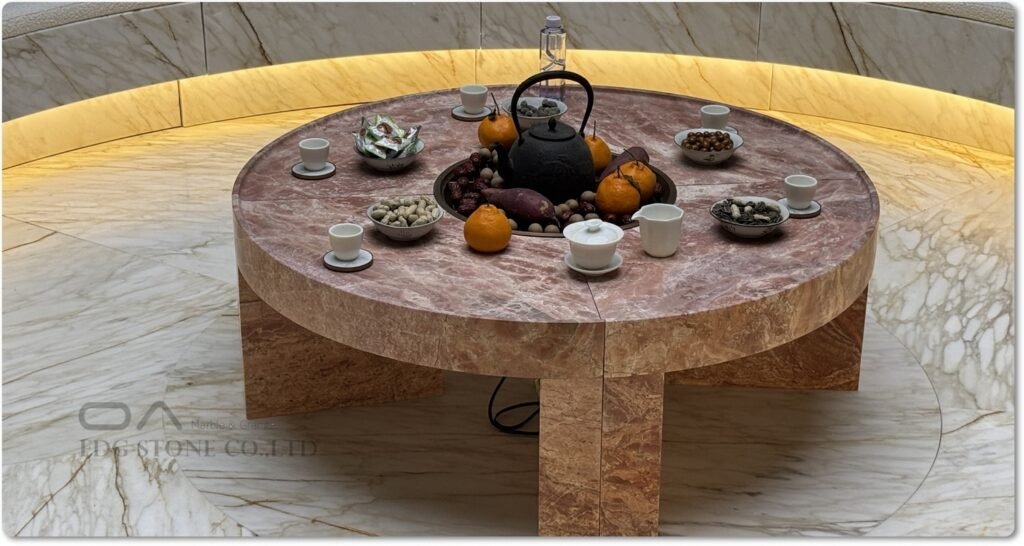
Marble coffee tables, dining tables, side tables, and console tables.
Travertine accent tables, plinths, and occasional furniture.
Granite dining tables and outdoor tables.
Quartzite countertops and stone-topped furniture.
Onyx feature tables and translucent decorative furniture.
Stone-and-wood cabinets, desks, shelving, and vanities.
Stone-and-metal furniture with steel, brass, or aluminum frames.
Bespoke stone furniture manufactured for hotels, restaurants, villas, retail interiors, and commercial developments.
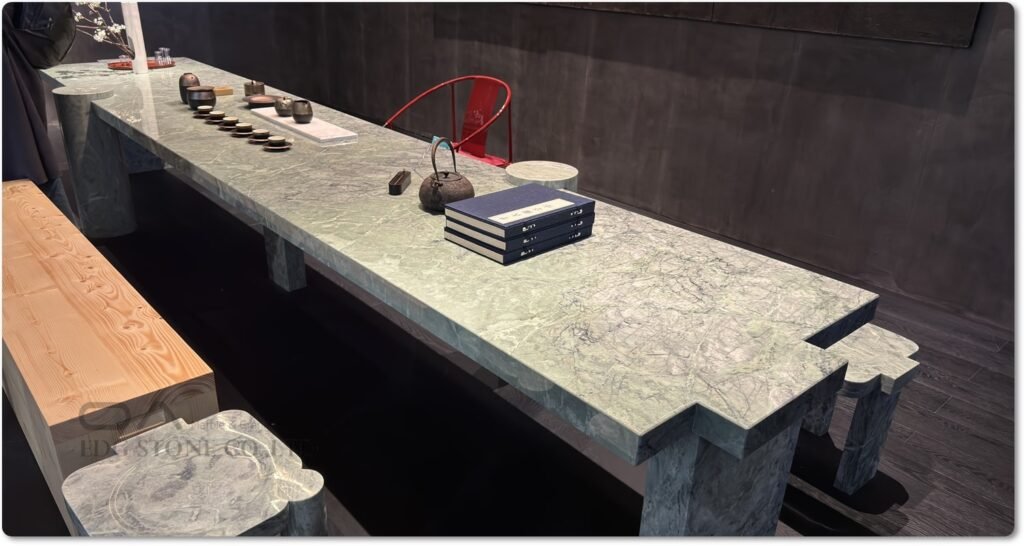
The term does not necessarily mean that every component is stone. Many commercially successful designs use a stone top with a wooden or metal base. This reduces the amount of stone required while allowing designers to combine contrasting textures, colors, and construction methods.
2.2 Natural Stone Furniture vs. Engineered Stone Furniture
The distinction between natural and engineered materials matters because their appearance, composition, fabrication methods, performance, and regulatory considerations can differ.
Natural stone furniture
Natural stone is quarried from geological formations and processed into slabs, blocks, tiles, or custom components. Marble, granite, travertine, quartzite, and onyx are commonly used in furniture applications.
Natural stone may exhibit mineral variation, veining, fossils, fissures, color differences, and other geological characteristics. These are not automatically defects; their acceptability depends on the material, design, structural requirements, and agreed quality criteria.
Engineered stone and other manufactured surfaces
This category can include engineered quartz composites, porcelain slabs, sintered surfaces, and other manufactured materials. These products are not interchangeable.
For example, engineered quartz commonly contains mineral aggregates and a binder, whereas porcelain and sintered surfaces are manufactured using different formulations and processes. Product-specific technical documentation is necessary to determine suitability.
A procurement specification should identify the exact material category rather than using the word “stone” as if every product had the same properties.
2.3 Stone Furniture vs. Stone-Topped Furniture
These descriptions are useful when defining an RFQ.
Stone furniture usually refers to furniture whose identity and design rely substantially on stone, such as a sculptural marble coffee table or a solid-looking travertine side table.
Stone-topped furniture generally refers to a product with a stone top supported by a separate structure, such as a wood dining table with a marble top or a steel console table with a granite surface.
The distinction affects pricing, weight, assembly, repairability, and transportation. A stone-topped table with a removable top may be easier to pack and install than a monolithic design, provided the attachment system and lifting procedure are appropriate.
2.4 Understanding the Main Product Categories
| Product category | Typical materials | Main design considerations |
|---|---|---|
| Coffee and side tables | Marble, travertine, granite | Dimensions, edge profile, base stability |
| Dining tables | Marble, granite, quartzite | Span, support structure, seating clearance |
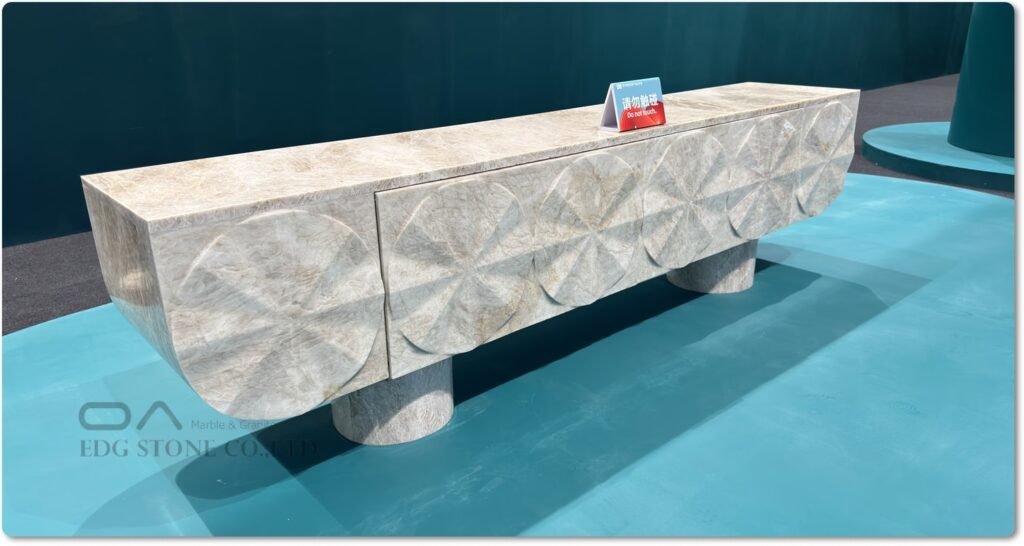
| Console tables | Marble, limestone, stone composites | Cantilever risk, wall clearance, frame design |
| Desks and office furniture | Granite, marble, engineered surfaces | Daily use, cable management, load distribution |
| Cabinets and storage furniture | Stone panels and tops with wood or metal | Joint design, door alignment, panel weight |
| Vanities and bathroom furniture | Marble, granite, quartzite, porcelain | Moisture exposure, cleaning products, cutouts |
| Hospitality furniture | Various stone types | Maintenance, repeatability, repair and replacement |
| Outdoor tables | Application-appropriate granite or other tested stone | Weather exposure, base anchoring, finish, drainage |
2.5 Where the Definition Ends
Stone furniture should not be confused with every stone product.
Architectural slabs, flooring, wall cladding, and countertop components may share materials and fabrication processes with furniture, but they have different installation and performance requirements. A stone slab intended for a countertop is not automatically suitable as a freestanding table without checking support conditions, dimensions, and intended loads.
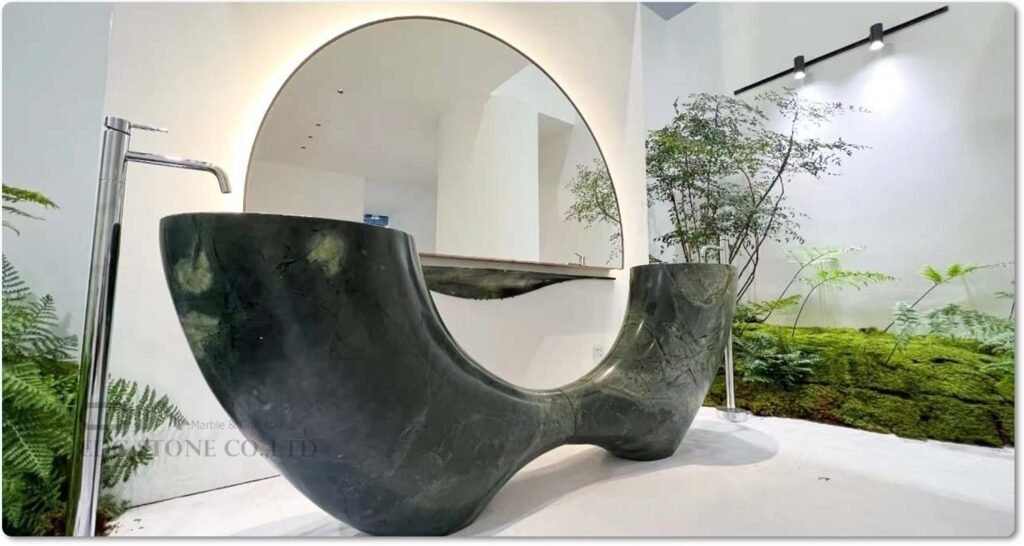
Likewise, a stone sink, bathtub, fireplace surround, or architectural panel may fall under a broader stone products portfolio but should be evaluated against its own product-specific requirements.
This distinction helps buyers avoid transferring specifications from one application to another without technical verification.
3. Technical Evaluation: Materials, Construction, and Performance
3.1 Marble Furniture: Visual Character and Maintenance
Marble is a carbonate stone commonly valued for its veining, color variation, and refined surface appearance.
Common applications include coffee tables, dining tables, bedside tables, console tables, vanity furniture, and luxury hospitality interiors.
Advantages
Distinctive natural veining and color.
Broad design compatibility with wood, metal, and glass.
Availability in multiple colors and patterns.
Suitability for polished, honed, and selected textured finishes.
Strong appeal in luxury residential and hospitality design.
Limitations
Many marbles are vulnerable to acids because their principal carbonate minerals can react with acidic substances. Lemon juice, vinegar, wine, and certain acidic cleaners may etch susceptible surfaces. Porosity and staining behavior vary by stone and finish.
A polished surface can also develop visible scratches or surface wear during use. Sealers may reduce the absorption of certain liquids but do not make marble acid-proof or maintenance-free.
Best suited for: Decorative furniture, carefully specified dining tables, bedroom furniture, luxury interiors, and applications where appearance is a priority and the owner understands the maintenance requirements.
3.2 Granite Furniture: Practicality and Abrasion Resistance
Granite is an igneous rock that often provides good hardness and resistance to abrasion. It is frequently considered for dining tables, console tables, heavy-use furniture, and some outdoor applications.
Advantages
Many varieties perform well under routine wear.
A wide selection of colors and granular patterns.
Suitable options for both indoor and outdoor furniture.
Often a practical choice for applications requiring a robust stone surface.
Limitations
Granite is not a single uniform material. Mineral composition, natural fissures, porosity, finish, and quality vary between varieties. Some granites require sealing, and a hard stone surface can still chip at vulnerable edges or fail if inadequately supported.
Best suited for: Tables subject to regular use, selected commercial applications, and outdoor furniture when the specific material, finish, structure, and environmental exposure have been evaluated.
3.3 Travertine Furniture: Texture and Architectural Warmth
Travertine is a carbonate stone associated with natural pores, cavities, and layered patterns. It is popular in contemporary, Mediterranean, minimalist, and warm-neutral interiors.
Typical products include coffee tables, side tables, stools, plinths, and console tables.
Travertine may be supplied with filled or unfilled pores and with different surface finishes. These choices affect appearance, cleaning, and maintenance.
Procurement considerations
Confirm whether natural cavities will be filled.
Define the permitted range of pores and surface irregularities.
Request images or samples representing the actual material.
Evaluate edge vulnerability and structural details.
Confirm the recommended cleaning method and whether sealing is advised.
Best suited for: Decorative interiors, accent furniture, and design-led hospitality spaces where texture and natural variation are part of the intended appearance.
3.4 Quartzite Furniture: Natural Pattern with Application-Specific Testing
Natural quartzite is a metamorphic rock formed from quartz-rich parent material. Some varieties are selected for their hardness and striking patterns.
It should not be confused with engineered quartz, which is a manufactured composite material.
Quartzite is often considered for dining tables, premium coffee tables, consoles, and feature furniture. However, the label “quartzite” alone does not establish a product’s suitability.
Commercial buyers should confirm the material’s identity and evaluate its mineral composition, structural integrity, finish, absorption behavior, and resistance to the conditions expected in service. Stone marketed under similar trade names may have different properties.
Best suited for: Premium furniture where natural pattern, material character, and a carefully verified performance specification are important.
3.5 Onyx Furniture: Decorative Impact and Translucency
Onyx is valued in furniture design for its layered colors and, in selected varieties, its ability to transmit light.
It can be used for feature tables, decorative panels, illuminated furniture, and luxury interiors.
However, many onyx varieties require careful handling and detailed engineering. Slab thickness, backing systems, support geometry, cutouts, and edge treatment must be appropriate for the specific material and design.
Backlighting adds further requirements, including light distribution, electrical components, ventilation where necessary, and access for maintenance.
Best suited for: Decorative feature furniture, selected low-impact applications, and custom projects where appearance is more important than unrestricted heavy-duty use.
3.6 Other Stone Materials
Limestone
Limestone can offer subtle colors and a calm, architectural appearance. Many varieties are sensitive to acids and may require careful sealing and cleaning practices.
Slate
Slate’s layered structure and textured appearance can suit selected tabletops and accent furniture. Edge treatment and the condition of the material should be checked.
Soapstone
Some soapstone varieties are relatively soft compared with granite and may scratch or change appearance with use. Buyers should assess whether this evolving surface character is desirable.
Engineered quartz
Engineered quartz can provide a relatively consistent manufactured appearance. Its suitability depends on the formulation, resin content, surface treatment, and intended exposure. Many resin-containing products are not appropriate for unrestricted outdoor or high-heat use.
Porcelain and sintered surfaces
These manufactured surfaces can offer useful design and maintenance characteristics, but thin slabs may be vulnerable to impact or edge damage. Their fabrication and support requirements differ from those of thicker natural stone.
3.7 Material Comparison Matrix
| Material | Visual character | Main concerns | Typical furniture applications |
|---|---|---|---|
| Marble | Veining, elegant patterns | Acid etching, scratching, staining | Dining tables, coffee tables, consoles |
| Granite | Granular patterns, broad color range | Weight, edge damage, material variability | Dining tables, commercial and outdoor furniture |
| Travertine | Pores, layered texture | Pore filling, cleaning, edge integrity | Coffee tables, side tables, accent furniture |
| Natural quartzite | Distinctive mineral patterns | Material identification, fabrication, structural integrity | Premium tables, feature furniture |
| Onyx | Layered color, possible translucency | Brittleness in some varieties, support, lighting | Feature tables, illuminated furniture |
| Limestone | Soft, understated appearance | Acid sensitivity, abrasion, staining | Decorative tables, selected interior furniture |
| Engineered quartz | Manufactured consistency | Heat, UV exposure, product-specific limitations | Indoor tabletops and furniture panels |
| Porcelain/sintered surface | Manufactured patterns and finishes | Impact, edge chipping, support requirements | Tables, cabinets, selected indoor/outdoor designs |
No material is universally best. The correct choice depends on intended use, exposure, maintenance expectations, design, and the technical documentation available for the exact product.
3.8 Stone and Wood Furniture: Balancing Warmth and Structure
Wood-and-stone furniture combines the visual solidity of stone with the warmth and workability of timber.
Typical designs include marble dining tables with wooden bases, stone coffee tables with oak frames, and stone-topped cabinets with timber storage components.
The combination requires attention to the different physical behavior of the materials. Wood can expand and contract as moisture conditions change, while stone behaves differently. A rigid connection that does not accommodate movement can place stress on the stone or its joints.
Recommended design checks
Define whether the stone top is removable.
Confirm the support points and load path.
Select suitable adhesives, pads, fasteners, or mechanical connectors.
Allow for expected wood movement where relevant.
Protect stone edges during assembly and transport.
Ensure that the base remains level and stable under the intended load.
Wood-and-stone furniture can be especially useful when the design calls for a visually substantial top without an entirely stone structure.
3.9 Stone and Metal Furniture: Modern Design and Load Transfer
Metal bases can create a lighter visual profile while supporting a substantial stone top.
Common materials include powder-coated steel, stainless steel, aluminum, and selected decorative metal finishes.
The engineering priority is not simply the metal’s strength. The frame geometry, welds, connections, support spacing, resistance to tipping, and interface between the metal and stone all matter.
A steel frame may be strong enough in general terms yet still create concentrated pressure at a vulnerable stone edge if its support details are poorly designed.
Buyers should request relevant drawings and confirm whether the base has been evaluated for the intended dimensions and loads.
3.10 Stone and Glass Furniture: Transparency and Visual Lightness
Glass can be incorporated into stone furniture as a shelf, protective surface, insert, or secondary design component.
The specification should identify the glass type, thickness, edge treatment, support conditions, and any applicable safety glazing requirements. Ordinary glass should not be assumed to meet the requirements of every furniture application.
Where stone and glass meet, tolerances, contact points, protective interfaces, and replacement access should be defined.
3.11 Weight, Thickness, and Structural Support
Weight is one of the most important factors in stone furniture procurement.
A preliminary estimate of the stone component can be calculated as:
Stone weight (kg) = length (m) × width (m) × thickness (m) × density (kg/m³)
For example, a rectangular stone top measuring 1.8 m × 0.9 m × 0.03 m has a volume of 0.0486 m³. At an illustrative density of 2,700 kg/m³, its estimated stone weight is approximately 131 kg.
This is an example, not a specification for every stone. Actual density varies, and the calculation excludes the base, hardware, and packaging.
Before approving a design, verify:
The actual stone density or an appropriate estimate.
The finished dimensions and thickness.
Support spacing and the load distribution.
The connection between the stone and base.
The number of people or mechanical aids required for handling.
Whether the furniture can be safely moved through doors, elevators, corridors, and stairwells.
Whether the installation surface and building conditions can accommodate the finished product.
A structural review is especially important for large dining tables, cantilevered consoles, unusually thin tops, and heavy commercial installations.
3.12 Fabrication Quality and Surface Inspection
A stone furniture specification should identify the finished dimensions, tolerances, edge profiles, corner radii, surface finish, cutouts, joints, and assembly method.
Inspect the following items:
Stone selection
Color and pattern against the approved reference.
Visible fissures, repairs, filled areas, and natural features.
Material consistency across multi-piece sets.
Matching requirements for adjacent or bookmatched components.
Fabrication
Dimensional accuracy.
Edge profile consistency.
Flatness and fit against the approved drawing.
Quality of polishing or honing.
Cleanliness and finish of cutouts.
Absence of unacceptable chips, cracks, or handling damage.
Assembly
Base alignment and stability.
Fastener and joint quality.
Correct use of protective pads or interfaces.
No unintended rocking or concentrated contact points.
Confirmation that the assembly matches the approved design.
Acceptance criteria should distinguish between unacceptable damage and natural stone variation. Without an agreed reference and written criteria, subjective disputes are likely.
3.13 Maintenance, Stains, and Surface Scratches
Maintenance requirements depend on the stone, finish, sealer, and exposure.
A practical maintenance plan should cover:
Routine cleaning with a product appropriate for the stone.
Immediate removal of spills where the material is stain-sensitive.
Avoidance of acidic cleaners on acid-sensitive carbonate stones.
Use of coasters, placemats, or protective pads when appropriate.
Avoidance of dragging heavy objects across the surface.
Periodic review of sealers where the supplier recommends them.
Safe lifting rather than pulling or tilting a heavy table by its top.
Sealing is not a universal solution. It may reduce absorption for certain stones, but it does not prevent acid etching, mechanical damage, or every type of stain.
3.14 Product-Specific Quality Standards
Standards can help define test methods and acceptance criteria, but their relevance must be checked for the material and product.
Potential references include:
ASTM C97/C97M, for absorption and bulk specific gravity of dimension stone.
ASTM C99/C99M, for modulus of rupture of dimension stone.
ASTM C170/C170M, for compressive strength of dimension stone.
ASTM C880/C880M, for flexural strength of dimension stone.
ASTM C1242, for the selection, design, and installation of dimension stone attachment systems.
These are examples of dimension-stone references, not a universal certification package for finished furniture. Buyers should confirm the current edition, scope, applicability, and test requirements with the relevant standards organization or qualified testing laboratory.
Finished furniture may also be subject to furniture-specific stability, strength, safety, labeling, chemical, or fire-related requirements depending on the product, market, and intended use. A stone slab test alone does not demonstrate that an assembled table is safe.
4. Procurement Checklist: How to Buy Stone Furniture
Step 1: Define the Application
Identify the room, environment, usage intensity, expected lifespan, and maintenance capacity.
A decorative hotel lobby table and a restaurant dining table may have similar dimensions but very different wear, cleaning, and replacement requirements.
Step 2: Choose the Material
Shortlist the stone based on appearance, performance, availability, budget, and maintenance.
Request the commercial material name, geological or technical description where available, photographs, and representative samples. For critical projects, consider independent testing.
Step 3: Confirm Dimensions and Geometry
Provide a dimensioned drawing covering:
Overall length, width, and height.
Stone thickness.
Edge profile and corner radius.
Base dimensions and support locations.
Overhang and clearance.
Cutouts, joints, and decorative details.
Finished weight estimate.
Step 4: Approve the Structure
Confirm how the stone transfers its load to the base and how the complete furniture piece resists tipping, movement, and foreseeable use loads.
Request assembly details and clarify whether a prototype or structural review is needed.
Step 5: Approve the Sample and Finish
A sample should establish material color, pattern, finish, edge treatment, and other critical visual characteristics.
For natural stone, a small sample cannot represent all geological variation. When consistency is important, request photographs or video of the actual selected slabs and agree on an acceptable range.
Step 6: Define Quality Acceptance Criteria
Document the permitted variation in dimensions, color, veining, natural fissures, filled areas, finish, joints, and assembly.
Agree on inspection stages and the method for resolving nonconformities.
Step 7: Confirm Packing and Transportation
Determine whether the product will be shipped assembled or in components.
Ask for the packaging design, protection of stone corners and edges, crate dimensions, gross weight, lifting points, handling labels, and loading plan.
For export shipments, confirm the applicable packaging and wood-packaging requirements with the exporter, freight forwarder, and importing market authorities.
Step 8: Confirm Commercial Terms and Delivery
The quotation should state:
Unit price and currency.
Quantity and price breaks.
Sample or prototype charges.
Tooling or mold costs, where applicable.
Production lead time.
Packing costs.
Shipping terms and named place or port.
Payment schedule.
Inspection arrangements.
Spare parts, replacement, and damage-claim procedures.
If Incoterms are used, identify the specific rule and named place, and confirm the agreed edition.
Step 9: Complete Pre-Shipment Inspection
Before dispatch, verify dimensions, appearance, finish, assembly, labeling, packing, and quantity against the approved order.
For large or repeated projects, consider an agreed inspection plan covering a representative sample or the full order, depending on risk.
Step 10: Plan Installation and After-Sales Support
Identify who receives, unloads, assembles, positions, and installs the furniture. Confirm the tools and lifting equipment required.
For hotels and multi-unit developments, retain the approved material reference, drawings, finish information, and supplier contact details to simplify future replacement orders.
5. Cost and Risk Factors: What Determines the Price of Stone Furniture?
5.1 Material Cost
Stone cost varies according to quarry or source, material rarity, block quality, slab yield, color consistency, thickness, finish, and availability.
A premium marble with selective veining may require more material selection and produce lower usable yield than a more uniform commercial stone.
A lower-priced material may not result in a lower finished-product cost if it requires more complex fabrication, additional reinforcement, or more stringent selection.
5.2 Fabrication and Engineering
The finished cost may include:
Cutting and dimensioning.
Edge profiling and polishing.
CNC or waterjet processing.
Cutouts and joints.
Surface treatment.
Base and frame fabrication.
Hardware and assembly.
Prototype development.
Quality inspection.
Custom drawings and project coordination.
Curved designs, sculptural bases, complex miters, bookmatching, and tight tolerances can increase production time and material waste.
5.3 Packaging and Logistics
Stone furniture may be much heavier than similarly sized wood or metal furniture. Its packaging must protect brittle edges and prevent movement or impact during transportation.
Relevant cost factors include crate design, protective materials, gross weight, cargo dimensions, handling equipment, container utilization, inland transport, freight, customs clearance, duties, taxes, and final delivery.
The cheapest quotation is not necessarily the lowest landed cost.
A useful comparison is:
Estimated landed cost = product cost + packaging + origin handling + freight + insurance where applicable + import charges + destination handling + delivery + installation
This is a planning framework, not a substitute for a shipment-specific quotation. The applicable tax and duty treatment depends on the product classification, origin, destination, transaction, and current rules.
5.4 Damage, Returns, and Replacement Risk
The major operational risks include:
Edge chips or cracks during handling.
Inadequate support during transport.
Incorrect dimensions or incompatible connections.
Natural stone variation beyond the approved range.
Delayed delivery caused by custom fabrication.
Damage discovered after installation.
Difficulty matching the original stone for replacements.
Mitigation starts before production: approve drawings, agree on material references, verify packaging, document inspections, and define claims procedures.
5.5 Regulations and Sustainability Considerations in 2026
International buyers should verify regulatory requirements for the destination market rather than assuming that one compliance statement covers all countries.
For EU-bound products, the General Product Safety Regulation (EU) 2023/988, applicable from 13 December 2024, establishes a general consumer-product safety framework where relevant. The specific obligations depend on the product, economic operator, intended user, and applicable sector-specific rules.
For furniture sold in the United States, requirements may vary by product type and include applicable federal or state rules covering safety, labeling, chemicals, or specific furniture categories. Buyers should identify the exact rules that apply to the product rather than treating a general supplier declaration as sufficient.
Wooden packaging used in international trade may be subject to ISPM 15, the international phytosanitary standard for regulating wood packaging material in international trade. Confirm the current requirements and exemptions with the relevant authorities and freight provider.
Environmental claims also deserve scrutiny. The EU Ecodesign for Sustainable Products Regulation, Regulation (EU) 2024/1781, entered into force in July 2024 and provides a framework for product sustainability requirements, with implementation dependent on applicable product measures and rules. It should not be interpreted as automatically imposing every requirement on every stone furniture product.
The EU’s Corporate Sustainability Reporting Directive (CSRD) concerns qualifying companies and reporting obligations; it is not a blanket product certification for imported stone furniture. Buyers should establish whether their organization or supply chain is within scope.
Practical sustainability measures for stone furniture procurement include:
Selecting durable designs that can be repaired.
Reducing avoidable cutting waste through efficient nesting.
Choosing packaging that balances protection and material use.
Recording material origin and relevant supplier declarations.
Considering replaceable bases, hardware, and components.
Avoiding unsupported claims such as “carbon neutral” or “100% sustainable” without suitable evidence.
Procurement principle: Compliance is determined by the actual product, the market, the responsible economic operator, and the applicable rules. A supplier’s generic statement that a product is “export compliant” is not enough to establish compliance in every jurisdiction.
6. Supplier Evaluation: How to Choose a Stone Furniture Manufacturer
A supplier’s product photographs are useful for initial screening, but they are not proof of production capacity, material quality, structural safety, or export performance.
6.1 Assess Material and Fabrication Capabilities
Ask the supplier to explain:
Which stone materials are available.
Whether material selection and slab inspection are handled in-house or by partners.
Which cutting, polishing, CNC, waterjet, and edge-processing operations are available.
Whether custom dimensions and drawings can be supported.
How natural variation is controlled and communicated.
Whether stone components and furniture bases are produced by the same company or coordinated across multiple suppliers.
6.2 Verify Production and Quality Control
Request evidence appropriate to the order size and risk, such as:
Factory and workshop photographs or a live video walkthrough.
Relevant machinery and production-process information.
Material inspection records.
Approved samples and production references.
Dimensional inspection reports.
Assembly and stability test records where applicable.
Corrective-action procedures for nonconforming products.
Do not assume that owning a particular machine automatically guarantees quality. Process control, operator skill, drawings, inspection, and repeatability are equally important.
6.3 Review Export and Packaging Experience
For international shipments, check whether the supplier can provide a documented packing plan and work with your freight forwarder on loading and handling.
Clarify who is responsible for export documentation, customs-related information, shipment booking, and destination coordination under the agreed commercial terms.
Ask for evidence of experience with comparable product sizes, weights, quantities, and destinations rather than relying solely on broad claims about export experience.
6.4 Evaluate OEM and ODM Capabilities
OEM typically means manufacturing products to a buyer’s design or specifications. ODM commonly refers to a supplier contributing more substantially to the product design or offering a developed design for adaptation.
Terminology varies by supplier. Define the actual scope in the contract.
For custom stone furniture, agree on:
Ownership of drawings and design files.
Prototype approval.
Material substitutions.
Tolerances and inspection standards.
Tooling and development costs.
Confidentiality and permitted reuse of designs.
Responsibility for defects and corrective work.
6.5 Why Buyers Consider EDG Stone
EDG Stone is a professional Chinese stone products manufacturer and exporter offering natural stone selection, custom fabrication, and project-oriented stone supply.
For buyers developing stone furniture collections or sourcing custom stone components, the relevant service areas can include:
Material selection across available natural stone varieties.
Custom cutting, edge processing, and detailed fabrication.
Coordination of product dimensions and drawing requirements.
Support for stone furniture tops, panels, and related stone components.
Quality inspection and export packaging coordination.
Project-based sourcing and repeat-order planning.
Confirm the exact scope for each project, especially when a buyer requires a fully assembled furniture product, a specialized metal or wood base, electrical integration, independent structural testing, or destination-market certification.
For the best procurement outcome, compare suppliers using the same drawings, material reference, finish specification, quantity, packing requirements, and delivery terms.
7. Practical RFQ Template: Stone Furniture Manufacturer and Wholesale Inquiry
Use the following template when contacting a stone furniture factory, manufacturer, supplier, or wholesaler.
7.1 Copy-and-Paste RFQ
Subject: RFQ – Natural Stone Furniture / Custom Stone Furniture Manufacturing
Dear Sales Team,
We are sourcing natural stone furniture for a residential, hospitality, retail, or commercial project and would like to receive your quotation based on the following specifications.
1. Buyer Information
Company name:
Country and destination city:
Contact person:
Company website:
Intended sales channel or project type:
2. Product Information
Product type: Coffee table / Dining table / Side table / Console / Desk / Cabinet / Other
Quantity:
Intended use:
Indoor or outdoor application:
Residential or commercial project:
3. Material Specification
Preferred stone: Marble / Granite / Travertine / Quartzite / Onyx / Other
Commercial material name:
Color and pattern reference:
Natural variation permitted: Yes / No / To be agreed
Required surface finish:
Edge profile:
Preferred thickness:
4. Dimensions and Structure
Length × width × height:
Stone component dimensions:
Base material: Wood / Metal / Stone / Other
Assembly method:
Removable top required: Yes / No
Dimensioned drawing attached: Yes / No
Special load, stability, or installation requirements:
5. Customization
OEM or ODM requirement:
Custom logo or labeling:
Packaging design:
Prototype required:
CAD or technical drawing format:
Special matching or bookmatching requirements:
6. Quality and Compliance
Required inspection criteria:
Applicable destination-market requirements:
Required material test reports:
Required furniture safety or stability tests:
Sample approval procedure:
Inspection before shipment required: Yes / No
7. Packaging and Shipping
Destination port or delivery address:
Preferred Incoterm and named place:
Estimated shipment date:
Required packaging:
Delivery and installation requirements:
Freight quotation required: Yes / No
8. Commercial Terms
Target quantity and repeat-order forecast:
Requested unit price and currency:
Sample or prototype cost:
Production lead time:
Payment terms:
Warranty or damage-claim policy:
Quotation validity:
Please provide your product specifications, material photographs, relevant production information, estimated finished-product weight, packaging details, and a quotation based on the above requirements.
Please identify any assumptions, exclusions, proposed substitutions, or additional costs clearly.
Best regards,
[Name]
[Company]
[Email]
[Website]
7.2 Pre-Shipment Acceptance Checklist
| Inspection item | Acceptance evidence |
|---|---|
| Material | Matches approved reference and permitted variation |
| Dimensions | Measured against approved drawings and tolerances |
| Surface finish | Matches the approved sample and specification |
| Edges and corners | No damage outside agreed acceptance criteria |
| Structure | Assembly and support match approved design |
| Stability | Applicable checks completed for the product |
| Quantity | Correct quantity and components |
| Packing | Correct protection, labels, and crate configuration |
| Documentation | Agreed commercial and shipping documents prepared |
| Photographic record | Product and packaging documented before dispatch |
For higher-risk or high-value projects, agree on the inspection method, sampling plan, measurement tools, and corrective-action procedure before production starts.
8. Frequently Asked Questions: Stone Furniture Procurement
FAQ 1: What is stone furniture?
Stone furniture is furniture that incorporates natural stone or manufactured stone surfaces into its design or construction. Examples include marble coffee tables, granite dining tables, travertine side tables, stone-topped cabinets, and custom stone-and-wood furniture.
FAQ 2: Which stone is best for furniture?
There is no universally best stone. Granite can be a strong candidate for high-use surfaces, marble is often selected for its veining and luxury appearance, travertine provides distinctive texture, quartzite offers varied natural patterns, and onyx can create dramatic decorative effects. Selection should be based on the exact material, application, maintenance expectations, and structural design.
FAQ 3: Is marble furniture suitable for everyday use?
Yes, marble furniture can be suitable for everyday use when it is appropriately designed and maintained. However, many marbles are vulnerable to acid etching and may scratch or stain. Buyers should select an appropriate finish, use suitable cleaning methods, and establish realistic expectations for natural surface changes.
FAQ 4: How do you calculate the weight of a stone table?
Multiply the stone component’s length, width, and thickness in meters by the material’s density in kilograms per cubic meter. Add the weight of the base, hardware, and other components to estimate the finished furniture weight. Packaging weight must be added separately for shipping calculations.
FAQ 5: How do I find a reliable stone furniture manufacturer or factory?
Compare suppliers using the same product drawings, material specification, finish, quantity, and delivery terms. Request evidence of fabrication capabilities, quality-control procedures, packaging methods, relevant test records, and experience with comparable projects. For custom furniture, clarify design ownership, tolerances, prototype approval, and after-sales responsibilities before placing the order.
9. References: Standards, Regulations, and Technical Resources
The following sources provide a starting point for verifying material properties, product safety, international packaging, and regulatory obligations. Buyers should consult the official publisher or relevant authority for the current edition and applicability before using a reference in a contract.
Dimension Stone and Testing
ASTM International — ASTM C97/C97M, Standard Test Methods for Absorption and Bulk Specific Gravity of Dimension Stone. Use the current edition applicable to the project.
ASTM International — ASTM C99/C99M, Standard Test Method for Modulus of Rupture of Dimension Stone. Confirm current edition and applicability.
ASTM International — ASTM C170/C170M, Standard Test Method for Compressive Strength of Dimension Stone. Confirm current edition and applicability.
ASTM International — ASTM C880/C880M, Standard Test Method for Flexural Strength of Dimension Stone. Confirm current edition and applicability.
ASTM International — ASTM C1242, Standard Guide for Selection, Design, and Installation of Dimension Stone Attachment Systems. Confirm the relevant edition and whether the application falls within its scope.
Official publisher: ASTM International, astm.org.
Product Safety and Regulatory Frameworks
European Union — Regulation (EU) 2023/988, General Product Safety Regulation. Published in the Official Journal of the European Union in May 2023; generally applicable from 13 December 2024. Applicability depends on the product and relevant sector-specific legislation.
European Union — Regulation (EU) 2024/1781, Ecodesign for Sustainable Products Regulation. Published in the Official Journal in June 2024; implementation depends on applicable measures and product scope.
European Union — Directive (EU) 2022/2464, Corporate Sustainability Reporting Directive. Reporting obligations depend on company scope, thresholds, and applicable implementation rules.
International Plant Protection Convention — ISPM 15, Regulation of Wood Packaging Material in International Trade. Consult the current standard and the importing country’s requirements.
United States Consumer Product Safety Commission (CPSC), official guidance and regulations applicable to the specific furniture category. Verify the exact product and rule rather than assuming a single general furniture certification applies.
Trade, Materials, and Procurement
International Organization for Standardization (ISO), applicable quality-management and environmental-management standards where relevant to the supplier’s operations and contractual requirements.
International Chamber of Commerce (ICC), Incoterms® Rules 2020, for defining responsibilities, costs, and risks in international sales contracts.
Natural Stone Institute, technical resources concerning natural stone selection, care, fabrication, and industry practices. Confirm the specific resource and its latest revision before citing technical recommendations.
Reference note: Standards and regulations should not be represented as product certifications unless the relevant product has actually undergone the required assessment. Always verify the exact standard, edition, test method, and legal scope.
10. EDG Stone CTA: Source Natural Stone Furniture and Custom Stone Components
From Material Selection to Finished Furniture
Stone furniture procurement works best when the material, design, fabrication, quality requirements, and transportation plan are considered as one coordinated process.
Whether you are sourcing marble coffee tables for a furniture collection, stone dining tables for a hospitality project, travertine accent furniture for residential interiors, or custom stone components for a furniture brand, begin with a clear specification and an experienced manufacturing partner.
EDG Stone is a professional Chinese stone products manufacturer and exporter supporting natural stone selection, custom fabrication, and project-oriented supply. Buyers can discuss material options, component dimensions, edge profiles, finish requirements, drawings, packaging, and project quantities according to their individual needs.
Explore the EDG Stone Furniture product collection to compare available styles and material options. For bespoke requirements, prepare a dimensioned drawing, preferred stone reference, estimated quantity, destination, and target delivery schedule before requesting a quotation.
Recommended next steps
Explore Stone Furniture: Browse product categories and material options.
Discuss Custom Fabrication: Share drawings, dimensions, finishes, and special processing requirements.
Request a Wholesale or Project Quote: Specify quantities, destination, packing needs, and commercial terms.
A well-prepared RFQ helps suppliers provide a more accurate quotation and allows buyers to compare quality, engineering, logistics, and total landed cost on a consistent basis.
Semantic Insight Block: How to Evaluate Stone Furniture in 2026
What Makes Stone Furniture Different from Conventional Furniture?
Stone furniture combines a naturally variable material with a manufactured product that must meet functional, structural, and aesthetic requirements. Its value comes from more than the stone’s appearance: material selection, fabrication precision, support design, finish, and serviceability determine whether the product performs well over time.
Why Does Material Selection Matter More Than a Color Sample?
Two stones with similar colors can differ in mineral composition, porosity, strength, fissures, finish behavior, and maintenance requirements. A color sample helps establish appearance but does not prove structural suitability or resistance to a particular environment. Commercial buyers should treat visual approval and technical approval as separate steps.
How Should Buyers Choose Between Natural Stone, Wood, and Metal?
The choice depends on the intended product and the role of each material. Natural stone provides geological variation and a substantial surface; wood contributes warmth and workability; metal can create slender support structures and distinctive geometry. Combining materials can reduce the quantity of stone required, but the interfaces between materials must accommodate their different physical behavior and expected loads.
Which Procurement Option Is Most Appropriate?
Standard wholesale products are appropriate when dimensions, materials, and finishes can be selected from an existing range.
Custom fabrication is suitable when the project requires specific stone dimensions, cutouts, edge profiles, or component geometry.
OEM production is appropriate when a buyer supplies an established design and requires repeatable manufacturing.
ODM development may suit buyers who need design-development support or a supplier’s existing design adapted to their collection.
The correct option depends on customization, volume, design ownership, development costs, and repeat-order expectations.
What Should Buyers Consider Before Ordering?
Buyers should establish the finished dimensions, estimated weight, intended loads, material reference, acceptable natural variation, finish, base construction, packing method, installation route, and destination requirements before production. For high-value or repeated orders, a prototype and documented pre-shipment inspection can reduce uncertainty.
What Is Changing in Stone Furniture Procurement?
The direction of procurement is toward more explicit specifications, documented supplier claims, product-level risk assessment, and improved coordination between design, fabrication, logistics, and compliance. Sustainability and durability are increasingly relevant buying considerations, but claims should be supported by evidence rather than broad marketing language.
What Is the Most Reliable Way to Buy Stone Furniture from a Factory?
The most reliable approach is to send the same detailed RFQ to each shortlisted supplier, compare quotations against the same technical specification, verify the production and inspection process, approve a representative sample or prototype, and agree on packaging and acceptance criteria before mass production. This method provides a stronger basis for comparing suppliers than unit price or product photographs alone.
Final procurement insight: The best stone furniture purchase is not necessarily the product made from the hardest stone or sold at the lowest price. It is the product whose material, structure, finish, maintenance requirements, manufacturing quality, and delivery arrangements are appropriate for its intended use.
For material options, custom stone fabrication, and project sourcing, explore the EDG Stone Furniture collection or contact EDG Stone with your drawings and RFQ requirements.