Introduction
Selecting the ideal surface for commercial and luxury residential projects requires a strategic evaluation of material performance, cost efficiency, and aesthetic longevity. Among the most popular choices today, quartz countertop slabs and porcelain slabs stand out for their durability, versatility, and premium appearance.
While both materials can mimic natural stone aesthetics, their performance characteristics, fabrication requirements, and installation considerations differ significantly. This whitepaper provides a comprehensive buyer decision framework for architects, developers, and contractors seeking high ROI and project reliability.
Quartz vs Porcelain Material Science
Quartz Countertop Slabs
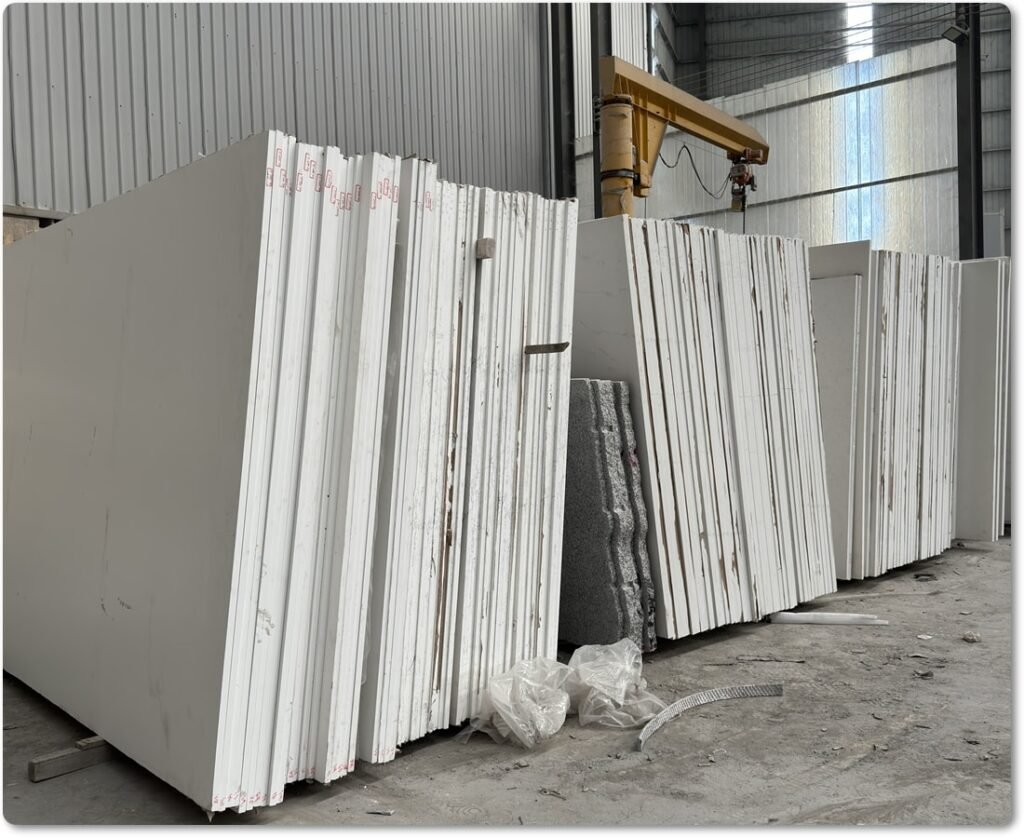
Engineered quartz slabs are manufactured by combining approximately 90–95% natural quartz with polymer resins and pigments. The resin system binds the quartz crystals, creating a non-porous, low-maintenance surface.
Key features:
- Uniform color and pattern consistency
- Non-porous surface suitable for indoor environments
- Available in various finishes: polished, honed, and leathered
- High scratch resistance, though extreme heat can damage the resin
Porcelain Slabs
Porcelain slabs are composed of finely ground clays and minerals, fired at temperatures exceeding 1,200°C (2,192°F). The vitrification process makes the surface extremely dense and resistant to stains and heat.
Key features:
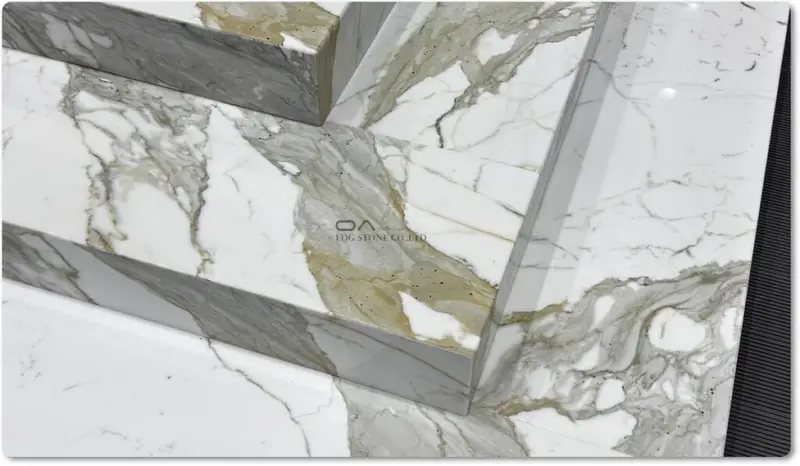
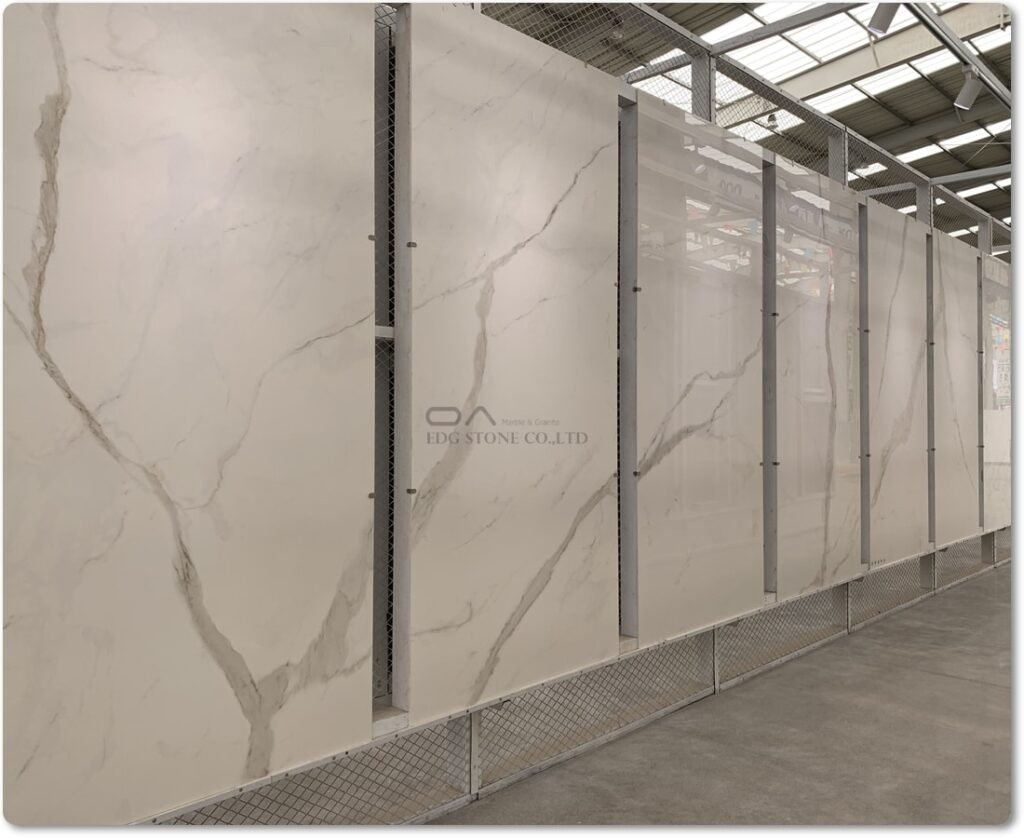
- Natural stone and marble mimicry with thin or large-format slabs
- Can be glazed or matte, suitable for both indoor and outdoor use
- Resistant to UV, thermal shock, and chemical exposure
- Requires specialized fabrication tools due to the hardness
Takeaway: Quartz is engineered for controlled aesthetics and ease of installation, while porcelain offers extreme density and superior heat resistance, making it ideal for both indoor and outdoor environments.
Heat Resistance Comparison
Quartz countertop slabs are moderately heat-resistant. While engineered quartz can tolerate everyday kitchen temperatures, direct contact with hot pans or stovetops can damage the resin, causing discoloration or cracking.
Porcelain slabs excel in heat resistance due to their mineral composition and high firing temperature. They can withstand direct flame and high-temperature cookware without damage.
Recommendation: For commercial kitchens or projects with frequent hot plate use, porcelain slabs provide higher safety margins. Quartz remains viable with protective measures such as trivets.
Flexural Strength & Impact Resistance
Flexural strength measures a material’s resistance to bending forces.
| Material | Flexural Strength | Impact Resistance | Notes |
|---|---|---|---|
| Quartz Slabs for Countertops | 35–50 MPa | Moderate | Can chip on the edge if dropped by heavy objects |
| Porcelain Slabs | 45–60 MPa | High | Extremely resistant to cracking; edges can still chip if mishandled |
Porcelain’s superior flexural strength allows for thinner slabs in large formats, ideal for waterfall islands and lightweight wall cladding. Quartz slabs provide consistency but require thicker sections for structural integrity.

UV Stability for Indoor & Outdoor Applications
- Quartz countertop slabs: UV exposure can cause subtle yellowing over time; thus, they are predominantly recommended for indoor applications.
- Quartz white porcelain slabs: Porcelain is inherently UV-stable, maintaining color integrity in outdoor kitchens, patios, and façades.
Decision Insight: For projects with outdoor exposure, porcelain offers long-term aesthetic consistency without protective coatings.
Fabrication Differences
Quartz Slabs for Countertops
- Requires wet cutting and diamond-tipped saws
- Polishing is resin-sensitive; overheating can cause resin to melt
- Pre-fabrication and templating are critical for large projects
Porcelain Slabs
- Fabrication is more demanding due to extreme hardness
- Typically cut using waterjet or high-precision bridge saws
- Installation requires specialized handling to avoid breakage
Implication: Quartz fabrication is faster and less tool-intensive, whereas porcelain demands skilled labor but offers ultra-thin, large-format flexibility.
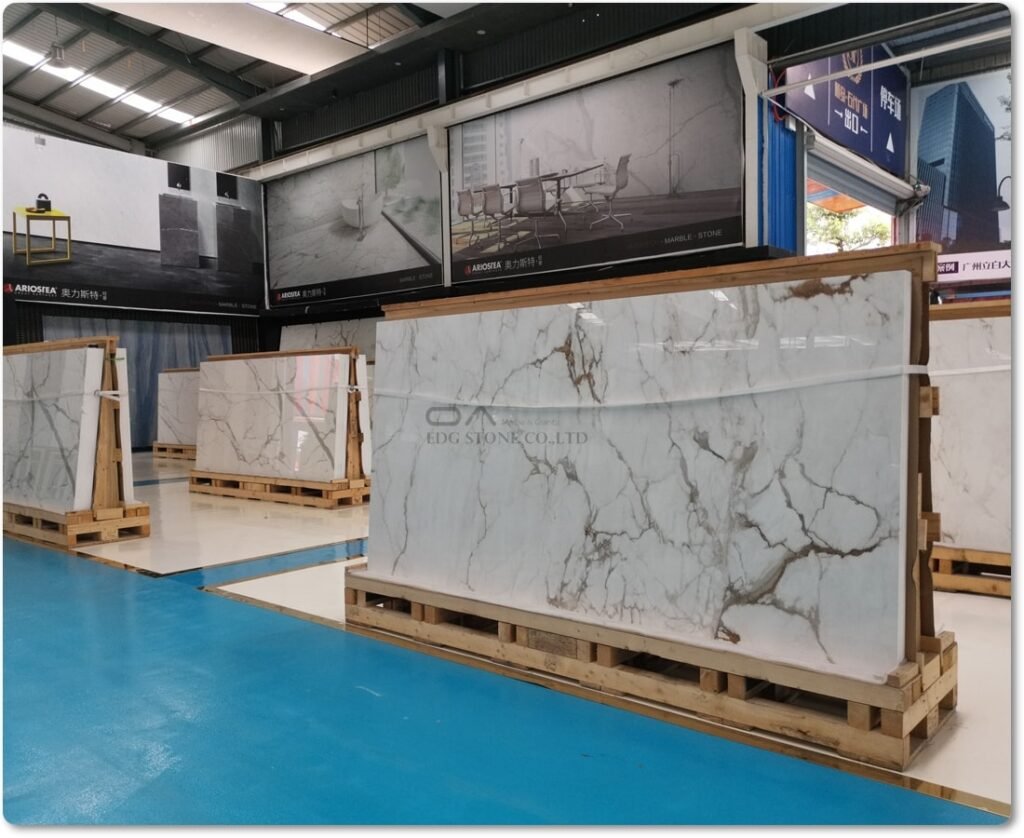
Cost Per Square Foot Analysis
| Material | Typical Range (USD/sq.ft) | Notes |
|---|---|---|
| Quartz Slabs | $50–$150 | Includes resin-based engineered slabs; cost varies by brand and finish |
| Porcelain Slabs | $70–$200 | High-end imported porcelain and large-format slabs increase cost; installation is labor-intensive |
ROI Consideration: Although porcelain may carry a higher upfront cost, its durability, low maintenance, and outdoor suitability often justify long-term investment, particularly for commercial projects.
Installation Risk Assessment
- Quartz: Moderate installation risk; resin and thickness require careful handling, but slabs are forgiving to minor on-site adjustments.
- Porcelain: High installation precision required; slabs are heavier per unit area and brittle during transport and cutting. Use experienced installers to minimize breakage.
Commercial Kitchen Applications
In commercial kitchens, surface selection hinges on heat tolerance, chemical resistance, and impact performance.
- Quartz countertops provide excellent sanitation (non-porous) and scratch resistance, but must avoid direct high heat.
- Porcelain slabs excel under high-traffic, high-temperature environments, resist staining, and tolerate frequent chemical cleaning.
Recommendation: For restaurants, hotels, and food prep areas, porcelain slabs are often preferred for operational resilience.
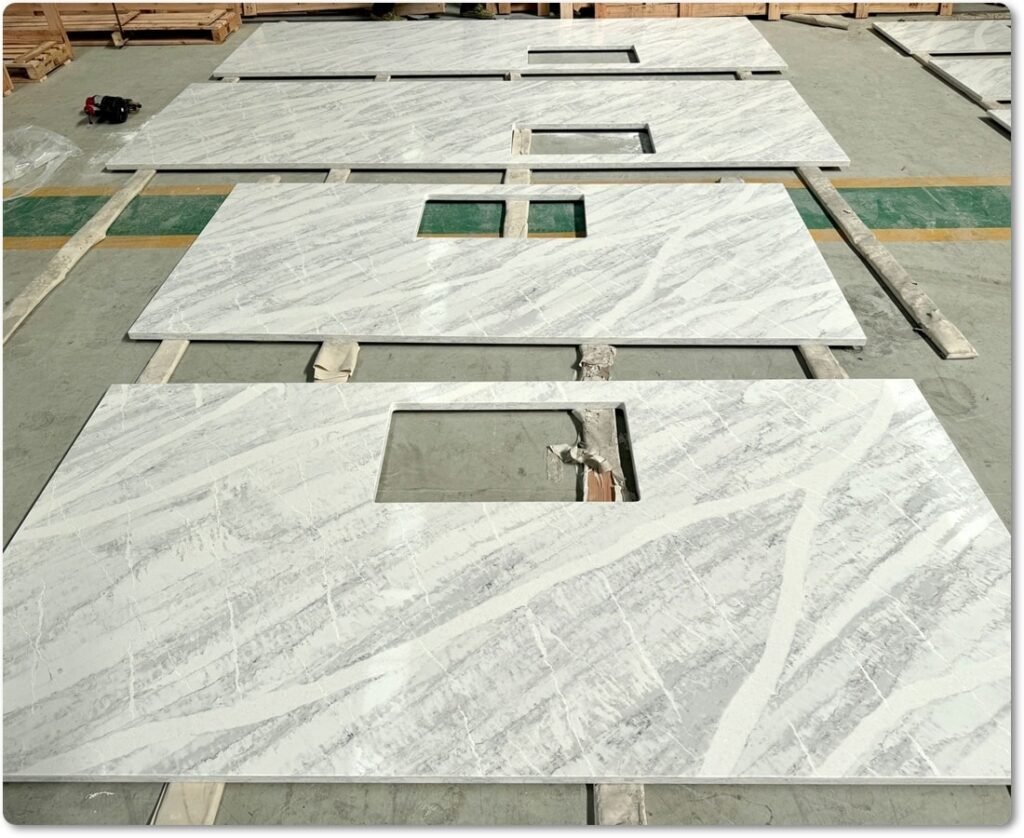
Luxury Residential Design Trends
- Quartz remains popular in high-end interiors for its uniform color and modern finishes.
- White quartz slabs are favored for minimalist and Scandinavian designs.
- Porcelain’s ultra-thin large formats support seamless countertops and integrated wall designs.
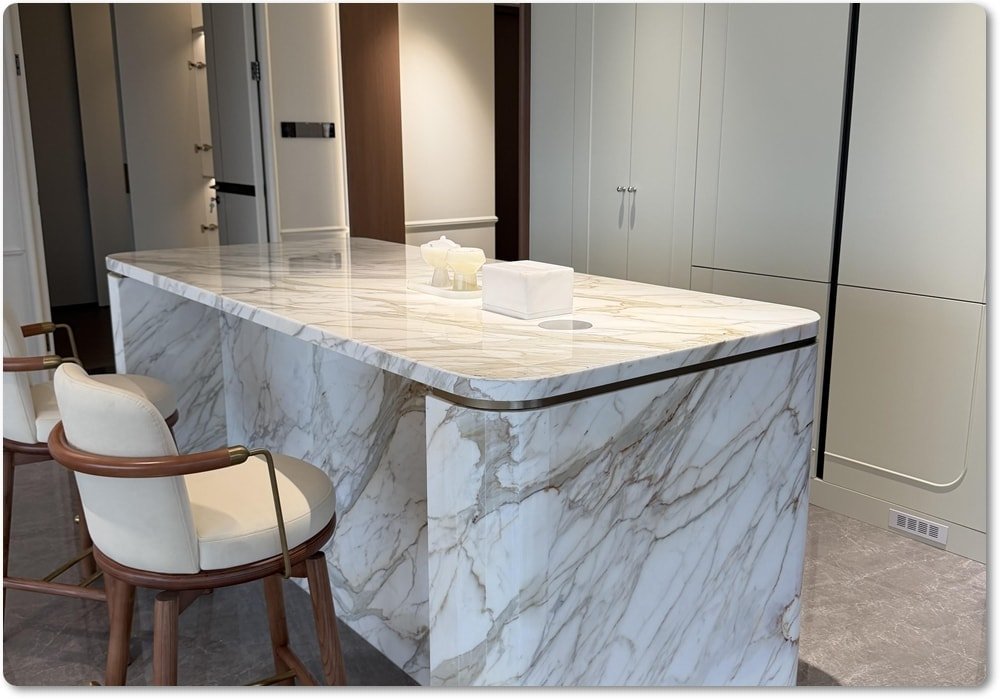
- Both materials support waterfall islands, integrated sinks, and backsplash continuity.
Trend Insight: Mixing quartz and porcelain in luxury homes can provide complementary aesthetics and functional zoning (kitchen vs outdoor living areas).
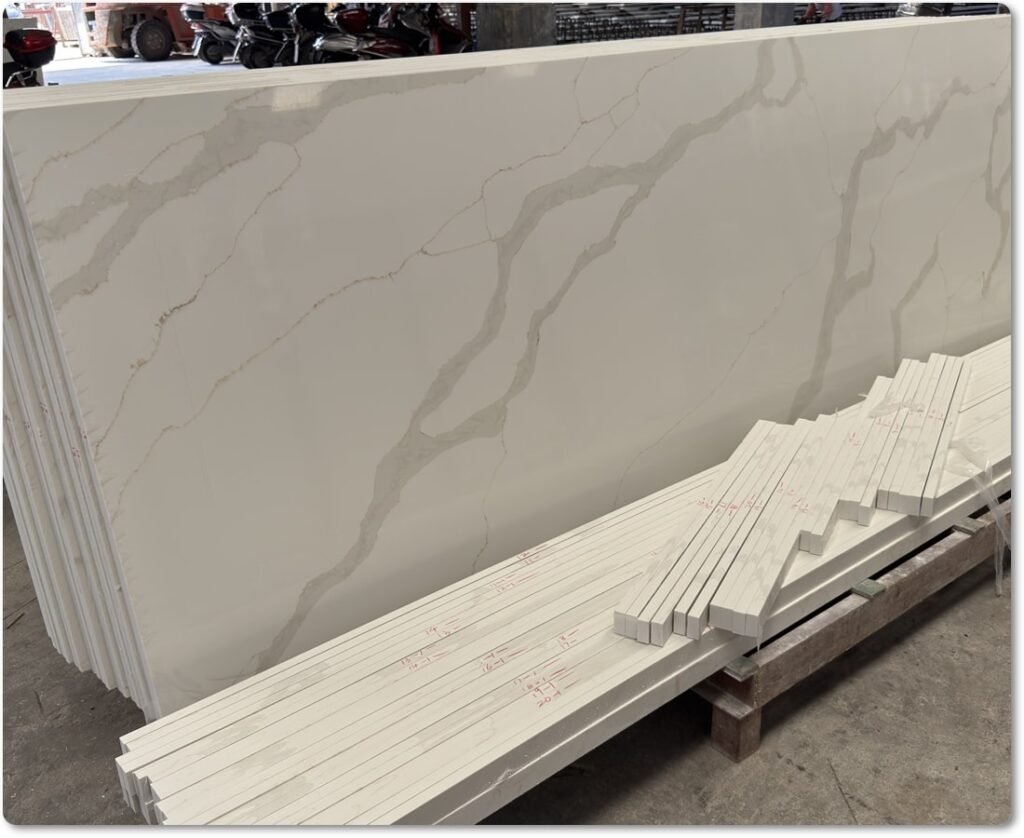
Choosing the Right Surface for Long-Term ROI
Decision Matrix
| Factor | Quartz | Porcelain | Recommendation |
|---|---|---|---|
| Durability | High | Very High | Porcelain for extreme wear; Quartz for controlled indoor use |
| Heat Resistance | Moderate | High | Porcelain for kitchens and outdoor |
| UV Stability | Low | High | Porcelain for outdoor applications |
| Fabrication & Installation | Easier | Challenging | Quartz for faster project turnaround |
| Cost | Lower | Higher | Quartz for budget-conscious projects |
| Aesthetic Flexibility | High | High | Both viable; porcelain enables ultra-thin, seamless surfaces |
Strategic Insight: Evaluate project environment, aesthetic requirements, and operational conditions. Architects and developers should prioritize long-term ROI, factoring in maintenance, replacement frequency, and client expectations.
FAQs
Q1: Can quartz and porcelain slabs be installed outdoors?
A1: Quartz slabs are generally unsuitable for direct sunlight exposure due to UV yellowing. Porcelain slabs are highly UV-stable and ideal for outdoor kitchens, patios, and cladding.
Q2: Which material is more scratch-resistant?
A2: Porcelain’s vitrified surface provides superior scratch resistance. Quartz is scratch-resistant for daily use but can chip under heavy impact.
Q3: Do porcelain slabs require special adhesives?
A3: Yes, due to hardness and low porosity, porcelain typically requires high-strength thin-set adhesives and professional installation.
Q4: Can quartz slabs withstand boiling water?
A4: Short-term contact is usually safe, but prolonged exposure to extreme heat can damage the resin. Using trivets is recommended.
Q5: Are there eco-friendly options for either material?
A5: Both materials can incorporate recycled content. Porcelain often uses natural clays, while engineered quartz may include recycled glass or stone aggregates.
Conclusion
Choosing between quartz countertop slabs and quartz white porcelain slabs involves balancing aesthetics, performance, fabrication, and long-term ROI. For indoor residential and controlled commercial applications, quartz offers ease of fabrication, consistent aesthetics, and cost efficiency. Porcelain slabs provide superior heat resistance, UV stability, and extreme durability, making them ideal for high-stress commercial kitchens and outdoor installations.
A data-driven selection framework ensures architects, developers, and contractors align material choice with project goals, operational demands, and client expectations, ultimately maximizing value over the lifecycle of the installation.
References
- Marble. Quartz vs Porcelain Countertops: Durability & Maintenance.
- Stone World. Engineered Quartz and Porcelain Surfaces: Technical Comparison.
- Architectural Digest. Luxury Kitchen Surface Trends 2026.
- EDG Stone. Quartz Slabs for Countertops: Material Specifications & Procurement Guide.