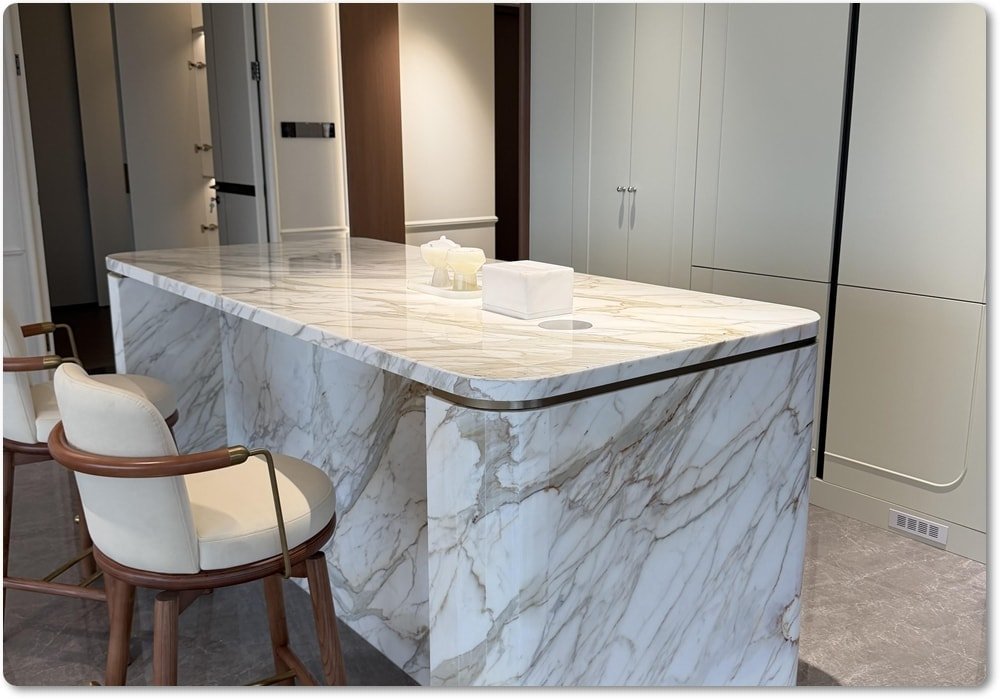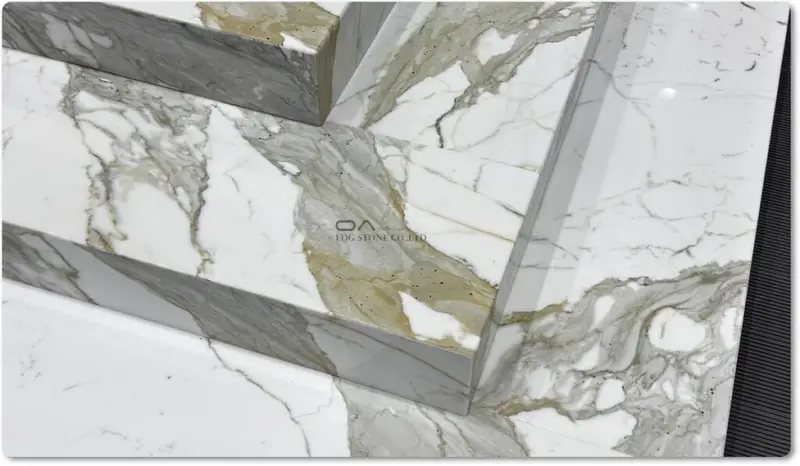
White quartz slabs have become one of the most commercially powerful surface categories in modern architecture and interior design. They are used everywhere from residential kitchens and spa bathrooms to hospitality lobbies, luxury villas, show apartments, retail flagship spaces, and premium food-service projects. The reason is simple: white quartz delivers visual brightness, broad design compatibility, and a clean, high-value aesthetic that appeals to both end users and project specifiers.
For designers, white quartz slabs are more than a material choice. They are a design strategy. White surfaces expand light, support minimalist and luxury styles, and create a sense of order that fits contemporary living. For developers and importers, white quartz is one of the safest color categories to stock because it stays relevant across markets, project types, and price tiers. For fabricators and distributors, it is also one of the strongest categories for repeat sales, since buyers often request quartz slabs for kitchen projects and quartz slabs for countertops with a white base and natural stone-inspired veining.
This article explains why white quartz dominates global kitchen design, how Calacatta and Carrara patterns differ, what veining technology means for product quality, and how white quartz performs in luxury hospitality and commercial applications. It also covers pricing tiers, maintenance, inventory planning, and how EDG Stone Factory positions white quartz collections for B2B buyers.
Why White Quartz Dominates Global Kitchen Design?
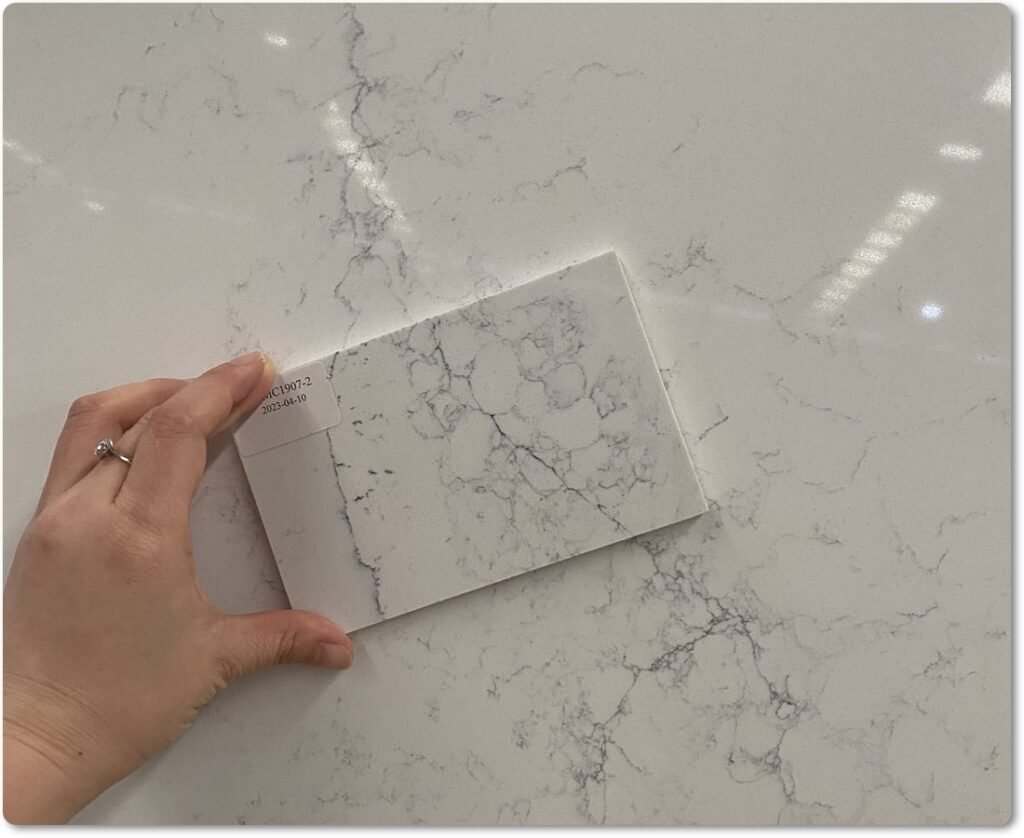
White quartz has broad international appeal because it supports the visual language most buyers want in kitchens: clean, bright, spacious, and timeless. In residential design, white surfaces make smaller kitchens feel larger and improve light distribution. In commercial settings, they help create a fresh and premium impression that works well with both classic and modern cabinetry.
White quartz is especially successful in kitchen environments because it balances beauty with practicality. Compared with natural marble, it offers a more controlled appearance and generally lower day-to-day maintenance expectations. Compared with darker or heavily patterned stones, it feels safer to design around. That is one reason it is often selected for large housing projects, apartment developments, hospitality kitchens, and model home packages.
There is also a psychological reason behind the category’s strength. White is commonly associated with cleanliness, purity, simplicity, and precision. In luxury interiors, these associations matter. A white quartz countertop signals refinement without appearing overly decorative. It gives the designer flexibility to build a room around texture, contrast, and hardware rather than forcing the entire space to compete with the surface.
For procurement teams, white quartz is also easier to standardize. It works across many regional tastes, which makes it useful for importers serving multiple markets. A product line built around white quartz slabs can cover large-scale residential projects, premium retail environments, and hospitality specifications with relatively little design risk.
Calacatta vs Carrara Quartz Patterns
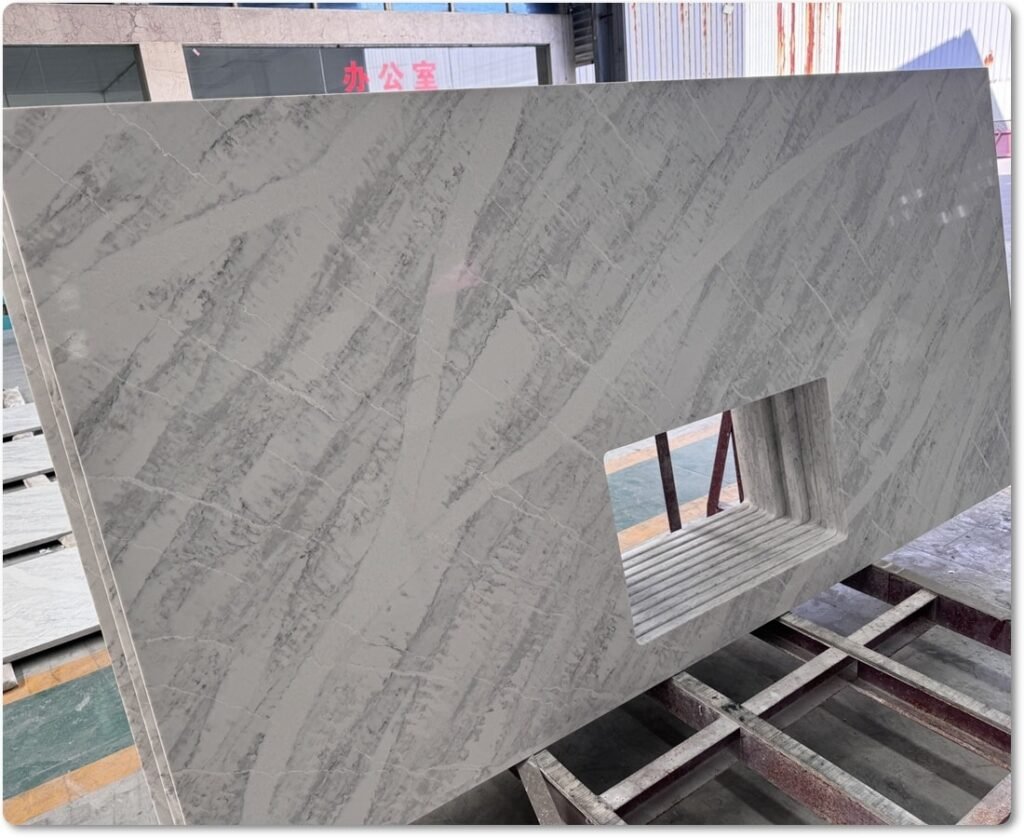
Among white quartz collections, Calacatta and Carrara styles are the two most recognizable pattern families. Although both are inspired by Italian marble, they serve different commercial and aesthetic goals.
Calacatta quartz typically features bolder, more dramatic veining. The veins are often wider, more expressive, and more visually premium. This style is popular in luxury kitchens, hotel suites, statement islands, and feature walls because it creates a stronger focal point. In marketing terms, Calacatta patterns usually read as more upscale and more fashion-forward.
Carrara quartz, by contrast, is generally softer and more subtle. The veining is finer and more restrained, giving the surface a quieter and more classic appearance. This makes Carrara-style quartz well suited to projects that need timeless elegance without visual drama. It is often selected for traditional kitchens, multi-unit developments, and buyers who want a marble-inspired look with lower visual intensity.
From a sales perspective, both styles perform well, but they attract different audiences. Calacatta quartz is often chosen for premium residential and hospitality storytelling. Carrara quartz is often preferred for broad-market luxury and design continuity. Many importers keep both in stock because they serve different parts of the same market.
For quartz slabs for countertops, the pattern choice matters as much as the physical specification. The slab must not only look attractive in a sample board or digital image, but also read well at full scale after fabrication. That is why slab layout, vein direction, and bookmatching capability are important commercial details when evaluating white quartz products.
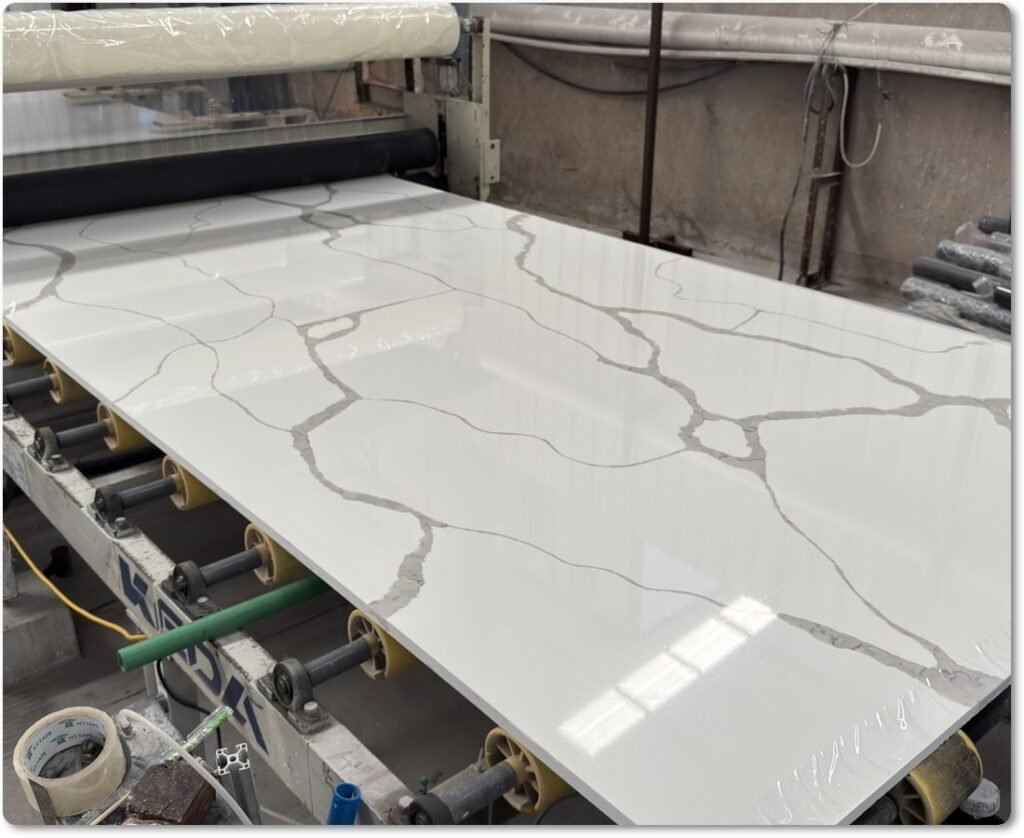
Veining Technology Innovations
The quality of white quartz is no longer defined only by color. It is increasingly defined by veining technology, print precision, pattern depth, and visual realism. Buyers today expect engineered surfaces to resemble natural stone more closely than ever before.
Modern veining technologies allow manufacturers to create more realistic marble effects through layered pattern systems, directional flow, and improved resin-pigment control. Some collections use fine linear veining for a soft marble interpretation, while others use large-scale movement for a more luxurious and dramatic look. High-end buyers are especially sensitive to whether a slab feels “flat” or has dimensional richness.
This matters commercially because pattern realism affects perceived value. When a slab has convincing veining, it can command greater interest from designers and end customers, even when its technical composition is similar to that of more basic products. That is one reason vein innovation is a major competitive lever in the white quartz market.
For product teams, the challenge is consistency. A beautiful vein pattern is only valuable if it can be reproduced across batches. Importers and distributors need slabs that maintain a stable appearance from one container to the next. In commercial projects, especially large kitchens or multi-unit developments, inconsistency can cause installation problems and visual mismatches.
EDG Stone Factory’s white quartz collections can be positioned around this advantage: premium veining, stable production, and project-friendly repeatability. That is a powerful combination for designers and buyers who need both aesthetics and execution reliability.
Light Reflection & Interior Design Psychology
White quartz is not only a style trend. It is also a light-management tool. Surfaces with a white base reflect more ambient light than darker surfaces, which helps improve perceived brightness in a room. In kitchens, this often makes the space feel cleaner, larger, and more open. In hospitality and retail environments, it supports a polished and welcoming atmosphere.
This is why white quartz works so well in open-plan homes, compact urban kitchens, and properties with limited natural light. It helps interiors feel less enclosed and more expensive, even when the room size is modest. Designers often use it to visually connect islands, backsplash surfaces, and perimeter counters so the room reads as one cohesive composition.
Psychologically, white surfaces also reduce visual noise. People tend to interpret uncluttered, bright surfaces as more organized and calming. In premium homes, this produces a sense of controlled luxury. In commercial environments, it communicates hygiene, professionalism, and attention to detail. That makes white quartz especially strong in projects where design and trust need to work together.
The result is a surface category that performs on both aesthetic and emotional levels. White quartz is not simply fashionable. It is functional in the way people experience space.
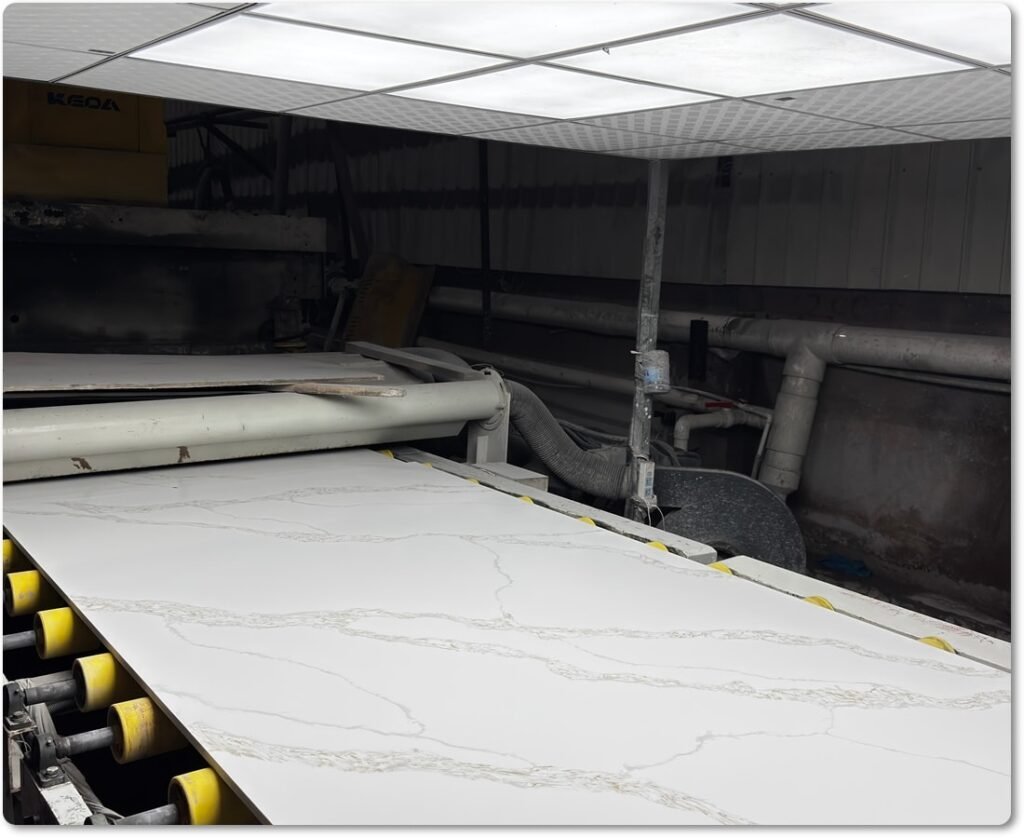
White Quartz in Luxury Hospitality Projects
Luxury hospitality design demands materials that perform visually at scale. White quartz is a strong choice for this reason because it communicates elegance while supporting consistency across many rooms or service areas.
In hotels, white quartz is frequently used for reception desks, bathroom vanities, guestroom counters, spa areas, cocktail stations, and executive lounge surfaces. The material helps create a clean, premium atmosphere that photographs well and supports a high-end brand image. It also offers a neutral base that complements brass, matte black, brushed nickel, warm wood, and natural textiles.
One of the strongest uses of white quartz in hospitality is the guest bathroom. These spaces are highly visible to guests and often influence perception of the overall property. White quartz in a vanity top or shower ledge can make the room feel brighter, more sanitary, and more refined. Because the material is consistent and manufactured, designers can achieve a uniform look from room to room.
For developers and procurement teams, hospitality projects require dependable supply and matching batch control. This is where white quartz becomes especially valuable. When a project needs hundreds of countertops or vanity tops, the material must look consistent across all rooms. A supplier with strong inventory planning and repeatable production has a major advantage.
White quartz slabs also support luxury branding because they adapt to changing design tastes. Whether the project style is minimalist, classical, contemporary, or warm modern, white quartz can be integrated without breaking the concept.
Maintenance & Stain Resistance
One of the biggest reasons white quartz remains commercially successful is its maintenance profile. Buyers often want the look of marble but not the maintenance burden. White quartz fills that gap well.
In everyday use, quartz surfaces are valued for their non-porous nature and easy-clean performance. For kitchens and countertops, that matters because buyers expect resistance to common spills, regular wiping, and routine household cleaning. Coffee, tea, wine, oils, and sauces are part of normal life, so a countertop category must be practical as well as attractive.
White quartz is especially attractive because its maintenance expectations are easy to communicate. Sales teams can explain that the surface is designed for daily living and does not require the same care mindset as many natural stones. That makes the product easier to sell to homeowners, designers, and developers who want a premium look without excessive upkeep.
At the same time, white surfaces can reveal residue more quickly than mid-tone materials, which means product education is important. Buyers should understand that regular cleaning keeps the surface looking its best. For B2B channels, this is a strength rather than a weakness, because it positions the product as premium but manageable.
For quartz slabs for kitchen installations, maintenance convenience is one of the key purchase drivers. White quartz combines visual luxury with practical cleaning, making it a reliable choice for both residential and commercial buyers.
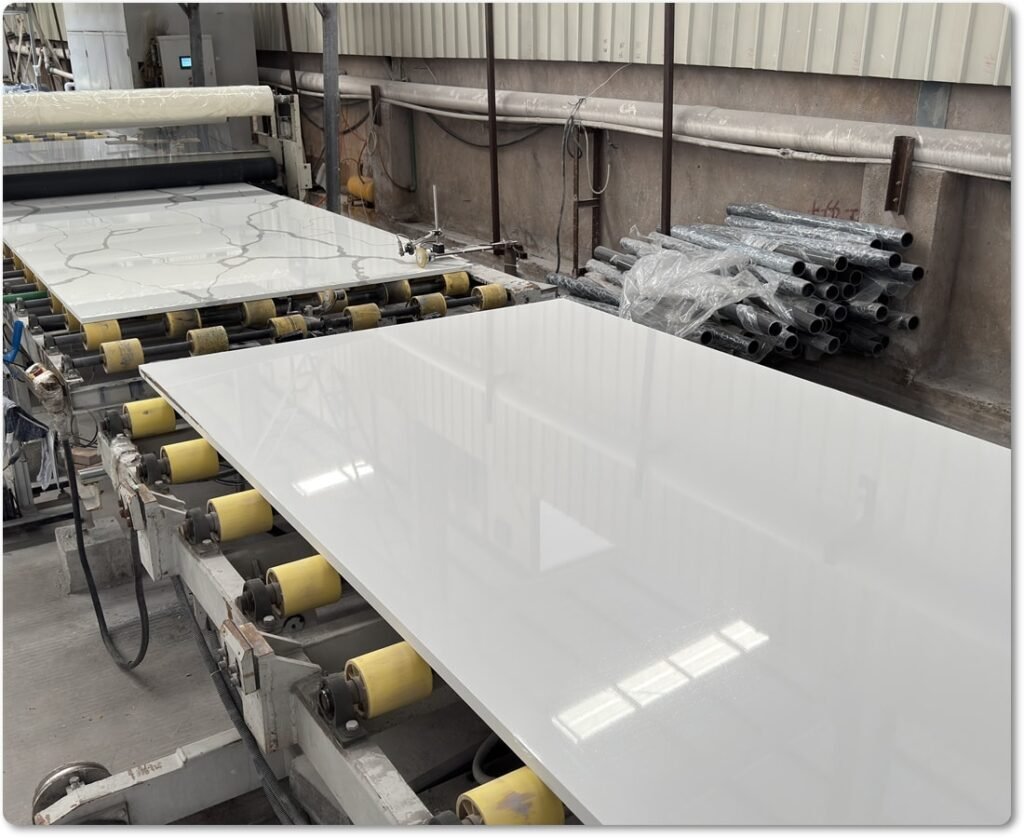
Matching Cabinets, Flooring & Fixtures
White quartz is highly versatile because it acts as a neutral anchor within the overall interior palette. That gives designers wide control over cabinets, floors, hardware, lighting, and wall finishes.
With white or light oak cabinetry, white quartz produces a soft, airy, Scandinavian-inspired look. This is popular in modern residential interiors and show homes. With dark cabinetry, white quartz creates contrast and drama, making it ideal for luxury kitchen islands and statement layouts. With warm walnut or natural wood, the result feels elegant, organic, and timeless.
Flooring also plays a major role. White quartz works well with large-format porcelain tile, natural wood flooring, polished concrete, and luxury vinyl plank in contemporary projects. In bathrooms, it pairs beautifully with stone-look wall tile and muted metallic fixtures. In hospitality, it supports a wide range of brand directions, from minimalist spa design to classic luxury.
Fixtures and hardware are where white quartz becomes particularly effective. Brushed brass, champagne gold, matte black, and stainless steel all work well against a white quartz surface. That flexibility is one reason designers return to the category repeatedly. It solves the problem of color coordination without forcing the rest of the room into a narrow style lane.
For project specifiers, this design flexibility reduces risk. A surface that can work with many cabinet and fixture combinations is easier to approve, easier to sell, and easier to incorporate into repeatable build packages.
White Quartz Pricing Tiers
White quartz is available across a wide pricing spectrum, from entry-level commercial products to premium designer collections. The price is influenced by pattern complexity, slab size, thickness, finish, manufacturing quality, packaging, and order volume.
At the value-oriented end of the market, buyers usually prioritize clean white color, basic veining, and reliable performance. These slabs are suitable for rental developments, budget-conscious remodeling, and large-volume procurement. Mid-tier products often include more realistic veining, better surface depth, and stronger visual appeal. Premium tiers may feature sophisticated Calacatta patterns, refined bookmatching potential, and more luxurious color movement.
For commercial buyers, pricing should not be evaluated only by slab cost. It should also be considered in terms of yield, fabrication efficiency, project fit, and replacement risk. A slightly higher-priced slab may produce better visual results and reduce complaints or rework costs. In luxury projects, that often creates more value overall.
Importers should also account for container utilization, warehouse turnover, and local market preferences. White quartz is a category where design trend, consistency, and distribution strategy all affect profitability. The best pricing strategy is not always the lowest price. It is the one that matches the right product tier to the right customer segment.
Inventory Challenges for Importers
White quartz is a high-demand category, but it also presents inventory challenges. Because it is so widely used, buyers often expect immediate availability. That can make forecasting difficult, especially for importers serving multiple market segments at once.
The biggest challenge is balancing breadth and depth. Importers need enough variety to satisfy designers who want Calacatta, Carrara, soft-vein, and bright, solid-white options. At the same time, they need enough stock of the most popular designs to avoid shortages. If inventory is too narrow, the company loses sales. If it is too broad, capital gets tied up in slow-moving slabs.
Consistency is another issue. White surfaces can reveal small variations more easily than dark or highly patterned materials. That means batch control, color matching, and slab sorting are especially important. Buyers in high-value residential and commercial projects expect consistency across all delivered materials.
Logistics also matter. White quartz is typically purchased for kitchens and countertops, which often means time-sensitive fabrication schedules. Importers need dependable lead times, protective packaging, and clear communication with factories. For this reason, suppliers with strong export discipline often outperform those with unstable shipping or inconsistent production standards.
EDG Stone Factory can be positioned as a solution to these challenges by emphasizing stable supply, project-based planning, and scalable white quartz collections suited for both stock orders and custom project requirements.
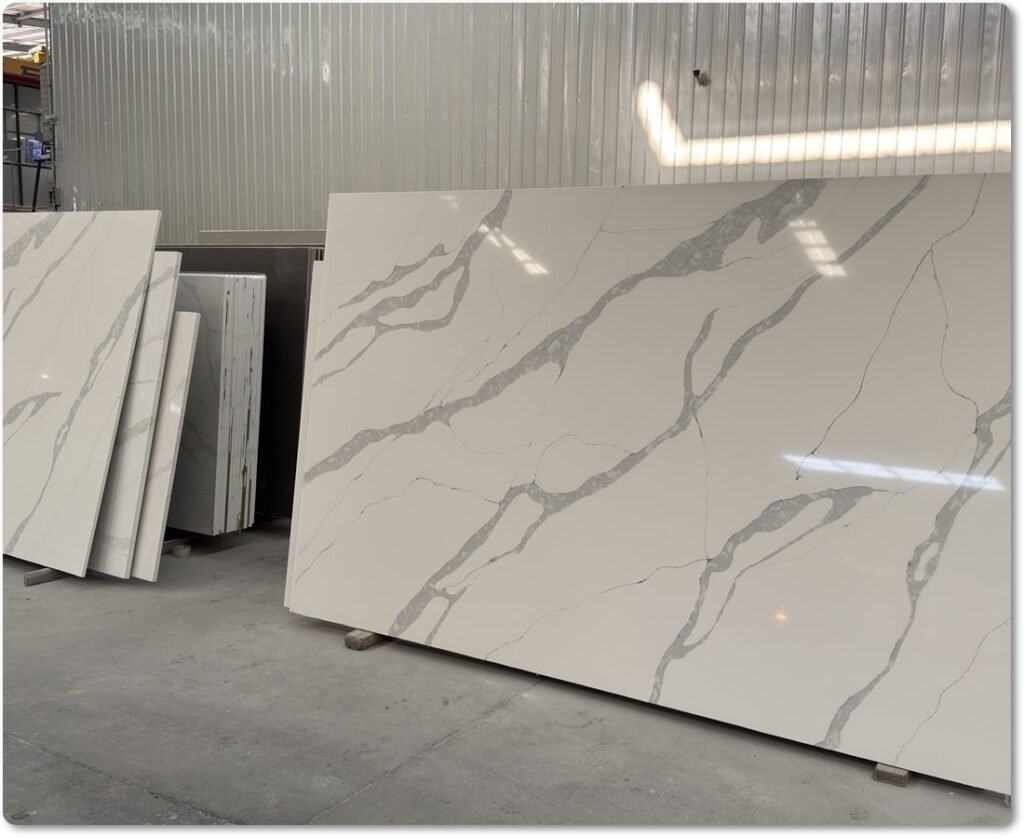
White Quartz Collections from EDG Stone Factory
EDG Stone Factory’s white quartz collections can be framed as a premium B2B solution for designers, developers, importers, and fabricators seeking a reliable luxury surface line. The strongest product positioning is not just “white quartz available,” but “white quartz engineered for modern commercial demand.”
A strong collection strategy may include several visual directions:
- Bright solid whites for minimalist kitchens and clean commercial environments
- Soft Carrara-inspired veining for broad residential appeal
- Dramatic Calacatta-style slabs for premium statement projects
- Warm white tones for natural, hospitality-led interiors
- Large-format slabs for efficient fabrication and upscale project delivery
This approach helps EDG Stone serve different buyer segments without losing brand clarity. The message is simple: the factory is not just supplying material; it is supplying market-ready surface solutions.
For international buyers, this positioning is especially valuable because the white quartz category supports many project types at once. A distributor can sell the same family into kitchens, bathrooms, retail interiors, hotels, and multi-family developments. That creates better inventory turnover and stronger long-term repeat business.
Conclusion
White quartz slabs remain one of the strongest categories in the global surface market because they combine design psychology, commercial versatility, and practical performance. They brighten interiors, support luxury branding, and work across residential and hospitality applications with minimal design risk. Their popularity in quartz slabs for countertops and quartz slabs for kitchen installations is not accidental; it reflects a deep alignment between consumer preference, project efficiency, and premium visual appeal.
For designers, white quartz offers a clean canvas that supports nearly any style direction. For developers and importers, it offers dependable demand and broad market acceptance. For suppliers like EDG Stone Factory, it represents a high-value category that can be structured around quality, consistency, and project-ready product positioning.
In a market where buyers want surfaces that look luxurious, photograph beautifully, and perform in real life, white quartz continues to lead.
FAQ
1. Why are white quartz slabs so popular in kitchens?
White quartz slabs are popular because they make kitchens feel brighter, cleaner, and more spacious while offering a premium stone-like appearance and easy daily maintenance.
2. What is the difference between Calacatta and Carrara quartz?
Calacatta quartz usually has bolder, more dramatic veining, while Carrara quartz has softer, finer, and more subtle movement. Calacatta often feels more luxurious; Carrara feels more classic.
3. Are white quartz slabs good for countertops?
Yes. White quartz slabs are widely used for countertops because they combine strong visual appeal with practical performance and broad design compatibility.
4. Do white quartz slabs work in luxury hospitality projects?
Yes. White quartz is commonly used in hotels, resorts, spas, and hospitality interiors because it looks refined, photographs well, and works consistently across many rooms and spaces.
5. What should importers consider when buying white quartz slabs?
Importers should evaluate design consistency, batch matching, lead time, packaging quality, slab size, pricing tier, and how well the collection fits their local market.