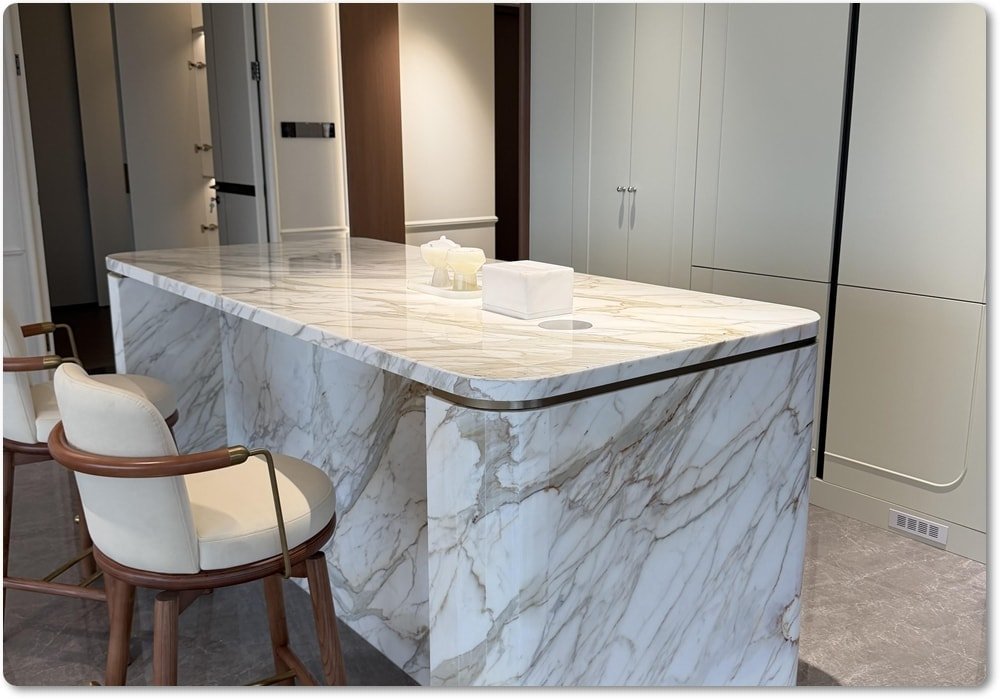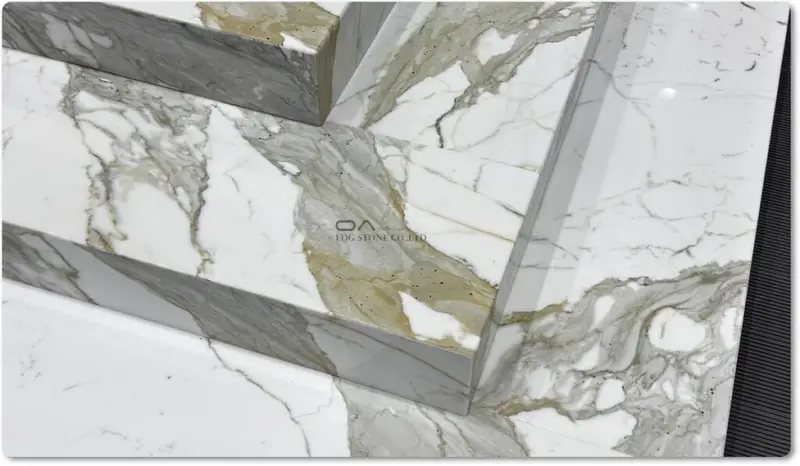
Quartz slabs remain one of the most important surfaces in modern kitchens, bathrooms, commercial interiors, and large-scale architectural projects because they combine the visual consistency buyers want with the performance fabricators need. In 2026, the category is being shaped by three forces at once: design demand for cleaner, larger formats; tighter silica-related compliance expectations; and a growing shift toward lower-silica and more sustainable surface systems.
For buyers searching for engineered quartz slabs, artificial quartz slabs, quartz stone slabs, quartz slabs for sale, or quartz slabs wholesale, the real question is no longer just “What looks good?” It is “What material system, factory process, certification set, and export model will perform reliably across markets?” That is exactly what this guide is designed to answer.
What Are Engineered Quartz Slabs?
Engineered quartz slabs are composite surfaces made from natural quartz minerals blended with binders such as polymer resins, plus pigments and other additives, then shaped and cured into slabs. In industry language, they are often called engineered stone, compound stone, or quartz surfaces. Leading manufacturers describe their quartz products as composed of roughly 90% quartz minerals plus resins and pigments, with the exact formulation varying by brand and product line.
The reason quartz slabs became so dominant in interior surfacing is simple: quartz is a very hard mineral, while the engineered format gives manufacturers the ability to control color, pattern, thickness, and slab uniformity at scale. Quartz itself is a common mineral composed primarily of silicon dioxide, and it is found widely in the Earth’s crust and in rocks such as granite.
Natural Quartz vs Engineered Quartz
Natural quartz is a mineral found in nature. Engineered quartz is a manufactured product that uses quartz as a major ingredient but changes the final surface through industrial mixing, pressing, curing, and finishing. That distinction matters because natural quartz products vary from block to block, while engineered slabs are designed for more consistent color, vein movement, and repeatable supply.
For procurement teams, this difference affects everything from sample approval to batch consistency. A natural stone program often accepts variation as part of the product identity. An engineered quartz program usually aims to minimize that variation, especially for multi-unit residential, hospitality, retail, and commercial chains where visual continuity across lots is critical. That is one reason quartz continues to perform well in large-format interior design applications.
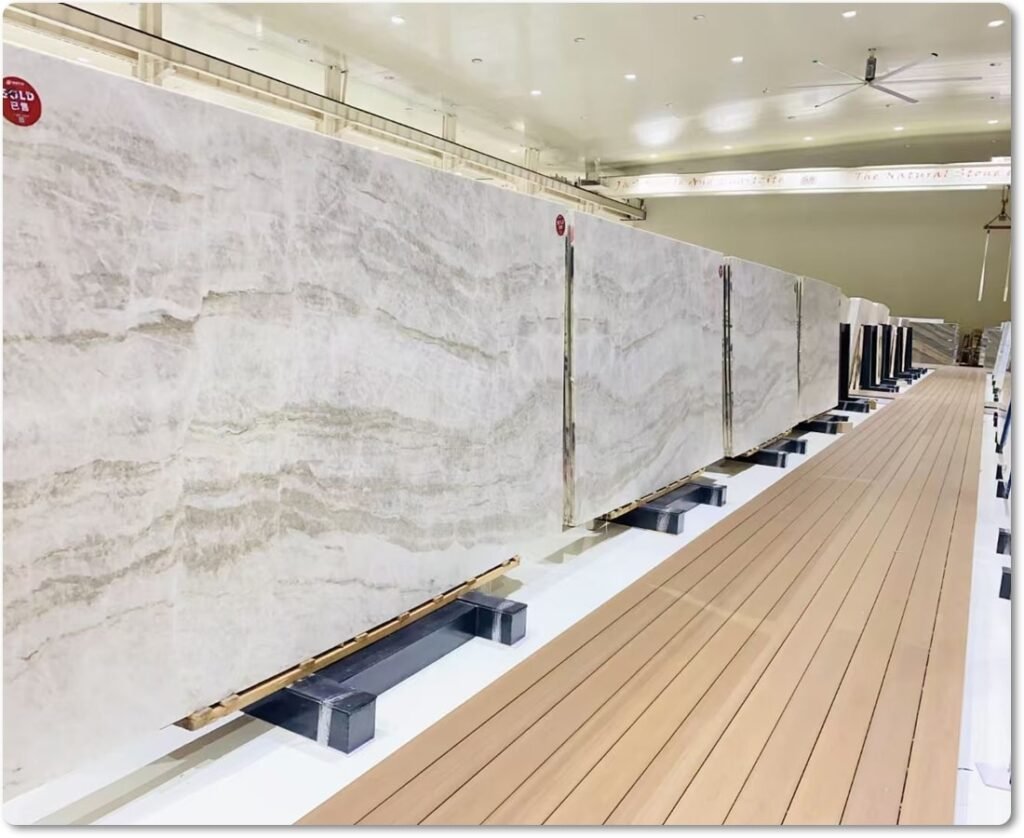
How Quartz Slabs Are Manufactured?
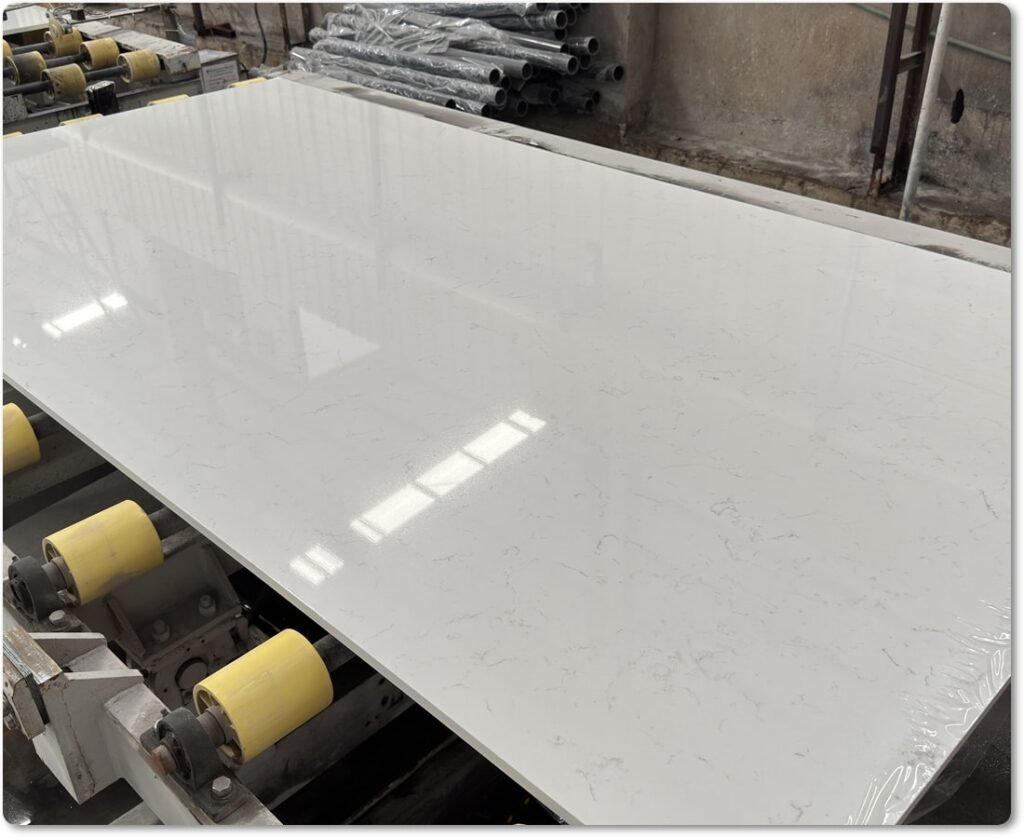
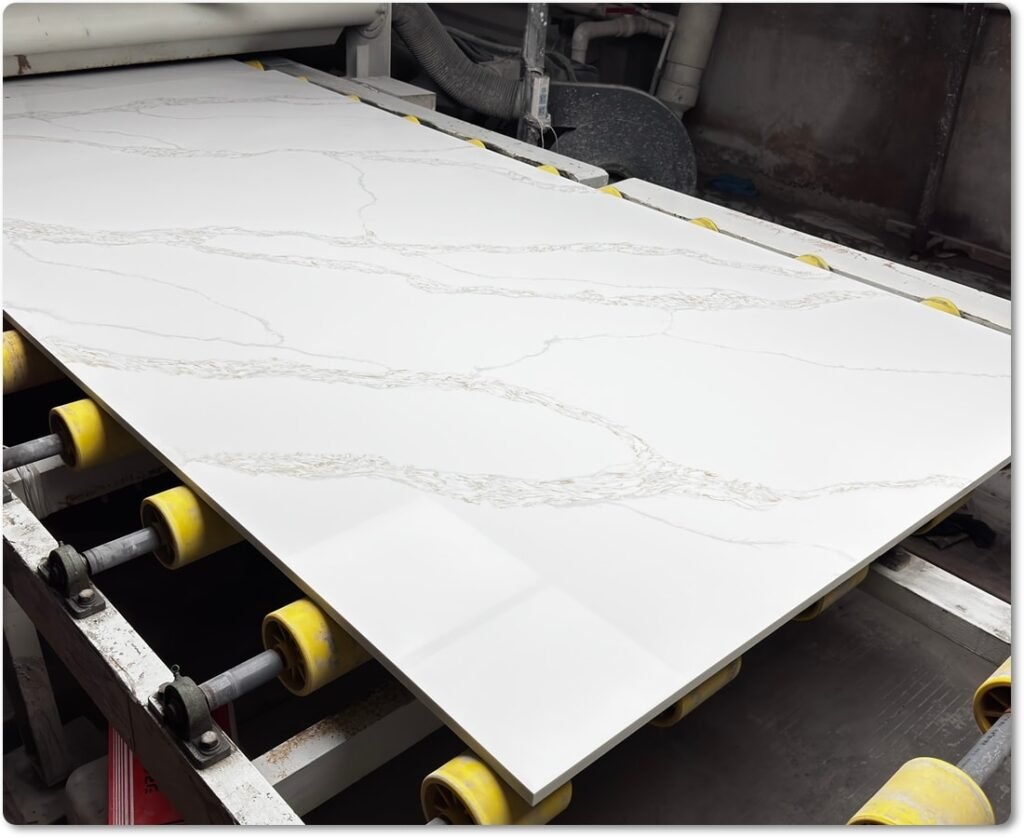
The modern quartz slab process begins with sorted quartz aggregates, resins, pigments, and additives. These ingredients are measured, mixed, formed into a slab blank, compacted, and then cured. After that, the slab is calibrated, polished, inspected, and packaged for shipment. Manufacturers describe this as a controlled industrial process rather than a quarry-cut natural stone workflow.
A key reason the process matters is that engineering controls shape product performance. The distribution of aggregates, resin chemistry, and pressing method all influence density, finish quality, stain resistance, and long-term stability. Breton, for example, describes its compound-stone process as a patented vibro-compression under vacuum system that supports high aggregate concentration while reducing binding material, and its slab platform supports formats from 140×300 cm up to 210×360 cm with thicknesses from 7 mm to 30 mm.
That is why two quartz slabs can look similar in a showroom and still behave very differently in fabrication or installation. The hidden variables are not only cosmetic. They include slurry control, compaction, curing behavior, resin load, and the quality of the polishing and QC line. In the best factories, those variables are standardized; in weaker factories, they are not.
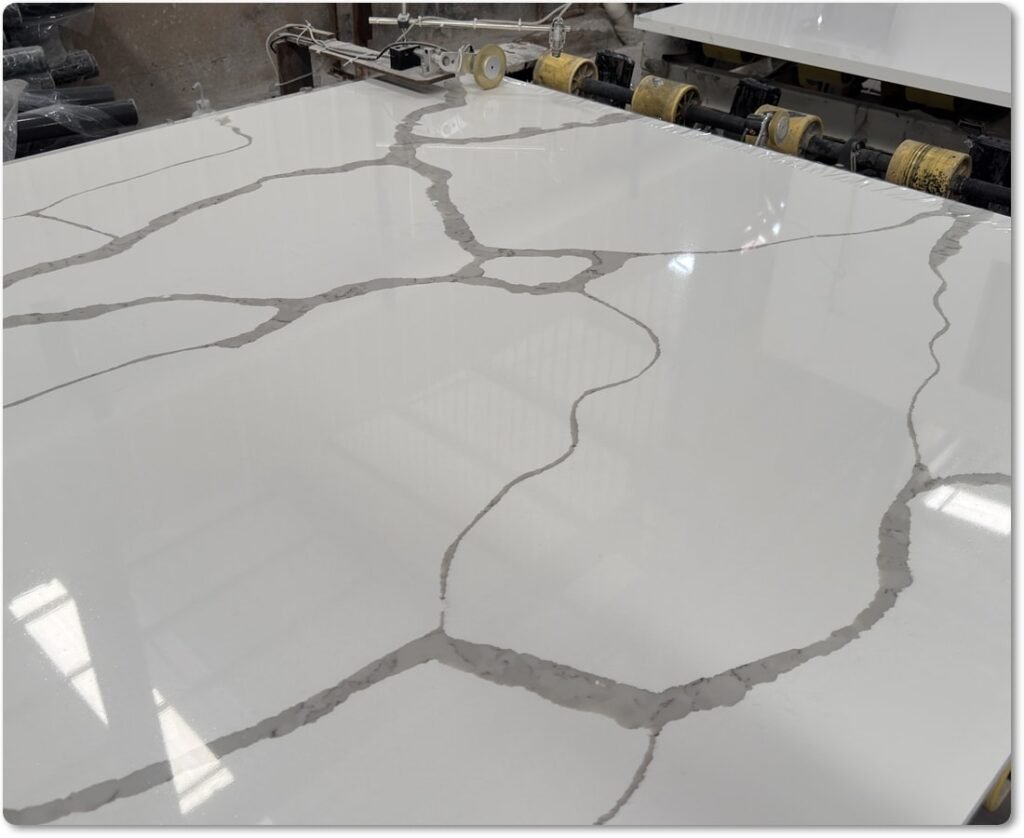
Breton Technology and Modern Production Lines
Breton remains one of the most recognized names in engineered stone production equipment. The company states that it has provided slab and stone-aggregate production systems since 1963, and that its plants support premium-quality slabs and blocks with low crystalline silica content. Its BretonStone platform is positioned for large-scale production of compound stone slabs with a broad range of aesthetics and formats.
That matters because equipment choice drives product strategy. A factory using a modern Breton line can pursue larger slab sizes, thinner profiles, better surface repeatability, and higher throughput than a less advanced plant. Breton also notes that its systems support layout development, machinery, installation, know-how transfer, training, and startup support, which is why equipment platforms often become part of the supplier selection process for OEM and export buyers.
In practical terms, the most competitive factories in 2026 are not simply “stone suppliers.” They are industrial surface manufacturers combining process engineering, color development, logistics, and market-specific compliance. EDG Stone Factory, for example, would be positioned in the market most effectively when it is presented not just as a slab seller, but as an OEM-ready production partner with repeatable manufacturing discipline and export execution.
Resin Systems, Pigments & Additives
The resin system is the “invisible architecture” of a quartz slab. It binds the mineral aggregate, affects workability, and influences stain resistance, heat behavior, and slab integrity. Pigments determine base color, tone, and decorative effects, while specialty additives can change flow, surface texture, or the visual depth of veining. Manufacturers rarely publish every formulation detail, but the industry consistently describes quartz slabs as mineral-resin composites rather than pure stone products.
This is also where design innovation is happening fastest. Brands increasingly use resin-and-pigment systems to simulate marble, terrazzo, concrete, travertine, and dramatic veining. Vicostone’s 2026 catalog, for example, highlights new collections built around natural-inspired design depth, while Breton notes that its technology supports a broad range of aesthetics and formats. That combination is why quartz continues to win in premium interiors even as buyers compare it with quartzite, porcelain, and other engineered alternatives.
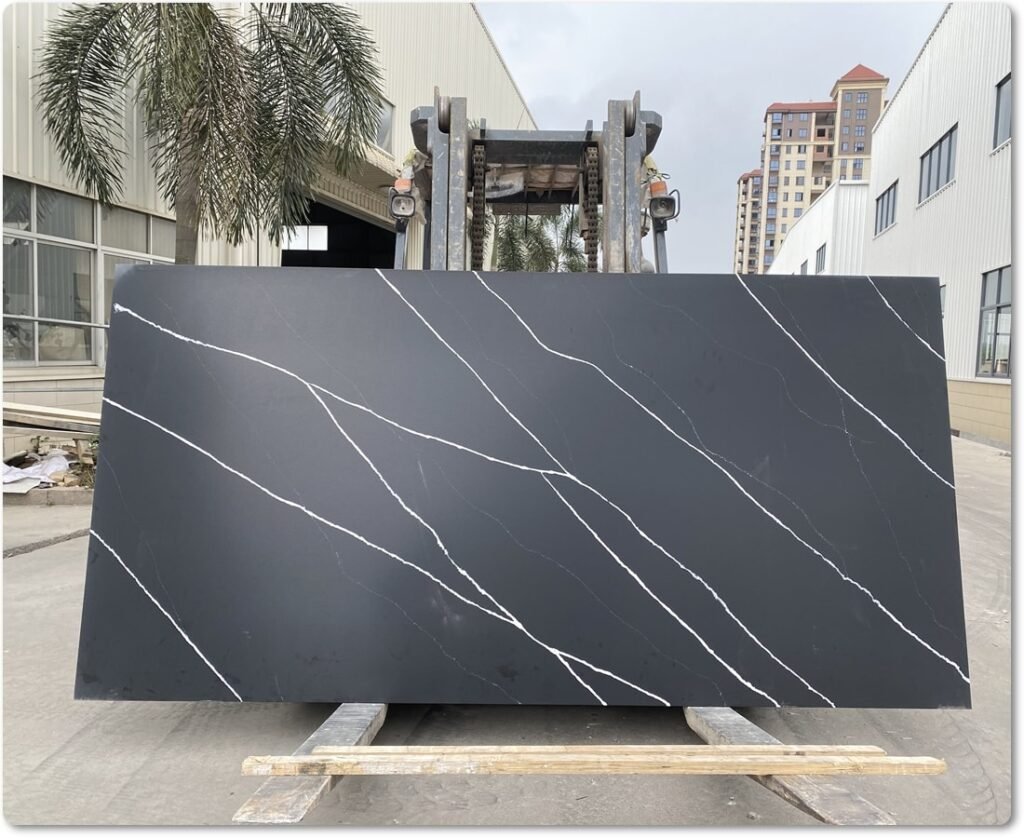
Global Quartz Slab Market Trends in 2026
The 2026 market is still expanding, but the growth story is no longer just “more quartz for more kitchens.” Market research firms continue to project growth for engineered stone and quartz surfaces, with one 2026 report projecting the engineered stone market to grow from USD 26.5 billion in 2025 to USD 45.2 billion by 2033. Another report places quartz-based engineered stone as the largest segment in 2025, typically formulated with 85–95% natural quartz aggregates.
Demand indicators from the design side are still supportive. The NKBA’s 2026 Kitchen Trends Report shows quartzite and quartz leading countertop preferences, with quartzite coming in right behind quartz in the countertop category. That signals that quartz remains a mainstream material reference point for 2026 kitchen and bath specifications, even as natural stones and hybrid surfaces compete more aggressively.
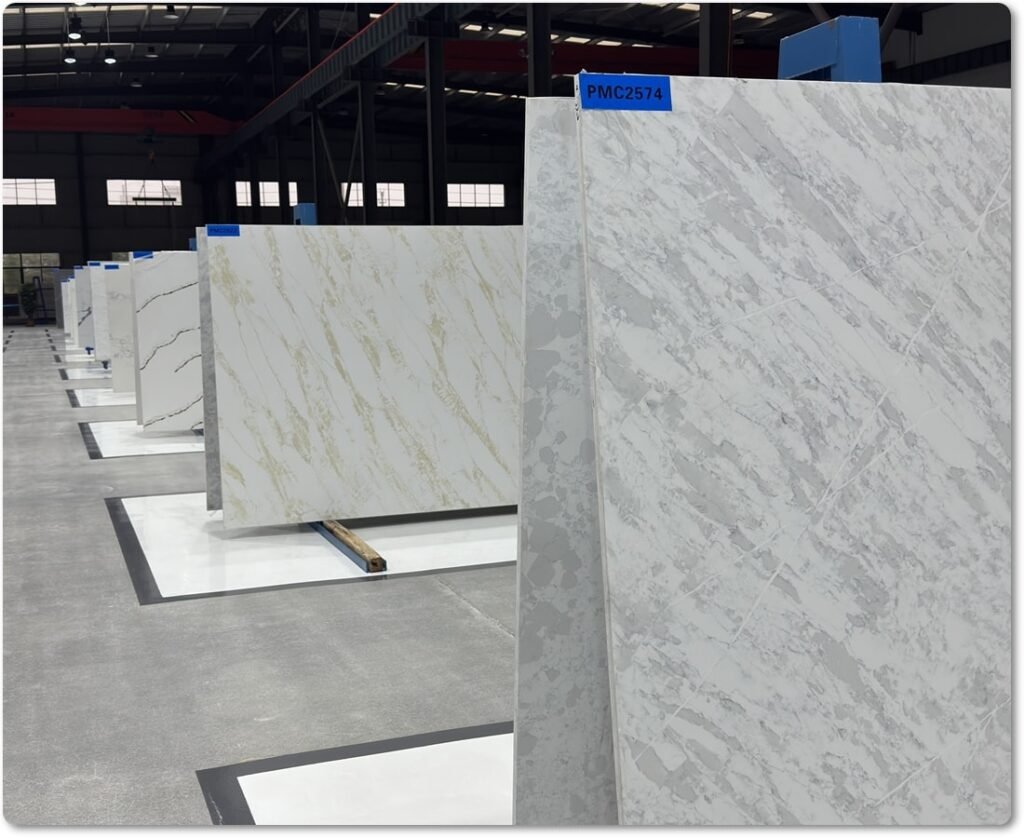
A second trend is premiumization through format. Manufacturers are pushing larger slab sizes, super-jumbo programs, thinner profiles, and more dramatic book-match visual effects. Vicostone’s 2026 materials describe super-jumbo slab production, while Breton lists slab sizes up to 210×360 cm and thicknesses down to 7 mm. The market is moving toward fewer seams, broader visual fields, and more architectural applications.
A third trend is design diversification. Contemporary buyers want quartz that looks less obviously “manufactured” and more like natural stone, limestone, travertine, or artisanal mineral surfaces. That is why marble-look, concrete-look, and soft-veined collections remain central to new product launches across major brands in 2025 and 2026.
Sustainability and Silica Regulations
This is the most important structural shift in the industry. In the United States, OSHA’s respirable crystalline silica standard requires engineering and work practice controls to keep employee exposure at or below the permissible exposure limit, along with exposure control plans, respiratory protection where needed, and housekeeping controls that avoid dry sweeping or uncontrolled compressed air.
Australia has gone further. Safe Work Australia states that, from 1 July 2024, the manufacture, supply, processing, and installation of engineered stone benchtops, panels, and slabs became prohibited under the model WHS regulations, and that from 1 January 2025, engineered stone benchtops, panels, and slabs became prohibited imports. The Australian definition covers artificial products containing at least 1% crystalline silica, combined with natural stone materials and chemical constituents, then hardened.
That regulatory pressure is reshaping product development. Instead of relying only on classic high-quartz formulations, manufacturers are investing in lower-silica alternatives, recycled content, EPDs, HPDs, and other environmental documentation. Cosentino’s low-silica and recycled-content messaging, together with Breton’s silica-free aggregate concepts and Vicostone’s Declare, HPD, and EPD positioning, show where the category is heading.
For buyers, this means compliance is now part of product quality. In 2026, a slab is not just judged by color and price. It is evaluated by silica profile, worker-safety implications, documentation depth, and whether it can be sold, fabricated, and installed in target markets without regulatory friction.
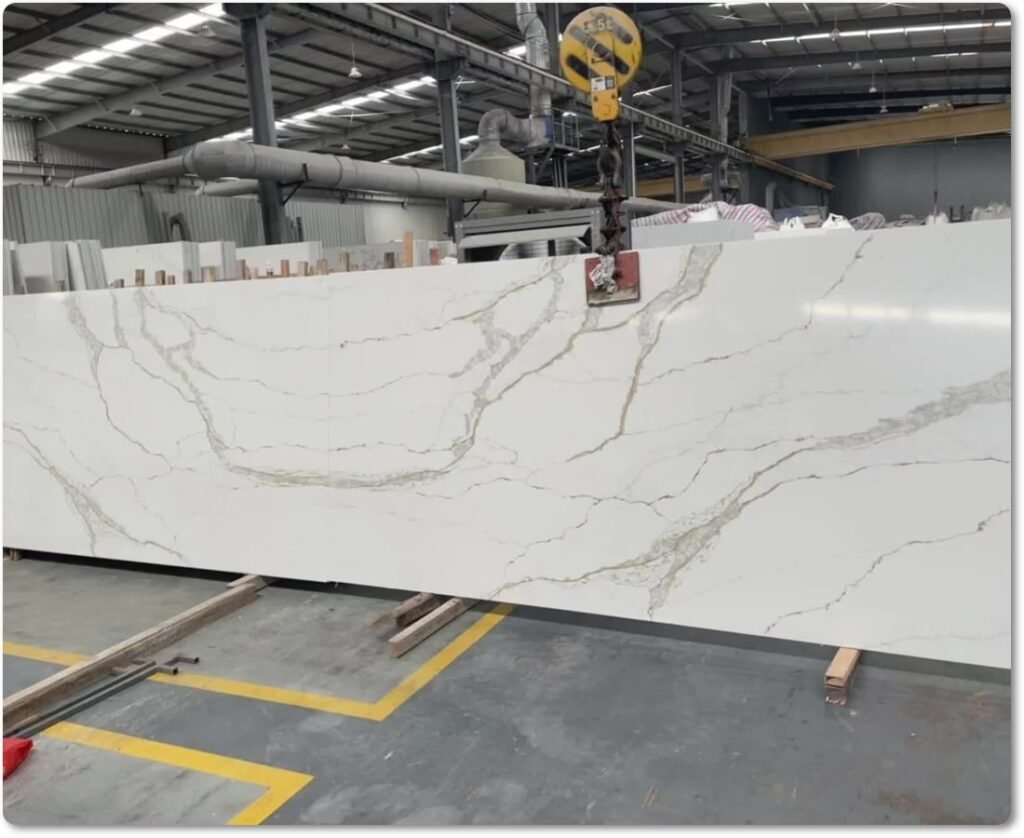
Quartz Slabs Export Supply Chains
Quartz slabs are a global trade product, and the supply chain is broader than many buyers expect. It starts with mineral inputs, resin systems, and pigment sourcing, then moves through compounding, slab pressing, finishing, packaging, container loading, and destination-market distribution. Vicostone’s 2026 brochure states that it has a distribution network spanning more than 50 countries and 10,000 distributors, while Breton highlights support for industrial projects worldwide.
A strong export supply chain also needs market-specific compliance planning. Australia’s ban, OSHA’s silica exposure requirements, and growing sustainability documentation expectations mean exporters must consider not only freight and customs, but also whether the target market will accept the material class at all. In practice, that makes quartz export supply chains more documentation-heavy than they were a few years ago.
The most reliable exporters tend to standardize slab dimensions, batch traceability, pallet protection, moisture control, and edge protection before the material leaves the factory. That is why large-scale distribution brands often build self-sufficient input chains, quality systems, and long-haul packaging protocols rather than relying on spot-market availability. Vicostone’s 2026 materials explicitly describe a self-sufficient input base and a production network built around Breton technology.
How Factories Like EDG Stone Factory Manage OEM Production?
OEM quartz production works best when the factory behaves like a specification partner rather than a commodity seller. That means matching color standards, controlling resin and pigment recipes, offering sample-to-bulk consistency, maintaining documented QC checkpoints, and supporting private-label packaging or buyer-specific product programs. This is the model that export-oriented factories in the quartz sector increasingly use when they serve distributors, importers, fabricators, and design chains.
For a professional exporter such as EDG Stone Factory, the strongest OEM story is usually built around four promises: stable formula control, repeatable slab appearance, export-grade packaging, and responsive production planning. Those are the traits B2B buyers care about when they are sourcing quartz slabs wholesale or building a long-term private-label program.
Future Trends in Large-Format Quartz
Large-format quartz is likely to keep growing because it answers three buyer demands at once: fewer seams, stronger visual continuity, and premium architectural impact. Breton already supports slab sizes up to 210×360 cm, and Vicostone has highlighted super-jumbo slab production in its product roadmap. At the same time, slimmer profiles are becoming more practical through improved compaction and structure control.
The future is also moving toward hybrid material innovation. Breton’s Bioquartz positioning, Cosentino’s low-silica hybrid surfaces, and the industry’s recycled-content messaging all suggest that the “next quartz slab” may not look radically different to a designer, but it may be materially safer, lower in crystalline silica, and easier to document for responsible procurement.
Procurement Takeaways
If you are evaluating quartz slabs for sale or quartz slabs wholesale in 2026, the smartest purchasing framework is simple: verify the material formula, verify the production platform, verify the compliance file, and verify export readiness. Quartz is still one of the strongest surface categories in the market, but the winning suppliers are now the ones that combine design, factory discipline, and regulatory awareness.
For buyers, the strongest suppliers will usually be able to answer five questions quickly: what is the quartz content, what is the slab size range, what technology line is used, what compliance documents are available, and how is the product packed for shipment. If a supplier cannot answer those five questions clearly, the price is probably not the real risk—the risk is the supply chain.
FAQ
Are engineered quartz slabs the same as natural quartz?
No. Natural quartz is a mineral found in the earth, while engineered quartz slabs are manufactured composites made from quartz minerals plus resin, pigments, and additives.
Why are quartz slabs so popular in 2026?
They remain popular because the market still values durability, low maintenance, design consistency, and large-format visual continuity, and NKBA’s 2026 report shows quartz still near the top of countertop preferences.
Is silica regulation affecting quartz slabs?
Yes. OSHA requires silica exposure control in U.S. construction environments, and Australia has already banned engineered stone benchtops, panels, slabs, and related imports under its current framework.
What is the biggest manufacturing trend in quartz slabs?
The biggest trends are larger slab formats, lower-silica or alternative formulations, better sustainability documentation, and more realistic marble-like aesthetics.
References Used
- U.S. Geological Survey, Mineral Commodity Summaries 2025
- OSHA, 1926.1153 – Respirable crystalline silica
- Safe Work Australia, Silica – Engineered stone ban
- NKBA, KBIS Releases Annual 2026 Kitchen Trends Report
- Breton, Plants, and BretonStone compound stone slab manufacturing
- Cosentino, Low-silica mineral surface/sustainability materials
- Grand View Research / Fortune Business Insights market summaries on engineered stone and quartz-based engineered stone