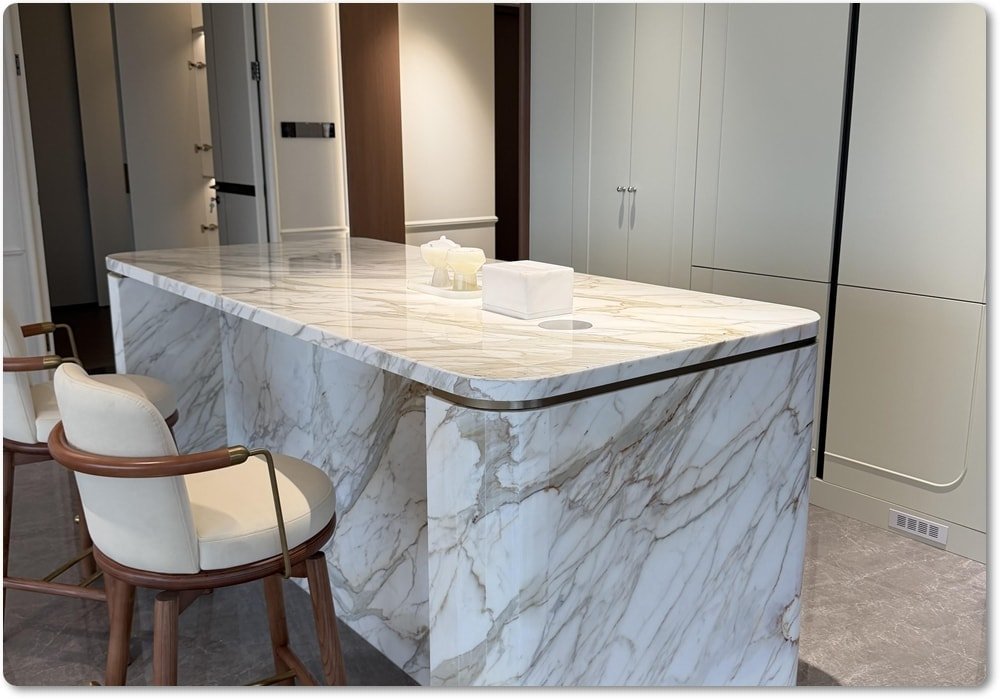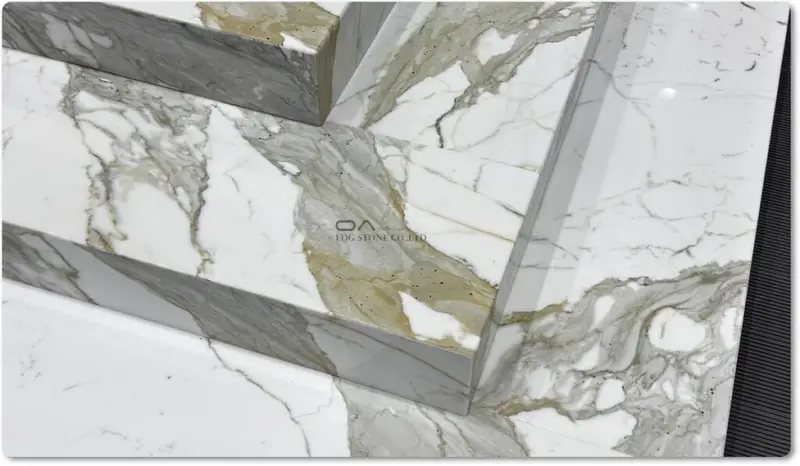
Optimized Blade Selection: Selection of Saw Blades and Tools Specifically Designed for the Hardness of Taj Mahal Quartzite
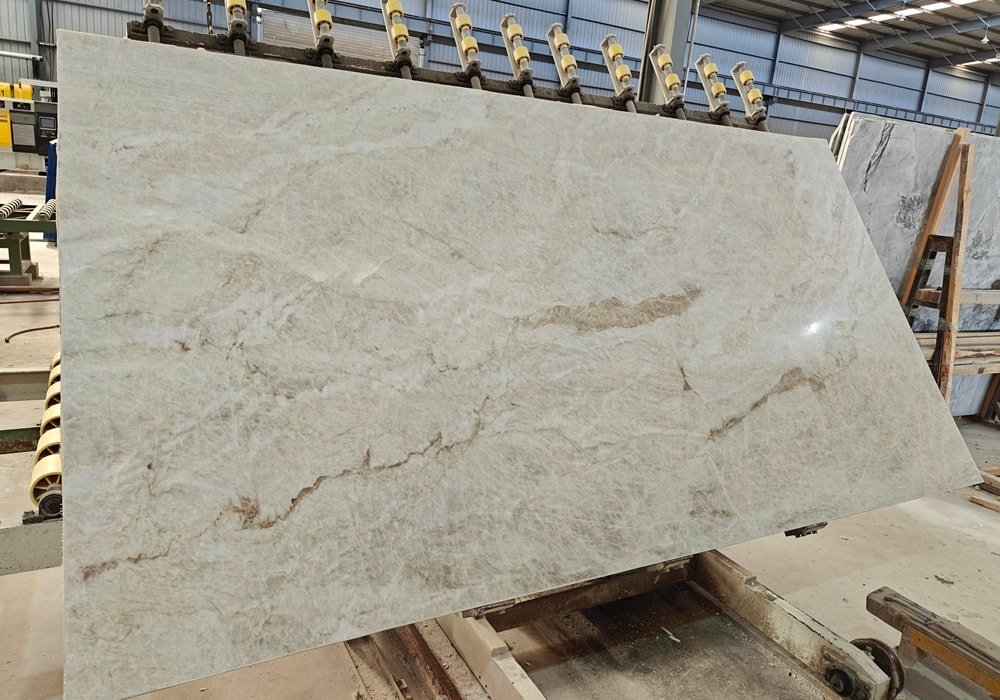
Why Taj Mahal Quartzite Requires Specialized Blade Selection?
Mineralogical Structure & Mohs Hardness Analysis
Quartzite is dominated by interlocking quartz grains (Mohs ≈ 7). That dense, intergrown silica matrix is abrasive and unforgiving; it grinds away metal bonds and blunts diamonds faster than softer marbles or many granites. In practice, Taj Mahal quartzite’s physical behavior under cut load resembles engineered quartz and hard granites more than marble, making bond formulation, diamond concentration, and thermal control the primary blade design factors.
Typical Cutting Failures When Using Incorrect Blades
Using a wrong or generic granite blade on Taj Mahal quartzite commonly produces: glazing (bond smearing over diamonds), rapid bond wear (short blade life), micro-chipping at edges, and surface smear/heat marks on polished faces. These failures raise scrap rates and installation callbacks, harming margins and reputation.
Industry evidence & regulatory pressure
Because quartzite and engineered stones produce respirable crystalline silica when cut, regulators and industry safety agencies have pushed fabricators to adopt wet-cutting, ventilation, and engineering controls—practices that also influence blade selection and cooling strategies. OSHA and NIOSH guidance for countertop operations highlights the hazards and prescribes engineering/administrative controls for cutting stone.
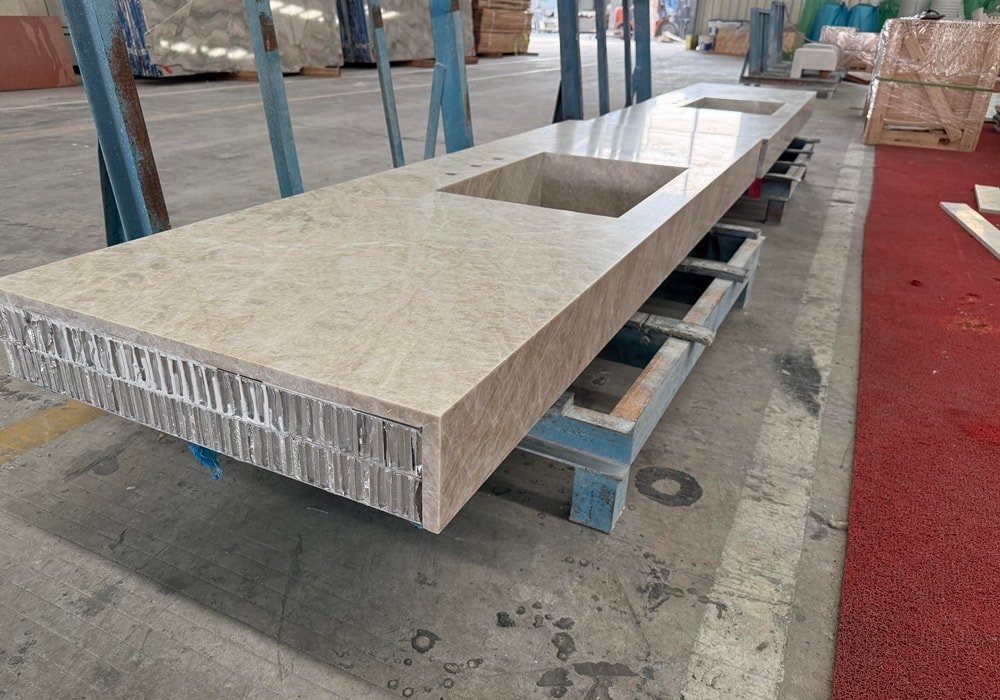
Key Blade Characteristics for Taj Mahal Quartzite
When choosing or specifying a blade for Taj Mahal quartzite, consider the following engineering variables together—no single parameter is sufficient.
Diamond Concentration and Metal Bond Formula
Higher diamond concentration with a harder metal bond is usually required for quartzite: a bond tough enough to retain diamonds under high abrasive load but engineered to wear at a controlled rate so fresh diamonds are exposed.
Blade manufacturers use proprietary metal matrices tuned for quartzite or engineered stone; these are not “one-size-fits-all.” Stone-industry practitioners consistently recommend blades labeled “quartzite” or “engineered stone” because their bond chemistry (and diamond grit distribution) is tuned for high silica content.
Segment Height, Width & Spacing Optimization
Taller segments (e.g., 15–25 mm) extend life and help energy transfer during deep cuts; they are common on quartzite bridge saw blades.
Segment shape and spacing (slots/expansion holes) aid slurry evacuation and heat control; more open designs often reduce glazing and overheating. Manufacturer lines for quartzite blades emphasize segment geometry to reduce glazing and increase cutting speed.
Core & Slot Design for Vibration and Heat Control
Silent cores, reinforced cores, and optimized slot patterns keep the blade tracking true during long bridge-saw cuts and reduce the chance of micro-chipping or miter inaccuracies. Many quartzite blades feature reinforced silent cores for both straight and miter work.
Cooling Efficiency & Wet Cutting
Wet cutting with robust water flow is non-negotiable: it cools the bond, flushes abrasive slurry, and reduces respirable dust (regulatory imperative). Cooling strategy affects acceptable RPM and feed rate ranges. OSHA/NIOSH explicitly recommends wet cutting and local ventilation measures in countertop operations.
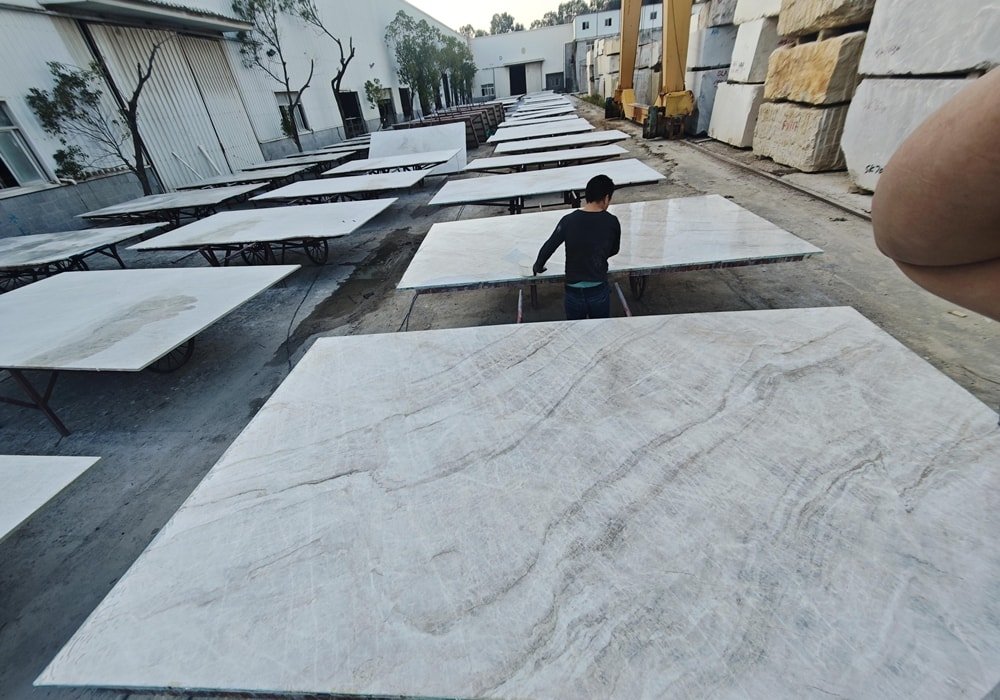
Bridge Saw Blade for Quartzite: Engineering-Level Selection Guide
Matching RPM, Surface Speed, and Feed Rates
Blade surface speed (SFM) matters. For typical bridge saw diameters, operating RPM should be selected to achieve the manufacturer’s recommended surface speed for hard stone—often lower RPM with a tough bond is recommended for quartzite to avoid glazing and overheating. Example operating charts (industry tables) show that for 14–20″ blades, the RPM bands for hard granite/quartzite are significantly lower than for marble.
Feed Pressure & Miter Work
Slower feed rates produce cleaner miters and reduce glazing; some shops recommend slowing feeds to ~350 mm/min for delicate mitering on quartzite, with increased water flow. Heavy miter schedules may require specialized miter blades or dedicated setups.
Blade Diameter vs. Cutting Task
Larger bridge saw blades (16–20″+) with taller segments are favored for slab-to-slab and slab-to-countertop processing, whereas specialized thinner segment blades may be used for fine profiling or sink cutouts—though you must avoid under-spec blades for sink routing (risk of burning/ricochet).
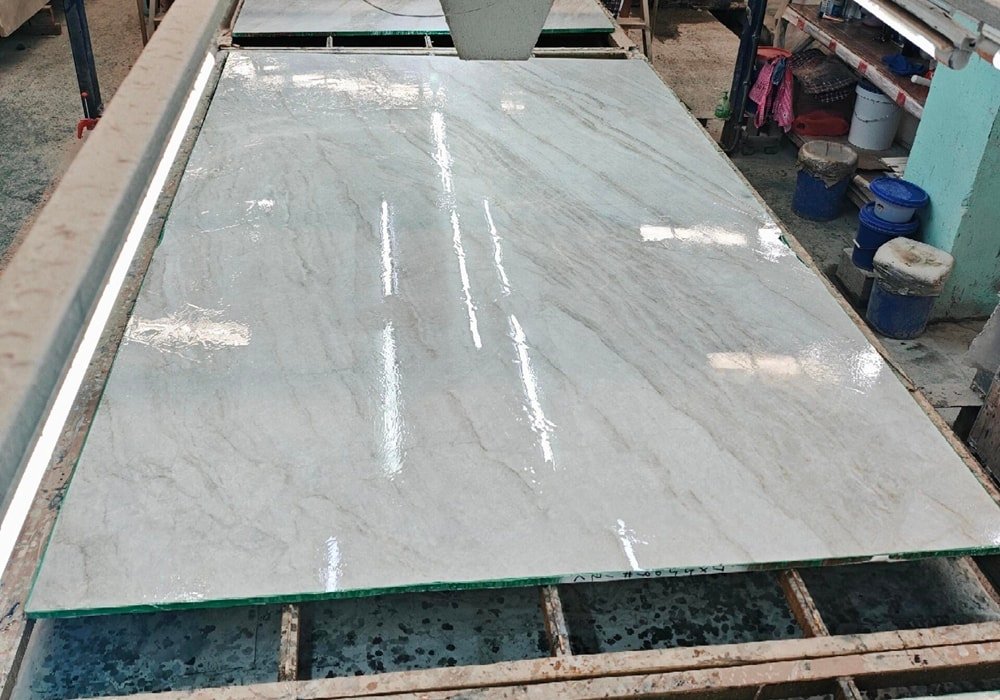
Cutting Taj Mahal Quartzite Slabs: Process-Based Tool Strategy
Primary Cutting (Block to Slab)
Quarry/gang saw, and wire saw settings at the primary stage must consider stone toughness and cooling. In many supply chains, primary slab production uses gang-saw segments designed for hard sandstone/granite; the slab surface finish fromthe primary stage can influence later machining choices.
Secondary Cutting (Slab to Countertop)
Bridge saw blades labeled for quartzite should be standard for crosscuts and length cuts. Use a blade with a higher diamond concentration and an aggressive segment profile to maintain throughput while avoiding glazing.
Edge Profiling & Sink Cut-Out
Edge work and sink cut-outs require different tooling: diamond cup wheels, core bits (for sink holes), and profiling bits with a stepwise approach (rough → fine) minimize heat buildup. Blade selection for profiling must prioritize thin, continuous rim diamond tools with abundant water flow.
Surface Finish Impact on Blade & Tool Choice
Polished vs Honed Taj Mahal Quartzite
Polished surfaces tolerate fewer micro-chips: fabricators should choose blades and feed profiles that minimize microfractures near the cut face. Honing generally allows more aggressive removal but still needs a quartzite-tuned bond to avoid glazing.
Leathered Taj Mahal Quartzite
Leathered surfaces change surface texture but do not reduce material hardness; the same blade selection principles apply. However, during finishing, leathering may reveal cutting defects, so initial cutting tolerances must be conservative.
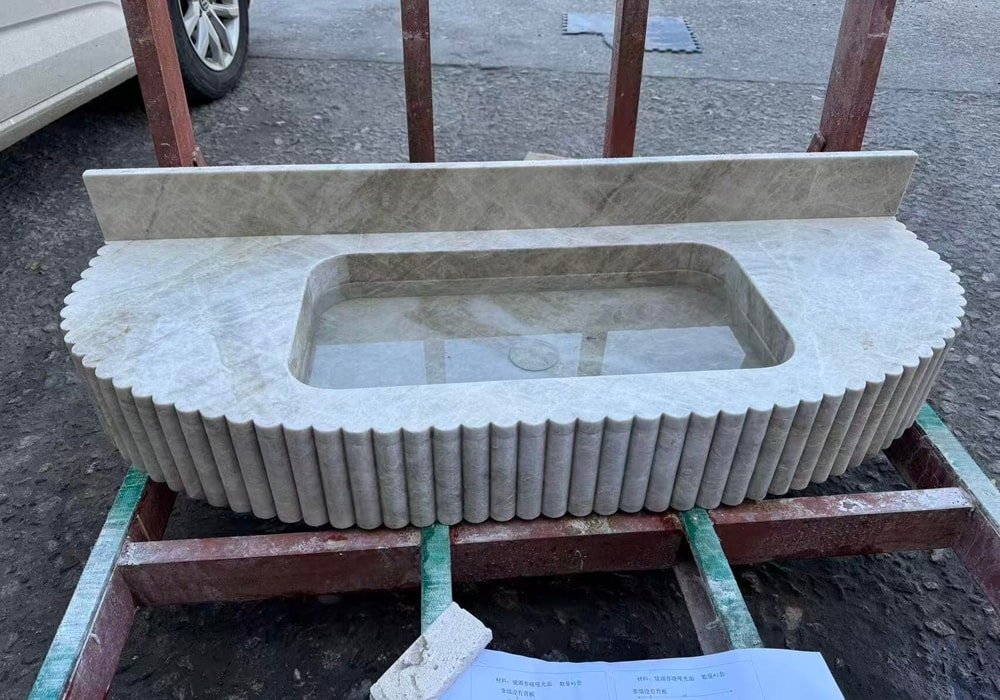
Tool Selection Beyond Blades: Supporting Equipment Matters
Bridge Saw Stability & Precision
A rock-steady rail and carriage, rigid mountings, and accurate servo control reduce side loads on blades—less vibration = less chipping and longer blade life. For factories scaling Taj Mahal production, machine calibration is as important as the blade itself.
Water Filtration & Slurry Control Systems
High-volume slurry tanks, cyclone separators, and closed-loop water systems preserve water quality, prevent slurry-borne recontamination, and cut operating costs while supporting wet-cutting best practices. Water system design also reduces blade glazing by improving slurry evacuation.
Dust & Silica Controls: Local Exhaust & Respiratory Protection
Because cutting quartzite generates respirable crystalline silica, fabricators must implement exhaust and wet suppression and follow respirator programs when exposures exceed action levels described by OSHA/NIOSH. Regulatory enforcement and focused inspections on stone fabrication have increased industry compliance pressure.
Regulations, Safety Standards & Industry Direction (2024–2026)
Silica Dust Regulations
OSHA’s construction silica standard (29 C.F.R. §1926.1153) sets exposure limits and engineering control expectations; the countertop industry has been a focus for hazard alerts and inspections. Employers must proactively reduce silica exposure through wet cutting, ventilation, and respiratory protection programs.
Global regulatory trends
Multiple jurisdictions have tightened enforcement, and some regions have taken extreme measures on engineered stone. This global trend encourages factories to invest in safer wet cutting, improved tooling (to reduce dry rework), and closed-loop processes to remain compliant and competitive.
How regulations shape tool selection
Safer cutting methods favor robust wet blades, higher water flows, and tooling that runs efficiently under wet conditions; they also push electronics and monitoring (blade life meters, dust monitors) into the standard factory toolkit.
Cost Efficiency Analysis: Blade Choice vs Fabrication Cost
Total Cost of Ownership (TCO) for Blades
The cheapest blade rarely equals the lowest cost-per-cut. A quartzite-tuned blade with longer life, reduced downtime, and lower scrap can reduce TCO despite higher upfront cost. Track metrics: cuts per blade, time per cut, scrap rate, and labor variance.
Yield & Pricing Impact
Increased blade life translates to lower yield loss and more predictable pricing for Taj Mahal quartzite countertops. When quoting customers, factories should reflect the true cost of machining hard quartzite—this avoids margin squeeze and preserves quality.
Application Scenarios: Taj Mahal Quartzite in Kitchens
Kitchen Countertops: Precision & Aesthetics
Installing Taj Mahal quartzite in kitchen environments requires tight tolerances and perfect miters to avoid visible seams. Blade choice influences edge finish and the need for secondary polishing passes.
White Taj Mahal Countertops: Handling Light Backgrounds
On light-background stones, any micro-chipping or surface burn is more visible. Conservative blade/feed choices and final finishing steps (light sanding, micro-polish) protect the aesthetic value.
Manufacturer & Factory Perspective: Scaling Taj Mahal Quartzite Processing
Standardization & SOPs
Large manufacturers should standardize blade types per operation (e.g., primary cut blade, slab-to-top blade, miter blade, profiling wheel), set feeds/RPMs in SOPs, and collect blade life KPIs to refine choices over time.
Wholesale & Export Considerations
For exporters dealing with global installation teams, consistent blade choice reduces variation and avoids site rework. Pack spare blades and clear cutting instructions with exported slabs to protect installation outcomes.
Practical Quick Decision Matrix (Selection Cheat-Sheet)
Cutting full slab → Bridge saw, 20–25 mm segments, quartzite-bond, reinforced silent core.
Miter/profile → Dedicated miter-rated quartzite blade or segmented thin rim profile wheel; slower feed, extra water.
Sink cutouts → Diamond core bits sized to sink/library template, step drilling, and continuous water.
Small shop/occasional quartzite → Buy a dedicated quartzite blade and follow conservative feed/RPM—don’t try to “make do” with a general granite blade.
FAQ: Google Hot Search Questions (5 Items)
Q1: What blade is best for cutting Taj Mahal quartzite?
A: Use a diamond bridge saw blade specifically labeled for quartzite or engineered stone. These blades combine a higher diamond concentration, a metal bond engineered for silica abrasion, and a reinforced core/segment geometry that resists glazing and provides cleaner cuts.
Q2: Can granite blades be used for Taj Mahal quartzite?
A: Some granite blades will cut quartzite, but results are often poor: reduced blade life, glazing, and risk of micro-chipping. Best practice is to use quartzite-tuned blades because their bond and segment design handle silica abrasion differently than standard granite bonds.
Q3: How does blade choice affect Taj Mahal quartzite countertops?
A: Blade choice affects per-cut cost, scrap rates, and labor time. Upfront spending on a correct quartzite blade usually reduces total fabrication cost by extending blade life and lowering waste—this should be folded into accurate job quotes.
Q4: Is leathered Taj Mahal quartzite harder to cut?
A: The leathered finish is a surface treatment and does not materially reduce hardness; cutting is similar to polished/quasi-honed stone in terms of tooling. However, leathering may hide or reveal cutting defects, so more conservative cutting settings are prudent.
Q5: How to extend blade life when cutting quartzite slabs?
A: Use wet cutting with high, consistent water flow; match RPM to blade manufacturer recommendations; slow feed rates for miters or thin cuts; and rotate two or more blade models to balance wear and keep diamonds exposed. Track blade life metrics and consult the blade maker for bond/grit adjustments.
Semantic Closed-Loop Content Block — How/Why/What/Options/Considerations
How: Taj Mahal quartzite’s high silica and dense interlocking quartz matrix require blades whose metal bond and diamond concentration are engineered to resist abrasive wear while exposing fresh diamonds at a controlled rate. Wet cutting, correct RPM, and conservative feed rates reduce glazing and thermal damage—improving finish quality and blade life.
Why: Incorrect blade selection increases blade replacement costs, causes micro-chipping, raises scrap, and creates health hazards from dry cutting. Regulatory pressure on silica exposure makes robust wet methods and properly engineered blades both a safety and economic imperative.
What: For factories and manufacturers, the “what” includes: quartzite-specific bridge saw blades (taller segments, quartzite bond), reinforced cores, water filtration systems, and documented SOPs (RPM/feed tables) per blade diameter.
Options: Buy OEM quartzite blades from reputable manufacturers; partner for OEM segment customization if processing large volumes; or standardize on 2–3 blade SKUs across your shop for different processes (primary cut, miter/profile, finishing).
Considerations: Evaluate total cost of ownership (blade price vs cuts per blade), regulatory compliance costs (dust capture, PPE, respirators), and end-product aesthetic risk (visible seams, micro-chips). Prioritize training and KPIs—blade life, scrap rate, and cut speed—for continuous improvement.
References (no links; select authoritative sources)
Occupational Safety and Health Administration (OSHA) — “1926.1153 – Respirable Crystalline Silica (Construction)” (OSHA)
OSHA / NIOSH — “Hazard Alert: Worker Exposure to Silica During Countertop Manufacturing, Finishing and Installation.” (OSHA / NIOSH hazard alert)
Centers for Disease Control and Prevention (CDC / NIOSH) — “Engineering Control of Silica Dust from Stone Countertop Operations.” (NIOSH survey/engineering guidance)
Husqvarna / Diamond Tool Manufacturer material — “Diamond Blade Design and Segment Bonding” (manufacturer tech notes on bond and segment designs)
Diamax / Stone Industry Product Notes — “Super Q Bridge Saw Blade for Quartzite” (product notes on reinforced cores and miter performance)