Quick Summary:
Quick Summary: Taj Mahal Quartzite—especially in leathered finish—delivers the look of luxury with practical, low-maintenance performance for modern kitchens and bathrooms. This article explains why quartzite balances durability and easy daily care, compares costs and buying options (manufacturer/factory/wholesale), and explains relevant fabrication safety trends driven by silica regulation.
What is Taj Mahal Quartzite?
Origin & geology
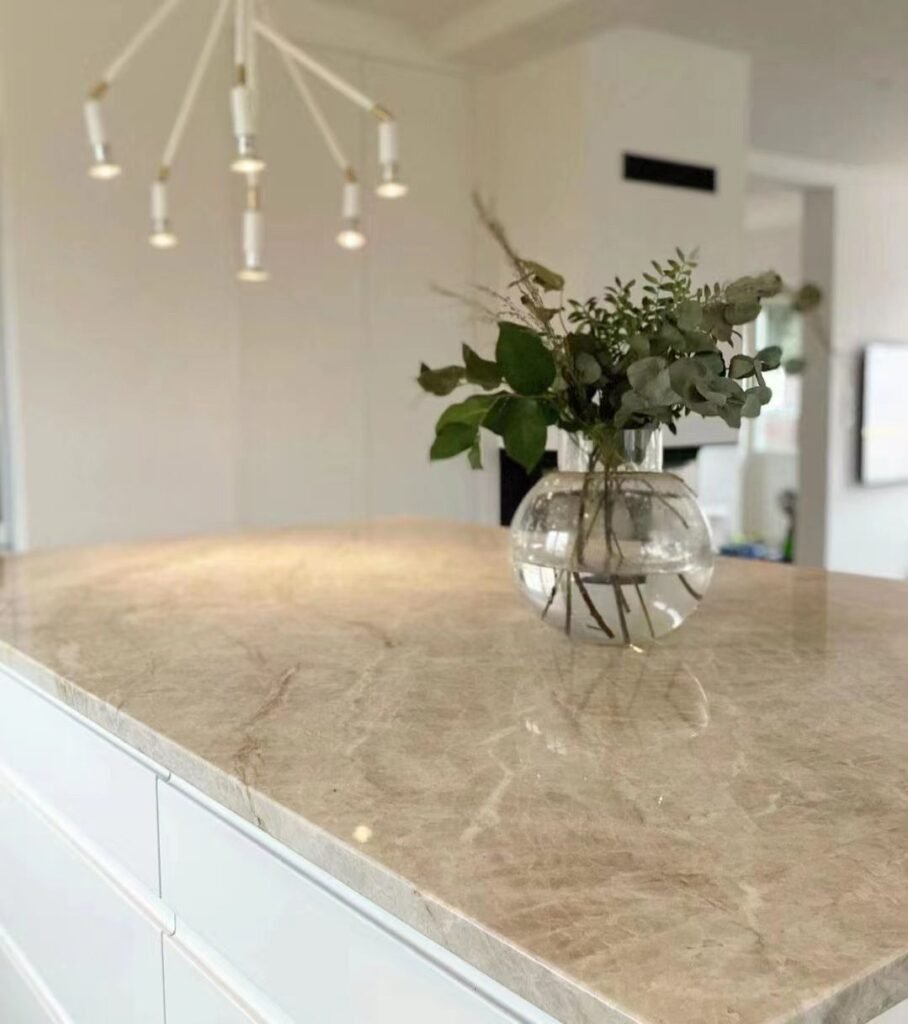
Taj Mahal Quartzite is a natural stone quarried from specific deposits known for soft cream and warm white backgrounds with subtle taupe or gold veining and occasional smoky movement. Unlike engineered quartz, quartzite is a metamorphosed sandstone—very hard and highly crystalline—so it shares marble-like aesthetics but offers superior heat and scratch resistance when properly finished.
Technical profile (what specifiers care about)
Hardness: high (resistant to scratches from everyday use).
Porosity: moderate—quartzite is less porous than many marbles but more so than fully engineered, non-porous surfaces; sealing strategy depends on finish.
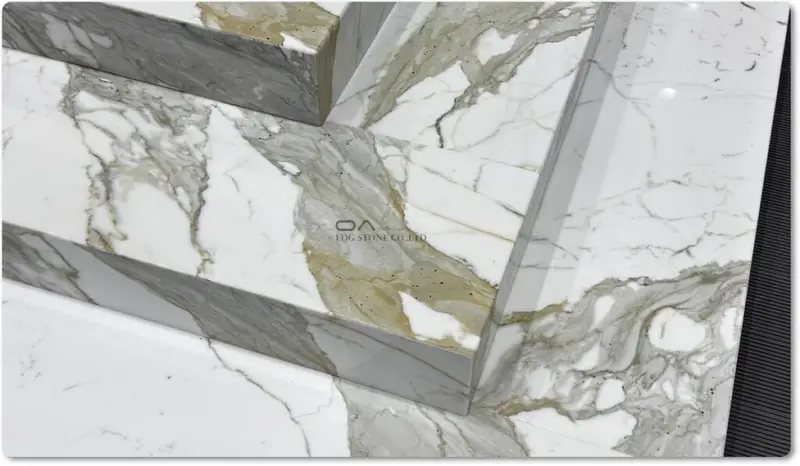
Typical slab sizes and thickness: common at 2cm/3cm thickness; full slabs can be bookmatched for striking waterfall or backsplash runs.
Visual character & finishes
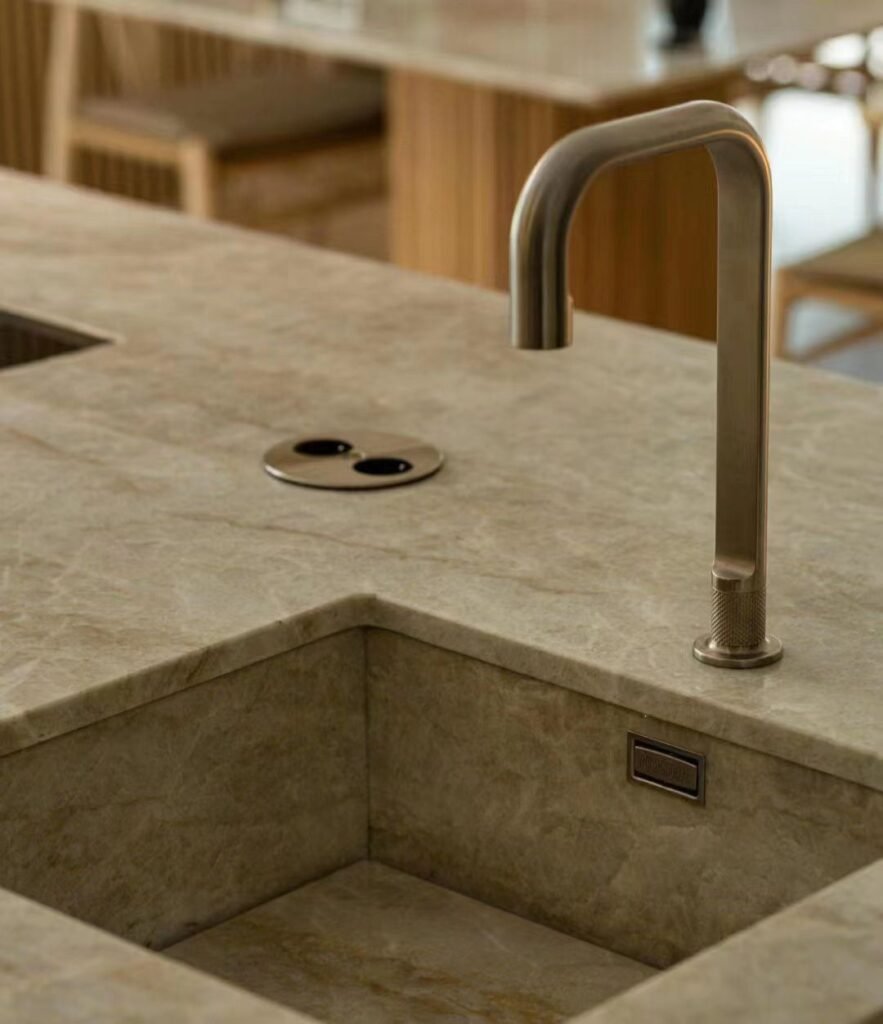
Taj Mahal’s aesthetic range—soft creams, faint veins, subtle movement—makes it a top choice for white cabinet kitchens and neutral luxury schemes. The leathered finish is particularly popular because it tones down glare, emphasizes texture, and hides fingerprints and water spots compared with polished surfaces.
Leathered vs Honed vs Polished
Polished: glossy, highlights color and veins; shows fingerprints and water marks more, but feels ultra-luxurious.
Honed: matte, smoother tactile feel; a middle ground for appearance vs maintenance.
Leathered: textured matte surface; reduces visible smudges and softens the look—excellent for daily living and modern kitchens where tactile warmth is desired.
Why “Low-Maintenance Luxury” describes Taj Mahal Quartzite?
Durability: heat, scratch, and real-world resilience
Quartzite’s natural formation gives it excellent heat resistance—hot pans briefly placed on the surface are less likely to damage quartzite than engineered resins. Its crystalline hardness also makes it more scratch-resistant than many marbles and some engineered surfaces.
Maintenance profile: sealing and daily care
Although quartzite is natural and often recommended to be sealed, many owners find that leathered Taj Mahal quartzite requires far less frequent sealing to maintain beauty compared to high-porosity marbles. Routine maintenance is simple: warm water, a soft cloth, and mild pH-neutral soap; avoid acidic or abrasive cleaners that can degrade sealers or dull finishes. Practical care steps are straightforward and fit modern living patterns—wipe spills quickly, routine mild cleaning, and periodic reseal only when water fails to bead.
Leathered finish: cosmetic benefits aligned with low upkeep
Leathering reduces glare, masks small abrasions, and visually conceals water spots and fingerprints. That means for busy households, the leathered Taj Mahal surface looks “new” longer with routine wiping rather than frequent polishing. Design pros increasingly recommend leathered options for appliance-heavy kitchens, and for pairing with white or warm wood cabinetry because of the forgiving, lived-in look it provides.
Design Applications & Pairings
Kitchens: islands, waterfall edges, and backsplashes
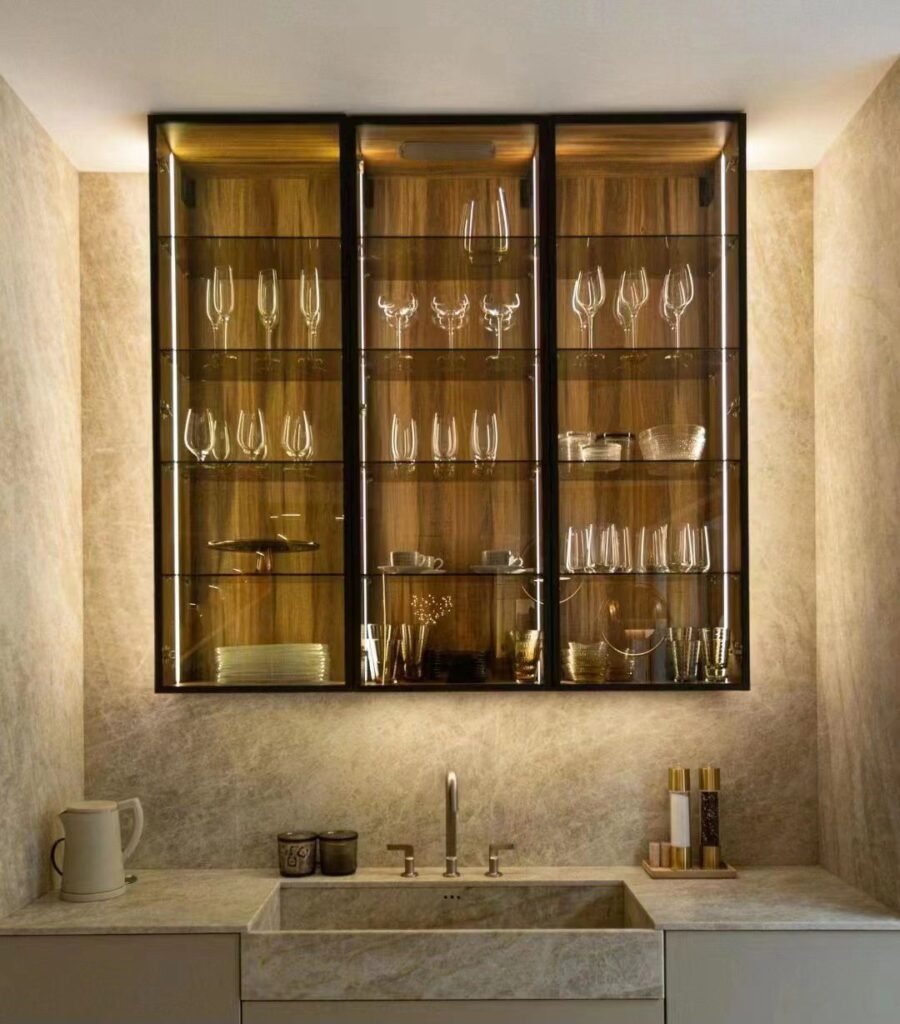
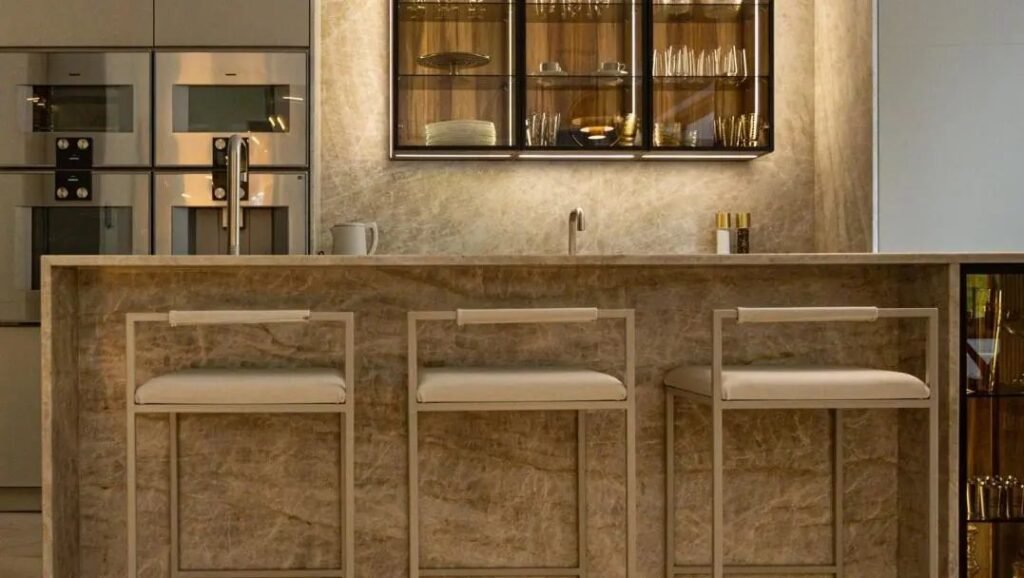
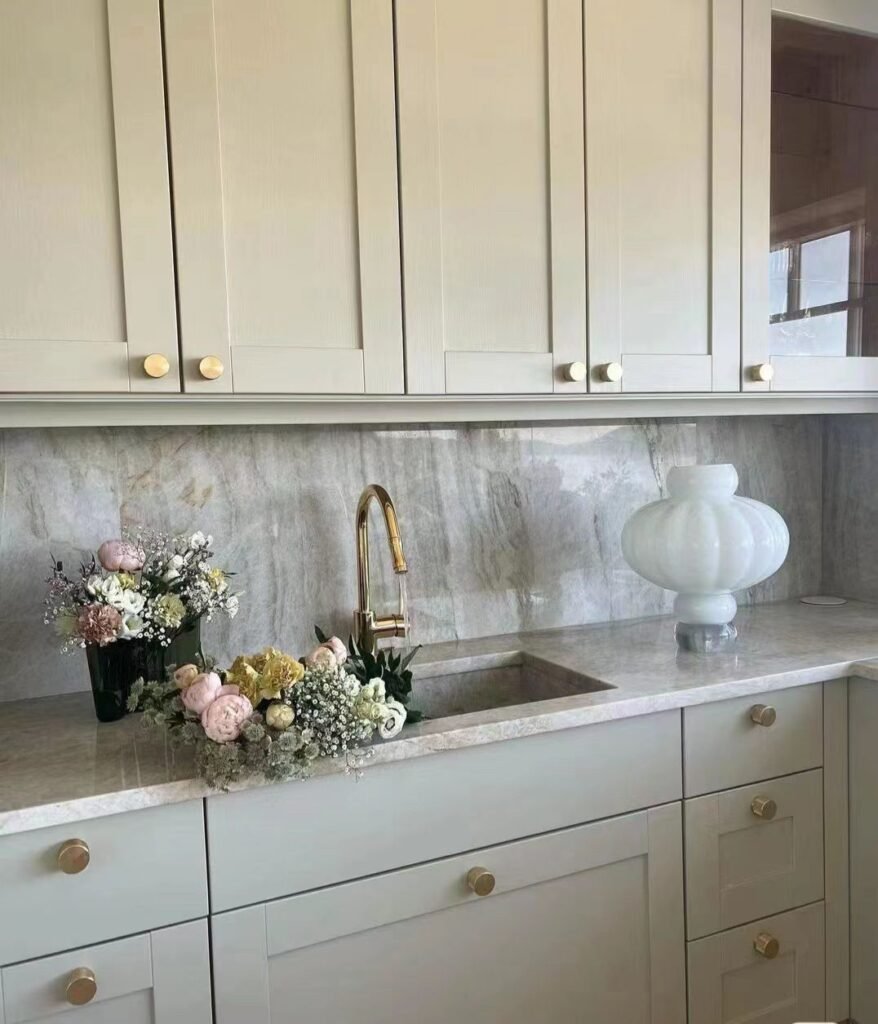
Taj Mahal quartzite excels as a centerpiece: waterfall islands, full-slab backsplashes, and integrated sinks highlight its continuous veining. Popular pairings: white cabinets (bright, airy contrast), warm cherry (classic luxury), and matte gray tones (modern minimalism).
Bathrooms & vanities
Leathered or honed finishes in bathrooms reduce slipperiness and help mask water marks. Use a consistent sealing routine around runoff zones and grout interfaces to maintain integrity over time.
Commercial & hospitality uses
Hotels and boutique restaurants use full-slab Taj Mahal for reception counters and statement walls—its durability and refined appearance deliver luxury that withstands frequent use.
Buying Guide: Price, Sizing, ‘Near Me’, and Where to Source (Manufacturer / Factory / Wholesale)
Typical price signals & what affects cost
Taj Mahal quartzite slab prices and installed countertop costs vary widely by slab quality, bookmatching, transport, and regional labor rates. Examples from slab marketplaces show material prices that can start around the mid-$60 per square foot and range upward depending on slab size and finish; full slab lots for premium material are often priced several thousand dollars per slab before fabrication and installation. Expect total installed prices to reflect material quality + fabrication complexity + edge profiles.
Searching “Taj Mahal quartzite countertops near me” & showroom questions
When you search locally, prioritize verified fabricators and ask to: see full slabs, confirm finish samples (leathered vs polished), inspect seams (ask for seam photos from previous installs), and request maintenance recommendations. Ask specifically about MOQs, lead times, and transport insurance for imported slabs.
Manufacturer / Factory / Wholesale buying tips
Buying direct from a manufacturer or factory (or through wholesale channels) can lower material cost per square foot, but watch for additional shipping, customs, and fabrication quality control needs. Ask factories for slab batch photos, finish samples, and certificates for slip resistance/finish if required for commercial projects.
Health, Safety & Regulatory Context (Industry trends driven by regulations)
Crystalline silica and fabrication safety (what buyers should know?)
Stone fabrication creates respirable crystalline silica (RCS) dust; regulators worldwide have tightened controls because long-term exposure causes silicosis and other serious illnesses. In the U.S., OSHA publishes silica standards and has increased inspection initiatives focused on stone fabrication to enforce controls and protect workers. Responsible fabricators now use wet cutting, local exhaust ventilation, and HEPA vacuums—features to ask about when vetting suppliers.
Regional updates & industry impacts
Several U.S. states and other jurisdictions have adopted additional silica protections for countertop fabricators, increasing demand for compliant prefabrication shops and certified installers. These regulatory shifts favor suppliers who invest in safe fabrication systems—an important selection criterion for enterprise and commercial projects.
How to Care for Taj Mahal Quartzite? (Step-by-Step Plan)
Daily cleaning routine (fast, non-specialized)
Wipe with a soft cloth and warm water + mild, pH-neutral soap.
Dry with a soft towel to prevent streaks.
For the leathered finish, brush crumbs off textured crevices and wipe along the grain to avoid trapping debris. Use microfiber to avoid lint.
Spill response & stain management
Act quickly for oils and colored liquids: blot (do not rub), then wash with warm soapy water.
For stubborn stains, a poultice recommended by your fabricator can lift oils; follow the fabricator’s guidance to avoid abrasive methods that alter texture.
Resealing strategy (if you choose to seal)
Test annually: place a tablespoon of water on the surface—if it beads, the sealer is working. If it soaks in visibly within minutes, schedule resealing. Many leathered quartzite owners reseal less frequently than polished stone users; proper product selection and professional application matter.
Alternatives & Cost-Benefit: Taj Mahal Quartzite vs Engineered Quartz / Sintered Porcelain / Marble
Quick pros & cons table (summary)
Taj Mahal Quartzite: Unique natural patterns, heat & scratch resistance, textured leather finishes hide wear — moderate maintenance (reseal as needed).
Engineered Quartz: Non-porous, minimal maintenance, limited heat resistance, uniform look.
Sintered Porcelain: UV stable for outdoors, very low maintenance, lighter installation weight, but seam-edge considerations.
Marble: Classic veining, softer, high maintenance, more staining risk.
Use-case recommendations
Choose Taj Mahal Quartzite if you prioritize natural uniqueness, tactile warmth, and a balance of durability with periodic care.
Choose engineered quartz for zero-sealer routines or ultra-low maintenance households.
Real-World Mini Case: EDG Stone — Taj Mahal Leathered Kitchen
Project snapshot
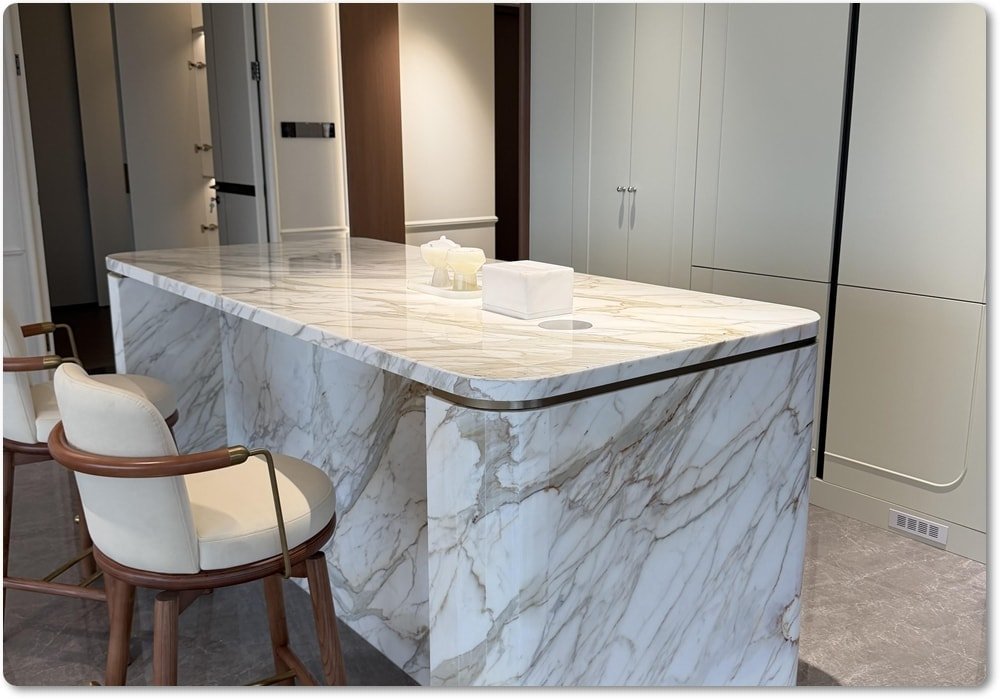
Client: Urban family home, open plan kitchen. Goal: warm neutral kitchen with tactile island surface that hides fingerprints and stains. Material: Taj Mahal quartzite, leathered finish, 3cm, waterfall island, full-slab backsplash.
Outcome & lessons
The leathered surface delivered daily-use forgiveness (fewer visible fingerprints), the client chose white shaker cabinets for contrast, and the fabricator recommended annual water-bead tests instead of fixed reseal schedules. Seam placement and edge profiles were planned to emphasize the stone flow. The result balanced luxury visuals and practical maintenance.
Market Signals & Data — Why Investing in Taj Mahal Quartzite Makes Business Sense?
Industry market reports show robust demand for natural stone across residential and commercial projects; multiple research firms place the global natural stone market in the tens of billions, with steady growth—supporting long-term resale and material value for premium homes. This macro demand, combined with consumer interest in low-maintenance luxury finishes (like leathered quartzite), creates resilient resale value for well-executed installations.
Purchase Checklist & Questions for Fabricators
12-point checklist before you sign
Inspect the full slab in person or request high-res photos and the lot number.
Confirm finish (leathered/honed/polished) and ask to see a sample.
Verify slab thickness and edge profile details.
Ask about sealed vs unsealed delivery and sealer brand.
Confirm seams and seam color options.
Ask for maintenance guidance and reseal policy.
Confirm lead times and shipping insurance.
Ask about fabrication dust controls and worker safety practices.
Request previous project photos (completed installs).
Verify warranty and responsibility for post-install issues.
Confirm on-site installation team credentials and insurance.
Get a written scope for cutouts, overhangs, and plumbing integration.
FAQ (Google Hot Search Questions)
Q1 — What is Taj Mahal quartzite, and is it low maintenance?
A1 — Taj Mahal quartzite is a natural, hard metamorphic stone known for creamy tones and subtle veining. It is generally lower maintenance than soft marbles but usually requires periodic sealing depending on finish; leathered finishes often mask wear and reduce perceived maintenance needs, making it a strong choice for modern living.
Q2 — How much do Taj Mahal quartzite countertops cost per square foot?
A2 — Prices vary widely by slab, finish, and region. Material listings often start in the mid-$60 per sq. ft. range for some slabs, with premium slabs and installation driving higher installed costs. Always request a full quote that separates material, fabrication, and installation.
Q3 — Can I use leather Taj Mahal quartzite with white cabinets?
A3 — Yes. Leathered Taj Mahal pairs beautifully with white cabinets because the textured, warm stone provides contrast and hides everyday smudges while keeping a bright kitchen palette.
Q4 — Do I need to reseal Taj Mahal quartzite countertops frequently?
A4 — Not necessarily. Leathered quartzite often needs resealing less frequently than polished stone. Use a water-bead test annually: if water soaks in quickly, reseal. Your fabricator’s guidance and the specific sealer chosen matter.
Q5 — Where should I buy Taj Mahal quartzite—manufacturer, factory, or wholesale supplier?
A5 — Buying direct from trusted manufacturers or wholesale suppliers can save material cost, but ensure strict quality control: request slab photos, sample finishes, clarifications on lead times, and fabrication practices (including silica dust controls). For many homeowners, local certified fabricators who source and fabricate slabs offer the best balance of cost, quality, and warranty.
Semantic Closure: How / Why / What / Options / Considerations
How Taj Mahal Quartzite delivers low-maintenance luxury: through a combination of natural hardness, finish choice (leathered reduces shine and visible wear), and simple daily cleaning routines. Homeowners achieve long-lasting elegance by pairing the right finish with periodic, evidence-based maintenance rather than constant intensive care.
Why choose filled-slab Taj Mahal over alternatives: it gives a unique, natural marble-like aesthetic with better thermal and scratch resilience, improving long-term utility without losing visual prestige. For many purchasers, the modest increase in initial investment is offset by the stone’s durability and resale appeal.
What to expect in terms of industry risk & compliance: fabrication generates respirable silica; compliant fabricators use wet cutting, ventilation, and HEPA filtration. Buyers should require safety-conscious partners to protect workers and avoid future liability or project delays driven by regulatory enforcement.
Options for procurement and finishes: buyers can choose direct factory supply for wholesale savings, local certified fabricators for turn-key services, or hybrid procurement (factory slabs + local install), depending on risk tolerance, lead time, and finish control.
Considerations for modern living: match finish to lifestyle—leathered for busy households, polished for show kitchens that see light use. Confirm maintenance expectations with your fabricator in writing and include reseal/test intervals in warranties or post-install documentation to preserve value.