Quick Summary
Introduction: Why slab thickness matters for Taj Mahal Quartzite?
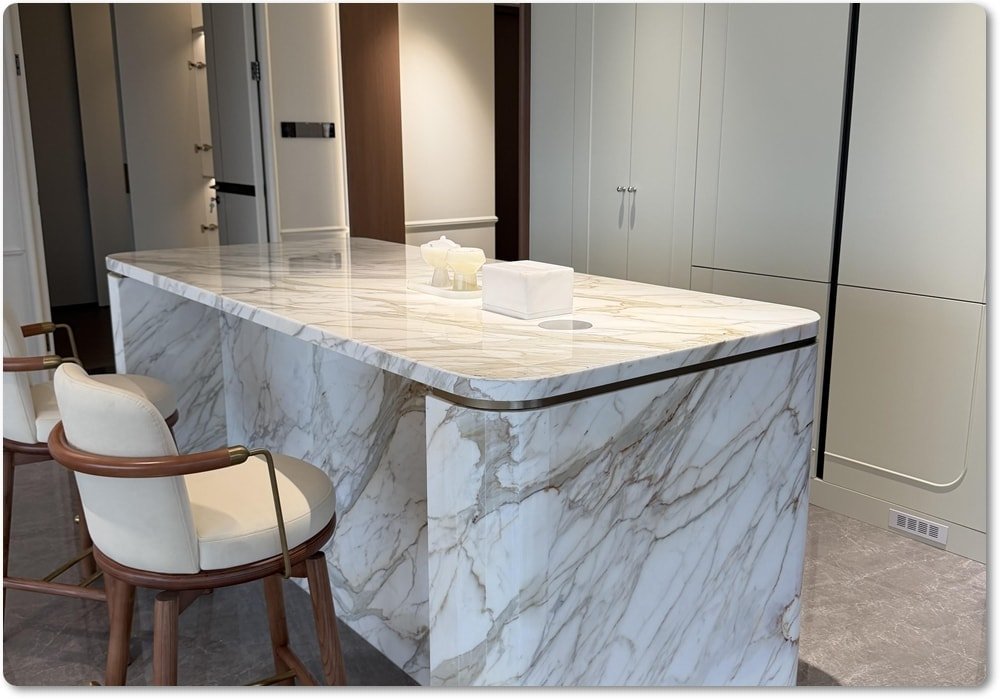
When specifying Taj Mahal Quartzite, thickness is not a secondary technical detail—it is a primary design and performance decision. Thickness influences visual weight, structural behavior, fabrication methods, installation requirements, and overall project cost. A 12–20 mm ultra-thin slab delivers a crisp, contemporary aesthetic, while a 30–50 mm thick slab creates a monolithic, architectural presence—especially for islands and statement counters.
This article is written for designers, builders, and buyers who want clarity: how to select slab thickness by application, how thickness interacts with finishes, and how sourcing from a manufacturer or factory changes outcomes. With production-level experience from EDG Stone.
Understanding Taj Mahal Quartzite: material & market demand
Geological characteristics & strength profile
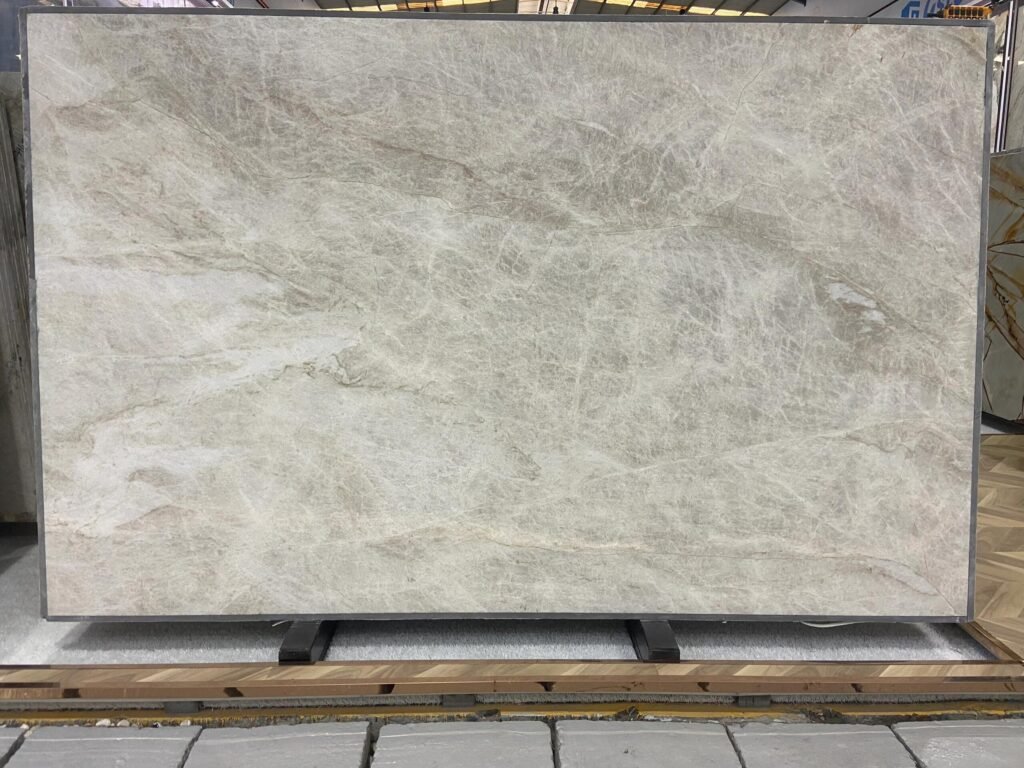
Taj Mahal Quartzite is a natural metamorphic stone dominated by interlocking quartz crystals. This crystalline structure gives it higher scratch resistance than marble and a tighter pore network, making it suitable for kitchens and heavy-use counters when properly sealed. Thickness selection works with this strength profile: thinner slabs require reinforcement; thicker slabs leverage mass for stiffness and edge continuity.
Why is Taj Mahal Quartzite so popular?
The stone’s popularity stems from its balance of beauty and performance. It offers a marble-like palette—soft whites, warm creams, gentle greige veining—paired with quartzite durability. This combination appeals to homeowners seeking timeless elegance without sacrificing resilience. Market demand also reflects versatility: Taj Mahal performs equally well in modern kitchens, classic interiors, and hospitality spaces.
Kitchens with Taj Mahal counters: perception by thickness
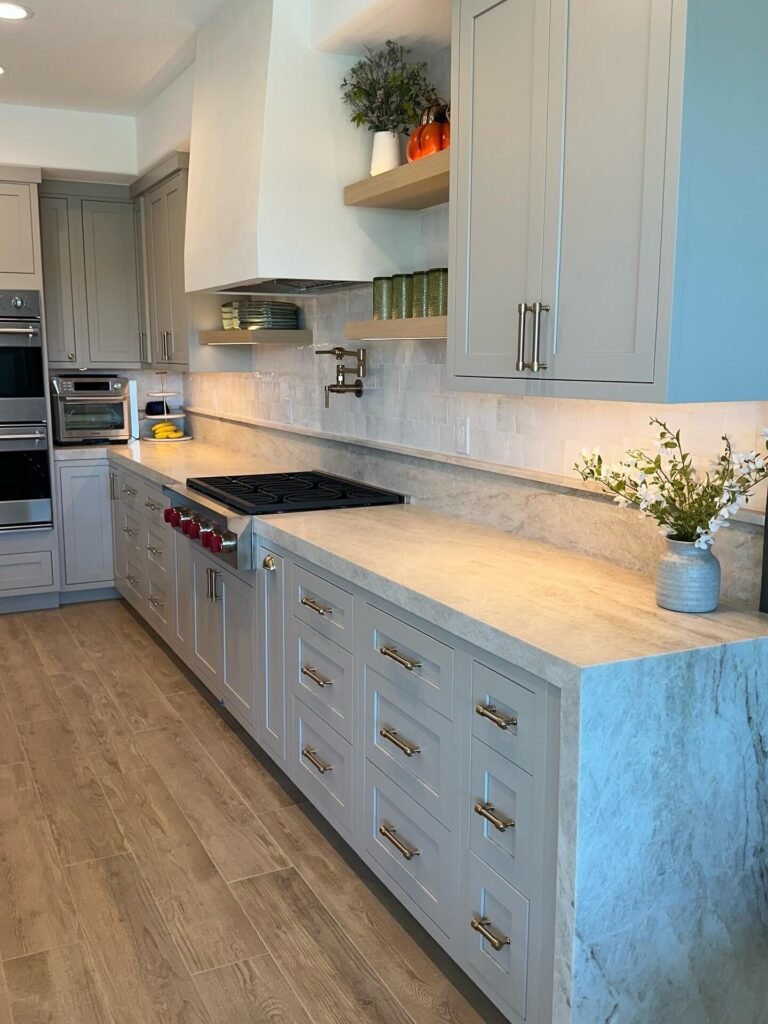
In kitchens, thickness changes how the stone reads from across the room. Thinner profiles feel sleek and minimal; thicker profiles communicate luxury and permanence. Designers increasingly use thickness as a visual tool, not just a structural parameter.
Taj Mahal Quartzite slab size & thickness standards
Typical slab dimensions
Most Taj Mahal Quartzite slabs are supplied in large formats suitable for islands and long runs. Jumbo slabs are commonly used to support waterfall islands and bookmatched installations. Exact dimensions vary by quarry block yield and factory cutting optimization.
Common thickness options
Ultra-thin: 12 mm–20 mm
Standard: 20 mm–30 mm
Thick / Extra-thick: 30 mm–50 mm+ (solid or laminated)
Variations by manufacturer & factory processing
Factory capabilities determine the consistency of thickness, surface flatness, and edge precision. Manufacturer-direct sourcing allows buyers to specify tolerances, reinforcement methods, and finish combinations early—reducing risk during fabrication and installation.
Ultra-thin Taj Mahal Quartzite slabs (12–20 mm)
Where ultra-thin slabs excel?
Ultra-thin Taj Mahal Quartzite suits contemporary kitchens, wall cladding, backsplashes, and furniture tops. It minimizes visual bulk and pairs well with handle-less cabinetry and integrated appliances.
Structural reinforcement requirements
Thin slabs require reinforcement—such as fiberglass mesh backing or bonded substrates—to meet load and span requirements. This is standard practice at the factory level and must be specified clearly to fabricators.
Pros, limitations & compliance
Pros: reduced weight, modern look, material efficiency.
Limitations: higher sensitivity to point loads, careful handling required.
Compliance: building standards typically require adequate support and approved adhesives; ultra-thin applications must follow manufacturer guidance.
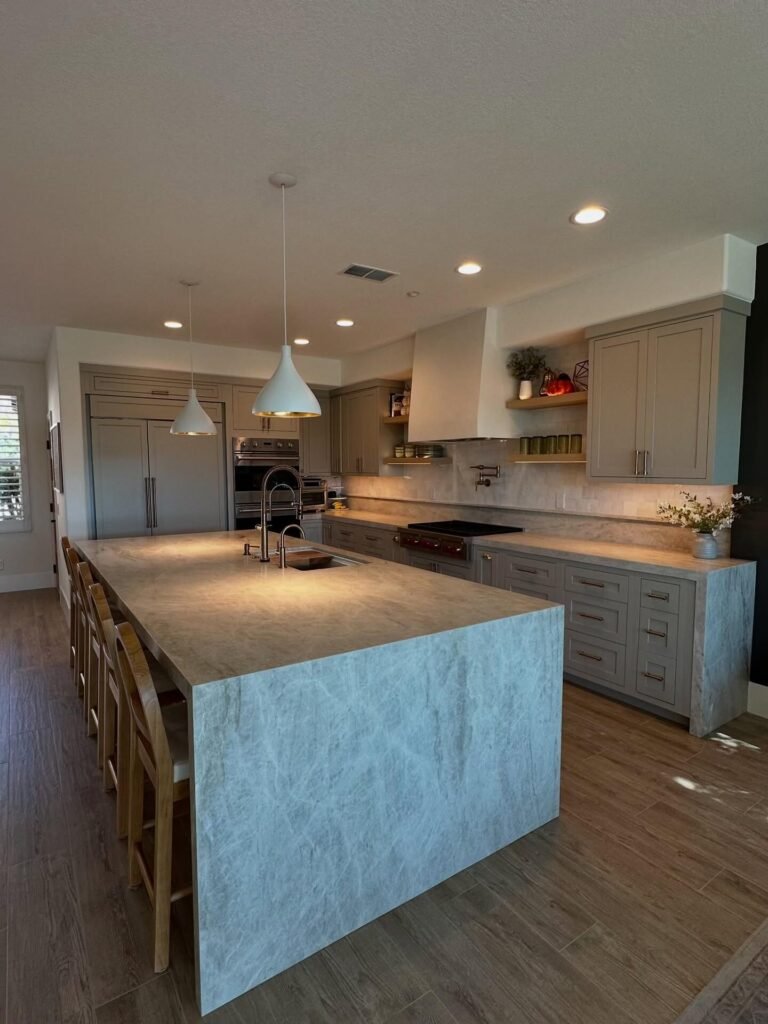
Standard thickness slabs (20–30 mm): the industry benchmark
Why 30 mm dominates countertops?
Thirty millimeters remains the most common choice for Taj Mahal quartzite countertops. It balances stiffness, durability, and visual presence while supporting a wide range of edge profiles.
Fabrication flexibility & edges
Standard thickness accommodates eased, beveled, ogee, and mitered edges. It also supports sink cut-outs and cooktop openings with reduced reinforcement complexity.
Balance of aesthetics, cost & durability
From a value perspective, 30 mm delivers predictable performance with manageable fabrication cost—making it the default for residential kitchens and light commercial use.
Thick & extra-thick slabs (30–50 mm+): statement design
Thick slabs for waterfall islands
For a Taj Mahal waterfall island, thickness defines drama. Thick profiles (either solid or laminated) create seamless vertical continuity and elevate islands into architectural features.
Visual mass & monolithic aesthetics
Thicker slabs emphasize the stone’s natural movement and color depth. They read as custom and bespoke—often preferred in luxury homes and boutique hospitality projects.
Transport & installation considerations
Extra thickness increases weight, requiring reinforced cabinetry, careful logistics, and professional installation planning. Manufacturer coordination is essential.
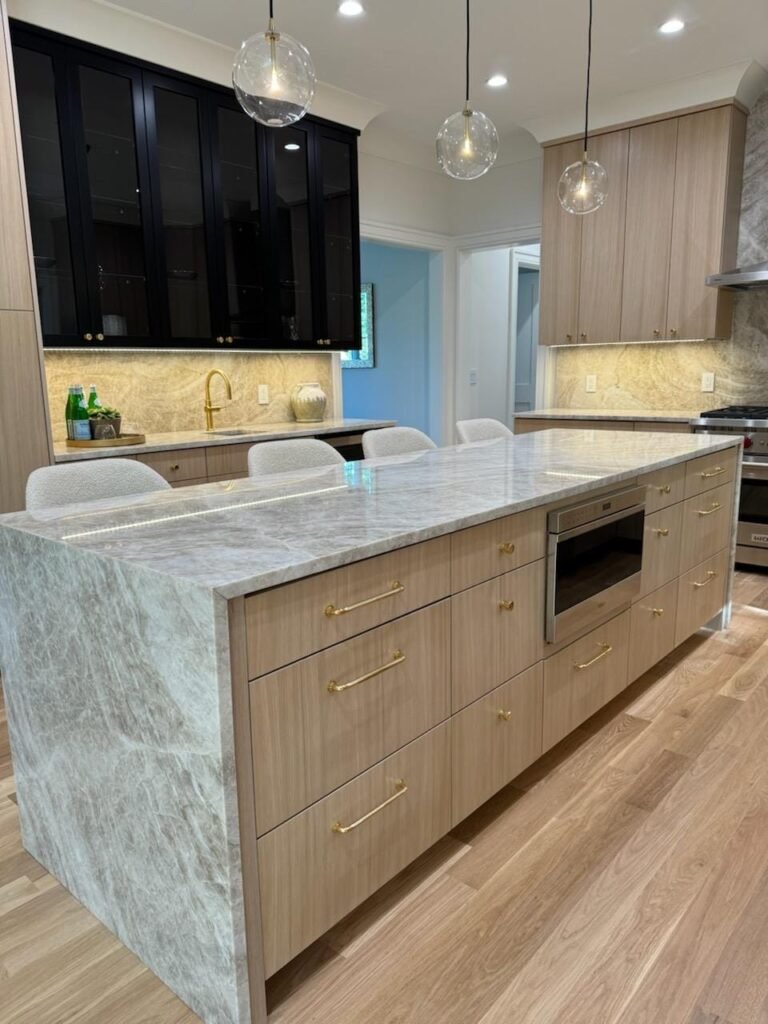
Slab thickness by application
Kitchen countertops
Ultra-thin: modern, minimal kitchens with full support.
Standard: most residential kitchens.
Thick: islands and focal points.
Waterfall islands & feature elements
Thicker slabs or laminated miters create continuous visual flow and edge impact.
Bathroom vanities & vertical panels
Thin to standard thickness works well; honed or leathered finishes reduce glare and fingerprints.
Commercial & hospitality
Durability and compliance dominate; standard to thick slabs are preferred for longevity.
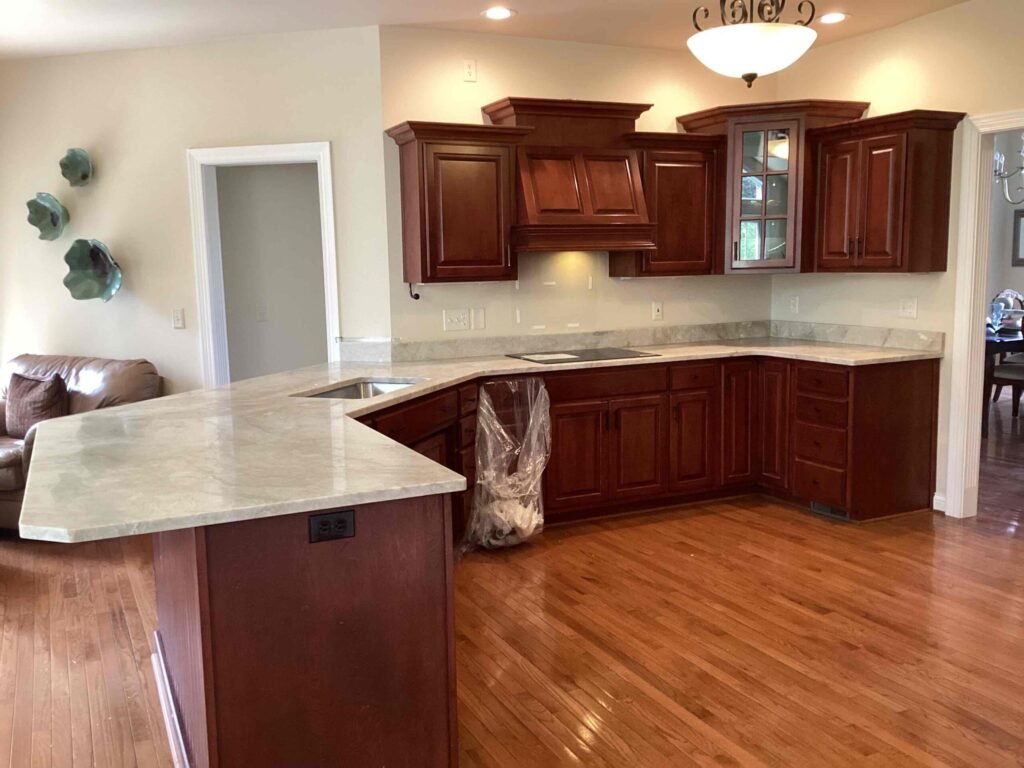
Design trends: thickness, finishes & modern kitchens
Taj Mahal leathered quartzite reviews & thickness perception
Leathered finishes soften reflections and enhance tactile appeal. On thicker slabs, leathering adds depth and richness; on thinner slabs, it maintains a modern, understated feel.
Polished vs honed vs leathered across thickness
Polished: maximizes light and veining—best on standard/thick slabs.
Honed: contemporary and forgiving—excellent across all thicknesses.
Leathered: tactile luxury—particularly effective on thicker profiles.
Edge detailing trends
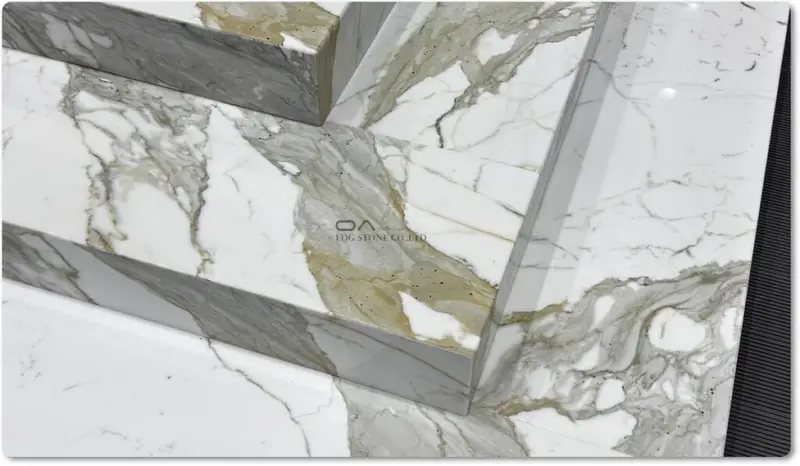
Mitered edges allow thin slabs to appear thick, offering a cost-effective way to achieve a bold look without full solid thickness.
Performance, safety & building regulation considerations
Load-bearing & support
Thickness selection must align with cabinet spans, overhang limits, and reinforcement methods. Thicker slabs tolerate longer overhangs; thinner slabs need engineered support.
Compliance in key markets
North American and EU standards emphasize safe handling, proper support, and certified adhesives. Sustainability reporting increasingly favors efficient material use—benefiting thin and laminated designs.
Sustainability & efficiency
Optimized thickness reduces waste and embodied energy while meeting performance needs, aligning with evolving green building expectations.
Cost structure: how thickness impacts pricing & logistics
Material yield & quarry efficiency
Thicker slabs consume more raw material per square meter; thin slabs improve yield but require reinforcement.
Fabrication, crating & shipping
Weight drives freight and crating costs. Factory-direct buyers can optimize packing and container utilization by mixing thicknesses strategically.
Manufacturer vs trader sourcing
Manufacturer sourcing offers transparency in thickness tolerances, reinforcement methods, and finish consistency—critical for large projects and wholesale programs.
Taj Mahal Quartzite alternatives: thickness comparison
Quartzite vs marble vs engineered stone
Quartzite supports thinner profiles better than marble due to its strength. Engineered stone offers uniform thin slabs but lacks natural variation.
When alternatives make sense
Budget constraints, extreme thinness without reinforcement, or uniform color requirements may favor alternatives, but Taj Mahal remains unmatched for natural elegance.
Visual similarity vs performance
Alternatives can mimic color but not crystalline depth; thickness choice often reveals this difference.
Color coordination & thickness perception
Taj Mahal quartzite paint color matching
Warm whites, greige, and soft taupes complement Taj Mahal. Thicker slabs intensify perceived warmth; thinner slabs feel lighter and airier.
Cabinetry & lighting interaction
Dark cabinetry amplifies slab thickness visually; integrated lighting highlights edges and waterfall details.
Making thin slabs look thick
Mitered edges, shadow gaps, and recessed toe-kicks enhance perceived mass without extra material.
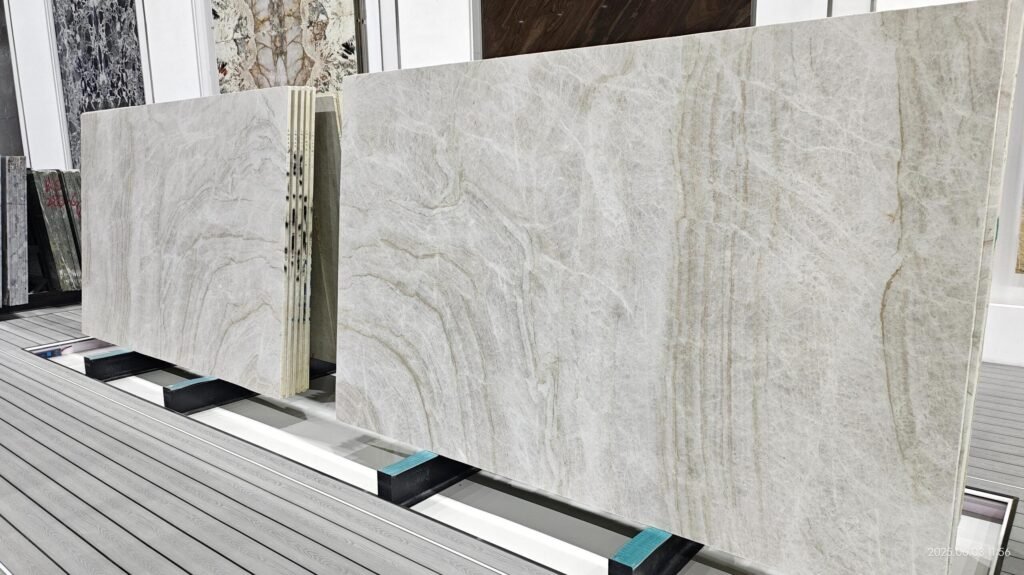
Buyer decision framework: how to choose the right slab thickness?
Residential vs commercial logic
Homes prioritize aesthetics and budget balance; commercial projects prioritize durability, compliance, and lifecycle cost.
Designer & importer checklist
Confirm application, span, finish, edge detail, reinforcement, logistics, and installation method before ordering.
Factory communication clarity
Specify thickness, tolerances, reinforcement, and finish in writing. Request slab photos and mock-ups for critical projects.
FAQ: Taj Mahal Quartzite slab thickness (Google hot search)
Q1: What slab thickness is best for Taj Mahal quartzite countertops?
A1: For most kitchens, 30 mm is the best all-around choice. It balances strength, durability, and aesthetics while supporting common edge profiles and cut-outs. Thinner slabs can work with reinforcement, while thicker slabs are ideal for statement designs.
Q2: How thin can Taj Mahal Quartzite be used safely?
A2: Ultra-thin slabs (12–20 mm) can be used safely when reinforced and fully supported. Proper fabrication and installation are essential to meet performance expectations and building standards.
Q3: How does slab thickness affect cost?
A3: Thicker slabs increase material and shipping costs, while thinner slabs reduce weight but add reinforcement expense. Factory-direct sourcing helps optimize total cost by aligning thickness with application needs.
Q4: Is a thicker slab better for a Taj Mahal waterfall island?
A4: Yes. Thicker or mitered slabs create a seamless, monolithic look for waterfall islands, enhancing visual impact and perceived luxury.
Q5: Does the finish choice change with thickness?
A5: Finish and thickness work together. Polished finishes shine on standard or thick slabs; honed and leathered finishes perform well across all thicknesses, especially in high-use kitchens.
Semantic Closure: How / Why / What / Options / Considerations
Why: Thickness defines visual weight, durability, and cost efficiency. The right thickness elevates design while meeting performance and compliance goals.
What: Taj Mahal Quartzite supports ultra-thin, standard, and thick profiles—each delivering distinct aesthetic and functional outcomes.
Options: Combine mitered edges, leathered finishes, and targeted thickness increases (e.g., islands only) to optimize impact and budget.
Considerations: Verify support, handling, sustainability goals, and factory capabilities. Clear specifications ensure predictable results and long-term value.
References
Quartzite Properties and Applications — U.S. Geological Survey — Technical Publication
Kitchen Countertop Trends — Architectural Digest — Editorial
Stone Fabrication Best Practices — International Masonry Institute — Technical Guide
Natural Stone Sustainability — BuildingGreen — Industry Analysis
Stone World Market Report — Stone World Magazine — Trade Publication
Taj Mahal Quartzite Product Catalog — EDG Stone — Manufacturer Documentation