Quick Summary: Heat & Safety Performance
Verdict: Taj Mahal Quartzite is structurally superior to engineered quartz and granite regarding thermal shock. It withstands temperatures exceeding 1,200°F without resin scorching, making it the safest choice for active culinary environments.
- Heat Tolerance: 10/10 (Volcanic origin makes it naturally fire-resistant).
- Safety Trend 2025: Increasing shift from high-silica artificial stone to natural quartzite due to health regulations.
- Aesthetics: Bridges the gap between the look of marble and the durability of granite.
- Best Sourcing: EDG Stone (Factory Direct) offers premium slab selection and custom fabrication, bypassing retail markups.
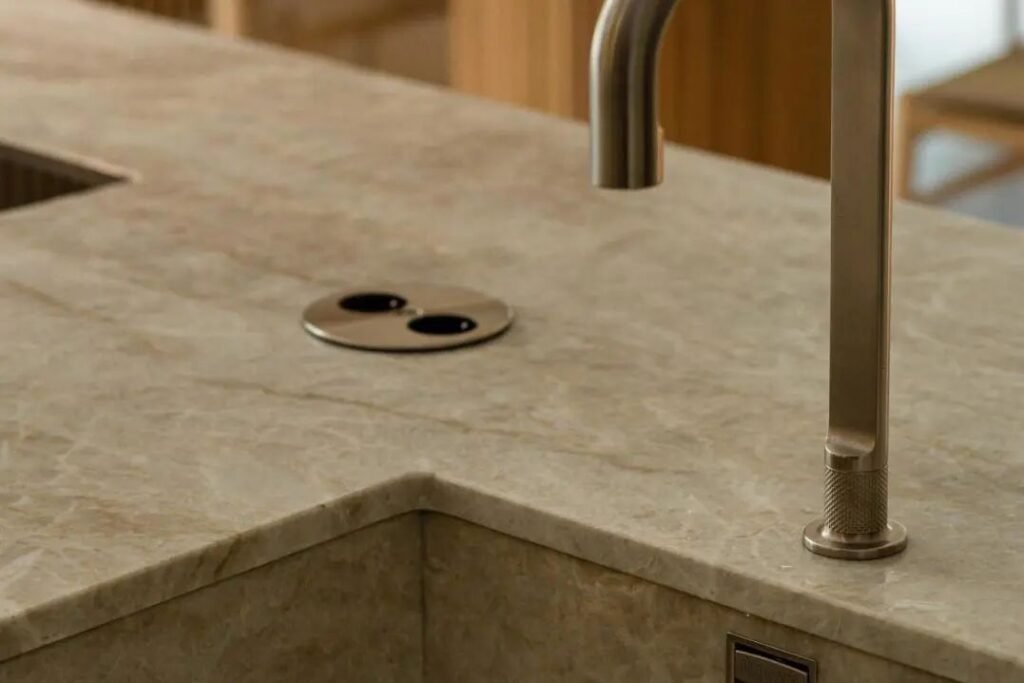
In the high-stakes environment of a modern kitchen, the countertop is more than just a surface; it is a workspace that must endure extreme conditions. While designers often focus on color palettes, the functional reality of a kitchen revolves around heat. Hot pots, boiling water, and searing pans are constant threats to inferior materials. This is where Taj Mahal Quartzite emerges not just as a luxury option but as a practical necessity.
Unlike engineered materials that rely on plastic resins, Taj Mahal Quartzite is born from geological pressure and heat. For homeowners asking, “Is Taj Mahal quartzite outdated?“, the answer is a resounding no. It is, in fact, becoming the standard-bearer for the “Quiet Luxury” movement in 2025, offering a safety profile that artificial stones cannot match. Whether you are looking for Taj Mahal quartzite countertops with white cabinets for a bright, airy look, or seeking the tactile depth of Taj Mahal leathered Quartzite, understanding the thermal physics of this stone is key to making a wise investment.
As a leading Taj Mahal quartzite slabs manufacturer, EDG Stone is committed to educating consumers on why this material is the ultimate shield for your kitchen, offering insights that go beyond the surface.
The Science of Heat: Why Quartzite Outperforms Engineered Stone?
To truly appreciate the value of Taj Mahal Quartzite, one must understand the fundamental difference between “heat resistant” and “heat proof.” Many countertop materials claim to resist heat, but few can withstand the direct contact of a hot skillet.
Geology 101: How Taj Mahal Quartzite is Formed
Taj Mahal is a metamorphic rock. It began its life as sandstone. Over millions of years, through intense tectonic compression and heating deep within the Earth’s crust, the quartz grains recrystallized and fused. This process creates an interlocking crystalline structure that is incredibly dense and hard. Because the stone was formed at temperatures far exceeding those of a residential oven, it is naturally inert to thermal shock.
Temperature Tolerance: Natural Stone vs. Quartz vs. Granite
The market is often confused by the terminology between “Quartz” (Engineered) and “Quartzite” (Natural).
Engineered Quartz: This is a composite material made of roughly 90-93% crushed stone and 7-10% polymer resin. The weak link here is the resin. Most polyester resins used in manufacturing begin to destabilize, yellow, or scorch at approximately 300°F (150°C). Placing a hot pot directly on engineered quartz can result in a permanent burn mark that cannot be repaired.
Taj Mahal Quartzite: Containing zero plastic binders, it is 100% mineral. It can handle temperatures well above 600°F to 1000°F without altering its physical state.
Granite: While granite is also heat resistant, Taj Mahal often surpasses it in density, offering a more marble-like appearance without the fragility of marble or the heat vulnerability of quartz.
The “Resin” Factor: Why Artificial Stone Fails at High Heat
In the manufacturing of artificial stone, the resin acts as the glue. However, heat breaks down this chemical bond. EDG Stone emphasizes that when you buy Taj Mahal quartzite countertops nearby or import them, you are purchasing a solid, resin-free slab. This means there is no chemical agent to melt, discolor, or release fumes when exposed to high temperatures, a critical factor for health-conscious households.
Aesthetic Versatility: Is Taj Mahal Quartzite Outdated?
A common query in search engines is the relevance of this stone in current design trends. The concern that Taj Mahal might be a relic of the past is unfounded. In fact, it is currently enjoying a renaissance due to the shift towards organic, earthy interiors.
Timeless Elegance: The “Chameleon” of Kitchen Design
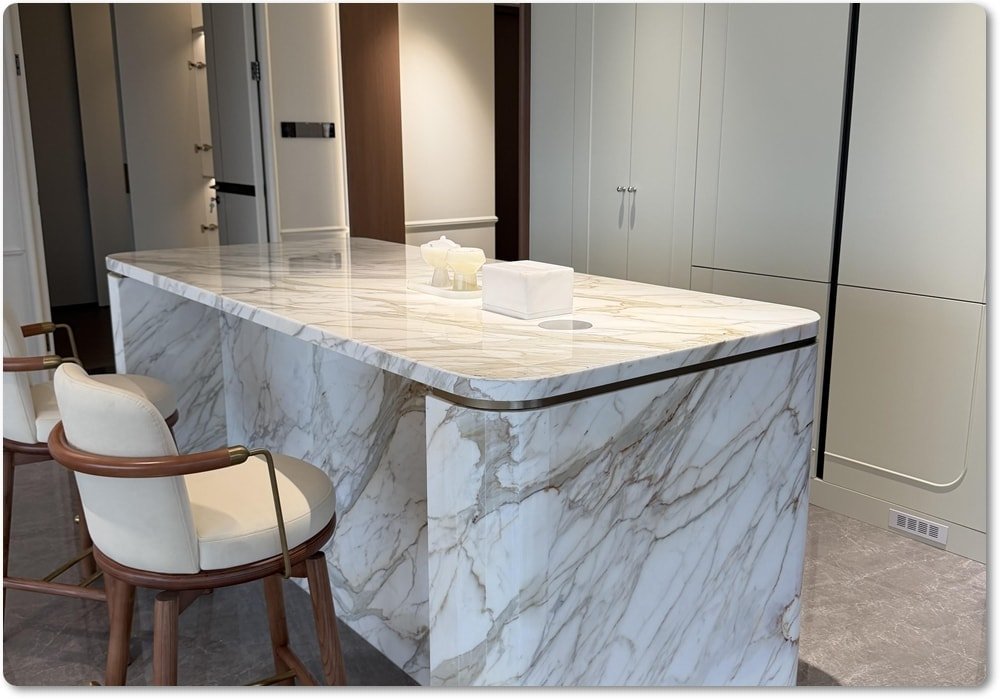
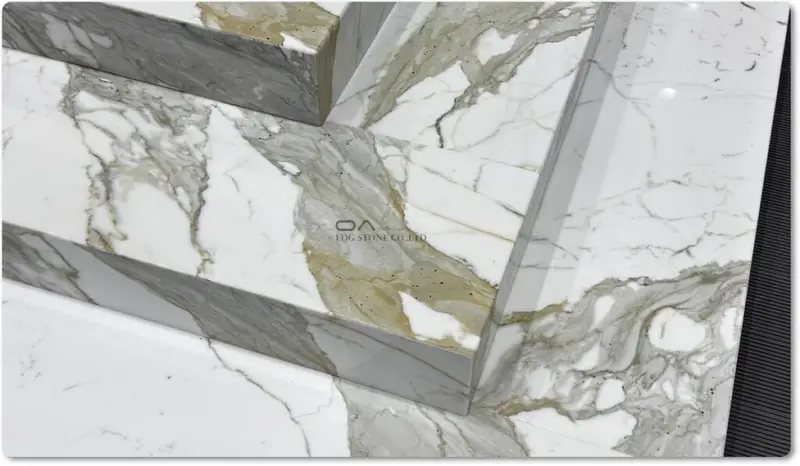
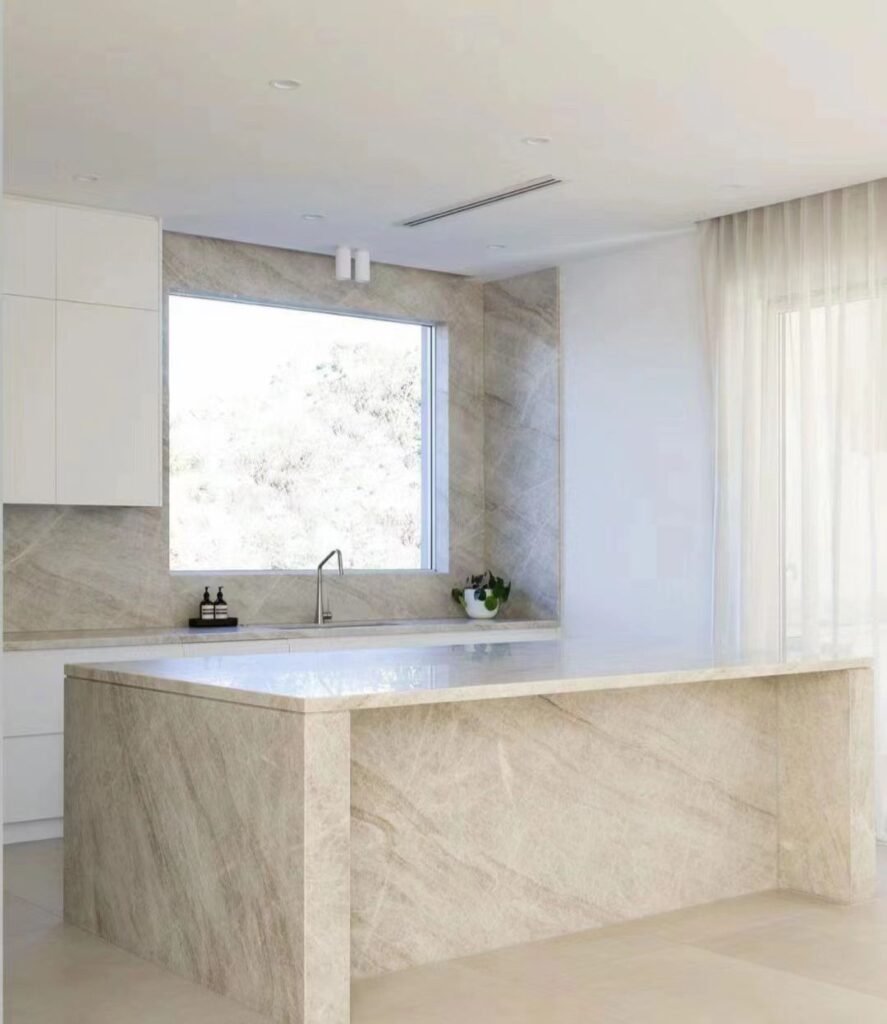
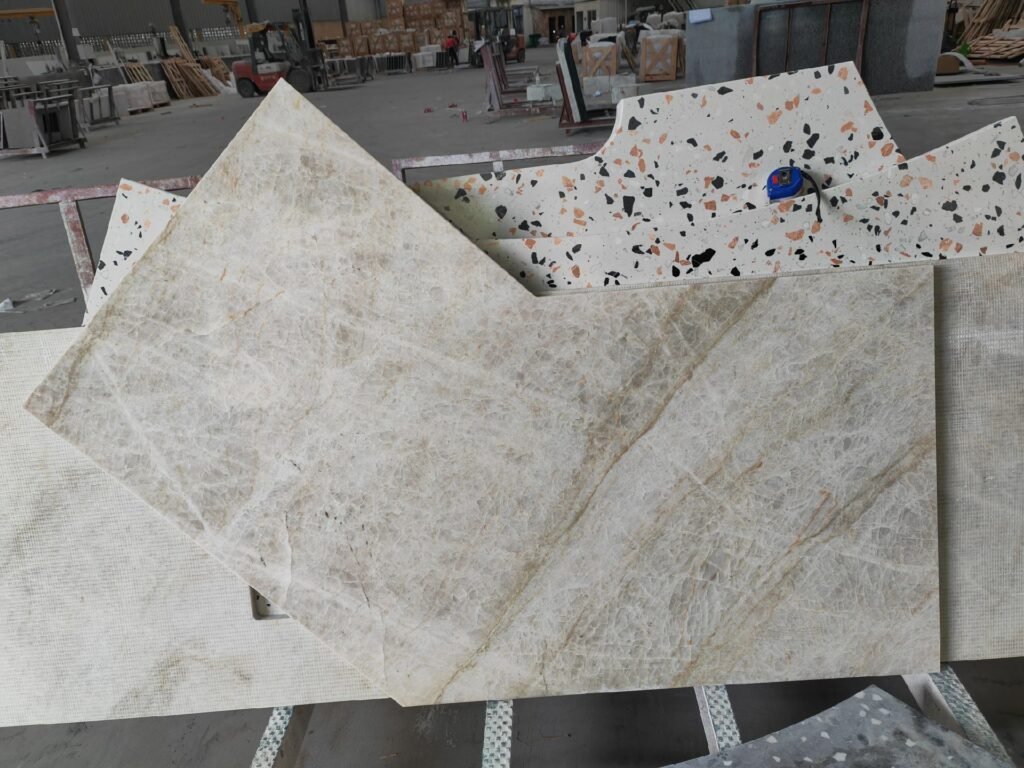
Taj Mahal is celebrated for its warm, creamy background featuring striations of gold, taupe, and sometimes slight grey. Unlike the busy, speckled granites of the early 2000s, Taj Mahal offers a flow and movement similar to Calacatta Gold marble but with a warmer, more inviting undertone. It fits seamlessly into:
Modern Minimalist Kitchens: Adding texture to sleek lines.
Traditional Estates: Complementing ornate woodwork.
Farmhouse Styles: Bridging the gap between rustic and refined.
Surface Textures: Taj Mahal Leathered Quartzite vs. Polished
The finish of the stone significantly impacts its heat performance perception and tactile quality.
Polished Finish: The classic high-gloss look that reflects light and maximizes the stone’s colors. It seals the pores tightly but can show fingerprints.
Leathered (Brushed) Finish: This is the trending choice for 2025. Diamond-tipped brushes are run over the slab to create a soft, matte texture that mimics the feel of smooth leather. Leathered Taj Mahal Quartzite is excellent for hiding crumbs, fingerprints, and water spots. Furthermore, the textured surface disperses heat effectively and adds a sensory dimension to the kitchen that flat polish lacks.
Visual Gallery: Describing Taj Mahal Quartzite Kitchen Pictures
When you browse Taj Mahal quartzite kitchen pictures, pay attention to the transparency. High-quality slabs, like those from EDG Stone, possess a semi-translucent quality known as crystalline depth. Under under-cabinet lighting, the stone seems to glow, revealing layers of quartz crystals that flat, opaque man-made stones can never replicate.
Design Pairings: Cabinets and Backsplashes
One of the reasons Taj Mahal is a favorite among interior designers is its neutrality. It does not demand attention, yet it commands the room.
Taj Mahal Quartzite Countertops with White Cabinets
This is the “Gold Standard” combination. White cabinets can sometimes feel sterile or hospital-like. Topping them with Taj Mahal introduces warmth without darkening the room. The gold veining in the quartzite picks up the warmth of brass or gold hardware, creating a cohesive luxury aesthetic.
Taj Mahal Quartzite Countertops with Cherry Cabinets
Designing with natural wood cabinets (Cherry, Walnut, White Oak) can be tricky. Cool-toned marbles often clash with the red or yellow undertones of wood. Taj Mahal is unique because its beige and amber veins harmonize perfectly with Taj Mahal quartzite countertops with cherry cabinets, creating a rich, seamless transition from joinery to countertop.
Seamless Flow: Backsplash with Taj Mahal Quartzite Countertops
A major trend in luxury kitchens is the “Full Height Backsplash.” Instead of using subway tiles or mosaics, homeowners are extending the slab from the counter up to the ceiling or upper cabinets.
Visual Impact: It creates a mural of natural art.
Maintenance: No grout lines to clean—grease and sauce splashes wipe right off the stone.
Heat Safety: Using Taj Mahal as a backsplash behind a professional gas range is incredibly safe due to its fire resistance, unlike quartz, which can discolor behind high-BTU burners.
Market Trends & Safety Regulations (2025 Outlook)
The stone industry is currently navigating a significant regulatory shift that favors natural quartzite.
The Shift from High-Silica Artificial Stone
Recent years have seen increased scrutiny on “Engineered Stone” due to the high silica content and the risks of silicosis for fabricators during the cutting process. Governments in Australia and potentially the US and EU are implementing stricter regulations or outright bans on certain artificial products. This has led to a massive pivot back to natural stone. Taj Mahal Quartzite is the primary beneficiary. It offers the “clean” look of quartz but is a natural geological formation. Sourcing from a responsible Taj Mahal quartzite countertops factory like EDG Stone ensures that you are supporting a supply chain that prioritizes authentic natural materials over chemically bound synthetics.
Why Designers are Returning to Authentic Natural Stone
Beyond safety, there is a desire for authenticity. In an era of AI and synthetics, people crave the “Real.” A Taj Mahal slab is a unique fingerprint of the earth; no two are identical. This exclusivity is a key driver for high-net-worth clients who refuse mass-produced uniformity.
Buying Guide: Price, Sourcing, and Fabrication
Navigating the purchase of quartzite can be complex. Understanding the logistics is crucial for securing the best value.
Understanding Taj Mahal Quartzite Countertops Price Per Square Foot
Taj Mahal is considered a premium exotic stone. Taj Mahal quartzite countertops price per square foot typically ranges from $95 to $220 USD, installed. The variance depends on:
Clarity: Cleaner backgrounds with distinct veining cost more.
Origin: Authentic blocks from Brazil.
Fabrication Complexity: Mitred edges, waterfalls, and leathering add to the cost.
Taj Mahal Quartzite Countertops Near Me vs. Factory Direct (EDG Stone)
Most homeowners start by searching for Taj Mahal quartzite countertops nearby. While local fabricators are essential for installation, sourcing the material is different.
Retail/Big Box: Often stock “Standard” or “Commercial” grade slabs, which may have more grey spots or fissures.
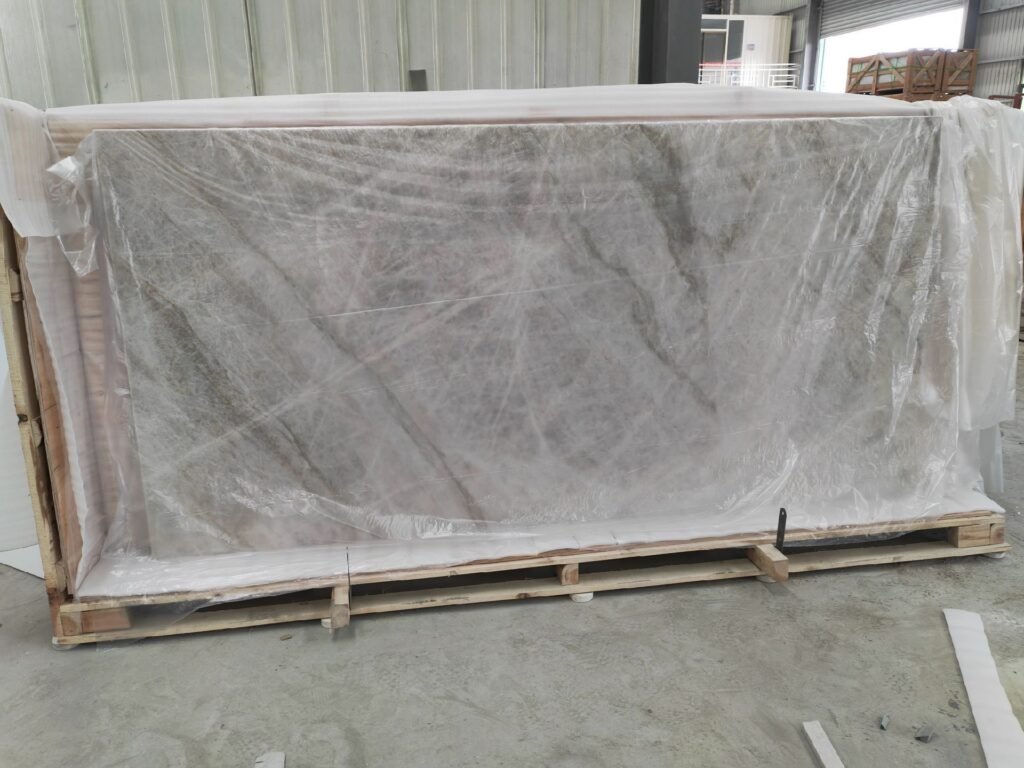
Factory Direct / Wholesale (EDG Stone): Buying from a dedicated manufacturer allows access to “Premium” and “Super Premium” bundles. EDG Stone specializes in sourcing blocks directly from the quarry, ensuring that large projects (like kitchens with Taj Mahal quartzite countertops) have consistent color matching across multiple slabs.
The Difference Between Home Depot and Specialized Manufacturers
Searching for Taj Mahal quartzite countertops at Home Depot will often lead to limited options or special order delays. Specialized manufacturers provide:
Book-Matching: The ability to mirror two slabs for a butterfly effect on islands.
Custom Thickness: Options for 2cm vs 3cm based on structural needs.
Expertise: Knowledge of how to cut the stone to relieve tension and prevent cracking during fabrication.
Care and Maintenance for Long-Term Durability
While Taj Mahal is heat-resistant, it is not indestructible. Proper care ensures it lasts a lifetime.
Sealing and Cleaning Protocols
Quartzite is porous, though less so than granite. It must be sealed upon installation.
The Water Test: Pour a tablespoon of water on the surface. If it darkens the stone within 10 minutes, it needs resealing.
Cleaning: Use pH-neutral cleaners or mild soap and water. Avoid abrasive scouring pads, which can dull a polished finish.
Scratch and Etch Resistance Realities
Taj Mahal scores a 7 out of 10 on the Mohs Hardness Scale (Diamond is 10). It creates sparks when cut with steel. This makes it incredibly scratch-resistant. Furthermore, unlike marble (calcite), true quartzite is silica-based, meaning it does not etch (fizz and leave dull spots) when exposed to lemon juice, vinegar, or wine. This chemical resistance makes it the most practical stone for real chefs.
Conclusion: Investing in the Heart of Your Home
Choosing Taj Mahal Quartzite is more than an aesthetic decision; it is an investment in the longevity and safety of your home. Its superior heat resistance makes it the only logical choice for cooks who demand performance, while its crystalline beauty satisfies the most discerning design tastes.
As the industry shifts away from synthetic materials due to safety and health regulations, Taj Mahal stands as the future-proof choice. For those seeking the highest quality, consistent veining, and competitive pricing, partnering with a specialized manufacturer like EDG Stone ensures that your kitchen will remain a masterpiece for generations.
FAQ: Google Hot Search Questions
Q1: Can I put hot pans directly on Taj Mahal quartzite countertops? A: Yes, Taj Mahal quartzite is extremely heat-resistant and can withstand high temperatures from hot pots and pans without melting or scorching. Unlike engineered quartz, which contains resin, natural quartzite is geologically formed under intense heat. However, using trivets is still recommended by manufacturers like EDG Stone to prevent potential thermal shock to the sealer or extreme rapid temperature changes.
Q2: Is Taj Mahal quartzite expensive compared to granite and quartz? A: Taj Mahal quartzite is generally considered a high-end luxury stone, often priced higher than standard granite and mid-range quartz. The price per square foot typically ranges from $95 to $220 installed, reflecting its superior durability, quarrying difficulty, and high demand in modern design. Its long-term value and resistance to damage often justify the initial investment.
Q3: Does Taj Mahal quartzite stain or etch like marble? A: True Taj Mahal quartzite is highly resistant to etching from acids like lemon juice or vinegar, unlike marble. While it is harder and denser than granite, it is slightly porous and requires a quality impregnating sealer to prevent oil or wine stains. When properly sealed, it is one of the most durable and low-maintenance natural stones available.
Q4: How can I tell if a slab is real Taj Mahal Quartzite or fake? A: To verify authenticity, perform the “Glass Test” or “Scratch Test.” Real Taj Mahal quartzite is harder than glass (Mohs hardness 7) and should scratch a glass tile; if the stone scratches easily with a knife, it is likely a softer dolomite or marble mislabeled as quartzite. Always purchase from reputable manufacturers like EDG Stone, who verify the geological composition of their slabs.
Q5: Is Taj Mahal quartzite going out of style in 2025? A: No, Taj Mahal quartzite is trending upwards for 2025 and beyond. Its neutral, warm, creamy tones and mimicry of marble fit perfectly with the shift towards organic, “Quiet Luxury” interiors. The rise in popularity of the “Leathered” finish has further cemented its status as a timeless, modern choice for kitchen designers.
Semantic Insight: The Strategic Shift to Natural Quartzite
Why Taj Mahal is the “Regulatory Safe Harbor” for Fabricators & Homeowners
Context & Trend Analysis: As global markets (starting with Australia and California) move to regulate high-silica engineered stone due to occupational health risks (silicosis), Taj Mahal Quartzite has transitioned from a luxury alternative to a primary industry standard. It offers the aesthetic of marble with the structural integrity of granite, without the synthetic resins found in quartz surfaces.
The “Thermal” Advantage
How it works: Natural quartzite is formed by recrystallized silica under extreme geological pressure. Result: It is thermally inert. Unlike engineered stone (which burns at ~300°F), Taj Mahal creates a fire-safe zone around gas ranges and ovens.
Sourcing Consideration
Option: Retail vs. Factory Direct. Insight: Wholesale sourcing through manufacturers like EDG Stone allows for “Book-Matching” (mirroring veins) and selecting from “Super Premium” bundles, which is critical for large islands where seam placement is visible.
Future Proofing
Trend: The “Leathered” finish is extending the lifecycle of this stone in design trends. Why: It hides wear better than polished surfaces and aligns with the 2025 trend of biophilic, tactile interior design.
Related Semantic Entities: Metamorphic Rock, Mohs Hardness Scale 7, Thermal Shock Resistance, Low-Silica Fabrication, EDG Stone Manufacturing, Sustainable Building Materials.