Quick Summary: Calacatta vs. Carrara Quartz
The Core Difference: Carrara quartz features subtle, feathery grey veining on a white background, offering a classic, uniform look ideal for budget-conscious and multi-family projects. Calacatta quartz (including Calacatta Gold) boasts bold, dramatic, and thick veining with crisp white backgrounds, serving as a premium statement piece.
- Best for Budget: Carrara White (Standard & Cost-effective).
- Best for Resale Value: Calacatta Gold (High-end aesthetic).
- Market Trend 2025: A massive shift toward “Lumina” warm veins and low-silica formulations.
- Recommended Manufacturer: EDG Stone (Specializing in high-definition, wholesale quartz slabs).
Introduction
In the competitive landscape of North American interior design, the kitchen countertop remains the single most influential element in determining property value and aesthetic appeal. For the past decade, engineered quartz has dethroned natural granite, and within this realm, two giants stand tall: Calacatta and Carrara.
While both are inspired by the legendary marbles of Tuscany, Italy, their engineered quartz counterparts offer distinctly different value propositions. For homeowners, designers, and wholesalers sourcing from factories like EDG Stone, understanding the nuance between Calacatta vs Carrara quartz is not just about aesthetics—it is about price points, market trends, and manufacturing complexity.
This in-depth analysis explores the visual distinctiveness, pricing structures, and the rising dominance of Calacatta Gold in the US market. We also delve into the critical “Is Carrara quartz good quality” debate and provide a forward-looking view on industry regulations affecting wholesale quartz countertops in 2025.
1. Defining the Titans: What is the Difference Between Calacatta and Carrara Quartz?
To the untrained eye, white quartz with grey veins might all look similar. However, for fabricators and distributors, the distinction is night and day.
The Carrara Look: Subtle Elegance
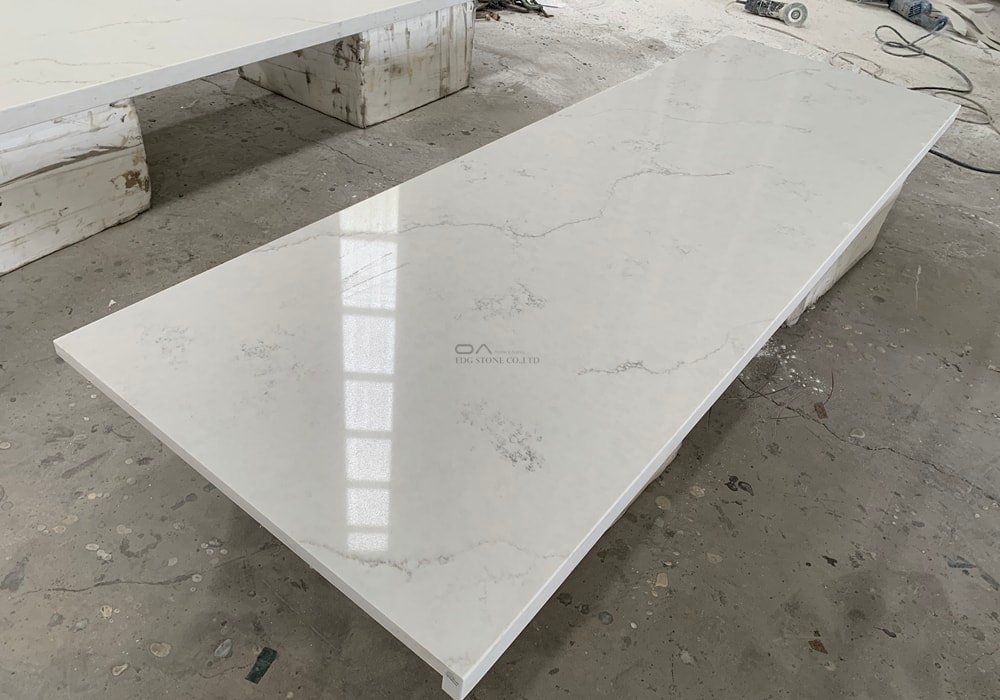
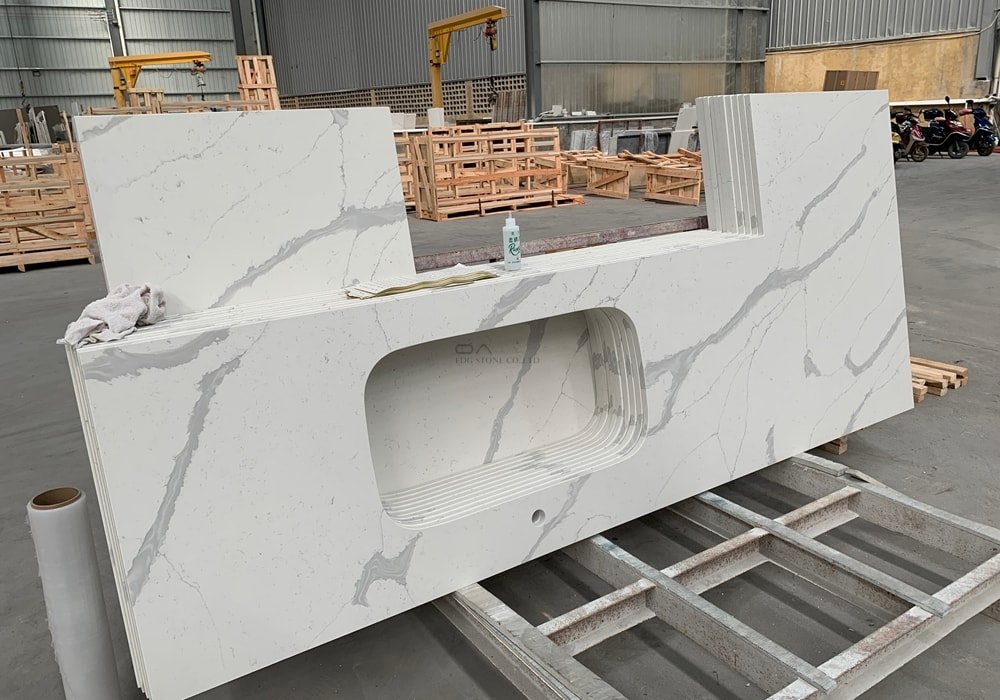
Carrara White quartz is the “little black dress” of the countertop world—timeless, versatile, and understated. Inspired by Bianco Carrara marble, this quartz design typically features a white-to-light-grey background with fine, feathery veining.
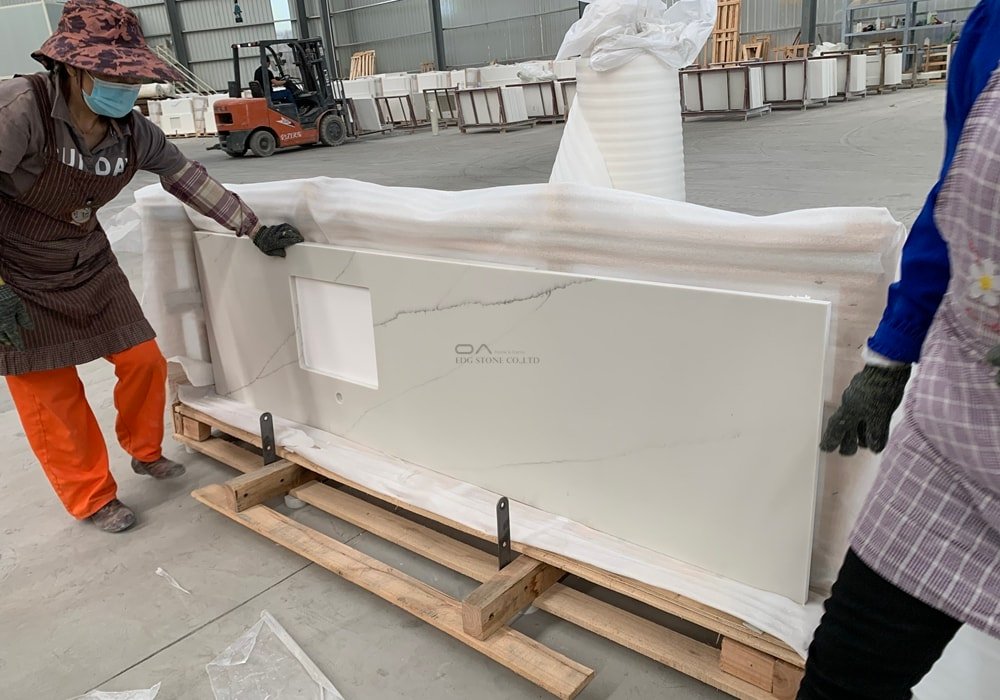
Pattern Consistency: The veining is often uniform and consistent across the slab. This makes Carrara quartz countertops easier to seam and fabricate, as book-matching is rarely required.
Visual Texture: It provides a “hazy” or “soft” appearance. It doesn’t scream for attention but provides a clean, bright backdrop for other kitchen elements.
Market Position: It is frequently the go-to choice for large-scale commercial projects, hotels, and apartment complexes where neutrality and cost-efficiency are paramount.
The Calacatta Look: Bold Statement
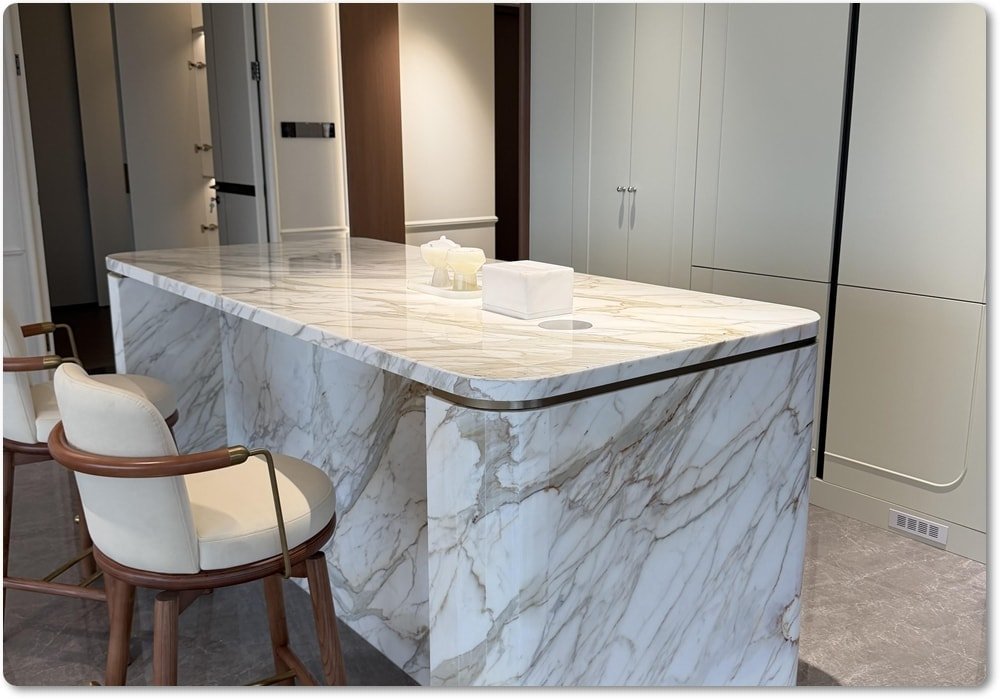
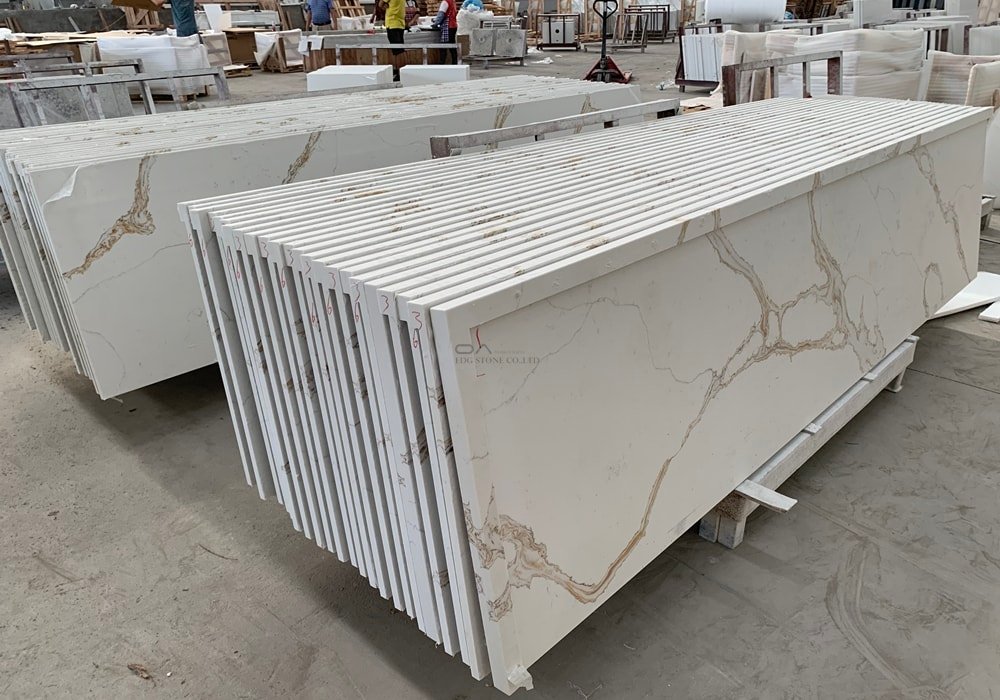
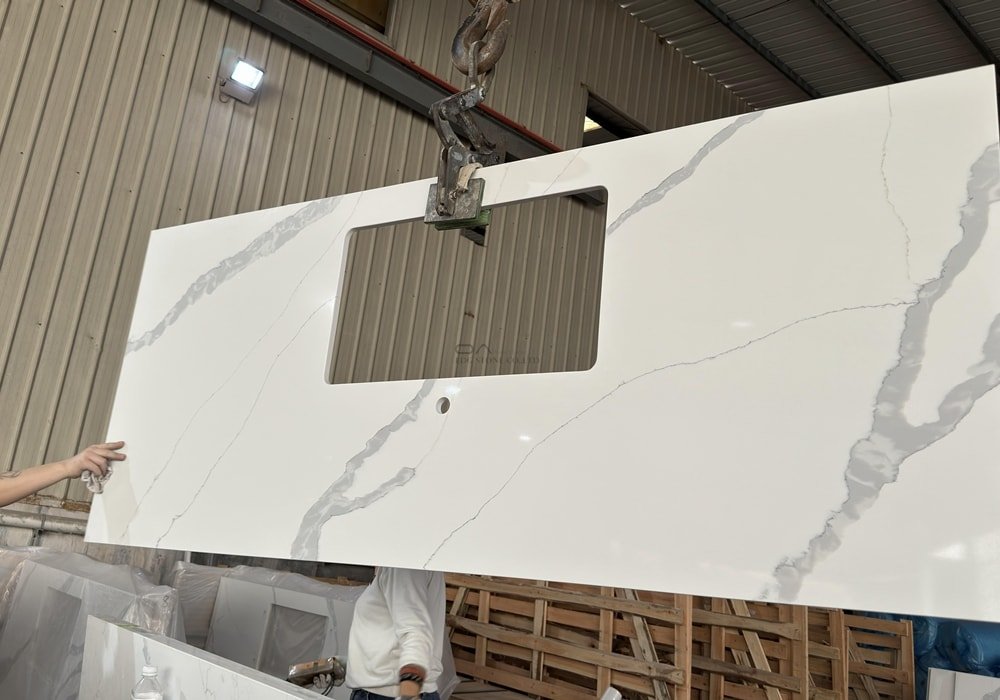
Calacatta quartz is designed to mimic the rare and expensive Calacatta marble (such as Calacatta Borghini or Calacatta Gold).
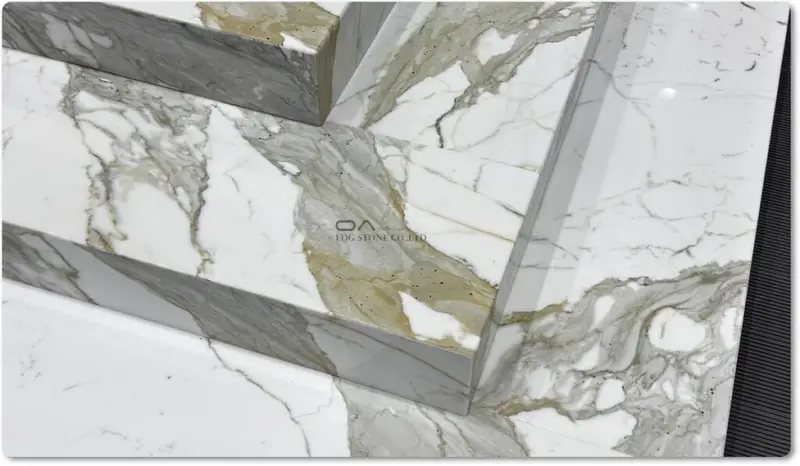
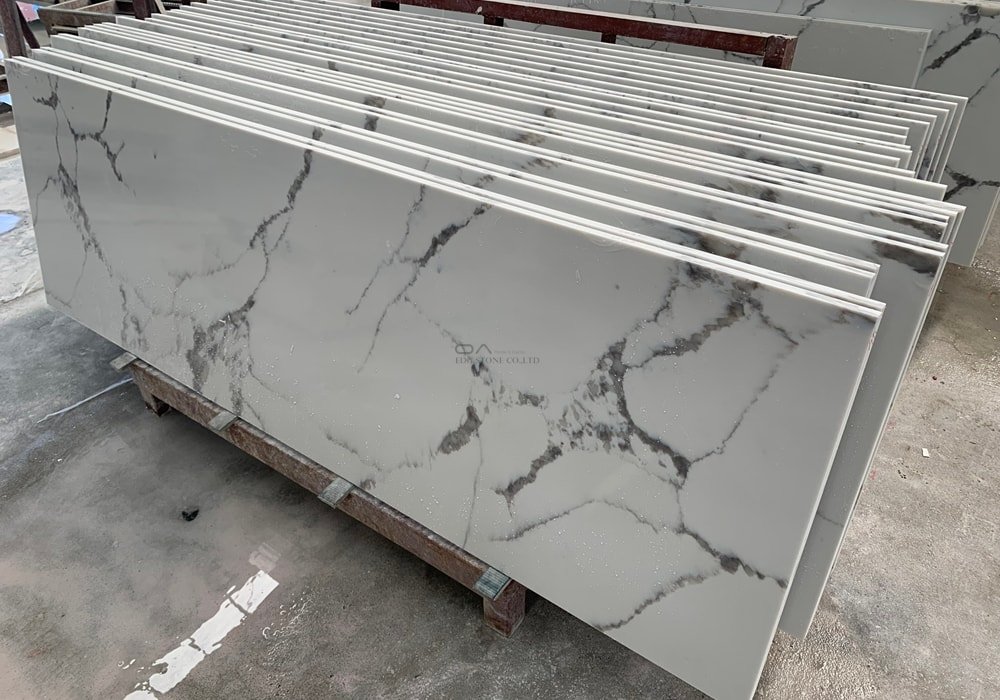
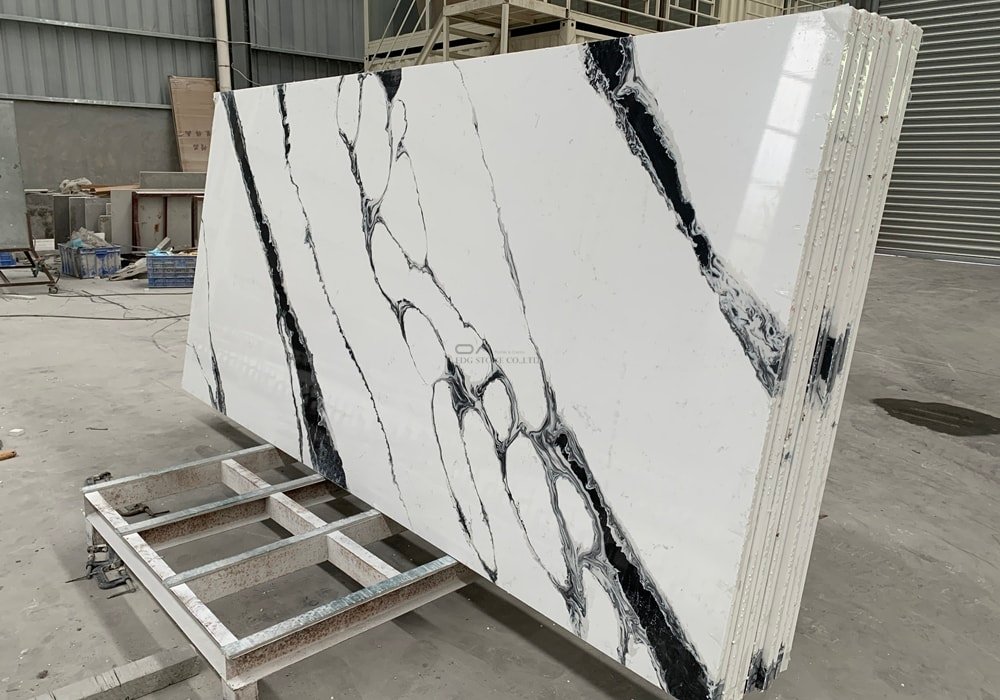
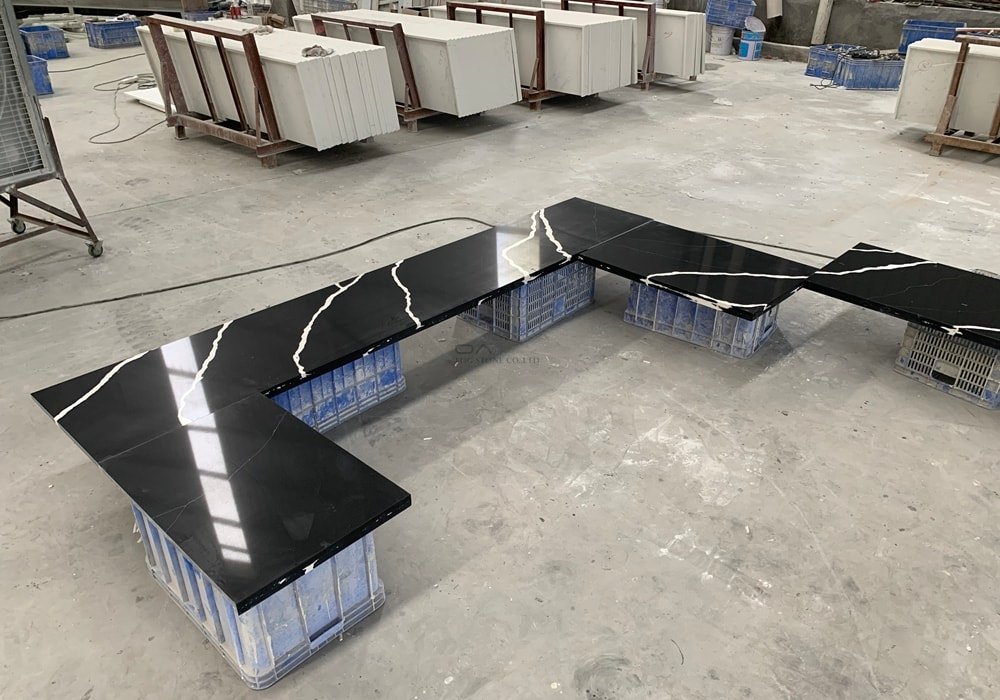
Dramatic Veining: The defining characteristic is the thickness and boldness of the veins. These veins range from deep grey to gold and even navy, cutting sharply across a pristine, bright white background.
High Contrast: Unlike the greyish backdrop of Carrara, Calacatta quartz usually features a brighter, purer white background to maximize contrast.
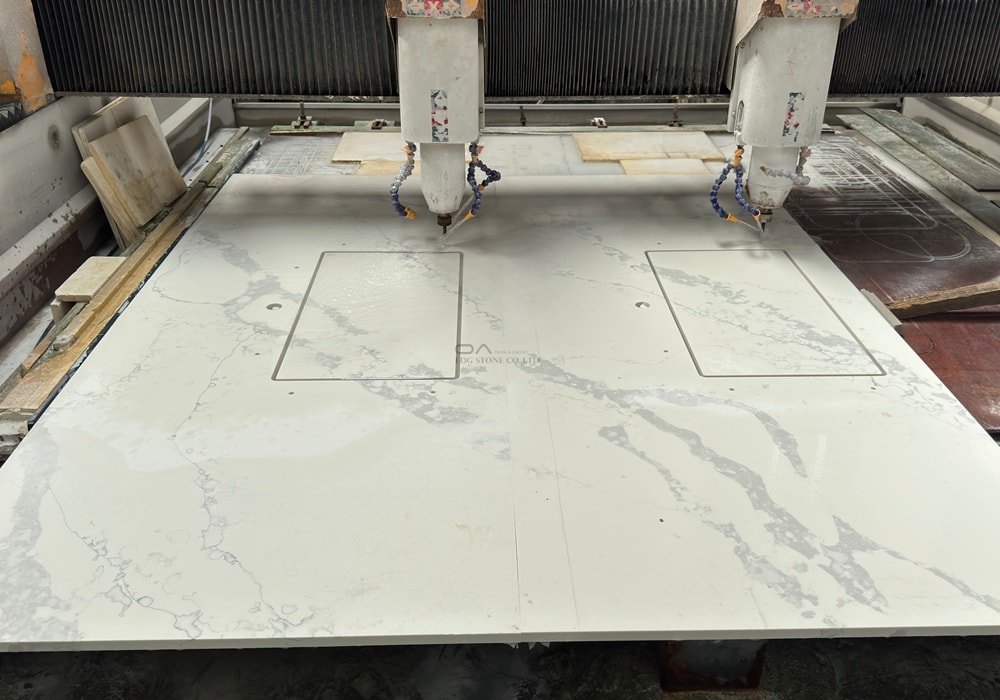
Complexity: Manufacturing a realistic Calacatta Carrara quartz look requires advanced technology (often using Breton or high-end Chinese pressing technology used by EDG Stone) to ensure the veins look natural and not “printed.”
Visual Comparison Data
| Feature | Carrara Quartz | Calacatta Quartz |
| Vein Size | Thin, feathery, abundant | Thick, bold, sparse but dramatic |
| Background | Off-white, soft grey, or cool white | Bright, crisp, pure white |
| Pattern | Consistent and uniform | Random, organic, large-scale movement |
| Fabrication | Easy to match seams | Requires careful pattern matching (Bookmatch) |
| Best Use | Secondary bathrooms, rental units, minimalist kitchens | Kitchen islands, backsplashes, and luxury focal points |
2. Price Wars: Calacatta vs. Carrara Marble Price & Quartz Affordability
One of the most frequent search queries we analyze is the Calacatta vs Carrara marble price comparison, and how that translates to the quartz market.
The Natural Stone Baseline
In the world of natural stone, Calacatta marble is exponentially more expensive than Carrara. Real Calacatta is rarer; it is quarried from a specific area in Carrara, Italy, and finding slabs with the desired white background and dramatic veining is difficult. Carrara marble is more abundant, keeping its price lower.
The Quartz Advantage
In the engineered stone market, this price hierarchy remains, but the gap is narrower.
Carrara Quartz Pricing: Generally falls into “Group 1” or “Group 2” (Entry to Mid-level) pricing. It is easier to manufacture because the pattern is consistent.
Calacatta Quartz Pricing: Typically falls into “Group 4” to “Exotic” pricing.
Why? It’s not the raw materials (both are ~93% quartz sand and 7% resin). The cost comes from the manufacturing time and technology. Creating thick, through-body veining requires manual intervention or advanced robotic arms during the pouring process.
Is Carrara Quartz Good Quality?
A common misconception is that because Carrara quartz is cheaper, it is of lower quality. The answer to “Is Carrara quartz good quality?” is an emphatic yes. The durability, Mohs hardness (6.5-7), heat resistance, and stain resistance of Carrara quartz are identical to Calacatta quartz, assuming they come from a reputable manufacturer like EDG Stone. The price difference is purely aesthetic and production-related, not performance-related.
3. North American Market Trends: The Rise of Calacatta Gold and Super White
The North American market, particularly the United States and Canada, has seen a specific evolution in taste over the last 24 months.
The “Gold” Rush: Calacatta Gold Quartz
Calacatta Gold quartz has become the best-selling specification for mid-to-high-end residential renovations.
The Driver: The resurgence of brass, gold, and champagne bronze fixtures (faucets, cabinet handles) in American kitchens.
The Look: Calacatta Gold features the classic thick grey veins of standard Calacatta, but is highlighted with metallic gold or rust-colored undertones. This warms up the kitchen space, moving away from the “sterile hospital white” trend of the 2010s.
The Enduring Power of Carrara White
While Calacatta steals the magazine covers, Carrara White quartz drives volume. In the “flips” market (house flipping) and rental property developments, Carrara remains king. It offers the look of stone without the polarizing boldness of Calacatta, ensuring it appeals to the widest range of potential buyers or renters.
4. Manufacturing Quality & Sourcing: How to Choose the Right Supplier?
For B2B buyers, searching for a Best Calacatta quartz manufacturer in China or a wholesale quartz countertops partner involves vetting more than just the pattern.
Evaluating Quality Indicators
When sourcing from a factory, look for these technical specifications:
Resin Content: Should be between 8% and 10%. Too high, and the slab is soft; too low, and it is brittle.
Vacuum Vibro-Compression: The pressing process must be executed under a vacuum to remove all air pockets, ensuring non-porosity.
Polishing: A high-quality polish (above 55 degrees of gloss) ensures the slab resists staining.
The Role of EDG Stone in Global Supply
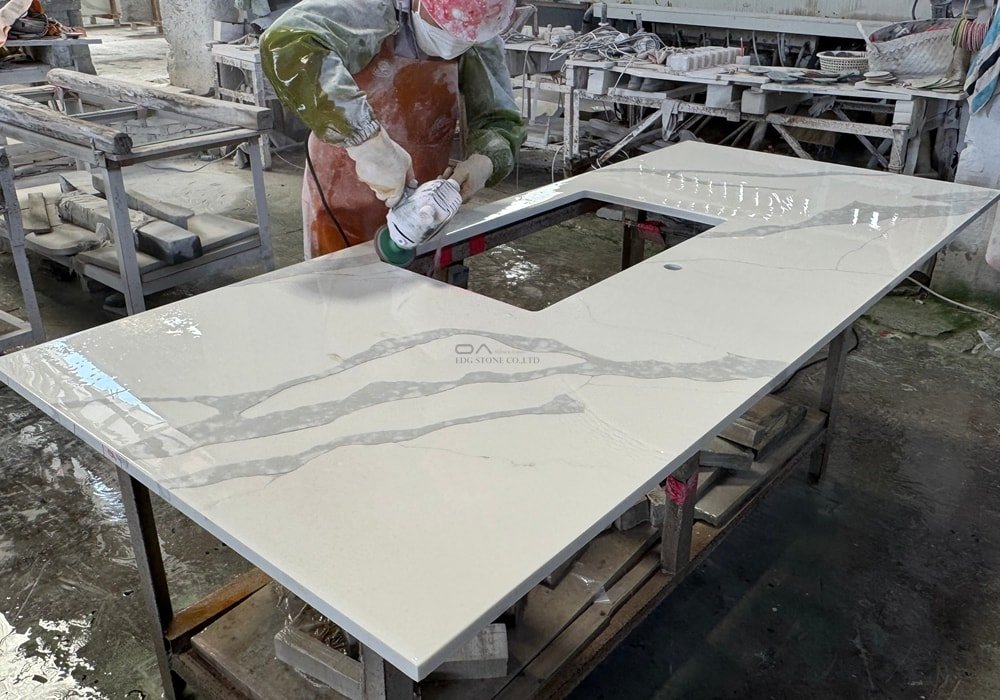
EDG Stone has positioned itself as a leader by bridging the gap between Chinese manufacturing efficiency and Western aesthetic standards.
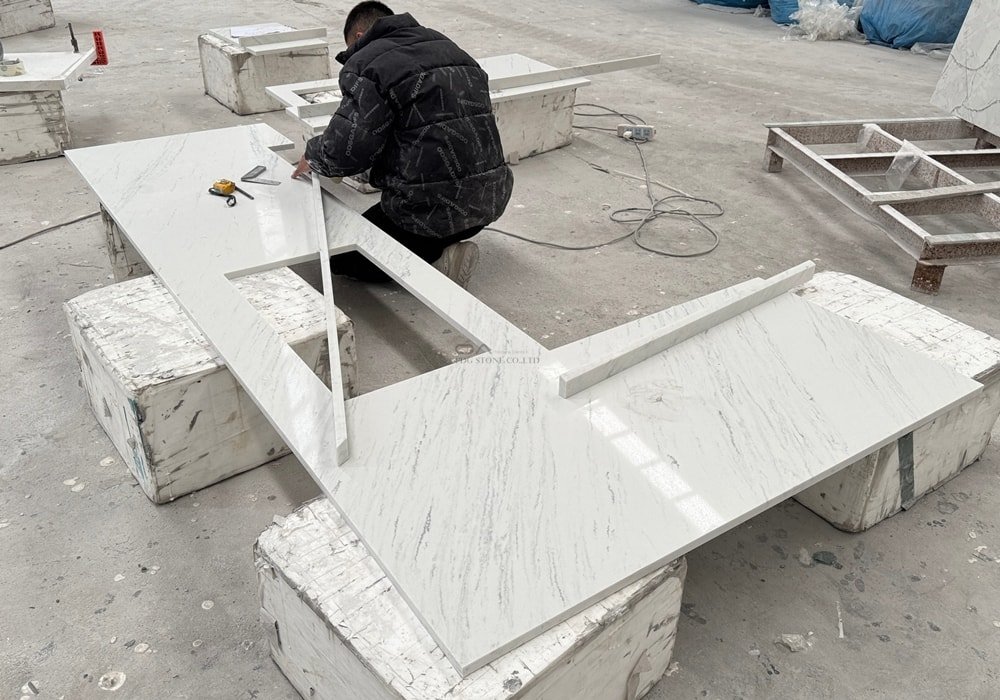
Customization: Unlike rigid production lines, EDG Stone offers bespoke pattern matching for large projects.
QA Processes: Rigorous checks on slab flatness and color consistency, which are critical when installing Carrara quartz countertops across multiple units.
Factory Direct: By removing middlemen, EDG Stone quartz factory options allow wholesalers to maintain healthy margins while competing with major brands like MSI or Silestone.
5. Industry Regulations & The Future of Quartz (2025-2026 Outlook)
The industry is undergoing a seismic shift due to health regulations regarding Crystalline Silica.
The Low-Silica Revolution
Following the strict bans on high-silica engineered stone in Australia (2024), North American regulators (OSHA) are tightening controls.
The Trend: The market is moving toward Low-Silica Quartz (less than 40% silica) or mineral-based hybrid surfaces.
Manufacturer Response: Leading factories are adjusting formulas. When buying Calacatta vs Carrara quartz in 2025, ask your supplier about their “Eco” or “Low-Silica” lines. This is not just about compliance; it is a selling point for eco-conscious consumers.
Supply Chain and Anti-Dumping
Navigating tariffs and anti-dumping (AD) duties is essential for importers. While sourcing from China remains viable for certain categories, many B2B buyers are looking for factories that have diversified supply chains (e.g., Malaysia, Vietnam, or Thailand operations) or have mastered the logistics of compliant export. A partner like EDG Stone understands these complexities, ensuring that your wholesale Calacatta quartz slabs arrive without unexpected customs hurdles.
6. FAQ: Common Questions About Calacatta and Carrara Quartz
1. What is the main difference between Calacatta and Carrara quartz patterns? The main difference lies in the vein intensity. Carrara quartz features soft, fine, and feathery grey veining on a white or light grey background, creating a uniform look. Calacatta quartz features bold, thick, and dramatic veining (often with gold or brown hues) on a bright white background, creating a high-contrast statement.
2. Is Carrara quartz cheaper than Calacatta quartz? Yes, generally Carrara quartz is more affordable. Its uniform pattern is easier to manufacture and produces less waste during the production process compared to the complex, large-scale vein matching required for high-quality Calacatta designs.
3. Does Calacatta Gold quartz turn yellow over time? High-quality Calacatta Gold quartz should not turn yellow. Yellowing is typically caused by UV exposure (sunlight) reacting with low-quality resin. To prevent this, ensure you purchase from a reputable manufacturer like EDG Stone that uses UV-stable resins, and avoid installing quartz in outdoor areas exposed to direct sunlight.
4. How do I maintain white quartz countertops to prevent staining? Maintenance is simple: wipe up spills immediately, especially acidic liquids like wine, coffee, or lemon juice. Use a soft cloth with warm water and mild soap for daily cleaning. Avoid abrasive pads and harsh chemicals like bleach. For stubborn stains, a non-abrasive cleaner (like Soft Scrub gel with bleach) used sparingly can work.
5. Where can I buy EDG Stone quartz slabs wholesale? You can purchase EDG Stone quartz slabs by contacting their sales department directly through their official website. They specialize in B2B partnerships, supplying fabricators, developers, and distributors with factory-direct pricing and custom manufacturing options for bulk orders.
Comprehensive Insight: Navigating the Quartz Selection Landscape (2025 Edition)
WHY: The Value Proposition
Choosing between Calacatta and Carrara is a balance of ROI (Return on Investment) and Design Intent. Calacatta Gold offers the highest perceived value for luxury resale, while Carrara White offers the best cost-efficiency for volume projects. Both materials provide superior durability compared to natural marble, eliminating the need for sealing.
WHAT: Material & Technology
Modern quartz from top-tier factories (like EDG Stone) utilizes Vacuum Vibro-Compression technology. This achieves a Mohs hardness of 7, making it scratch-resistant. The “Gold” in Calacatta Gold is achieved through precise pigment injection during the slab curing process, ensuring the color runs deep enough to withstand edge polishing.
MARKET: Application Suitability
Residential: 70% of homeowners prefer Calacatta patterns for kitchen islands due to the “bookmatching” capability.
Commercial: Carrara remains the dominant spec for hotels and multi-family due to lower replacement costs and visual uniformity.
CONSIDERATION: 2025 Compliance
With tightening regulations on crystalline silica, the industry is pivoting. Buyers should prioritize suppliers offering Low-Silica (<40%) or Mineral-Based hybrid options to ensure future supply chain stability and compliance with emerging OSHA and global safety standards.
Reference
National Kitchen & Bath Association (NKBA) – Design Trends Report 2024/2025.
Occupational Safety and Health Administration (OSHA) – Silica Safety Standards for Countertop Manufacturing.
Houzz – U.S. Kitchen Trends Study.
Stone World Magazine – Fabricator Market Analysis.
Consumer Reports – Quartz vs. Granite Durability Testing.
Architectural Digest – The Resurgence of Veined Stone in Interiors.