1 — Executive framework: What is inventory hedging for quartz?
Inventory hedging = intentional stock positioning to protect revenue and service levels against: (a) sudden demand shifts (trend-driven), (b) supply interruptions (quarry, resin, pigment shortages), and (c) regulatory or logistics shocks (fabrication restrictions, export delays). For quartz countertops, hedging focuses on color/pattern families and finishes rather than every SKU. The aim: maximize revenue capture and shorten customer lead time while minimizing over-capitalized slow SKUs.
2 — Market & regulatory context (key datapoints)
Global engineered/quartz stone markets continue to expand (mid-single digit CAGR), driven by renovation and new builds; industry forecasts project ongoing growth through 2025 and beyond.
Safety and occupational regulation for engineered stone processing is actively changing. Some jurisdictions implemented bans or strict controls on engineered-stone manufacture and processing (e.g., Australia moved to ban engineered stone manufacture/supply as part of broader silica controls). Regions like California adopted enhanced respirable crystalline silica standards for stone workers and fabricators. These rules materially affect production location decisions, allowable workflows, and, therefore, lead times.
Designer and consumer trends for 2025→2026 show movement away from the decade-long “all-white” kitchen into warmer neutrals, deeper colors (greens, burgundies), and highly realistic veining. Suppliers who do not carry convincing marble-look whites and trending warm neutrals risk losing sales.
3 — Which quartz colors & patterns are “must-stock” (research-backed)?
Below are color/pattern families to prioritize. For each family, I list why it sells, who buys it, and recommended SKU depth. Many design references and manufacturer catalogs highlight these categories—brands like Caesarstone, Cambria, and major retailers continue to feature these looks in their core ranges.
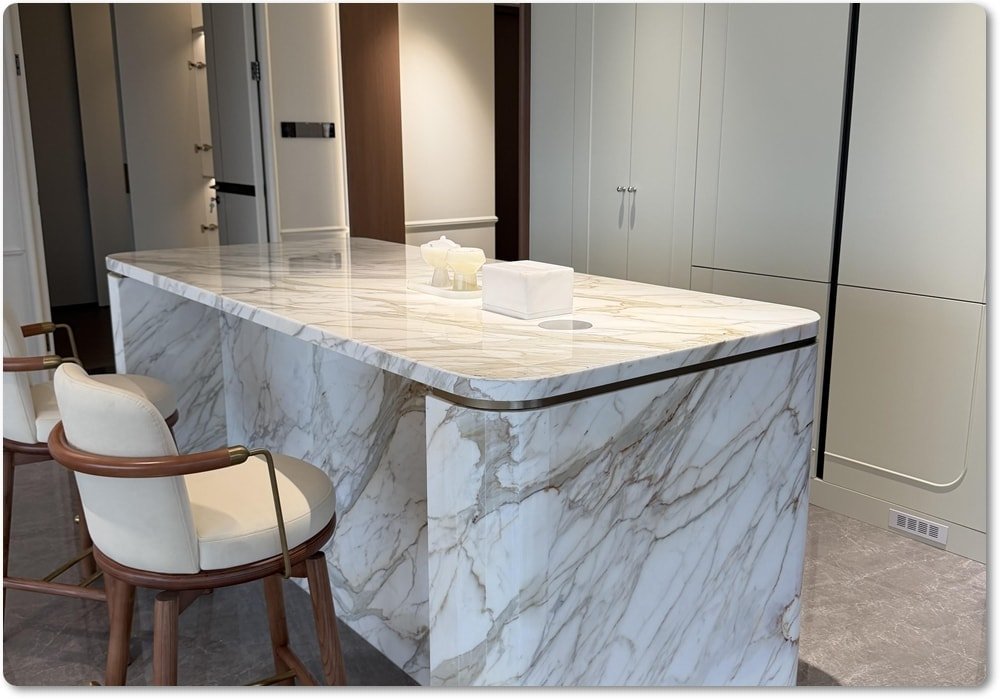
A. Marble-look whites & off-whites (Calacatta, Statuario styles)
Why: Timeless, broad market appeal across luxury and mainstream remodels; high cross-sell (backsplash, vanity).
Who: High-end residential, spec builders, hospitality.
SKU depth: High — keep 25–35% of slab inventory SKU-weighted here.
B. Warm neutrals & beige/taupe (the “Year of Warmth” palette)
Why: Designers cite a shift to warm, wellness-oriented palettes that integrate the kitchen with living spaces. These are resilient across regions and seasons.
Who: Urban renovations, multifamily, hospitality.
SKU depth: Medium-high — 15–25% inventory.
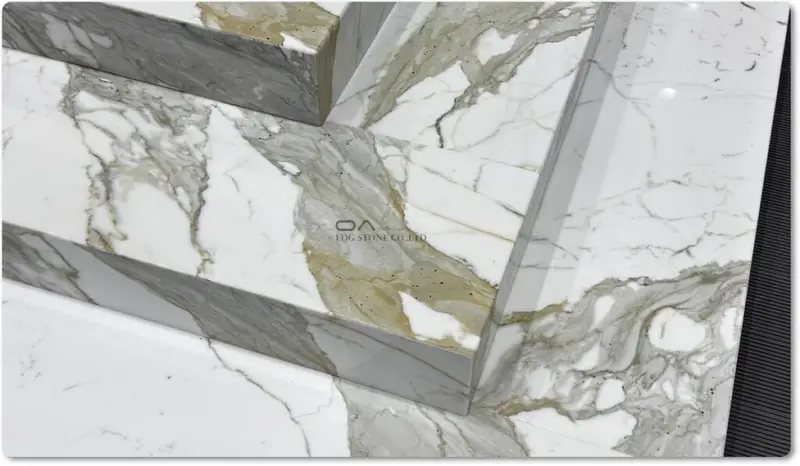
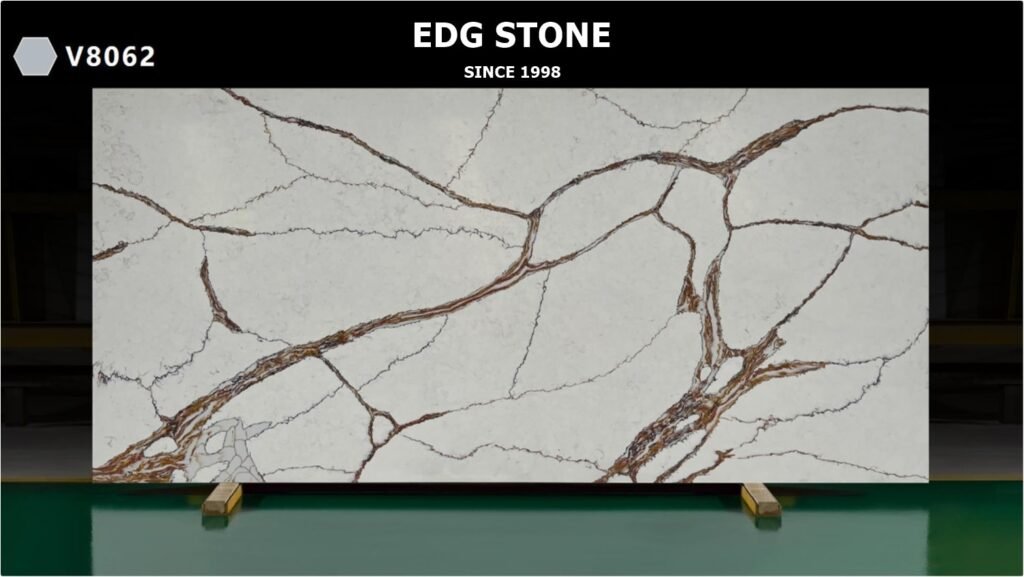
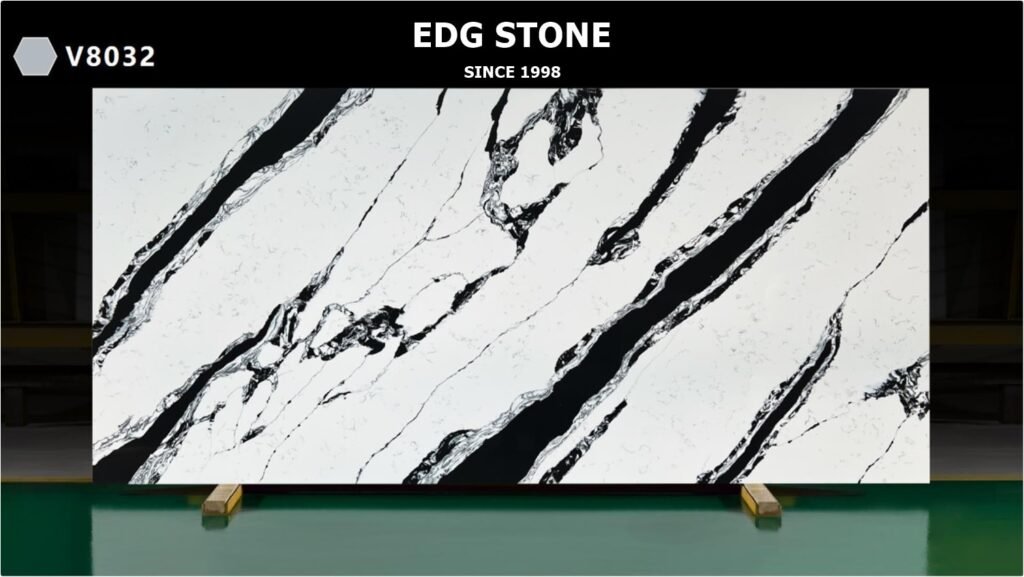
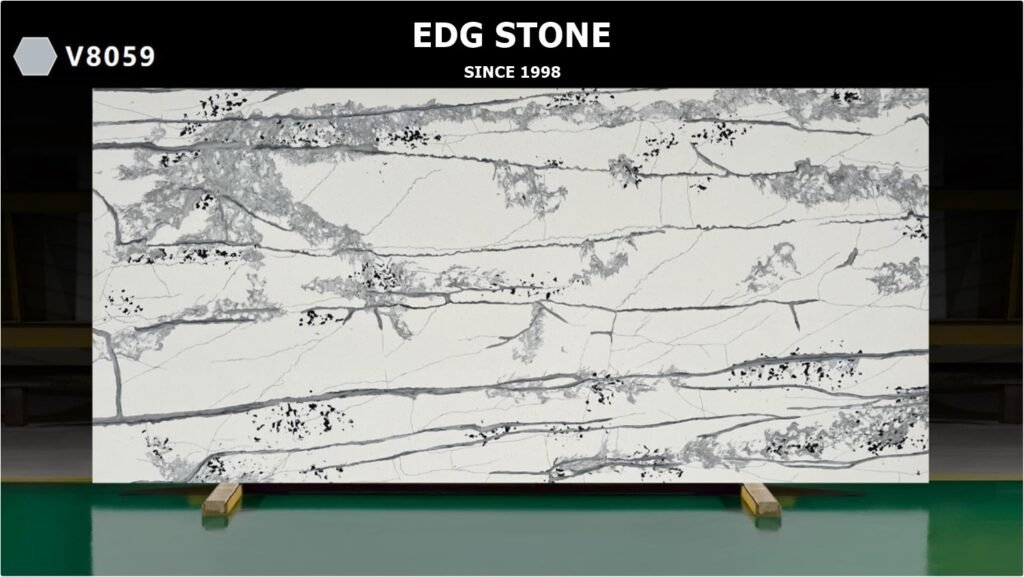
C. Dramatic veined stones (Calacatta-style bold veining, bookmatched slabs)
Why: Feature islands and waterfall edges favor bold veining for impact photos and showroom displays. These command higher margins.
Who: Showhomes, custom homes, designers.
SKU depth: Medium — 10–20% (include a few high-impact full slabs for display).
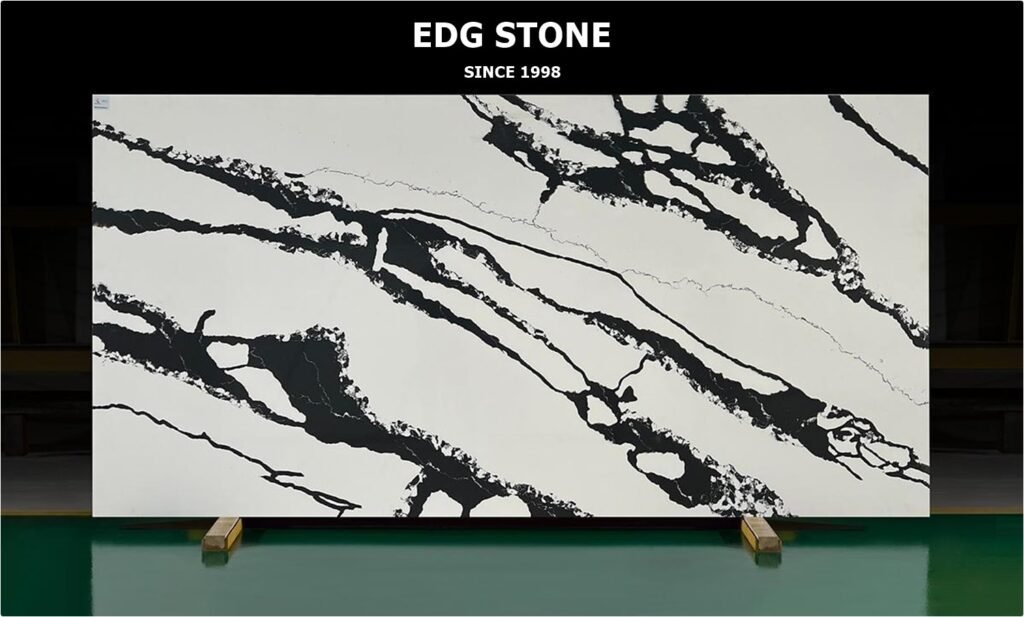
D. Deep darks & graphite blacks (solid-black, leather/matte finishes)
Why: Rising as contrast elements and for modern luxury kitchens; also popular as bar/entertainment counters.
Who: Contemporary residences, hospitality.
SKU depth: Medium — 10–15%.
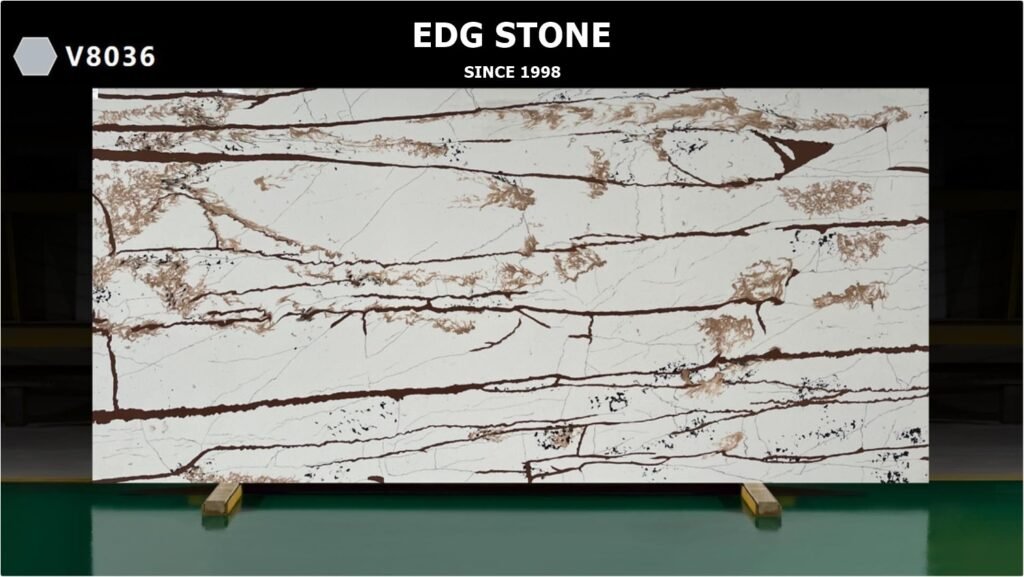
E. Emerging colors: Greens, burgundy, and blues
Why: 2025–2026 signals show appetite for richer, unique tones (emeralds, burgundy marble). While niche, they drive showroom differentiation.
Who: High-design projects, bespoke clients.
SKU depth: Low-to-medium, keep key SKUs or available-to-order lead times.
F. Concrete/industrial greys & textured finishes
Why: Neutral base, strong in commercial and industrial-looking interiors; textured (leather) finishes hide wear.
SKU depth: Medium.
4 — Stocking strategy: SKUs, buffer rules, and lead-time hedging
SKU Tiering (recommended)
Tier 1 — Core classics (30–40% of inventory value): Marble whites + top warm neutrals. Hold deep stock, multiple slab sizes.
Tier 2 — Style differentiators (30%): Veined features + darks + concrete greys. Moderate stock.
Tier 3 — Trend/niche (20%): Greens, burgundy, unusual finishes. Low stock, use quick PO channels.
Tier 4 — Custom/limited (10%): Special pigments, bookmatch slabs. Made-to-order; no routine stock.
Safety stock & formula
Use a simple safety stock formula tailored per SKU family:
Safety stock = Z * σLT * √LT
Where Z = service-level z-score (e.g., 1.04 for 85% service level), σLT = standard deviation of demand per period, and LT = lead time (weeks). For Tier 1, choose Z=1.28 (90–92% service). For Tier 3–4, lower Z to limit capital tie-up.
Replenishment cadence
Tier 1: Weekly review + biweekly ship-from-factory replenishment.
Tier 2: Biweekly review + monthly replenishment.
Tier 3–4: Monthly or on-demand; vendor-managed inventory (VMI) or quick-turn draws.
Lead-time hedging
Diversify suppliers across regions; maintain a small buffer of “neutral” white/beige slabs at offshore warehouses and a rotating stockpile domestically to offset export delays or local processing bans.
5 — Channel & region segmentation
Different sales channels require different stock profiles:
Retail / Showroom: More veined, high-impact slabs on display (lower turnover but stronger influence).
Trade / Fabricator network: Steady demand for classic whites and neutrals; prioritize fast replenishment and standard slab sizes.
Commercial projects / Spec builders: Larger slab volumes and color consistency — negotiate committed volumes/contracts to secure throughput.
Exports: Consider packaging, crate design, and slab crate reinforcement (ocean freight risk) to minimize damage and returns.
Also adjust by geography: coastal markets often prefer lighter coastal palettes; urban centers shift faster to trend colors — check customer-level analytics by zip/region monthly.
6 — Cost vs. revenue tradeoffs and KPIs
Key KPIs to monitor:
Fill rate (by SKU family) — target ≥95% for Tier 1.
Days of Inventory (DOI) — maintain DOI such that capital cost is optimized: Tier 1 (30–60 days), Tier 2 (45–90 days).
Gross Margin Return on Inventory (GMROI) — track per SKU family; prioritize SKU investment to the highest GMROI.
Stockout cost — estimate lost sales + remediation costs for each stockout event, especially for Tier 1.
Financial rule of thumb: if a Tier 1 SKU drives >20% of sales but consumes <10% of inventory value, treat it as “cash-generative” and prioritize replenishment.
7 — Implementation checklist & reporting cadence
Initial setup (0–90 days):
Identify the top 50 SKUs by revenue and margin.
Classify SKUs into Tier 1–4.
Model safety stock using 12 months of demand data.
Negotiate VMI or consignment for slow-moving, high-value slabs.
Establish alternative processing partners outside restricted jurisdictions.
Ongoing (monthly/quarterly):
Monthly SKU performance review (sales, returns, fill rate).
Quarterly trend scan (trade publications, brand catalogs) to identify color shifts.
Regulatory monitoring dashboard (silica rules, export/import changes).
8 — 3–5 long-tail purchase-intent keywords (suggested)
“Buy Calacatta quartz slabs manufacturer wholesale”
“wholesale warm beige quartz countertops factory”
“Best marble look quartz for kitchen buy bulk”
“quick ship quartz slabs manufacturer near me”
“commercial-grade quartz countertops supplier factory pricing”
These combine design intent with transactional (manufacturer/wholesale) intent to attract buyers ready to purchase.
9 — FAQ
Q: Which quartz countertop colors will be most popular in 2025–2026?
A: Expect continued demand for marble-look whites and off-whites, a strong shift into warm neutrals and taupes, increasing interest in deep greens and burgundy tones for statement pieces, and steady demand for graphite/black matte finishes. Designer forecasting for 2026 emphasizes warmth + unique color accents.Q: How should a supplier decide how many slabs of a color to stock?
A: Use SKU tiering (Core / Differentiator / Trend / Custom) and safety-stock formulas based on historical demand volatility and lead time. Core marble-whites should have the deepest safety stock and the highest service-level targets.Q: Are there regulations that affect quartz production and, therefore, inventory availability?
A: Yes. Multiple regions have tightened silica exposure controls for fabrication; Australia instituted a national engineered-stone ban on supply/manufacture (from 2024 in certain forms), and U.S. states like California have instituted strict respirable crystalline silica rules, impacting where and how stone is fabricated. These rules can change lead times and processing capacity.Q: What pricing or margin effects should suppliers expect from holding larger inventories?
A: Holding more stock increases carrying costs (capital, warehousing, insurance) but reduces stockouts and rush fabrication premiums. Measure GMROI and balance DOI; prioritize high-turn, high-margin SKUs for deeper stock.
Semantic Closing Block — How / Why / What / Options / Considerations
Why: Market growth remains positive, but regulatory and trend volatility can cause spikes in lead time or abrupt demand for specific looks. Maintaining core stock reduces lost sales and preserves margins.
What: Keep 30–40% inventory value in core classics, 30% in differentiators, with the remainder for trend & custom; implement safety-stock formula and monthly trend scans.
Options (detailed): Onshore buffer stock vs. offshore bulk; vendor-managed consignment vs. prepaid orders; dynamic pricing to move slow SKUs.
Considerations (detailed): Monitor regulatory changes (silica rules, import/export), maintain QA for color matches across batches, and track GMROI to avoid over-capitalized SKUs.