Why 2026 Feels Different: A renewed appetite for “material personality”?
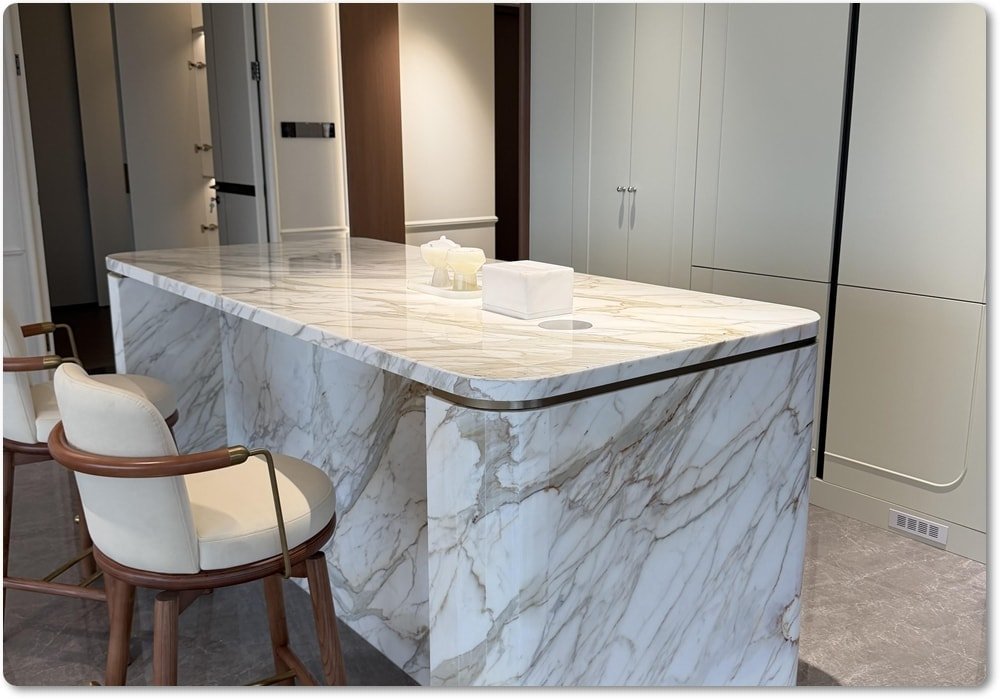
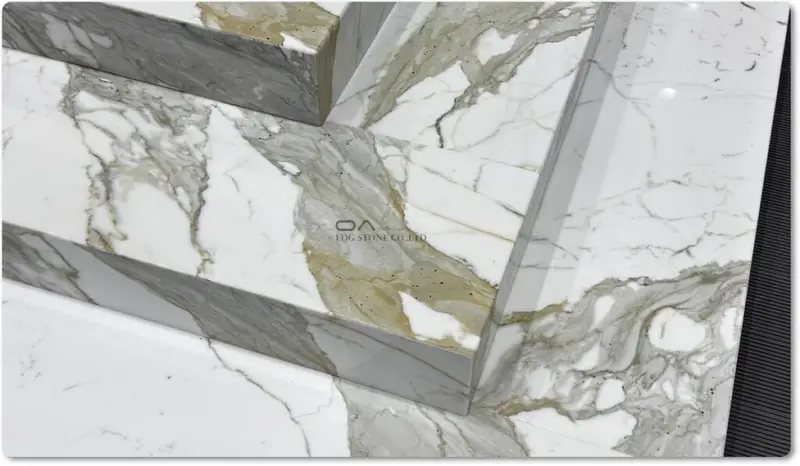
After years of low-contrast minimalism, designers and homeowners are shifting toward materials that read as confident and textured rather than neutral backdrops. The kitchens of 2026 favor surfaces that act like artwork — sweeping veins, high-contrast movement, and waterfall islands that visually anchor a room. Architectural Digest and industry trend reports highlight bespoke natural materials and statement stone as headline trends in the next design year.
This movement is not purely aesthetic: it’s emotional. People want kitchens that feel curated and layered, and dramatic-veined stone provides instant character without complex patterning or added finishes. Houzz and related industry outlets also report growing interest in stone slabs—especially quartzite and marbles with rich, organic movement—positioning slab work as a key differentiator for 2026 projects.
Market catalysts: technology, availability, and health/regulatory shifts
Large-format slabs + fabrication tech
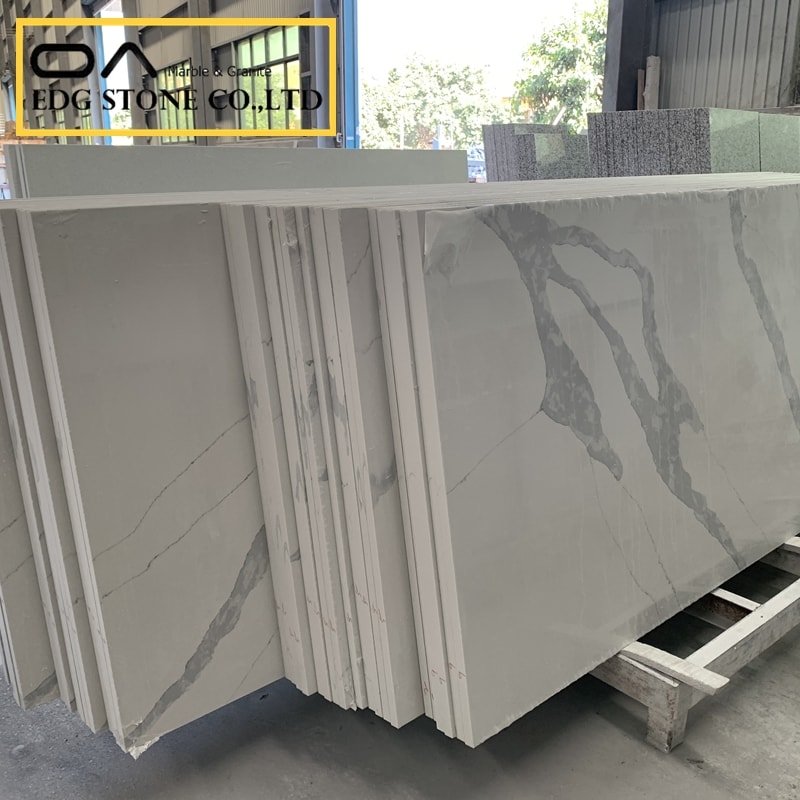
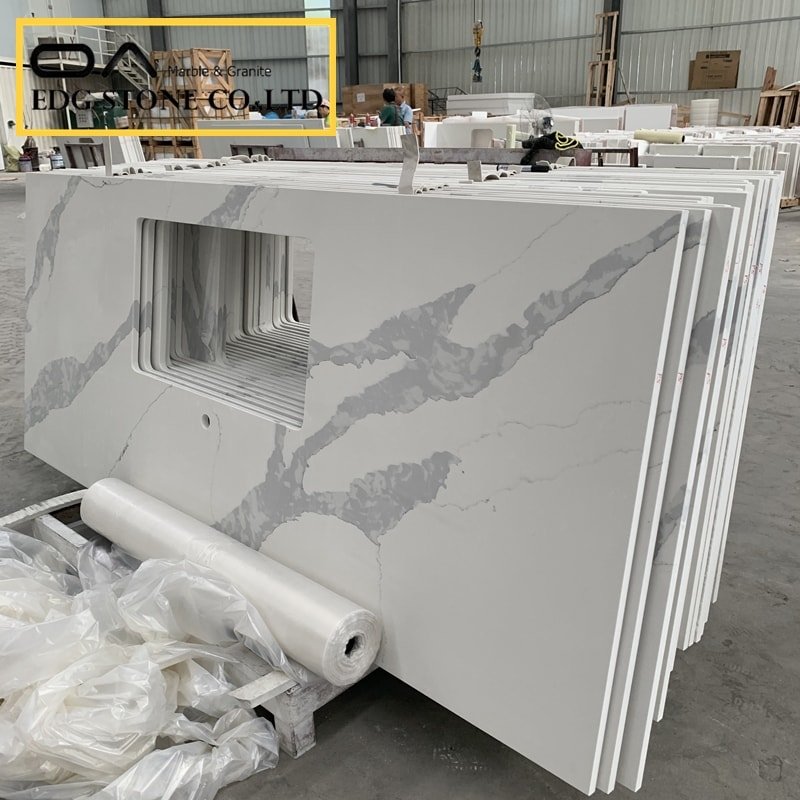
Advances in quarrying, slab polishing, and waterjet CNC have made very large, bookmatched slabs more accessible and affordable than in previous decades. Manufacturers can now deliver full-height backsplashes and matched waterfall islands that showcase dramatic veins without seams. This scale amplifies the vein as a composition element, turning counters into sculptural planes rather than mere worktops. Recent kitchen trend coverage shows large slabs and full-height installations rising on moodboards for 2026 kitchens.
Health regulations nudging material choices and messaging
Public health attention on respirable crystalline silica from engineered-stone fabrication has shifted some market attention to both safer processes and alternative materials. OSHA’s targeted enforcement and guidance for engineered-stone fabrication and installation — and the formal respirable crystalline silica standards (including a 50 µg/m³ PEL for general industry) — have forced many fabricators to invest in engineering controls, wet cutting, and ventilation, or to re-evaluate material mixes. Suppliers that clearly address fabrication safety and compliance—through documentation, safer cutting protocols, or pre-fabricated/integrated solutions—will stand out.
NIOSH and CDC reporting continues to document the severity of silica-related illness among fabricators and installers, reinforcing how compliance and worker safety are now central purchase and supplier-evaluation criteria in many markets. Manufacturers that proactively label materials, provide safe-handling guides, and partner with certified fabricators improve buyer confidence.

Design language and use-cases: how exaggerated veining is being used
Islands & waterfall edges as anchors
Designers specify bold-veining slabs for islands and waterfall edges to create a single, continuous “anchor” element. Because the eye reads the island as sculpture, cabinetry, colors, and hardware become supporting players. Expect to see the combination of warm, moody cabinetry and a high-contrast Calacatta-style or quartzite slab.
Full-height backsplashes and integrated shelves
Seamless, bookmatched slabs run full height to create uninterrupted veining that reads like a mural. Integrated stone shelves and niches are also being used to extend the visual flow while keeping maintenance-friendly surfaces. Industry trend pieces call out full-height slabs as a key 2026 move.
Small kitchens: drama without clutter
In compact kitchens, a single veined slab on a backsplash or countertop provides big personality without adding clutter. This is a key reason “small kitchen trends 2026” include statement materials: they scale visually even in tight footprints. (See later “long-tail keywords” for how to target small-kitchen searches.)
What buyers want from suppliers in 2026?
Authentic imagery & bookmatching previews. High-quality, realistic photography and mockups (including AR/3D views) that show how veins bookmatch across an island and backsplash. AI tools are increasingly used to create believable staged rooms for e-commerce pages.
Safety & fabrication data sheets. Plain-language guidance on silica content, recommended cutting/wet-cut systems, and required PPE plus links to regulatory guidance. This reduces friction for architects and GC procurement.
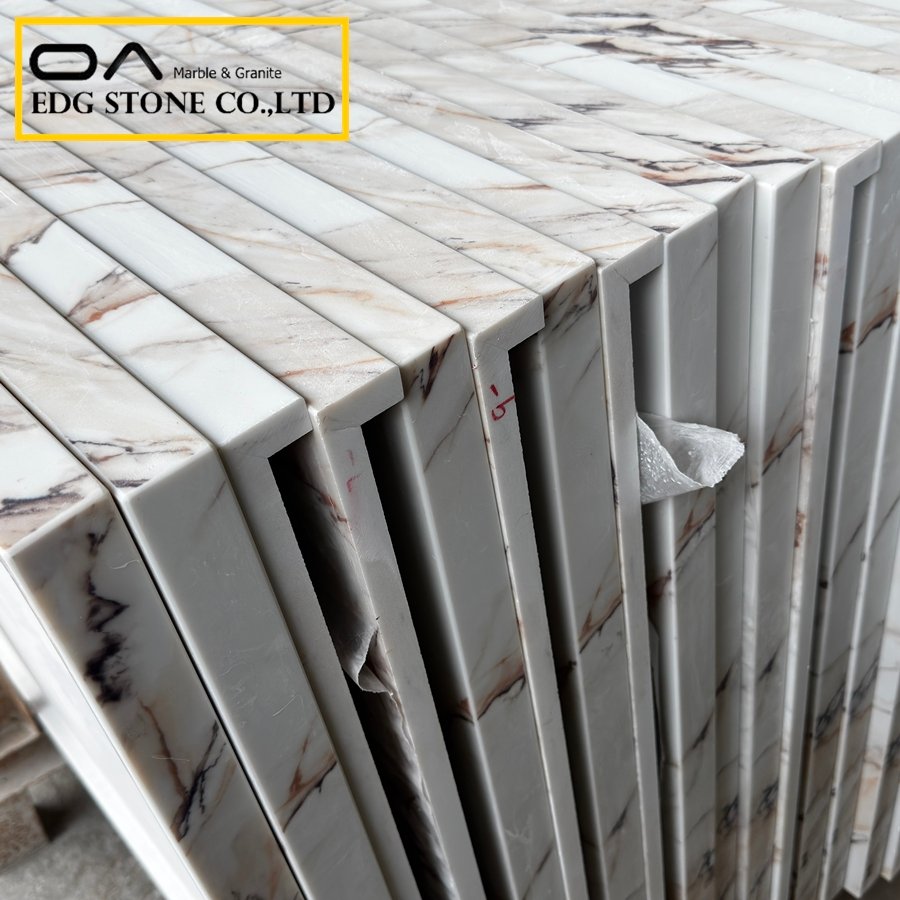
Commercial strategy for EDG Stone and B2B partners
Position bold-vein lines as “Architectural Slabs”: Package bookmatched pairs, full-height backsplash kits, and waterfall island kits with cutlists and installation guides. Include professional imagery and AR assets.
Compliance & training bundle: Offer a “Fabricator Safety Kit” (SDS, wet-cutting protocol doc, recommended PPE, and a list of certified fabricators) that accompanies each slab order. This reduces buyer risk and shortens procurement timelines.
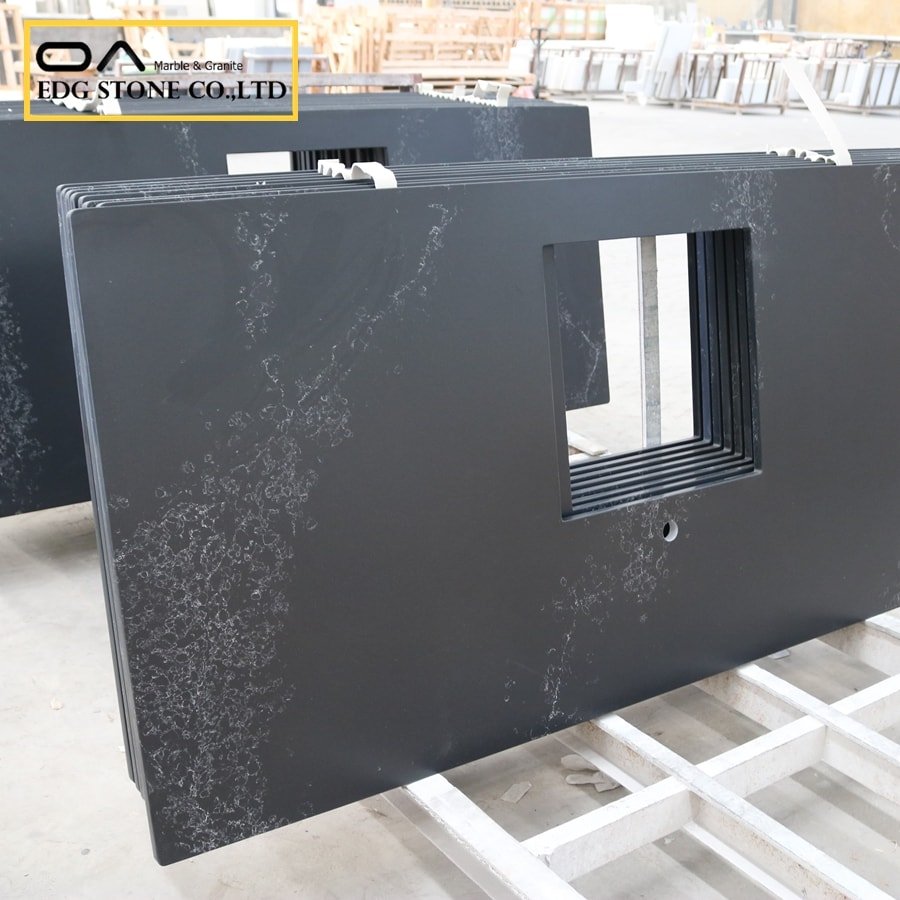
Visual & material pairing cheatsheet
Warm, deep cabinetry (walnut, dark-stained oak) + high-contrast white veined marble = luxe cinematic kitchen.
Soft, earthy cabinets (olive, clay) + gold/terra-toned quartzite with movement = modern-retro warmth.
Matte black hardware + bookmatched Calacatta-style slab = gallery-minimalist statement.
Data points & market signals (selected)
Industry trend reports and editorial round-ups identify large-format stone and pronounced veining as top kitchen motifs for 2026.
OSHA continues enforcement and compliance focus on engineered-stone shops — suppliers must provide safe-use documentation.
NIOSH/CDC publications and peer-reviewed analyses continue to highlight the health risks around respirable crystalline silica in stone fabrication, strengthening procurement-level risk assessments.
Long-tail keyword ideas (3–5, purchase-intent variants included)
dramatic veined quartzite slabs manufacturer
full-height bookmatched marble backsplash supplier wholesale
Buy bold veined kitchen island slab factory direct
small kitchen dramatic vein countertop ideas
2026 kitchen statement slab supplier EDG Stone manufacturer
FAQ
Q1: What is the dramatic veining stone trend for kitchens in 2026?
A1: Dramatic veining is a move toward high-contrast, sweeping stone movement used as islands, waterfall counters, and full-height backsplashes. It’s becoming a leading material choice for 2026 because it delivers instant visual personality and scales well in both large and small kitchens.
Q2: Is dramatic-veined stone harder to maintain than plain quartz?
A2: Maintenance depends on the stone family. Natural marbles and some quartzites may need sealing and care for acidic spills; many engineered quartz products mimic veining while offering stain and etch resistance. Always follow supplier maintenance guides.
Q3: Are there health or regulatory concerns when choosing engineered veined stone?
A3: Fabrication of engineered stone can generate respirable crystalline silica dust. OSHA and public-health authorities have guidance and enforcement efforts for fabricators; buyers should verify that suppliers and fabricators follow wet-cutting, dust controls, and documented safety practices.
Q4: How do I ensure my slab will bookmatch and look continuous across an island and backsplash?
A4: Ask the supplier for bookmatched slabs photos, slab maps with vein direction, and request on-site layout mockups. Many premium suppliers provide digital mockups and AR previews.