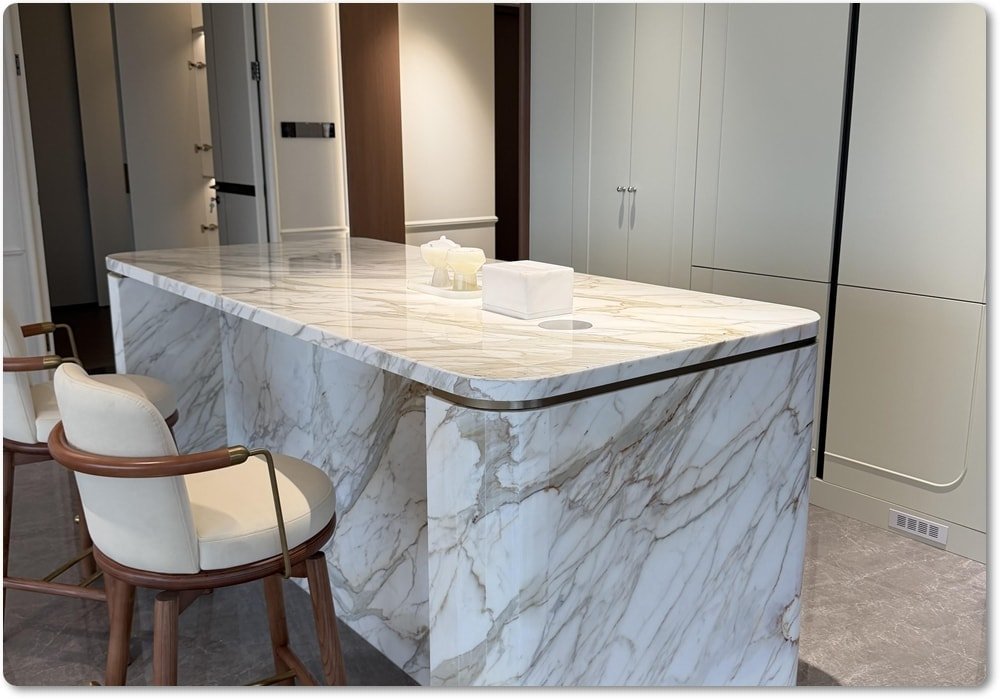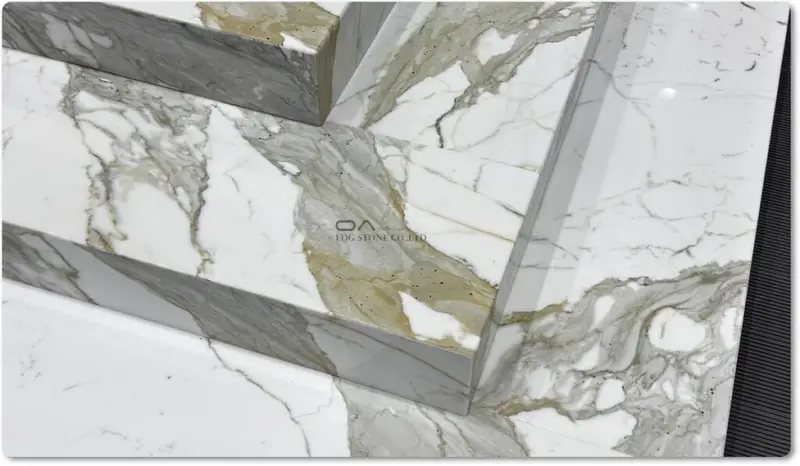
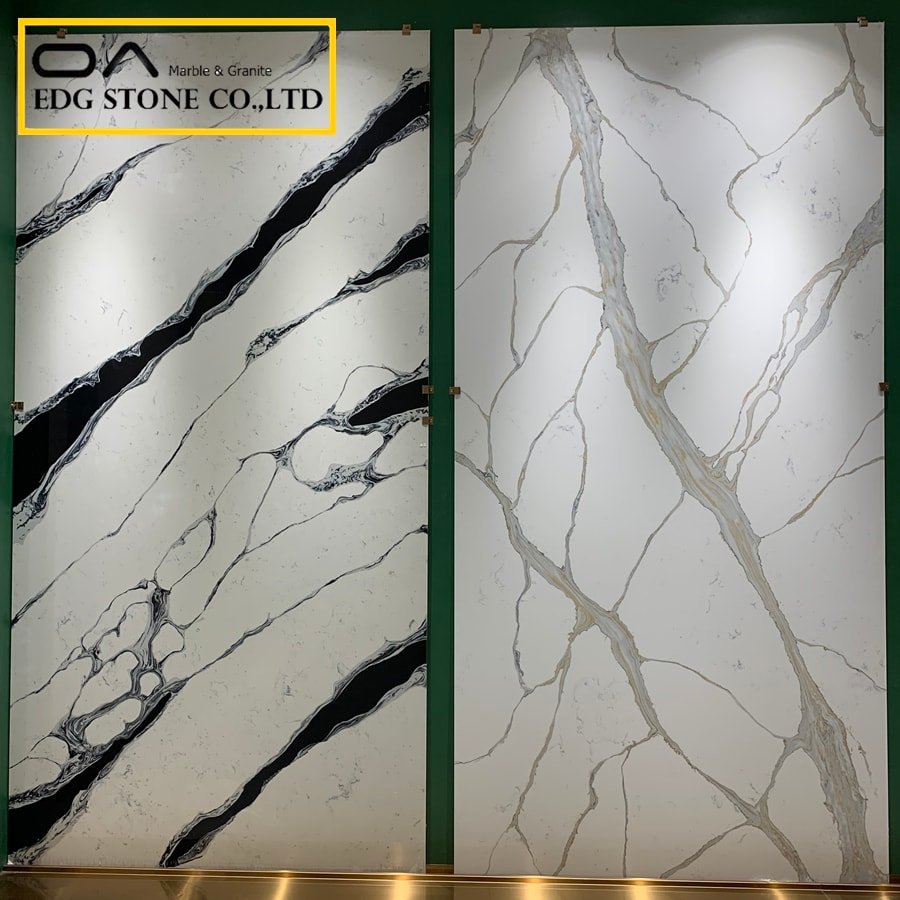
1 — Introduction: the cost vs value problem
When homeowners, designers, or contractors search “quartz countertops price,” many choices appear: $50 per sq ft; $120 per sq ft; slab offers online from multiple vendors. But price alone rarely predicts long-term satisfaction. “High-performance quartz” should be defined by how a countertop performs in everyday life (stain resistance, edge strength, color stability), how easily it is fabricated and installed (availability of jumbo slabs, factory-grade cutouts, consistent sheet calibration), and how the supply partner supports the job (samples, lead time transparency, warranty, regulatory compliance documentation). This guide reframes the buyer’s decision: cost is one input — value is the outcome.
2 — Market snapshot: why quartz matters now?
The global countertops market is large and growing: a recent industry report estimated the global market at ~USD 148.3 billion in 2024 and projected growth to about USD 217.8 billion by 2030 (CAGR ~6.7%). Engineered quartz is among the fastest-growing segments because it combines predictable appearance, low maintenance, and industrial scalability.
Takeaway: the size and growth of the market mean more brands, more low-cost suppliers, and a wider variance in slab quality — which raises the buyer’s need for robust evaluation.
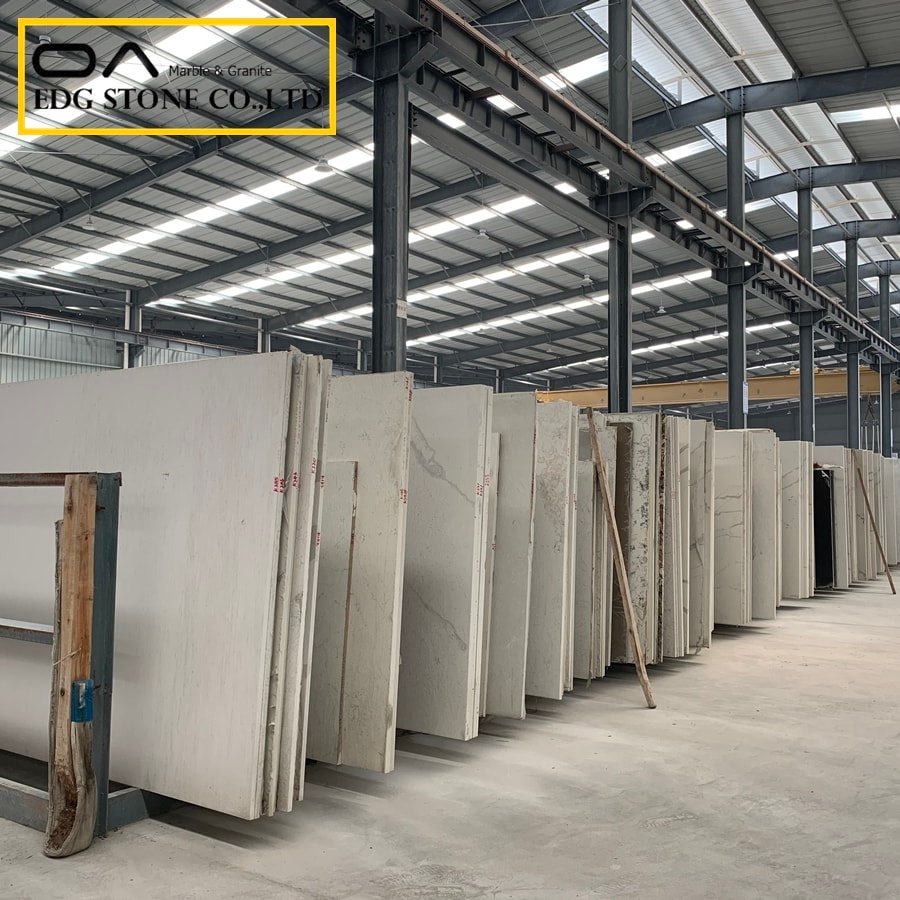
3 — What “high-performance quartz” actually means — beyond price?
A short checklist of attributes that determine real performance and long-term value:
Material formulation & quartz content: higher quartz content + quality resin systems generally increase hardness and stain resistance.
Manufacturing control & batch consistency: uniform color, repeatable veining, and consistent thickness reduce seam issues and build confidence for bookmatching.
Finish durability: polishing quality, scratch resistance, and resistance to thermal shock.
Fabrication friendliness: slab flatness, predictable cutting/sawdust behavior, and available slab sizes reduce fabrication waste.
Regulatory & safety documentation: supplier TDS, SDS (safety data sheets), and compliance with local product-labeling rules.
Warranty & after-sales support: real warranties, local distributor support, and accessible replacement programs.
These are the things that make “cheap quartz” rapidly become expensive when rework, color mismatch, or early wear occur.
4 — Technical & aesthetic parameters that drive value
Material composition & mechanical properties
Not all “quartz” recipes are equal. Engineered quartz is typically ~90% crystalline quartz plus resin, pigments, and auxiliaries — but % quartz and resin quality vary by manufacturer. Higher natural quartz loading and premium polymer binders usually mean greater hardness, lower thermal expansion, and fewer micro-defects. Ask for Mohs hardness or scratch testing, as well as long-term UV/colour stability data for outdoor or high-sun exposure applications.
Surface finish & polish retention
The polish quality is a function of micron-level finishing and resin curing chemistry. High-performance quartz keeps a glossy or matte finish longer in kitchens with active use — reducing the need for maintenance or reconditioning.
Edge & fabrication tolerances
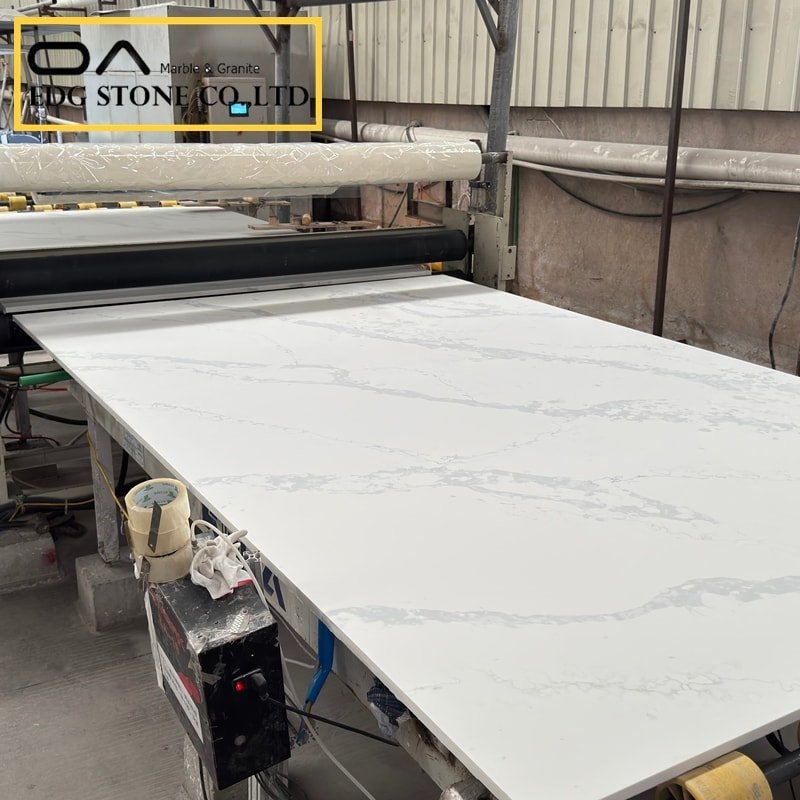
Thicker, flatter slabs that hold consistent 20mm/30mm tolerances make mitered edges, water-fall islands, and integrated sinks more predictable. Slab flatness also reduces Δ in seam height — a common cause of callbacks.
Slab size (fewer seams = higher perceived value)
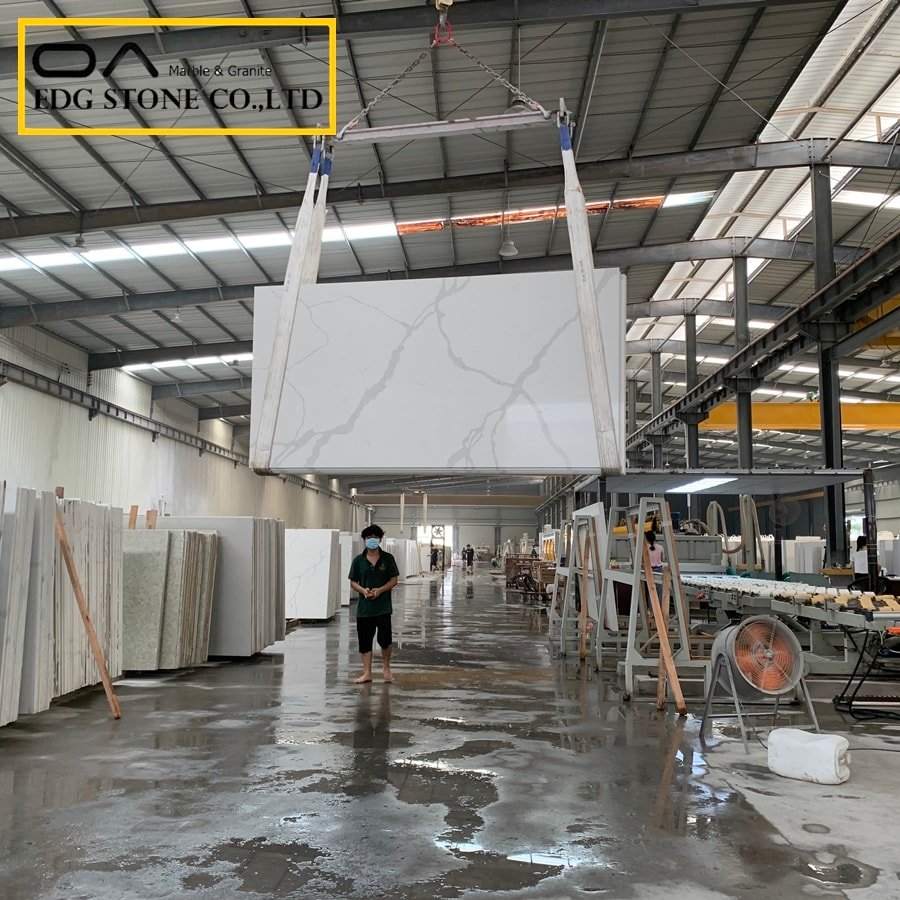
Standard slabs commonly start around 120″ × 55″ (approx.), with jumbo or “super jumbo” sizes available from some suppliers (up to ~126–138″ widths or 3200×1600 mm super-jumbos). Larger slabs reduce seams and increase design flexibility; they are worth the extra cost on big islands and open-plan kitchens.
Color matching, veining control, and bookmatching
Designer finishes depend on predictable veining across slabs. Value increases where the supplier can provide slab-by-slab imagery and pre-approval, or better, offer bookmatched pairs for focal walls and islands.
5 — Real costs to compare: material, fabrication, installation & risk
When reading a quote, break the cost into transparent parts:
Material cost (per sq ft or per slab): raw slab price, color premium for designer patterns. (Typical consumer installed ranges for quartz: roughly $50–$200 per sq ft, depending on grade, with most projects clustering $70–$120/sq ft — expect lower builder grades and higher designer grades.)
Fabrication: cutting, sink cutouts, edge profiling, polishing, and transport from the factory to the fabricator. Complex edges and integrated sinks meaningfully increase cost.
Installation & site adjustments: seams, joins, leveling, and sometimes substrate repair.
Warranty & service: include any extended warranty costs and availability of local support.
Regulatory & compliance risk premium: In some markets, additional labelling, testing, or restrictions raise operational costs for suppliers, which may be passed down to buyers. (See regulatory section below.)
Hidden cost example: A low-cost slab with poor color consistency may save $10/sq ft but create a seam mismatch that requires replacement, costing thousands in time and labor — turning low cost into higher total ownership cost.
6 — Regulatory & safety landscape shaping supplier choices
Regulation and worker safety are reshaping the industry — this affects cost and availability:
Workplace silica controls & enforcement: agencies like OSHA in the U.S. have ramped up enforcement efforts focused on engineered stone fabrication and installation; guidance and initiatives have increased inspections of shops handling engineered stone. Suppliers and fabricators that invest in compliant wet-cut systems, extraction, and training have higher operating costs — and less regulatory risk.
National bans and import controls: Australia set aggressive national steps — banning the use/supply/manufacture of engineered stone and later restricting importation timelines — which dramatically shifted sourcing and supplier behavior in that market. Buyers in other markets should watch similar regulatory trends that could affect supply continuity or warranty exposure.
Product labeling and consumer warnings: California Proposition 65 and other labeling regimes are evolving and require suppliers/distributors to track chemical lists and warning content; this administrative burden is part of a supplier’s cost structure and a piece of the value conversation.
Why this matters for buyers: suppliers who proactively share SDS/TDS, test reports, and documentation about workplace safety indicate an upstream investment in compliance and continuity (less risk of sudden supply restrictions).
7 — Buying checklist: how to evaluate manufacturers, factory, and wholesale offers
When evaluating a (China or global) quartz manufacturer or wholesale slab supplier — ask for, and verify, the following:
Technical Data Sheet (TDS) and SDS for the specific SKU (not just a generic PDF).
Independent third-party test reports (abrasion, scratch, heat resistance, water absorption).
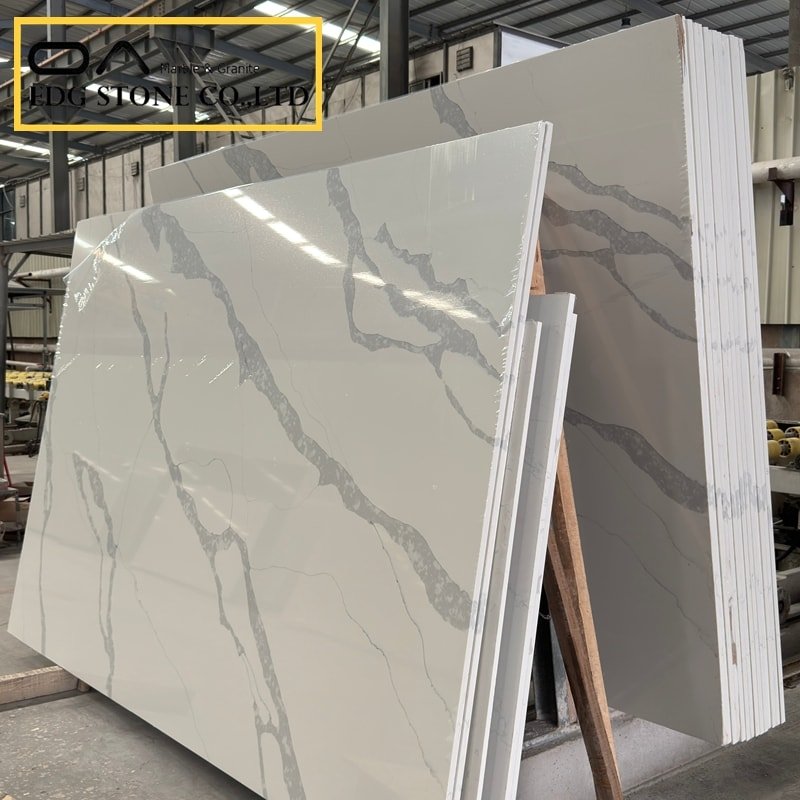
Full slab photography and slab-numbered images (not only small swatches).
Slab size & thickness options: confirm jumbo/super-jumbo availability if the job needs seam-free spans.
Factory QC process & certificates (ISO or equivalent, batch traceability).
Warranty terms & local service network (important for warranty claims).
Lead time & MOQ (does the factory offer “no minimum” for sample orders? Can they reserve slab lots?).
Regulatory docs (SDS, silica handling statements, Prop 65 check if shipping to California).
Sample & mockup policy — can the factory provide full-scale mockups or book-matching for verification?
References & installed photos from similar projects.
This checklist turns vendor selection from a price race into a value evaluation.
8 — Quartz vs quartzite vs porcelain vs marble — quick comparative guide
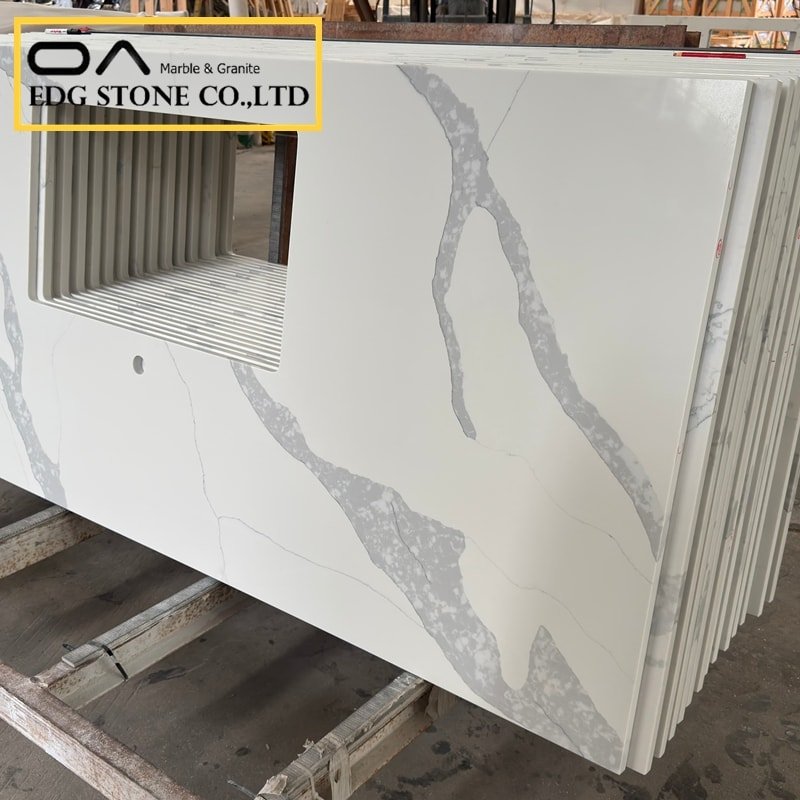
Quartz (engineered): non-porous, low maintenance, consistent patterns, available in many colors and jumbo slab sizes. Great balance of performance and design flexibility. Price: moderate to premium, depending on brand and design.
Quartzite (natural): authentic natural stone aesthetics; greater heat resistance but variable patterning and porosity; needs sealing. Often more expensive per slab due to quarrying and slab yield.
Porcelain large slabs: extremely hard, highly scratch/heat resistant, very low porosity — increasingly used for waterfall islands and backsplash. Fabrication requires different tooling; plus, some porcelain slabs come in extremely large sizes.
Marble: unmatched classic aesthetic; softer and more porous — higher maintenance over life.
Choose by use: kitchens and active family zones often favor quartz or porcelain; statement islands and bathrooms may justify quartzite or marble for aesthetics.
9 — Pricing guidance, slab sizes, and how to read quotes
Typical consumer installed ranges (guidance, varies by region and complexity):
Builder-grade quartz: $50–$70 / sq ft installed.
Mid-range quartz: $70–$100 / sq ft installed.
Premium designer quartz: $100–$200+ / sq ft installed.
Sources such as HomeAdvisor, Angi, and brand guides give similar bands — use them as ballpark but insist on full quotes that itemize slab material, fabrication, edges, installation, and disposal.
Slab sizes & impact on cost: standard slabs are commonly ~120″×55″; jumbo or super-jumbo options reduce seams but command higher per-slab prices and may have limited availability for some colors. Always request slab images and confirmations of slab IDs (slab numbers) used for your project.
10 — Future trends that will reshape cost and value
Regulatory tightening (silica & product labeling): expect more enforcement and documentation — suppliers that already comply may charge a premium but drastically lower continuity risk.
Supply chain transparency: buyers will demand provenance, TDS, and live QC evidence (video or slab photos) that reduce dispute costs.
AI in selection & QC: computer vision can score slab quality and surface defects at scale — decreasing costly callbacks and improving the ROI of choosing a slightly higher-quality slab.
Material innovation: hybrid surfaces, outdoor-rated quartz, and ultra-large porcelain slabs will further bifurcate price and value tiers.
Semantic Closure: How / Why / What / Options / Considerations
Why: Short-term savings on low-cost slabs can convert to higher life-cycle costs because of color mismatch, early wear, callback fabrication, or regulatory interruptions.
What: Ask for slab numbers, slab photos, TDS/SDS, finish retention tests, warranty language, and lead-time guarantees. If possible, request a fabrication mockup or bookmatch set.
Options: Balance cost and value by selecting mid-range quartz for high-use areas (kitchen) and reserving premium slabs for focal installations. Consider porcelain or quartzite, where heat resistance or natural variation is a priority.
Considerations: Factor in regulatory risk (silica enforcement and product labeling), fabrication complexity, and local service/warranty coverage. Procurement is not only price — it’s a risk mitigation & quality strategy.
12 — FAQ
Q1: What makes a quartz brand “high performance” rather than just expensive?
A1: High performance is measured by validated durability tests (scratch, stain, heat), consistent slab production, robust finish retention, available slab sizes for your layout, and transparent factory QC + warranty support. An expensive slab with poor QC isn’t high performance — but a mid-priced slab with strong test data and consistent slabs often delivers better value.
Q2: Are large “jumbo” or “super-jumbo” quartz slabs worth the extra cost?
A2: Yes for projects that need seam-free islands or continuous bookmatching; fewer seams improve aesthetics and reduce installation complexity. Jumbo slabs generally cost more but can reduce labor/time and increase perceived value.
Q3: Should I prefer quartz or quartzite for my kitchen?
A3: For family kitchens that need low maintenance and consistent color, quartz is typically better. For a natural, high-heat-resistant look, quartzite is attractive but needs sealing and more maintenance.
Q4: How do new silica regulations affect quartz buying?
A4: Stricter silica enforcement and national rules (e.g., Australia’s engineered stone restrictions) increase compliance costs for factories and can affect availability or require suppliers to show safe-working documentation; choose suppliers that provide SDS, fabrication safety statements, and evidence of compliant processes.
Q5: How should I read a quartz countertop quote to compare real value?
A5: Break the quote into material cost, fabrication, installation, edge and sink work, transport, and warranty. Ask for slab ID, slab photos, TDS/SDS, and confirm slab size to see whether the quote includes premium slab choices or standard stock material.